John Lewis - Another visit (3 November 2021) [2]
3 November 2021
View this email in your browser

Subscribe today to benefit from our world class insight.
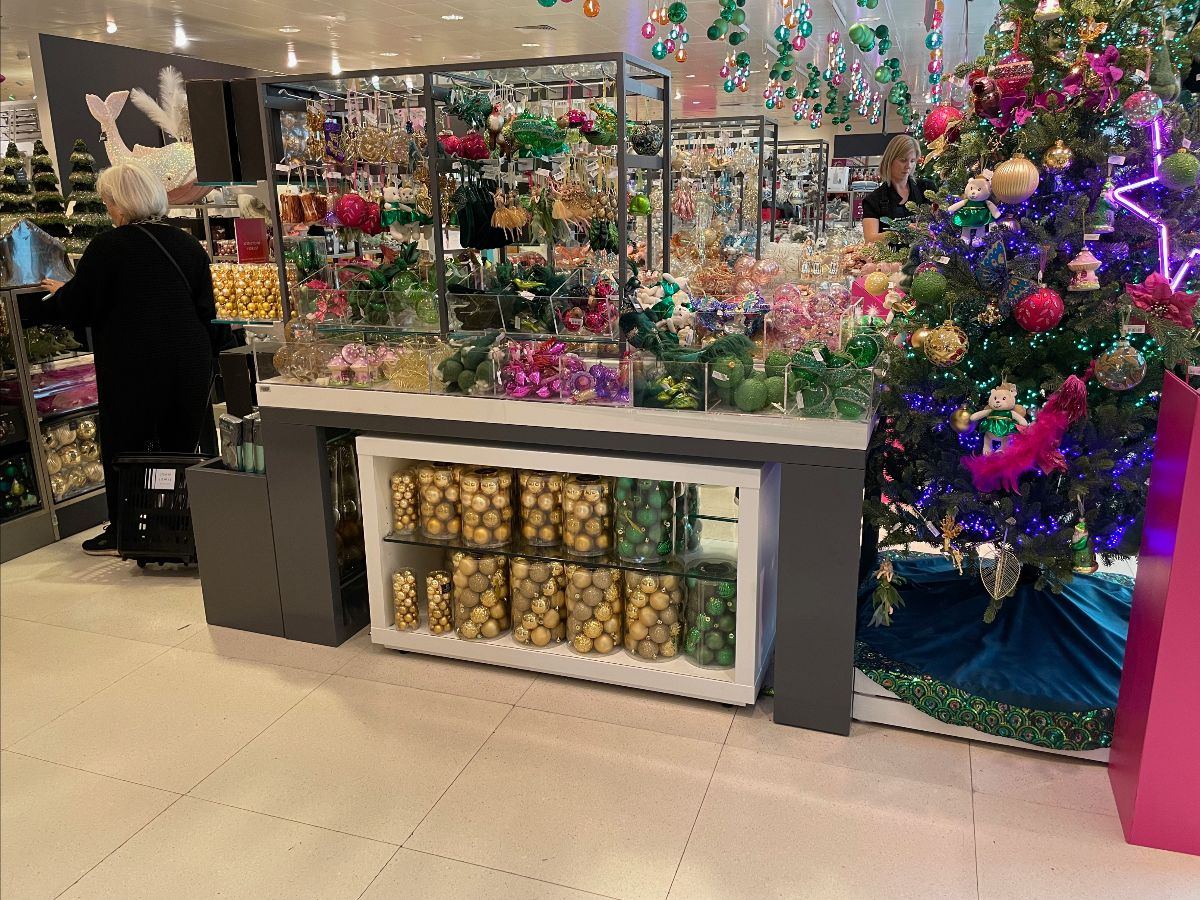 If everything in John Lewis was put together with as much thought, care, inspiration and quality as Christmas is. They'd be held up as a retailer that is arguably, one of the best in the world.
Could our advisory and consultancy services help you?
Edit - this is a revised note with grammatical inaccuracies corrected and certain passages rewritten, given they made no sense due to selected images being moved around in the email composer.
That said. The note shouldn't have arrived in your inbox without these elements being corrected. Please accept my apologies for this.
Key Takeaways - John Lewis - 2nd visit
1) Christmas is on the 2nd email and as I stated above; if the chain could somehow embed that discipline, focus and passion for the event on the day to day, then this would be a very different email. Easier said than done, however.
2) Standards again were challenging, lighting is covered in depth in the 2nd email, but a smattering of observations here is enough to whet the appetite, frankly, it was a disaster.
3) Anyday polarises opinion and no amount of fancy pop up shops to showcase the range will change my perception on this. The rollout looks confused and it's now in so many categories. I'm unclear what the aim of the sub brand is.
My perception of Anyday has worsened. It's arguably the biggest act of economic self harm, by a retailer, ever.
Certainly in terms of own label.
As the brand has continued to roll out - it's now touching more categories and sadly, looking more ridiculous.
The rationale for introducing Anyday appears to be centred on the fact that John Lewis is viewed as expensive, which, we know can be the case.
This is despite the never knowingly undersold pledge and all the rest of it.
But it misses the point that people shop with John Lewis for all manner of reasons. They're happy to pay a higher price because customers might know the business is a partnership. not a PLC. It may be that they like the service, it could be anything. Thousands of reasons are related to a customer choosing to buy from one retailer, over another.
Whilst price is important, the value the customer gets is far more important. You can justify almost any price if it's associated with positive connotations around customer service, the wider brand, product quality, store environment and experience....
The minute that the brand turns negative in terms of perception, or starts a trajectory downwards. Higher prices, or a higher than average price point becomes harder to defend. Indeed, the customer can wonder why they're spending that bit extra when the service, product quality, or countless other elements are merely comparable to other retailers. Not better, thus why pay more?
When written down. One reads that back and wonders which retailer would merrily erode their own strengths?
Well, it's just another example of where John Lewis are going wrong.
They will never be able to compete on price in a meaningful way, ever. Their ownership model prohibits it, given the bonus for one. Alongside their more bureaucratic structure, paying suppliers more etc.
Not just these factors alone. But department store retailing and their locations mean that higher costs are incurred anyway via rent and rates.
Department stores are not known for their volume retailing abilities, namely because customers have to walk from any high street store with their purchases, which can be a sizeable barrier in itself. (Public transport not always helpful).
But that's the only way to get prices down. Sell more to buy even more and the economies of scale take care of the rest.
However, if you can't drive volumes, and John Lewis patently can not. Then in the absence of sales growth (and indeed, new space, it's the reverse now) then you have to cut costs to keep the profit line moving.
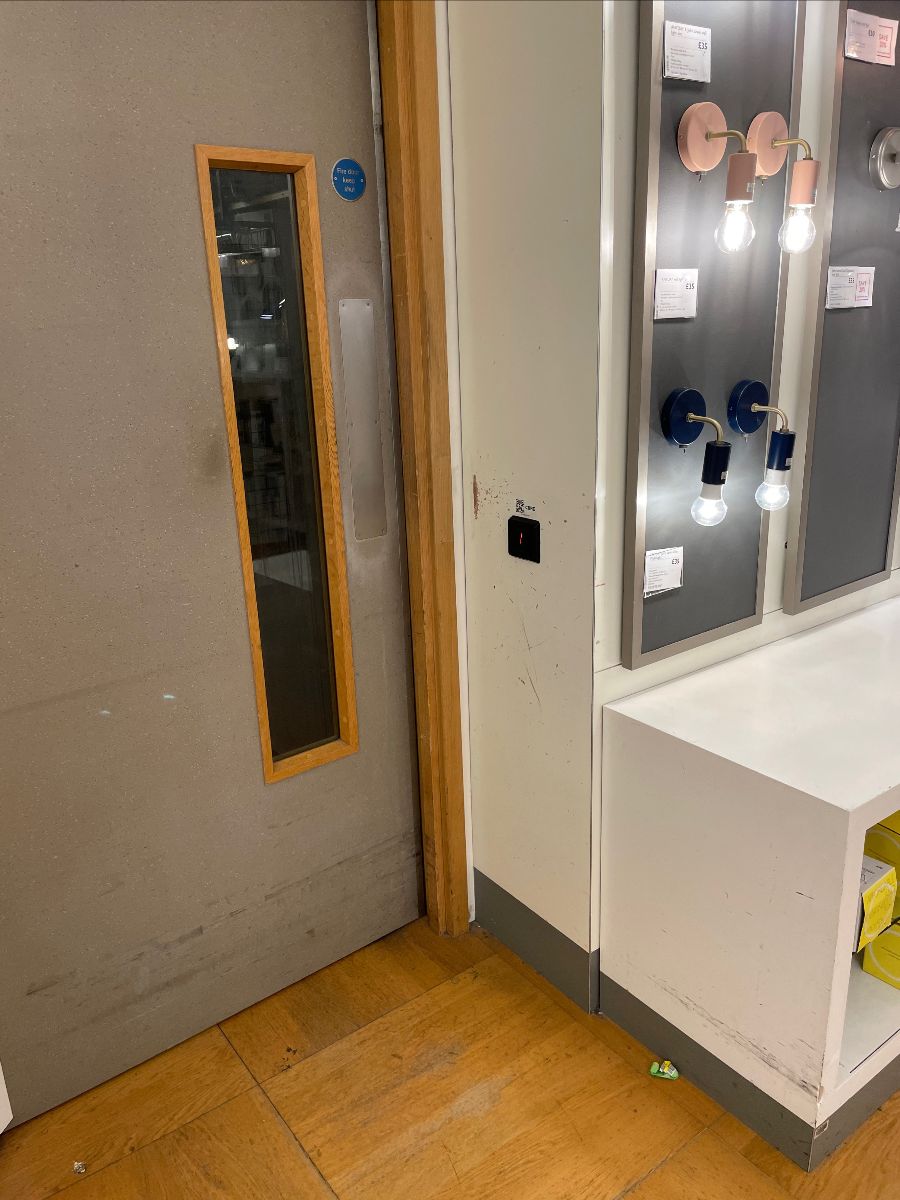
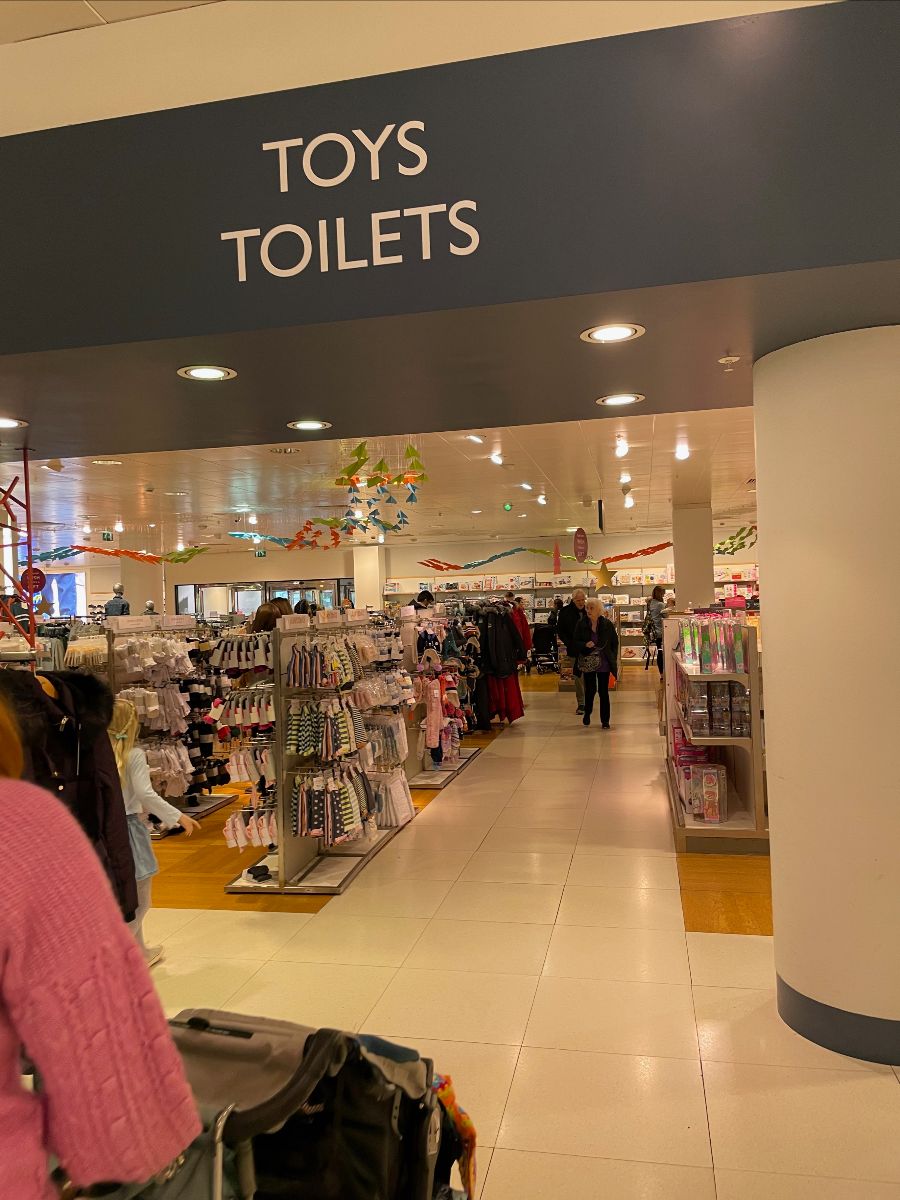
Refits are sorely needed, plus this segway of Toys and Toilets, hardly world class.
Cost cuts mean ideas like shifting call centres to the Far East, these moves in the short term cause little pain. There is some isolated noise from customers perhaps. but the savings are there for all to see.
Real excitement at the head office; so more moves are made. With yet more radical cost saving ideas coming down the track.
Other tasks, like refits end up being postponed, or cut back to a 'lite' version. Indeed; some of the JL stores in the estate are needing an update and modernisation, purely from a display kit alone.
Let alone the challenges with battered walls, paintwork chipping and all the other small elements that go in to a wider retailing environment.
A popular target for cost cutting are hours. "Let's aim to staff the store with nowhere near enough staff" (not necessarily the case in JL, at all, however, but the front end always is a struggle).
Key performance indicators and trackers are often fixated around the "net promoter score" (how positively customers speak about the brand) and any decline takes a while to take hold and be reflected in the score.......
Soon; the tidal wave comes in the way of rising complaints about earlier changes, like the call centres. The satisfaction score quickly goes in to reverse and the sales line plummets. The profits naturally follow downwards, which then means more cuts are needed, ironic, eh?
The culture then eats itself as cheerleaders for the strategy are left looking at each other. There has to be a change at the top as the incumbent exec has presided over the decision to cut costs, so they have to go......
Assuming we are seeing similar here, a business focused on the cost line and not on serving. Certainly we know that costs are always being cut at John Lewis, barely a week goes by without a store being closed or another restructure of the management.
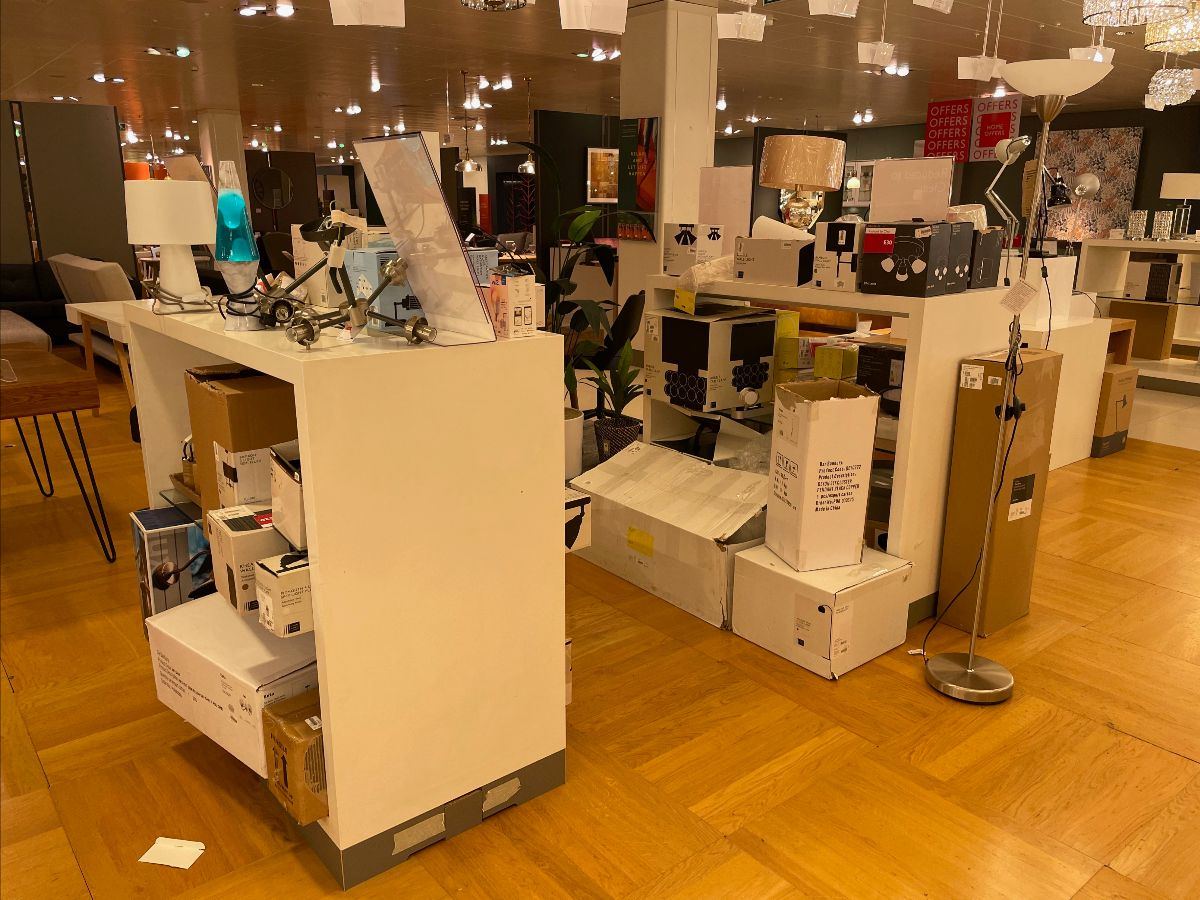
This means the customer (remember them?) ends up encountering more of the Tracey Emin style clearance areas.
What is the purpose of this clearance area? (image below)What would any single person think of the brand? Based on this? The store is trying to hawk sofas costing upwards of £2,000 about 2 metres away...
It looks dreadful, one look at that and you're assuming they treat all products like that, what are the back areas like? Why is no one sorting any of this out? Is it central buyers holding on to markdown and not allowing it to be cleared through?
Are some of these lines damaged packaging? Or are others damaged product? Missing a lightbulb etc?
There is a bad logic in retail that the clearance area has to resemble a disaster zone for it to be equated as a clearance area. Not so! Merchandising must be sharper here, than anywhere else!
This is amateur hour. Plenty of management about too, why have they not toured the store and seen this?
More on lighting in part 2; not an area I am necessarily always au-fait with but as a homeowner, as noted previously. Somewhat of a cloud can descend as you find yourself gravitating looking at home lighting and seemingly getting to that stage of your life.....
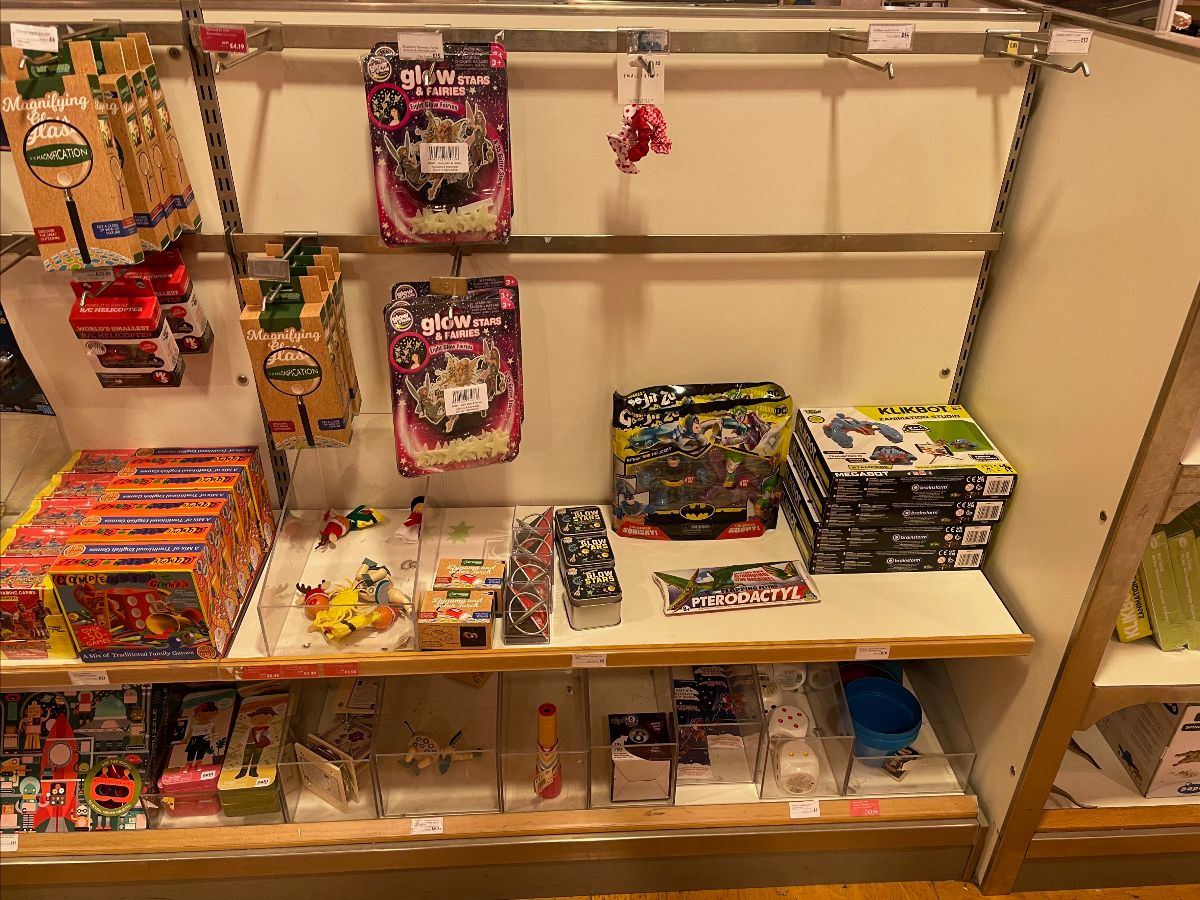
Toys is another category of interest given my/Mrs D's spending has reached the equivalent GDP of a small country on various Toy based lines down the years.
Where Toys was a positive but 'must try harder' in JL Leeds, in the Trafford Centre, it was very much 'why bother?'
Very poor all round. It's relatively close to Christmas but nothing going on of note. No focus, no direction, no wow. No price labels on some products.
Sure the displays are old and the layouts are confusing. Yes, there are stock shortages, Brexit, HGV drivers aren't easy to find, the toys are on a container somewhere etc etc.
Making excuses is easy, who will stand up for the excuses?
No one. Then it's addictive, playing the blame game.
Where some elements are out of your hands in retail, it is the same for competitors. By all means watch and observe their activity, but you can't control what they do.
Where can you control?
Your own store!
You may not have the stock, but you could tidy the display...
Try and see the wood for the trees, investigate the gaps if necessary and then when stock arrives, it can go straight on the shelf.
Rather than it resembling a dumping ground.......
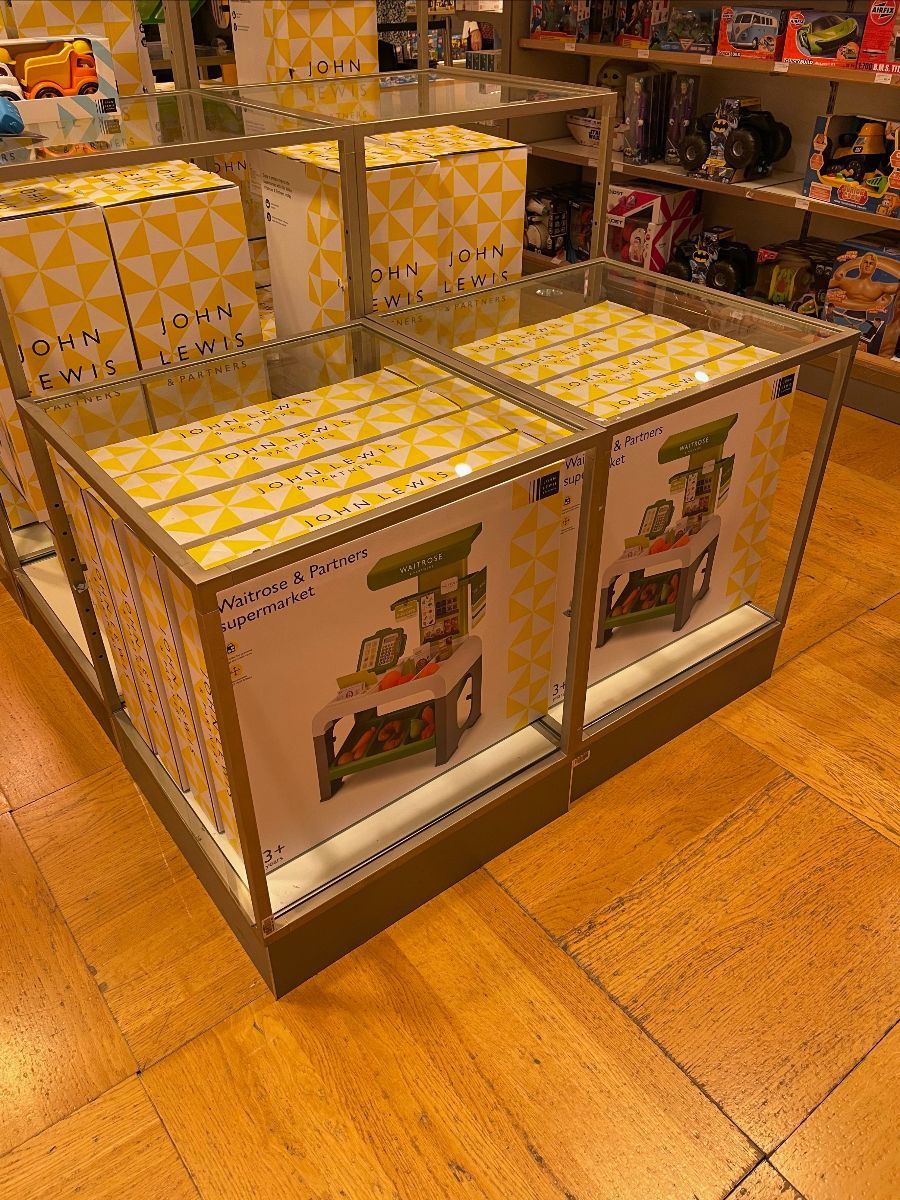
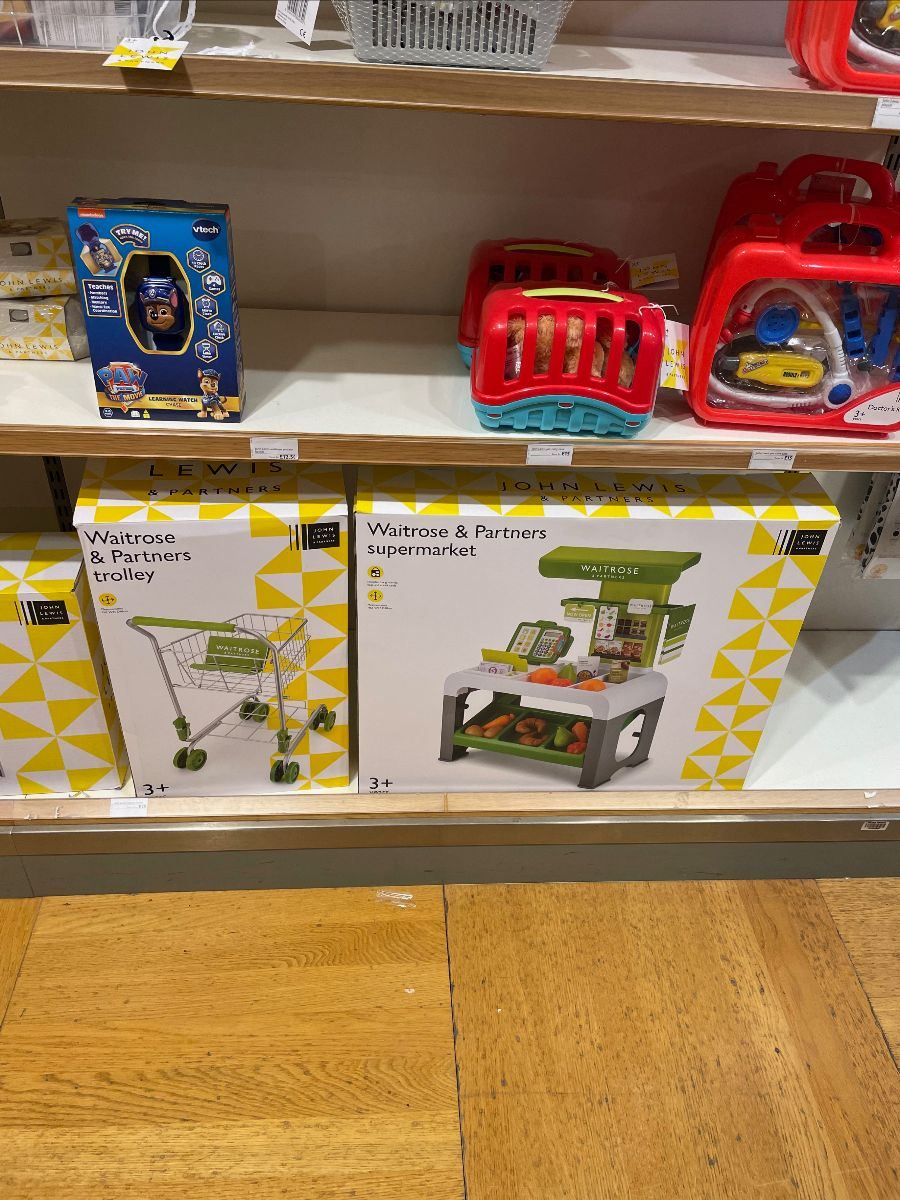
In terms of control. One can certainly put out shelf edge labels to indicate the price of the Waitrose supermarket. Two separate locations and not a price on either, own goal.
Not good at all. Such a basic.
It breeds mistrust with customers too, especially if they pick up the item thinking it's far cheaper due to the label issues. Then get to the checkout and find out it's £20 more.
What do they do? Pay it? Say they don't want it? It's a very British problem and one that is entirely avoidable.
I appreciate gaps are hard to manage in Toys and wider non-food at the moment, but surely that makes basic shopkeeping even more important?
Some customer focused work around tags on labels to show which products are out of stock, helping customers to see the price of the ones that are on sale would be a start.....
Again, it's down to taking control at store level.
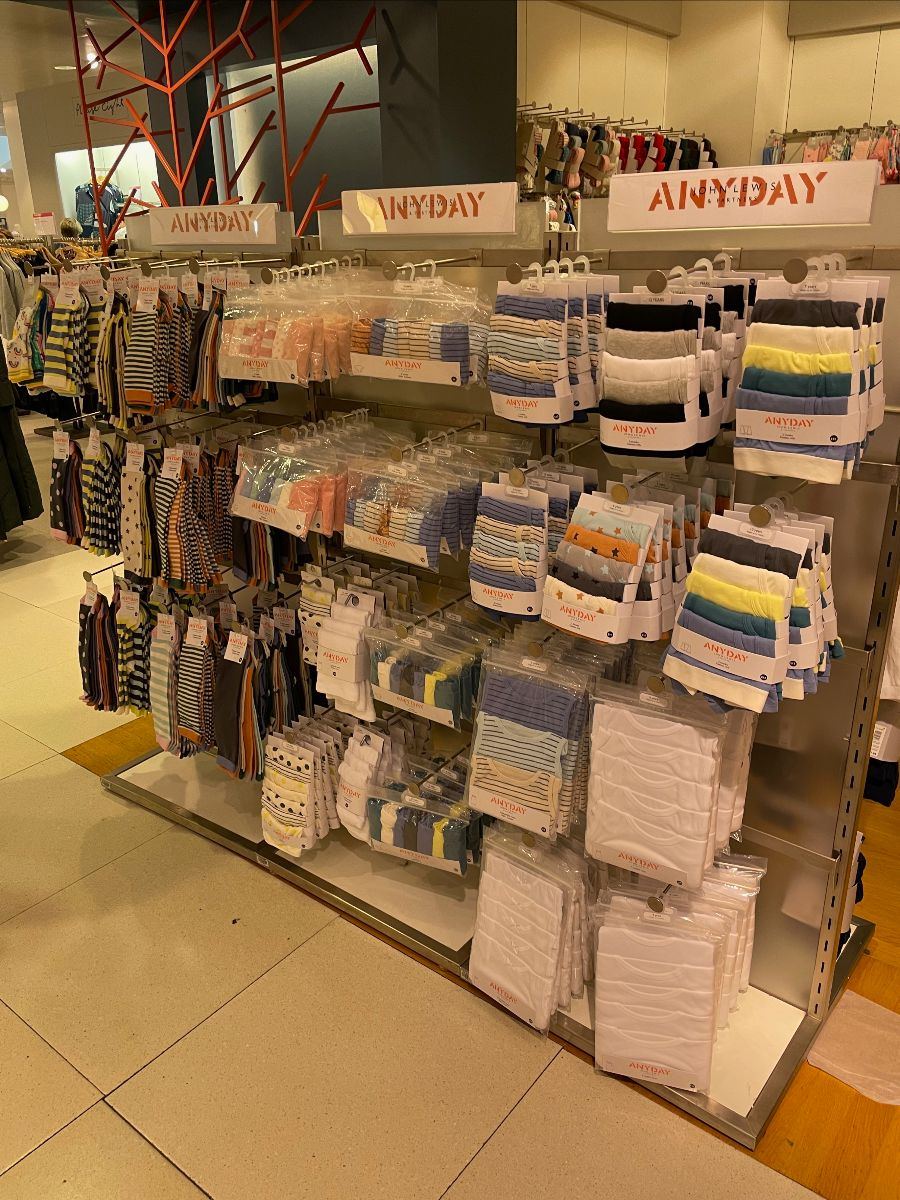
Ah Anyday. Not content with the sub brand moving in to furnishings and placemats replacing the ever present, solid and brand aligned 'House'. The range is now appearing in kids underwear, this alongside Babywear, Cots, Mugs and a whole host of other lines too.
Why?
The only real reason to introduce a unifying brand such as "Anyday" would be to resolve issues with a former brand/brands.
But there wasn't any issue with the brand. John Lewis speaks for itself as a brand name, with the values it evokes.
Just imagine having a brand such as "John Lewis" and being able to use it in childrenswear; where trust is everything.
A retailers dream. But then introducing Anyday over the top of it? Why?
I understand the need to introduce a value based tier with more of a value cue at the core. Perhaps. But when the tealights and photo frames are far more expensive than IKEA or equivalent retailers, it seems entirely questionable.
It's just so odd to have the brand everywhere using what looks like a scattergun approach. Especially when you have to then persuade customers (all over again) that the product quality hasn't diminished despite the packaging changing. (Customers will still convince themselves it has).
When you look around the store; it's part Anyday, part John Lewis and the rest is pot luck, almost a Tombola approach to branding and ranges.
Understandably supply issues cause the old ranges to be stocked for a bit longer, but the both brands on display in homewares looked a mess.
That said - old branding alongside new Anyday brand, where is the distinction? Where does the customer draw the line?
How can it launch successfully with the old stock still hanging around?
It really is basic retailing.
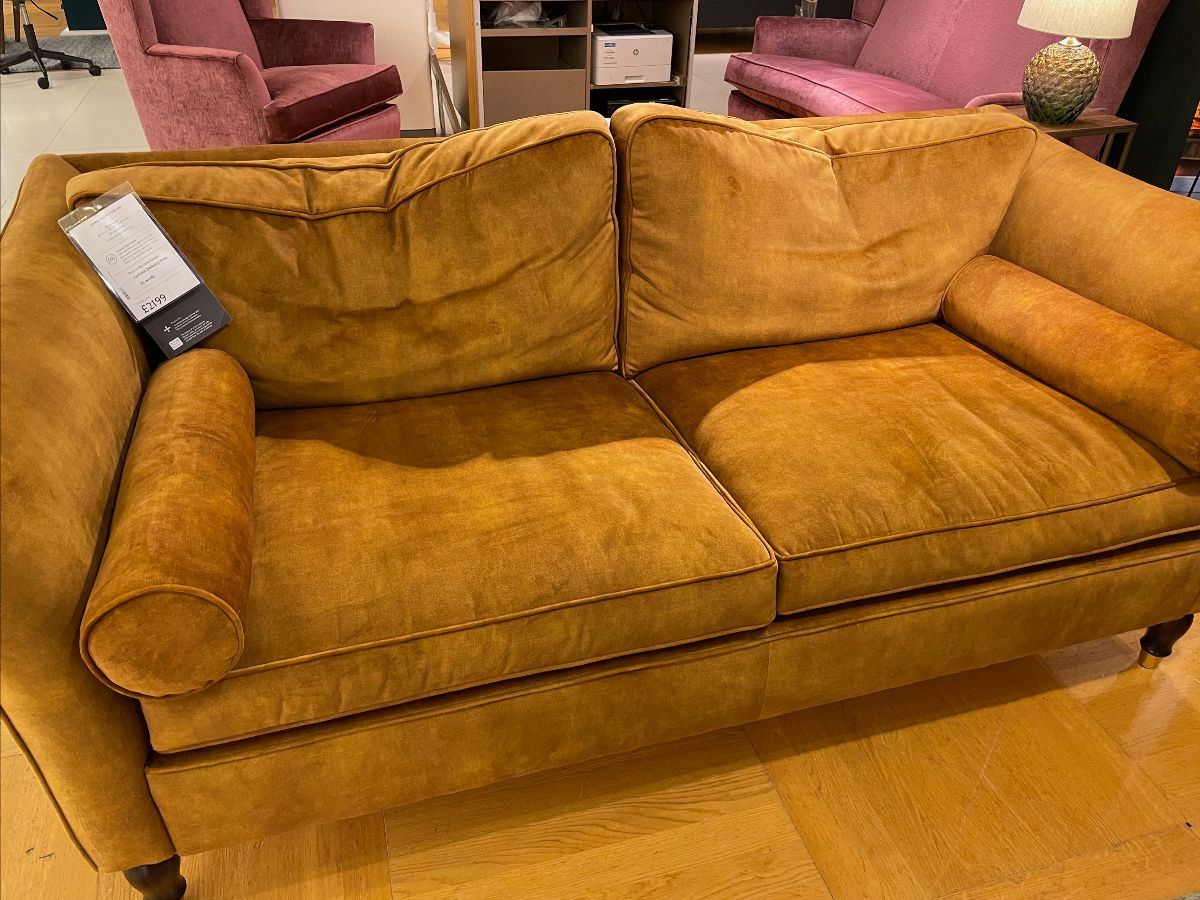
£2000 of your money for this sofa?
The furniture itself isn't bad but the cushions. Oh dear.
Who is responsible for maintaining the presentation here? It sets a terrible first impression.You would never see this at the professional furniture retailers, for example.
If you can't do it properly, then why do it at all?
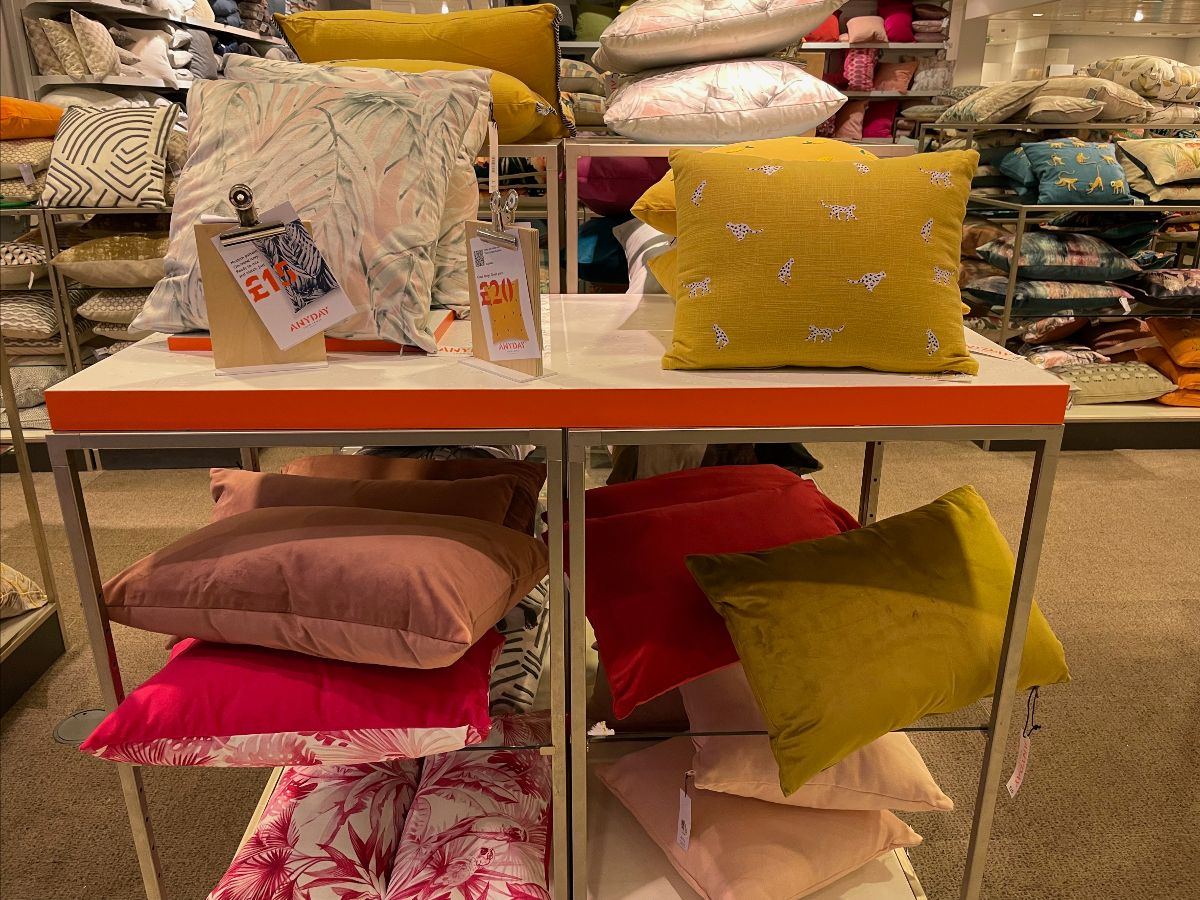
Even Cushions weren't safe from the Anyday treatment; with this range somewhat awkwardly merchandised on a display unit here.
There must be a better way, surely?
Again, a reminder of how confused the own label tiering is. £15 / £20 for cushions that don't appear all that different. Do they have to be Anyday?
No.
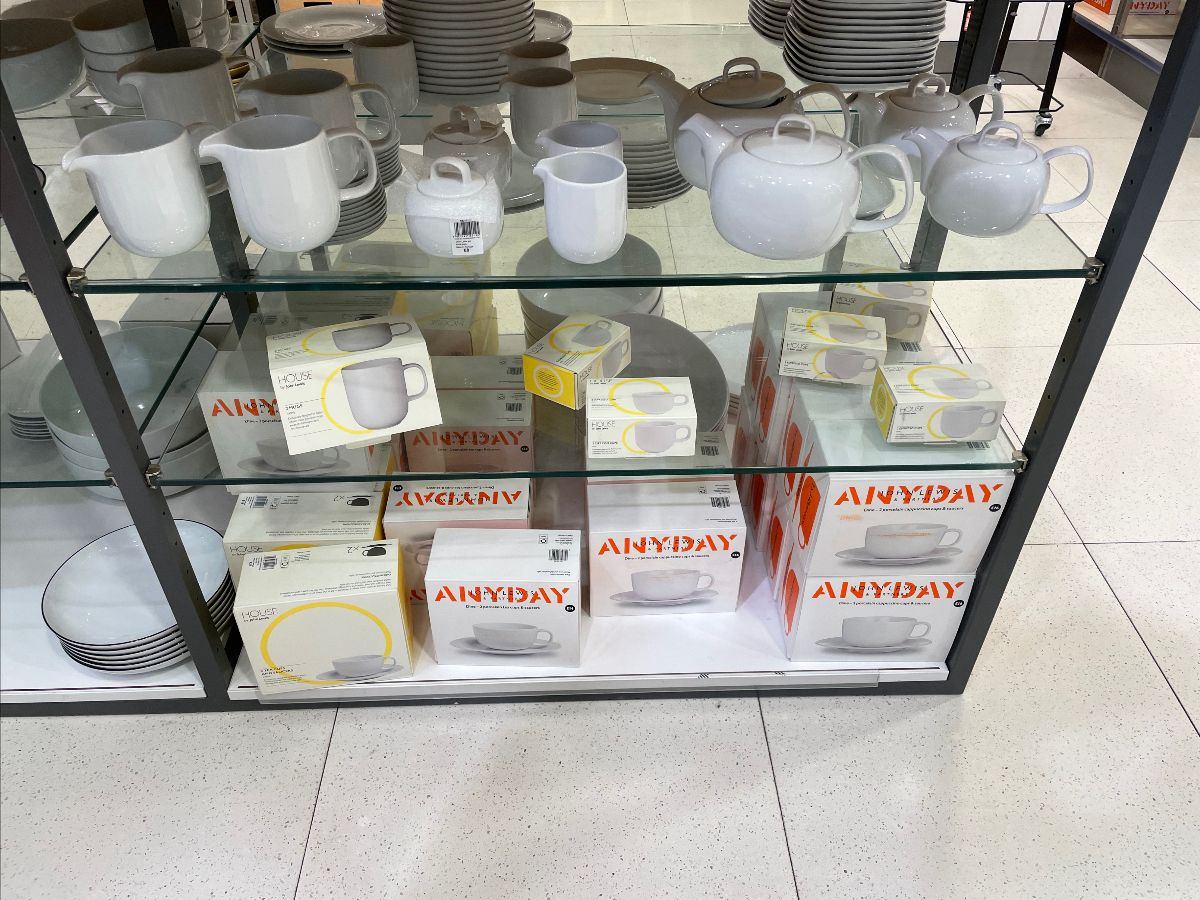
This was the disaster awaiting me when I went in to the store. It's a mess.
First impressions count, of course, but the fact that Anyday, then House are on the same display hardly helps. Nor does the Church 'bric a brac' style sale of Teapots and other items.
Where is the inspiration? What was wrong with "House?"
A baby's cot now has the same branding as this range of Dinnerware and then a myriad of other products.
There isn't even a distinction around the usage / mission anymore. IE using "House" to signify product is to be used in the home, whilst obvious, does work.
Had the Anyday range been introduced as a palatable cost effective range, then I could have understood. But I would not have agreed with it. John Lewis customers are not shopping with John Lewis for price and price alone.
As Steve Jobs, then Dave Lewis famously said: "It's much better to cannibalise your own sales than have someone else do it...."
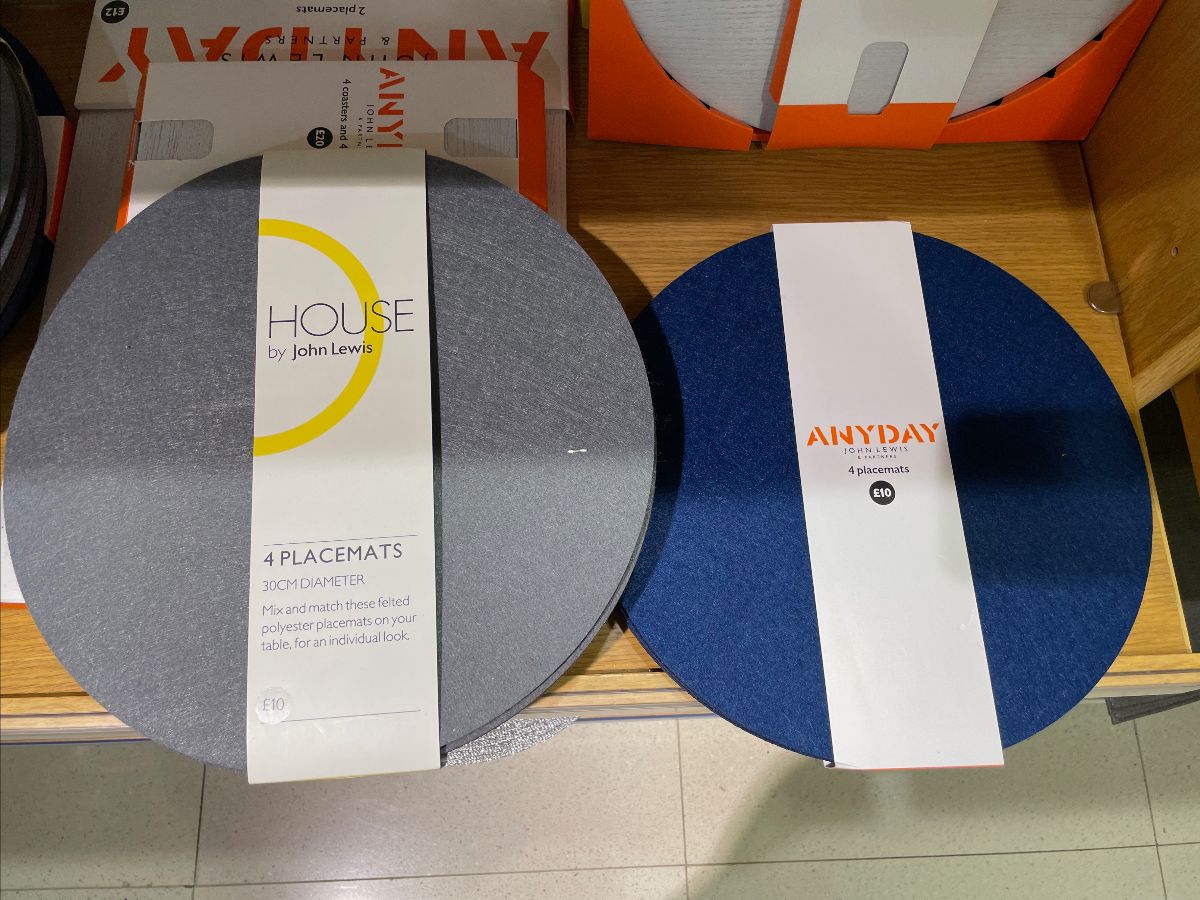
But as it is, Anyday is starting to just replace existing product, but at the same price point. Which is near pointless.
Same price point here for both products. No change in specification seemingly.
I'll leave you to draw your own conclusions around which one looks better on shelf.
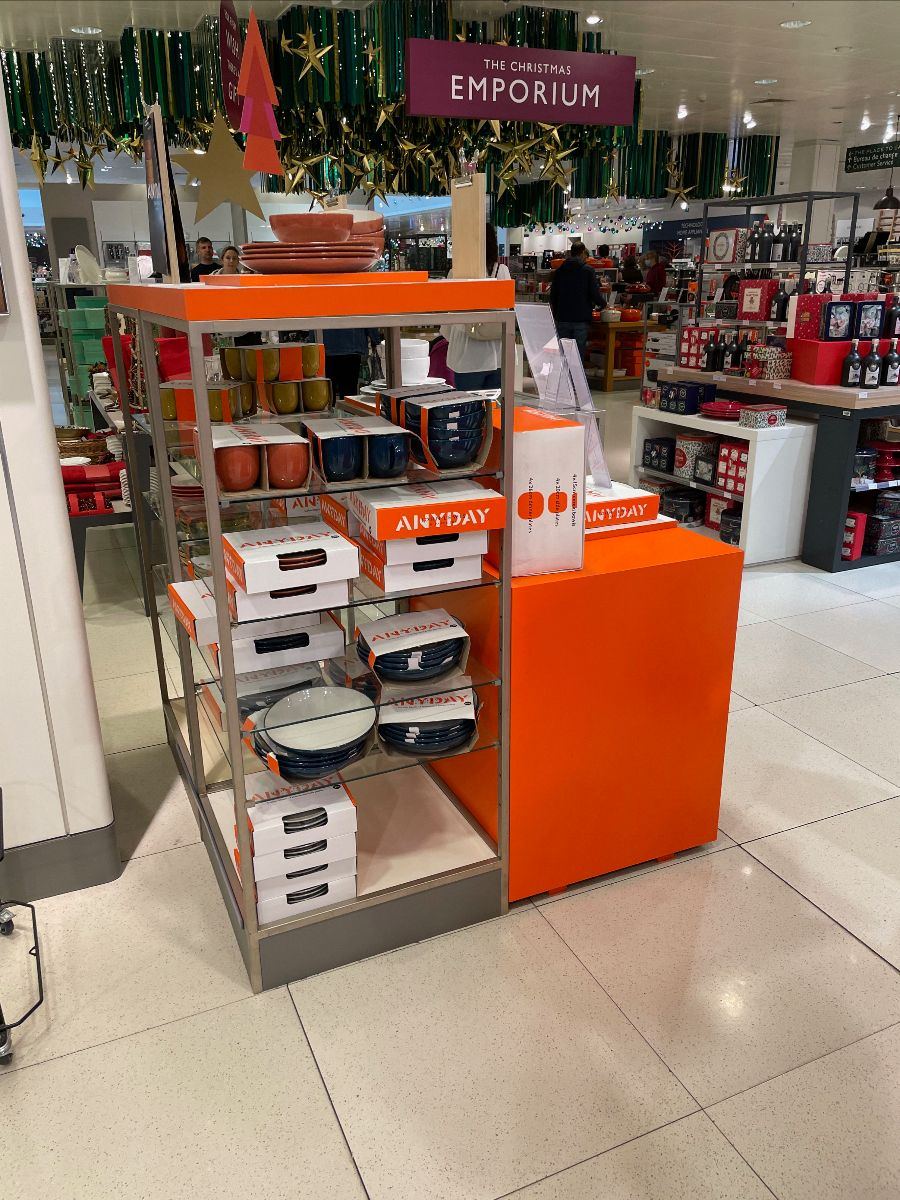
Even the branding here is messy. Anyday stands out well but on shelf / display units, the product just looks a mess.
The ANYDAY branding does little to improve things or really generate feelings / emotions / thoughts of real quality.
Merchandising is nine tenths of the law in non-food / department store retailing.
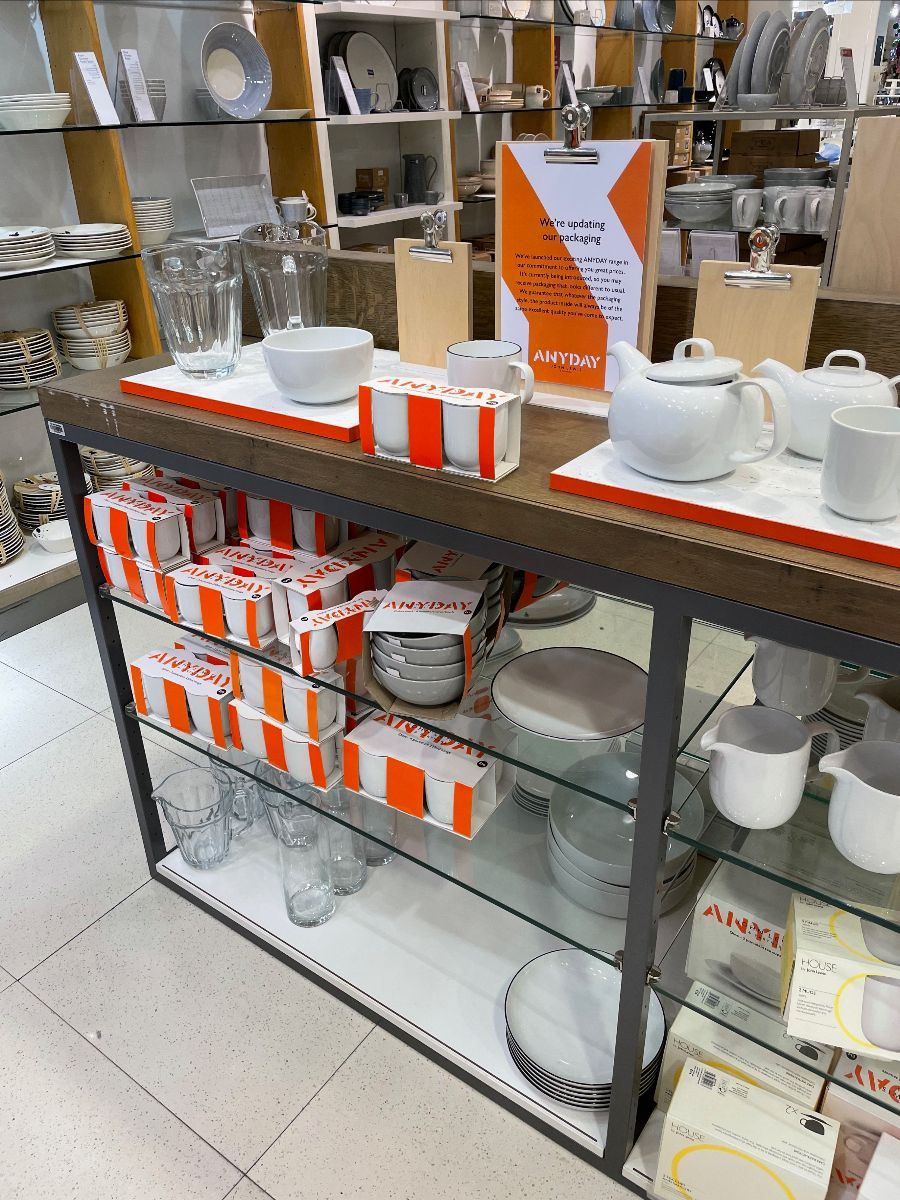
Even here - there is an explanation around the changes to ranges and that the customer needs to bear with them. (an entirely unnecessary change really). But again, the packaging on shelf just doesn't look right, it's over engineered and ends up actually obscuring the product.
If anything; Anyday cheapens the look and feel of the own label which is a very dangerous path to go down, because you end up bringing yourself into comparative with the market, which is the last thing you want to do.
Ruthlessly exploit your points of difference; not lower the base to be like everyone else, but 15-20% more expensive.
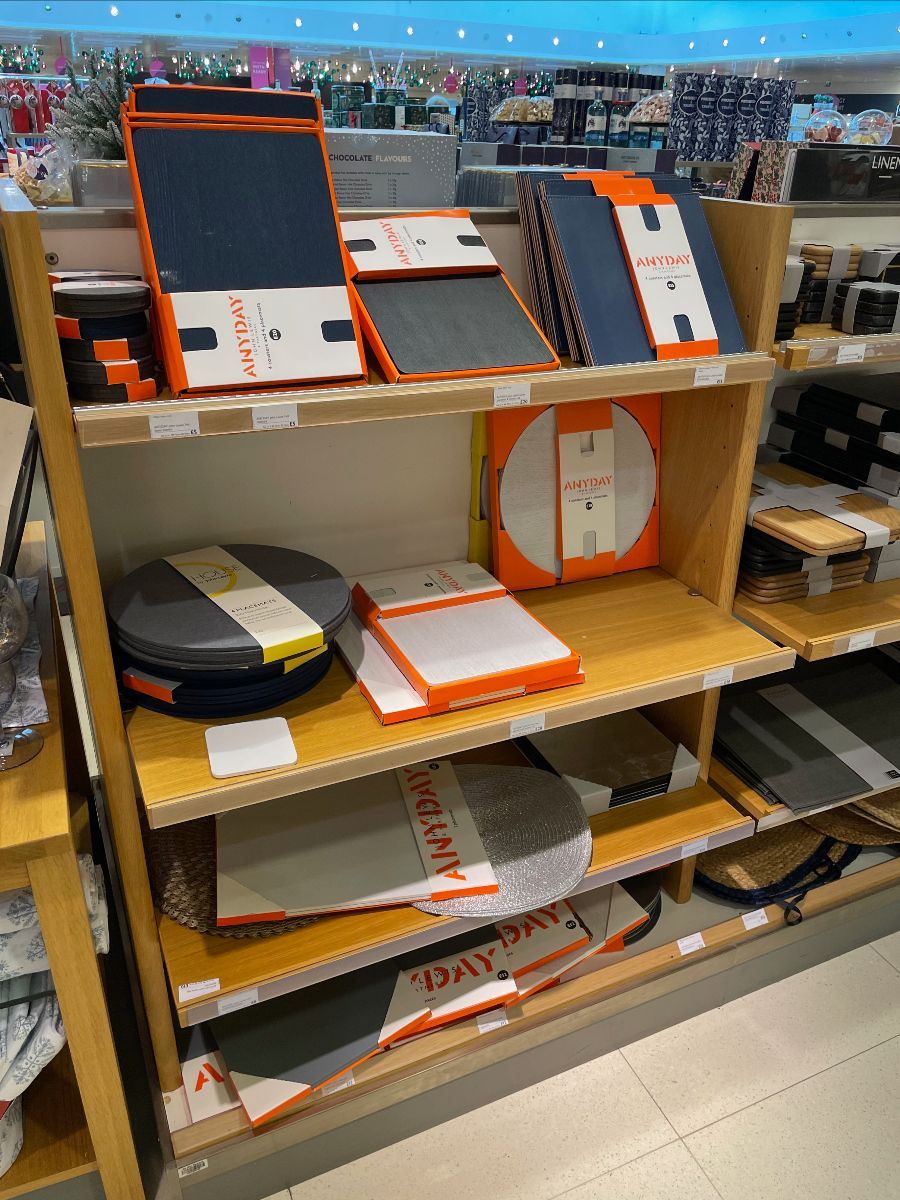
Sometimes (not often) I'm at a loss for words.
It's really hard to see what it should look like, let alone quite how the display ended up at looking like this.
Branding again is self inflicted harm and makes things worse but the whole things just looks bizarre.
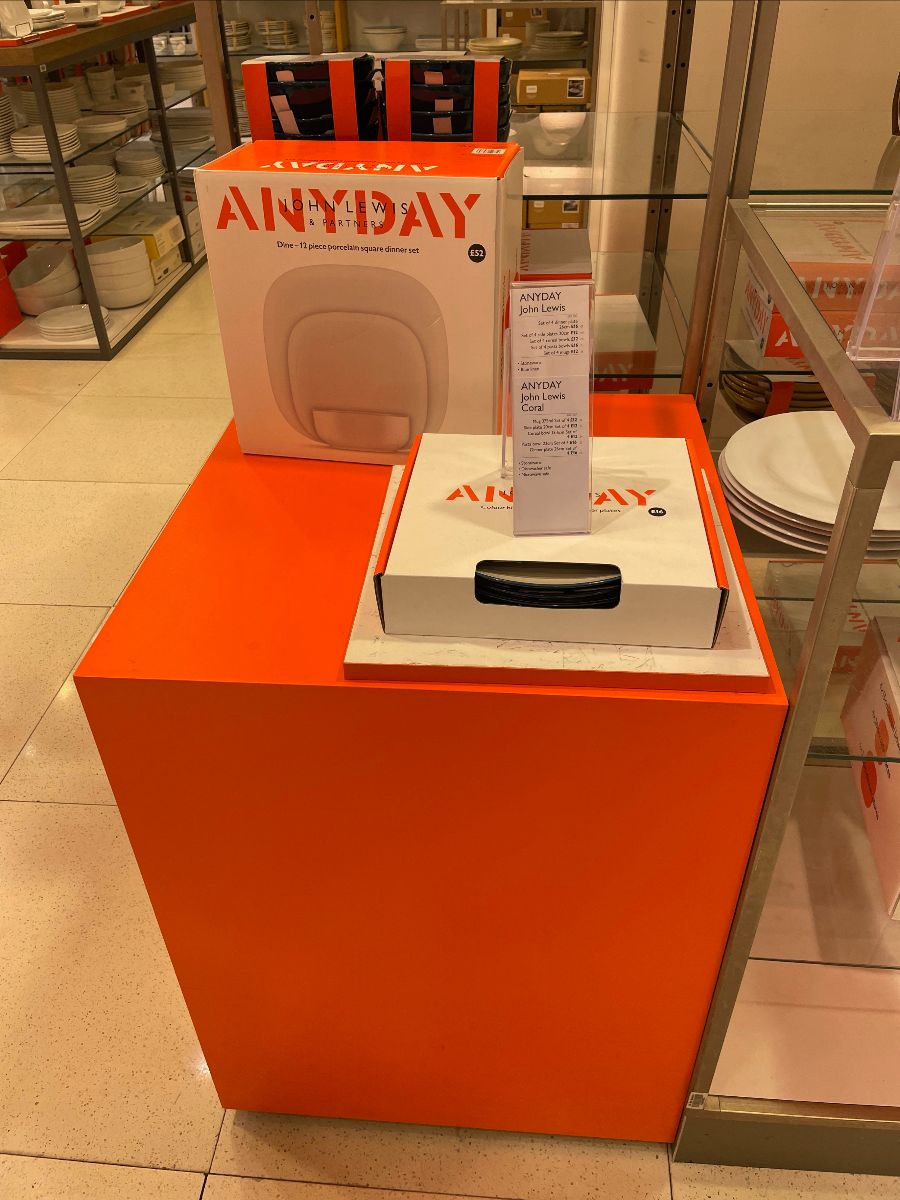
£52 for a dinner set, or £16 for some plates (I think) but the display is so unclear.
The signage is appalling, you get less information on signage when buying a car...
The bright orange shroud for the display kit does stand out well. However, it is a pointless waste of retail real estate, that space could be used to communicate anything around the brand, or products featured, to customers.
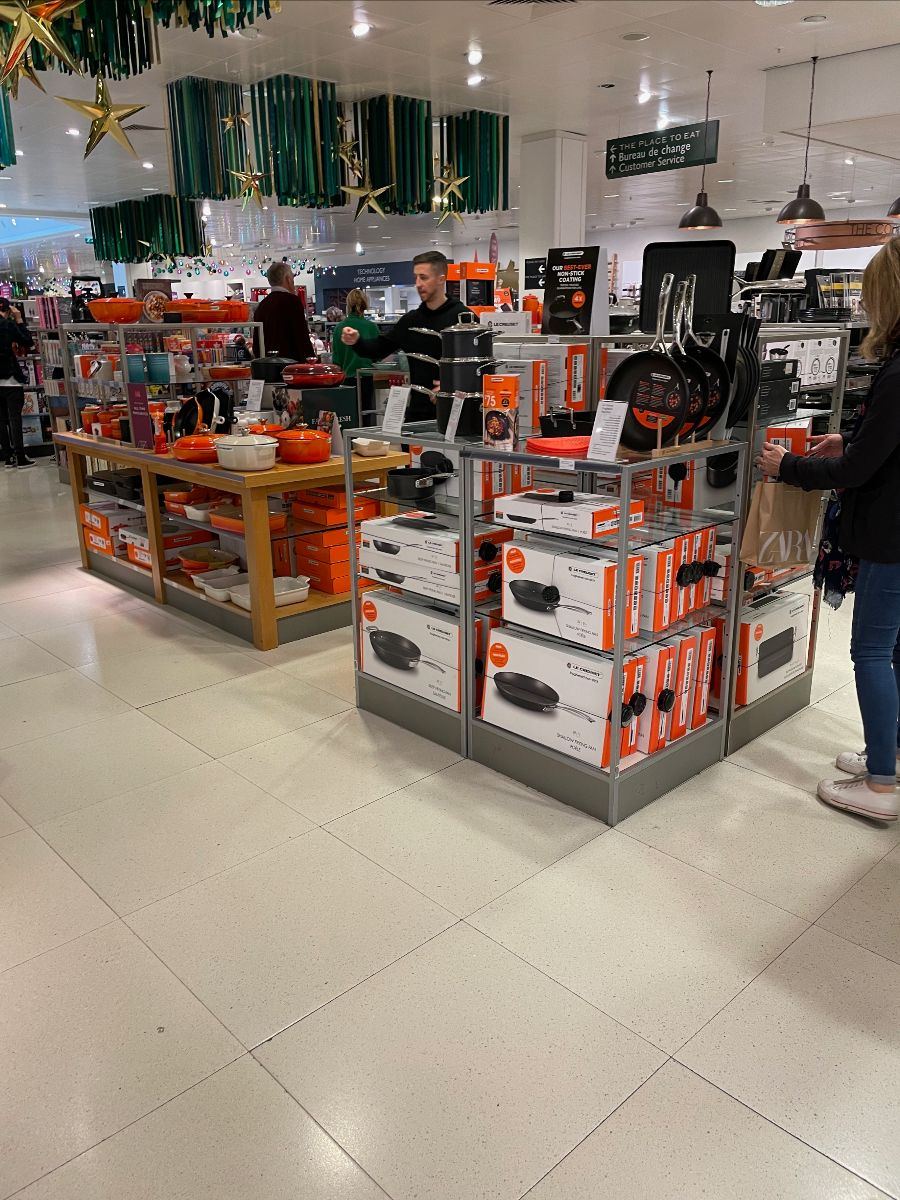
A bit of an overlap on the packaging front with Le Creuset (notably) in the first area of the store. Both brands share the Orange colourway on packaging and that's not a great place to be in.
You want a form of kerb appeal without utilising another brand's identity.
We all know the French manufacturer of kitchen equipment have a superb range of cast iron products, however we also know that the prices go with that quality and lifetime guarantee.
You certainly do get what you pay for.
Lighting, Christmas and the rest of the store are up next on our retail by email service.
Christmas is good, they get that right and that's great for big events, however as evidenced here, the day to day is so important.
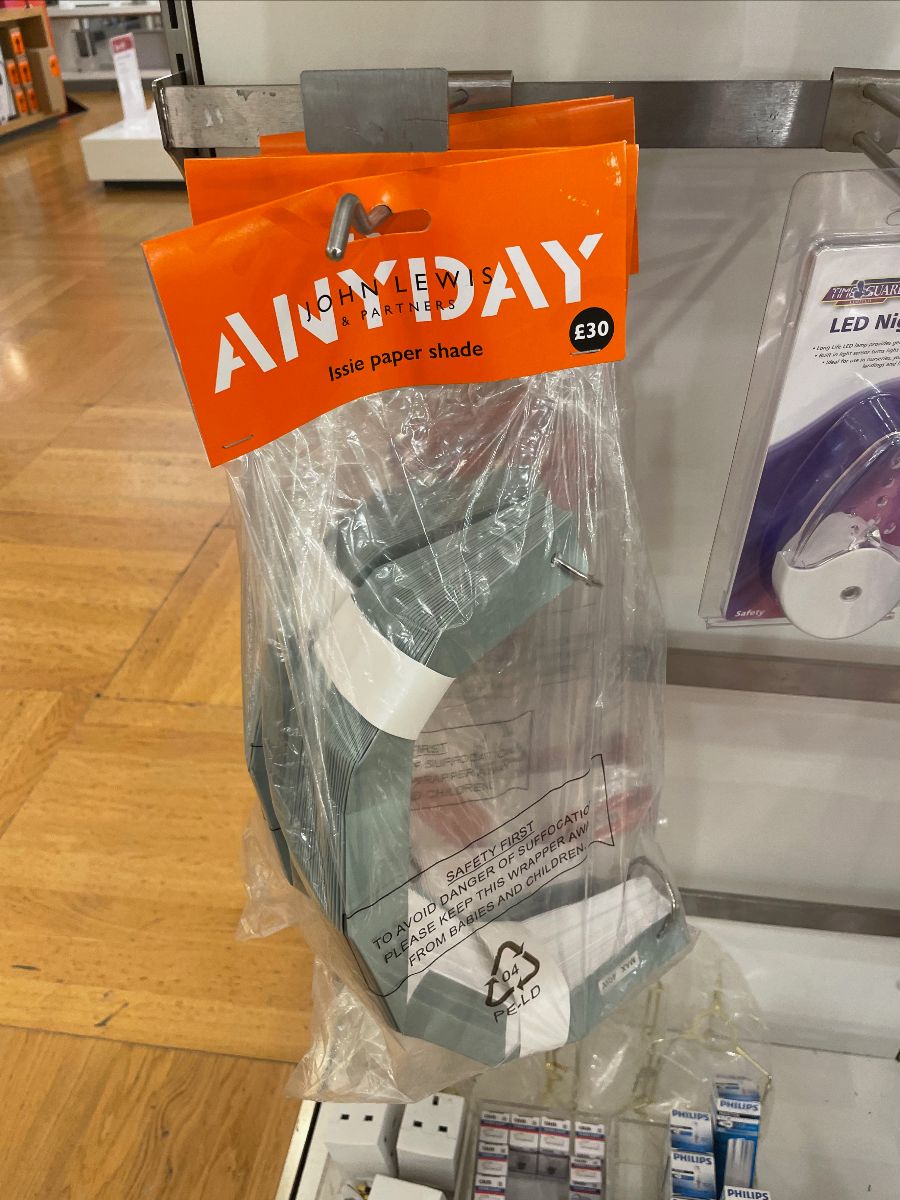
As for this paper shade. £30, in packaging like that? Especially where the colourway on pack looks to be wrong (white out of orange, usually the other way around) which makes it harder to read.
This example is probably a goof one to hold up as an indicator of "Anyday" and for John Lewis too.
Confused.
Part 2 coming tomorrow.
Edit - this is revised piece with grammatical inaccuracies corrected and certain passages rewritten that made no sense after selected images were moved around this email.
That said, it shouldn't have left our building without these elements being corrected. Please accept my apologies for this.
Subscribe today to benefit from world class insight.
Forward our note on John Lewis to your colleagues
From the Grocery Insight newsletter archive, first sent to subscribers on 3 November 2021. Steve now writes at read.groceryinsight.com. See also the blog archive and briefings.