The value paradox
12 June 2014
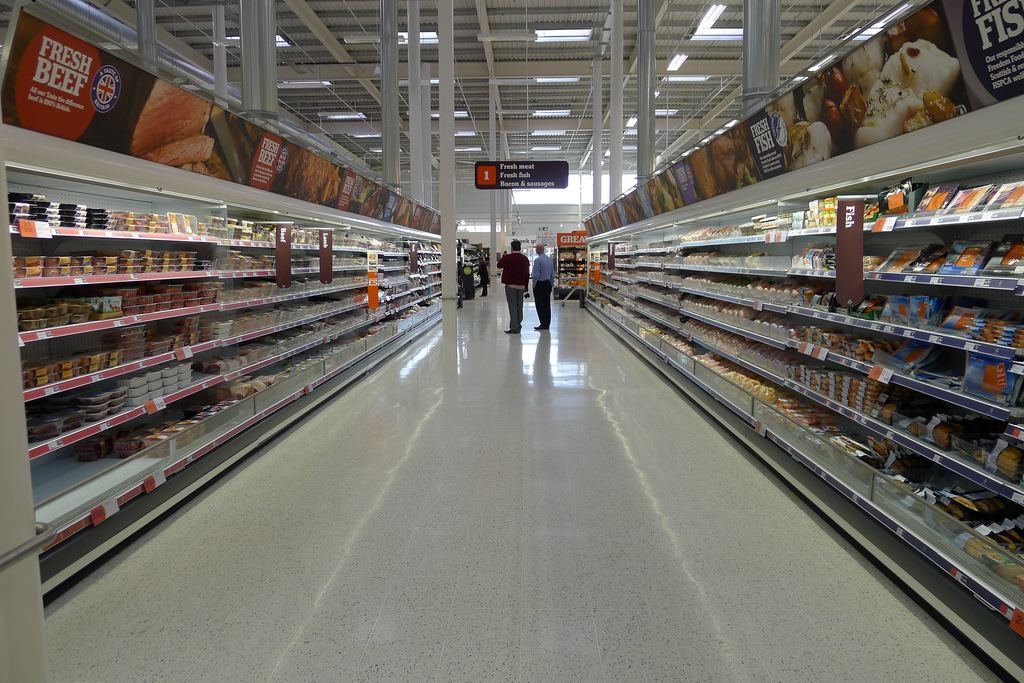
Tesco can struggle to get this level of execution, there is still so much 'accepting the unacceptable' and until visits from senior management are anonymous and really set about improving the shopping trip for the customer, it'll continue.
Many initiatives come and go and I feel its symptomatic of food retail today that buyers are stuck in their own silo - concentrating on their own category and not seeing the bigger picture. Who pulls each category together for the shopping trip?
More importantly, are the store managers walking around the store? I am unsure if they are.
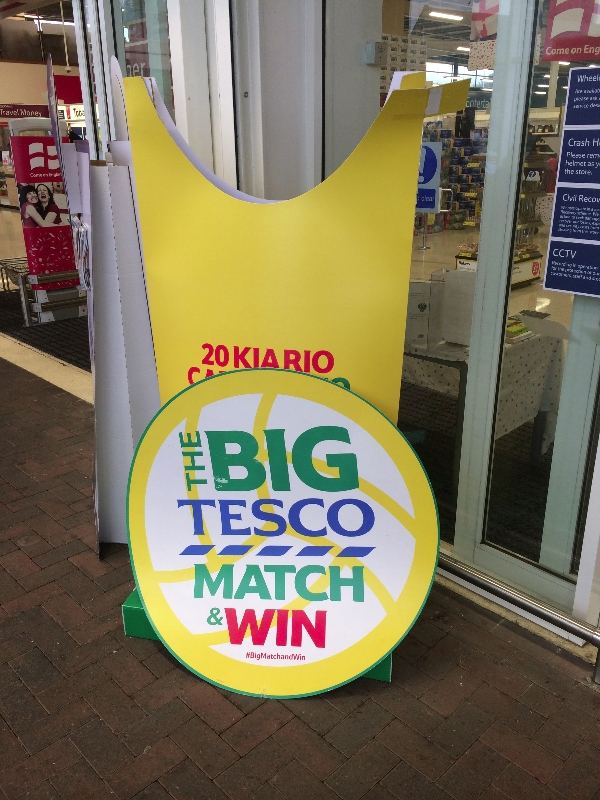
The 'big match and win' campaign has been low key, a great opportunity seemingly missed, very little interest in store and I wasn't offered a card despite spending over £20 twice.
The PoS at the front of the store sets the tone somewhat, but it's so low key. There are hanging boards by checkouts but very little else.
Game cards are a promotion that customers will retrospectively think about, 'Oh, I didn't get a gamecard' if they see an ad. The assumption then is they were ripped off / lied to.
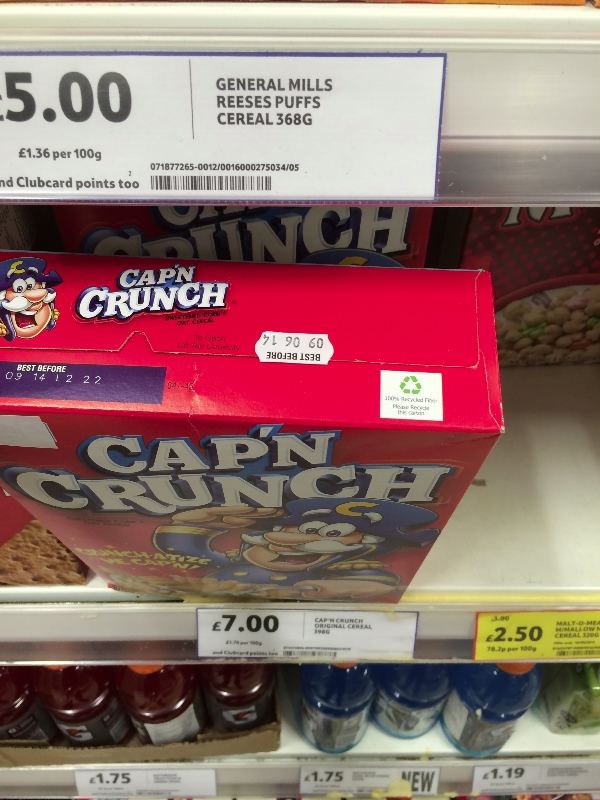
An American range does work well in stores, confectionary in particular sells well and there are plenty of sites making a good living from selling a range like this.
However, just how much equity does Cap'n Crunch have in the UK? He doesn't have £7 a box's worth.
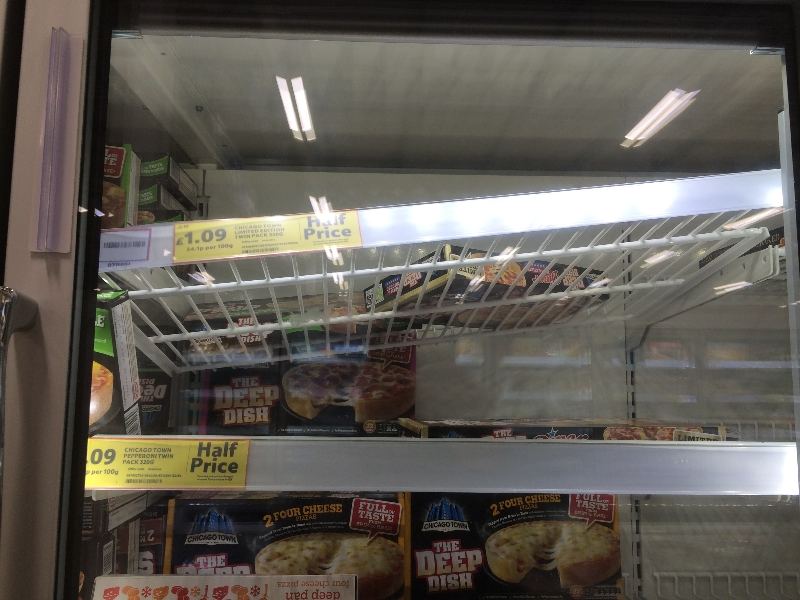
Good value being driven here, but it's the double insult of a promotion being virtually out of stock, regarding the shelf collapsing, I have no idea what's gone on.
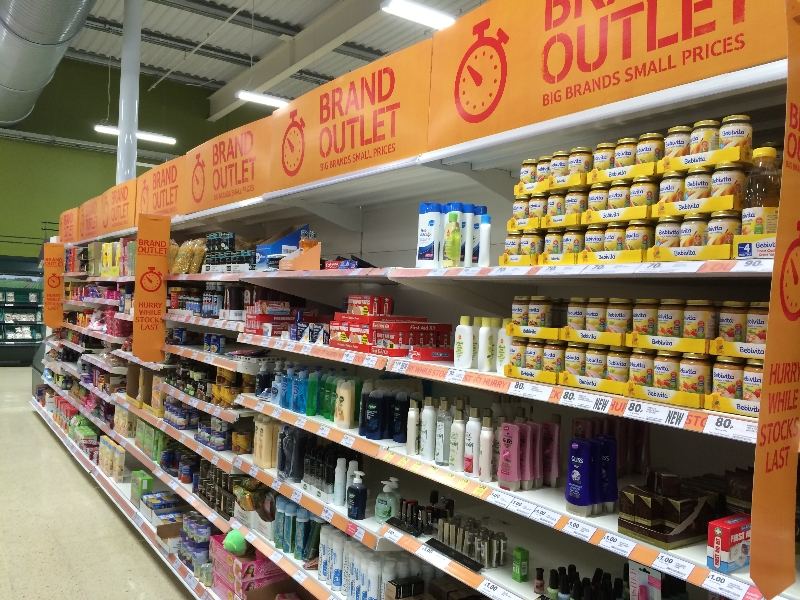
Where the other retailers concentrate on fighting new competitors such as the discounters and indeed; B&M, Home Bargains, Poundland et al by differentiating their own offer. Tesco don't like chains encroaching on their turf, and have developed the brand outlet to replace their £/£2/£3 shop they used to run.
The benefits are two fold, 1) it uses up excess space which is crucial in the over spaced Tesco world and 2) It does tick a box for shoppers who are value conscious.
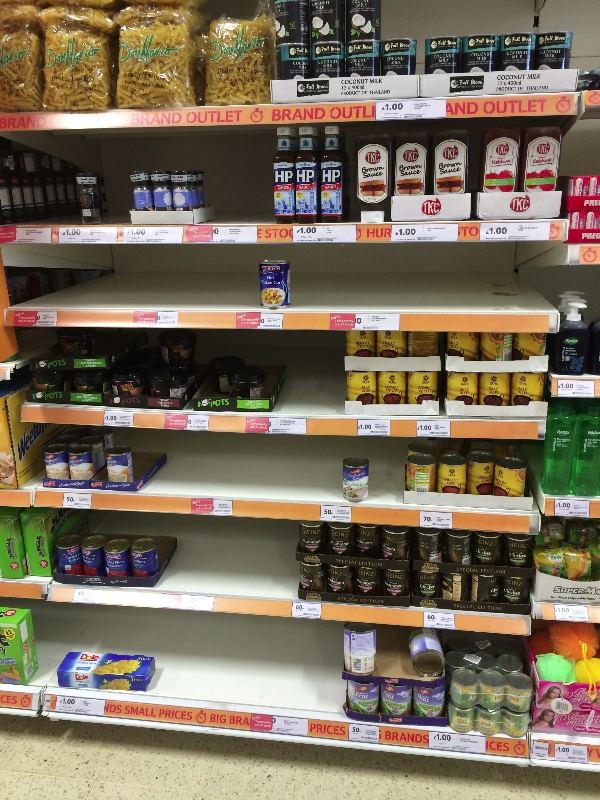
Clearly on the core range it's popular, this bay is evidence of that so the new range works, however you wouldn't get that level of availability in Poundland - so things need to be sharpened up.
This SKU is great, the specialist 5 pack of Walkers competes directly with Poundland, matching their price here.
However, it doesn't compare to the core 6 pack line sold in the Crisps category - the location where your average customer will go to each shopping trip.
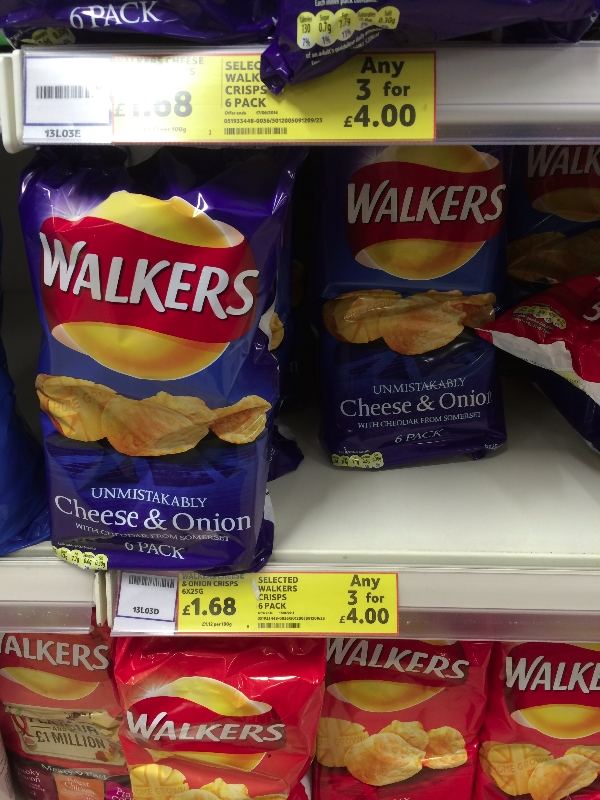
For an extra bag, the product within the core aisle costs you an extra 68p. There is a promotion but this only takes the cost down to £1.33, still an extra 33p for the extra bag, but you've spent £4 to achieve this price per bag.
Per bag, the 5 pack in the Brand aisle works out at 20p a bag, whereas the 6 pack (core line) works out at 28p a bag.
Tesco are effectively competing with themselves here, with the issues not ending on Crisps.
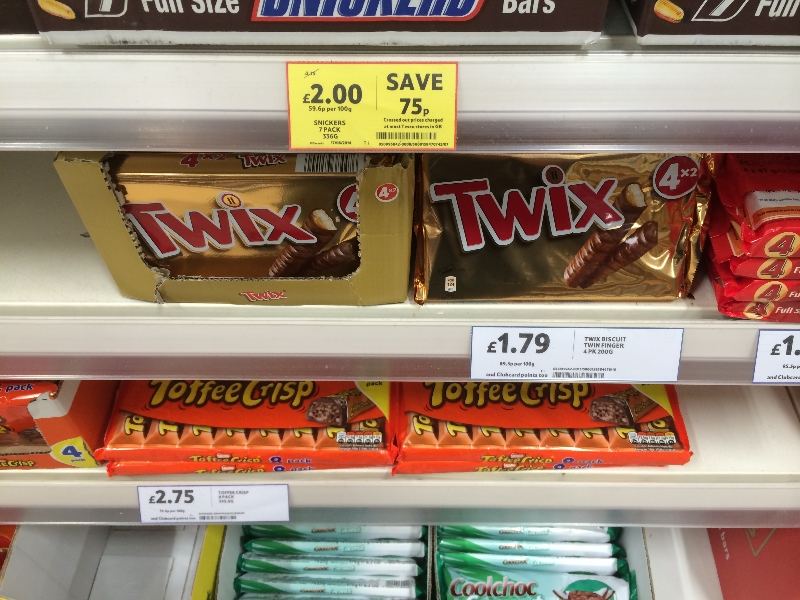
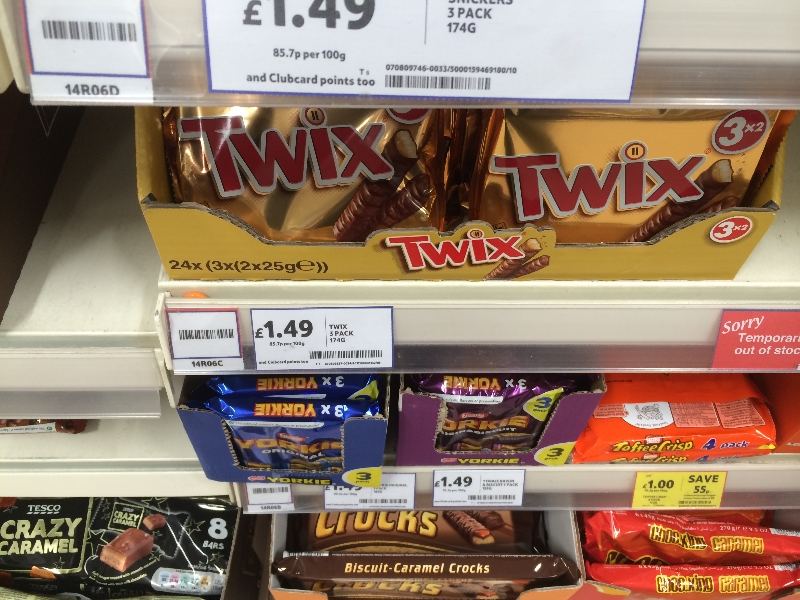
Not to continually talk about ranges but there are more decisions here that just do not help the customer.
Twix 4pk and 3pk on the same shelf with a 30p differential, these sort of range decisions lead customers to think they're being taken for a ride. They don't have time to calculate the price per bar, nor the inclination to do so.
Consider the market leaders (according to Kantar at least) Aldi / Lidl who thrive on a simple model, a basic 1300 SKU range and then consider Asda with their 'less is more' strategy.
An easier shopping experience is vital for today's customer and range plays a huge part.
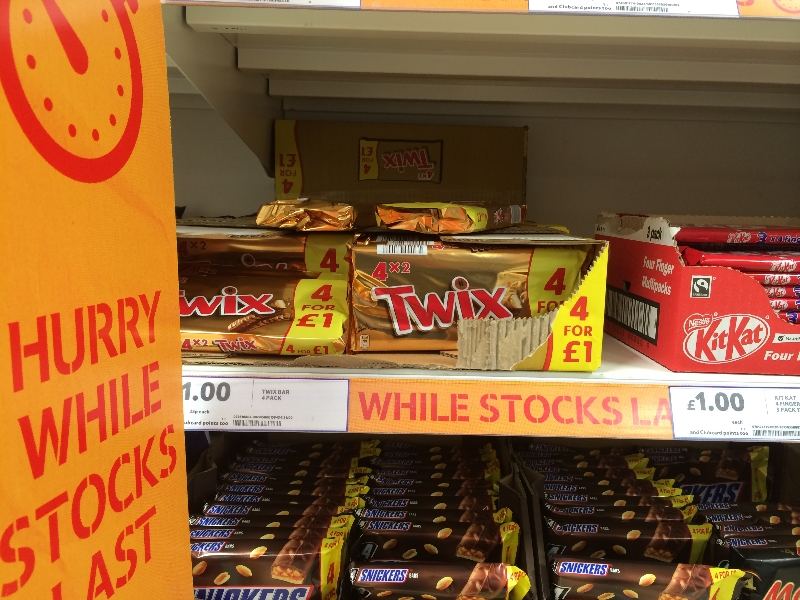
While stocks last but here's another Twix SKU; if you visit the confectionary aisle each week, you'll pay 79p extra than the £1 via brand outlet. Hardly rewarding loyalty.
They manage to have two identical products on the system by selling this price marked, thus meaning it'll have a different barcode.
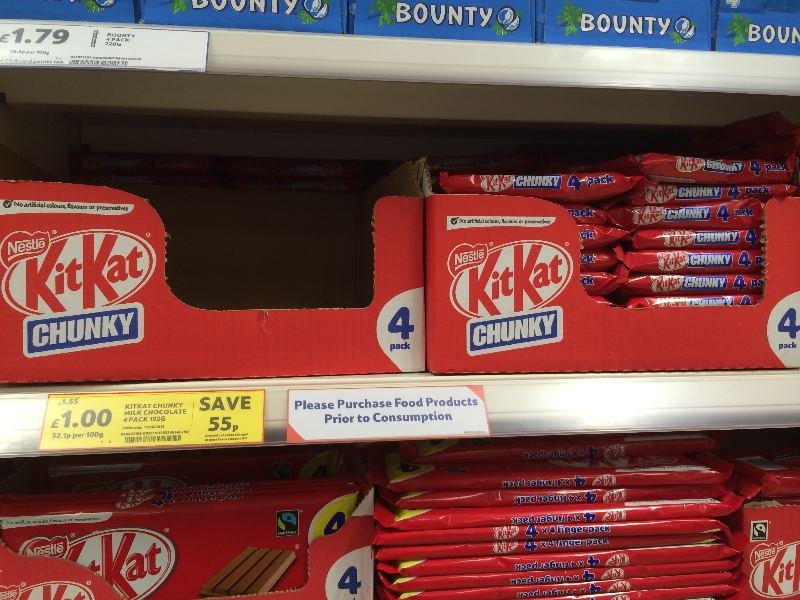
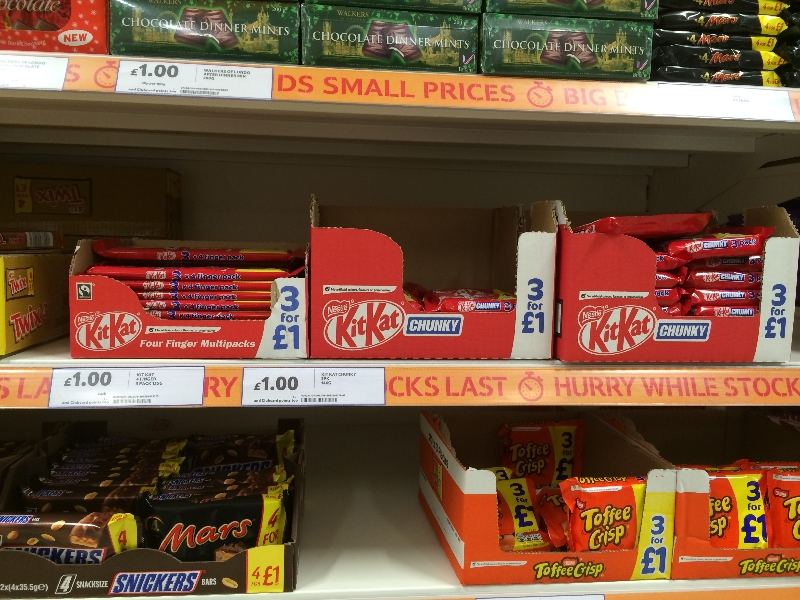
The presence of a special offer means the larger 4 pack is better value than the special 3 pack brand outlet stock.
Typically, the 3 pack would represent better value as its 33p a bar, but a good example of EDLP pricing fighting against promotional within the same store.
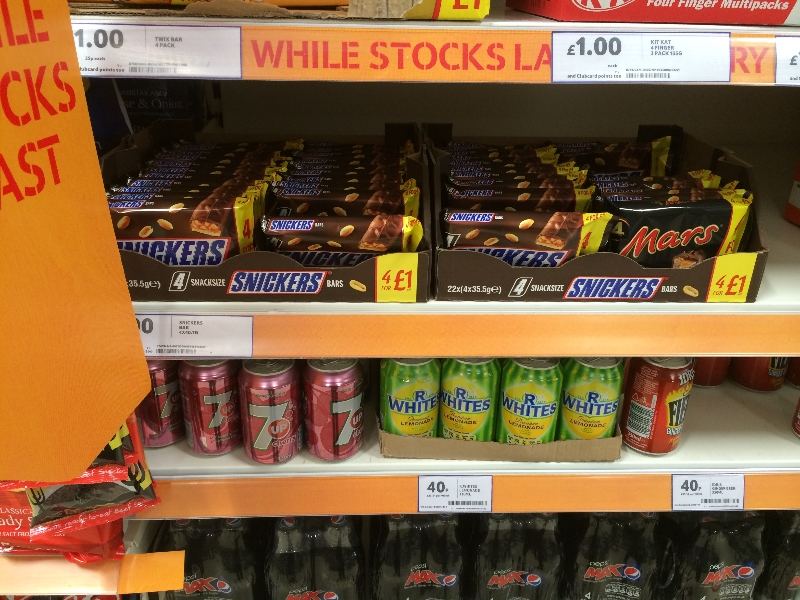
Confusing, keeping the range to generic / tertiary brands would make sense for customers. Cans of 7up Cherry and R Whites are good examples of this.
The current confusion within brand outlet damages price perception and indeed, the value proposition.
It's clear the discount range has a part to play, but not at the expense of the core range. Rewarding loyalty is much more than extra Clubcard points.
From the Grocery Insight newsletter archive, first sent to subscribers on 12 June 2014. Steve now writes at read.groceryinsight.com. See also the blog archive and briefings.