Tesco Ireland - turned the tide?
9 October 2017
COMING UP
Now: Tesco - Cuts in Ireland
Soon: What about Wilko?
Later: M&S - Did the lack of a sale impact food?
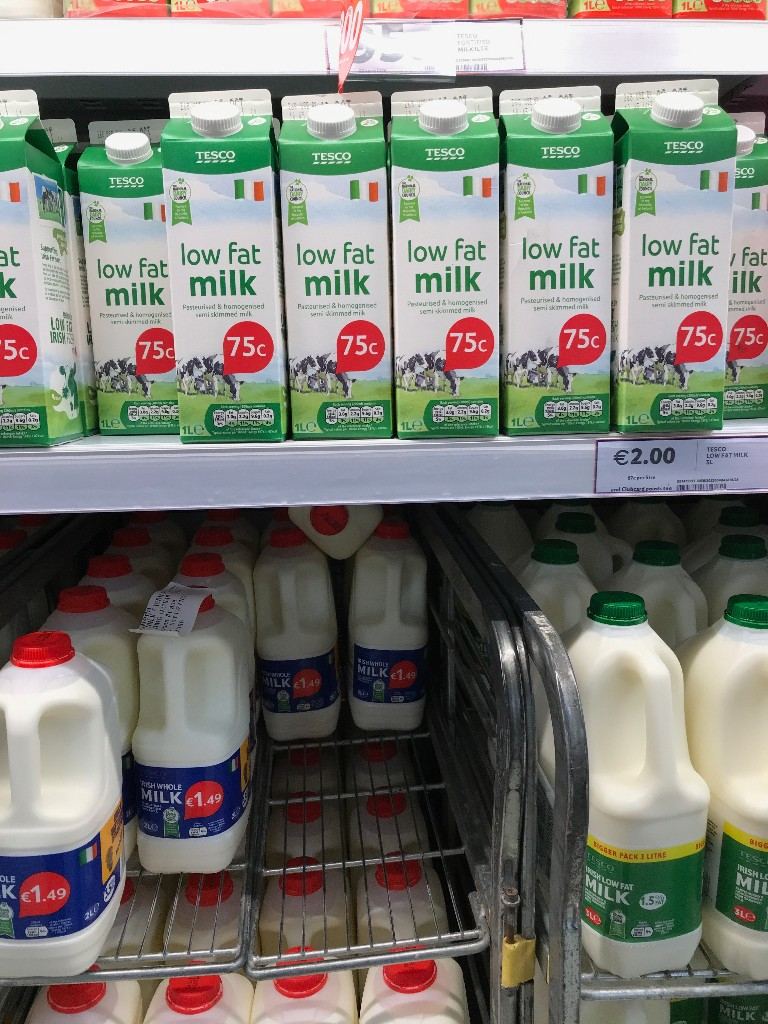
How long before this comes to the UK business? Or has Brexit scuppered any attempts at this in the short term?
Having spent two days in Ireland after visits in 2016 and 2016 (Ryanair even had a pilot for us!) The improvement in Tesco Ireland is unbelievable really, they have turned full circle and improved beyond belief in many respects.
Stores are sharper, events are infinitely better, the supplier signage has been reduced and they've rode nicely on the back of the UK initiatives whilst not adopting everything either.
Of course, the business came from a shockingly low base, where the UK struggled in the market, there were greater woes in Ireland. Regularly battered by some -7% like for like with volumes also heading in the same way.... It wasn't great....
Discounters have run amok for years in the Irish Republic and Lidl are larger than Aldi certainly, with two other main competitors alongside Tesco in Dunnes and Supervalu... It's a very competitive market.
But aside from standards and the general improvements on Produce and Meat, what about the 800? What does it all mean?
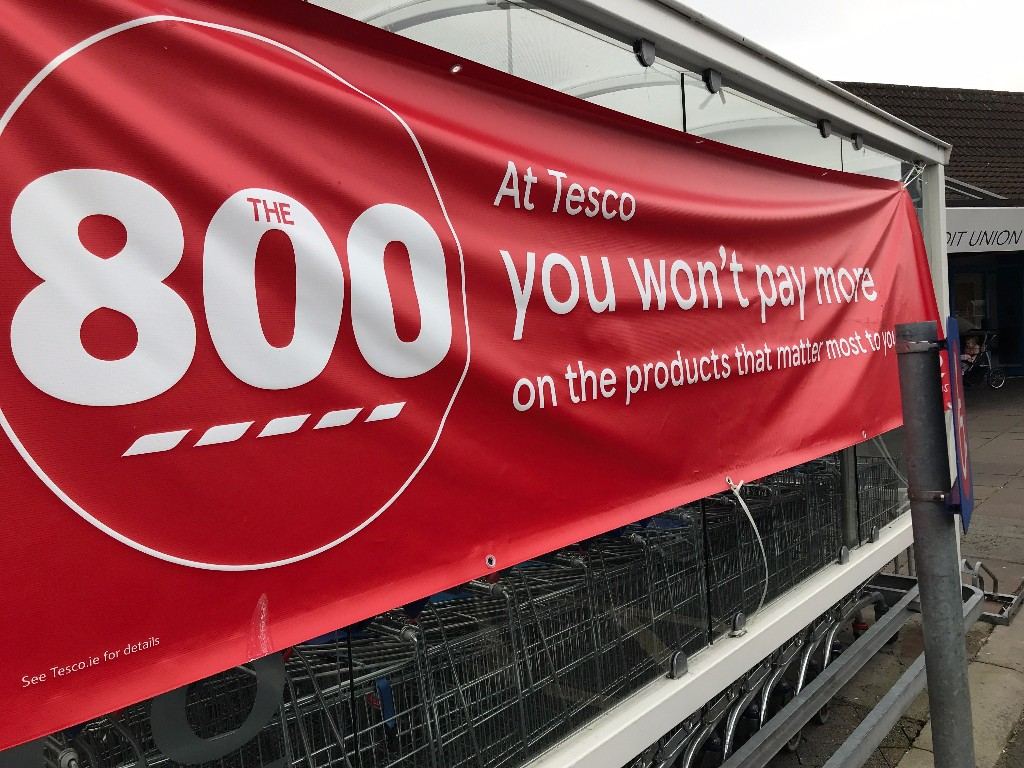
Well, it's basically a list of important products that customers recognise, via research from Tesco. Therefore Tesco have picked these items to highlight as being ones that you 'won't pay more than the market price' at Tesco.
'Market price' means and includes discounters, the 800 do include some brands (overlap with discount) but it's predominantly own label. Which sidesteps the discounters comparing own label vs. brands quite nicely.
Tesco have been working hard on price for a while in Ireland, an explicit campaign at the shelf edge, flagging value with 'prices staying down' - informing customers how long the prices have been kept down was evidenced in 2016.
But "Prices low for 15 months and counting" then starts to become a bit unbelievable, especially with inflationary pressure, so customers start to disbelieve it as the months continue.
Broadly, the message remains the same, the nuts and bolts remain the same, however the main difference is the campaign execution at the shelf edge.
The 800 is a list of products that customers have rated as important, the 'market' is no more expensive under this Tesco guarantee, which means that Aldi and Lidl are included too.
It brings a level of reality to the investment undertaken by Tesco here, and also adds a layer of 'choice'. As in, the customer is being listened to and their favourite products remain low in price.
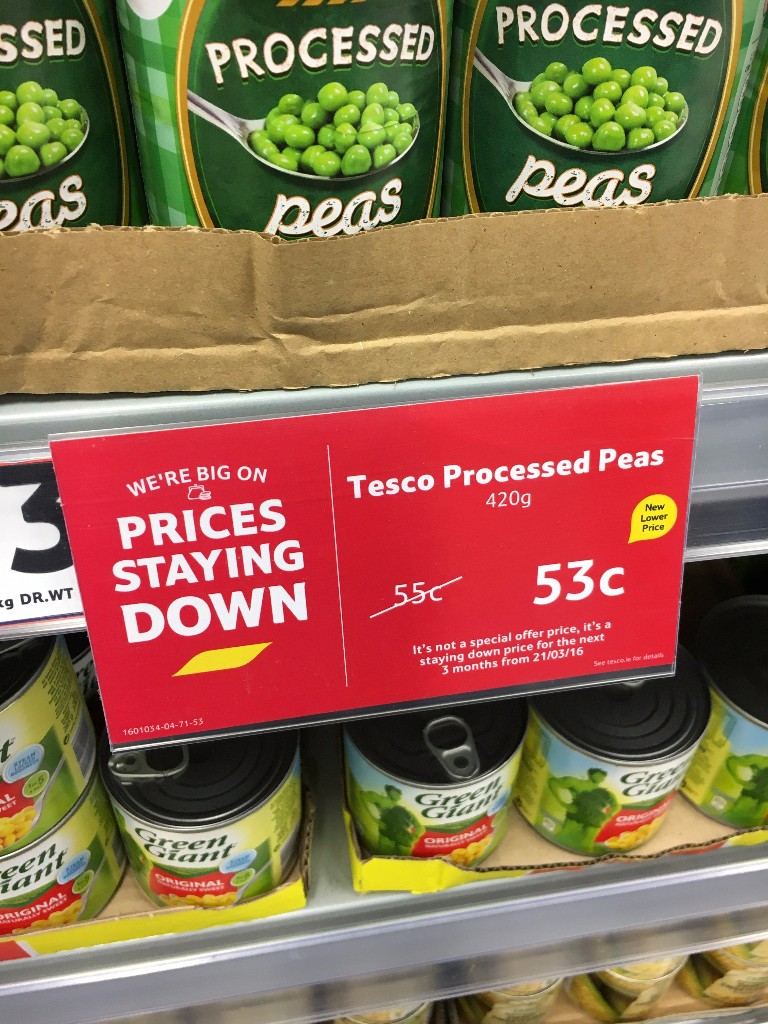
In 2016, signage reflected the price cut and this was a prime example of where Tesco Ireland followed the discounters in, cent by cent.
This particular line was down for 3 months at this price, but it became clunky on the signage and wasn't necessarily giving Tesco enough credit for their work on price...
How many months do you continue with low prices at the shelf edge? Before it becomes wallpaper?
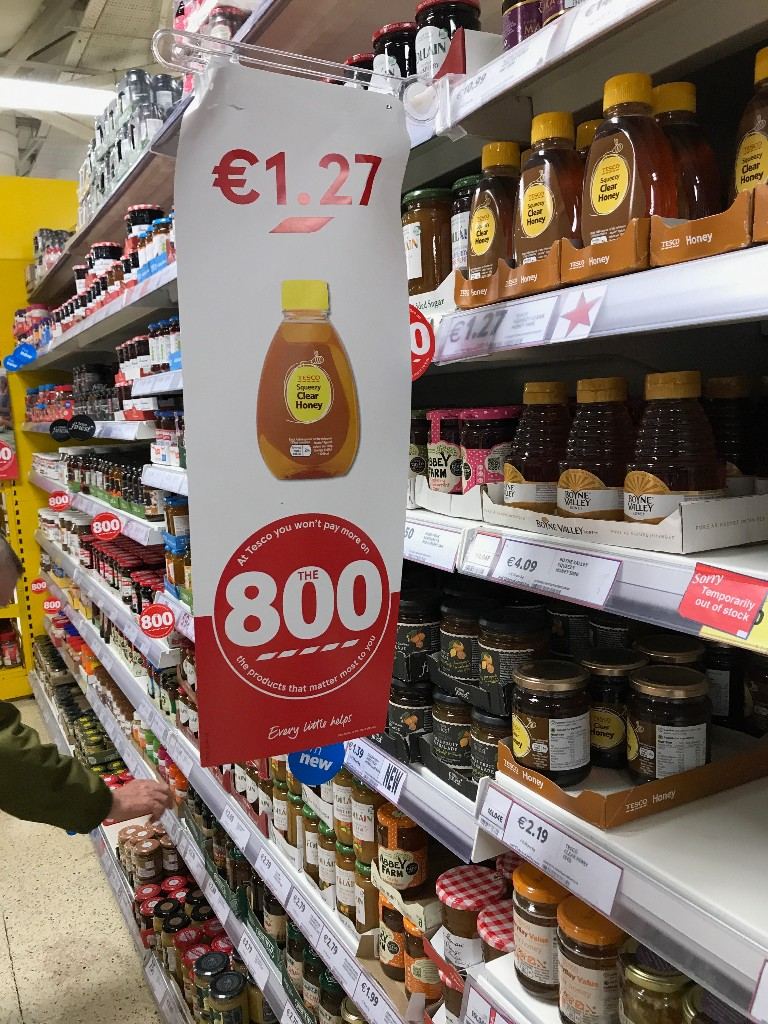
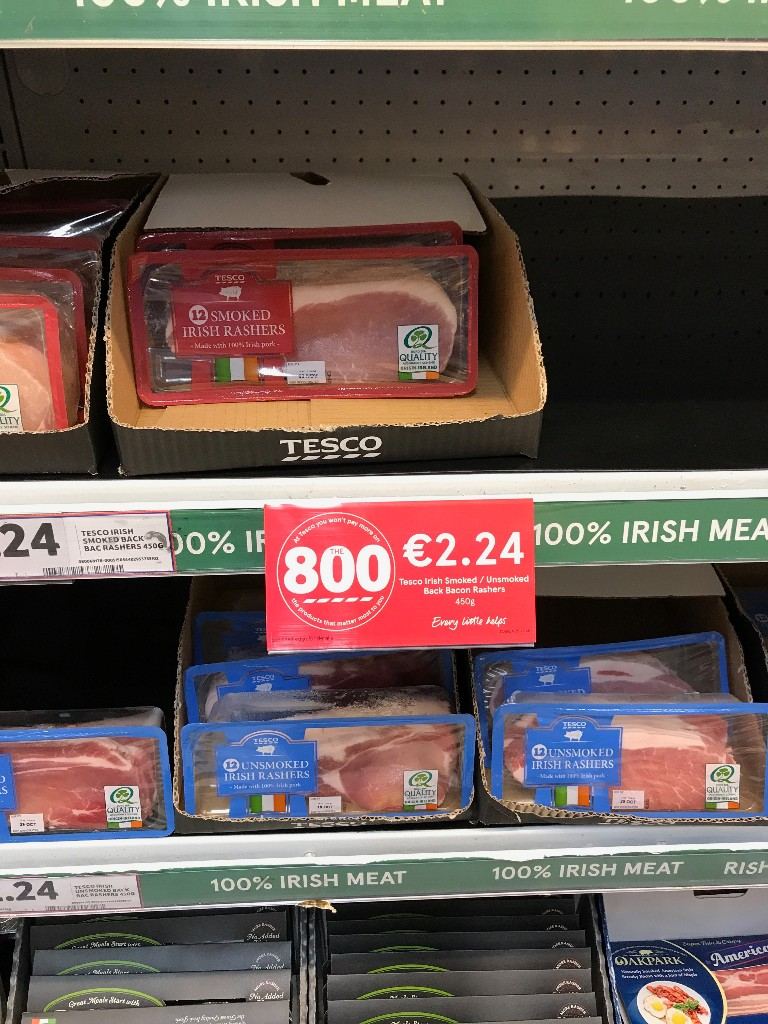
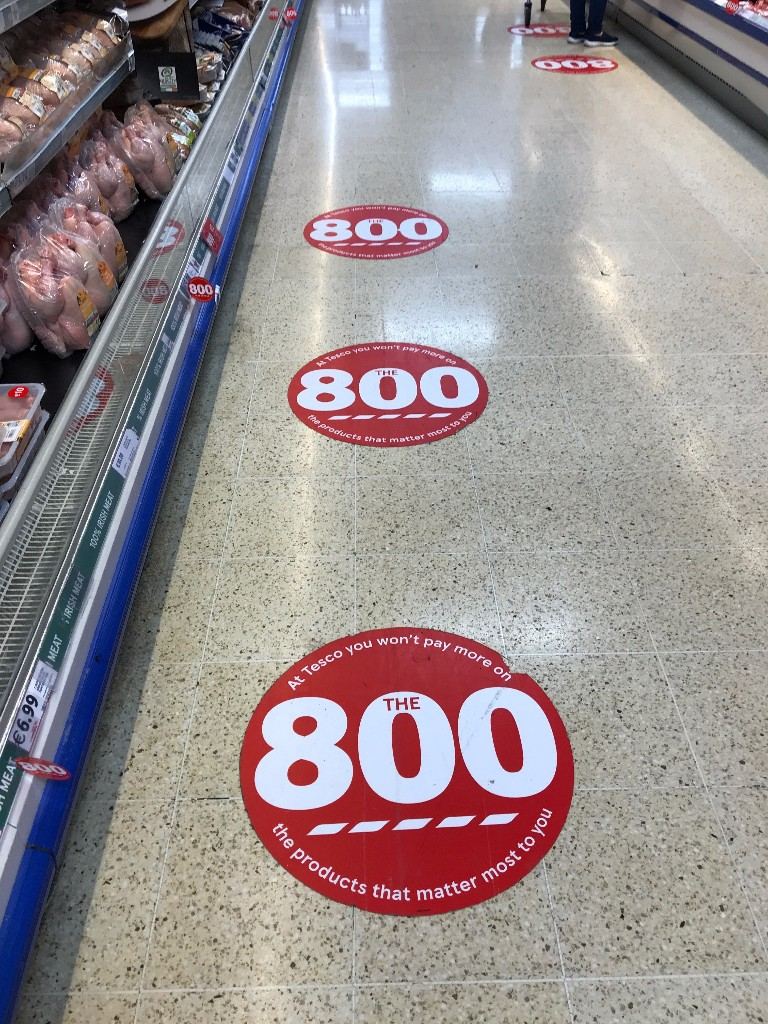
With the 800, the customer walks the store and sees numerous price messages. Floor stickers, flags, bubbles on the shelf edge and some barkers (larger signage) to communicate that this product was one of the 800 etc.
Given the discounter focus, unsurprisingly, Produce and Meat are heavily focused upon and there has been other work, alongside price to enhance the offer.
Better signage across the fixture, better packaging and provenance work all help to aid the quality perception and drive trade in to the Meat category, alongside Produce too.
Both very strong discounter based categories as we know.
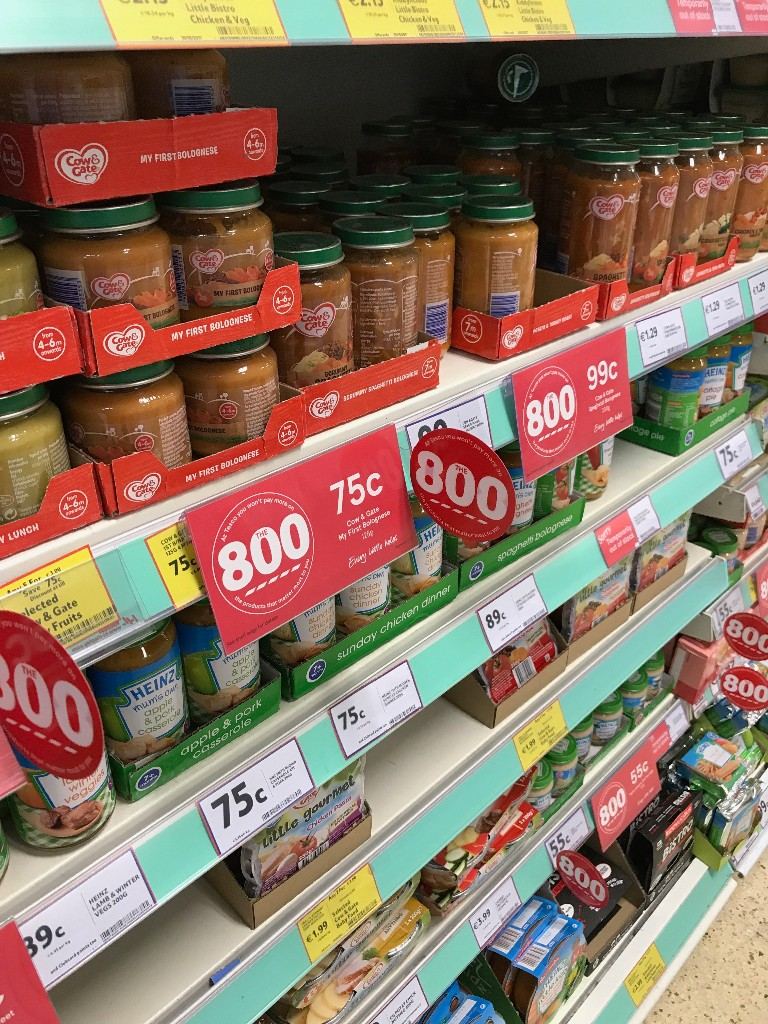
Baby is another category where discounters perform well, their lower prices hep families who can guarantee their shopping bill remains at a stable level, away from the 'hi/lo' prices that can be found in other retailers.
Therefore to see Tesco competing within Baby, or customers saying that some of their favourite products are within Baby is no surprise. Particularly as some branded lines are ranged by discounters, which can make the comparatives easier for customers.
Signage was strong in the fixture as noted above, lots of coverage for the '800' and the prices at the shelf edge highlighting the 'you won't pay more guarantee'.
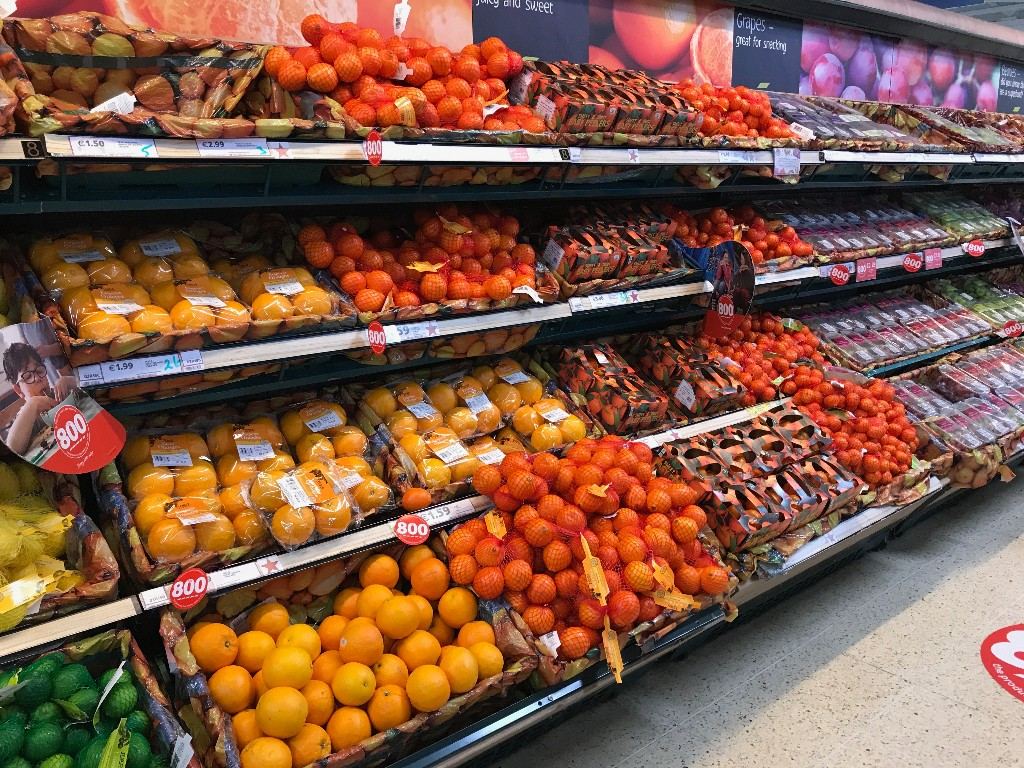
Produce has been dramatically improved since my last visits, a lot of the improvements are simple - made by creating abundance with better fixtures and more stock in many cases.
Displays utilise printed crate liners (note the images of Oranges on the top crate) which help create further abundance and uniformity. Rather than just seeing another green crate....
The price message is very well weaved indeed here, throughout Produce, price is a key message. Both their version of Super 6 (tables at the front with a leading price message) and also the 800 everyday low priced products around Produce too.
The quality is there to be seen, the category drives a great first impression, certainly in the 2/3 stores I visited.
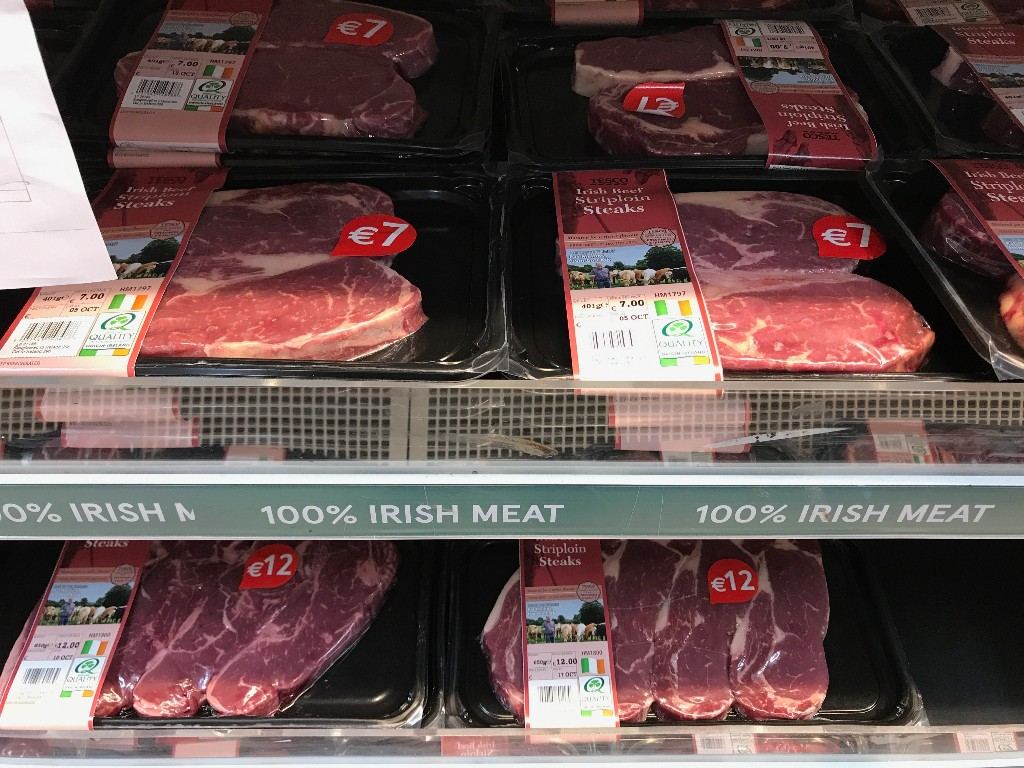
Meat is another area of core strength, driven by the market requirements but also the strength of discounters here.
We know how good the discounters are in Meat and Produce, especially when you consider the emergence of Tesco 'farm/fresh' brands which basically catered for the discounters tier and matched up to those on price.
Tesco Ireland are strong on quality and provenance, but also operate very simply around price points within Meat for example.
Offering 3 Steaks in a pack for 12E, or 2 Steaks in a pack for 7E means that customers are able to shop the category with confidence and find the prices shown clearly. This is replicated around the category, Chicken, Mince, Pork etc all have the same framework.
It pushes back on discounters, but also is a lot about 'self help'. Tesco have sharpened up on price, but also on product quality, range and packaging to enhance their overall offer.
It's never just about price, after all.
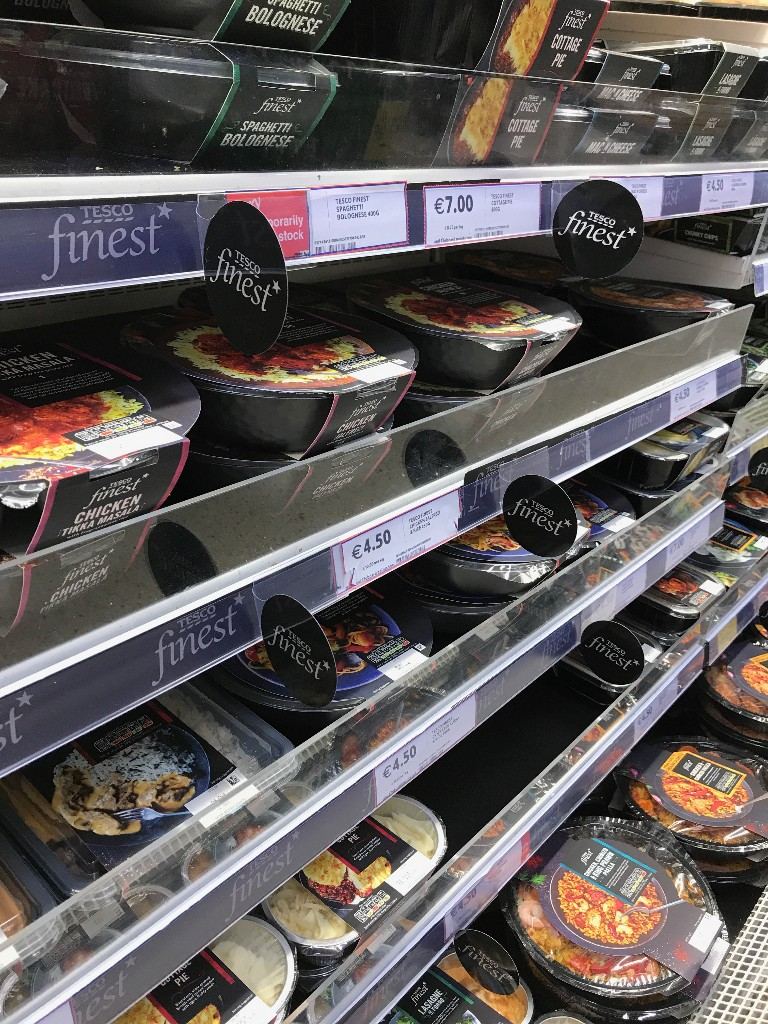
Whilst the volumes have to move, and rapidly when you deflate yourself in such a way as Tesco Ireland have... The margin is a consideration as Tesco look to recover things in Ireland as a wider business.
Highlighting the premium range across the store is one way and it's cleverly done with small bubbles around the fixtures showing where the range lives in fixture. Bakery is sharper and features a focus on Finest, as do other areas too.
Discounters are very strong on premium themselves and Tesco match up to some of these lines with their own products at the same price.... But driving margin when the customers are in the door, and saving money is more compelling for customers than sticking Finest up everywhere as Tesco UK did in 2013(?) at Christmas.
With Tesco Ireland having their best quarterly like for like sales performance for 10 years last week (Q2 17/18), it shows their plan is both working and also that Tesco have come out of the other side of deflation along with the volume shift.
For anyone looking at this plan and thinking it's perhaps as ''simple' as picking off a number of lines, price matching discount and sitting back and watching the money roll in.... They have to think again.
Any such campaign has to be believed, if discounters are going in to Gravy at 15c, then you have to follow them in and be relentless. There can be no worried faces when you realise you're selling Gravy at -5% margin.....
It's not forever and it's for the greater good. You have to reduce range accordingly so as to ensure the benefit of volume based retailing is achieved (enough space for quick sellers) without compromising choice / assortment.
There is no need for confusing promotions to be overlaid over the top, indeed, it seemed very clear to me that Tesco Ireland have borrowed the UK 'yellow/black' signage for any promotion but left their 800 as their leading message.
Therefore, it's a long term play, they've been on a journey for some 2.5 years, perhaps slightly longer before getting to this position.
All credit to them, it's the first real discount neutralisation we've seen in the modern market as everyone grapples with what to do.... It's painful, results can be erratic (forgive the rudimentary spreadsheet......)
But imagine if a UK based retailer were chugging along nicely with positive like for like results in 3 quarters of 16/17 but then had a -1.3% 'slump' over the Christmas period and in to Q4...
There'd be shareholder pressure and the legions of retail experts dumbing down the story to a mere case of black and white.... One quarter of decline and it'd be all over bar the shouting, time for change etc.
Whereas Tesco have had a longer term plan, the volume figures for ROI are not easily accessible for each quarter, but their investment over Christmas last year saw a volume upswing to counteract the loss in like for like sales....
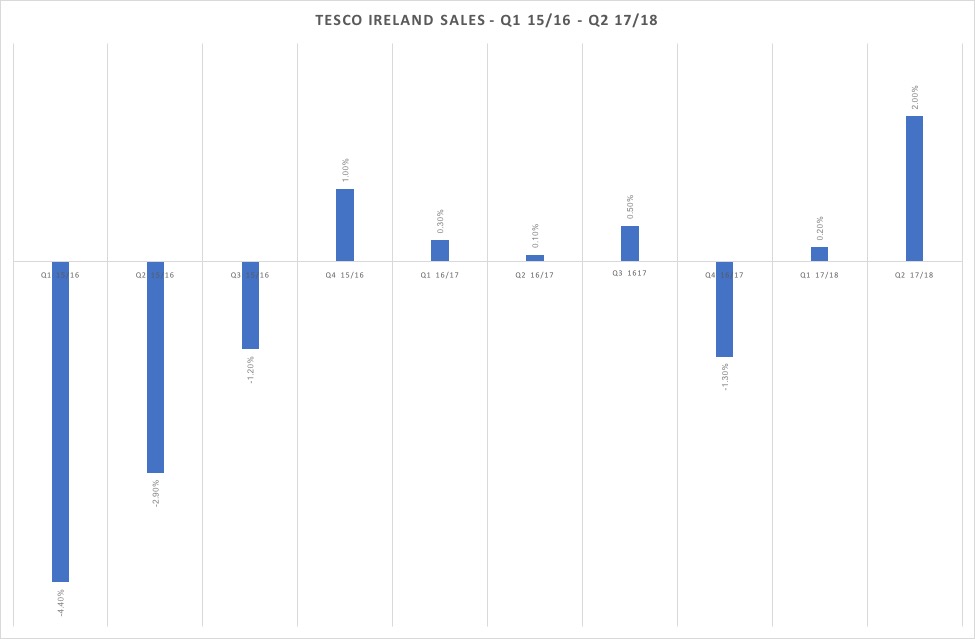
A longer term plan being allowed to play out? Not changing tack at the first sign of a bump in the road?
More long termism is needed, any retailer looking to imitate this approach, including those in the US would do well to study the chart above and recognise that Rome was never built in a day...
All very impressive from Tesco Ireland, arguably in a more perilous state than the wider UK business was, yet some three years on...... Things are radically improved in a business virtually unrecognisable from my first visit out there in 2015.
Crucially? They've done what was right for the customers and the customers have repaid them handsomely. The work never stops, price movements continue but Tesco will be there, following the discounters in on price....
A long term plan indeed.
From the Grocery Insight newsletter archive, first sent to subscribers on 9 October 2017. Steve now writes at read.groceryinsight.com. See also the blog archive and briefings.