Profits down, sales up at Aldi
26 September 2017
COMING UP
Now: Aldi - Profits down
Soon: What about Wilko?
Later: M&S - Did the lack of a sale impact food?
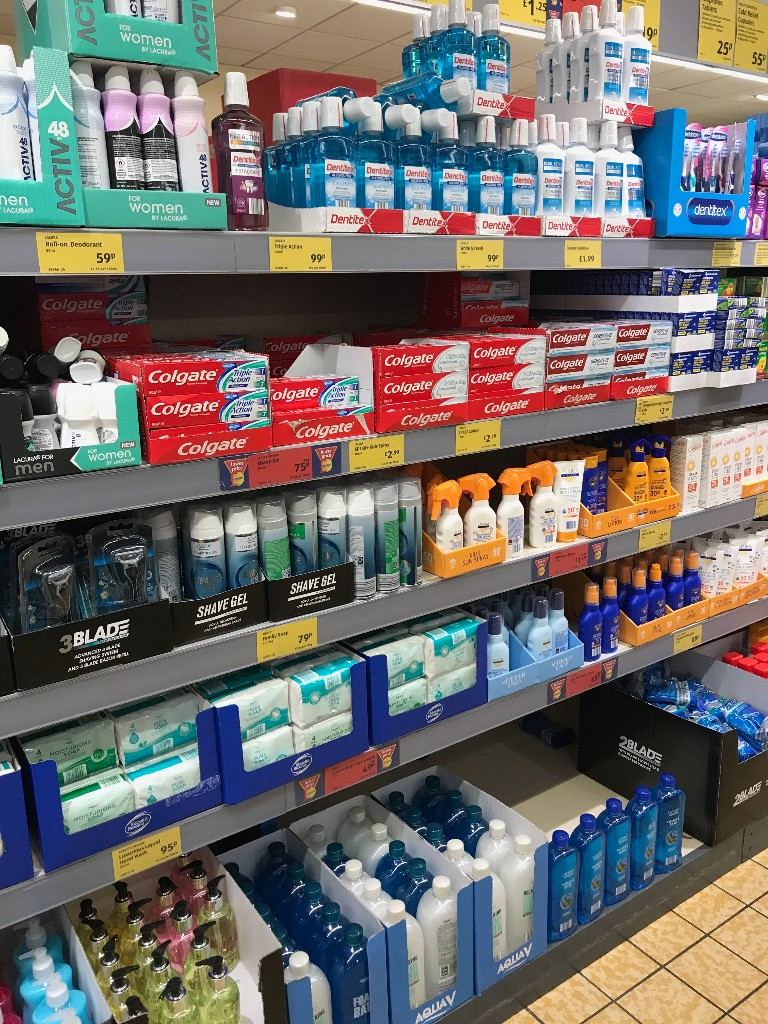
Lots and lots of positive PR for Aldi and as one PR professional once said to me, "how do you keep permanently good news relevant?" A good question and we as the British generally like to 'bash' those who perform well, like Tesco in the older days.
But not Aldi or Lidl just yet, why?
They're doing a grand job for customers with their award winning own brand products, focus on fresh foods, convenient store locations and generally being a customer champion.
They have forced the big four to change their mindset in terms of how they operate and overseen a step change in shopping habits too.
Yet beyond that, as an operator / insight person / consultant / whatever you term my emails and further assistance (should you buy it, and why wouldn't you?!) if we look through the lens of profitability, their news this week wasn't as positive as expected.
In fact, it was the same headlines as 2016, investment in prices meant their profits were down. Expansion etc.
Aldi are growing rapidly and that's fair, their capital expenditure remains high and they continue to commit to both extensions of existing stores and the reformat to the new 'fresh' format (as seen in Tamworth) and also opening another 70 stores too.
Kantar as a measure of monthly sales growth is virtually pointless now, given the rate in which Aldi and Lidl open stores, and indeed the skewing of numbers that the Co-Operative now suffer with, as they've sold off 300 to McColls.
Yet they get headlines for record growth, overtaking the Co-Operative, Waitrose and potentially 'the big four' soon, on a Kantar basis at least.
With like for likes repairing themselves (admittedly with inflation but after significant nadirs at Morrisons, Tesco and Asda), they look over the worst, larger stores do sell more range which works for them, but also have higher outgoings in terms of staff cost and also the wider store estate too.
So for Aldi to be considered in the league with the 'big four', surely their profits have to come along with that. A margin fall is never good news, but Aldi have had to invest in price like the rest of the market, to keep inflation under control. This is why we have yet to see a real challenge around customer spending and inflation, it's happening but in selected categories.
For Aldi to note inflation as a reason for lower profits seems odd, it's a factor but everyone else has had to manage this too, would it really impact the year's overall number? They were aggressive last year too (2016 statement said the same, surely it's a given in food retailing?) Refits and CapEx certainly would impact, but again, this is spending that is costed and not unexpected given the Aldi ambition and indeed, their model demanding more and more stores to make the numbers work ever better.
There is perhaps a 3rd factor. Increased costs. Not necessarily staff costs (although living wage implications...) but their costs to operate. They are carrying more products, they may stay true to their 1750 (ish) products (if you were to count labels) but there is significant deviation in the wider store operation, certainly when compared to say 3/4 years back.
Special buys in the centre of the shop are increasingly used to trade more products akin to B&M and Home Bargains, with brands added there, even if they don't necessarily align with the events they are running. They haven't been stung with clearance in the same way they were at Christmas, some two years ago but they still have a fair old amount of product floating that requires clearance.
They have added best before codes on pack to Produce, presumably to fend off concerns over quality? Or to provide a customer with a better handle on shelf life?
Some customers I speak to have commented on Aldi produce as 'going off as soon as you get home', so is stock turn a concern? It wouldn't have necessarily been an issue in the past, but as Aldi cannibalise their own sales (intentionally), this can reduce the sales rates and stock turn in other stores....
Adding date codes is a good, customer focused move but comes at a cost. Produce that is going out of date needs to be marked down, so this incurs cost to the store budget. 'lost' sales value.
Aldi rapidly growing fresh ranges definitely add sales, but also add waste from a store perspective too.
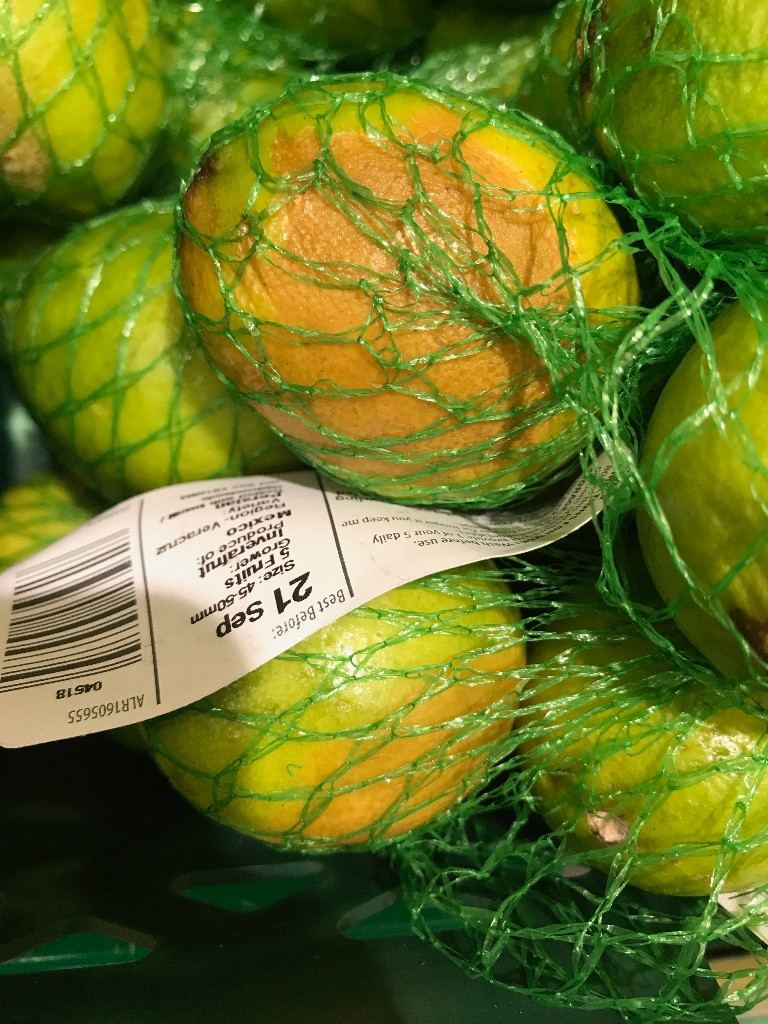
Pic taken on 21st September, a good example of what customers were finding. Produce on the date of expiry already on the turn. It could be a bad batch perhaps, but still doesn't help any wider quality perception.
Consider that Produce is where a lot of work has gone in from a retail viewpoint on price. Apples are Apples after all, so any own label dominated category can be easy prey for discount, as they can bring their own brand in and happily compare prices.
Look at Farm/Fresh Foods brands from Tesco, the chart that Dave Lewis always shows with his Meat / Produce categories been eaten by two unnamed retailers (hmmm)... It's easily comparable for shoppers, own label dominant so no brand confusion and is typically a 'price' rather than hi/lo offer based.
In the early days of discounters, they were significantly cheaper on Produce lines than the big four which helped drive a positive price perception. It was why Asda did price lock on so many Produce lines, and why Tesco then did Price Drop in the same way.
If you take the humble Cucumber today, it's 44p at Aldi as they establish price leadership in the market, however both Tesco and Morrisons are only 45p. Asda and Sainsbury's are then only 50p.
The gap is 6p at most, which won't force customers to go across the road, they may do given the price gap on other products, but for Produce, the gap is narrowing.
Quality then has greater importance given the price being nullified, and Aldi can be found wanting around loose produce in particular. These products were added in 2014 as part of their attempts to add choice after customer requests, without breaking their model.
They also added around 5 organic products which seemed curious, you either buy organic, or you don't.
Just buying organic Carrots but the rest of your pesticide coated Fruit&Veg just doesn't stack up.... Nor did adding loose Produce on selected lines such as Apples and Peppers, they're so low on price on pre packaged items, why would anyone buy loose produce too?
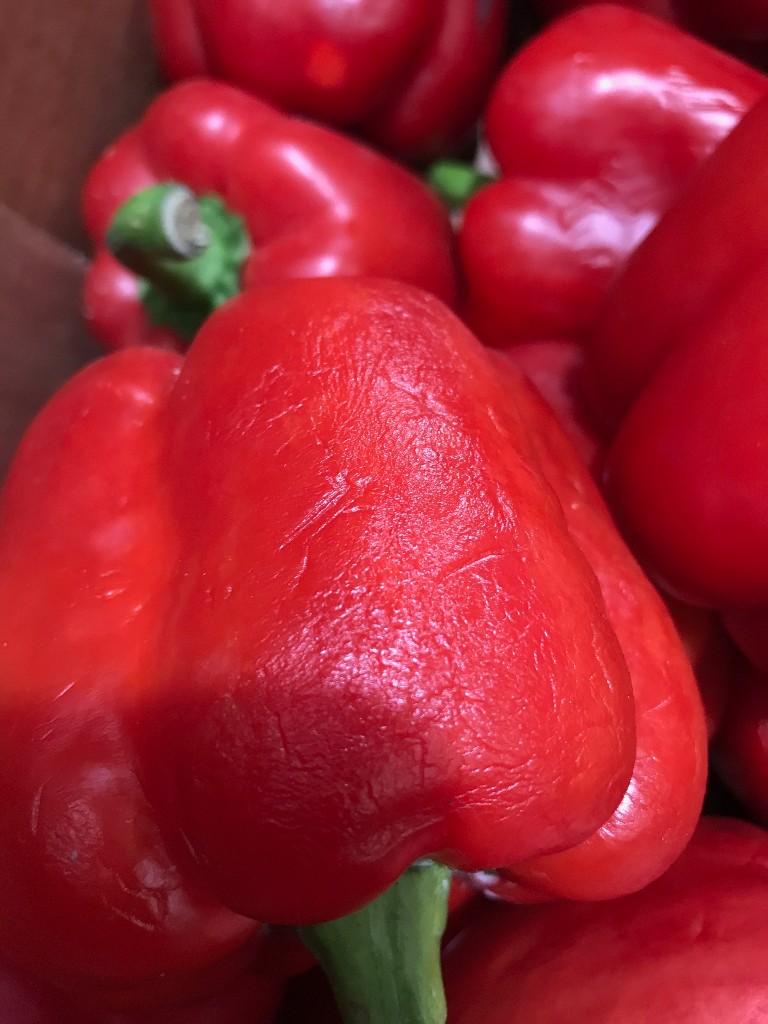
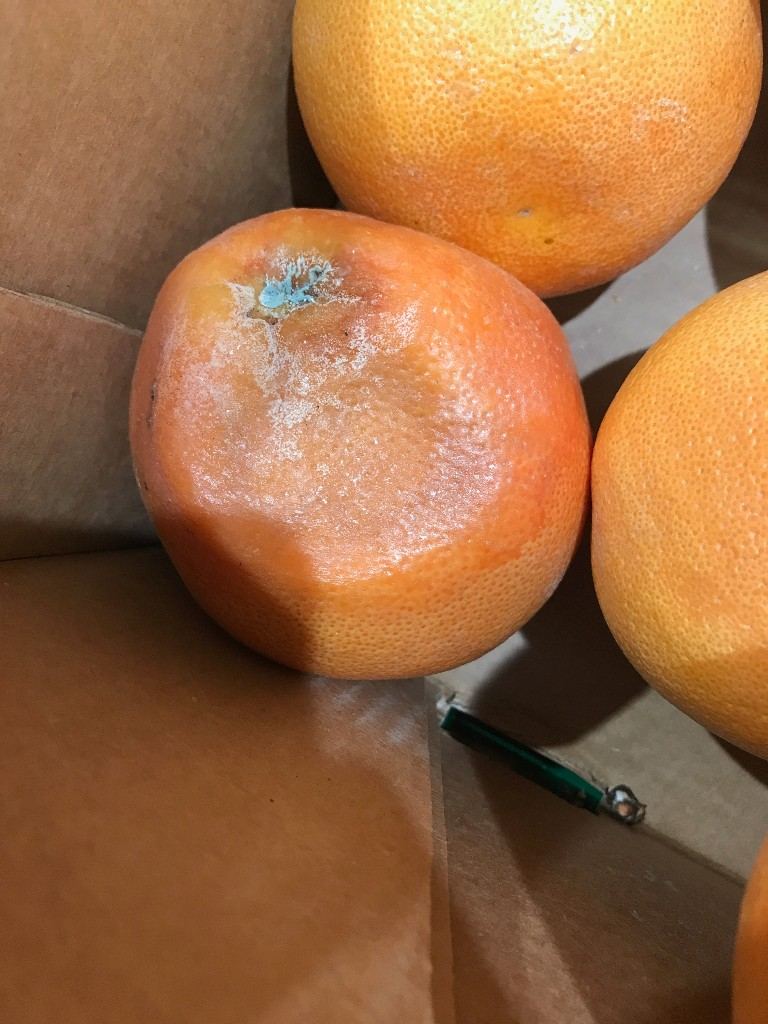
They won't be buying loose produce from this store, that's for sure. Very poor on the Peppers, these are way past their best and Grapefruits are beyond poor too.
It's an example of Aldi adding complexity, colleagues have to learn the codes for these products at the checkout and produce colleagues have to rotate the produce and also perform quality checks, ensuring poor quality lines are taken off.
This adds cost of course, both to the operation and also the store waste budget, any unsold, poor quality lines have to be accounted for.
You could perhaps find this in a larger supermarket too, but as a freshness gauge, there are more loose products around a Sainsbury's and Tesco which drives the perception the other way than 4/5 in Aldi...
Not good.
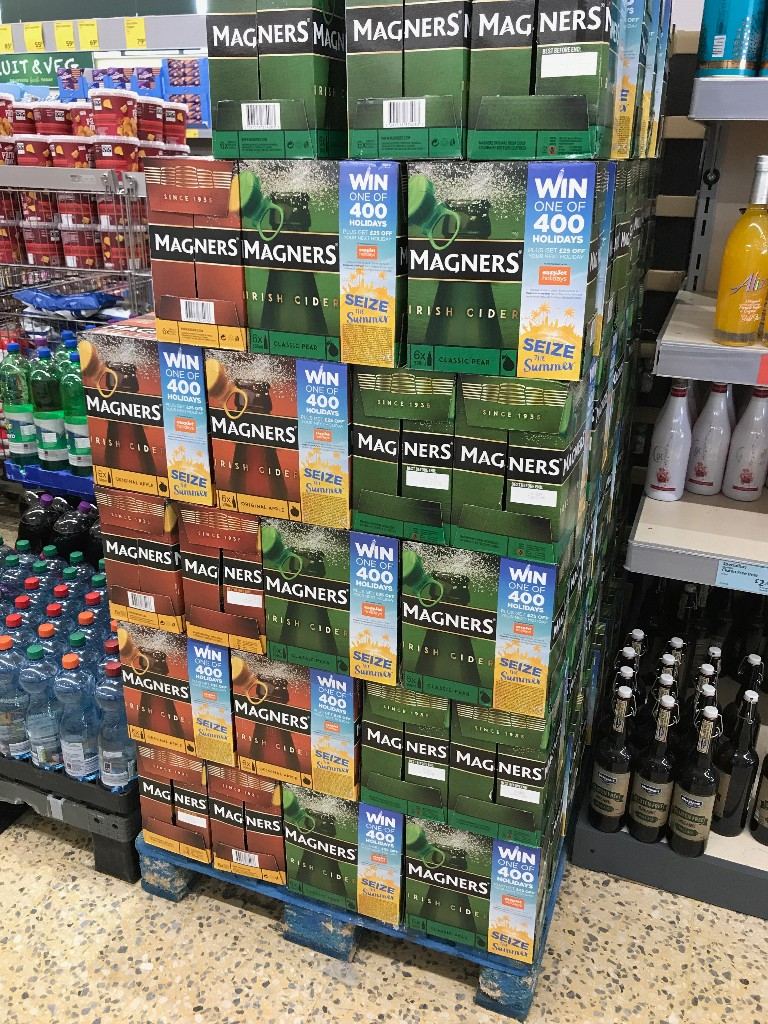
The brands are popping up in Aldi, we've covered this already with the emergence of shippers at the checkouts, allowing Aldi to trade brands in a customer friendly way.
Brands are keen to work with discounters, we know this as they offer volume opportunity, but the chances of a permanent listing are virtually zero.
So the centre of the store becomes fair game and there are numerous examples of all manner of lines being added to drive spend northwards and entice customers to spend more with Aldi.
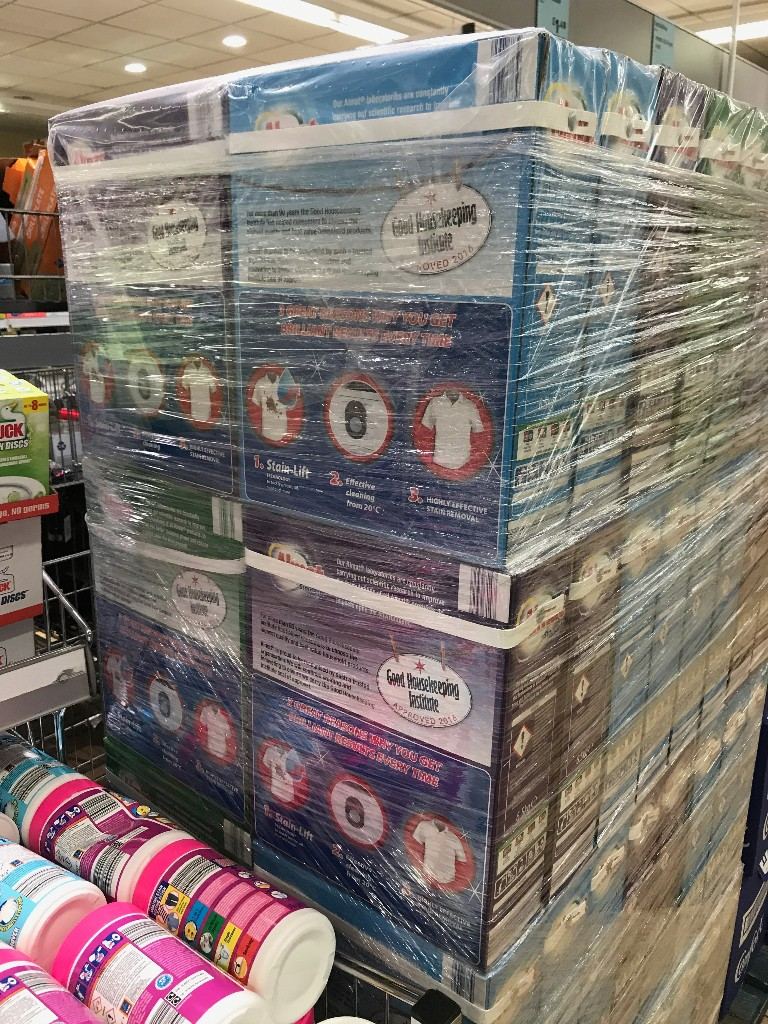
The Powder is own label admittedly, it's their larger pack size of laundry powder for the baby event / cleaning event perhaps.
Lidl trade 'XXL' packs heavily and Aldi are perhaps replicating that here to compete.
Unsure why the Powder pallet is gift wrapped!
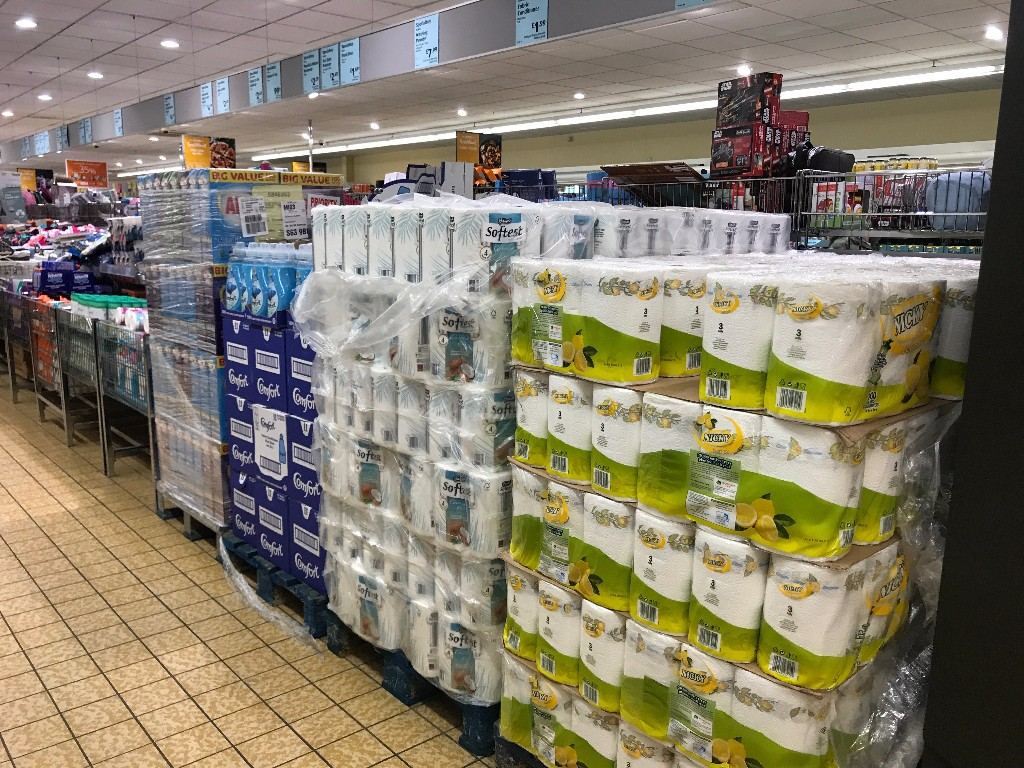
However they also have Nicky kitchen towels and Comfort fabric conditioner in their central aisle? Why? Seems odd to offer these when their own label is so strong....
Pallet displays noted, which shows the volume they're trying to shift. They have to stick to the rigid model within the assortment, but the wider specials area can become uncontrolled.
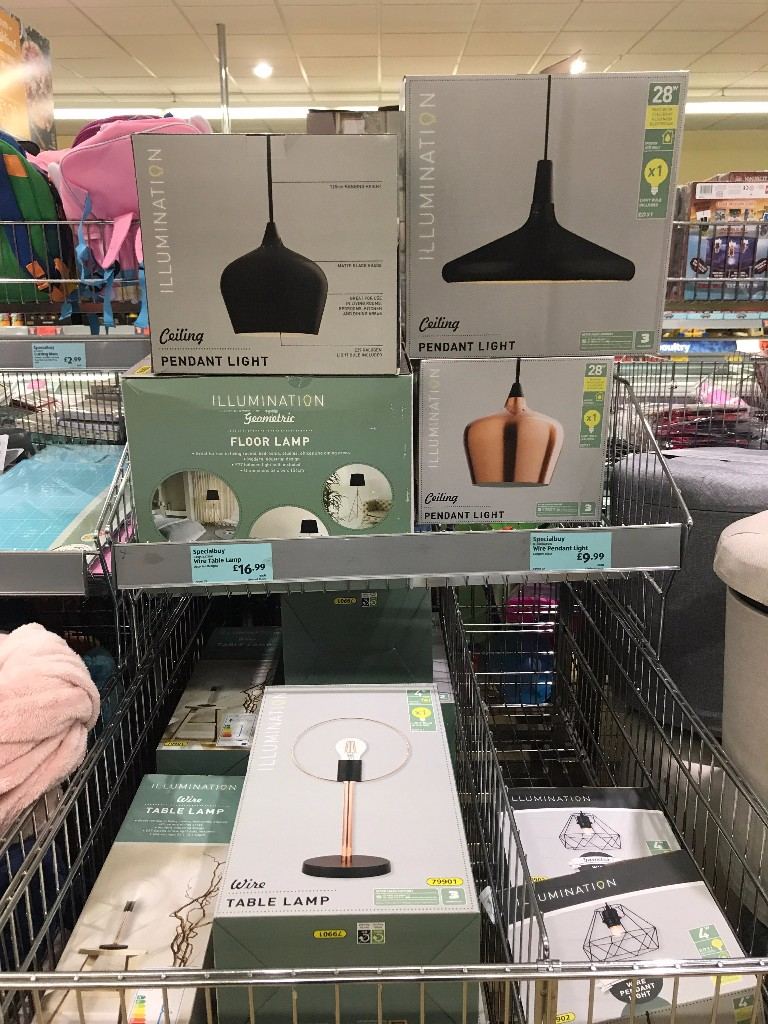
Their newer non food ranges have been good though, they have put some work in to the packaging and wider product too. These look strong but there seems to be a step change in the availability of these in some stores, there's a few products around in many stores.
Good margins and price for sure, but the clearance impact then to move it on hurts, plus with online services also being offered to customers - you can run the risk of shifting those sales online and away from the stores.
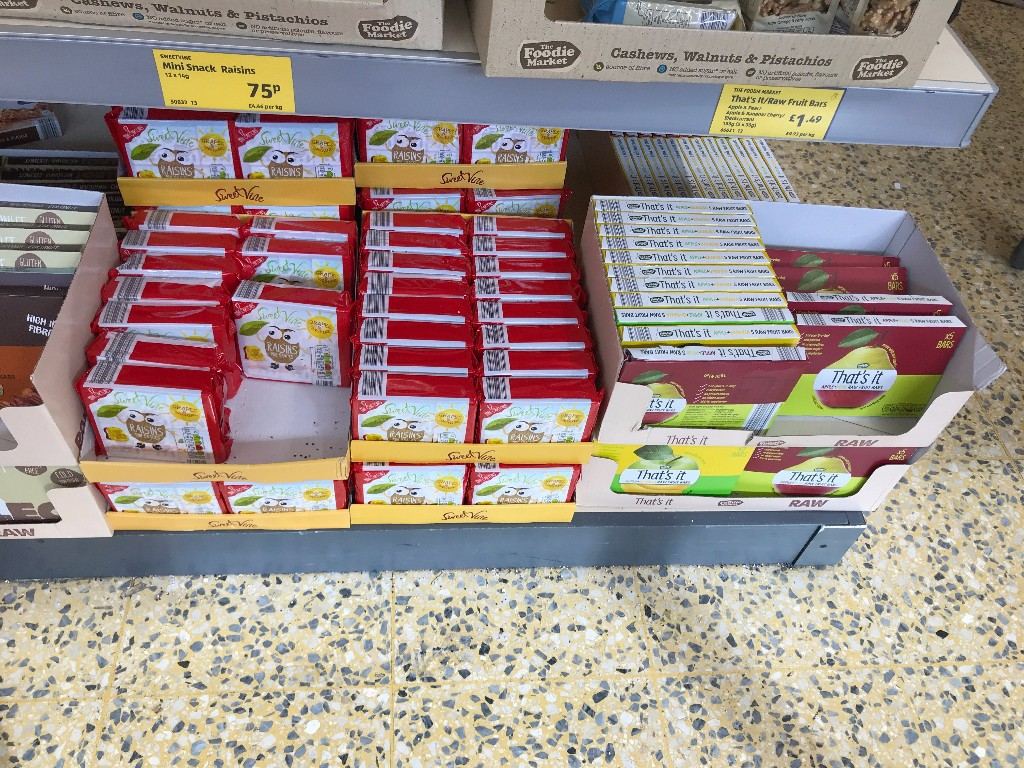
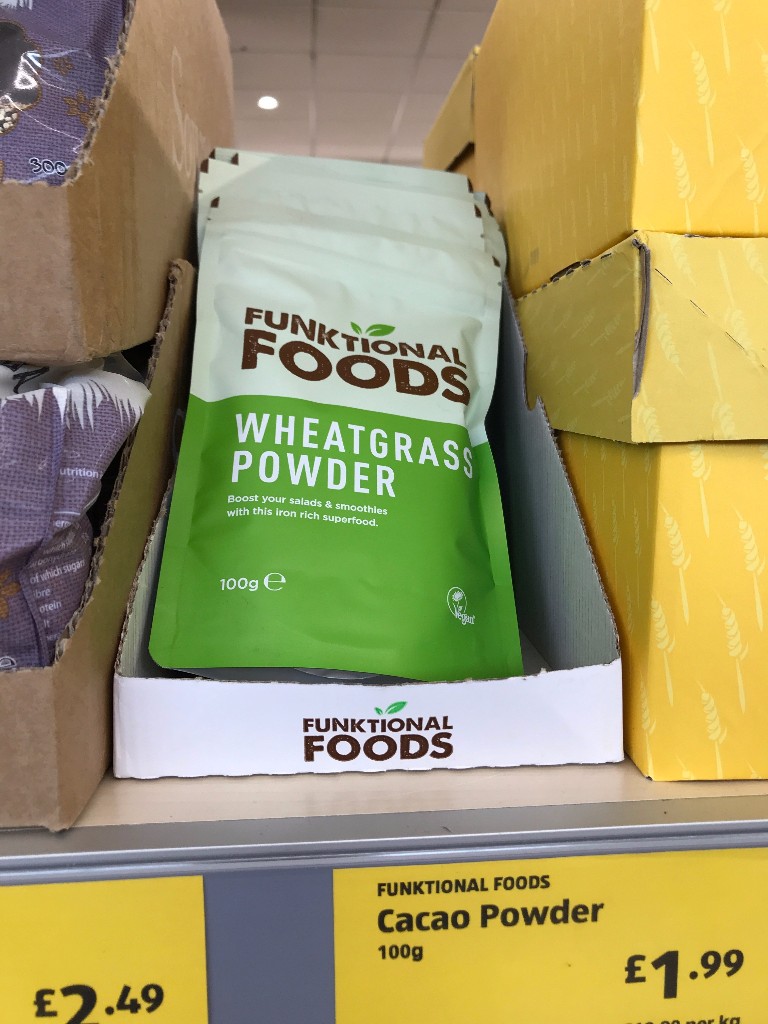
They appear to be broadly sticking to the range assortment, be it 1750 / 1850 if you consider the labels as a metric in which to count the products.
Aldi often have a huge range of Yoghurts, but 3 flavours will be sold under 1 label / product, inside one box which is smart retailing and one the larger mults could learn from.
They're close to trends too, and given their value strength will have customers beating down the doors for free from, health and other categories that customers perceive to be too expensive elsewhere.
Health foods are a good example of this, these powders are clearly 'on trend' given they've appeared in Aldi (and Costco, who only range on trend items alongside the core).
However in differing store layouts, they change location, older stores have these within home baking, whereas newer stores (Produce at the front) feature these products within Cereals.
The buyer will want to add more of these products, as there's a market for them, it attracts new customers too. So they start in Special buys and can perhaps be featured within the health event that they run.
They've performed well and Aldi have added a number to the core ranges, but lines will have had to come out to make room here... 1 in, 1 out.
Consider the rapid growth in Free From and Aldi have no hope of keeping pace, nor do they have the space so are limited to a special event to offer breadth on a non permanent basis, but their newer stores have a comprehensive range, but again, it's tiny versus their larger compatriots.
They can't afford to do everything, and one wonders what has come out to make room for these powders, or Paleo bars. Whilst important (and it's good they're looking at health) it does underline the limitations with their model at times.
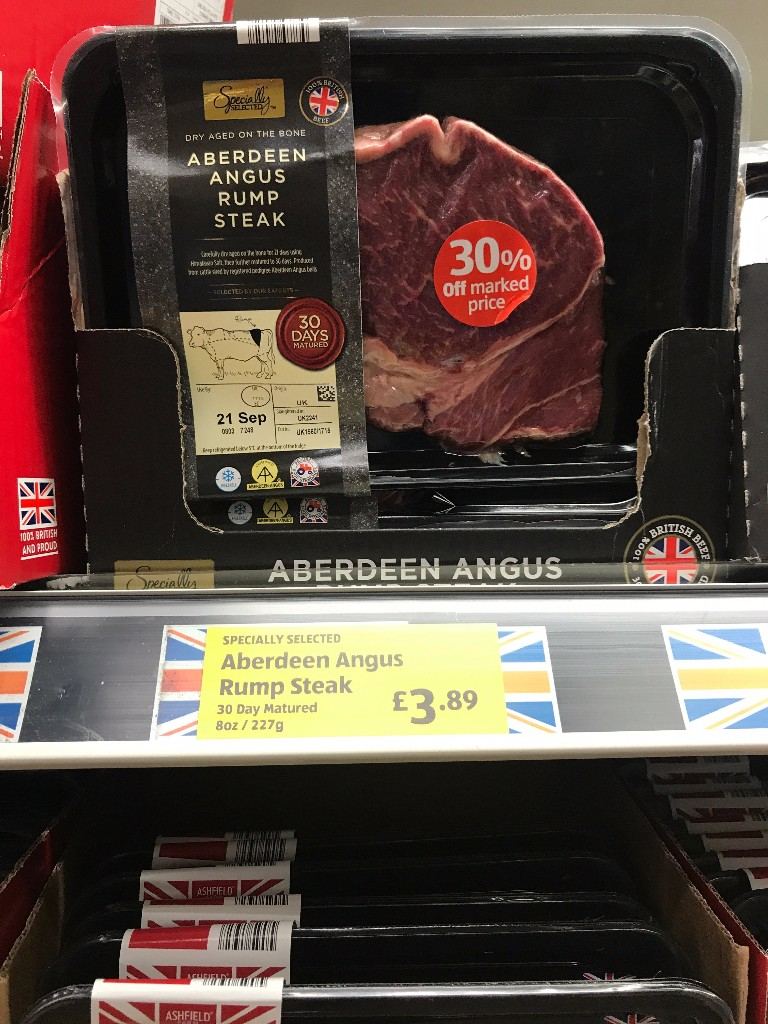
Another area to see rapid growth is their premium tier, customers like it for a start and it also offers attractive margins for buyers who are targeted with growth upon growth which is never easy in the UK marketplace.
There is also still a discernible price gap between Aldi ranges and that of their rivals too. There are arguments for even more legal wrangling over premium label comparatives given the specialist breed of Birds / ingredients etc that are used across the landscape.
But Aldi like premium and it does perform well for them, the products are broadly good and win their fair share of awards too.
However again, within the range. I can understand the need for a premium Pizza, it offers a nice trade up and replaces the need to phone Domino's on a Friday night. The premium garlic bread I can get on board with, just about...
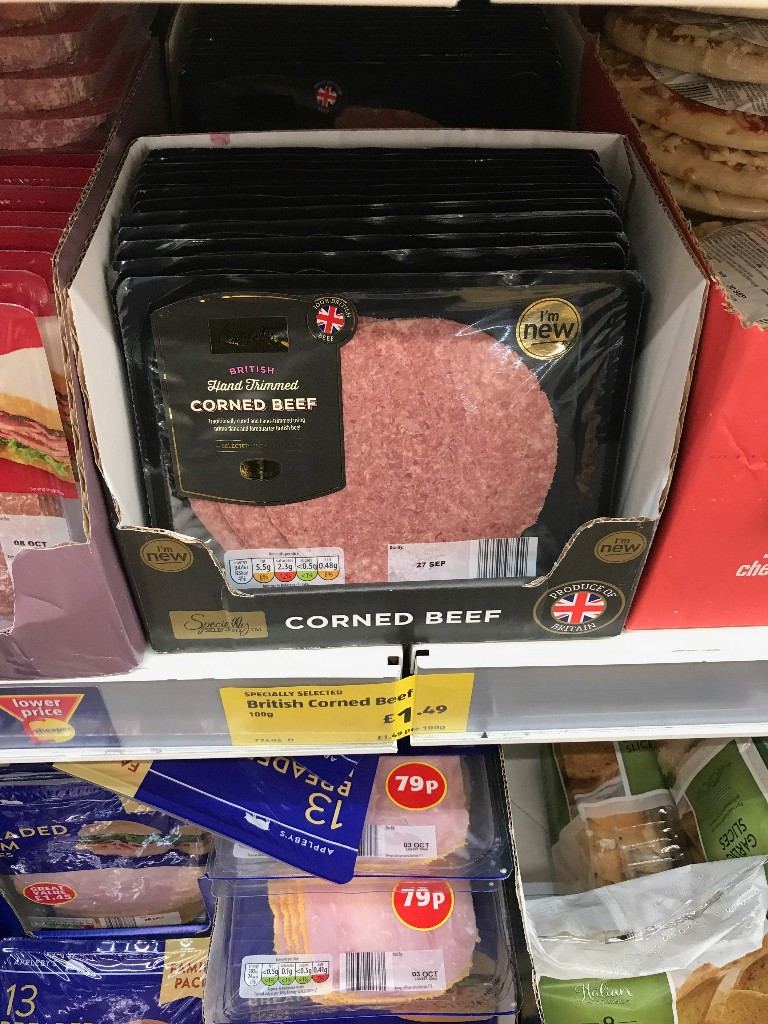
But core Corned Beef (does well as a standalone, otherwise it wouldn't feature in the range), then a premium addition too?
Necessary?
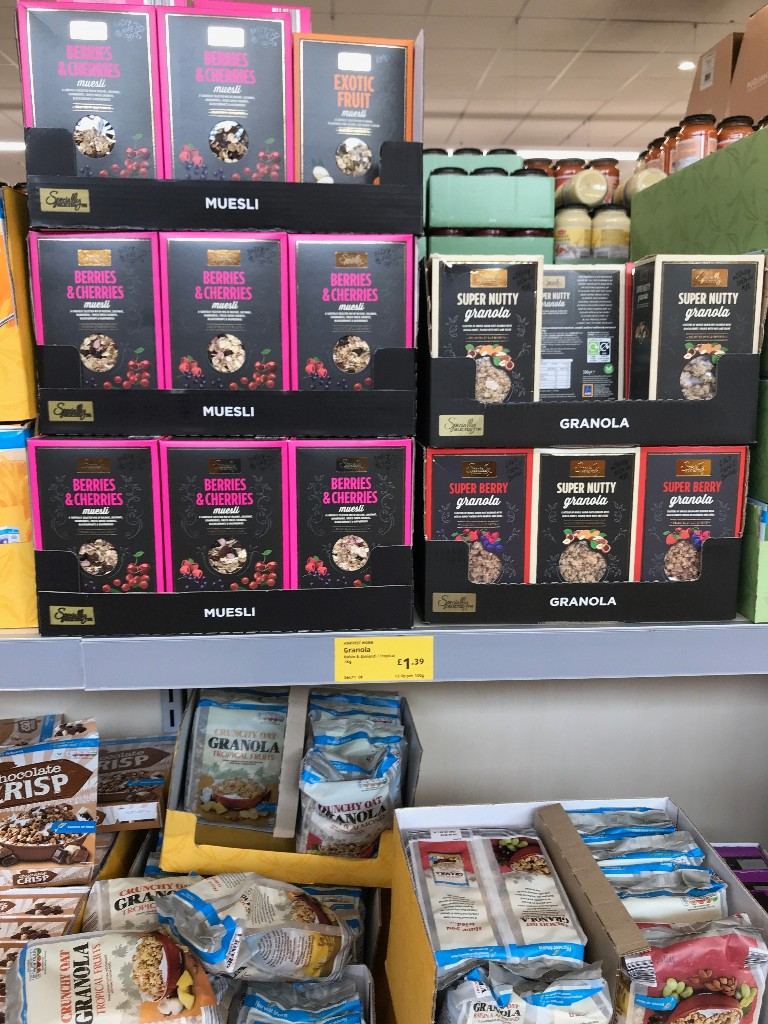
Granola is in rapid growth too for the health benefits, anyone who has walked down a Cereal aisle recently can tell... The buyers are still getting a grip of just who is selling what and have just seemingly ranged everything, from everyone.
Most of the lines occupy just one facing and it becomes a nightmare for store colleagues to try and manage. There's too much choice in many cases as the trend grows out of control, but it brings sales....
A little like the Milicano innovation some years ago, you can't move for Coffee products like that down the aisle now. Therefore I can understand Aldi offering a premium Granola here, note the mixed cases with the flavours too.
There are also core Granola lines below, which would be benchmarked and compared with Alpen or similar. Premium therefore offers a nice trade up opportunity.
If you recall when Aldi first landed ready meals, it was a range of 4/5 products and lauded as a major step change for them given their popularity with customers, but also the impact on the discounter model > more costs via waste and more range too.
Well, the range now is significantly greater than 4/5 lines, it's a huge range spanning all manner of cuisines and tiers too - lots of premium in here, which is understandable given the greater margins on offer.
Customers like premium products, ready meals along with Pizza are good range extensions as there is a replacement for a meal out, or as a 'special' midweek treat. The initial credit crunch / recession saw Tesco ward off the challenges initially by pushing Finest and the meal deal under Sir Terry of course...
But 6 (six) premium Pizza variants? There's sourdough in there, flavours aplenty, award winners, premium garlic breads and even a value tier garlic bread for the value conscious too.
Above that, there's premium Curry, Rice, Cottage pies (Charlie Bigham imitations) too.
Aldi can't be everything to everyone. So why are they trying?
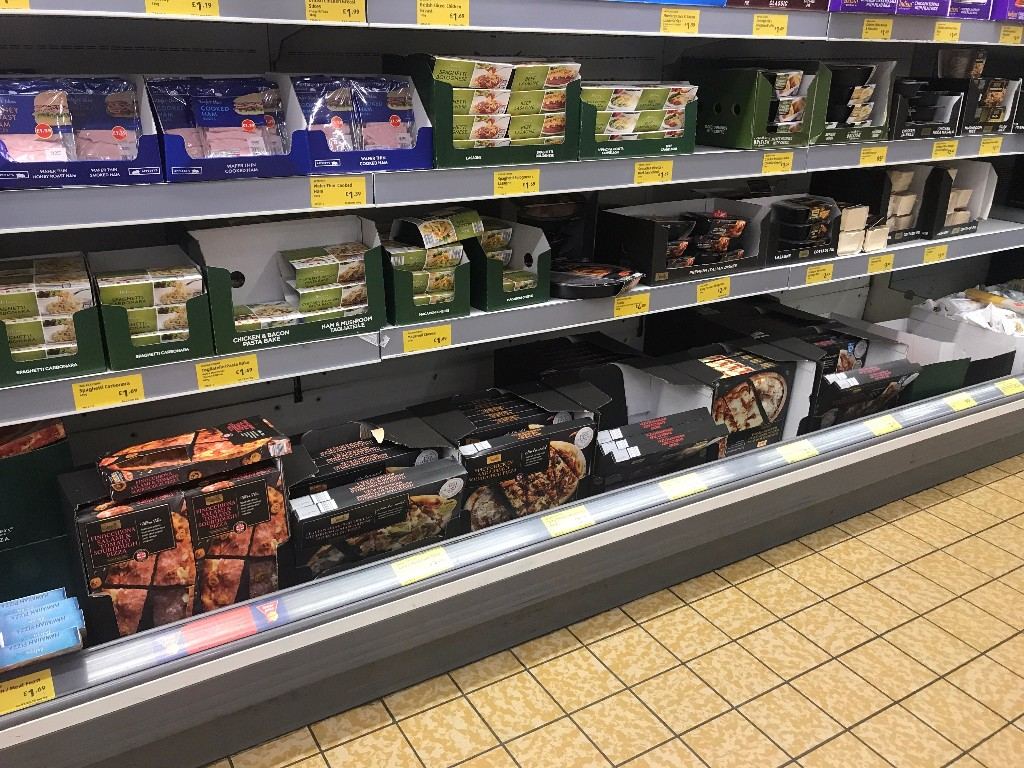
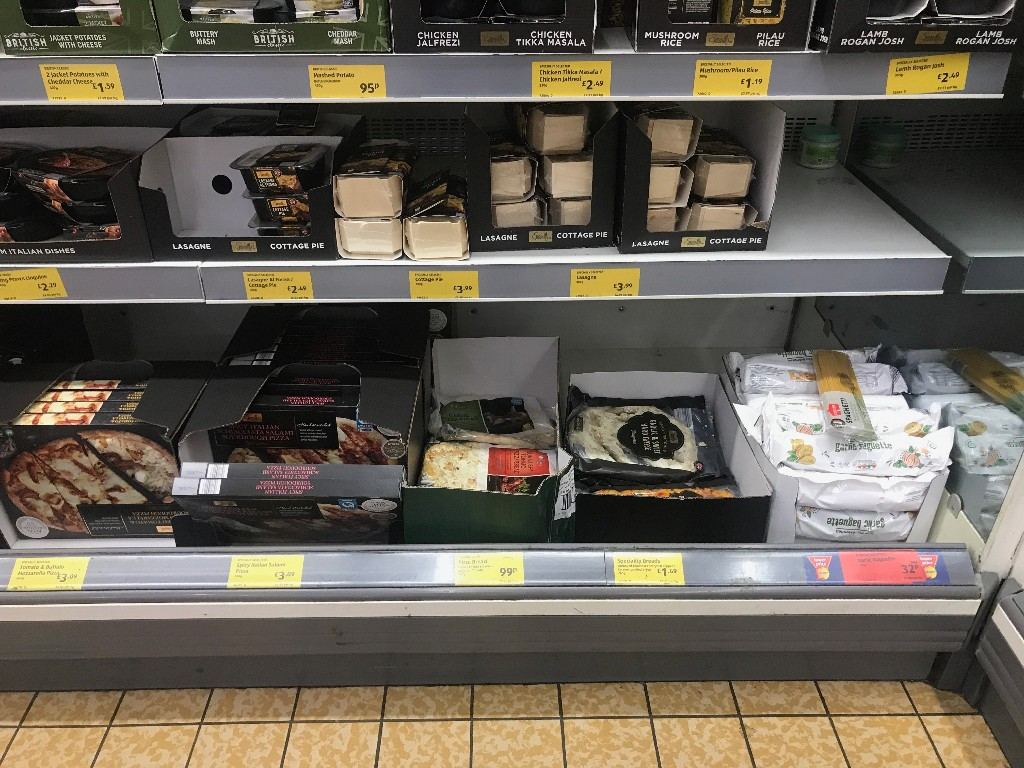
The range growth in fresh, date codes and loose Produce adds store costs around wastage and reductions on those products. Not to mention colleague time sorting through these lines and applying reductions, specials are similar in that they require a lot of time re-merchandising to create space for the new ranges and also then applying reductions to trade through the rest.
It is one area where you feel that electronic labels would really aid their cause, within the special buys. Given the number of price changes / clearance lines and the ability to do clearance in a very simple way.
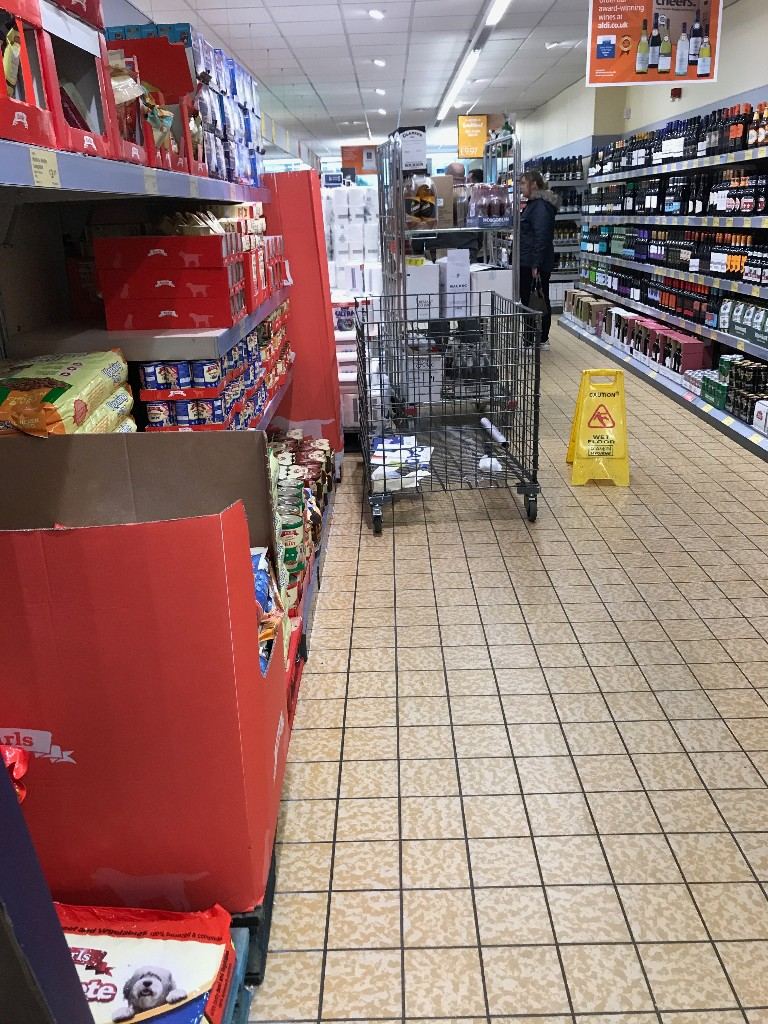
Another way in which cost has been added seemingly is via replenishment, you often see these cages dotted around the store, unsual as their replenishment should be done via pallets which are built in such a way (alongside shelf edge plans and shelf ready packaging) to be fully worked and done within 20 minutes.
However the emergence of cages with stock shows that Beers/Wines needs more attention, their range is vast within Wines and they do a great job here, but it makes the operation somewhat more complex.
So there we have it from Aldi, sales up to record levels (as are the store numbers) but profits down for a 3rd successive year.
The inflation provides a distraction and Aldi will have absorbed their fair share of inflation across fresh without a great deal of margin to play with in the first place, but this is the same for all retailers in the market.
They have committed to growth and you wouldn't expect that to change, their ambition to push the new format / refit to other stores is noteworthy. It's a great store is Tamworth with better fixtures, layouts and signage but it does feel a very 'un' Aldi thing to do.
Refits are used as a defensive mechanism by the major retailers now, given the new store builds are all but over. Refits can be used to sharpen the offer when Aldi or Lidl come to town, so perhaps Aldi are feeling the pain from this tactic.
The comments in 2016 were identical to 2017, the continued investment in prices means profits take a hit. Understandable, but the discounter model should provide greater returns as the store numbers grow surely?
659 stores in 2016 and 726 this year, but profits fell further. Is it that they're still investing so fair enough? Is it truly price? It was price last year too, but inflation is with us and the gap remains broadly the same between discounters and the multiples.
Or is it that their own operation perhaps could do with a look? Adding date codes to Produce is a good move for customers, but must add cost on both ends of the spectrum. Fresh range growth is another area of note.
Similarly their range in the centre of the shop is growing all the time, which adds cost in terms of working capital but also colleague time sorting out the myriad of events.
Aldi can't be everything to everyone, their model doesn't support it. Yet they feel like they're turning in to a mini supermarket themselves with the various elements outlined above, all of which are great for customers, but less so for the discount model.
They are a long term business and still growing well (no like for likes though...) but profits remain the end game ultimately, whoever owns the firm.
Whilst they keep doing a great job for customers (and they do in so many areas) then they'll keep winning awards, gaining share and converting customers.
You can't keep chipping away at your profit number forever either...
From the Grocery Insight newsletter archive, first sent to subscribers on 26 September 2017. Steve now writes at read.groceryinsight.com. See also the blog archive and briefings.