Sainsbury's - own label progression
18 July 2017
Ah Sainsbury's, more from them today as we consider their own label ambitions. Back in the days pre JK and certainly within to the Justin King era - Sainsbury's were always renowned for own label.
Very consistent, excellent on welfare, sourced with integrity, prices were a tad higher than mass market rivals but you always got a degree of quality with that product.
In many ways, it was akin to a branded product and their raft of sub brands like Blue Parrot Cafe (kids range with Jamie Oliver), So Organic, Taste the Difference of course alongside the rebranded (2005) Basics / value tier meant customers were not short of own label options.
Taste the Difference stood for something and was brightly packaged, with the italicised font too. Great prominence on shelf, and a leader alongside Tesco Finest. Back then, pre Safeway, Morrisons didn't even have a premium tier!
Sainsbury's have always been strong on Fairtrade (more later) and this was integrated in to numerous products and they were on point with their British meat advertising too....
Higher prices perhaps, but very much a case of paying a higher price but receiving something in return. Easier as a 'play' in the BD (before discount) market versus the likes of Tesco (mass market, everything alongside food), Morrisons (still considered a northern based Pie shop) and Asda (low price, cheap food).
Of course both Waitrose and M&S existed at the top end of the market but Sainsbury's were in that middle ground and appealed to both ends of the market. That was Justin's legacy really; 'restoring universal appeal' for the wider business.
He succeeded too; sales growth was unbroken for 30+ quarters and whilst boosted by store extensions and concerted non food push, they continued to harness the own label and the relevance it had for the customer.
Switch & Save was a major campaign they liked; with the key premise being around Rice Krispies versus the own label Rice Krispies with the price difference and the 'switch and save' message.
Customers could buy own label and save, without compromising, across numerous products, not just Rice Krispies.
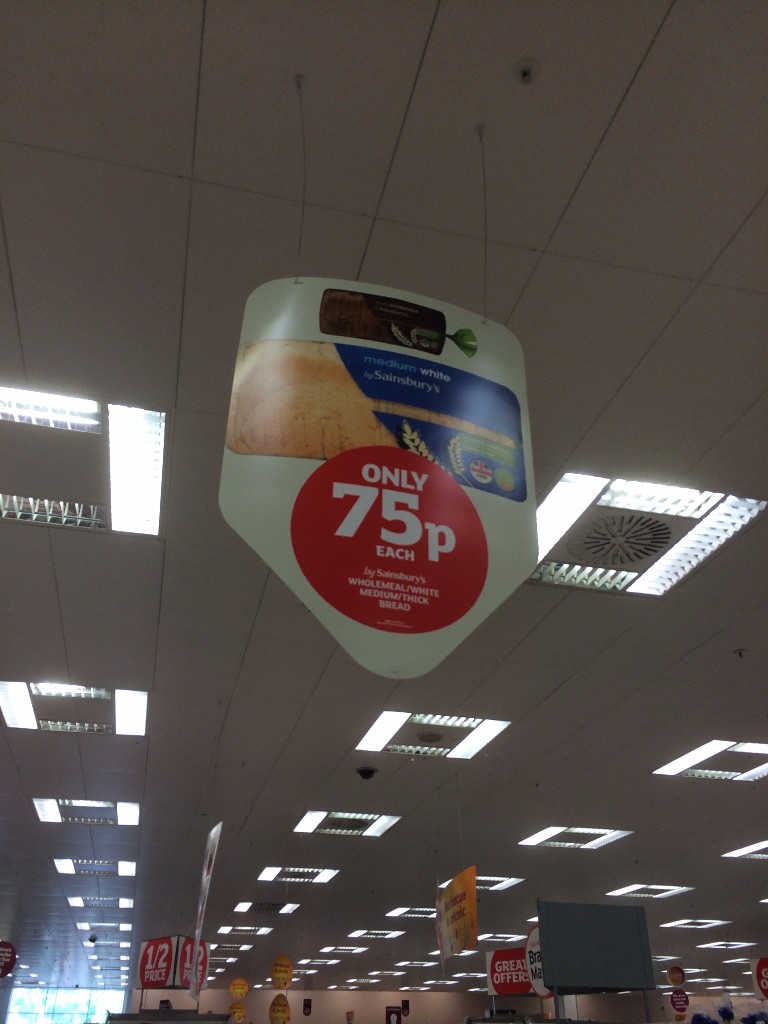
However the discounters then came along, post recession and slowdown and took control. In many cases they borrowed the Sainsbury's model on own label and marketed their ranges excessively.
We all know what happened next, comparisons with brands, focusing on 100% British meat (own label) that was significantly cheaper than the 'big four' alongside Fruit & Vegetables that were also far cheaper than Sainsbury's and co - immediately flagging to customers where the price differential was.
Sainsbury's looked more expensive than discounters, significantly so given the premium they traded on within own label, discounters had made their own labels brand equivalent, and also immediately turned the focus to supermarket own label pricing at the same time.
Sainsbury's reacted like the rest with a raft of price cuts / locked prices on some areas of Produce, Meat and Bread but it was too little, too late really as vast swathes of customers moved their shopping across to the German discounters.
Ironically Sainsbury's used to flag that they were relatively insulated from the discounters; not a great deal of property overlap either in their earlier days and differing missions. They had a shared site in Newcastle with Lidl and Justin King pointed to the fact that the stores complemented each other nicely.
Range helped, discounters were still yet to land their premium ranges and were relatively tight on choice. Sites wise, both Aldi and Lidl focussed on the north where there was a lot of growth, plus southern sites are always harder to come by.
Lidl are Wimbledon based of course, so they had more southern locations established, but were slower to really be 'embraced' by the public in the same way that Aldi were.
However when Lidl started to sharpen their offer, launching Lidl surprises and improving the stores. They too were able to ride the wave and start to enhance their position in the market, which impacted Sainsbury's.
The range/choice growth followed and this meant discounters became smaller supermarkets in their own right too.
We know all the major supermarkets have been 'hammered' by discounters and had to change their models entirely by stripping down ranges and deals and adopting more of a stable price / EDLP model.
A major part of this has been a renewed focus on own label as a reason for customers to come to the store, it is exclusive to the retailer after all, plus the price, ingredients, shelf position and marketing can be controlled by the retailer too.
So we have seen greater efforts from the market, particularly Tesco in turning their core own label in to something worth hanging your hat on. Not just a 'me too' as around 8 brands of Biscuits are put on a 3 for 2 deal.....
This has pushed Sainsbury's out of the way a little bit, their own label has always been a differentiator but they find themselves in the middle a bit once again. Discounters are cheaper and the quality is perceived to be as good too, given their focus on branded equivalents - little doubt that customers will also think that the Sainsbury's own label is trumped.
Aldi in particular have targeted Sainsbury's on their signage over premium price gaps with the march in to premium from both Aldi and Lidl doesn't help Taste the Difference at all.
Similarly the premium push elsewhere has also seen Sainsbury's lagging, Christmas saw a very stale range in Sainsbury's with precious little 'wow' versus the likes of M&S and Waitrose... Consider Aldi and Lidl with their huge premium ranges and Sainsbury's do look a bit 'safe'.
Even relative luminaries in the own label, let alone premium world - Morrisons and Asda had excellent premium tier products and in many respects, their core tier out performed too. It was a key reason for Asda performing relatively well (by their standards at least) over Christmas.
Their range of fresh lines, party food, Meat and Fish struck a chord with customers who didn't have to decamp to Sainsbury's for those 'special' lines and instead, found themselves buying them at Asda instead.
So for Sainsbury's, what's in store within their own label development? Lots of talk in releases around development but what's going on?
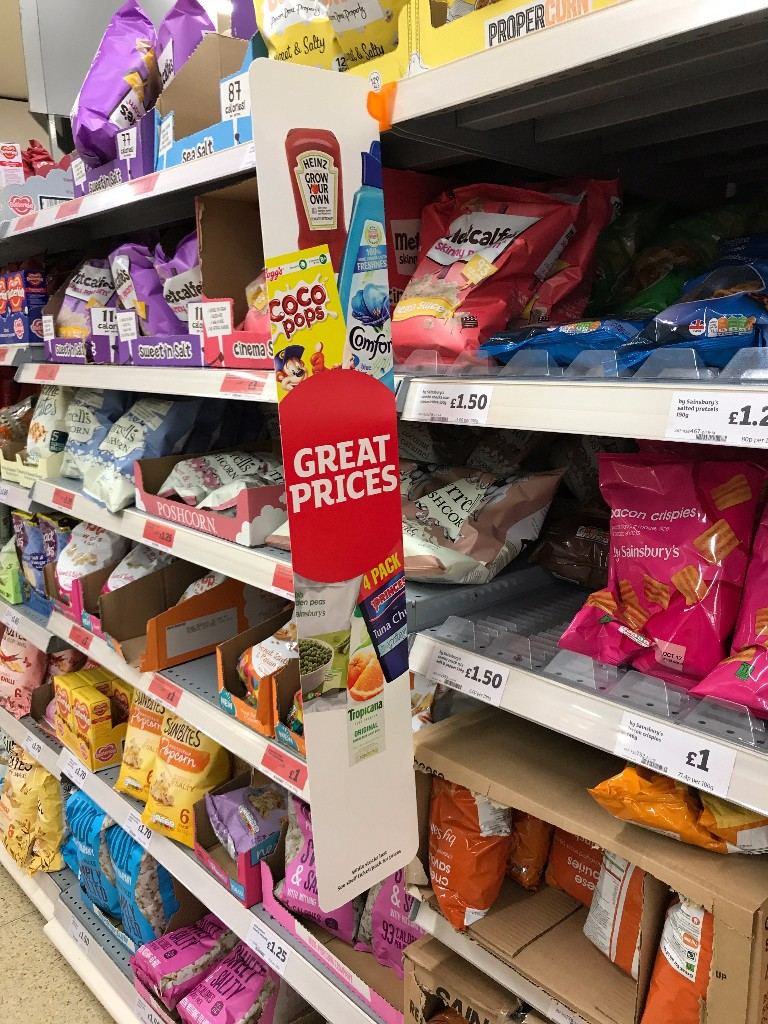
Still a bit of a push on brands, their value conundrum remains puzzling in the more value pressed areas, whereas their southern base is probably relatively happy with what they see as price cuts.
This great prices adds little value really; loads of brands flagged and what is the message? You can get those brands elsewhere, increasingly cheaper at the likes of B&M anyway. But Asda are good for brands and Tesco have a guarantee on brands in any case.
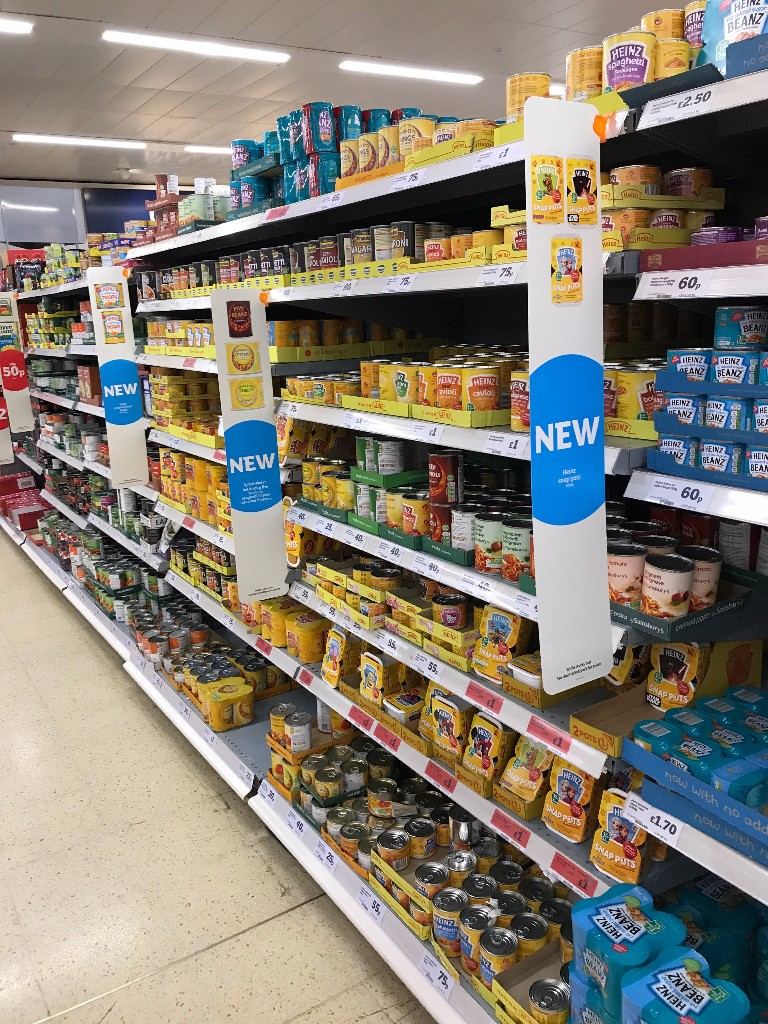
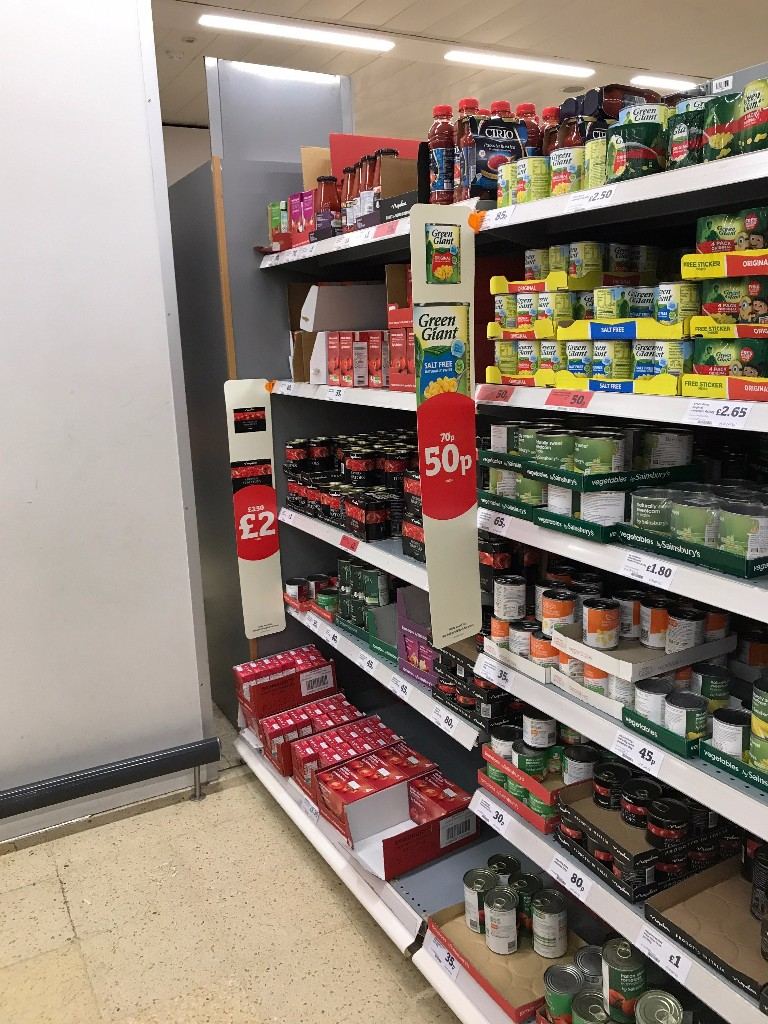
Price is still dominant in many categories, some of the prices aren't necessarily all that either, but flags are used anyway.
Space features strongly in fixture for brands, Napolina occupy the main shelf within Canned Tomatoes and benefit from the blocking there, contrast with Tesco who ensure their own brand is prominent.
'New' flagged for the latest character deal Heinz have done, NPD (new product development) has been something of a joke really for many brands, adding no real invention but packaging it as a new product.
Genuine 'newness' is only really done by M&S, Waitrose also have some innovation from time to time. But often it is far too safe around the market - the general trading conditions do drive a 'safer' approach.
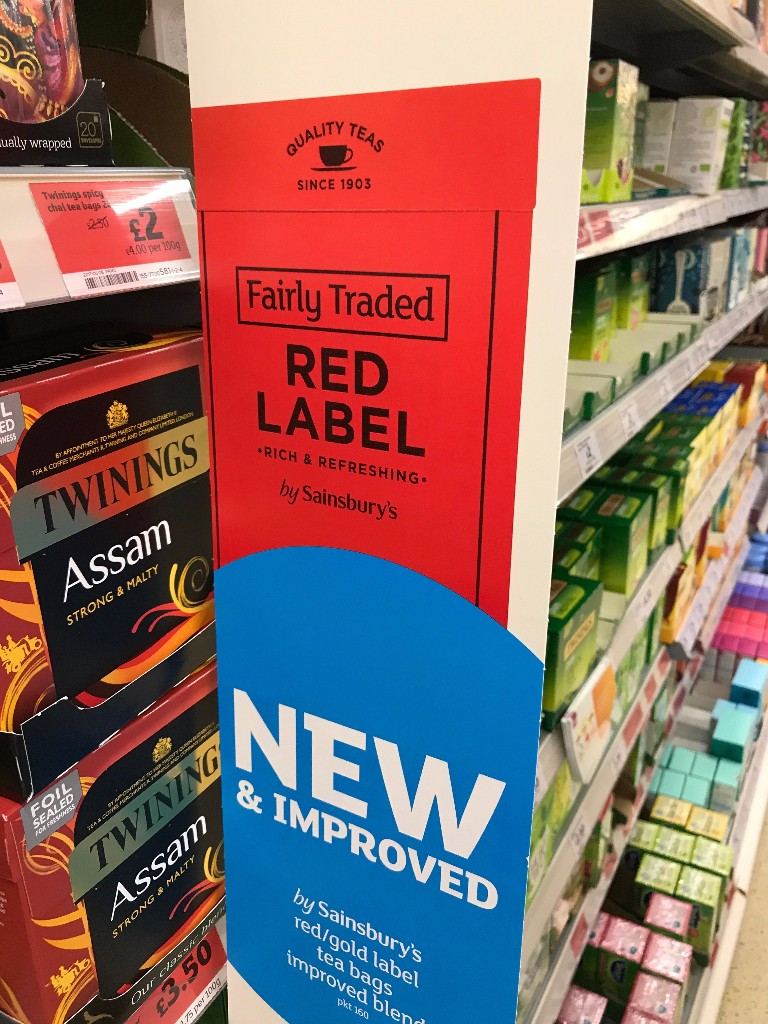
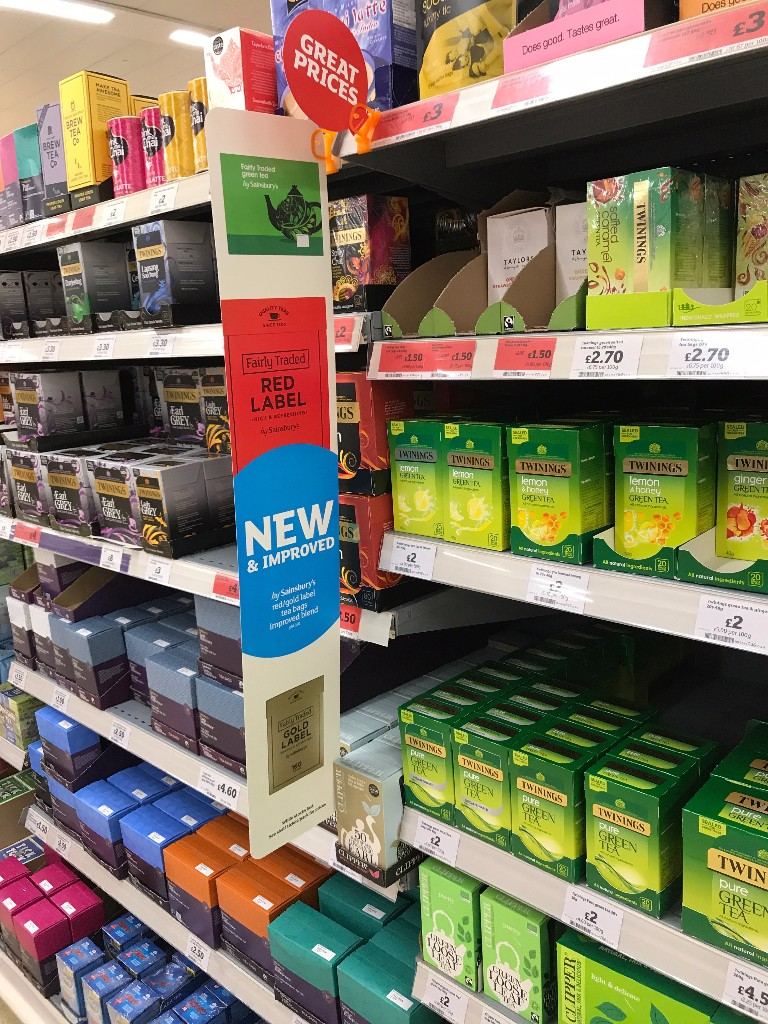
Whether the 'improved' element covers the fact that the product is no longer fairtrade, or whether JS feel their new scheme is better than the former scheme is unclear.
Or even, that the product is truly better! But Tea has grabbed the headlines over the Fairtrade changes, a cynic may say it's to improve the margins but also there has been criticism of the Fairtrade scheme.... So it's like anything, Sainsbury's must have reason to do what they're doing and it will be interesting to see if others follow suit.
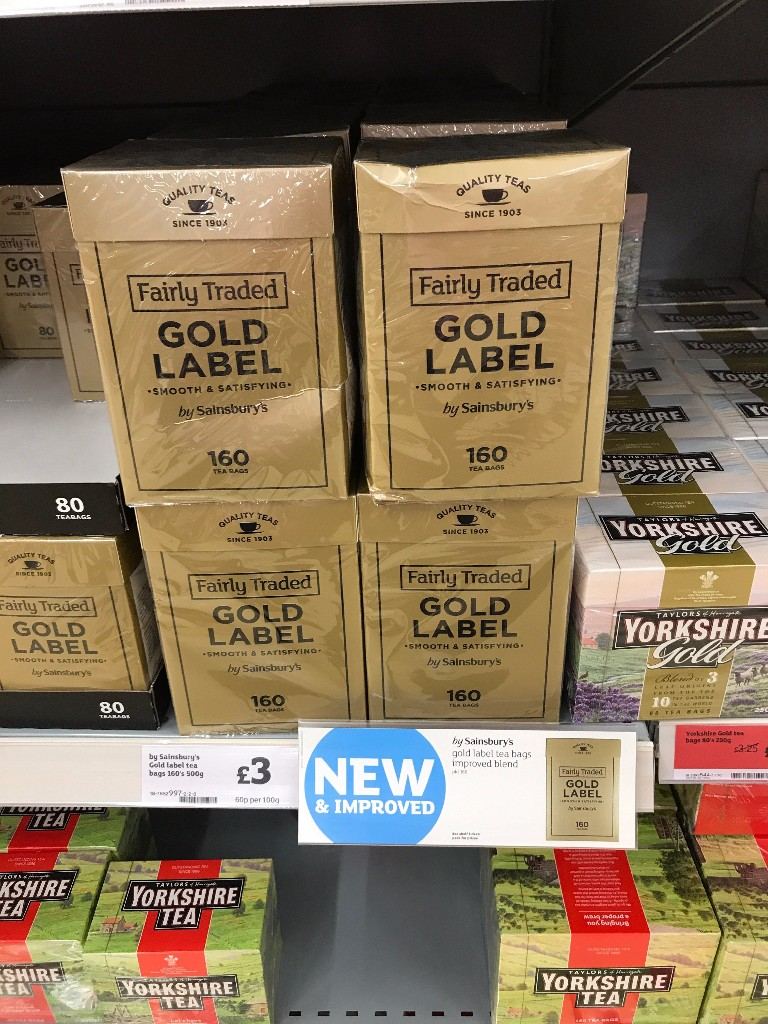
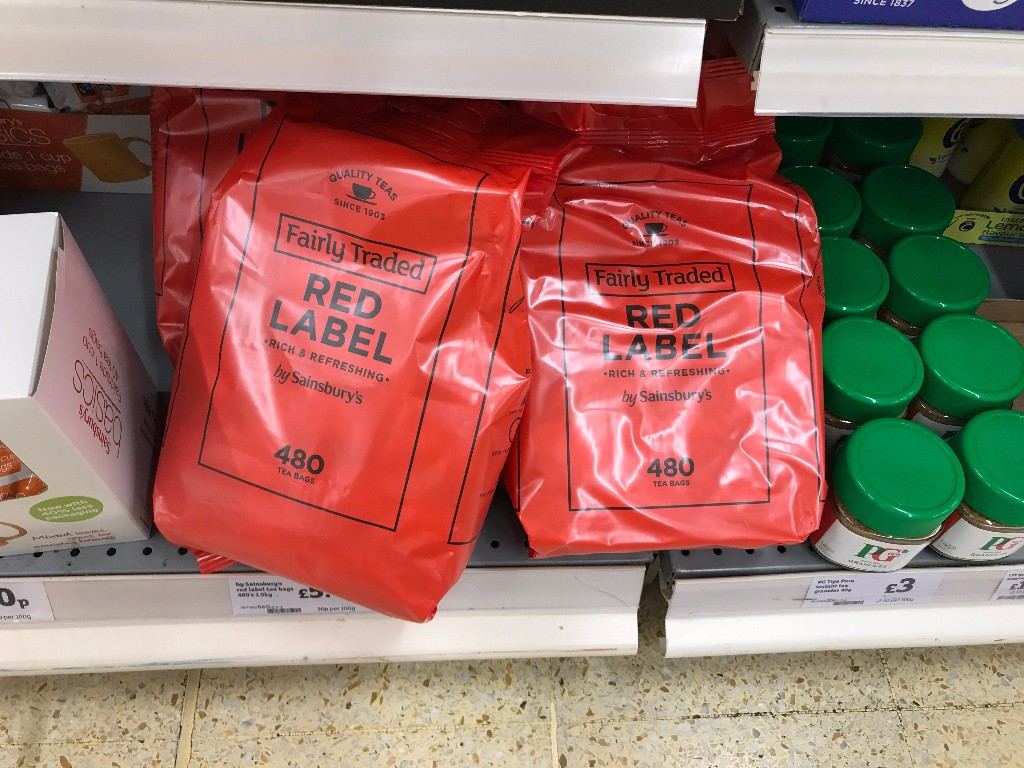
Nice packaging to be fair; very bold and not a huge focus on the label itself. 'by Sainsbury's' is tucked below the product description but the bold colour blocking helps the wider range stand out.
We've not seen the explicit placement of own label in the same way that Tesco have done, but there is attempts here at sharpening the own label.. However to go to the next stage, you feel there has to be an effort to prioritise own label between brands to give the customer (scanning the shelves) a feeling of choice.
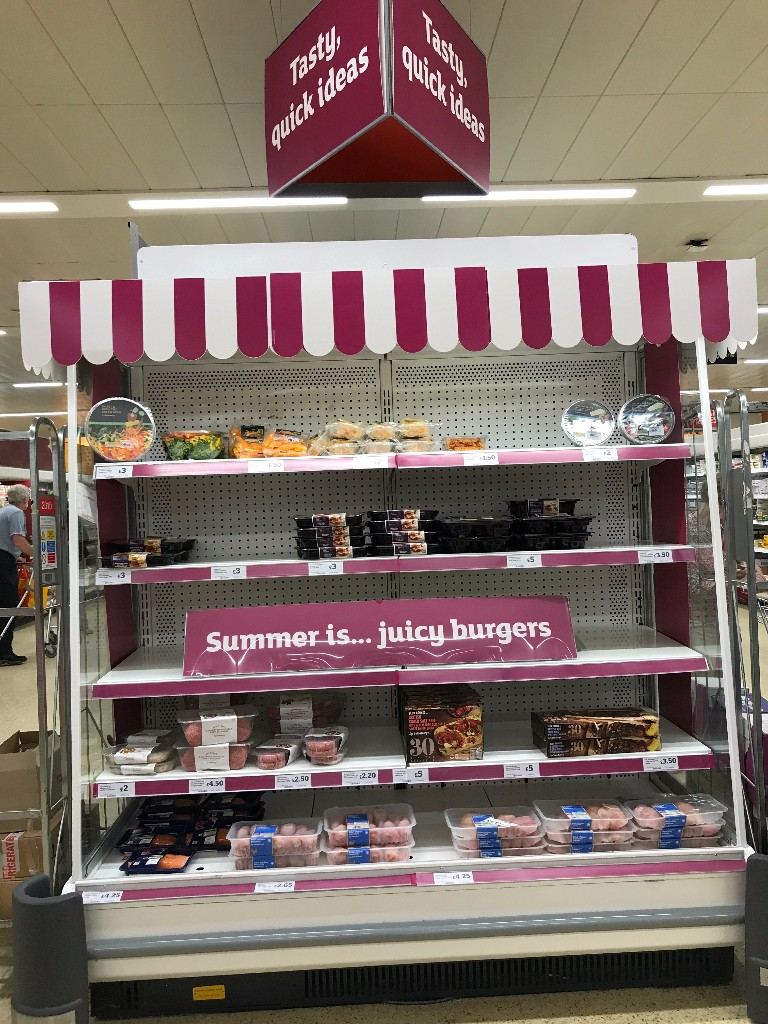
Not the inspiration that was perhaps expected at head office, but a stab at an end here to drive some own label sales and get on the pitch with the seasonality. Especially on fresh foods.
However the merchandising isn't great, but there's so much scope to get own label sales moving in fresh and also inspire meals too.
But it has to be better than this. Also note premium burgers one shelf above the signage but have very little presence.
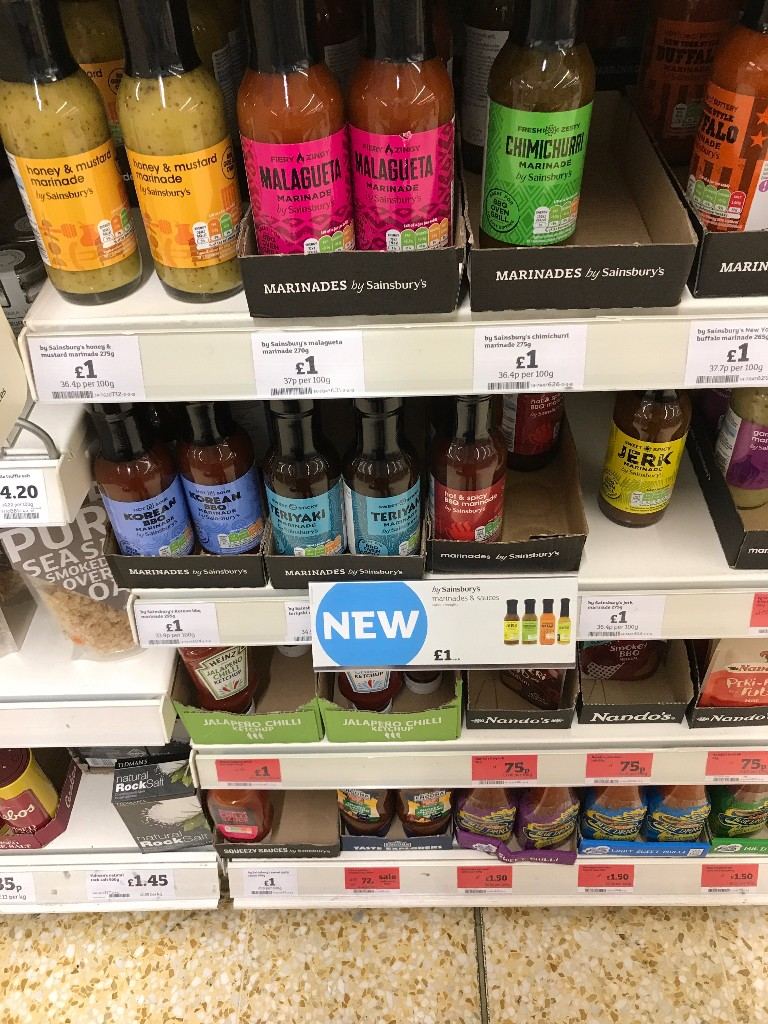
New marinades were also noted last week, unclear when these actually landed but anything with a new barker is typically newly arrived within 4-6 weeks.
Therefore you'd expect these lines to have arrived sooner perhaps, given Summer and competing retailers bringing their ranges in earlier.
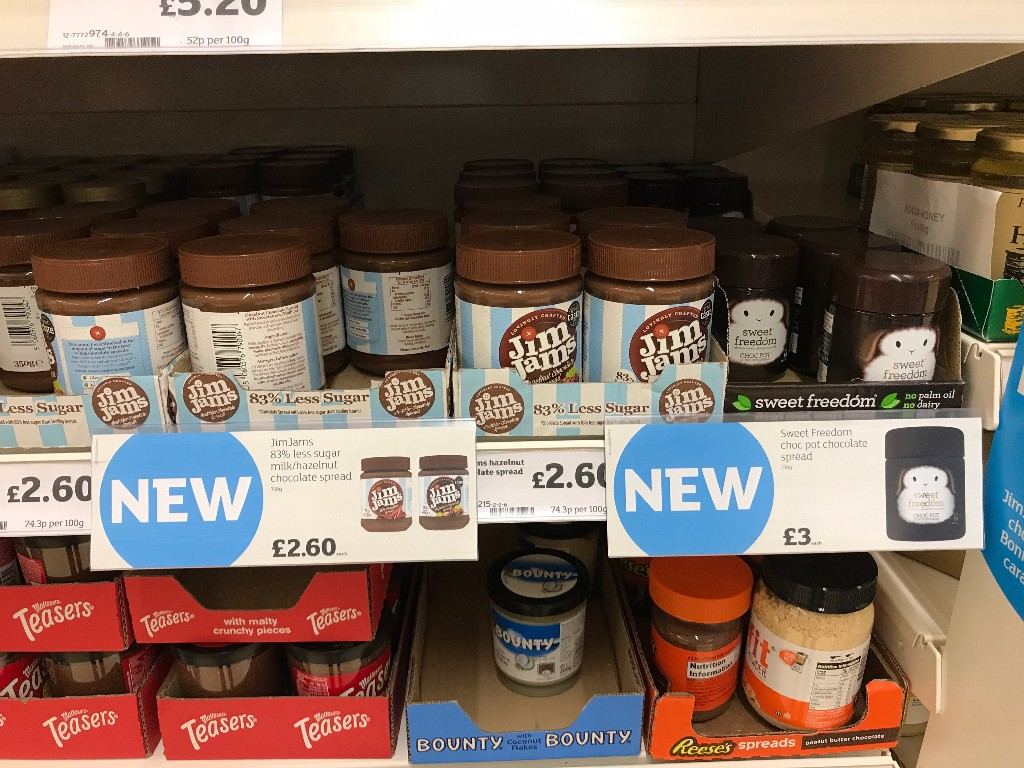
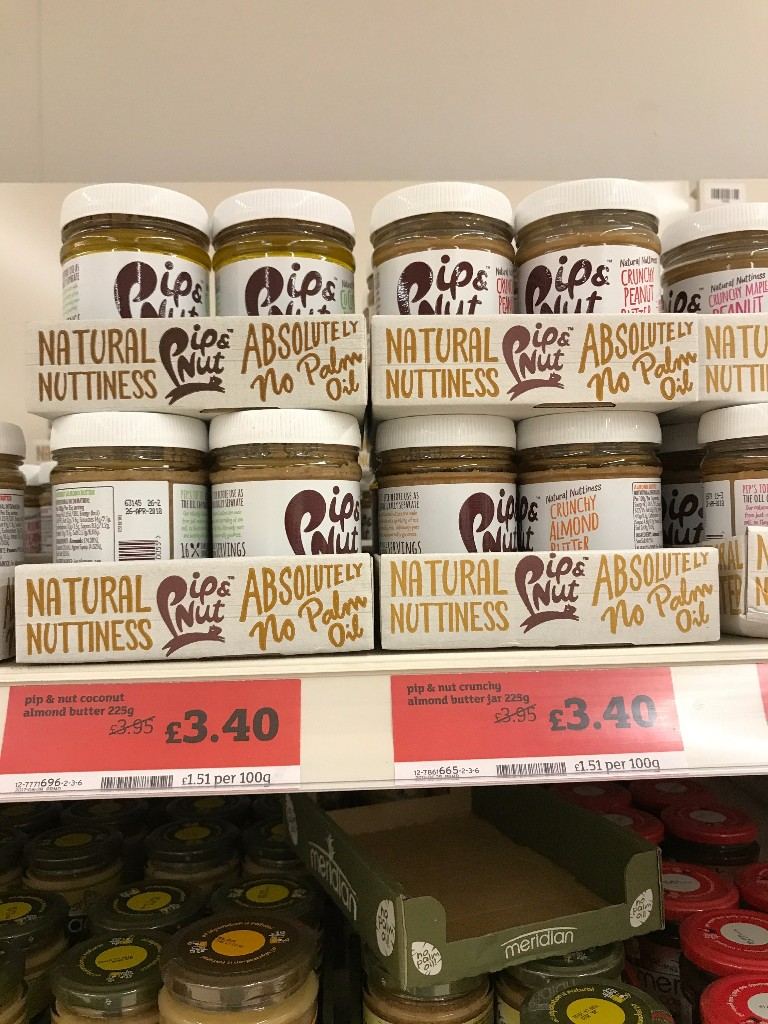
Whilst branded activity; it was notable to see a number of low sugar lines landing in to the Spreads fixture, not just lower Sugar lines but a major focus on numerous Peanut Butter spreads and alternatives within this category.
There is a trend for Cashew butter and the like given the health benefits, so Sainsbury's are on the money here, capitalising on trends.
More is needed and own label has to play a part too.
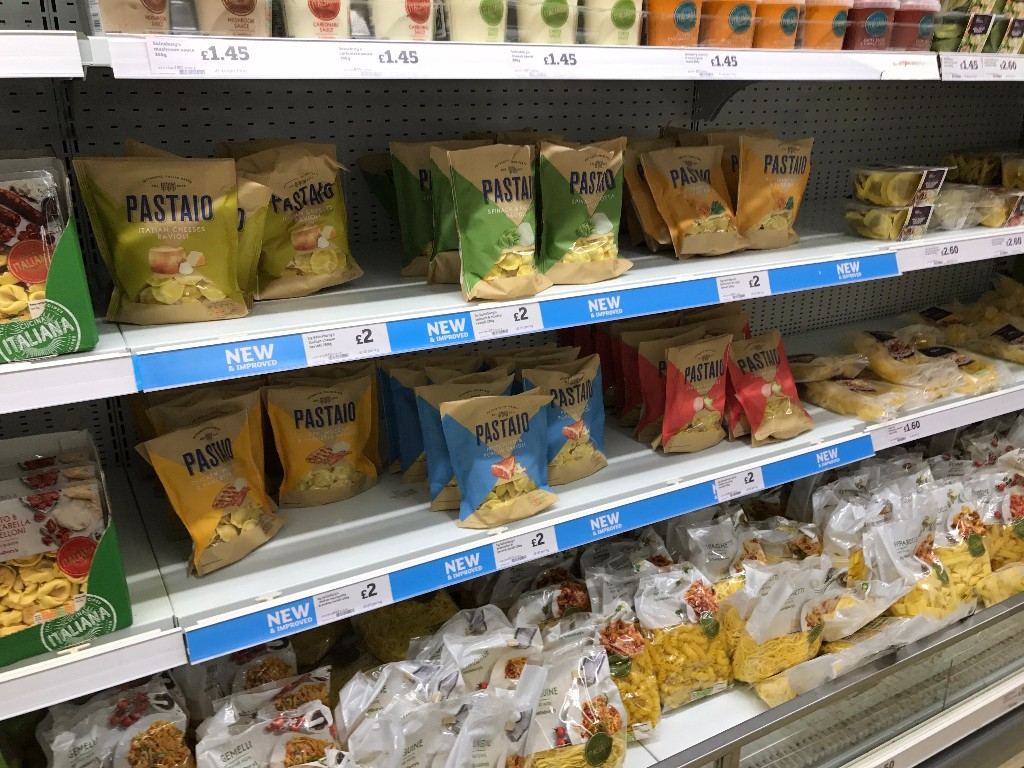
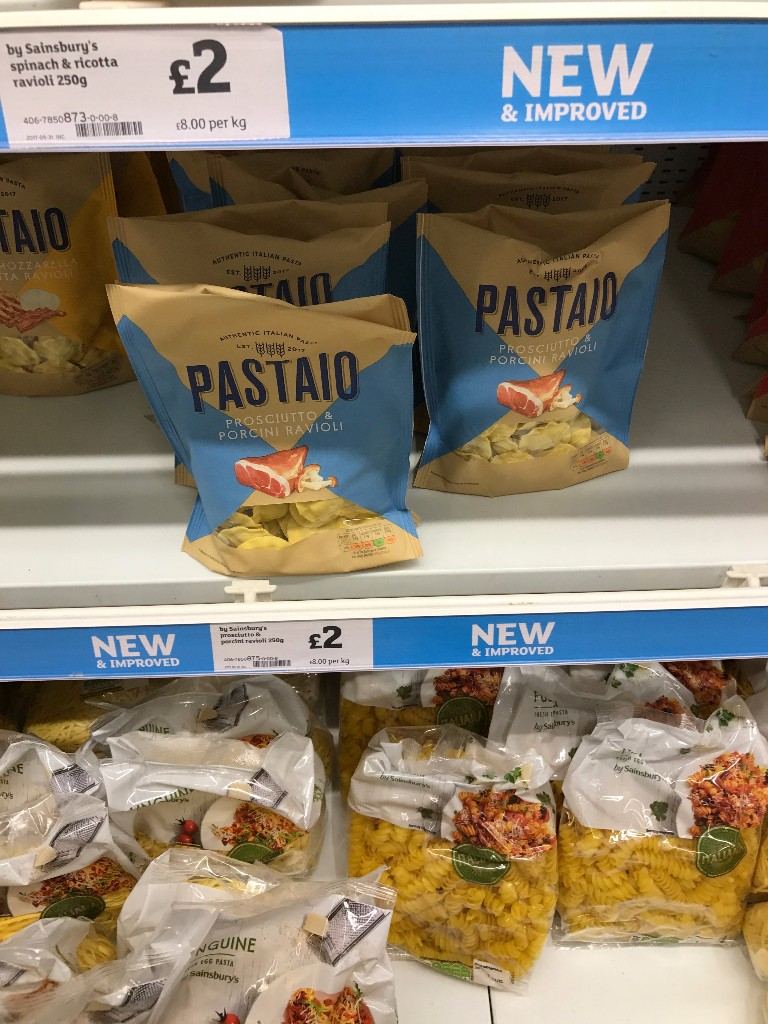
The biggest interest in the own label work was reserved for prepared Pasta within the fresh range, Sainsbury's have landed a brand of their own within this range here.
The shelf stripping featuring 'new and improved' was impactful firstly and framed the range for the customer, attracting them to have a look.
It's a very interesting piece of work, it looks similar to the likes of Giovani Rana branded pasta (usually £1 on deal in most retailers but in Eataly, NY it's a gourmet product!) There looks to be some Pizza Express style inspiration here too...
It's interesting in terms of the brand name; Pastaio is reasonably impactful, the price is notable at £2. Not exactly cheap but not budget blowing either and it looks like a brand, but isn't.
It's a Sainsbury's brand.....
Perhaps this is the future for the supermarkets? Building brands in their own right.. Dave Lewis and Tesco received significant flak for "Farms" and the fake nature which I agreed with in a sense of the farm elements but the hysteria afterwards was nonsense.
They're now 'fresh food brands' of course and this is an example of where big supermarkets can borrow the ideas from discounters and apply their own twist on it.
Dave Lewis is a brand builder of course, his work at Unilever tells us this... Is the next plank of Tesco a raft of other brands to take on discount? Should Sainsbury's work in fresh pasta extend across the store?
For me it should, there's a definite need for it and own label is such an effective defence. However you do deflate your categories by focusing on own label given the lower prices and have to really hope the volume takes off for it to make sense.
In terms of the label - 'By Sainsbury's' is somewhat stale so appropriate sub brands would be as effective and liven some categories up certainly.
Consider that Sainsbury's have 'Classic Cola' which is their sub brand and used to get loads of attention on shelf, with loads of space too versus Coke. However this has died away somewhat, barely a mention for it these days. That's an open goal....
However for Sainsbury's, in light of increasing competition everywhere in the market, especially discounters and even Iceland - their premium tier needs a real revamp to ensure it has a level of distinction that 'The Best' and other such brands really do have within their respective retailer.
That is easier said than done though...
From the Grocery Insight newsletter archive, first sent to subscribers on 18 July 2017. Steve now writes at read.groceryinsight.com. See also the blog archive and briefings.