Sainsbury's - Change afoot - the long read
29 January 2020
Visit the Retail Bible - our new platform for imagery and insight
The long read
Sainsbury's - Change at the top
The pillar of stability throughout my time in retail (starting at 2002, with Sainsbury's, so perhaps from 2005 onwards) has always been Sainsbury's.
Justin King came into a basket case in 2004 with the ordering system in meltdown, poorly aligned deliveries, stock routines in meltdown, stores unable to work deliveries and all the stock in the building, then telling the system they didn't have the stock needed just drove more stock into the stores.
Poor availability meant online suffered (bad news for the fledgeling operation, but pre-social media meant the impact was negated somewhat) the chain struggled to compete with a rampant Tesco in their heartlands and northern supermarket Morrisons then bought Safeway to become a national player and pressure the chain even harder.
The business was stabilised and with key hires (including Mike Coupe no less) sorting out the key areas, the business was able to stabilise and Morrisons moved into that space of being a 'laggard' in the market with their extensive range of challenges integrating Safeway, selling off stores and retreating from other areas that perhaps would have formed part of a bigger chain had things not conspired against them.
This allowed Sainsbury's time out of the spotlight and the business to focus on food, pricing, sorting the stores and transforming the offer. For example, non-food was in the pre-online pomp and Tesco had done a great job of transforming their business with the margins on non-food in their largest stores.
Asda was a business that had a strong non-food offer too in their larger stores, yet Sainsbury's barely had an offer, save for one with Jeff Banks (that ended acrimoniously) space wasn't dedicated to any form of range in many stores, which made the margin mix lower than it would have been.
An over-reliance on food and a higher than average cost base, no doubt boosted by wages of longer standing colleagues who were given gold plated contracts when times were good (central office was Holborn, yet stories emerged almost immediately about high costs and a wish to move to Kings Cross, or similar). That hasn't yet transpired (although some of the space is leased to other entities at Holborn) despite several stories indicating it would happen in 2004, 2007 and 2011.
As Tesco continued to motor along, they were well ahead in convenience as well with several acquisitions fuelling their plans, Sainsbury's were barely in the c-store market save for a few 'central' stores that were located in London and other key metropolitan areas. Local chains like Bells and Jacksons in the North of England were acquired to give the chain a foothold in the convenience store market.
Sainsbury's continued to expand their stores to accommodate non-food and then seemingly sold a number off and leased them back, which does free up cash to further expand but leaves a larger rent bill at the end of it. There was progression on virtually every element of the business and their consistency in-store standards are something we are never likely to see again in the UK market.
External factors like the global financial crash didn't help matters but Sainsbury's proved resilient and never had that 'nadir' that befell Asda (-7%). Morrisons (-6%) or indeed Tesco (several disasters pre Dave Lewis).
Nor the financial nadir, save one write off that saw the business lose c.£50m after writing off property and several other assets given the changing marketplace. So stability gained under King has continued under Coupe, despite the market changing in a rapid way.
This note isn't intended to be a write up of Justin King's time at Sainsbury's, although given Coupe's tenure overlapped that as he took the reigns, there is a degree of linkage that aids the story.
Whilst King saved Sainsbury's and left the business on an even keel, the market was relatively kind. There was no real discounter threat like we have today, although there was a definite switch towards the Germans, they were not considered a 'fuller' shop experience like they are now. (Range growth and the special aisle has aided discount, but it's not 'complete' shop, nor will it ever be).
Justin once noted that Lidl had opened next to the Sainsbury's in Newcastle and it had aided the Sainsbury's store trade as Lidl drove footfall. That is unlikely to be the case now..... Whether that is down to Lidl improving their offer, or Sainsbury's lowering their own standards is one for a wider discussion......
Coupe took the reigns at a company that was performing well, had strong brand value and was broadly well-liked by shoppers, indeed the general public would have had a strong affinity with Sainsbury's given their work on food welfare and they weren't impacted by Horse meat in the same way that other retailers (Morrisons aside) were.
It's often difficult if you inherit a ship that is sailing well on the open waters, as the investors will never be happy, yet you have to change course to try and stamp your authority on the chain as even slow progress in food retail, in the UK is akin to going backwards.
Especially when you consider that in 2014/2015 - Tesco, Morrisons and Asda were all struggling but all three had management changes and started to perform better, which puts Sainsbury's under pressure.
Indeed, there is often a tit for tat with Tesco's performance versus Sainsbury's given the geographic overlap in the south-east of the country. One picks up, the other bears the brunt, add in the discounters who by then having started to fill gaps in the north, turned their attention southwards and you have a difficult balancing act.
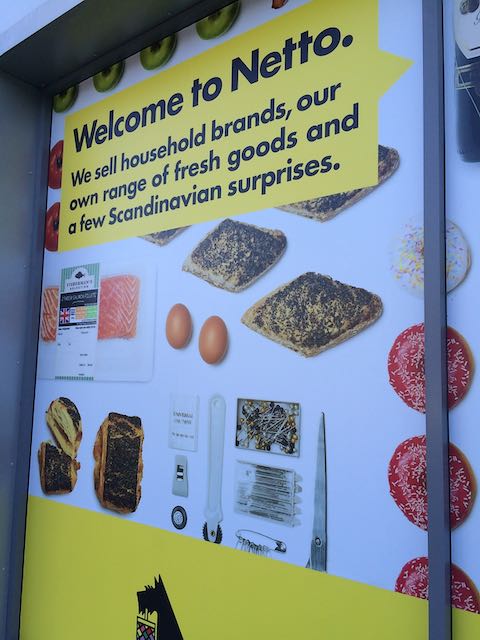
Netto and Sainsbury's aligning was a surprise given the chain had departed the UK some 4 years previously. There will have been some red faces in Leeds as it emerged that the Asda deal didn't block Netto coming back despite the Leeds based retailer buying the UK business, however, who thought they would return?
The UK market had come around to discount but Netto was a discounter of old, stores often in hard-pressed areas of the UK and had seemingly built a business on special buys in the first aisle and offered very little in the way of quality around own label, or even fresh foods.
Whereas Aldi and Lidl were blazing a trail with good quality ambient and fresh food products, low prices and mimicking branded designs on the packaging to encourage the customers to try these products. The absence of deals was huge for customers who were able to budget effectively due to the focus on EDLP (everyday low pricing of course).
This rapid shift to discount didn't immediately signal the end for bigger chains, it hasn't all been painless growth either, there was a time when the larger chains battered back the discounters but the shift back to behaviours and mentalities around promotions, questionable value for money and general value perception meant that the discounters (privately owned of course) were able to be a model of consistency.
Coupe knew this and announced a joint venture with Dansk, who put everything into the chain, focusing on being different and capitalising on the work that both Aldi and Lidl had done to the customer 'psyche' with their acceptance of discount shopping and utilising quality cues and 100% British sourcing etc.
The first store opened in Leeds before several others (some inside Sainsbury's stores) others on stand-alone sites across the M62 belt were opened. The joint venture ended somewhat abruptly as the realisation hit Sainsbury's that they couldn't get to scale in the north alone and it would cost a significant amount of money to get the fabled '500 store' mark in any case.
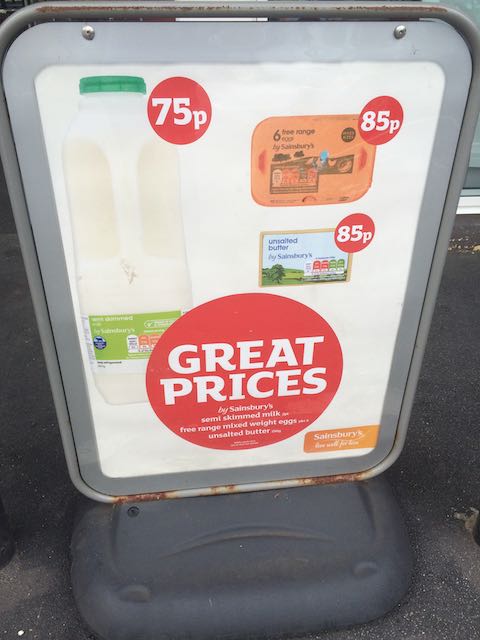
That kicked off a change in Sainsbury's, focusing on lower, everyday prices with no hi/lo on dishwasher (down to £7 then up to £10, £12, £14 then back down). Trustworthy prices and more stability was the key learning from their work with Netto and they have stood over this stoically.
No multibuys also came out of this work (or was associated with it) and that simplifies the model. I appreciate their reasons for doing so but somehow the message is lost a bit when the business runs "buy 6 save 25%" on Wines every other week in the 2nd half of 2019.
But value simplicity has been a key part of the Coupe regimen, but guarantees like Brand Match didn't stand the test of time and this was abandoned when the lower, stable prices came to the fore. Indeed, Tesco flirted with a brand guarantee scheme that enabled instant discount at the till on branded items (brilliant but expensive, 100% redemption rates) and Asda ended their 10% guarantee a year later.
The non-food market slowing down, alongside an increasing shift to Amazon (for everything A-Z) was spooking Sainsbury's and their stores were larger (on the whole) due to their non-food expansion, they'd done a good job but their click/collect operation was barely noticeable.
Indeed as Asda and Tesco really pushed hard on click and collect for food and non-food (Asda are clear leaders in this space, even today), Sainsbury's were slow off the mark and their online food collection service in some stores is still the caveman equivalent of a delivery driver sat in a van under a canopy.
Sainsbury's were in danger of being left behind thus, Mike entered the transfer market again and bought.....
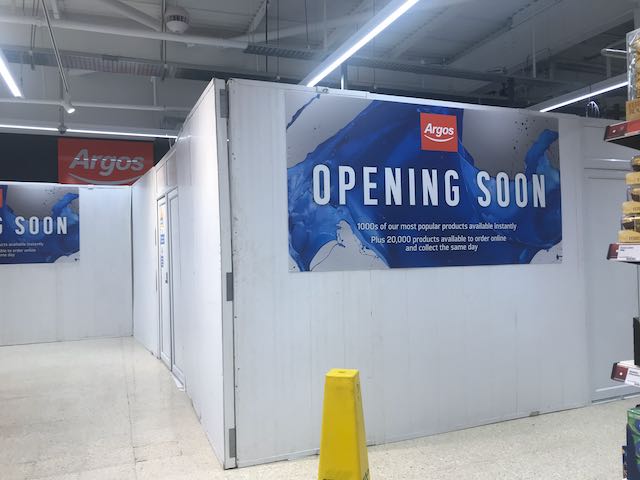
Argos!
Which now looks as though it's dragging the results down with the slowdown in non-food due to the wider market and economic challenges faced in the sector.
However they made click and collect before click and collect was even a theory, let alone a reality and they remain a strong retailer with an offer that is solid and appeals to customers. That said, the savings were generated largely by closing down stores and moving the Argos unit to the nearby Sainsbury's store.
That makes sense and provides a boost to Sainsbury's in terms of footfall (it could be argued it's an expensive way to drive footfall, however) but the challenge remains that in a large Sainsbury's store with a sizeable Toy and Non Food offer - what happens to that space?
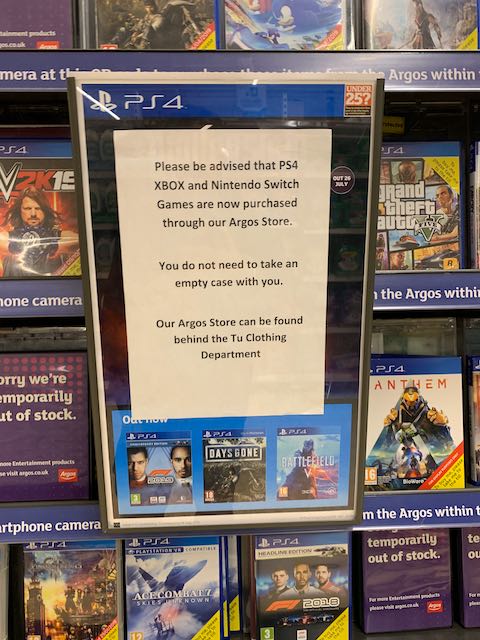
It still doesn't feel right, even when looking at stores like Selly Oak and Hedge End, the merging of the brands is uncomfortable and feels inherently disconnected. Argos has never been associated with general merchandise and furniture really, not unless you're after cheap, quick and convenient products and don't want to fight with customers on aisle 8, location 21 in IKEA.
So putting these products front and centre in Selly Oak is odd, and it feels like Sainsbury's are still unsure what to do in some cases. There will need to be consideration for Argos, certainly in terms of their high street presence where there is no nearby Sainsbury's store and what that should look like.
There have been other categories that have appeared on the Argos website in recent months, Pet is notable but it's never, ever going to be 'top of mind' for a customer to visit Argos for Pet supplies. Toys?
Of course but it's a fierce old marketplace too. Electricals too, great! However, margins are thin. There is still some confusion over what you do when both Sainsbury's and Argos sell games (under one roof).
Also - what do you do with Habitat? An iconic brand perhaps but it's very 90's and there never seems to be a customer in the store whenever I have visited, and more sale stock than full priced stock.
Another element of the Mike Coupe regime has been their work around own label, of course, one could write page upon page on the failed Asda merger.
However, the business did lose any momentum for a year whilst that deal was being grappled with and the own label work ground to halt entirely. Recently they have started to imitate (is perhaps the kindest word) the Tesco strategy of introducing private label value tier equivalents across ambient and fresh foods.
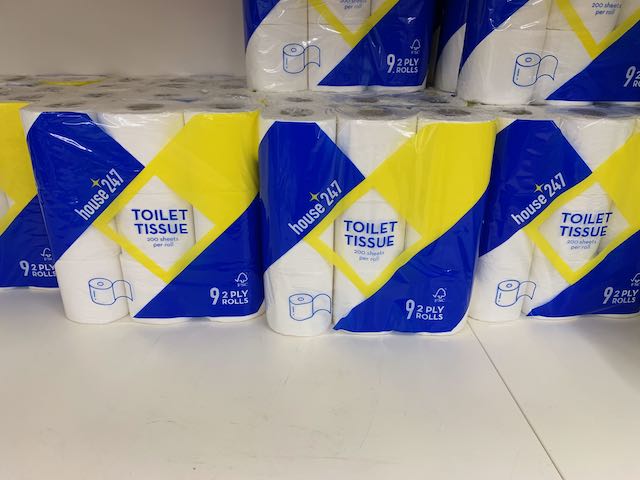
Some are heritage-based, like Stamford St (their former home) and others look like they'd fit in well on the shelves of Dale's Supermarket Sweep. Such as House 24/7 which in itself sounds like a low budget TV show.
A positive for customers and they're seeing good numbers here are Sainsbury's, but they can ill afford to trade customers down, given the weaker margins....
It's a different time of course but Sainsbury's were absolutely obsessed with store standards and restructures and changes in the ways of working has meant a lot of this work has been lost in translation and inexperienced managers have picked up a job with greater requirements and less money in which to do it in.
Of course, something has to give and we are harking back to a time that has gone, frankly, given the rise in the minimum wage and margins being thinned across the board. The challenge remains with the 'accepting the unacceptable' and all too often, Sainsbury's have struggled immensely to show themselves in a positive light around stores and general standards.
Eliminating nearly all night shifts was a brave move but in some cases, really impacted the early morning customer and some had to go back in, especially where a store picked online groceries. The systems and ways of working were well embedded, everyone expects disruption but the point remained that Sainsbury's were the architects of their own downfall here, they didn't have to do what they did.
Maybe they did from a financial viewpoint, but store standards that were a clear competitive advantage, turning to a negative are self-inflicted and there is no getting away from it.
There are some improvements but I fear Coupe will be remembered for two things, the failed merger and the worsening of the shopping experience in stores. Ironically his replacement, Simon Roberts came in just two months before the restructure was announced and whether it was his work or the wheels were in motion already is unclear but he has 'owned' it in the press (notably the Grocer).
Any improvements are questionable, there is a degree of improvement but it's akin to saving the team from relegation to the conference after being a mid-table premier league team 4 seasons before. The decline has to stop eventually, but their improvement probably sees them around mid-table in league 1.
Maybe pushing for the playoffs. Any internal metric that is highlighted as an improvement is the marking of their own homework. Essentially it's those surveys that customers see advertised, you can win £100 of vouchers if you do a review etc.
Likelihood is, really upset customers would do one, then ring the head office, whereas other customers may do generic average / good visits, incentivised by the chance to win vouchers. They're not moved to feedback positive or negatively necessarily, but they are motivated by the chance to win.
It's part of a theory on 'surrogacy' in the Harvard Business Review, where they talk about the fact that businesses end up managing their scorecard measures, rather than the strategy of the company, sometimes prioritising conflicting measures on the performance of metrics, rather than the strategical objectives.
In an ideal world, both would be aligned but there is always tension, especially in retail where the need to balance cost whilst growing sales is huge.
Sainsbury's would see their customer service scores rise because they have drilled their people to deliver great customer service, to every single customer. They would see availability perception rise because they send the correct stock in, stores are empowered to chase 'gaps' and drive sales. Thus organically, both measures improve because the business is doing a great job for customers.
As it is, the stores are doing a better job of putting the signage everywhere highlighting the chance to win vouchers if you do a quick survey. Customers may even feel (or think, incorrectly) that a positive score for the store/chain would increase their chance of winning.
It may be a cynical view but versus their former measure. I.E. a mystery customer measure and the mystery availability check - totally random and anonymous, it's not up to it.
That is a true 'acid test'. A better score with that measure and continued data (it was discontinued when the restructuring occurred in favour of the 'survey') would be a better gauge of just how good, or bad things were on the ground.
I have written more notes than I care to remember on Sainsbury's and their acceleration downwards if you'd like our entire archive of emails on the market - please let me know and we can arrange that.
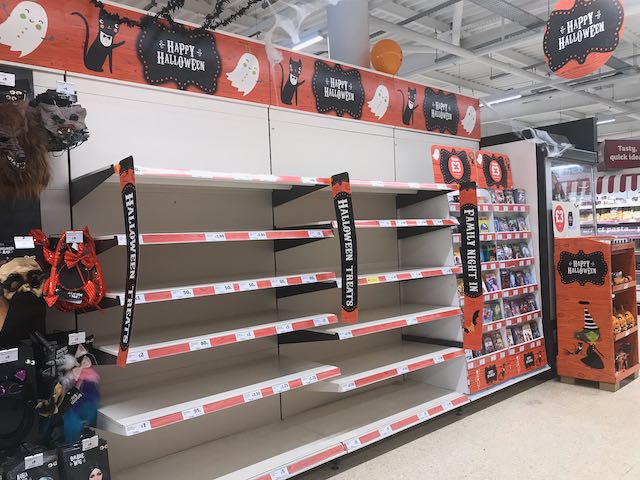
9 am.
Unacceptable.
No night shift thus relays done in day, demonstrable customer impact.
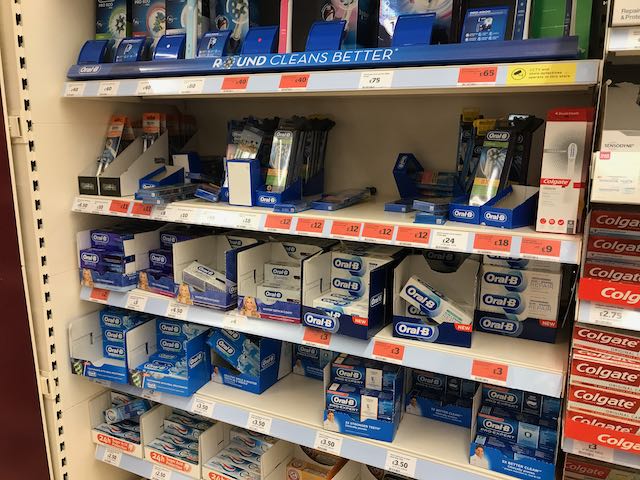
Promotions are still important to customers, despite the elimination of multibuys and more "EDLP" work in stores.
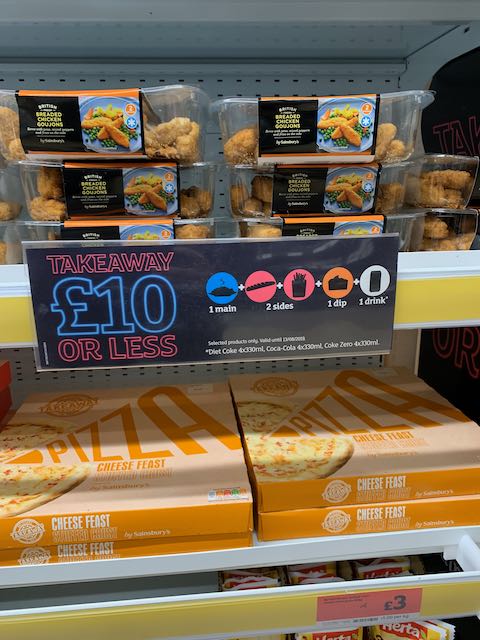
However, the elimination of multibuys makes what should be a simple mechanic that's easy to shop, far harder than it needs to be.
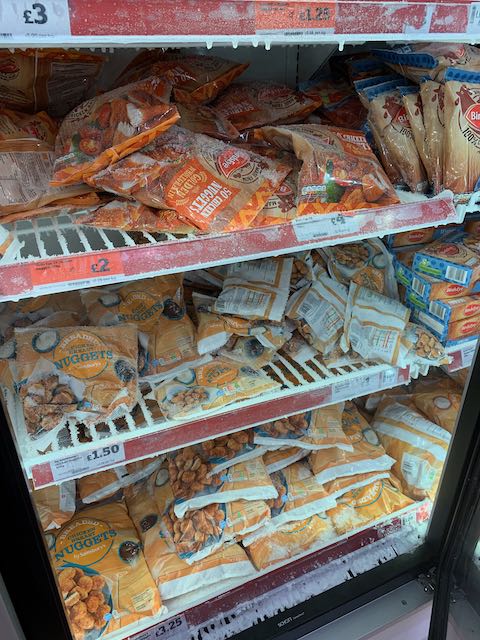
Even Hedge End (and refitted investor store visit superstar / TV show focus) struggles, Frozen Foods is often an issue in numerous shops, notably Sainsbury's.
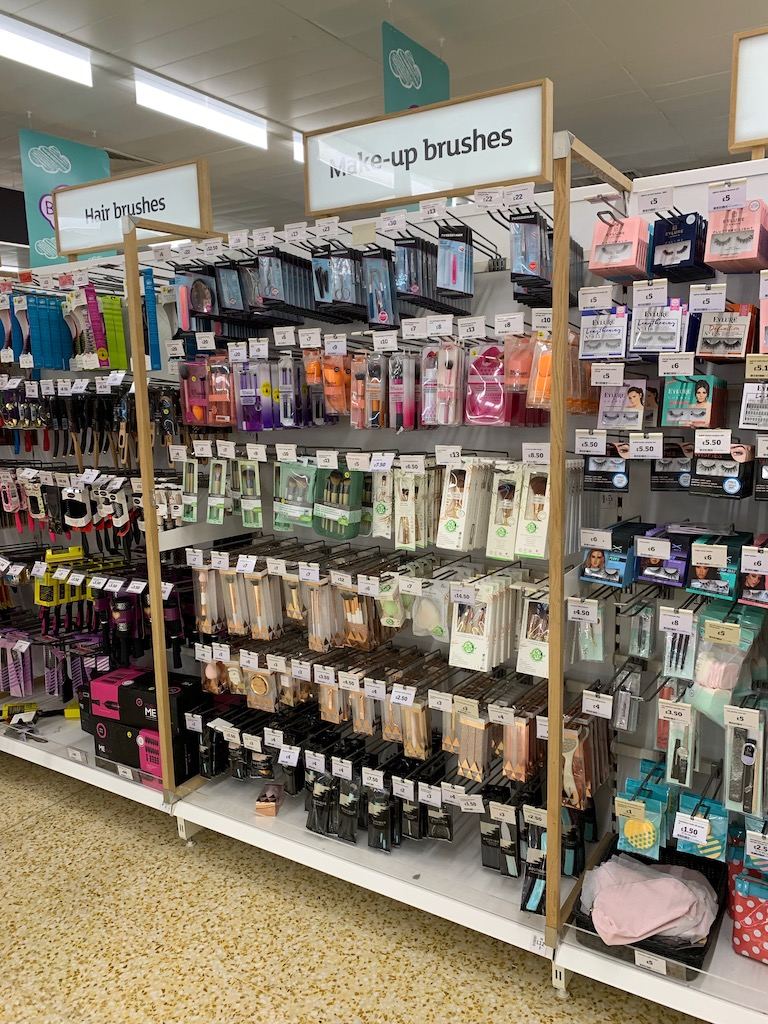
A number of stores are to receive the new 'beauty' bar / Cosmetics counters in-store. A positive move but this investment will be directed at the big stores, what about the rest?
There is a lot for Simon Roberts to ingest on his elevation to the big office in July, not least questions around strategic moves, more of the same? Some momentum was gained at Christmas but it was pumped by fuel and 25% off wines.
Own label was improved (dramatically) but this space is crowded, Morrisons win more than their fair share of awards in premium, not to mention Aldi and Lidl alongside a revitalised M&S Food.
There needs to be more work here, they were strong on Vegan last year, let alone this year but that space is crowded once again with everyone in the mix here.
A lot of questions and not that many answers in truth, it's not an easy job at Sainsbury's. They were already very efficient, utilised technology well, have a strong online arm, convenience is also a strong business. Competitive market, quality food is a lower price elsewhere, differentiation is harder to get at.
Where do you go from there?
Visit the Retail Bible - our new platform for imagery and insight
Find out more about our services
From the Grocery Insight newsletter archive, first sent to subscribers on 29 January 2020. Steve now writes at read.groceryinsight.com. See also the blog archive and briefings.