Poundworld - Multi price, Multi confusion?
26 February 2018

Our price and access options will soon change for this service, with tiered packages available to encompass various options for users who would like a little bit more content.
Subscribe to our email newsletter service
We produce a wide range of reports too.
There has been a fair amount of talk about Steinhoff and Poundland, but they're not the only former single price retailer in town of course...
Poundworld are a Yorkshire based firm who were family run until around 2 years ago when Chris Edwards sold his shares and departed, having traded and grown the business through difficult times, including the recession when actually, things become a bit easier for the discount stores.
However as things started to improve for the population, pre Brexit, he probably felt the business was at a bit of a turning point. Especially given the consolidation in the sector generated by Poundland buying 99p stores and gaining a huge tranche of locations to trade from.
The single price model worked brilliantly well for customers, it's simple to understand and brilliant to drive value. There are some gems within the mix but some lines are actually cheaper elsewhere (Cotton Buds e.g.)
For the retailer, buying becomes incredibly skilled as you have be relevant, offer quality and stay within that £1 framework. Sourcing from the Far East becomes ever interesting with transport factored in and the leading suppliers are falling over themselves to do deals on smaller pack size in order to grab the volume.
The negative with this model of a fixed price point is that it becomes easy to defend against, there was nothing stopping Asda pushing on the £1 price point when the recession and slowdown gripped the nation. Thus Asda are able to do more at the £1 price point at standard pack sizes, leaving the customer in little doubt that they're getting a good deal.
The single price point also impacts the retailer, as deals appear or products are available that are slightly over their £1 threshold and therefore can't be featured.
The single price retailers felt they needed to offer multi price to be more competitive, especially with the growth of the likes of B&M, who are able to offer all manner of price points but crucially, the range to go with it.
The problem with this strategy is that whilst you think you can compete more effectively, the challenge is that you open yourself up to being compared on price by the customer.
Whereas the price point of £1 was unequivocally good value, suddenly, dropping other price points in to the mix can lead to questions from the customer around the value elsewhere.
Not a place you want to be as a former single price operator, working with a customer base that will be mixed, but predominantly be hard pressed people and families who are watching every penny.
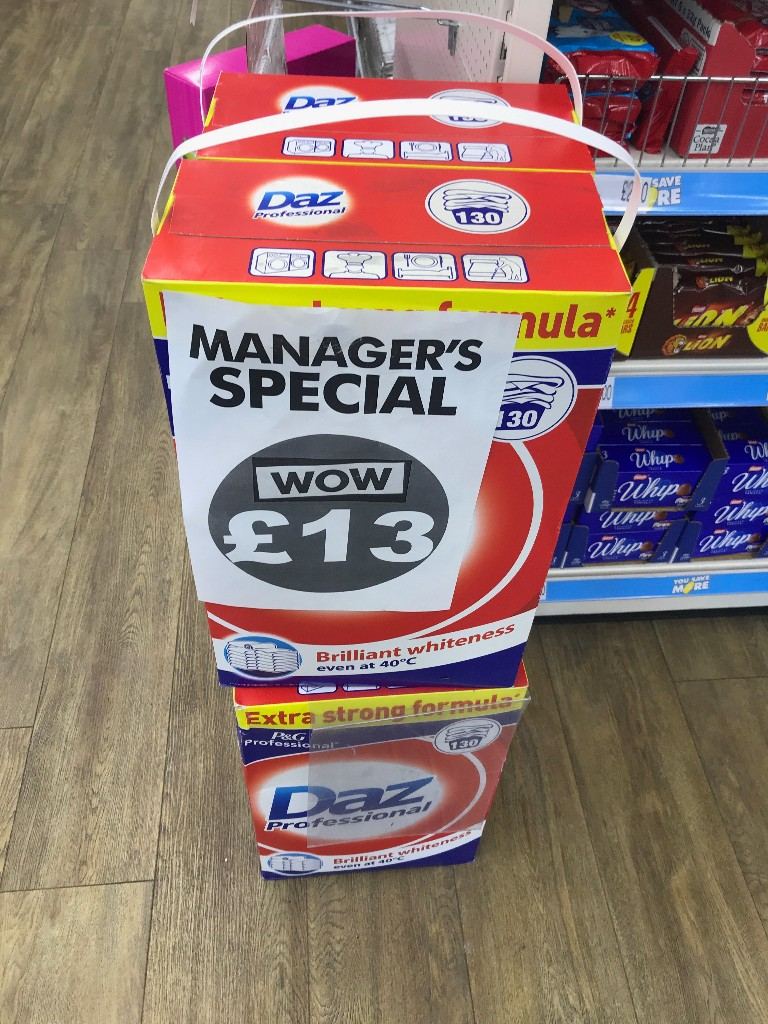
So in the past 18 months or so, we have seen both Poundland and Poundworld change to multi price offering. Poundland remain broadly true to their £1 message, with any £2 / higher priced products blocked in the fixture and signposted accordingly.
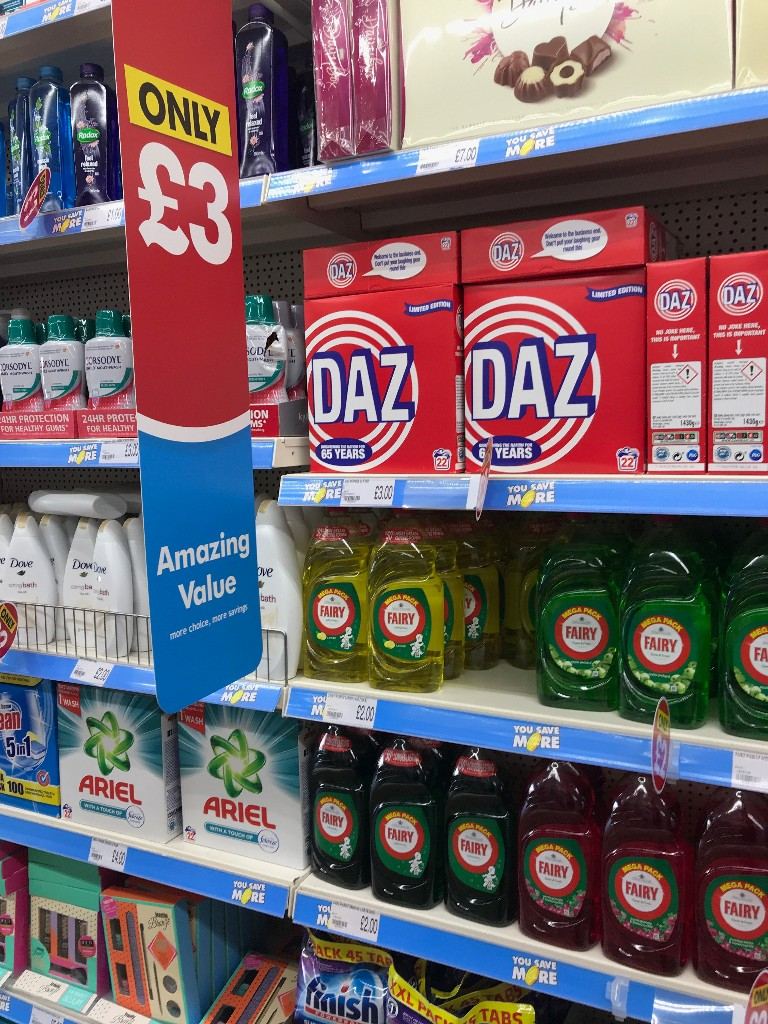
Poundworld changed their stores to the 'Plus' format which enabled them to do a lot more multi price work across the ranges.
However they retained the Poundworld name, so one presumed it would be flexing of their model....
Not so, what started as a multi priced doorway range has progressed to being multi priced all across the shop, even in fixture. Which confuses the message entirely....
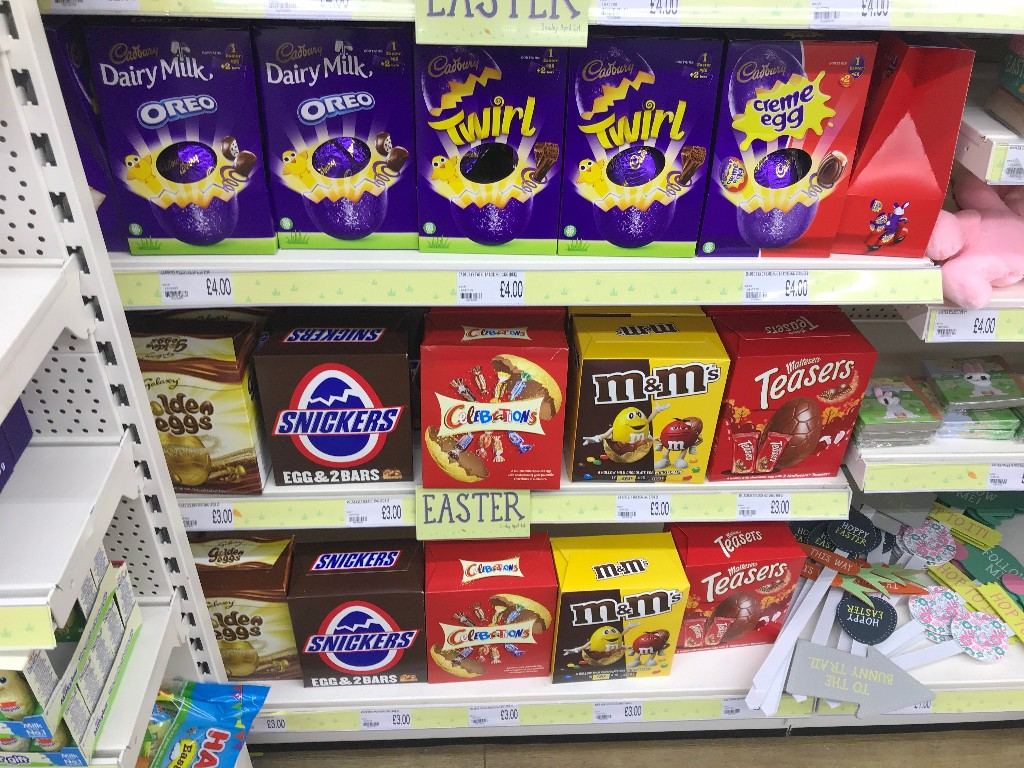
if we consider the store from a customer viewpoint, every single sign / price forms part of the customer and their value perceptions.
Therefore if a retailer is careless about what the customer sees on their way in, price points that are too large, or perceived to be poor value our out of season.
Then you can immediately set a customer off in to thinking about things being too expensive, or even, looking at your prices in forensic detail.
Areas like Easter Eggs, a core range as seen in all retailers with barely any difference in price. Where is the incentive for a customer?
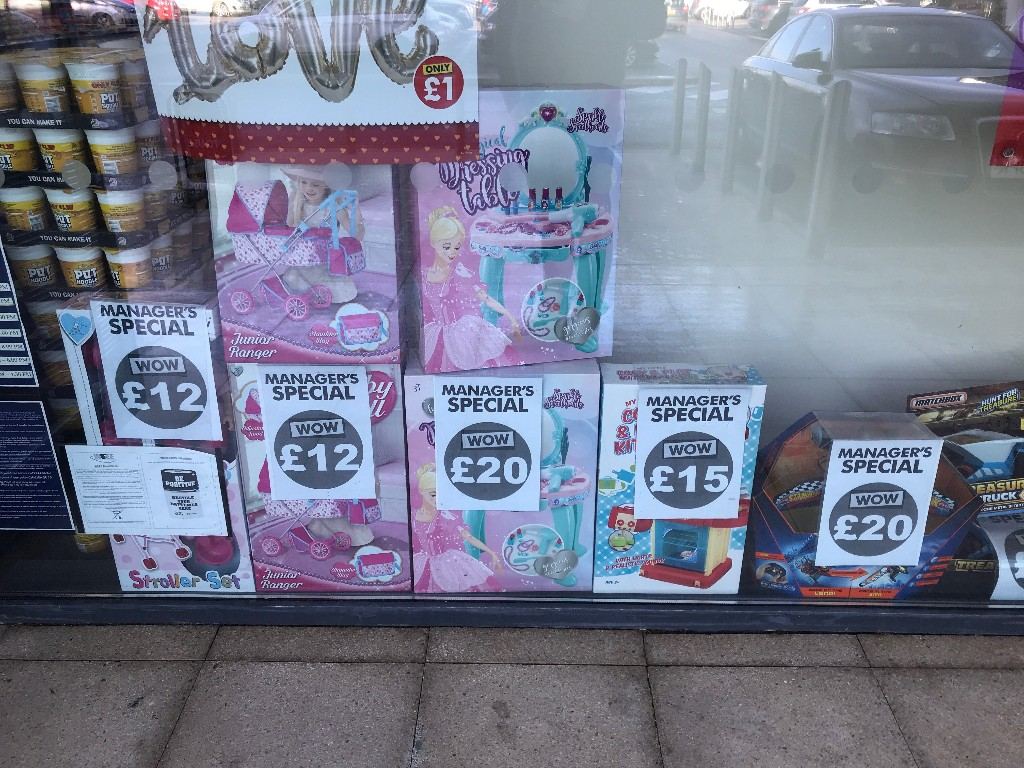
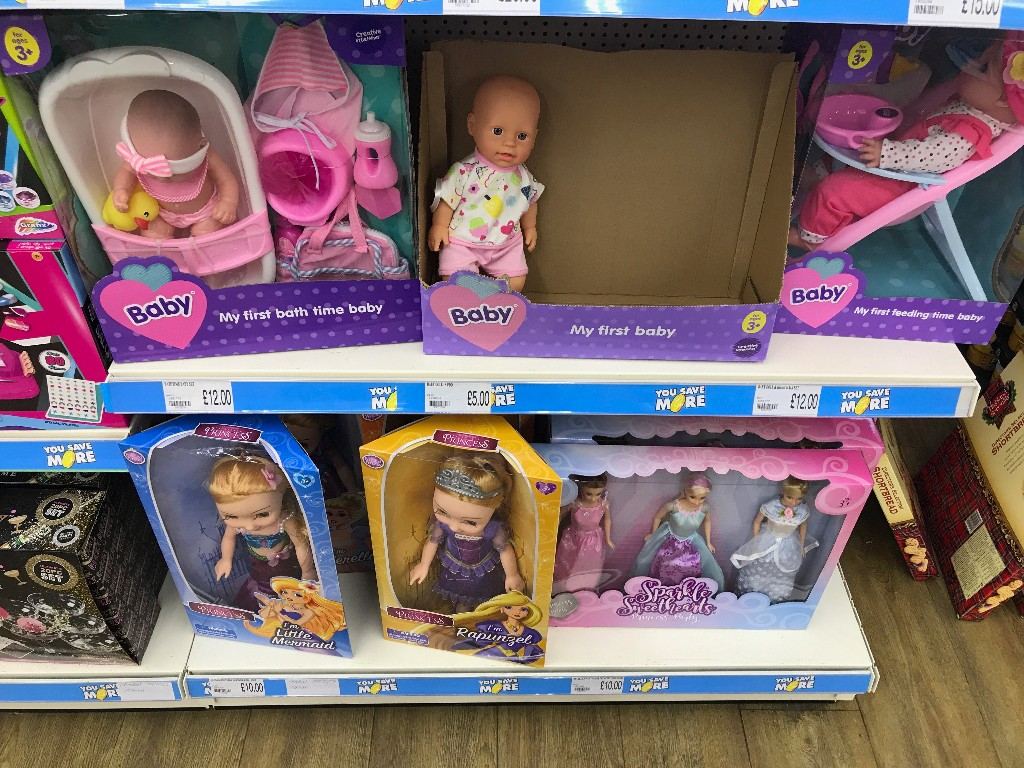
Post Christmas toys were a great example of stock that skews price perceptions as all you see is large price points upon entering the store. These brands are generic and in many cases exclusive to Poundworld, so comparatives are not easy for a customer.
In this sense, you then encourage comparisons with B&M (very strong on Toys) and the other retailers who will do branded equivalent Toys for less than the price of some in the window....
Price perception is questioned before one enters the store.
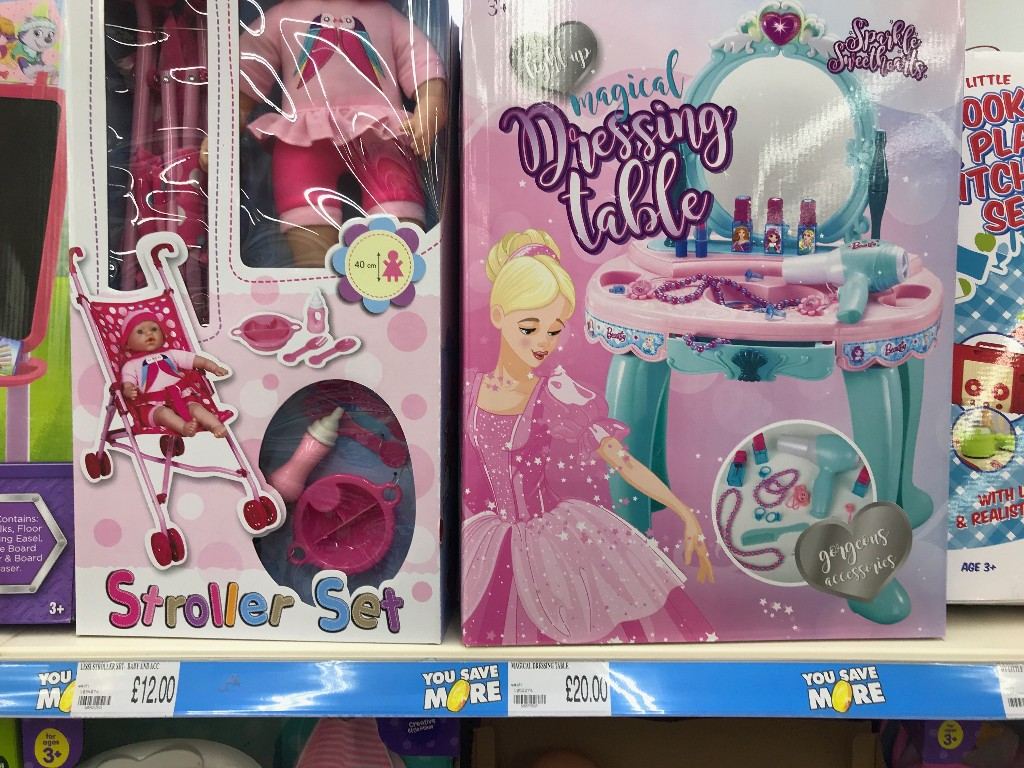
Around the aisles and fixtures, the beauty of a Pound store was that it was literally 'sleep shopping', where a customer could easily shop without over thinking things as the prices remained the same.
New products were easily identifiable and the value cut through instantly. A clear indicator to customers that there was value to be had within the core range, with anything extra added on a 'one off' basis or otherwise aided that 'treasure hunt' feel.
However when you start mixing prices in the fixture, it's near impossible for customers to work out what is going on, where their favourites are, where the value is and the addition of lines at £1.25 for example, leads customers to think that their core products may have risen in price too.
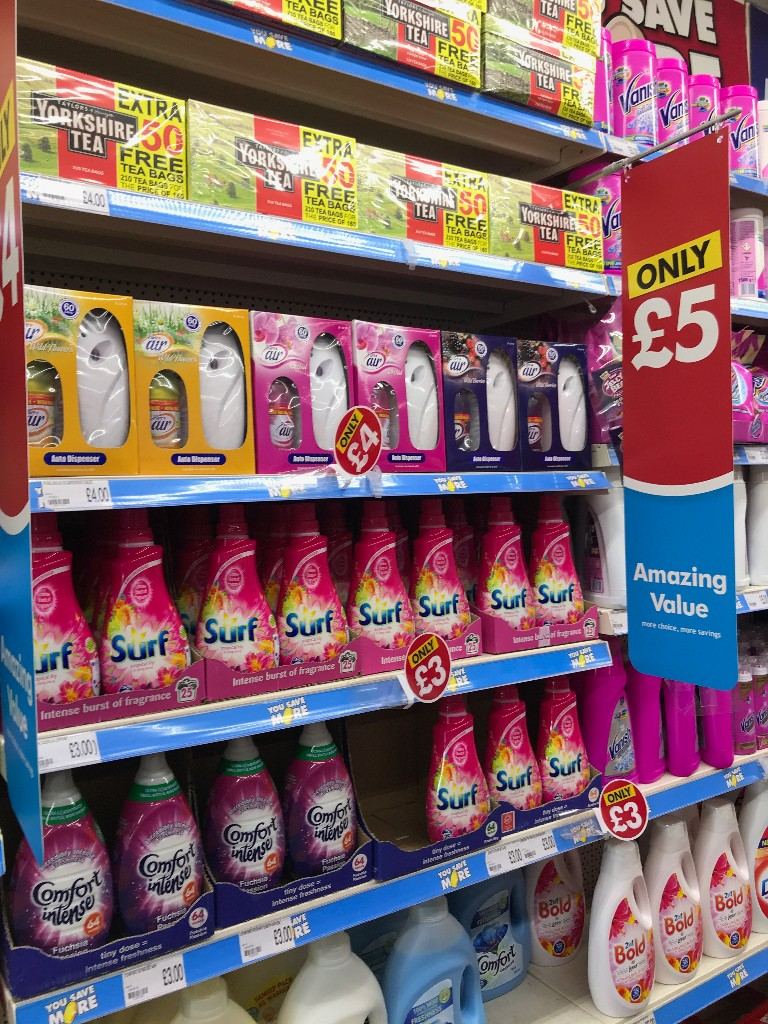
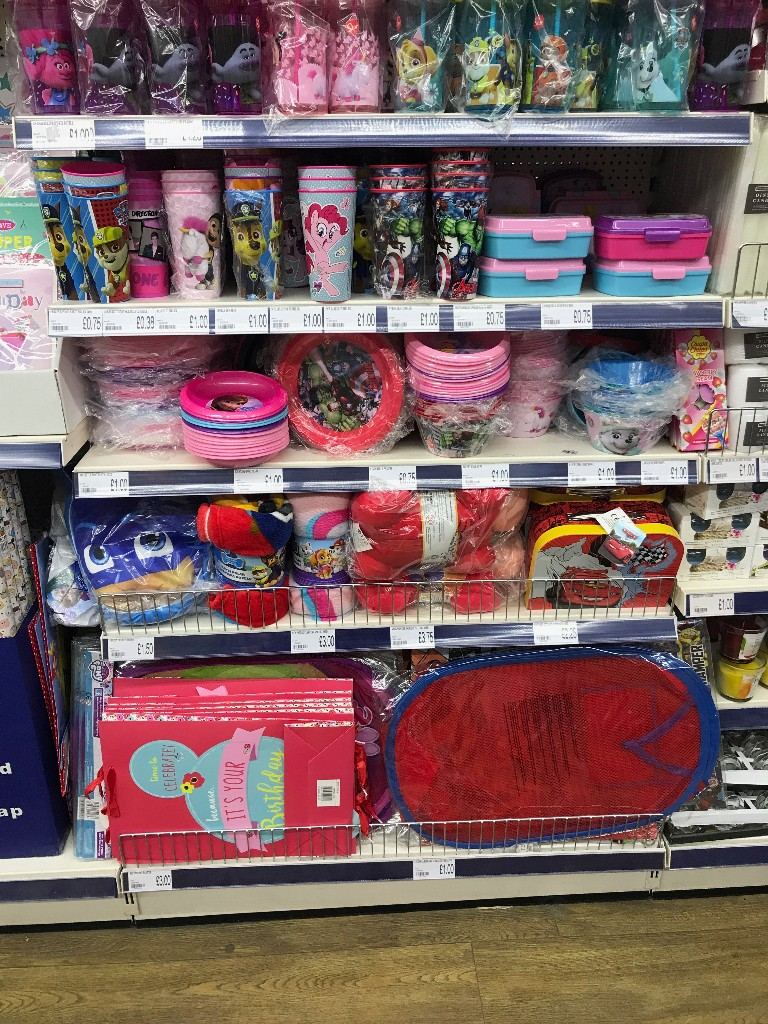
Good example above is where the range has diversified, perhaps fairly in to lunchboxes and other lines, but there isn't a clear path to value.
The prices look reasonable but not necessarily 'cheap' in the same way that the 'Pound' would have got your attention.
Therefore a customer looking at these lines (not to mention the merchandising which is an issue in itself) would perhaps think about places like B&M and Home Bargains....
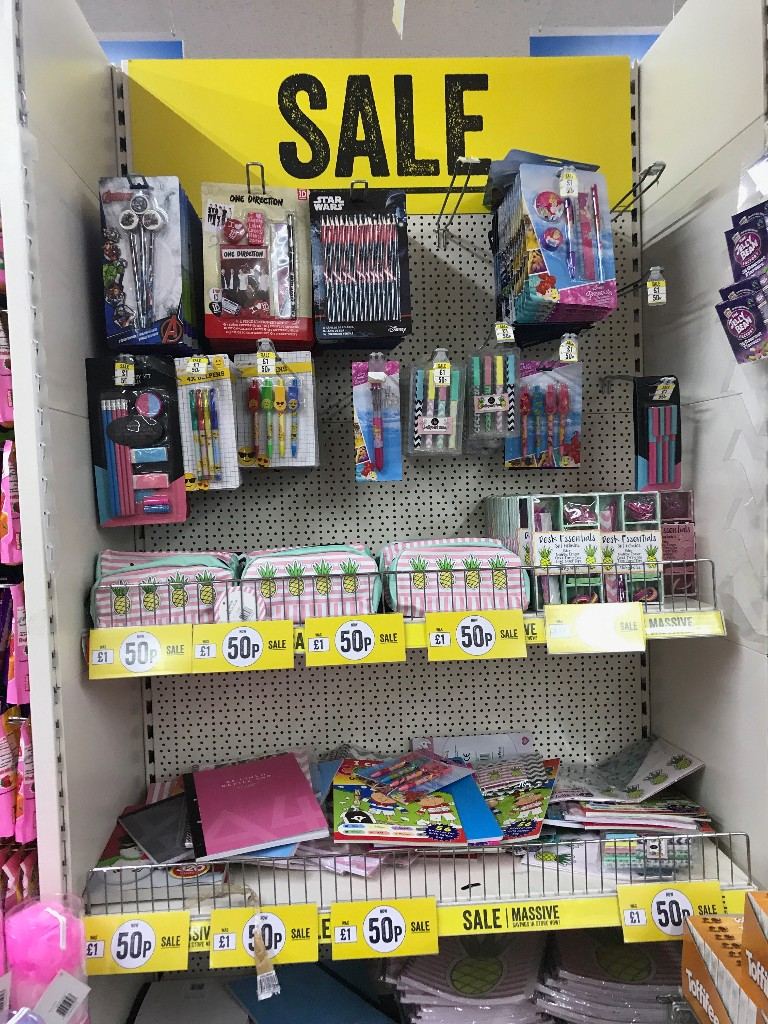
Sale of former Back to School / Stationery stock told its own story of a business that isn't turning stock with any regularity. They have been sharper on seasonal events, but that brings real risk around clearance given retailers have to be very sharp with their ranging to maximise sell through.
For a business operating on low margins, this only further adds risk.
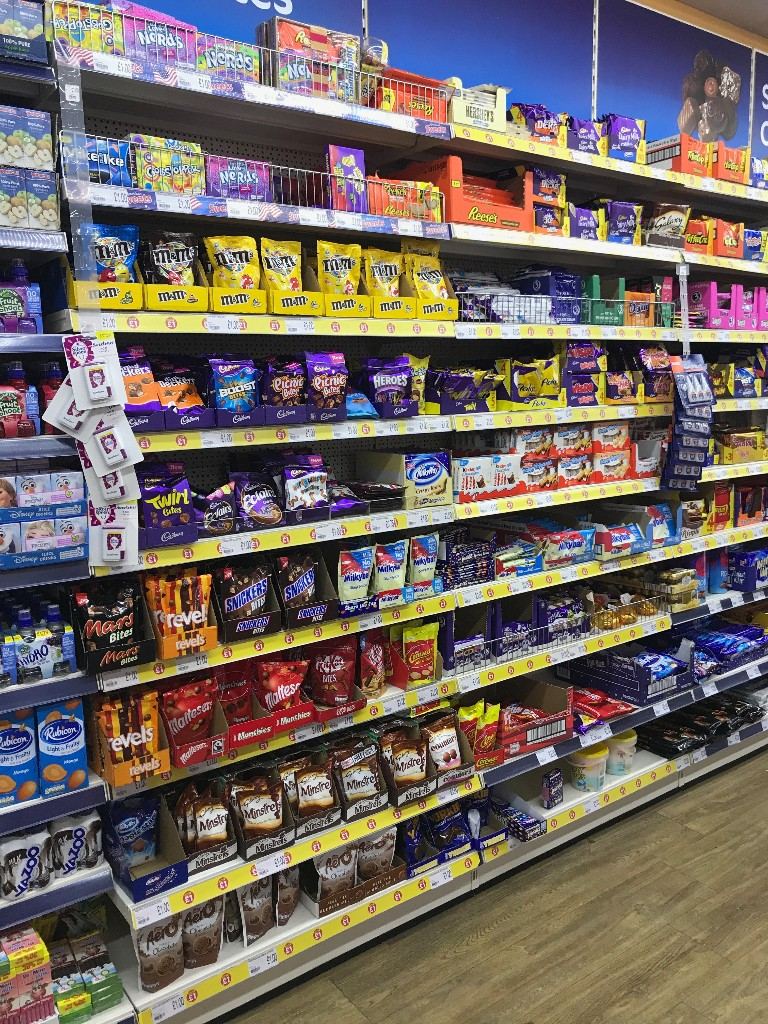
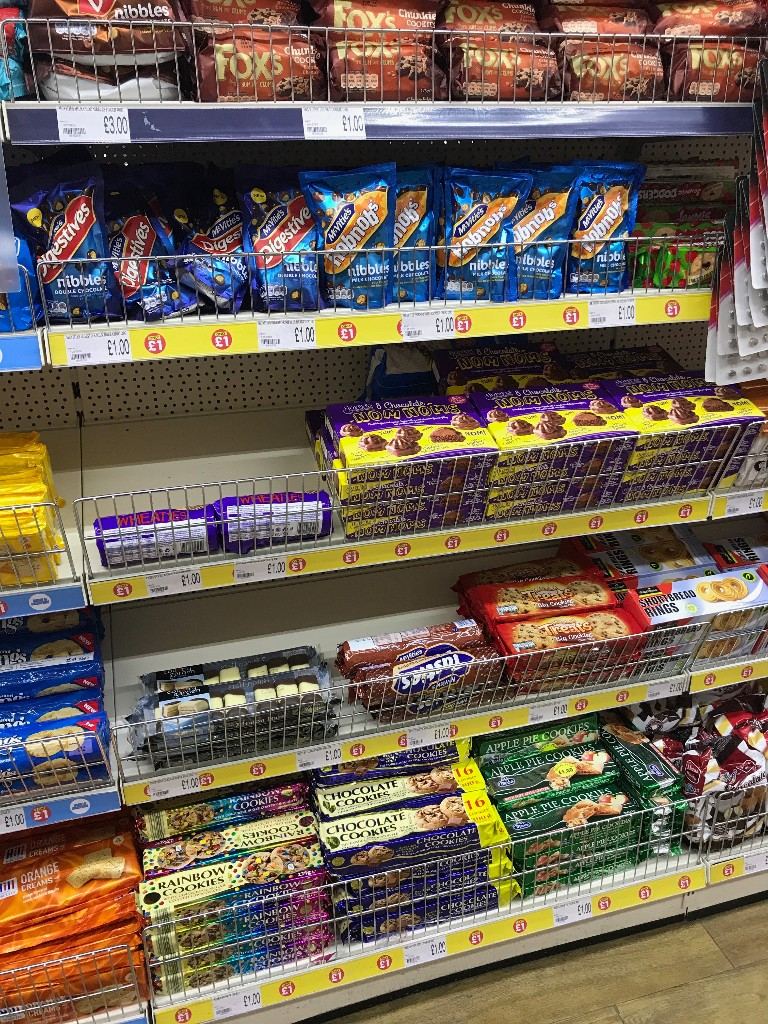
The best example of the business having lost its way is evidenced in food.
When you're having to flag the shelves within the wider range that are trading at the price point you used to be famous for, it's a clear sign that far too many products have come in at different prices.
It's eroded the value message and left customers thinking that there is probably better value elsewhere. In this market, there probably is, especially at places like B&M and Home Bargains.
Not a good place to be for Poundworld, being famous for value and a customer base incredibly value sensitive doesn't equal a chain that can then add numerous multiple priced lines in and simply grow sales.
They're not in a good place in terms of trading and recent store visits have shown that store staff aren't easily found either. The stories in the Times over the weekend regarding 'company doctors' coming in to aid restructure the chain make sense.
It just shows the risks of over complicating a simple business that works because it's a simple business.
Some multi pricing like Poundland is appropriate, clearly defined and tightly structured. Turning in to a mini B&M like Poundworld have done is the wrong move and thus brings them in to competition with B&M....
We produce a wide range of reports too.
From the Grocery Insight newsletter archive, first sent to subscribers on 26 February 2018. Steve now writes at read.groceryinsight.com. See also the blog archive and briefings.