Poundland to Multipoundland
7 August 2017
With the news that Asda were looking to buy B&M (quite the scoop in the Times two weeks back), we all expected a 7am announcement from B&M and the 12pm (7am US time announcement from Wal-Mart).... However, nothing has been forthcoming....
Will B&M end up in the hands of Asda? Unlikely one would think but you can perhaps see the appeal given the growth engine that B&M is, their rapid expansion and strong customer numbers, with like for like rising upwards makes them an attractive target.
However B&M stand on their own. One of those businesses that are relatively difficult to grasp in terms of their model but seem inherently popular irrespective of their store environment or near bizarre product assortment.
But B&M acquiring Heron Foods looks defensive however it's hard to see the owners being overly concerned about a takeover given what their shareholding would subsequently be worth. A Heron Foods takeover will be looked at on this service in future weeks, but at first glance it seems like B&M have bought a fair amount of complexity alongside the sites and increased volumes.
There are numerous pitfalls.
Logistics is number 1. Suddenly having to deliver multi temperature foods (Frozen/Chilled) alongside ambient and also navigating high street stores that bring delivery restrictions, curfews and limited warehouse space.
Number 2 is the wider offer. B&M exist and succeed because they're able to buy groceries from all over the market alongside the traditional supply routes (due to volume growth) and sell at negligible margin. Their extensive GM / Non Food offer then drives profits up as customers have a wander around and buy the better margin GM which brings the profit in.
Seasonal assortments work hand in hand with a stronger GM offer which means B&M can be in and out of Back to School, or Gardening whilst bringing relevance to the customer.
Heron Foods are high street operators, with a customer base that are incredibly price sensitive in the first instance. The limited store space means there isn't room to stock much non food at all, meaning food needs to be very sharp on price and the assortment.
B&M perform well in Ambient grocery due to a relatively eclectic mix of lines that changes and keeps the customer interested. A treasure hunt if you will.
They'll have to be on point to get this right as B&M Express or whatever the new chain will be called. Especially as Iceland are performing well with their own high street Frozen/Fresh core format....
We saw a similar shift in the recession to both Home Bargains and B&M who were relatively small retailers back then. They have nowhere near the store estate they have now and in many cases, were/are ignored by all and sundry too...
However with economic slowdown on its way via Brexit with a debate around what will actually happen, let alone the lack of any coherent strategy from the Government..... These stores will rise to prominence in the customer's mindset once more.
The mults have done so much work to counteract discount and are in a better place to compete, however there are still chinks in their armour and discounters still exploit these. However variety stores are still the great 'unknown' in many cases......
Poundland are one retailer who have benefitted from the consolidation in the sector post recession by purchasing 99p stores and somewhat clumsily integrating the chain in to their wider estate.
Poundland were then acquired by Steinhoff which saw them departing from the stock market and in to ownership with the South African magnate Christo Wiese. There is a distinct ex Asda feel to Poundland with Andy Bond involved with initial Pepkor efforts around Pep&Co and GHM! stores that were popping up around the UK.
Acquiring Poundland has given them immediate scale and access locations up and down the land. They've added further ex Asda people to the team and announced a decision to move from single price to a multi price strategy - prices available at £2 / £3 / £5 / £7 etc alongside the core £1.
This is a wise move as whilst the £1 message was so valuable to them to lock value down, it left them open to attack from B&M and unable to move out from their restrictive pricing structure. This mean strong deals at the £2 mark were beyond them, even though these could add real value to their customers.
They did start to land some non food higher prices in the run towards the end of the old regime, but this looked out of kilter and in many cases undermined their wider proposition.
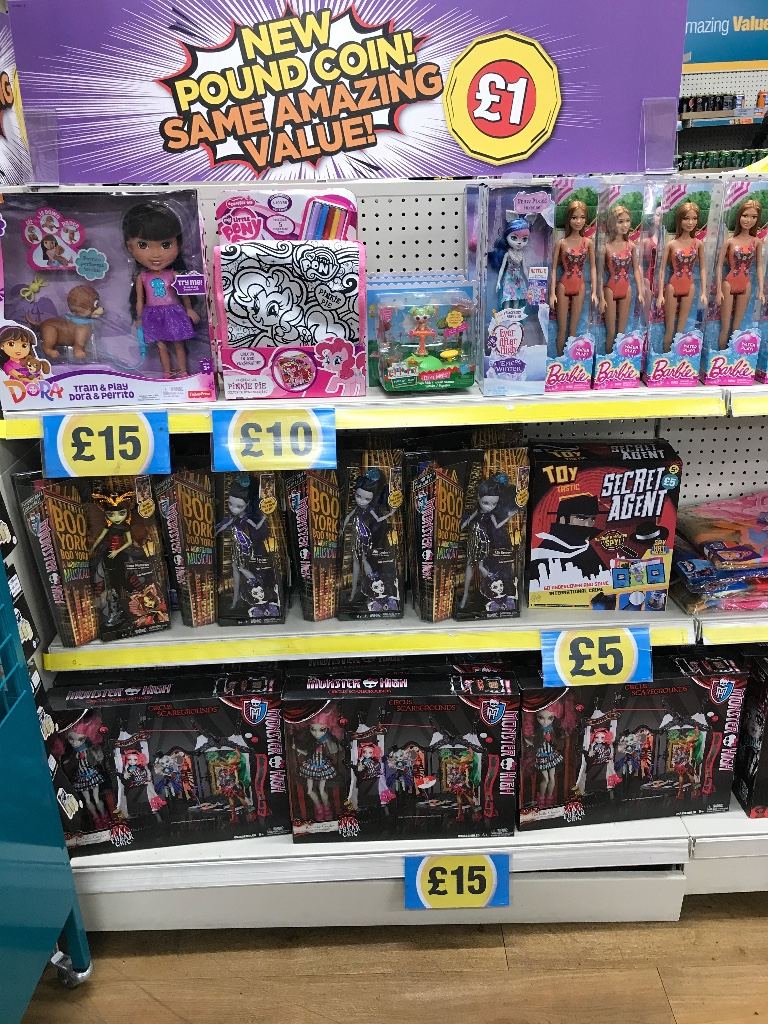
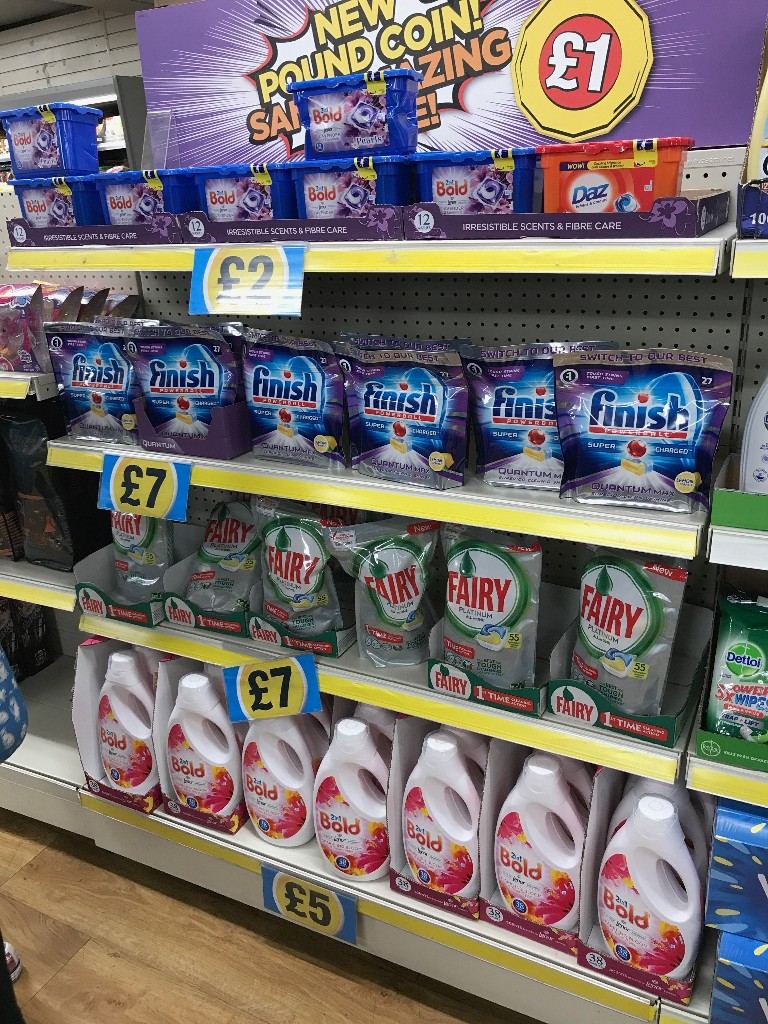
Some of the Poundland work around pricing is still mixed, multiple pricing on non food seen here - Toys can drive value and footfall within a multi price strategy.
There is no sign of larger prices points worked in to the core fixtures, higher prices are 'promotional' space in the main, signage reflects the new £1 but the same great value.
Whereas Poundworld (as we see later) work the multi prices in to core ranges which confuses the message for customers. How do customers know where the value is?
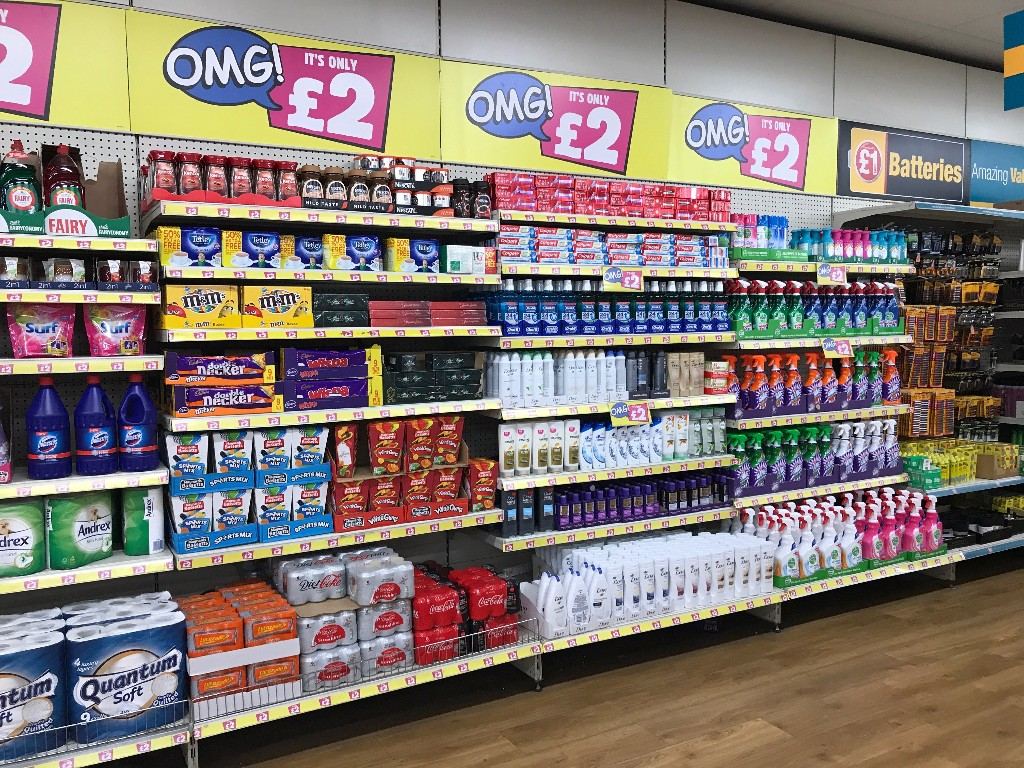
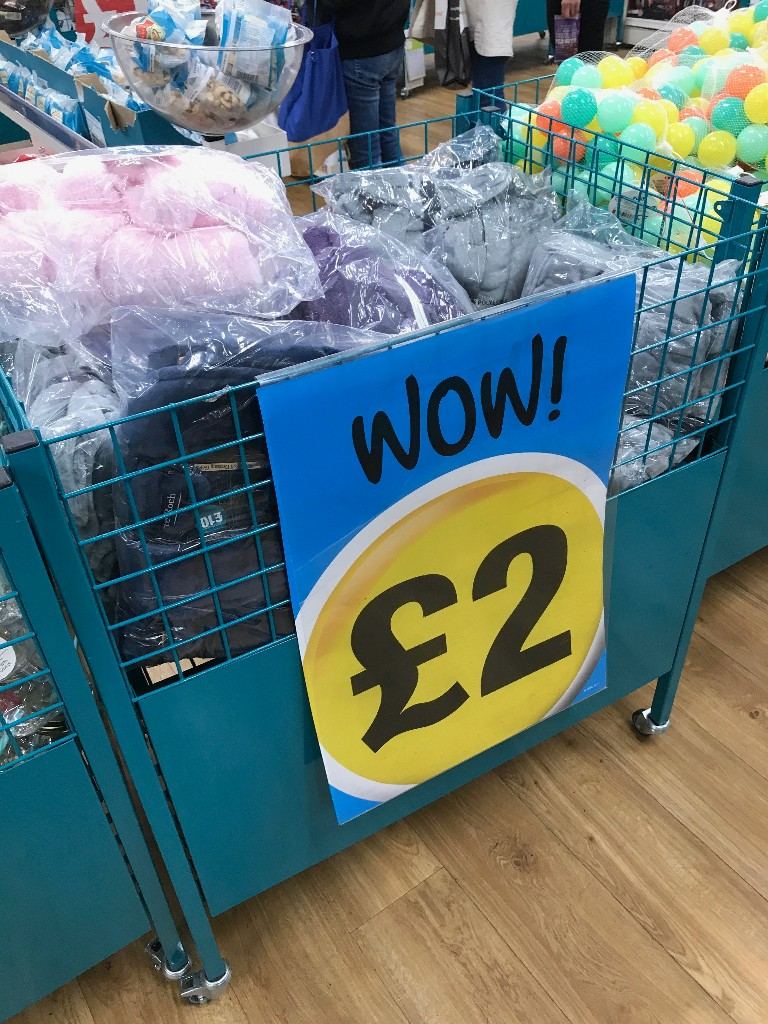
Examples of their £2 price point here; under the 'OMG' marketing campaign which is garish but works so well for the core message and the feeling of customers still getting value.
The entrance to Poundland still features their spot buys / non specific ranged lines at £1 before a move to a £2 price point.
£2 lines are generally big brands and offer a greater pack size, larger packs of Tetley Tea, 6pk Coke and Dove/Colgate were all noted. Their space then goes down to a £1 message for Batteries and in to Core Health/Beauty etc.
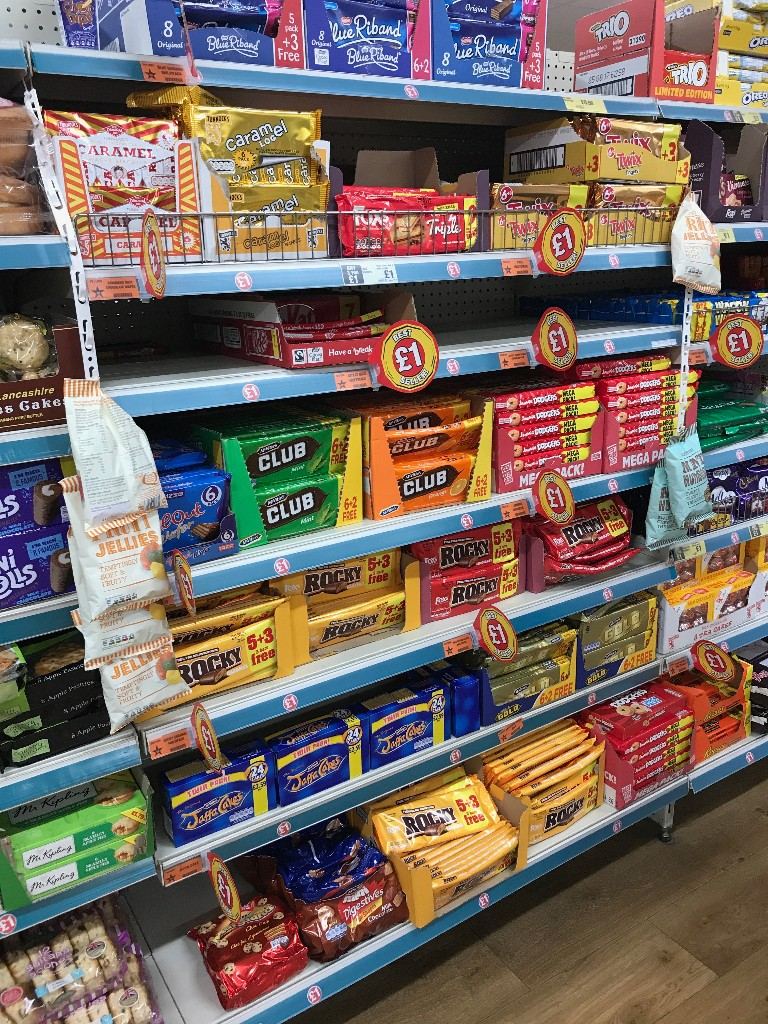
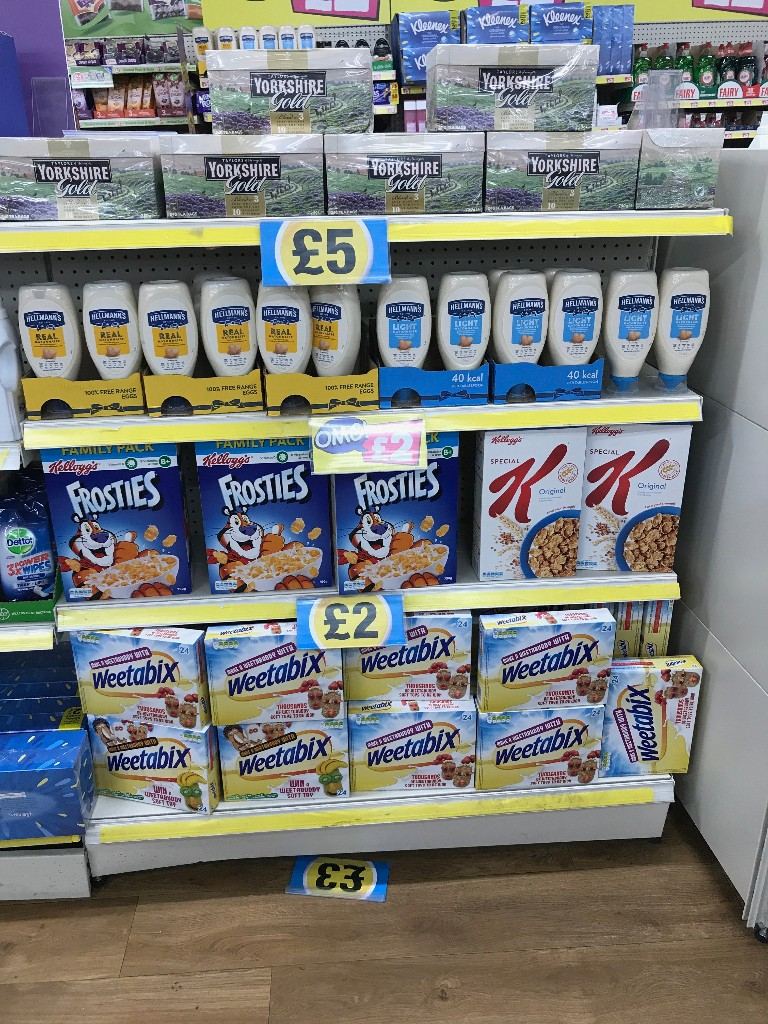
Some of the seasonal space around the store near checkouts and 'promotional' space featured £2 lines alongside giant boxes of Yorkshire Gold at £5. Keeping a relatively simple price tiering means it's easier for customers to sense the value.
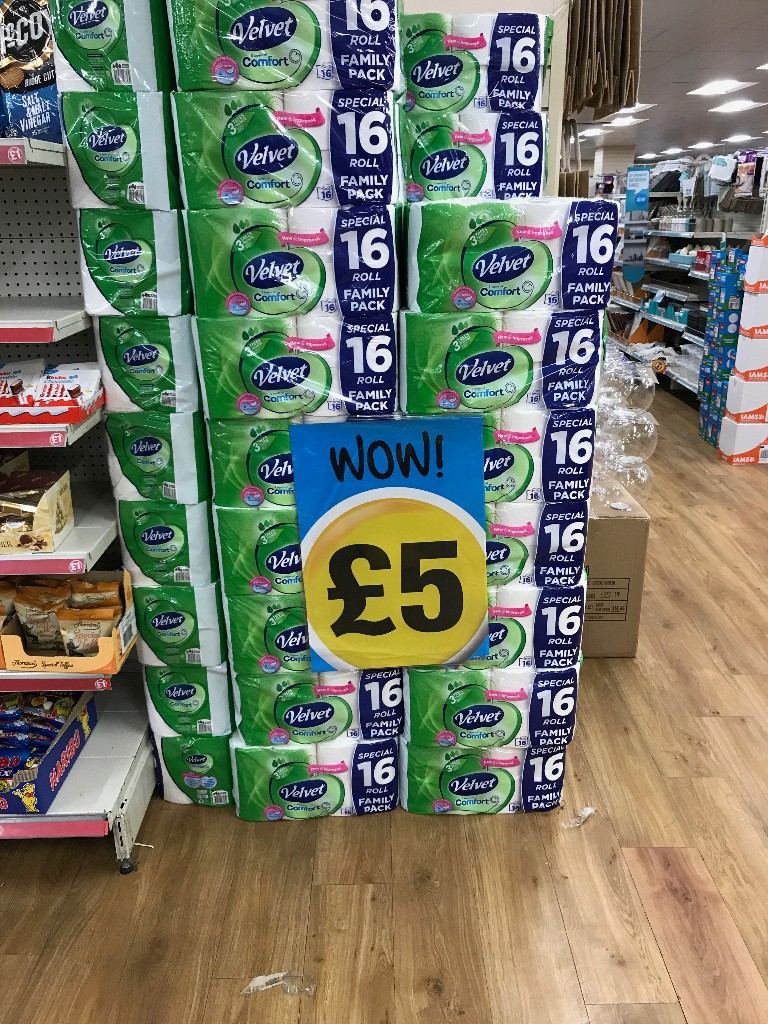
£7 in Household unlocks the largest pack sizes of Powder and Liquids to drive home value. Often shoppers are waiting for a large price / big deal to extract such a price from the core retailers. Triple Velvet at £5 for 16 rolls is another great price.
There is still a sense that customers who are dissatisfied with price on products around in Coffee, Tea, Detergents, Dishwash will go and chance their arm in a variety store. Knowing they'll be able to find at least one brand (even if not their favourite) at a good price - IE lower than the RRP / entry price for a large branded line.
The beauty of variety stores of course!
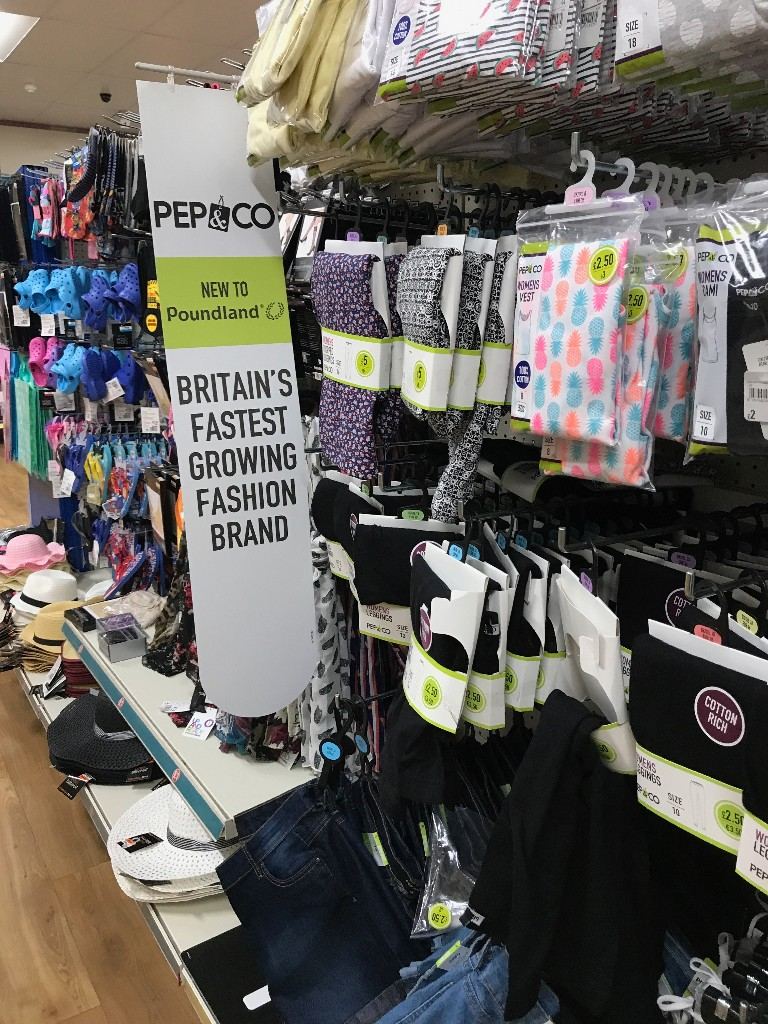
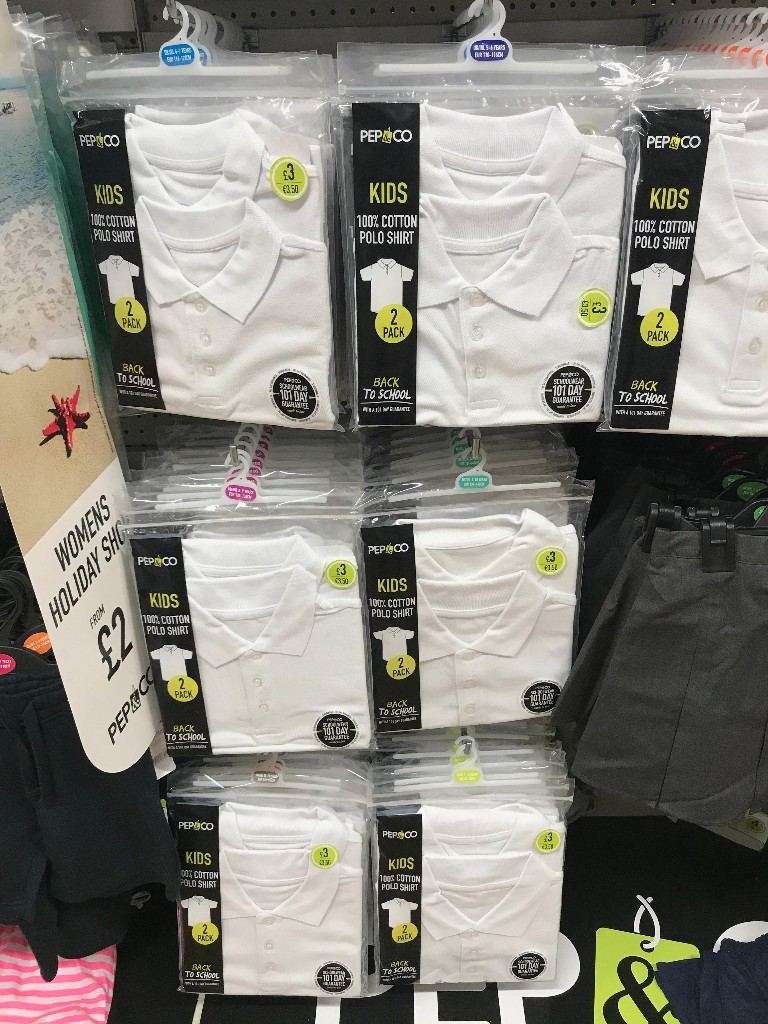
The Steinhoff tie up has meant that the Pep&Co roll out has expanded to arrive in Poundland stores. Larger stores like this one are able to feature a fair sized range alongside school uniform which enhances the overall value for customers.
The displays weren't the sharpest, but the branding looks good and it all drives the loyalty for customers, especially if they offer school uniform all year round.
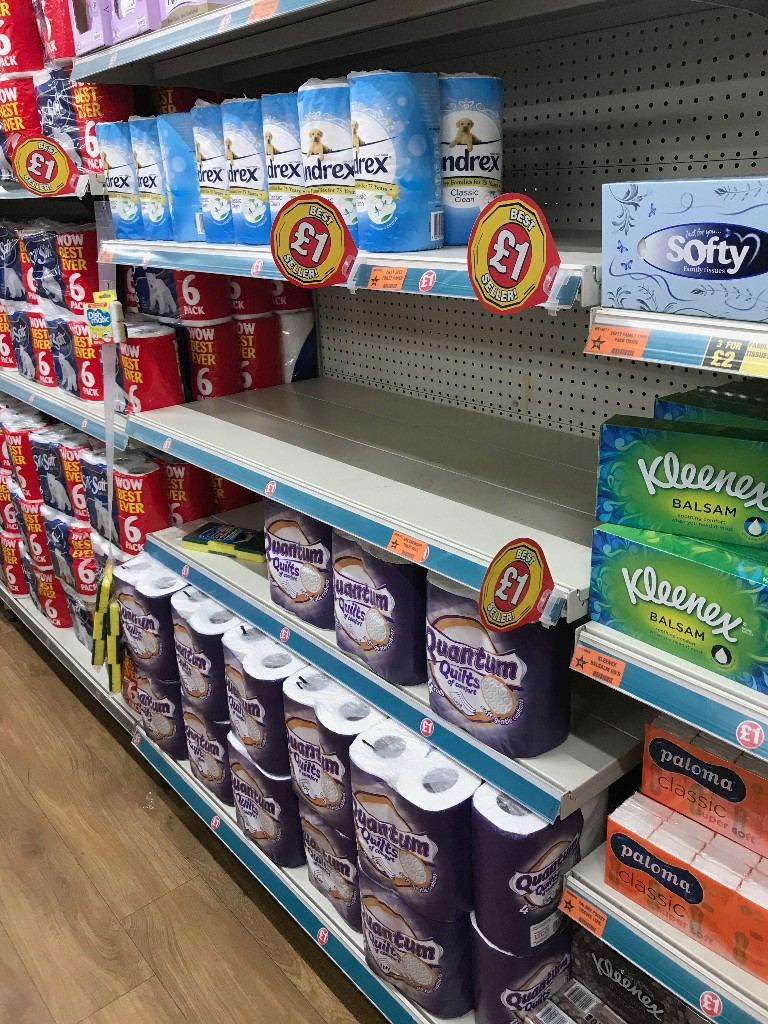
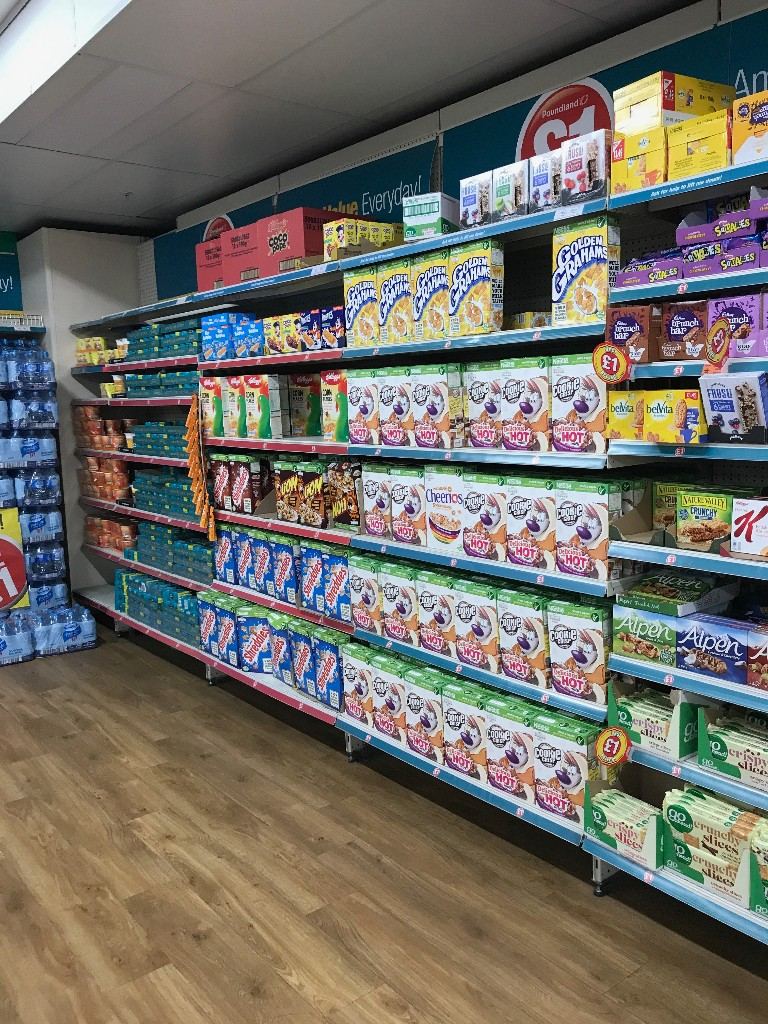
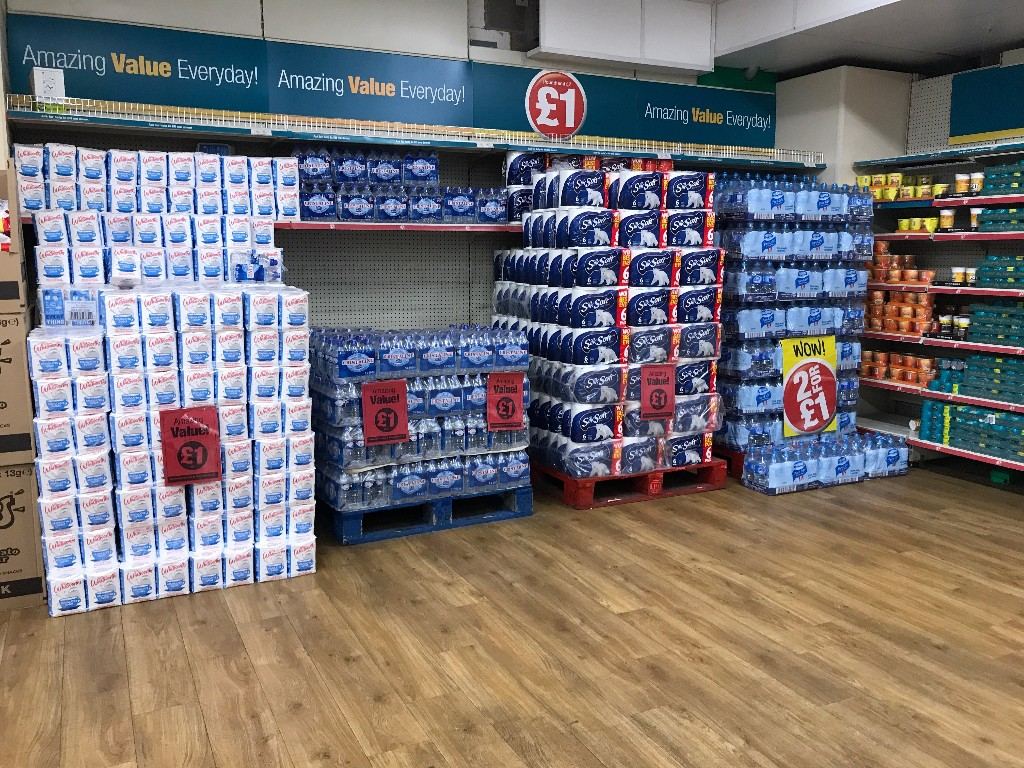
Their core focus remains relentless though, the £1 point is important for customers, many of whom are incredibly price sensitive and will be making decisions on shopping based on their budgets now.
Despite the seeing prices fall 0.4% (via the BRC. Give me a break!) in the last month, customers are having to make instant decisions on spending.
It seems to escape many in the trade who are perhaps waiting for the press or the OBR or indeed, anyone to fire the starting gun in inflation and a change in circumstances for customers. They'll get there eventually I am sure.
The reality is that the majority of customers have a limited pot of money each month, they have fixed commitments and variable commitments (discretionary spending) and it becomes a very simple case of C needing to be enough for A+B.
The rise in fixed commitments (IE Utility bills, credit card interest, credit card payments rising due to higher spending) plus the rise in variable commitments (inflation pushing food prices up, fuel prices on the rise) means that there is less money for customers.
Whilst spending on both variable / fixed commitments has to occur, there isn't a rise on the inputs. Wages are flat with minimal pay rises around (a national minimum wage rise means there's less benefits on the flip side) and state benefits are not rising either.
Add that together. Customers have to switch their spending to extract maximum value.
If you've suddenly got £50 less per month to spend, you don't keep blindly shopping at the same retailer - you shop around to get more for your money.
Add that school holidays are now in full swing with the expense that this entails and it's a testing time for families in particular.
The same money coming in but greater costs harm confidence and sees variety stores like B&M and Home Bargains alongside single price retailers (multi price) Poundland / Poundworld Plus pick up trade.
Let's not forget the credit crunch changed shopping for the youngest generation alongside others... We are now talking about customers who were conditioned by that tough time, the end of cheap credit and the acceptance of discount and a move away from the 'big shop.'
So, the core £1 message has to remain important and any 2 for £1 deals are important for customers who will come to rely on these deals to shape their shopping trip.
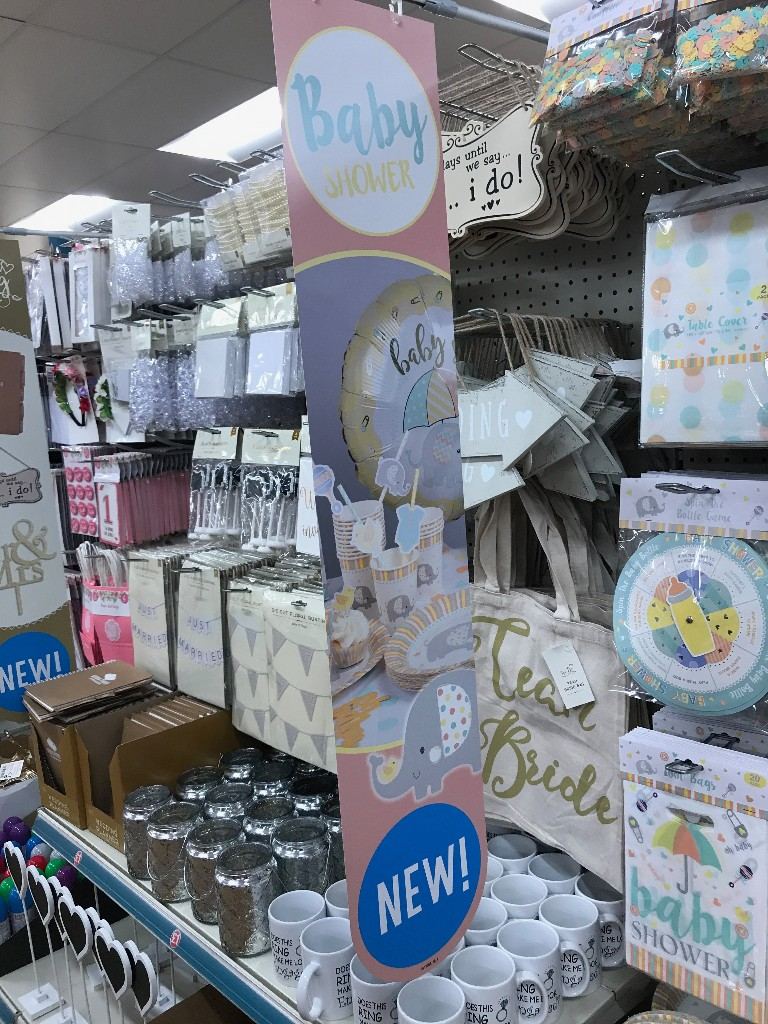
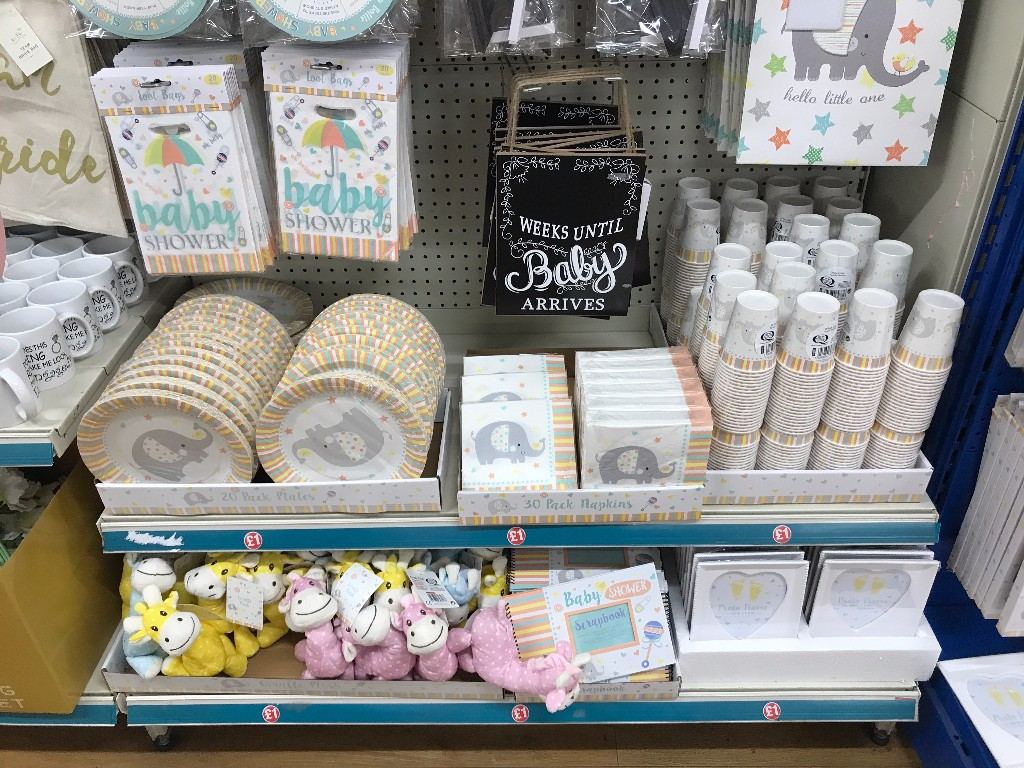
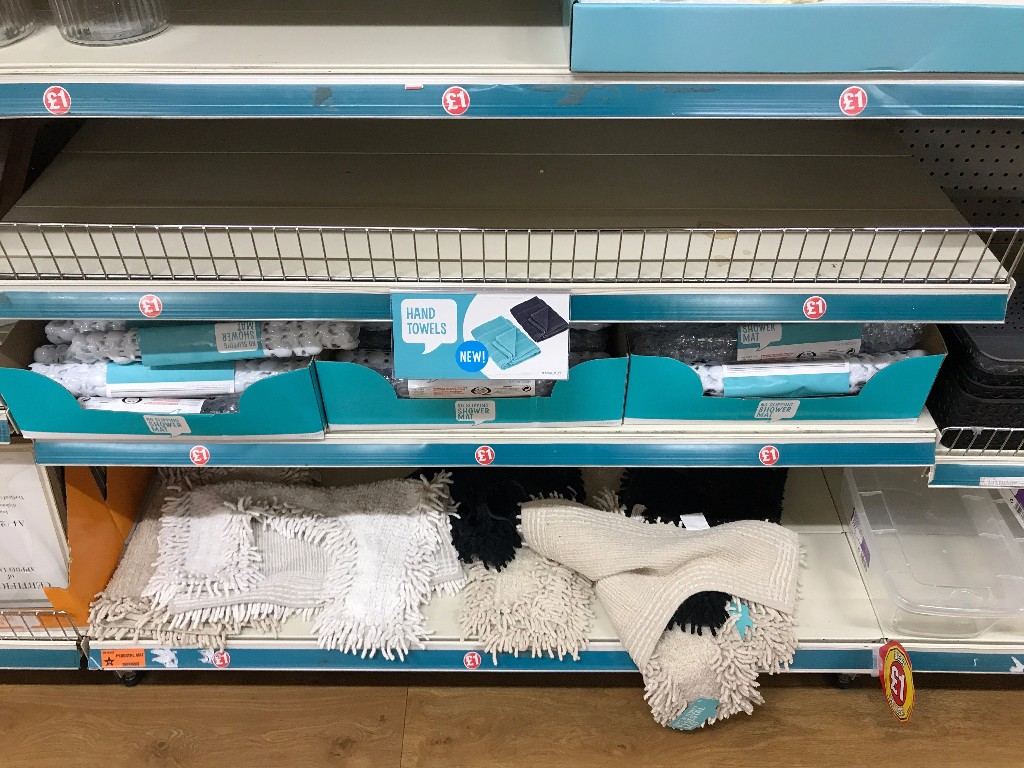
A real strength of any variety retailer is their focus on seasonality and being absolutely relevant to the current period. Maximising sales and minimising markdown is the order of the day, so Back to School is a key event at the minute which then transitions in to Halloween, no doubt via a couple of cleaning / baby events on the way.
These all help drive basket spend upwards, as does non food which when offering essentials like the above at £1, it's great value for customers.
Events aside, a permanent range of lines centred around Baby Shower alongside Hen parties are another way to drive sales and relevance for customers.
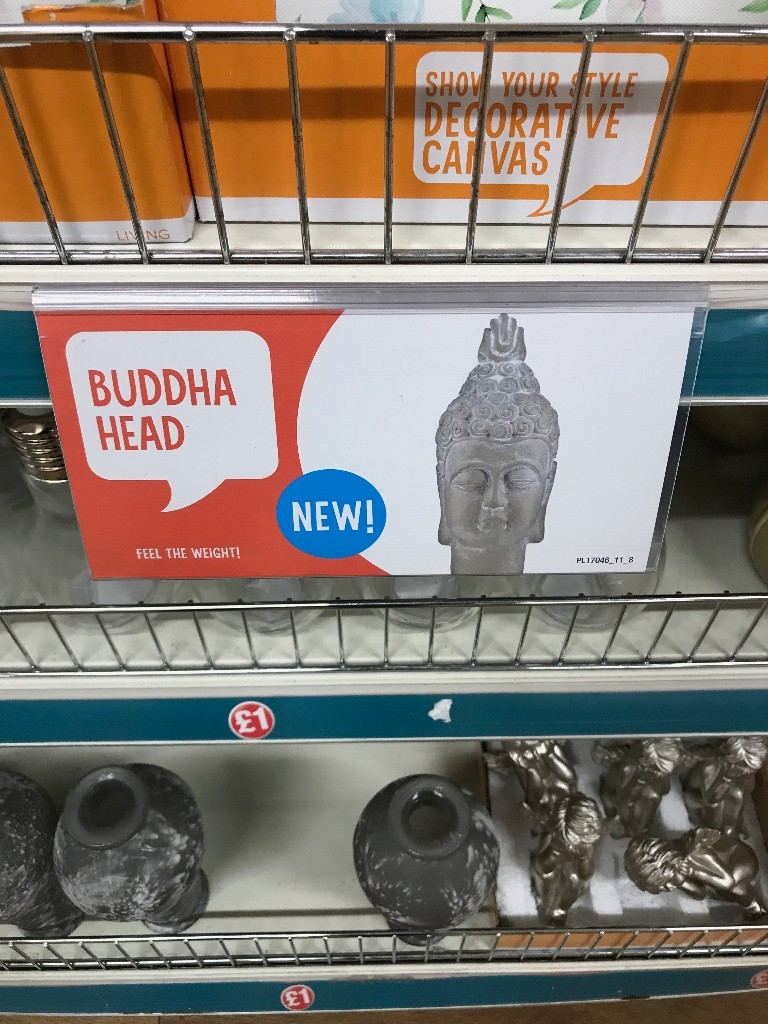
In addition, the non essentials like a Buddha Head are decorative items (for some) and when the odd gem is picked, featured in the Mail or wherever, it becomes a point of difference and a reason to visit Poundland.
Own label is another reason to visit the chain as it's exclusive(!) There is a real trend towards a rethink on own label around the market, brought on by discounters.
Poundland know they can control costs, quality and price when it's their own product rather than relying solely on the branded FMCG companies. I honestly don't believe they have any cohesive strategy when it comes to operating in the sector, bar the odd attempt at shrinkflation and blaming it on 'rising costs'. It's so fragmented, they have their products turning up in B&M and a core retailer at different prices....
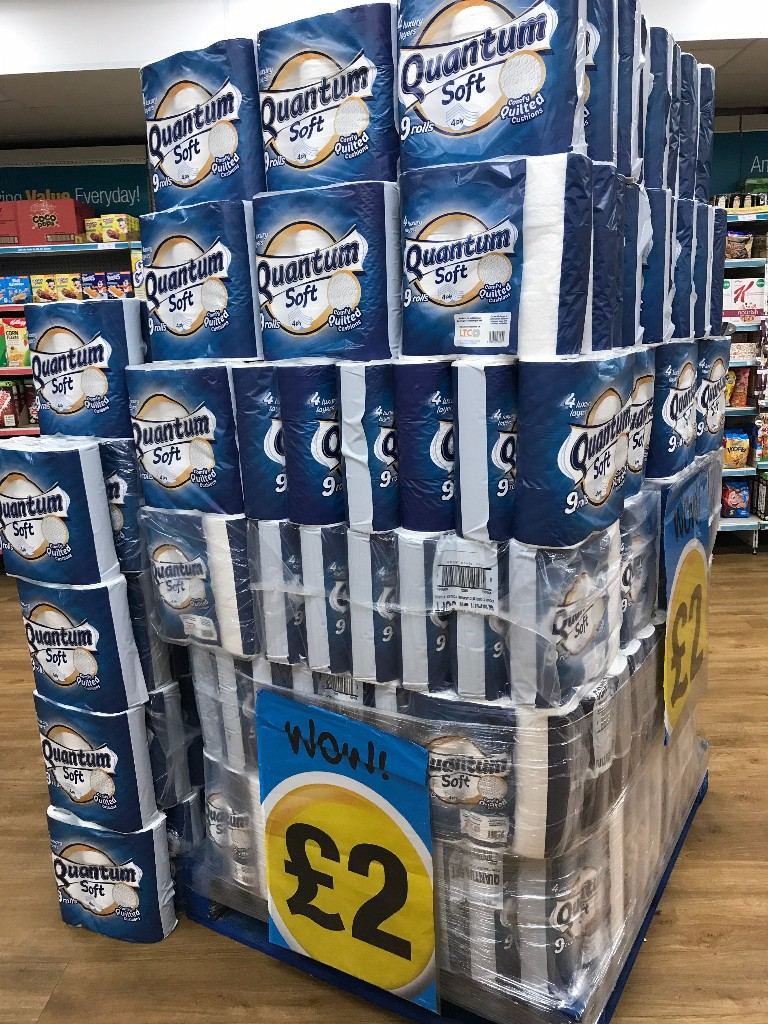
As we saw on TV not too long back; there's a 9pk own label toilet roll in for £2 at Poundland, an example of them using their multi price strategy to good effect here. Own label too!
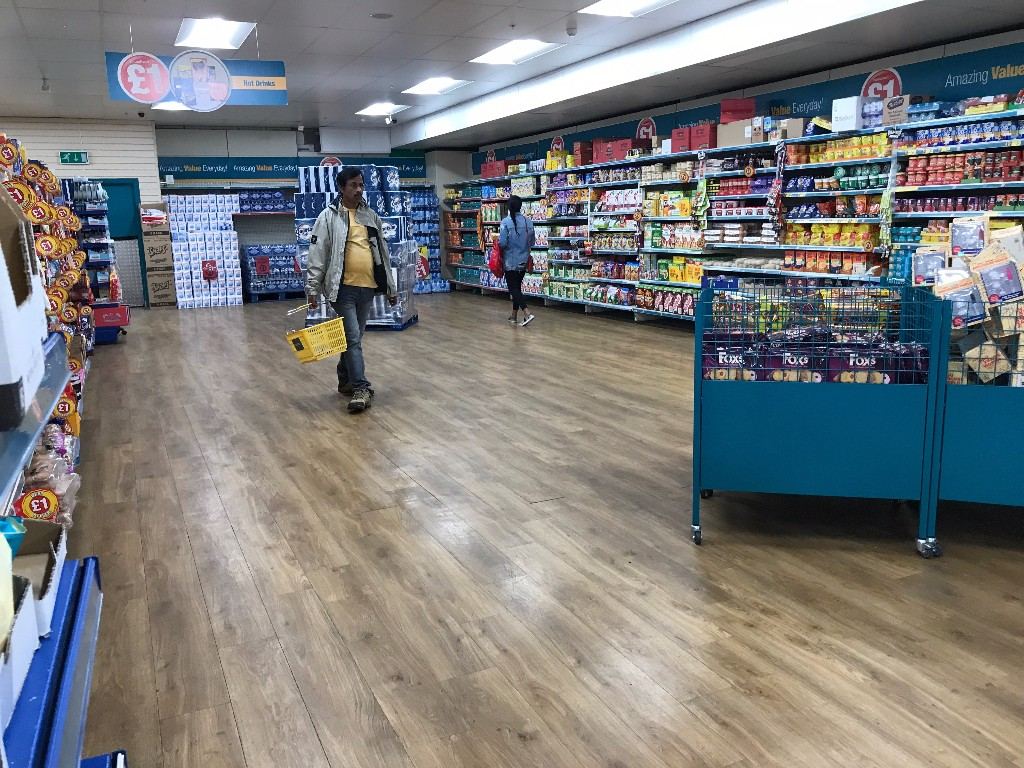
There is a bit of a hangover with the wider estate going forward, some stores are huge post that 99p and Poundland space race they got caught up in post the recession. This store in the north had a fair bit of space, there's opportunity for bulk based trading on pallets perhaps... But in a low yield, volume based business - excess space is harder to justify.
This store is a city centre store too; there are limited opportunities for trading pallets as customers have still got to lug their shopping home and on public transport in some cases too.
The main rival to Poundland is Poundworld who have been taken over themselves, with private equity now running the chain with Gerry Gray (ex Tesco) running the show as CEO. There have been a fair number of moves in to the chain from various retailers, particularly ex Morrisons folk who are not part of the new world there.
Poundworld have seemingly morphed in to a version of Wilko / Woolworths and taken their 'plus' brand to heart with a wide range of lines at multiple prices.....
These products are not treated like promotional lines though, it's a clear muddying of the waters by ranging lines in the core fixtures at various price points.
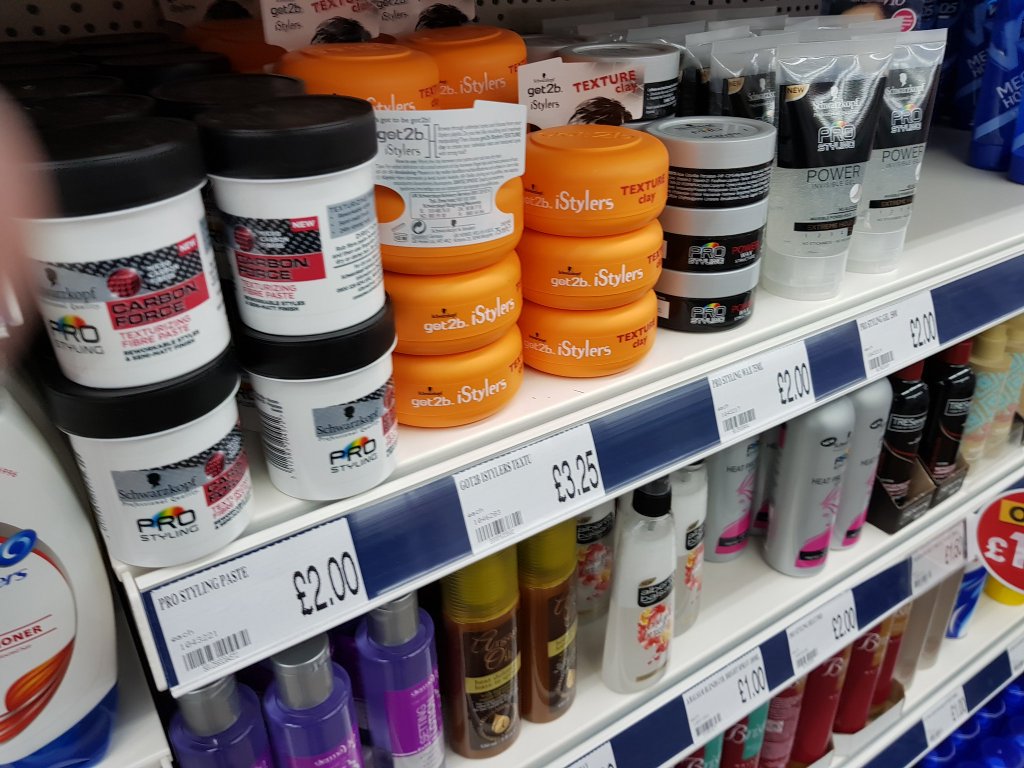
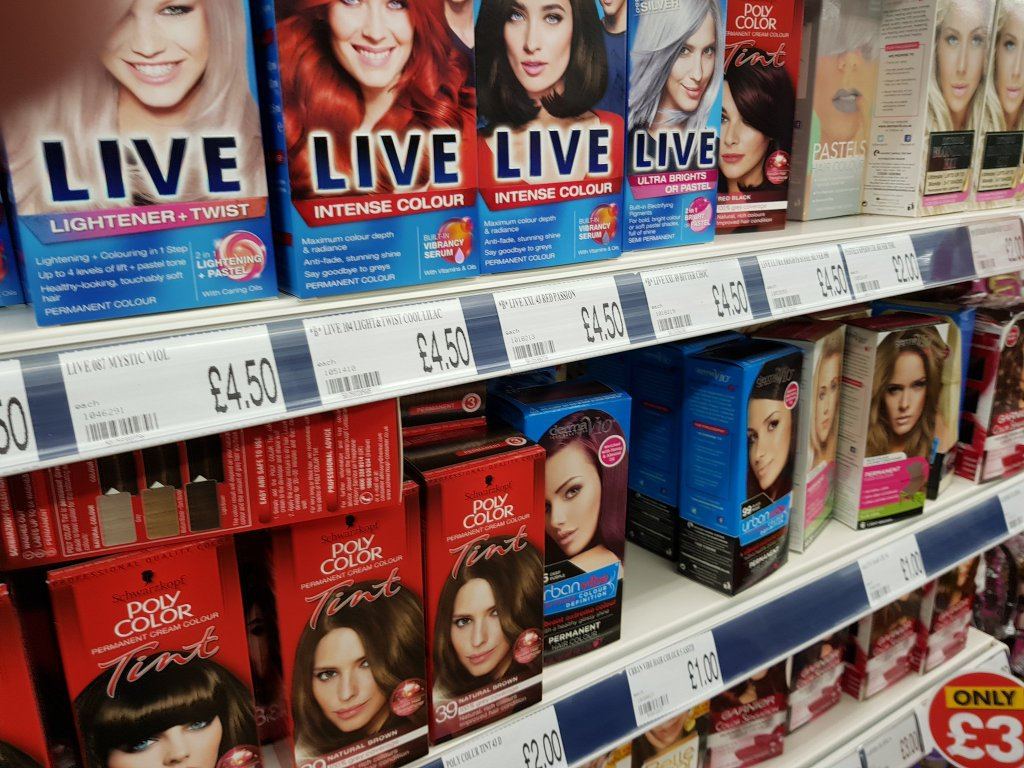
This seems entirely at odds with their core model and also their core customer and could harm price perception for the chain. £4.50 Hair colourants takes them in to B&M / Home Bargains land and their customers may be surprised to find hair colourants stocked, before being surprised at the price....
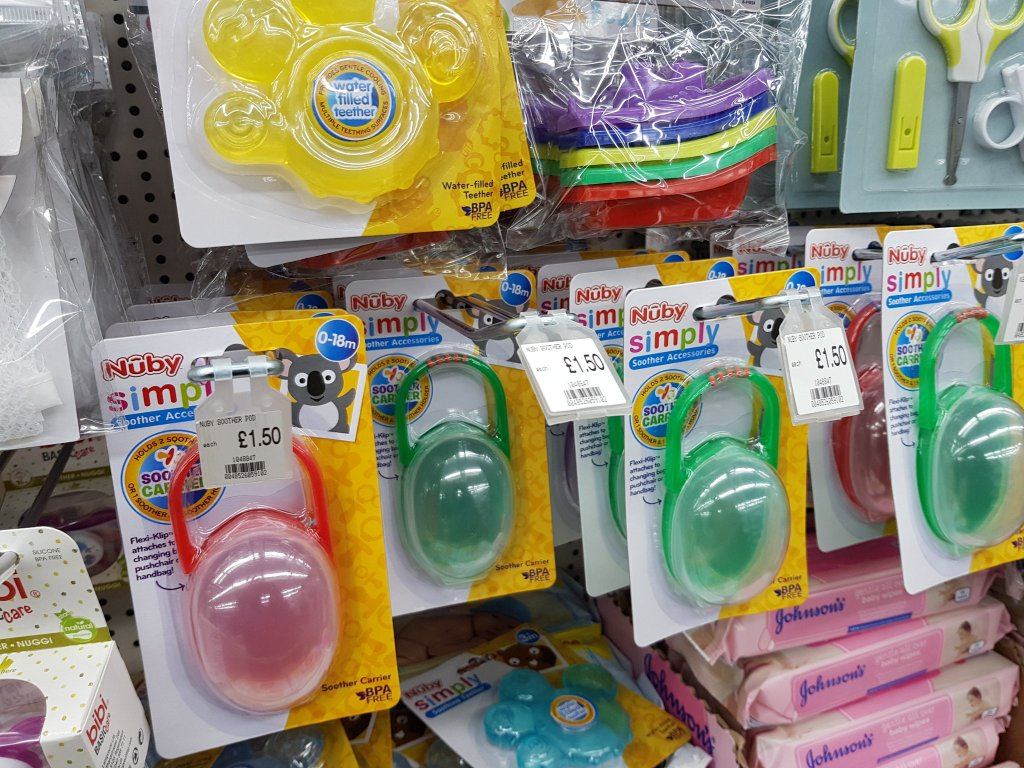
Perhaps that's the idea with lines that are above £1? Nice surprises? But "baby soother" accessories would surely be £1 ordinarily so it must affect price perception when they see these at £1.50.....
The price points appear all over too; where Poundland have moved out of £1 but in to round pound price points. Splitting out to £2 / £3 etc... Poundworld have £2 / £3.25 / £1.50 / £4.50 in fixture in these images alone.....
Surely this just adds confusion?
The move by Poundworld makes them one to watch, especially given they have already have the Family Bargains format that allows multi price / non food trading, how does that chain fit together with this core strategy?
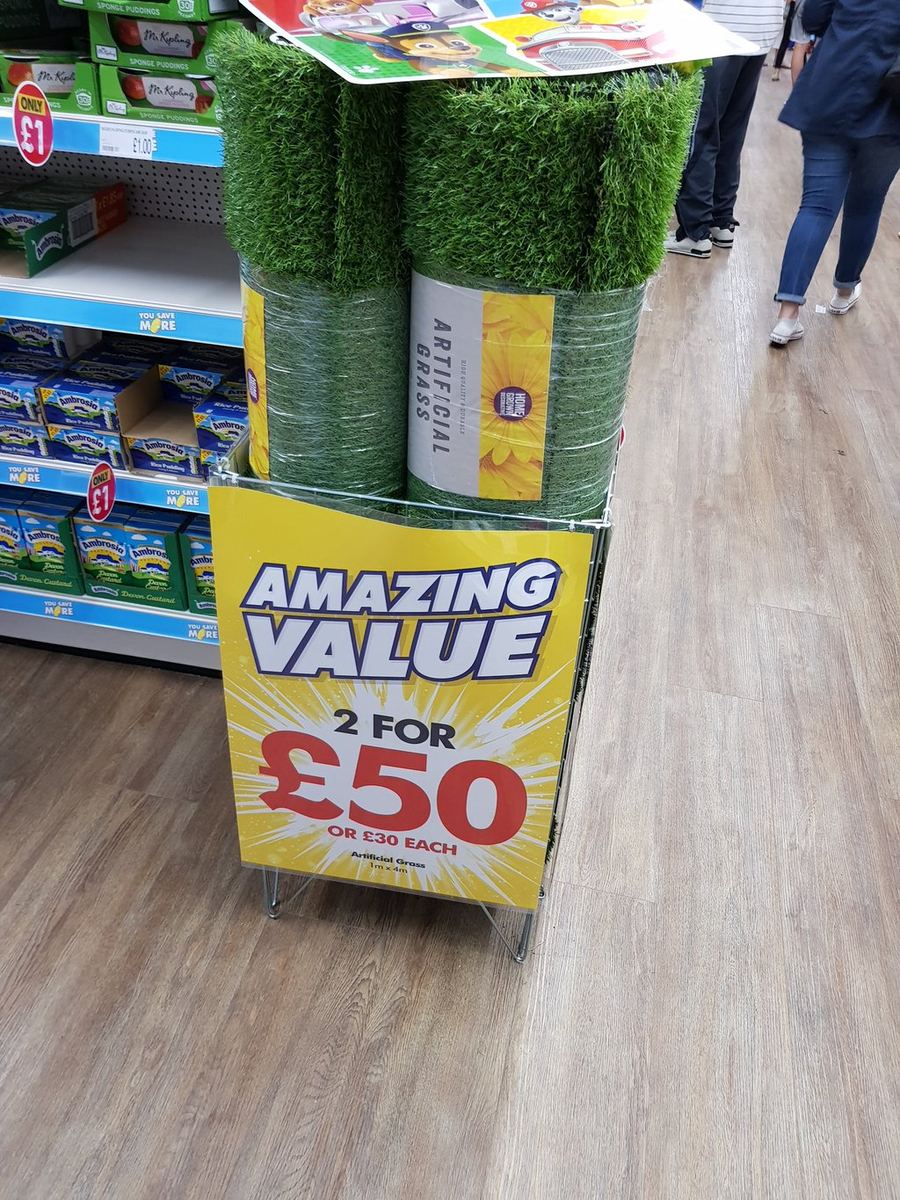
How could Poundworld ever justify adding the below to a high street, single price store? It just looks pie in the sky to me.....
Sure you can add a fair bit of profit to the bottom line by stocking multi priced lines across the stores, but how many customers do you lose by cluttering the message in this way?
So with new management, ownership and new direction without a restriction of a single price framework. All eyes are on the single price retailers as they break forward in the new world.
They're a firm outpost for customers seeking value and grew rapidly after the recession in 2010 and beyond due to their simplicity around the value / price point.
However with both retailers adding further prices in to their range makeup, whoever remains true to their heritage of single price as much as possible.
A bit like discounters. Yes they have special buys but then you don't expect to find the core ranges crammed with branded lines alongside the core stuff you're in there to buy.
Just an FAO Poundworld....
From the Grocery Insight newsletter archive, first sent to subscribers on 7 August 2017. Steve now writes at read.groceryinsight.com. See also the blog archive and briefings.