What did we learn from the Tesco slides / statement?
4 October 2018

Forwarded this email? Subscribe today for more!
Our Jack's in depth report is now available!
The ever impressive Tesco continued to work hard at their offer in the first half and recorded their 11th consecutive quarter of growth on a like for like basis. As noted before, the Dave Lewis turnaround of Tesco should be business case studies for years to come, if only for the ease of the analysis as to where they went wrong in the first place.
Naturally Dave was helped by someone's erstwhile blog flagging a number of items that needed attention (no expensive consultancy fees either!). This was always my personal favourite.....
Anyway; I digress. Despite a poorer than expected profit number (although who's expectation was it?) and the share price slumping. The business is not resting on its laurels and has pressed ahead with Booker integration (8 more to get a shop in shop) and 60 suppliers now have joint buying agreements with the enlarged group.
The Carrefour deal is also one to be keenly watched in terms of what that will bring, greater buying scale? Better baguettes? Joint sharing of expertise? The overseas problems have been broadly dealt with but some business units require further surgery but the UK looks in good shape regardless.
Interesting notes from the IR call / conference / slides are to follow. I must admit I haven't yet watched it all, but the Q&A always brings interesting elements and in particular, to hear subscribers to this service in 'real life!'
A note on space was interesting, they felt that the UK had used the excess space with the various modular pieces of work that had been done via Arcadia et al. However that isn't to say there won't be more space identified... It feels to me like Jack's will take some of the space that under performs due to offer, should the format be rolled further...
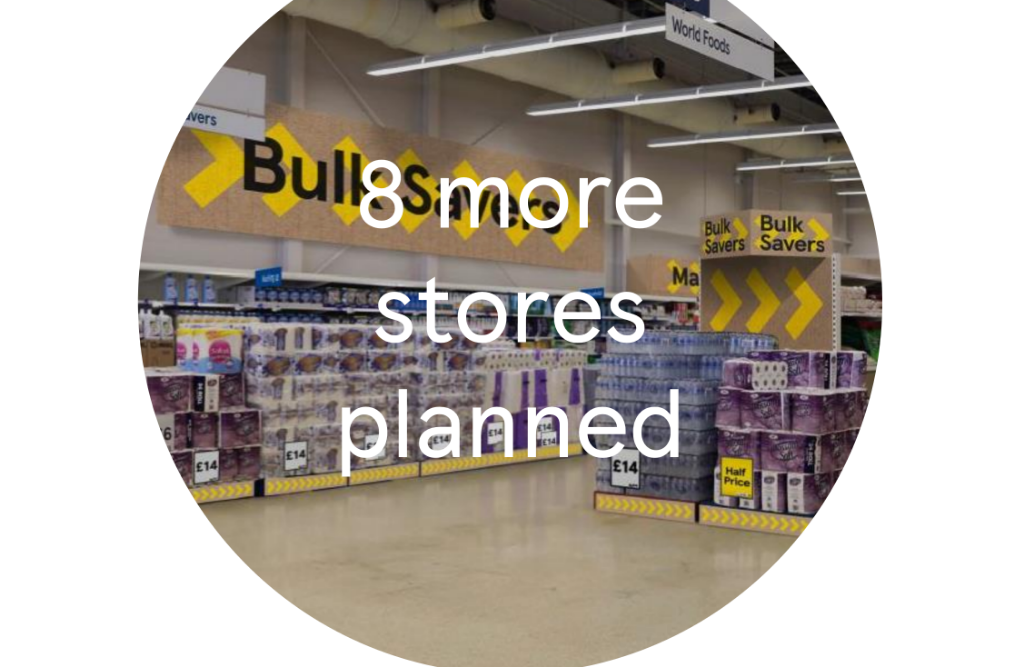
Unclear if this is the signage, or the signage will look like this for Booker in Tesco(?) The photoshopped price indicates it could be a mock up.
However 8 more store in store, post Gallions Reach (that actually sits inside the store itself) shows that this format does have legs and it can form part of a wider offer. Also sorting out some of the excess space (in stores where concessions are difficult e.g.) but also to improve the overall offer for the customer.
Notably areas with a demographic where asian customers are prevalent particularly would benefit from a Booker, many of those customers cook from scratch and as such, they buy in bulk and are taught to look at the per kg price as opposed to a headline price. Booker would work here.
It's not clear how the Bar Hill unit (alongside Tesco, in the former Dobbie's) is performing although the offer had changed slightly upon visiting two weeks ago. No need for a minimum spend and some of the chilled units / frozen units had changed. It still feels a bit warehousey in there, where it perhaps needs to be a bit like Costco with a mix of ranges...
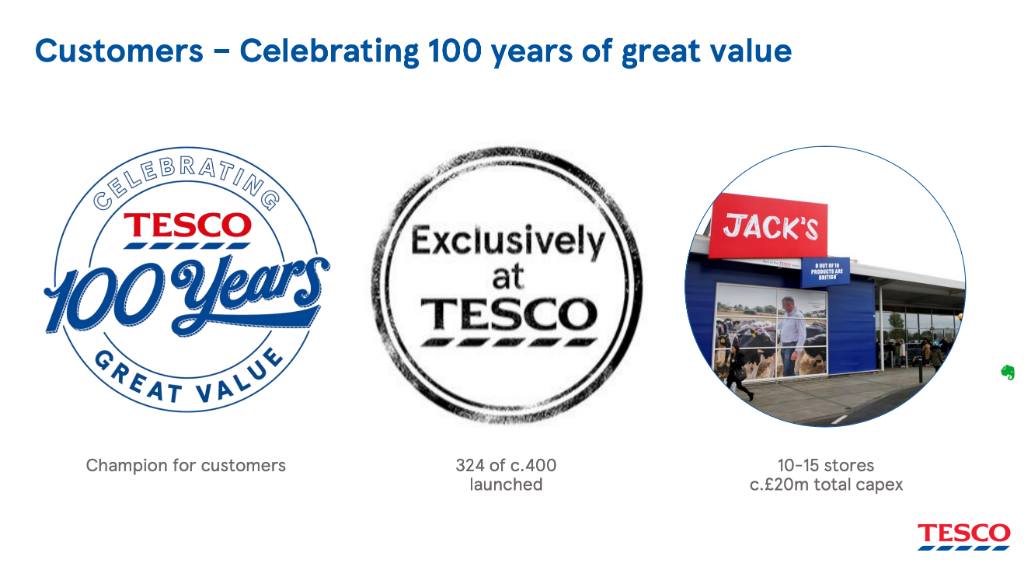
The 100 years of value was nodded to at Jack's of course; and the discount arm forms part of the rationale for the centenary year.
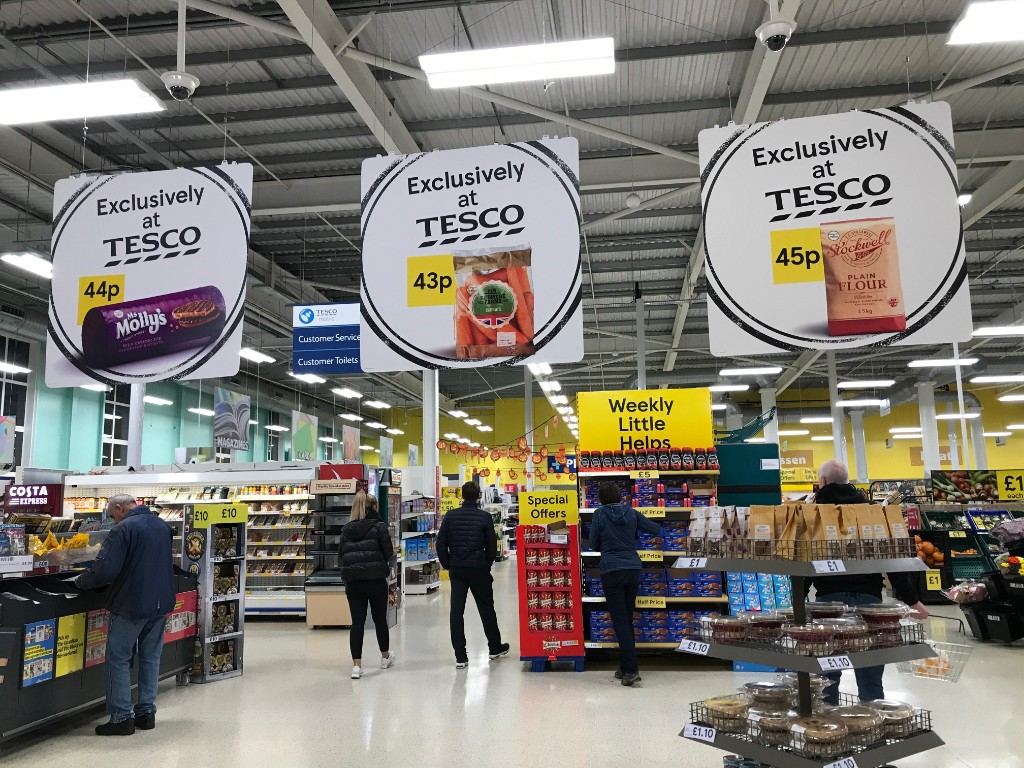
Exclusively at Tesco has come up on the rails as a strategy that has been a long time in the making (although users of this service will know this has been identified for a number of months). The value tier is being replaced by these imitation brands that are cheaper than Aldi, or Lidl where the value tier doesn't exist. Where the value tier does exist, then the prices are being matched on a weekly basis seemingly.
There is some pricing data to follow that we are collating on this range of products versus Aldi predominantly in the first instance. We know that Aldi will drop Nappies by 2p for example to retain leadership, Tesco will then reduce to the same level, until the level drops no further...
It has been played out in Ireland and Tesco continue to perform brilliantly over there, Andrew Yaxley is now back in the UK business as chief commercial officer and that turnaround will not really be mentioned, but the business was in a dire state when he took over in 2015.
However with price matching versus discount on core own label vs. own label lines and following them in on said prices (I think Cream crackers were as low as 13c at one time), customers trusted on price.
Of course it's painful for the margin and like for like sales, but the volume came through which showed the plan worked and a longer term strategy like this, the longer you play with said strategy, ironically, gives a better long term return.
Tesco UK doing a similar thing, albeit with the value tier is interesting as it can force a rebase around price and quality and is difficult for discounters to defend against. They can end up having to defend price gaps on value versus mid tier whilst having to match up on others...
Alongside this; the timing is excellent as Aldi and Lidl start to load in Christmas lines that are hard to compare and also, there is a fair premium range in this assortment too which comes in at a higher price.
A trend noted in both Aldi, but especially Lidl is their work with branded suppliers around shippers and also overtaking special buys with a number of branded lines.
Thus running a real risk of skewing price perception versus own label by stocking brands that they have held up as poor value versus their own label....
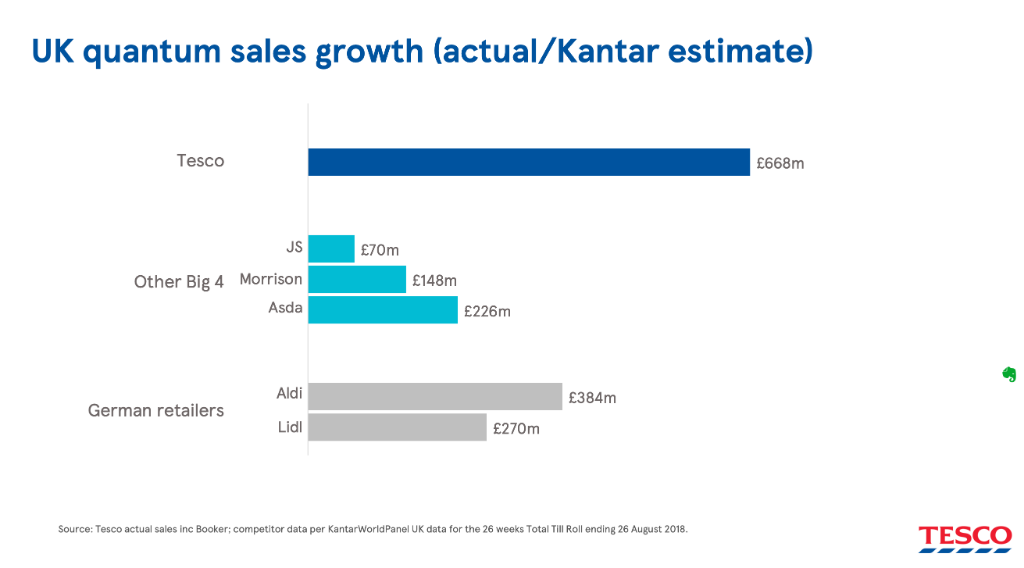
This slide was notable in that it flagged the discounters as "German retailers" which is of course what they are..
No mention of discounters.
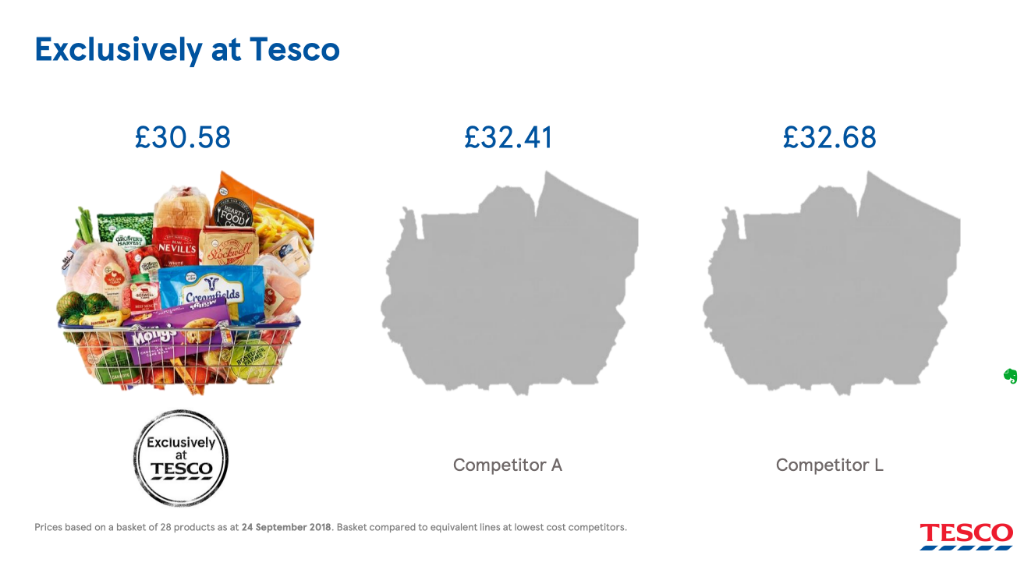
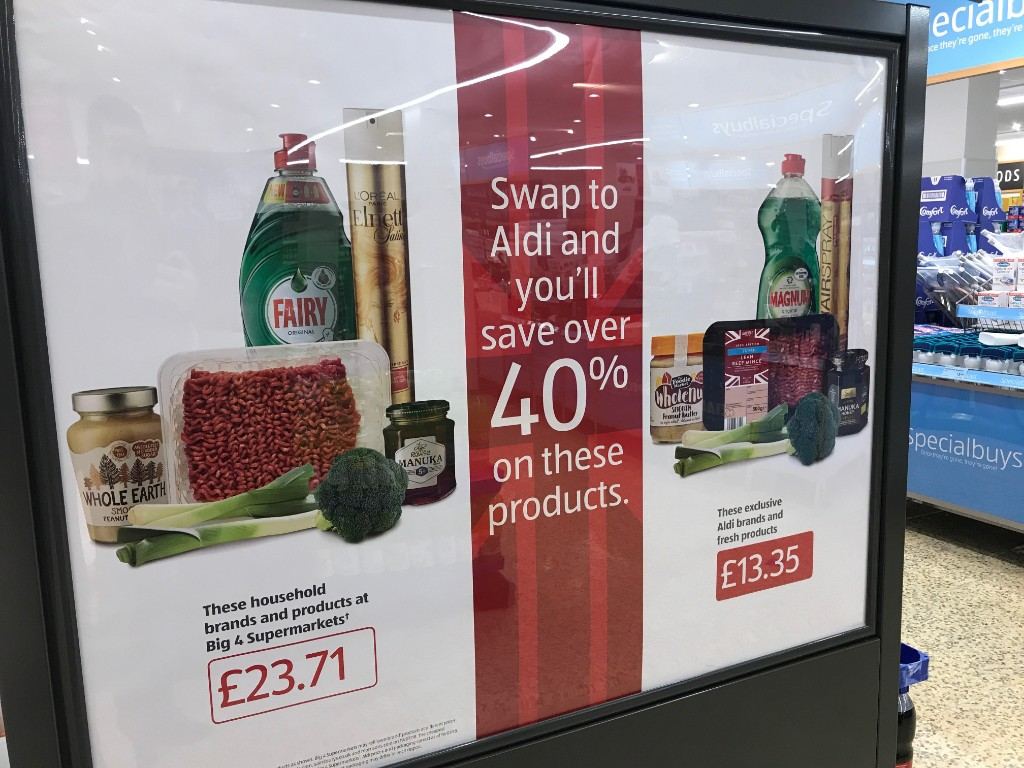
The old price comparative basket was also notable, we haven't seen it in the mainstream for some time. Aldi often do a price comparative on their doorway signage and then dot it around the store.
However the assorted products are becoming curious in terms of choice and certainly some are picked just to highlight a huge price gap, not necessarily how a customer purchases or indeed, an everyday buy.
A recent Aldi basket featured Manuka Honey (can be a huge price variance, but a very specialist product) and also own label hairspray (vs. branded) which can again be variable due to deals. This then equalled a c.35% price gap.
The price gap on core lines is narrowing all the time, the 'exclusive' Tesco brands are cheaper versus comparatives at competitors "A and L" (I wonder) on this basket basis.
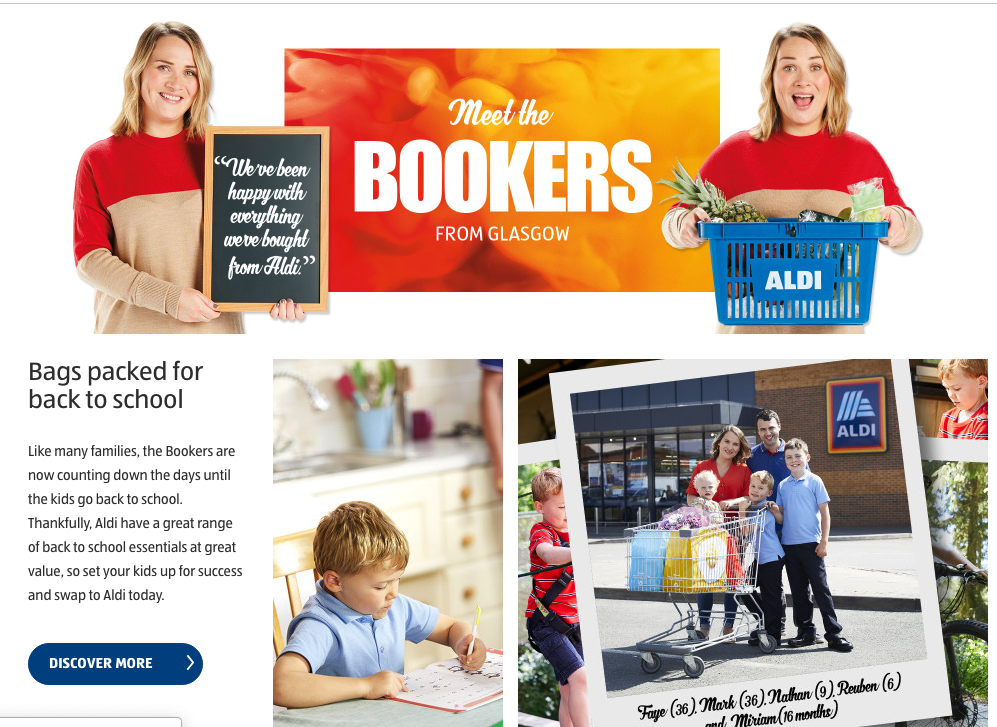
Booker family (c) Aldi. A good choice of family name for a price campaign which features Tesco.....(!) Below is the breakdown of a monthly shop for the same advertising campaign.
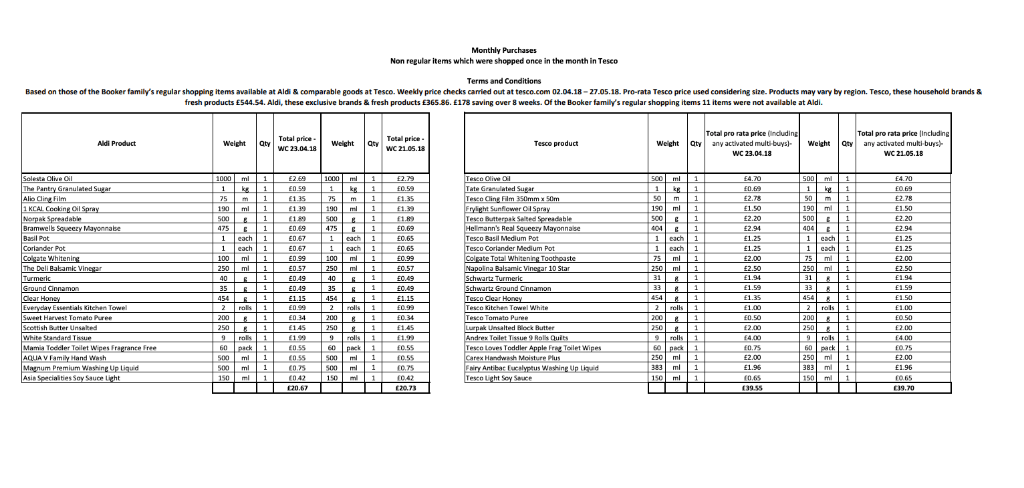
The brand vs. own label situation on the monthly shop comparative is also a challenge; the customer goes to Tesco and semingly buys all brands. But is happy with own label spices in Aldi.
Therefore she'd be happy with own label Spices in Tesco(?) Equally toilet tissue, why would she buy the brand when the own label 9pk is cheaper in Tesco than Andrex was?
Once a customer is conditioned to lower, simpler prices and also being open to the own label being good quality (as they are at Aldi) then they would transfer this mentality to their shopping at Tesco. Without a doubt.
So the price comparative game becomes a phoney war, no doubt that discounters have been cheaper on an overall basis, but the gap has narrowed and that isn't always reflected in the various adverts (why would you!) Aldi and Lidl are certainly consistently low in price but the risk with said adverts is they advertise a dramatic price gap.
Customer does shopping and thinks actually, there's not that much difference now. So you can ultimately hurt your own price perception. A careful balance...
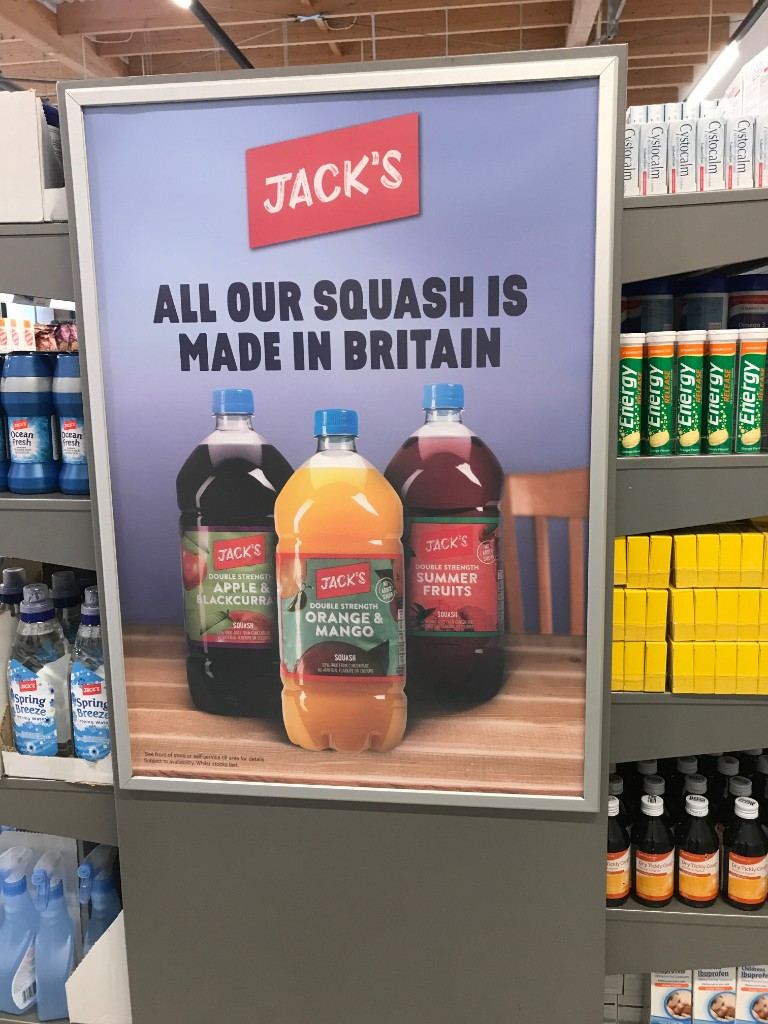
Jack's was mentioned and is trading well; the next two stores open today (Liverpool / St Helens) and both stores are in ex Tesco Metro sites which will bring a new set of challenges given their former lives as Kwik Save stores... (although a rebuild took place a few years back).
The Aldi nearby has had a refit so defensive work is happening all over.
Space forecast for Tesco was notable in that they said they'd have 129k sq.ft of space under the Jack's banner by the year end (Feb '19). At a 15 store run rate that would put the average net sales space as 8,500 sq.ft.
If it's 12 stores, it's nearer 10,750 sq.ft which does feel more like a discount sized shop. However the Tesco Metro stores vary in size so it will become clear what the number is, in the coming months.
Barnsley Extra is to have a Jack's built alongside the store itself; signage and plans are in and it remains very interesting to see how trade will develop here. Notably in Immingham, the range was slightly different with a smaller £1/£2 range near special buys and more of their WIGIG grocery / specials - Kelloggs Cereals, Walkers Sensations etc etc.
Home Bargains occupy the space next door, so the offer can be tilted accordingly quite clearly.
Another note which is perhaps indicative of the business refocus and reshaping. Excluding Jack's - Tesco will actually close more space than it opens this year on a sq.ft basis. A number of One Stop and Express stores are closing and the newly opened space is 1k sq.ft less than the space being closed.
You'd have got long odds on that ever being the case, even when Dave Lewis took charge.
So many positives for the Tesco world; of course profitability remains a concern and their activity in terms of fuel coupons etc are annualising soon so they will have to be as competitive once again..
They are approaching the golden quarter in good shape though with a strong Halloween offer from what I have seen so far. Exiting Direct / click & collect will enhance their store traffic and mean they're able to push back on Argos on Toy prices too.
Forwarded this email? Subscribe today for more!
Our Jack's in depth report is now available!
From the Grocery Insight newsletter archive, first sent to subscribers on 4 October 2018. Steve now writes at read.groceryinsight.com. See also the blog archive and briefings.