New York Retail - A few thoughts
25 April 2017
There's been a slight gap in emails on the service for which I apologise; usually I hit the 2/3 per week but a trip to NYC got in the way! There's so much to round up for the wider market post Easter too, which will be coming soon also.
5 Easter trends to watch out for document is also in production; this focuses on the trends in the market from this year for the event. Easter is interesting as there is definite movement towards other sectors within the wider Easter event.
Like all events in the retail calendar, there is real diversification now, Easter is not just about Chocolate, with retailers finding ways to extract sales without necessarily going down the Chocolate based route.
But that's to come! So in terms of New York; always so many great things to look at in the wider market; the trends to watch and it's interesting to see the near hysteria about online and retail store closures across the pond.
I don't like to talk about #online #millennial #future too much, as it's just noise in all honesty. Most of it is irrelevant and allows folk to point to dying stores but offers absolutely no solution beyond that.
Inside New York city though; the market is moving towards online ideas so one has to look and consider, given the click/collect opportunities for time pressed customers.
There are a few store closures in the US granted; but some of the chains have been flagging for years and thus become irrelevant, with or without online there were issues. Look at Woolworths in the UK; a poor offer and under invested stores just ultimately killed their business.
Department stores that have failed to move with the times ultimately end up in the history books, woeful performance across stores and the numbers follow - Sears for example have essentially concocted their own downfall.
We know that stores over time can start to struggle as dynamics change in the market, the local economy (store location) changes for the good/bad and competitor opening also can impact. We have seen this in the UK as retailers shape their estate and enact closures as appropriate. It's a fact of life in retail now but in the mass space race, it was considered better business to keep a loss making store open, rather than it go to a competitor....
The US is no different and online is happening in a big way too; there are too many other places to purchase items that are sold by Macy's, Sears or JC Penney.
Amazon naturally sell everything, are everywhere and are online centric as we know, Wal-Mart are doing a great job pushing their online strategy which allows differentiation from Amazon in that they offer shipping via courier but are increasingly pushing their 'pickup' service which is their click/collect model. Plus you have others like Target (mass market) and then the specialist department stores like JCP and Macy's too,
Online can be highly effective when driving footfall to the store, pickup allows the likes of Target / Wal-Mart to sidestep any online grocery conundrums by simply not offering the service.
Out of town big box stores offering click/collect makes sense for customers (guaranteed stock, no aimless wandering, no waiting for a delivery) but also for Wal-Mart/others (can reduce costs by utilising store network, drives footfall to the store, likely increases sales as customers in store are more likely to purchase other lines).
Utilising store pick up is an advantage over Amazon who require courier based deliveries due to their lack of stores. The sheer size of the US means that unless it's a high density metropolitan area like New York, online food deliveries are unlikely to become the norm.
In addition; the economics of food delivery are still highly unclear in the UK, so why add that layer of complexity in the US?
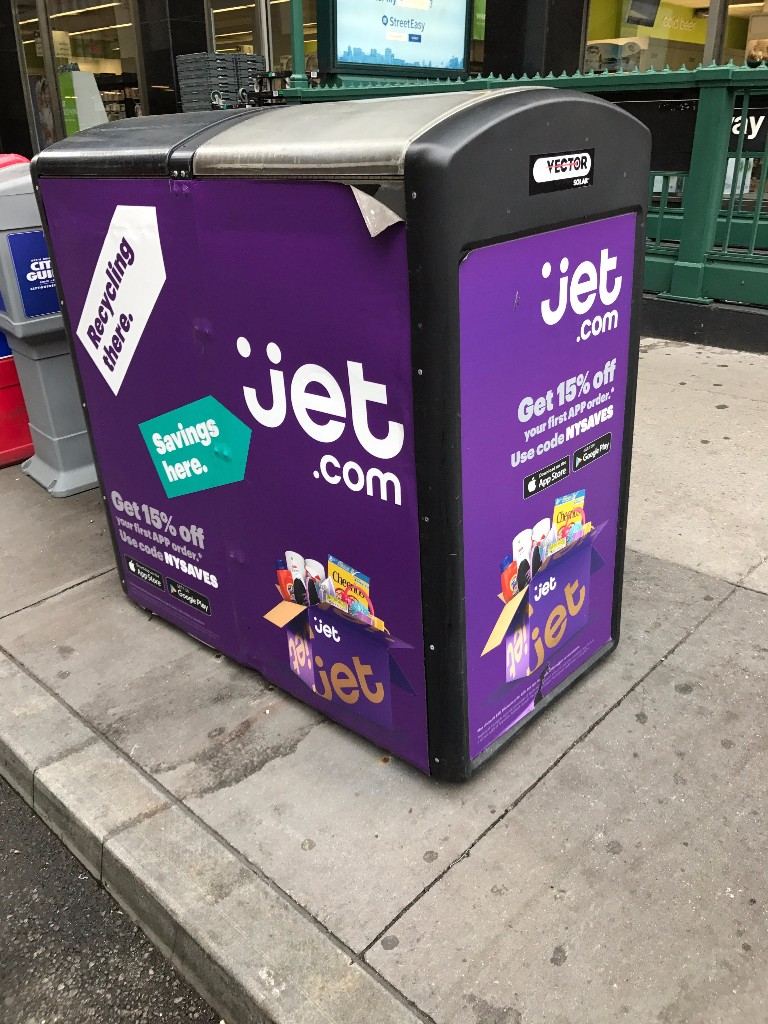
The Wal-Mart acquisition of Jet.com is a smart piece of business given their online focus and unique business model. I hadn't realised the two people involved in Jet were the originators of diapers.com which set up back in the 2000's in New York City. It was then bought out by Amazon after some fierce price activity from the Seattle based chain.
Jet.com is a great site; they allow customers to waive certain 'rights' / 'benefits' such as free delivery or free returns in return for a lower overall price.
Wal-Mart are now starting to utilise this technology on their own site too; a smart move as online customers are a savvy bunch and the usage of tech to allow customisation of price drives loyalty.
Adverts such as the above were sited around New York, advertising their services to the busy New Yorkers; it seemed to be pitching their service as a 'big packs' ambient based model.
Tailor made for the classic NY customer; one who wants to shop on the go (Whole Foods et al) and not wrestle large boxes of Cereals and Detergent home on the Subway.
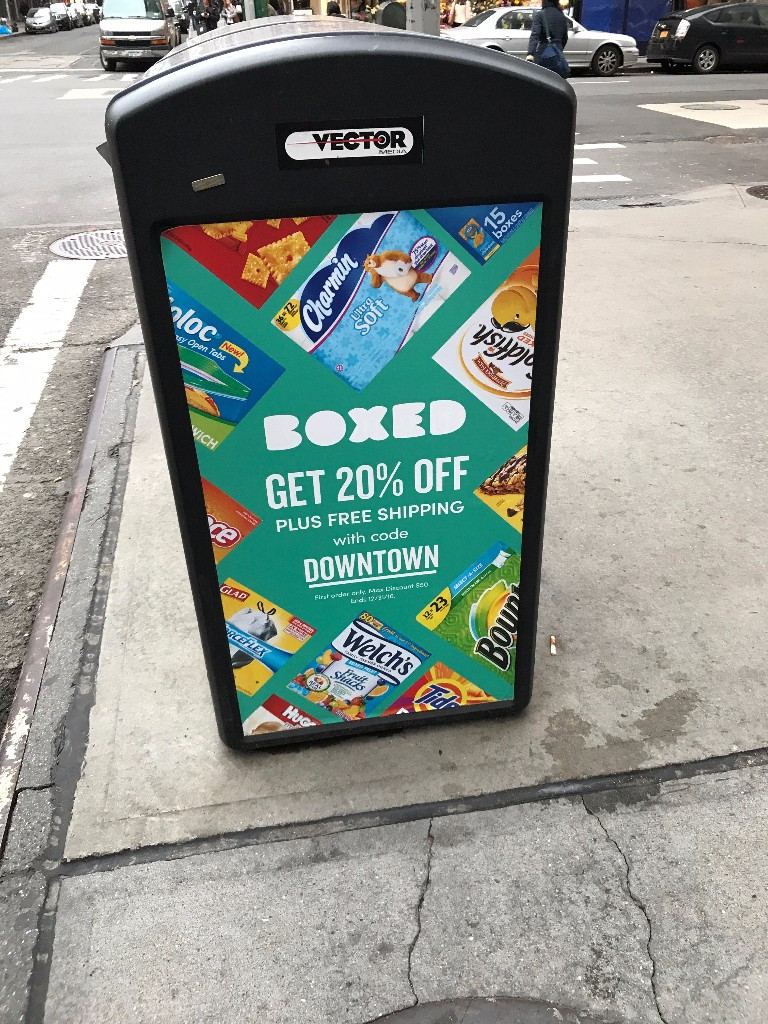
'Boxed' are another online retailer who offer a similar service of groceries to the door; again tapping in to the customer requirements and offering a convenient service.
Note all the images are groceries / household and typically larger packs which are hard to carry for the NY customers. Think London on steroids.
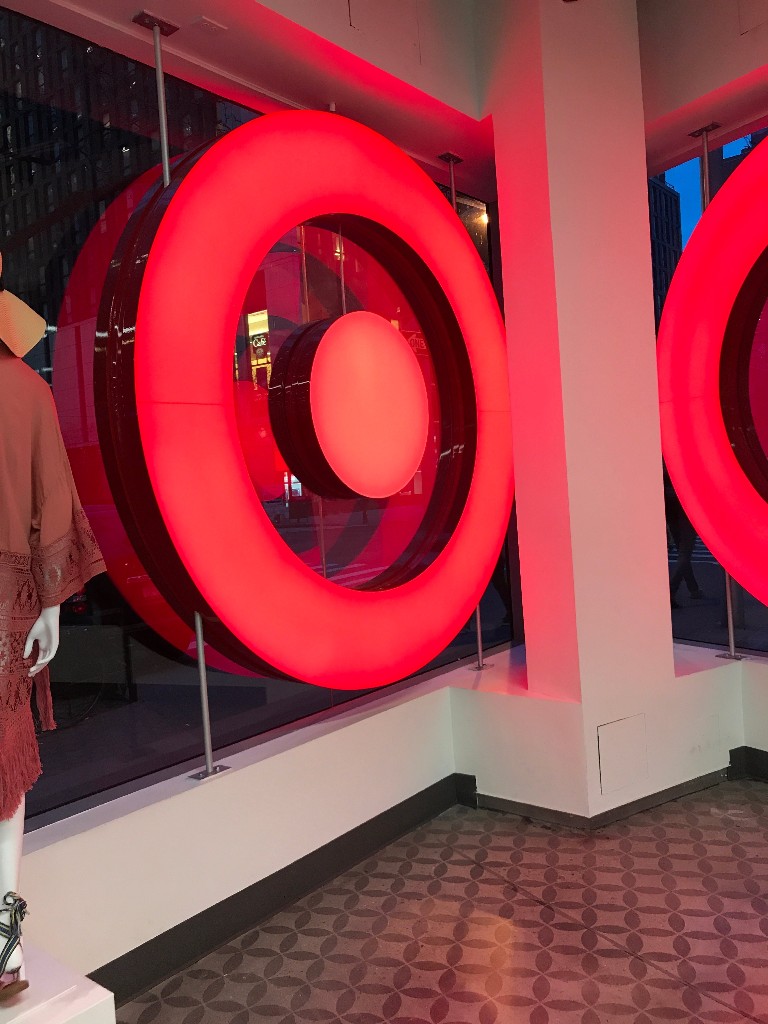
I was really excited to visit the new Target 'City' model in Tribeca (more to come on this). The store isn't far from the new Trade Centre actually, a great location.
However the model puzzled me, it's clear New York City - particularly in Tribeca, Manhattan etc is like London on steroids. Heavily food to go / smaller basket mission, time poor customers who don't drive and rely on public transport which rules out big pack sizes.
Similarly; non food and Pet are categories that come under pressure as the customer base don't typically keep Pets in a big way (lack of space) nor do they have gardens given the apartment based living situation.
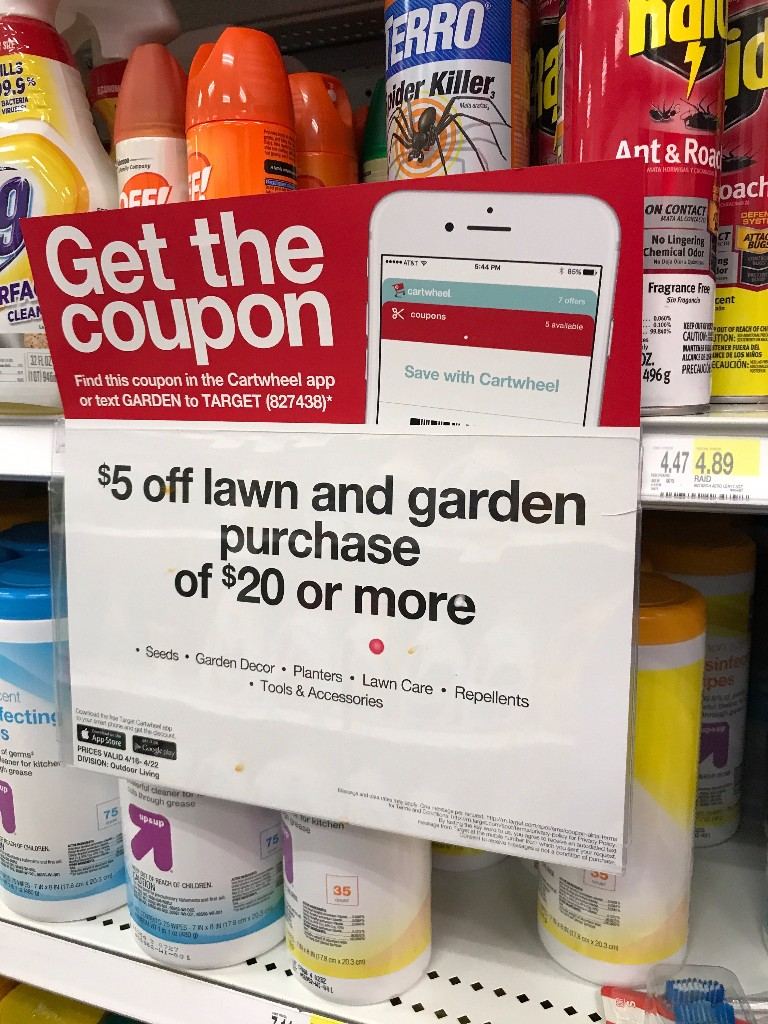
The lack of targeted deals (ahem) in Target seemed odd; the deals didn't appear to be customised for the demographic/customer base. Large trigger spends for money off on Garden ($5 off $20) and a 3 for $9 deal on 8pk Coke and variants.
However a EDLP focus would help here; it's hard to see someone taking 24 bottles of Coke et al home on their commute, less so if they're walking....
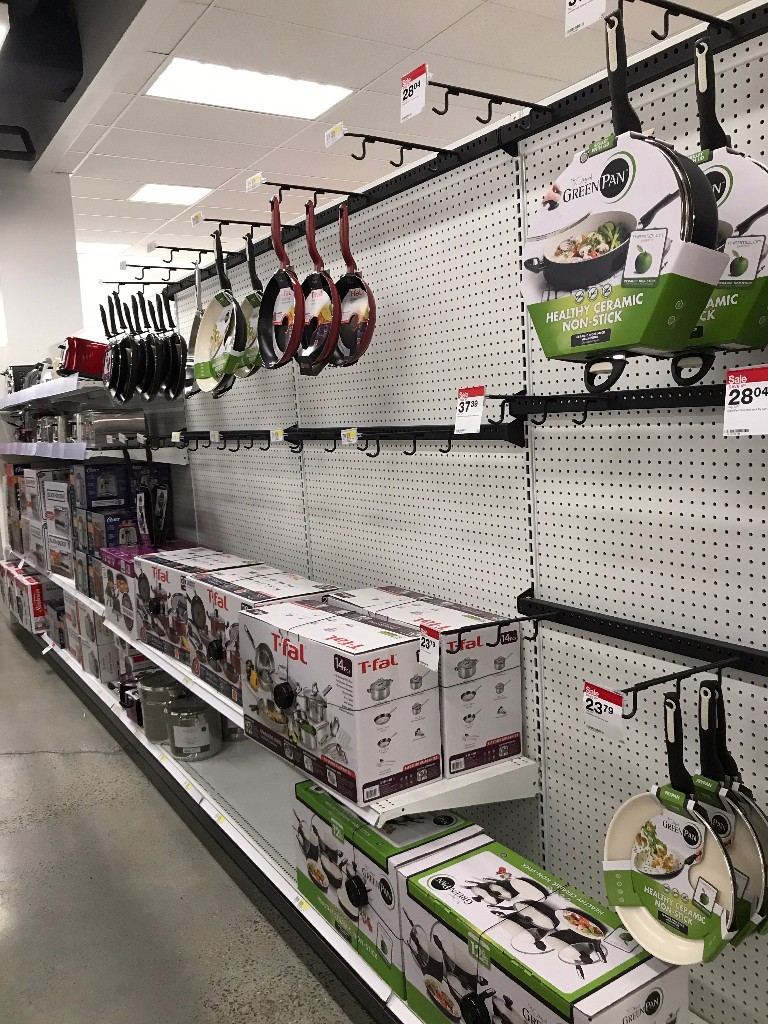
Some of their ranges were popular; non food like Pans that offer quality and strong pricing for customers were poor from an availability viewpoint.
The store offers something markedly different in the location; Target manage to fit an impressive amount inside the store too.
However they need to be consistently brilliant in areas like homewares to maximise sales.
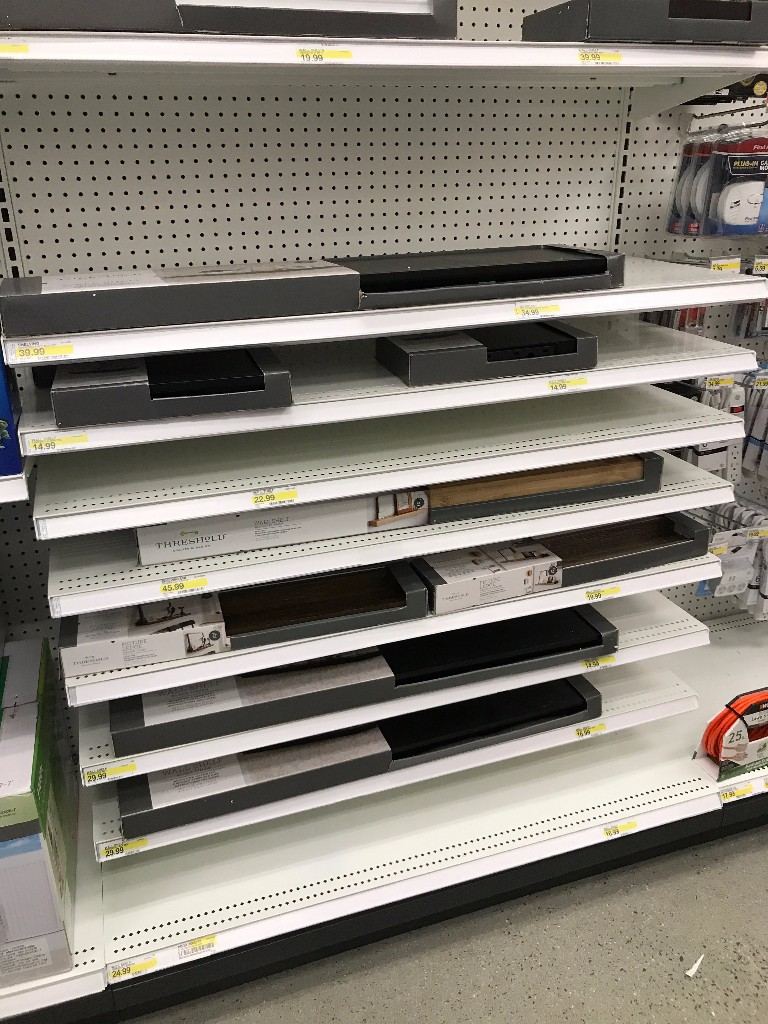
Some of the plans / assortments were clearly larger store based but dropped in to a smaller store.
Like here; shelving? I can understand the range perhaps, depending on the renter conditions in apartments but there is likely enough demand to range some products.
However the planogram..... Why is it like this? The store is a focal store as it's representative of the newer strategy in to smaller stores and everything should be considered and thought through, signed off with a customer in mind.
It's amazing that this bay was set up like this; I just can't understand what the purpose is. How can this improve sales?
What must a customer think? It's bizarre.
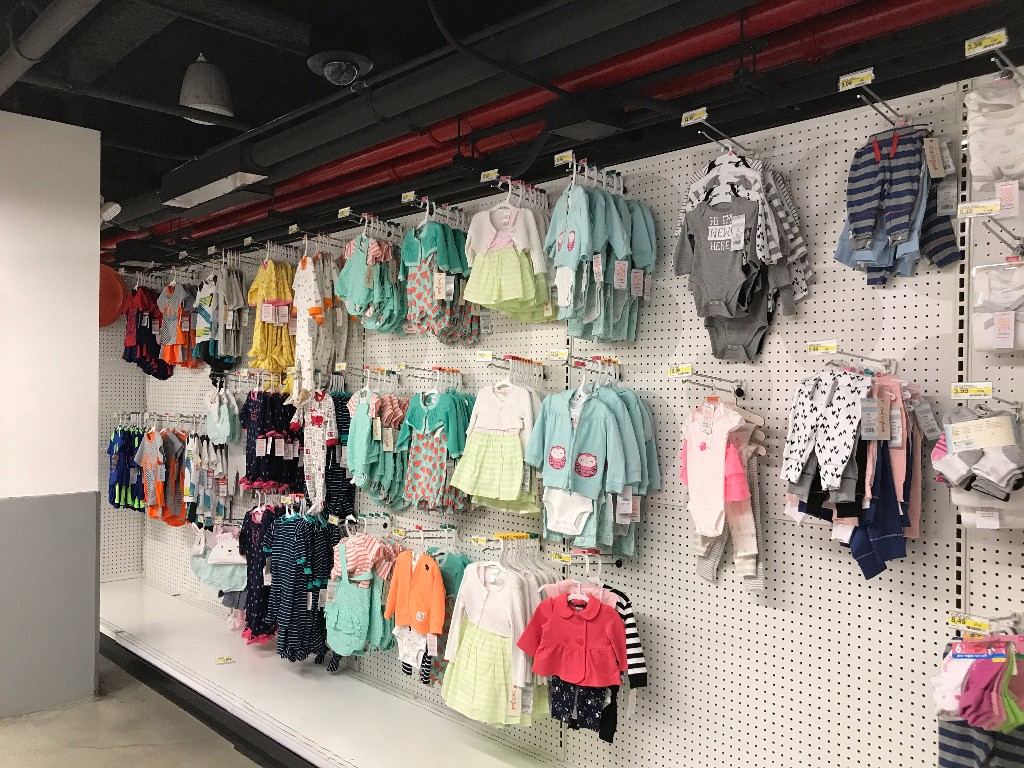
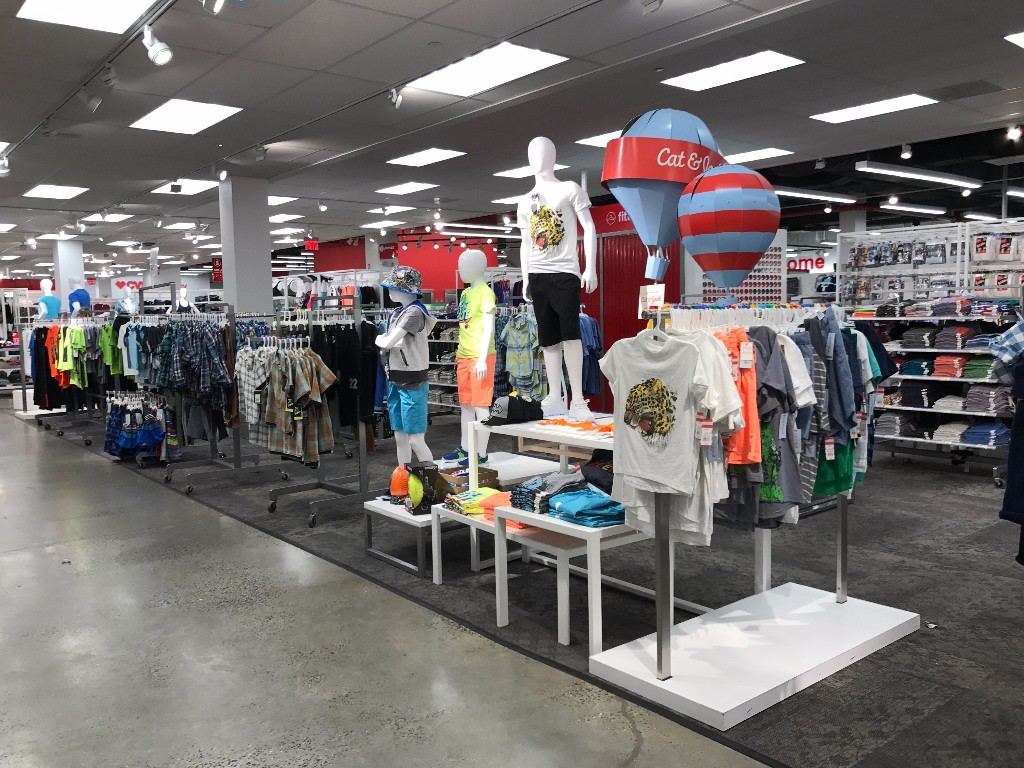
Much more to come on this store; there are some good elements and it's an impressive offer, but the nuances are surprising and despite c-stores being a relatively new concept for the larger retailers (7-11 et al do a grand job), there's a lot of scope for Target to sharpen the offer.
This is a 'City' store which means that it's a smaller outlet than their usual gargantuan sheds, however it's still a decent sized store by UK standards. Likely some 40,000 sq ft at a conservative estimate, over two levels with the bottom level similar in size to a decent superstore in the UK.
A key range for Target is Baby; the depth of choice here is a major differentiator as the competition nearby can't/don't feature a huge range. Plus the store is near a tourist hotspot (WTC) so there is so much opportunity for emergency baby food / milk / nappies.
However the baby range is almost too big, it looks like the entire large store Nappy assortment is ranged here; too much choice = hard to shop and less sales ultimately.
A range of clothing on hooks near the Baby range was noted; however if a customers turns around... there is more Kids clothing is located near Baby, why use both locations?
On the online theme; not a great deal around for click/collect in Target; surprising perhaps given the store location being so central.
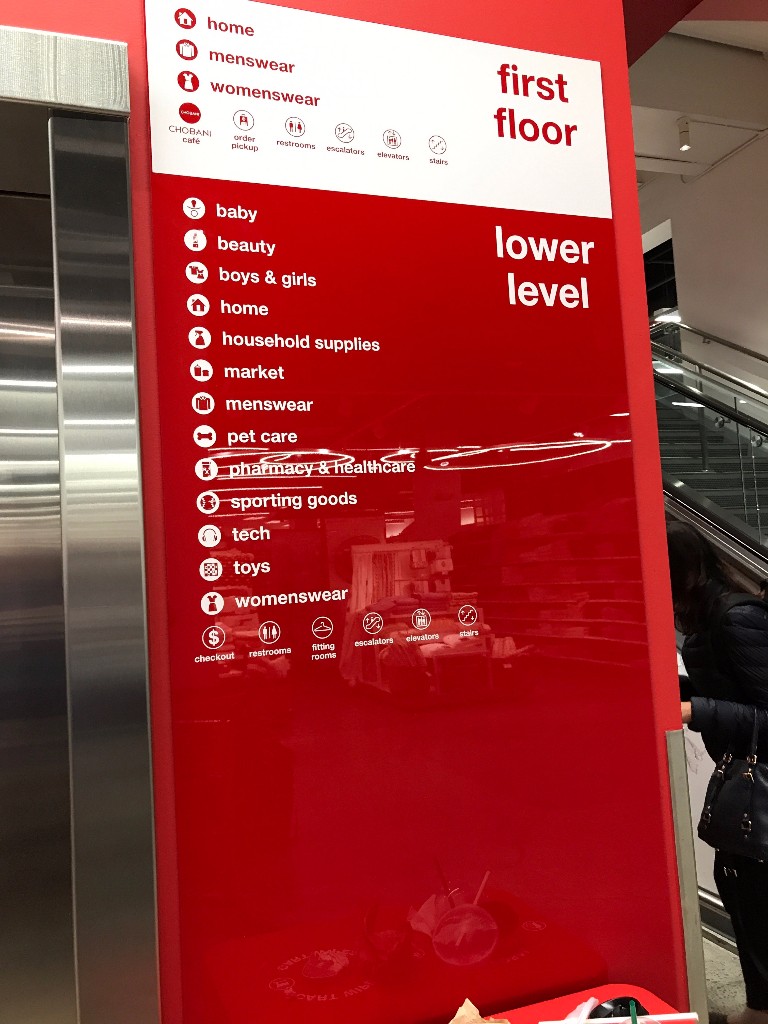
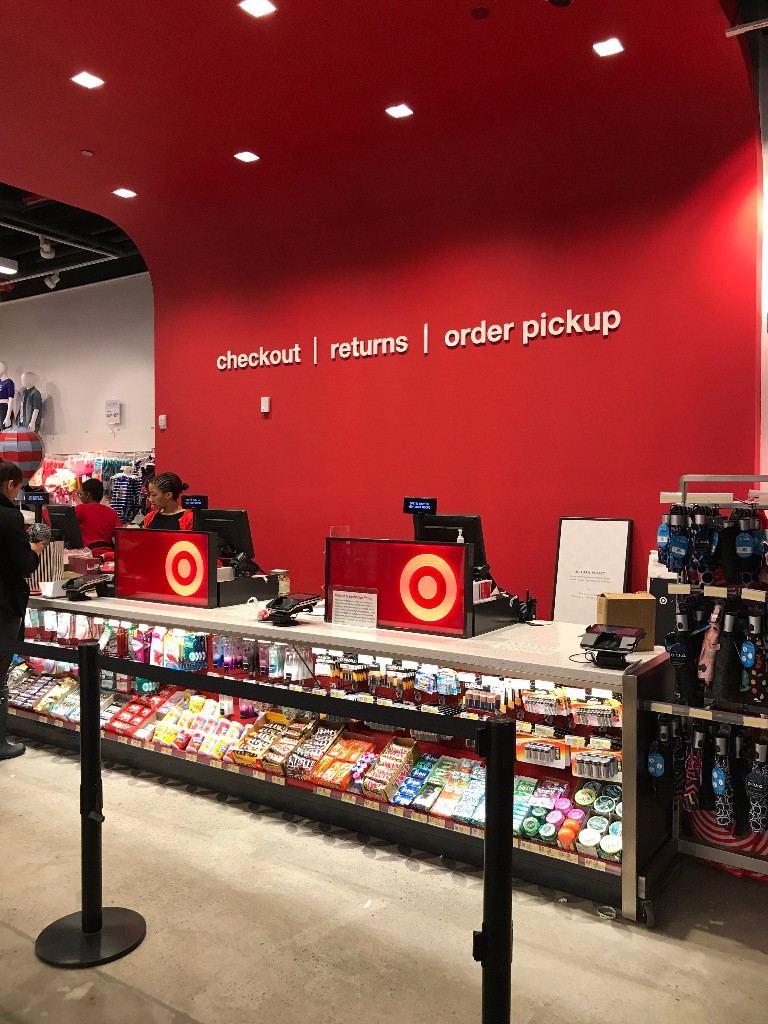
The store seemed tailor made for a 'hub' for click/collect which would send a message out to visiting customers that Target is a real option for click/collect, especially with these super convenient locations like Tribeca.
Yet the service is almost hidden to customers; very little around the store in terms of signage, the collection area was also where customers queue to pay, complain and/or ask a question.
Convenient for customers? Not really.
Time poor customers who are opting for a convenient solution by ordering ahead online and then picking up in store are unlikely to be enamoured by sharing a queue with other customers....
Why not just implement the arrival touch screen? Customer enters the order number so the store knows they've arrived, thus allowing the team to collect the order and bring it the front of the store.... Customer goes away, happy days.
It seems far simpler (always is on paper!) perhaps it will follow once the store gets to scale with regard to orders....
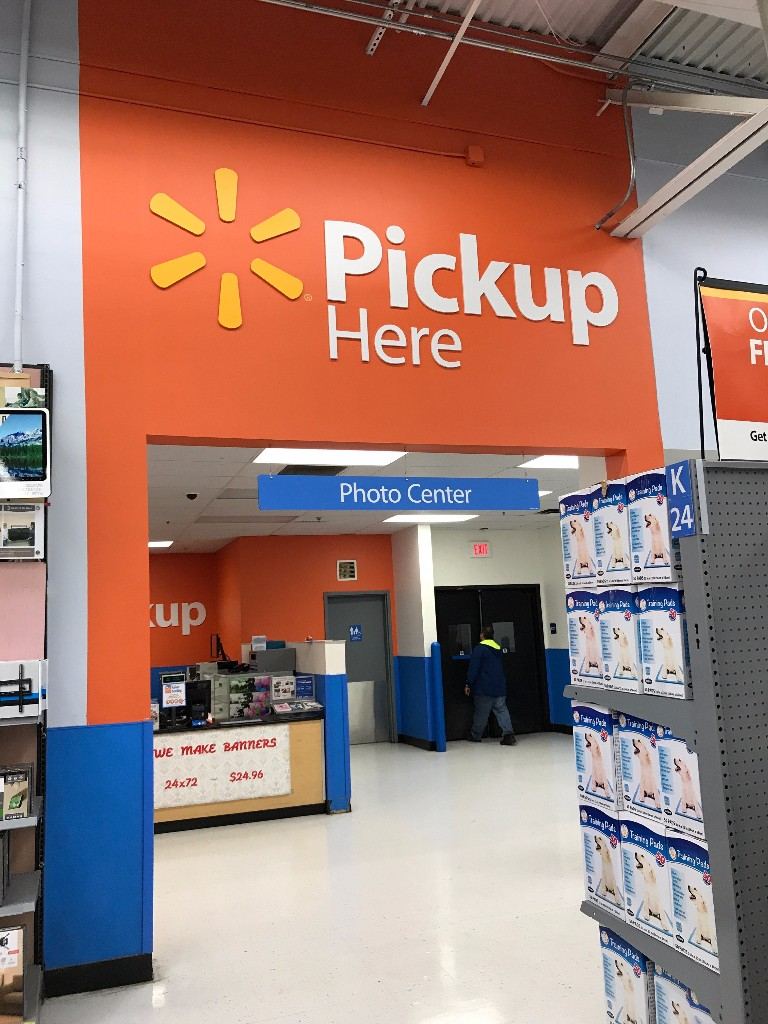
Going upstate a bit, Wal-Mart are stepping on the gas with their Pickup service, lots of signage around the store, a brightly coloured area to pick up your order and development of small money off options should you wish to waive your free returns etc.
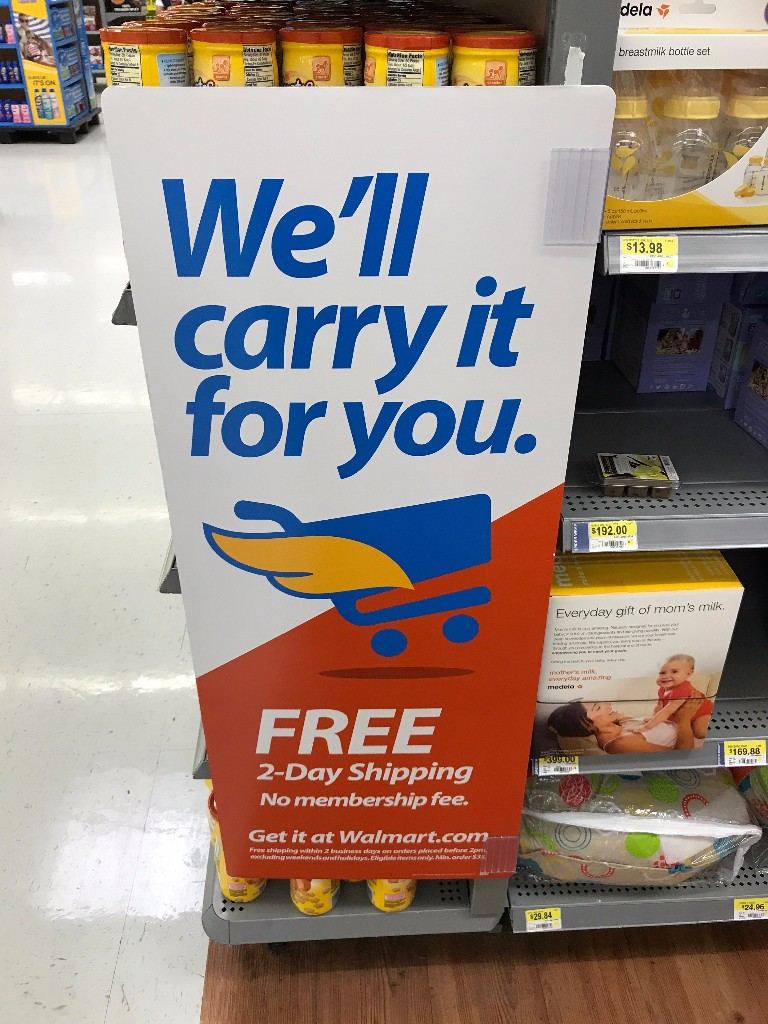
No membership fee but free 2 day shipping - no surprise who that's targeted at.... Amazon and their Prime service of course.
More of those #future analysts often talk about mobile phones and obsess about getting all that ready. Usual soundbites about every child from 2010 born with a mobile in their hand etc etc etc.
However get the stores right.... Given that a store environment is vitally important both in terms of driving sales online (who would buy online from someone who ran poor shops with poor product?) and also the pick up process, it's baffling to put the cart before the horse in this respect.
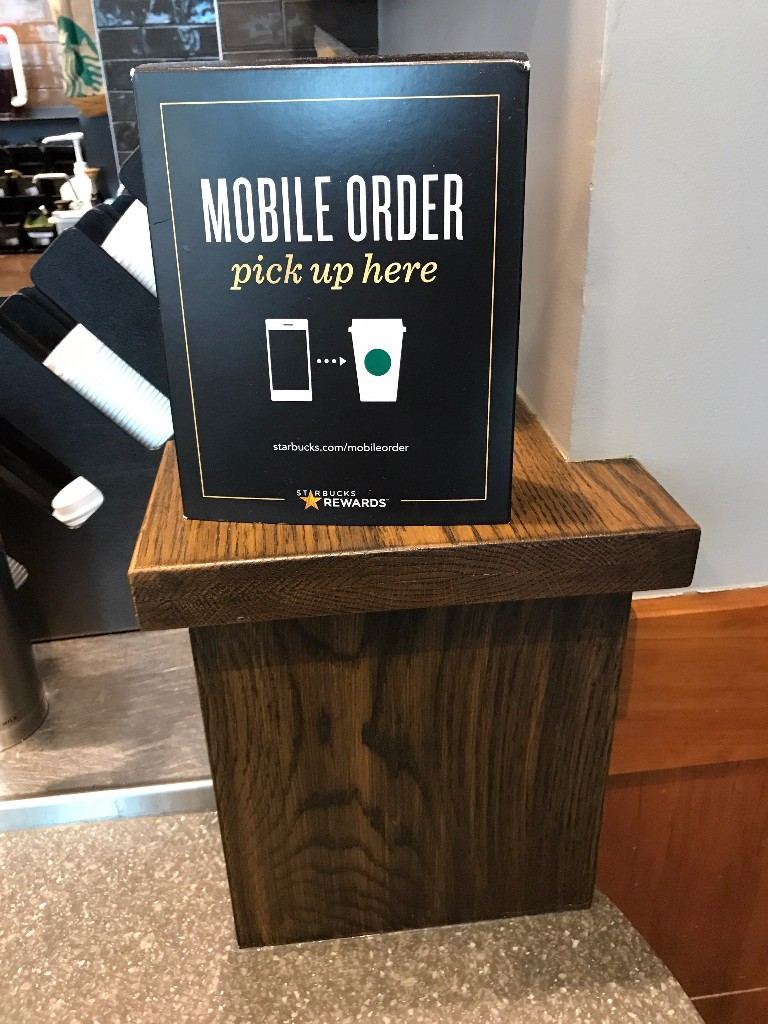
Starbucks are an ideal retailer for order ahead via mobile, their locations and customer base support it too. These signs were in every outlet, so clearly a big take up - customer orders ahead and then goes to the pickup point where their drink is waiting.
A great example of aiding the time poor customer. The UK are also on the page with order ahead in Starbucks.
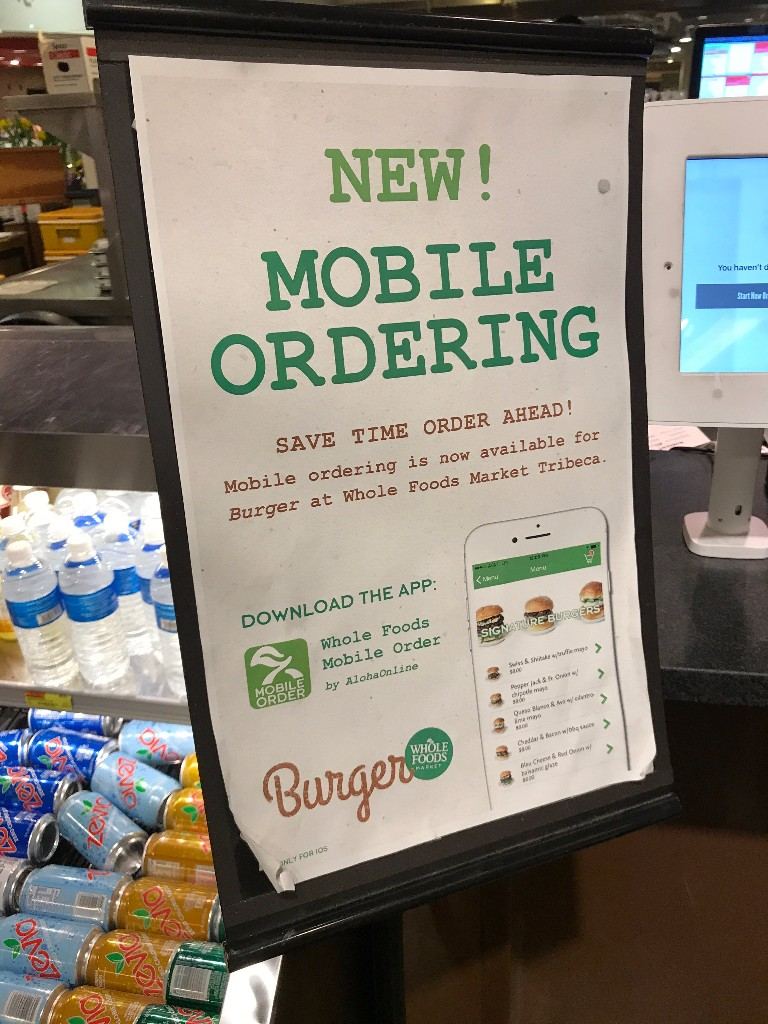
Whole Foods were also in the mobile ordering game, with their food service counter (Burgers etc) offering both a pre order service via mobile, alongside an iPad version in store - allowing customers to shop in store and then return for their chosen dish at the specified time.
A good example of minimising 'dead' time in the metro based stores, full of time poor customers with small baskets. High footfall, low(well, Whole Foods...) basket spend. Mobile ordering aids service and pleases the customer.
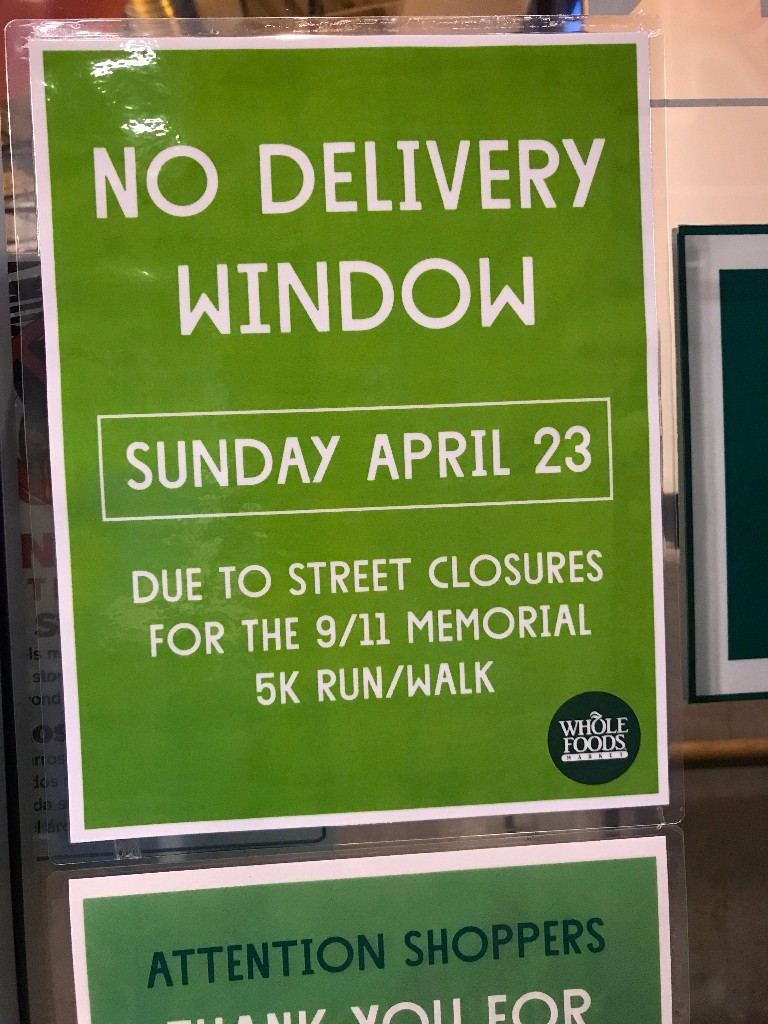
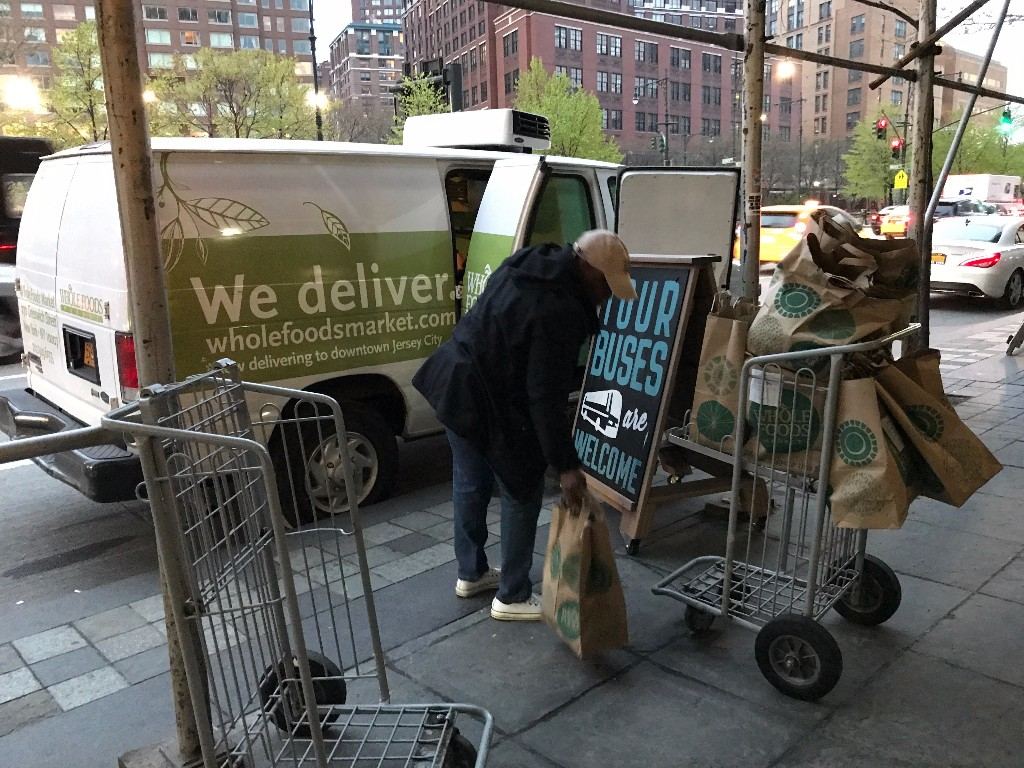
Online is always busy in Whole Foods at Tribeca, always busily loading vans up, with the pre picked shopping often located clumsily near the doorway ready to go.
The delivery options are busy; given the number of vans around the perimeter of the store. That said; metropolitan areas bring challenges for the online operation, it isn't just traffic (which is beyond poor) but also city based events. There were no online deliveries on Sunday just gone due to the 9/11 memorial run/walk.
Another challenge to layer on top of running a food delivery operation in one of the busiest cities in the world.....
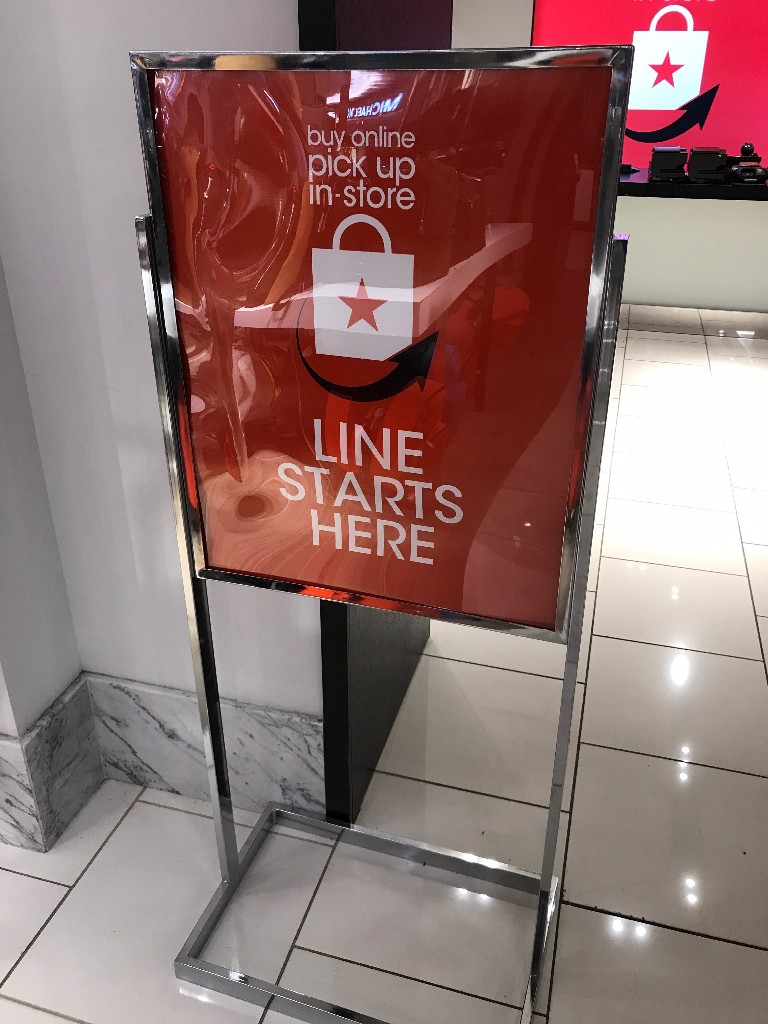
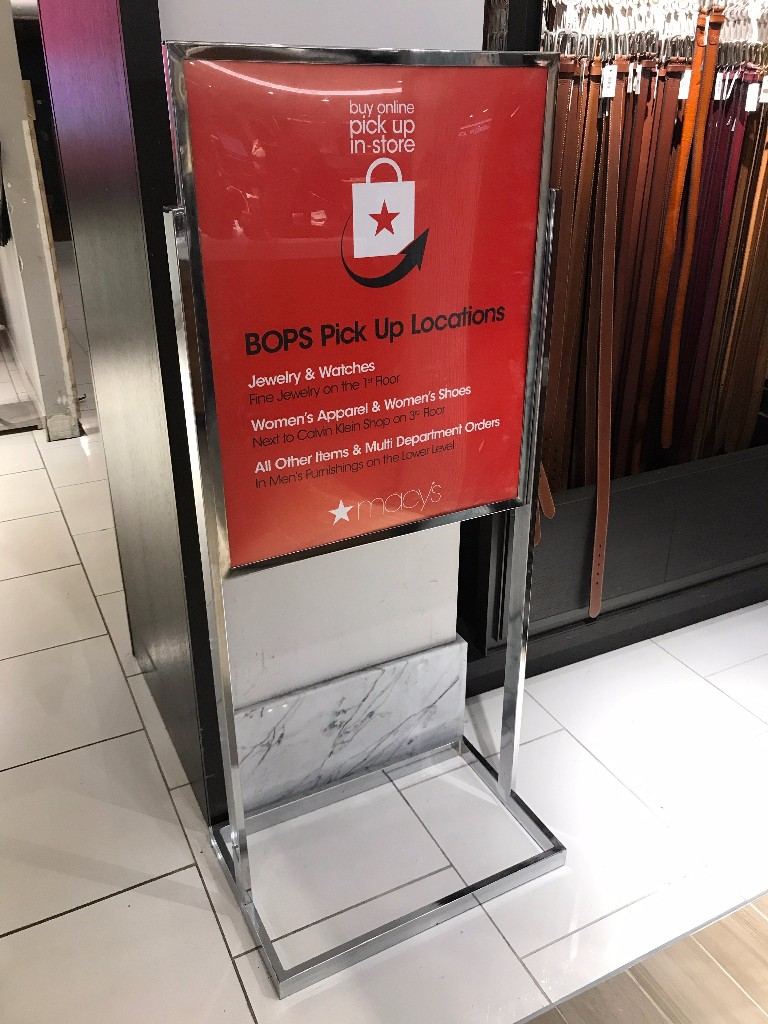
Department stores have their work cut out; what is their reason to exist? What's their point of difference versus other retailers, ones like Wal-Mart who operate across a number of categories and have suddenly made a SuperCenter attractive, even for a customer who dislikes the large store experience.
Pickup is easy and convenient versus walking around a 120,000 sq.ft+ store, or if they can't get to a store then there's a 2 day delivery window in any case.
Macy's have to be better than the example above, I'm sure the reasons for pick up in various floors for various products make sense to their operational teams. But the operation should never impact the customer.
Also, what is BOPS? It's their acronym for 'buy online pick up in store'.....
A single place / hub for collecting orders is a must, it has to be convenient for customers so they'll order again. Especially as the customer is a) spending money online with the retailer and b) may well spend further once they're in the store itself.
Get it wrong, and they'll go elsewhere!
So there we have it, a bit of a brief whistle stop tour of the future for retail... Well, the practical considerations for retail - online shopping and links between that platform and 'real' stores.
There was a lot on the Target city format today and there will be more to follow on the store itself in a later edition.
It's a laudable idea to experiment in city centre locations, with higher rents and entirely different customer missions.
There is real opportunity in the smaller formats, especially with better online links and tailored ranges as Target progress their model for these smaller units.
All very interesting; breaking down barriers for the customer is important, but there has to be a tangible reward for the customer.
Pre order, jump the line and click/collect are vital - but the service needs to be absolutely spot on for the benefit to be felt.
From the Grocery Insight newsletter archive, first sent to subscribers on 25 April 2017. Steve now writes at read.groceryinsight.com. See also the blog archive and briefings.