Brexit, Drivers and Pings
22 July 2021
View this email in your browser

Key Takeaways
1) The challenges around availability are part of a wider chain of events that impact everyone in the food supply chain. One domino falls and it’s a nightmare.
2) Brexit impact is real, driver shortages and stock flow are the biggest barriers with ‘just in time’ failing, it means the house of cards falls.
3) Warm weather shouldn’t be discounted, there are numerous factors at play at the moment, not least, the fact that refrigerators don’t cope in the heat and have to be emptied.
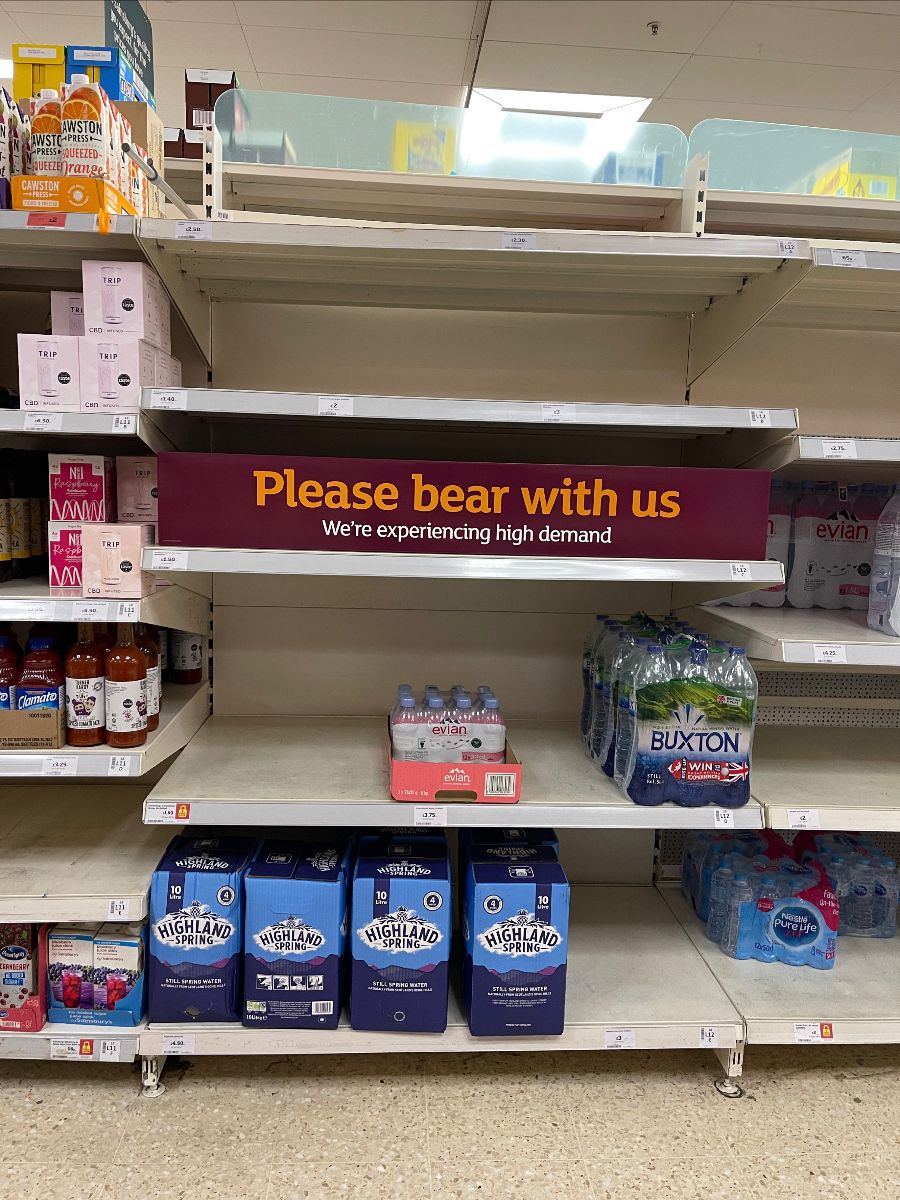
Brexit, Drivers, Gaps
It’s a grim time in retail and indeed, life for many as pings and test and trace react to the huge numbers of people who are testing positive and thus, using rules that were established when we knew so little about the virus, over a year ago, end up sending huge numbers of people home.
Does it have an impact? It does! But only on education of children, workplace morale and indeed, the absence rate which is rising by the day.
We know that there is a perfect storm that is hitting retail at the minute and we didn’t expect to have to add the weather to things, but the stiflingly hot conditions, sans air conditioning have left many people firing up the BBQ and buying more ‘warm weather’ lines than usual. Alongside this, the usual sales spikes in Lager, Beer and the rest mean that trade is buoyancy and long may it continue(!)
However, the challenge with warm weather is that whilst you know what’s going to get hit - Ice Cream, bagged Salads, Beers, BBQ Meats etc. You can only do so much in store, or indeed, at the head office supply teams… You are reliant on the suppliers and the supply chain to get the production moving and crucially, get it in to depots and back out the other side to the stores.
Not least, before the weather dies away and it becomes the traditional bleak, cold for the time of year weather that we typically experience.
With the supply chain, you need more wagons, not less, to collect the extra production, or indeed, have it arrived to your depots and then out to stores. More Fresh means decisions are made about what to leave off - you are restricted in a sense, by the physical size of the vehicle and indeed, the weight of it too.
That isn’t a problem as with the ‘just in time’ model, you can make adjustments knowing that the stock will land in to stores either that night, or the next day. But when the stock is in a different warehouse entirely, and you are pushed in to making those decisions, then it becomes an issue of ‘backlogs’ and that is not a good place to be.
Primarily because it’s expensive to remedy and requires smaller, inefficient delivery runs to get everything back in sync. That’s without the additional pressure around warm weather lines and getting those lines in and out and on sale……
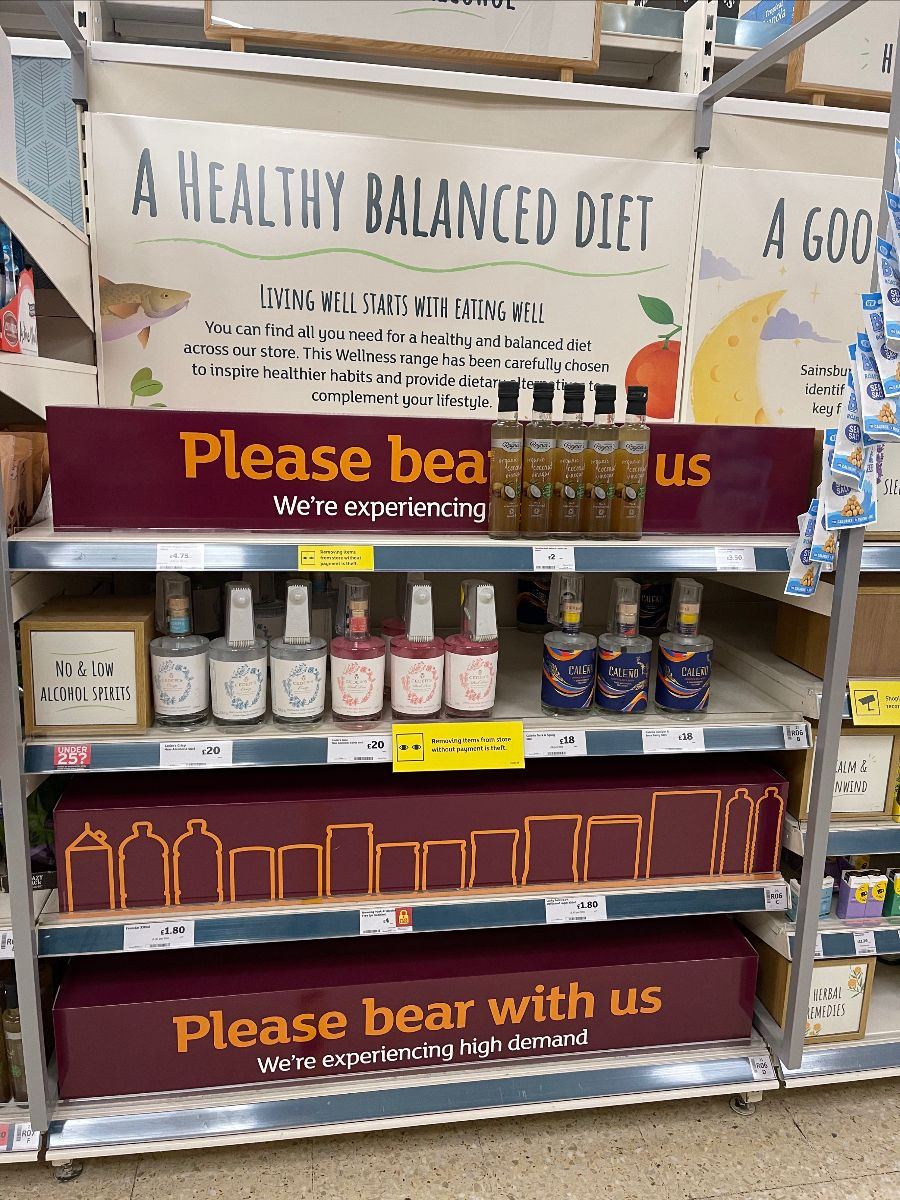
The Pingdemic
The challenge is multiple at the moment, food factories and the general food supply are at risk of pings and indeed COVID, at the height of the pandemic, we had several factories close down with numerous people testing positive, due to close working conditions.
In addition, if we consider that the app is a relatively new development and hasn’t really been operational at scale when restrictions were lifted, this is all new and the limitations with the app have long been questioned - especially given that the model, tracking the pandemic, does track and count elements like mask wearing and the like.
Whereas the app has no such ability and you can (and people do) get pinged when they’re either behind a screen, wearing PPE or sharing an office (separate by a full wall).
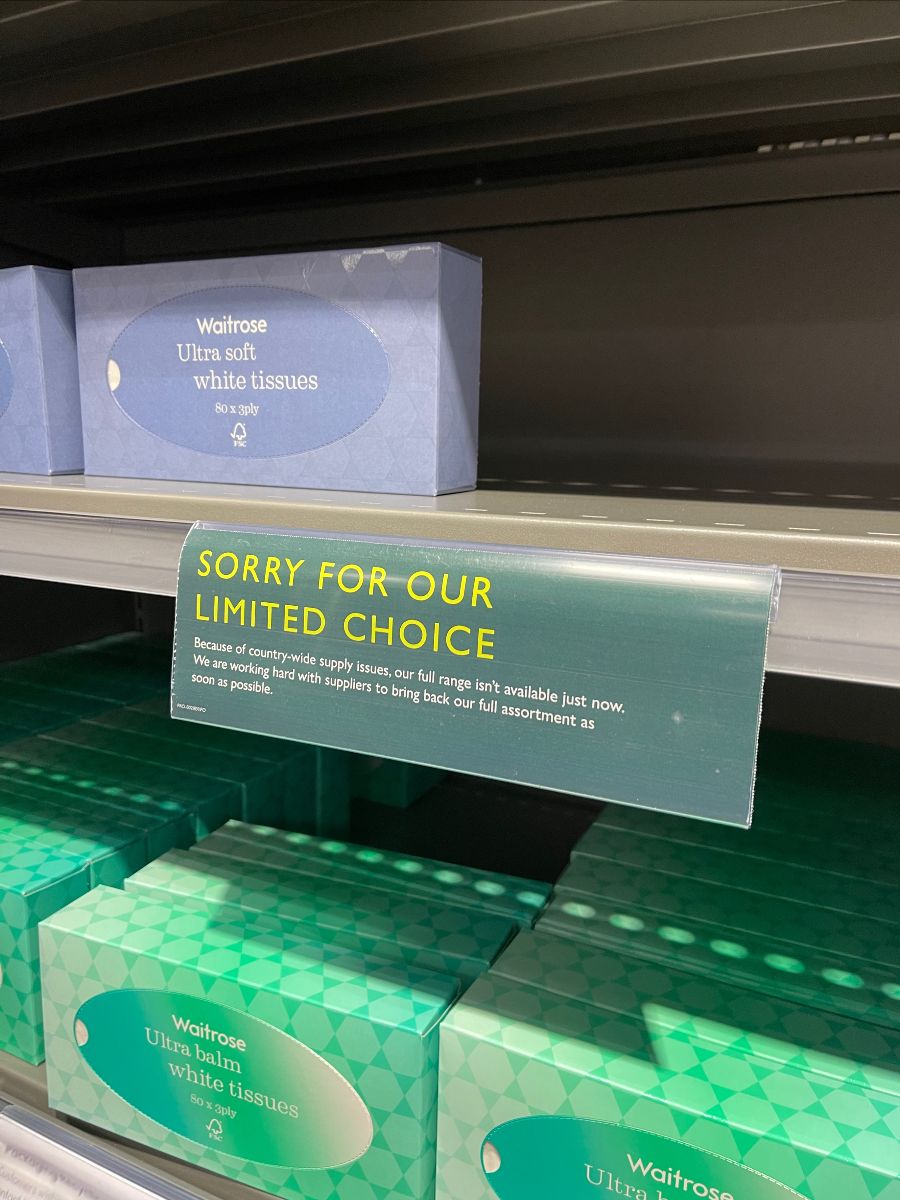
Schooling and working parents We know the issue is endemic in schools where antiquated rules require any close, identified contacts of a positive case be sent home, this leads to 50+ children in some cases having to go home for 10 days, with some kids I know of, on their 5th such period of isolation, this year….
It’s crazy and the impact to retail is not thought of as significant, but the retail workers job can’t be done at home. But who looks after the child, if they’re off? You can change shifts but it’s not always as easy as that, food retail (UK especially) are not exactly abundant with people who can change shifts and the schedules are tightly managed to facilitate where peak trade comes for that store.
So you have an additional knock on effect of absence in that regard, if the school bubbles are closed, or your child is caught in the crossfire of a self isolation period.
Added to that, the ping in store if you have your phone active and working (some employers do tell their employees to turn off the app/Bluetooth during working hours) due to sheer number of people you come in to contact with is also throwing up huge challenges.
But it goes back up the supply chain too, which then means any additional sales that can be got hold of (not always instantly for warm weather, but there is opportunity) is nearly impossible to get hold of:
The challenges are faced by a long chain of stakeholders:
No capacity in the supply chain (indeed, negative capacity on the driver front),
Food production facilities are unlikely to be able to take on extra volumes, if anything, they’re doing well to maintain the volumes as they stand.
Even if the stock makes it way through, core demand/deliveries is a challenge for depots to pick as they’re both close contact and indeed, rely on people to physically pick the items.
Assuming that hurdle is passed, then who is driving the vehicle? It’s ok extending driver hours but that’s still not enough.
The wagon gets out to store and the store itself is struggling, the longest part of the supply chain is often said to be ‘the last 5 yards’ from store warehouse to shelf is the longest and issues with colleague absence, the lack of manpower generally, meaning that overtime, if available, can be a struggle to get filled anyway. Meaning availability challenges.
In addition, the wagons, with the just in time improvements and reductions to shelf stock holding to improve working capital, generally pick up suppliers products on the way back to depot, it’s part of the efficient supply chain which also improves the margin, as the supplier doesn’t need to deliver.
These are also impacted as the retailer wagons are not necessarily able to go back empty, thus pick up stock on their way, or the route may be impacted due to shortages and more, smaller deliveries having to be made. This further adds to the problem of the right stock, being the wrong place, at the wrong time.
It’s a house of cards, sure, but it’s one that was built to take advantage of improvements in technology, the open borders and the fact that ‘just in time’ is just that. Stock waiting around turns in to a cash drain, which is in no one’s interest. We’ve essentially added numerous inefficiencies to an efficient way of working.
Which is Brexit, however the COVID-19 ‘black swan’ event is the last thing we needed. The distinction, or lack of, with regard to double vaccinated people remains puzzling as the US quickly made distinction between the two groups of people.
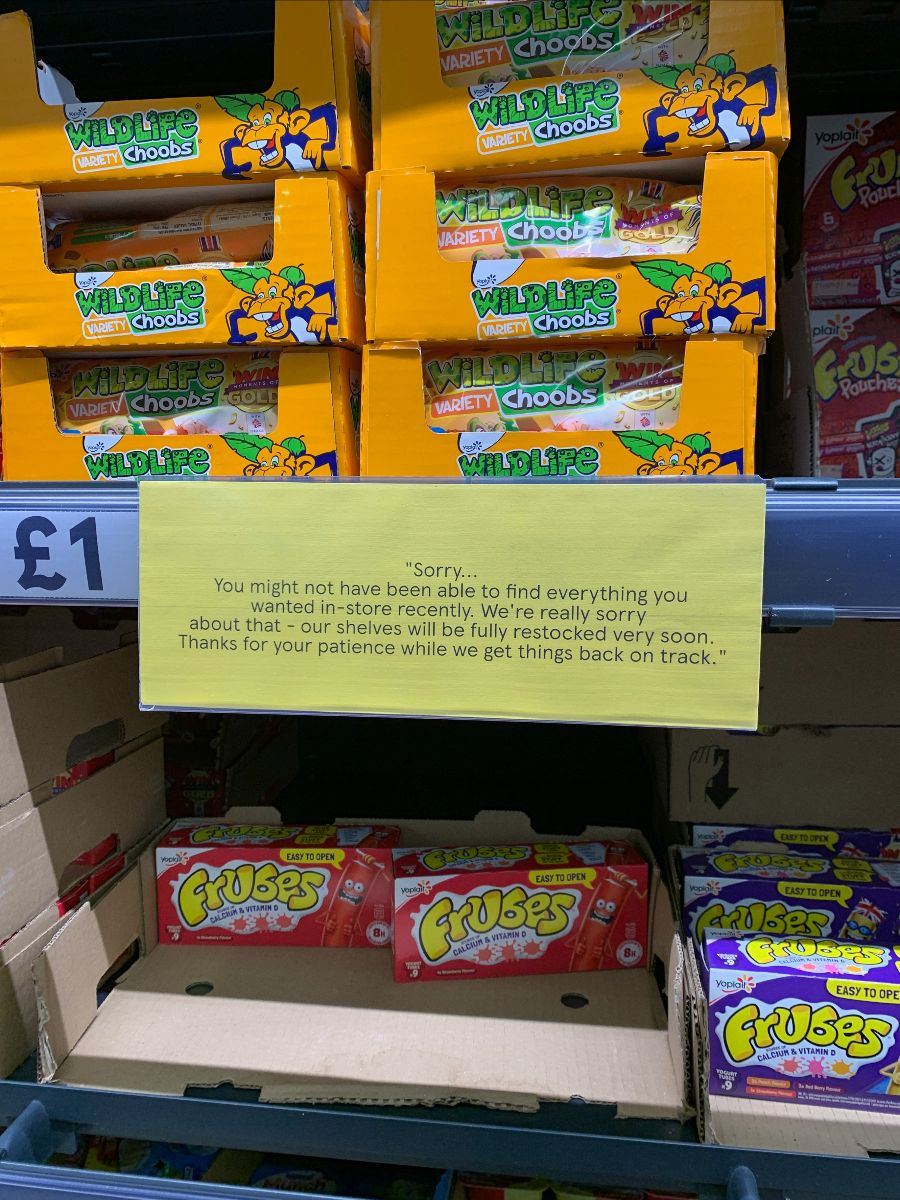
Is there a way out?
Who knows.
Either case rates need to drop (minus restrictions, hard to see how that will happen, but then I presumed we couldn’t see a spread like this in the Summer when people are outdoors) or indeed, there needs to be a change around immigration, so truck drivers that have left for the EU, are able to return.
However, we are not necessarily known for being a welcoming presence on the continent and again, with our case rates, we probably don’t look the most promising proposition ever.
Retail will find a way, it always does. But the gaps on the shelves?
Not just down to the Brexit, nor the pingdemic, or the weather, but rather, a combination of all factors, two of which look likely to continue for the foreseeable future.
PS - don’t forget refrigeration breakdowns too. In the hot weather, the units struggle to cope and thus you’ll see an entirely empty freezer, it doesn’t mean they’ve sold out. Rather the unit is running over a ‘safe’ temperature for Frozen, or Fresh Foods and as such, has to be emptied.
All units are controlled by sensors and a central control unit in store which alerts colleagues, of course, central offices can also see these temperatures. The only thing to do in such situations is merrily empty the food and put it in the chiller/freezer in the warehouse and await the refrigeration engineer making his way to the store, merrily, to get things started again.
From the Grocery Insight newsletter archive, first sent to subscribers on 22 July 2021. Steve now writes at read.groceryinsight.com. See also the blog archive and briefings.