Aldi - Range growing?
4 February 2019

Join this service to receive more insight like this
We have considered Aldi and their range growth in the past on this service; however there remains a concern over growth in range, central aisle B&M inspired assortments and what that means for the discounter model at large.
We all know the success of Aldi is enabled by the fact that their model is formulaic, a rigid control on costs via uniform store sizes, layouts etc means the more they sell, the more the profitability grows as increased volumes means better purchasing power via the limited assortment of product they sell.
Colleagues are added when the work is necessary for them to be added, therefore people are only employed when the store is churning over volume.
However when complexity is added in to the model, more products, different store layouts, increased speclal buys, more seasonal events etc, the model can become unproductive. A different store layout (some stores are 5 aisles wide, rather than 4 and others with the new format are different in terms of adjacencies) then this adds time in store to replenish.
Availability can also become a problem with too many lines in the space, meaning that products sell out = disappointing customers. Not a unique problem to Aldi, but nonetheless, their scale and growth means it's right to pore over every element of the business.
The brands have been struggling with the Aldi situation, how to deal with their growth and the fact the vast majority of it comes via own label sales, in many cases with products that directly imitate the brands themselves!
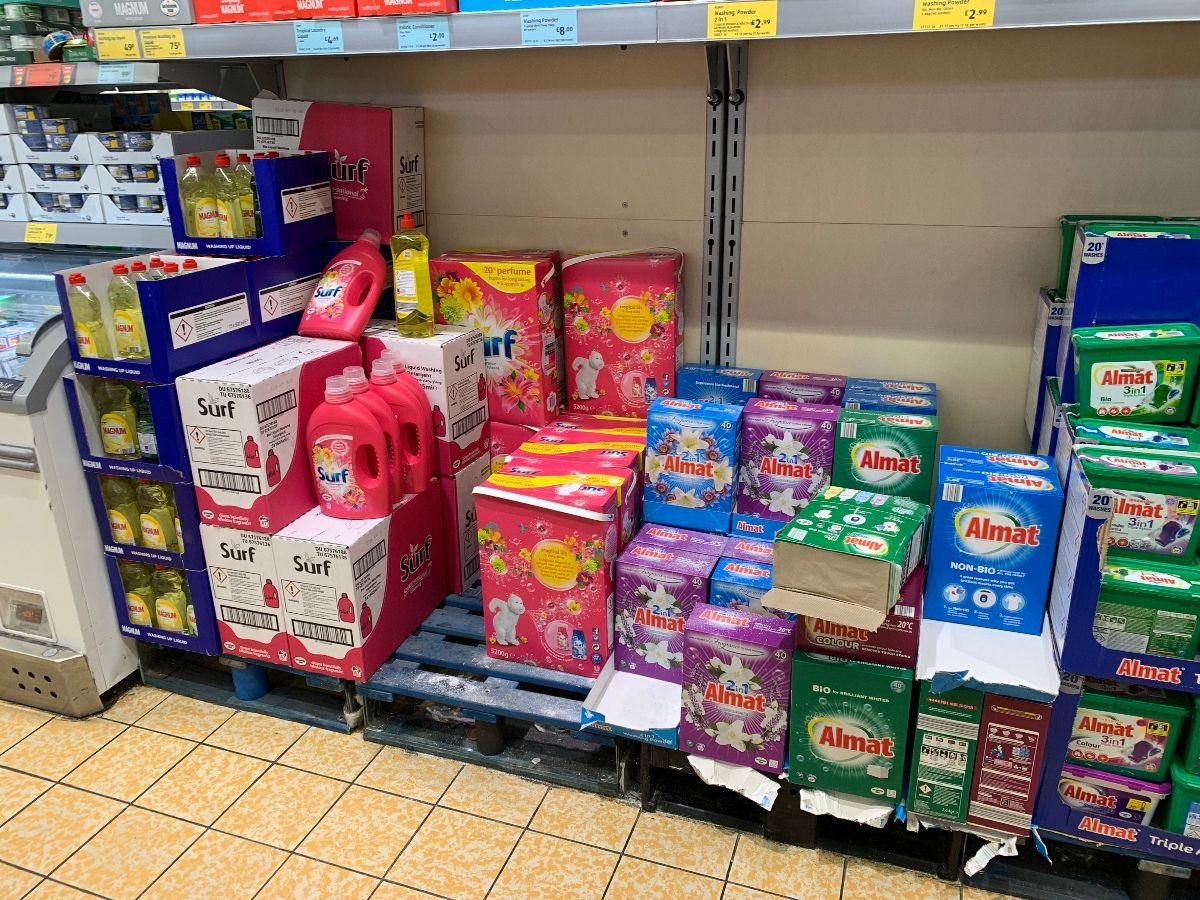
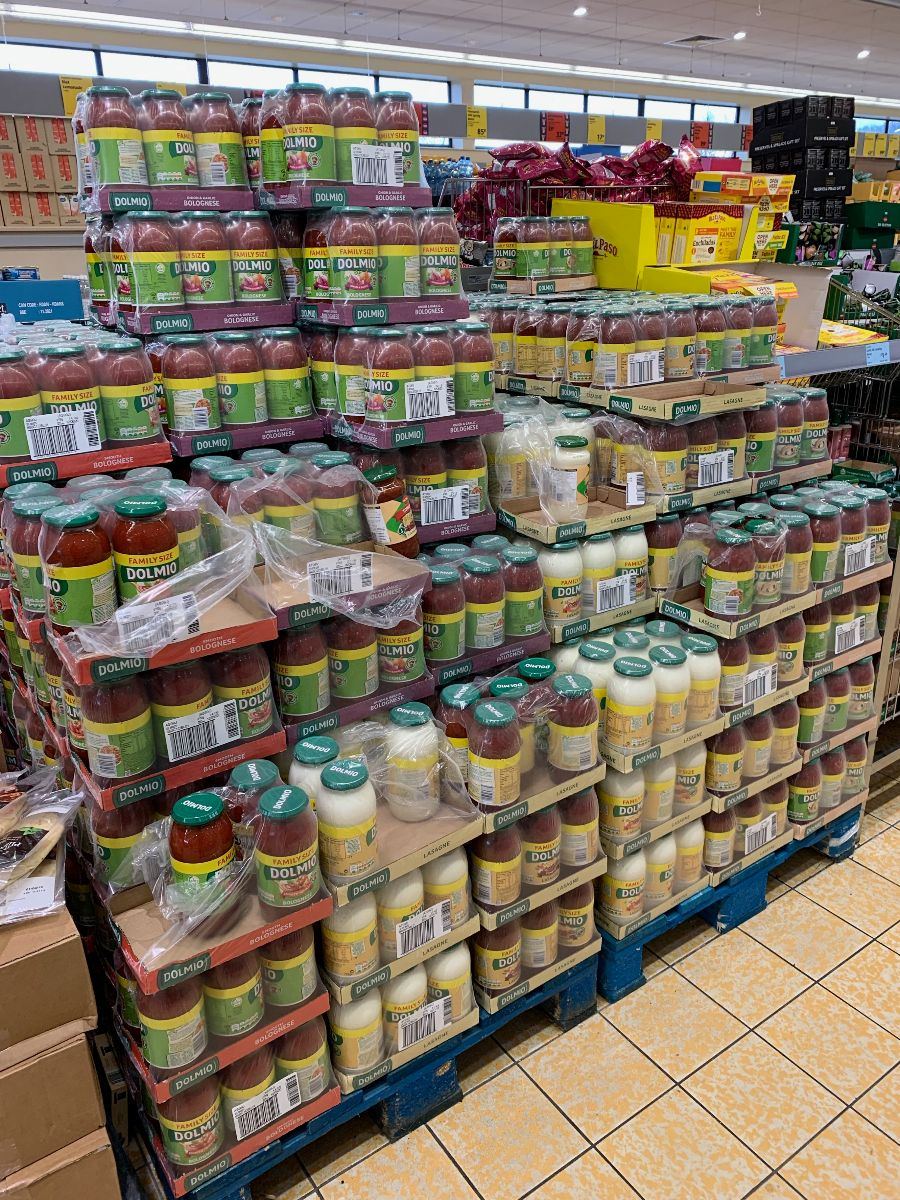
Therefore it seems that the brands are so keen to play within the discounter space and benefit from the huge volumes on offer, they are selling to them to go in the central space, part of a wider 'event' or other.
Surf powder for example was featured for the new year cleaning event and in store moved to the core fixture due to the volumes of stock in this one store. A sure sign that some shops are struggling with the stock inflow, Christmas was good for Aldi in terms of offer and set up but merchandise is still around, even today, from Christmas.
Dolmio was also featured with a huge pallet of sauce alongside Old El Paso which has been in and gone previously, curiously merchandised alongside the Aldi own label.
Lidl have also boosted their branded presence by adding numerous shippers and grocery lines via special buys to boost the sales line and also, presumably aim to stop customers visiting a competitor, especially Home Bargains or B&M who do a good job with low priced branded goods.
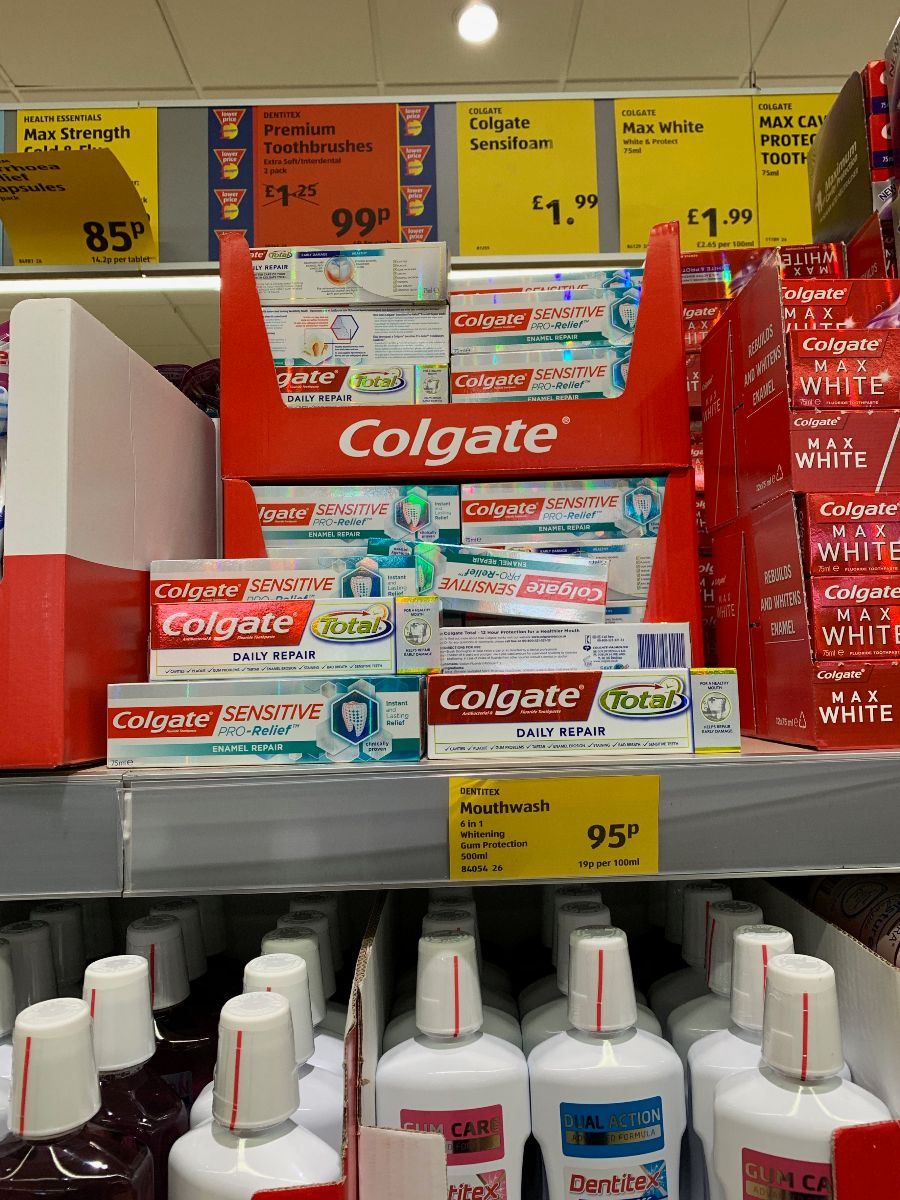
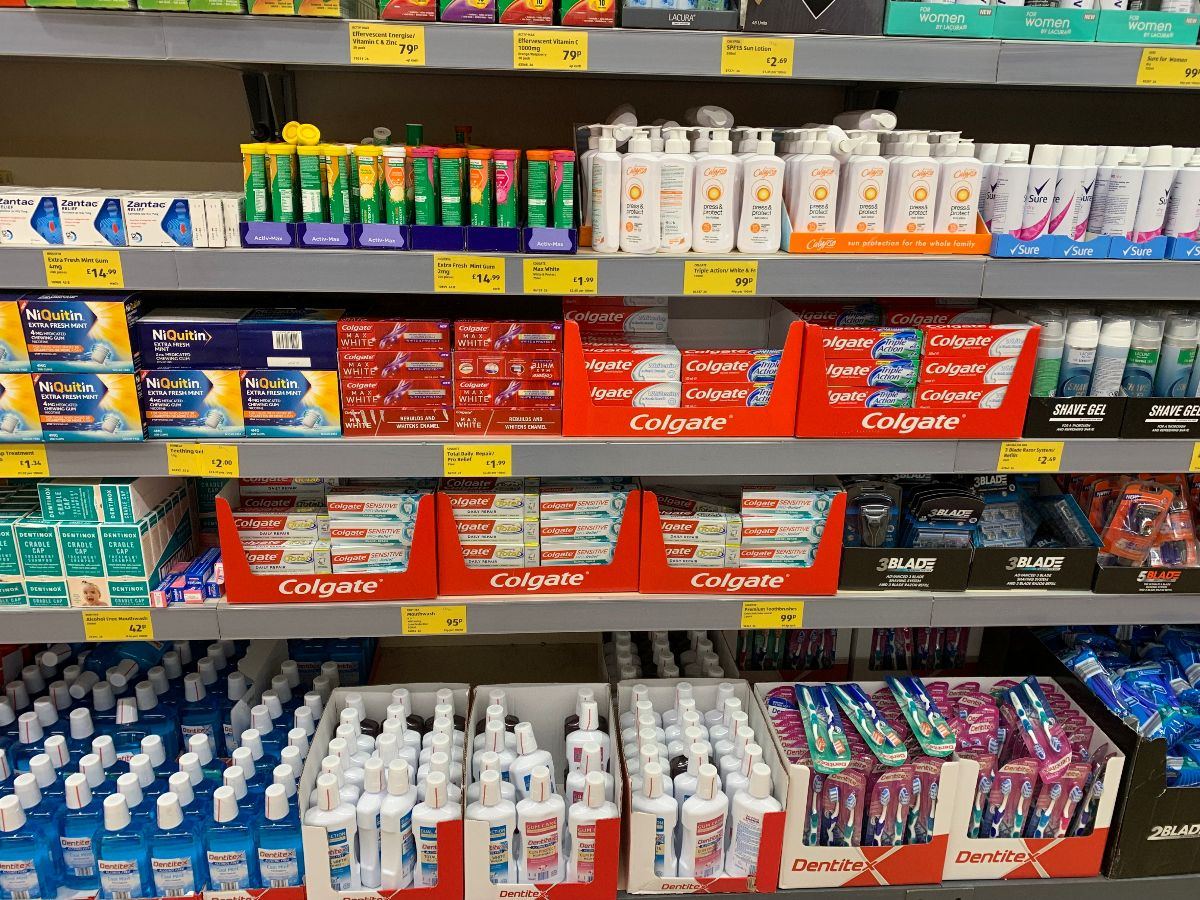
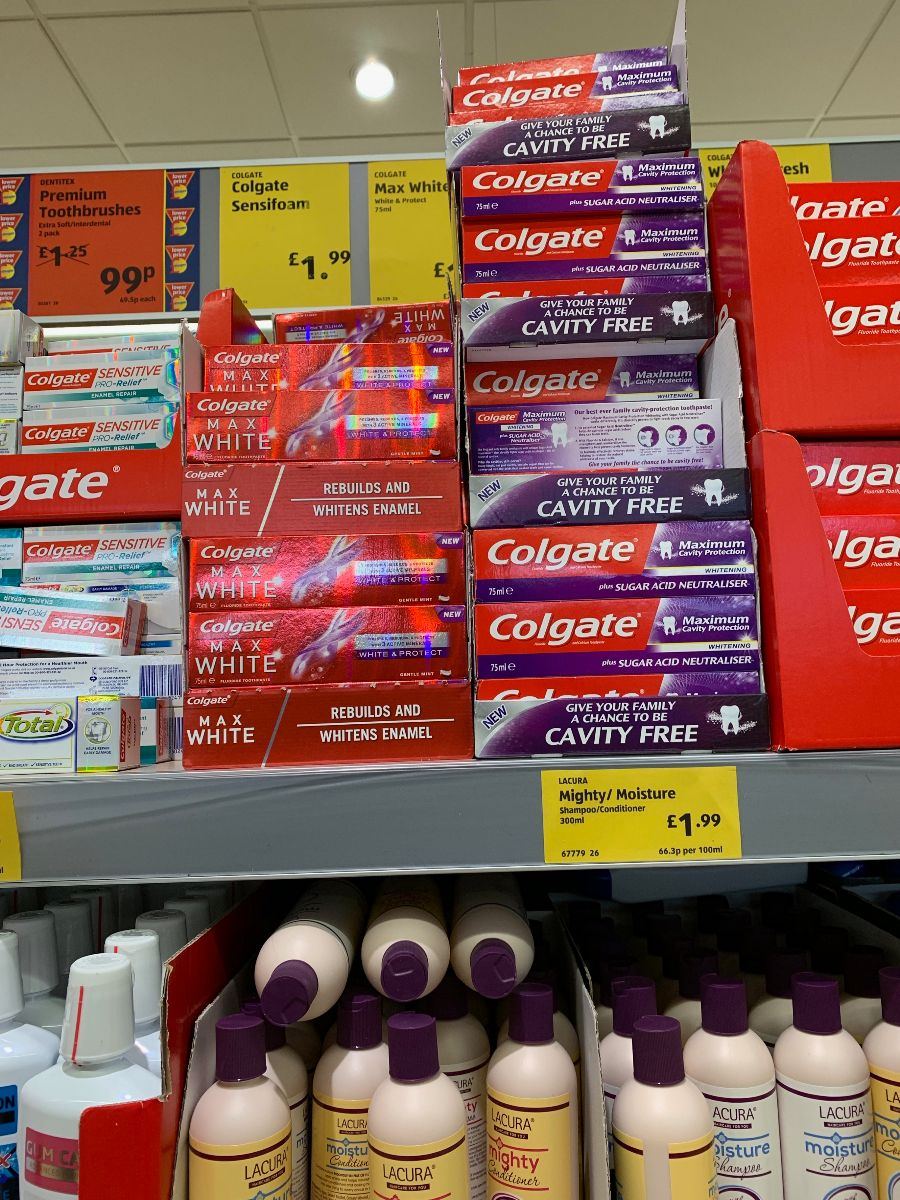
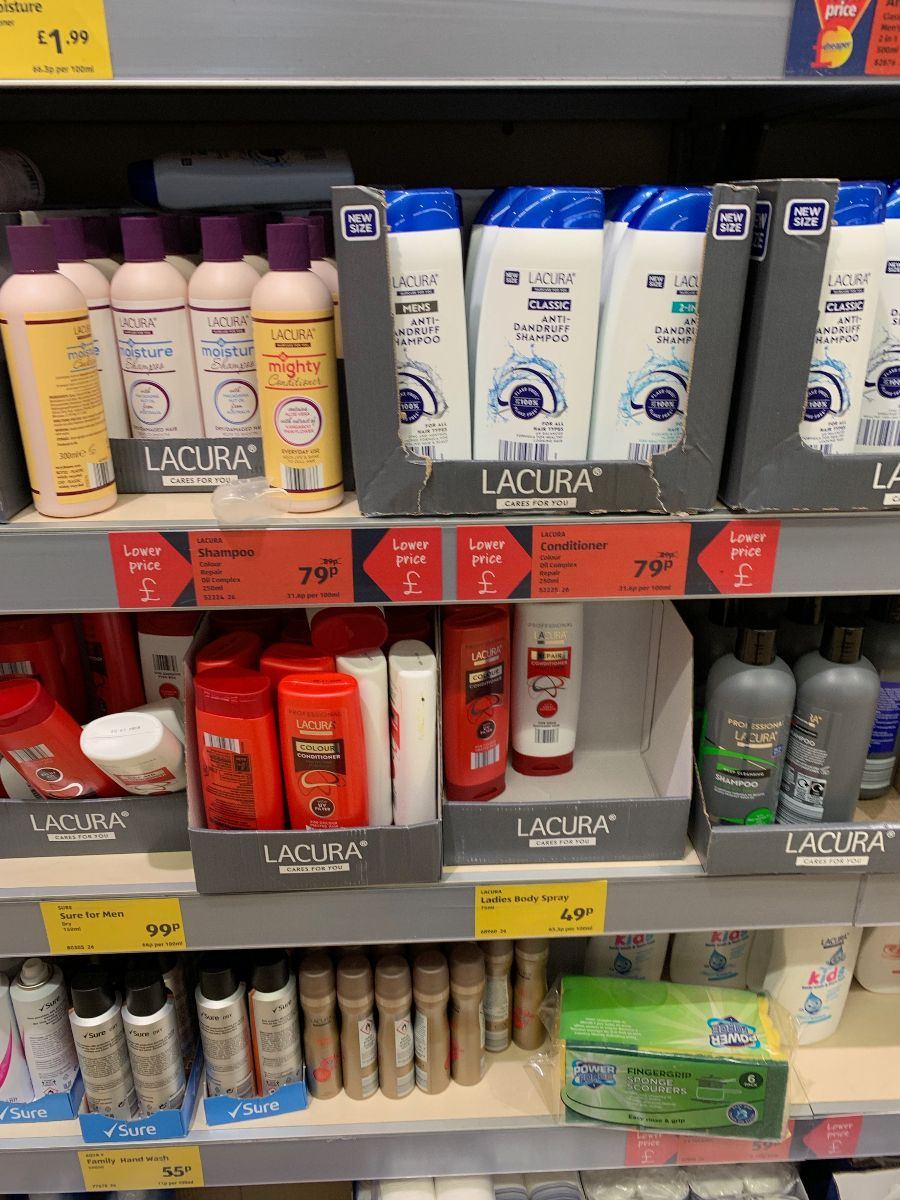
Another interesting element to view is the Health/Beauty space; both Aldi and Lidl do range some brands in here - but the majority of product is own label - direct imitations of the brands too....
However Aldi appear to have dispensed with their own oral care offer and put Colgate in to their range instead; the core line at 85p is their anchor product and can be found everywhere else - but a mixed cases of toothbrushes and toothpaste for kids was noted recently alongside a number of their other whitening toothpastes.
That will bring valuable income one suspects if Colgate form part of the core range, plus a strong buying price too. So many suppliers are just unable to get in to the core range due to the limitations on space and numbers.
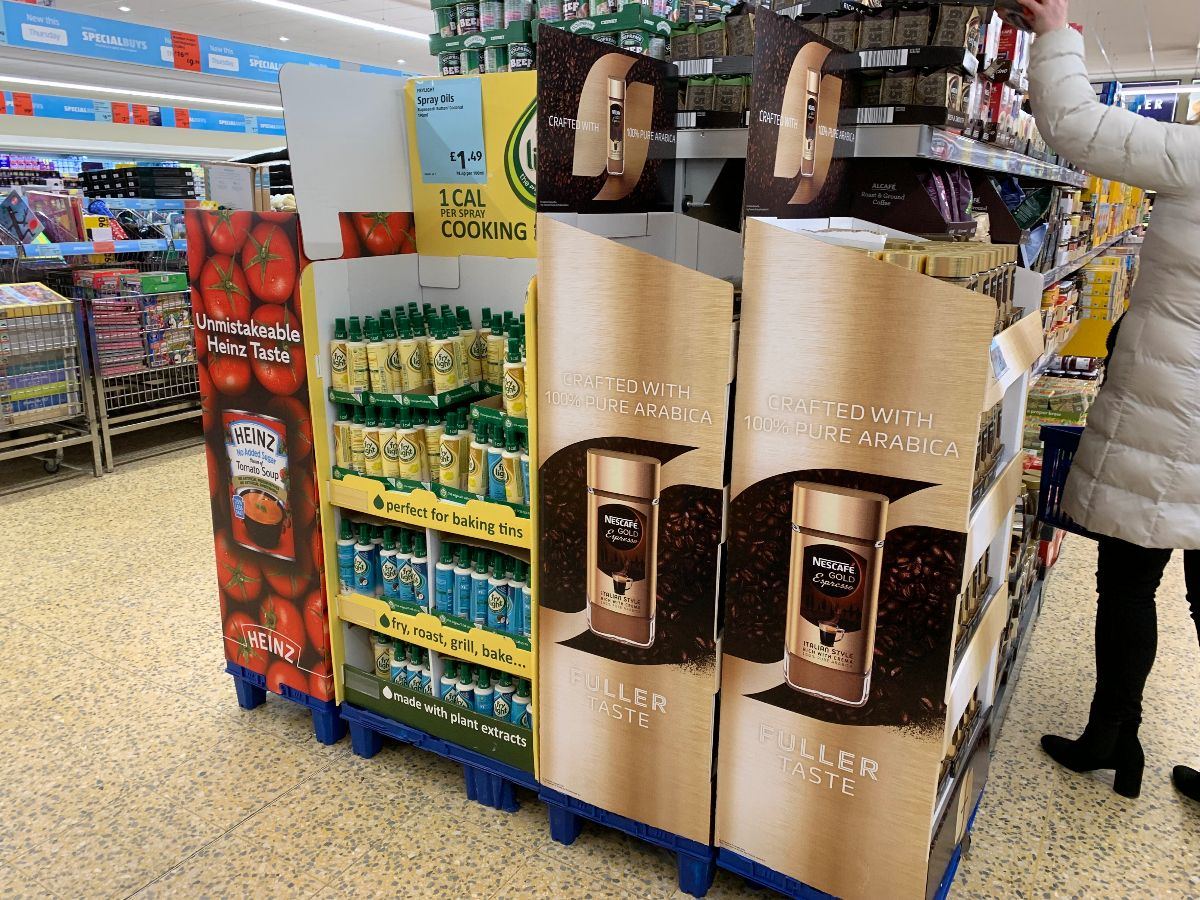
So many branded shippers are now seen around the stores; Aldi must be allowing the suppliers in now, the same way that Lidl are doing - for them it makes sense as they'll sell the product - it's often lower than the multiples in terms of price - no deals needed either.
Suppliers it makes sense to benefit from the volumes, but it doesn't feel like a long term play. Especially as they are lower prices in discounters on shippers / WIGIG items than they are in Aldi, or Lidl for example.
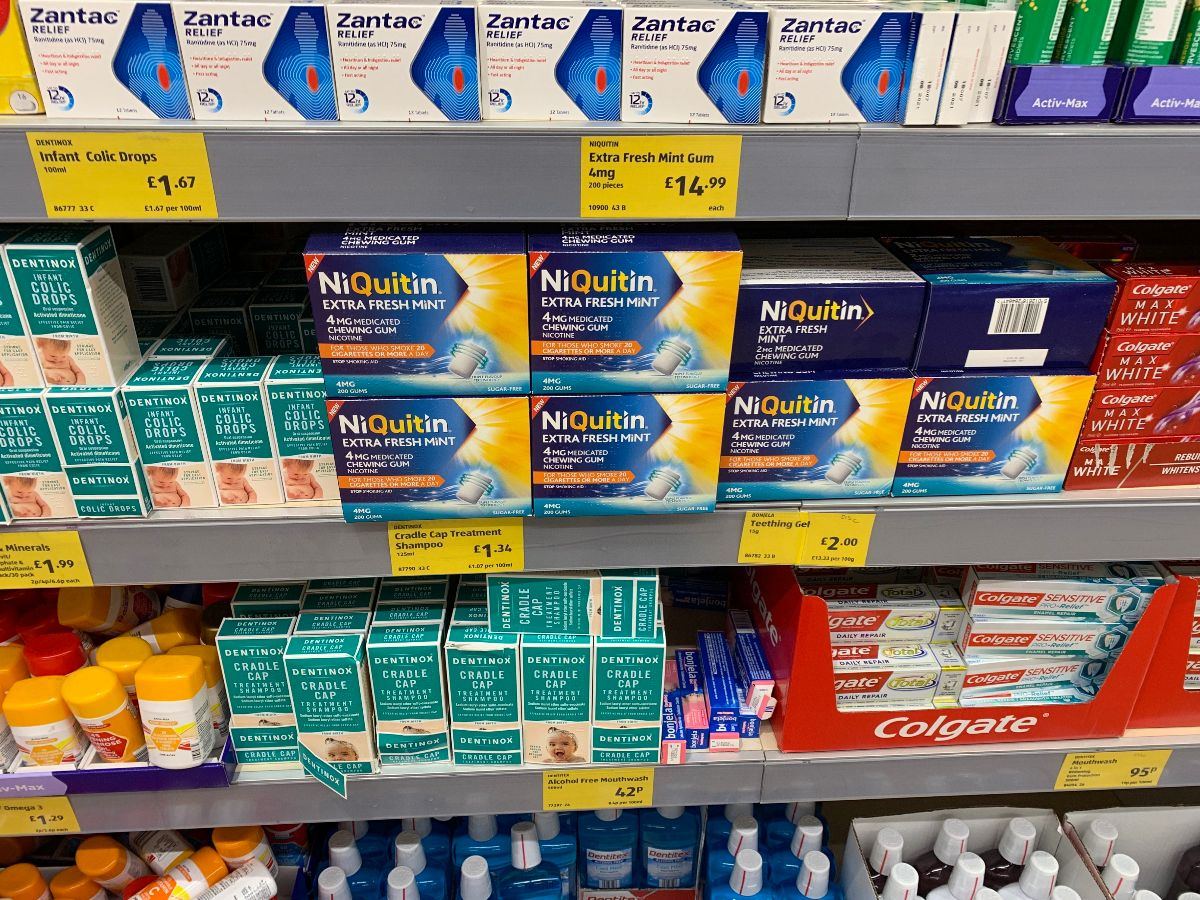
Niquitin was noted in the Health/Beauty run in January - not a bad line to feature and brands have a huge amount of trust in medicines / health. It's a difficult ask to push own label in front of customers in areas such as smoking cessation and expect them to purchase.
However where it works well, in areas like Baby - with the Aldi own label Nappies and Milk too, it can be a real footfall driver and a huge driver of loyalty too.
Alongside continued growth in stores, a questionable like for like number (see the December 2018 release only quoting one week's of sales for Christmas in Aldi whereas 2017's December number featured the entire month)... Price remains all important for discounters.
Where they used to fight over who was cheaper for a can of Beans - Aldi, Lidl or Netto whilst the big 4/5 barely cared and focused on rapid growth and takeovers... Now it has become a real obsession for the discounters to push on price and continue to be the cheapest in town.
Therefore any price activity at any large retailer is generally matched with equivalent activity at Aldi, or Lidl, even if means they drop by 1p/2p - they retain that leadership on price.
There are a number of lower price signs in stores at the moment, featuring both identities which can make things unclear about the meaning of cuts. They're semi permanent but prices go up, as well as down, and some may have been around the time of Jack's opening.
Others are definitely a reaction to the work by Tesco on their value tier too, whilst Tesco rebranded value tier to a stable of sub brands, naturally their range has coverage in areas where Aldi don't have a value tier but do have own label / mid tier.
Thus Aldi were noted to cut prices on an equivalent basis to retain price leadership / a gap in some form. 80pk TE Stockwell Tea was cheaper than the Aldi 160pk Tea, but Aldi cut the price of the 160pk Tea to reflect that and become cheaper on a per cup cost basis....
It does muddy the waters a bit though for customers comparing value tier versus a mid tier brand in Aldi; nonetheless, there has been a favourable reaction from customers in Tesco and the strength of Eastman's Ham (one bay of low, low priced Cooked meats) has probably quickened the need to close down Deli counters in Tesco stores.
However Jack's / Tesco aside; there have been a fair number of lower prices noted in Aldi and Lidl. Whilst they do have price leadership, it all eats in to the margin number and profitability remains absolutely key for any retailer - expansion and rapidly rising store numbers are turnover are one thing, but you have to be growing profits at the same rate.
Especially now Aldi are at that fabled 700+ store number; where the model via the increased volumes should start to really progress with lower buying prices via increased volumes meaning the efficiency is improving and margin can be built sustainably.
But that range growth continues to be a conundrum; Aldi are limited by the box they build stores in and their model that they operate. Too many adjustments to that model and things become difficult, inefficiency becomes a challenge and more people are needed - for a low margin business, that is a problem.
However Aldi are popular and need to be on the latest trends, lest they risk losing customers to competitors. There will always be that 20% that Aldi can not provide (Free From e.g). Branded shippers with branded items are one way of getting around the limitations with range, but only on a rotating, limited basis.
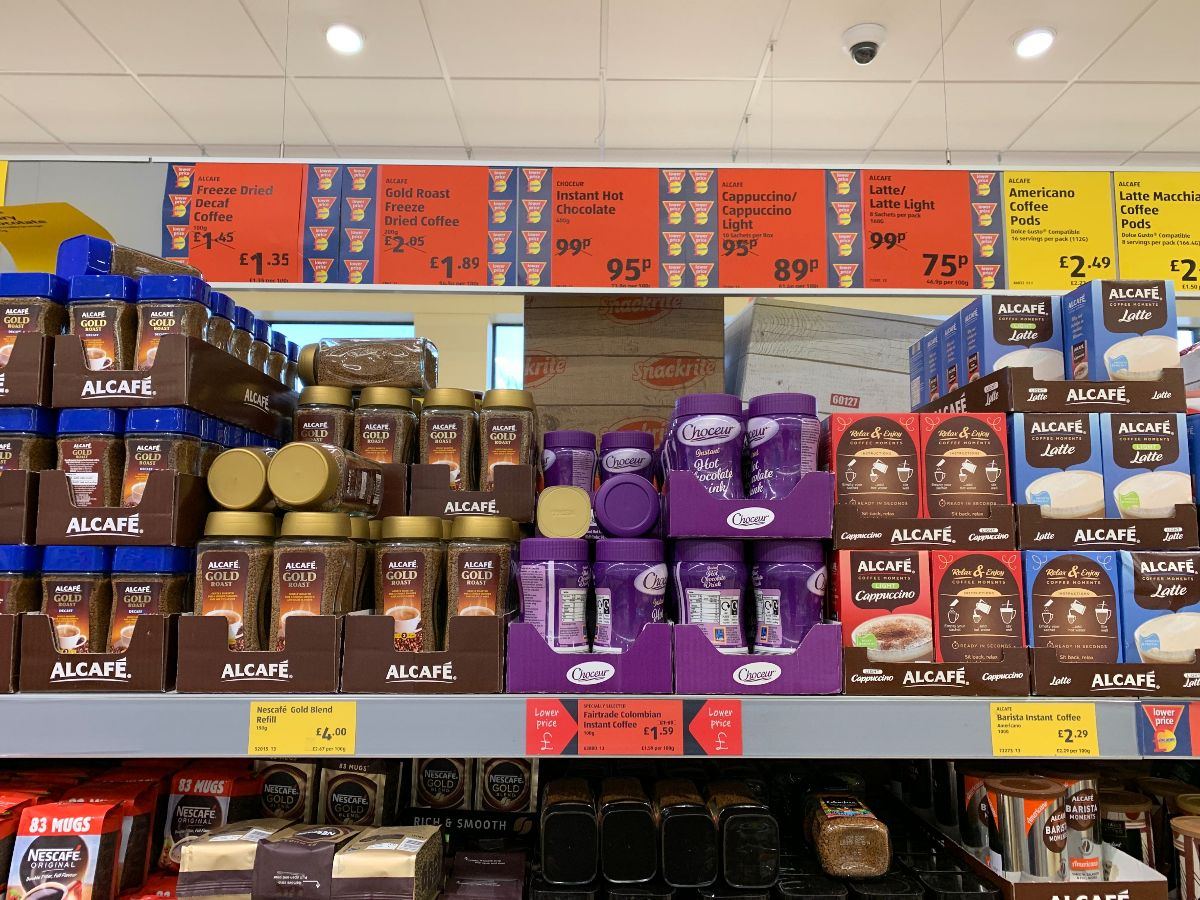
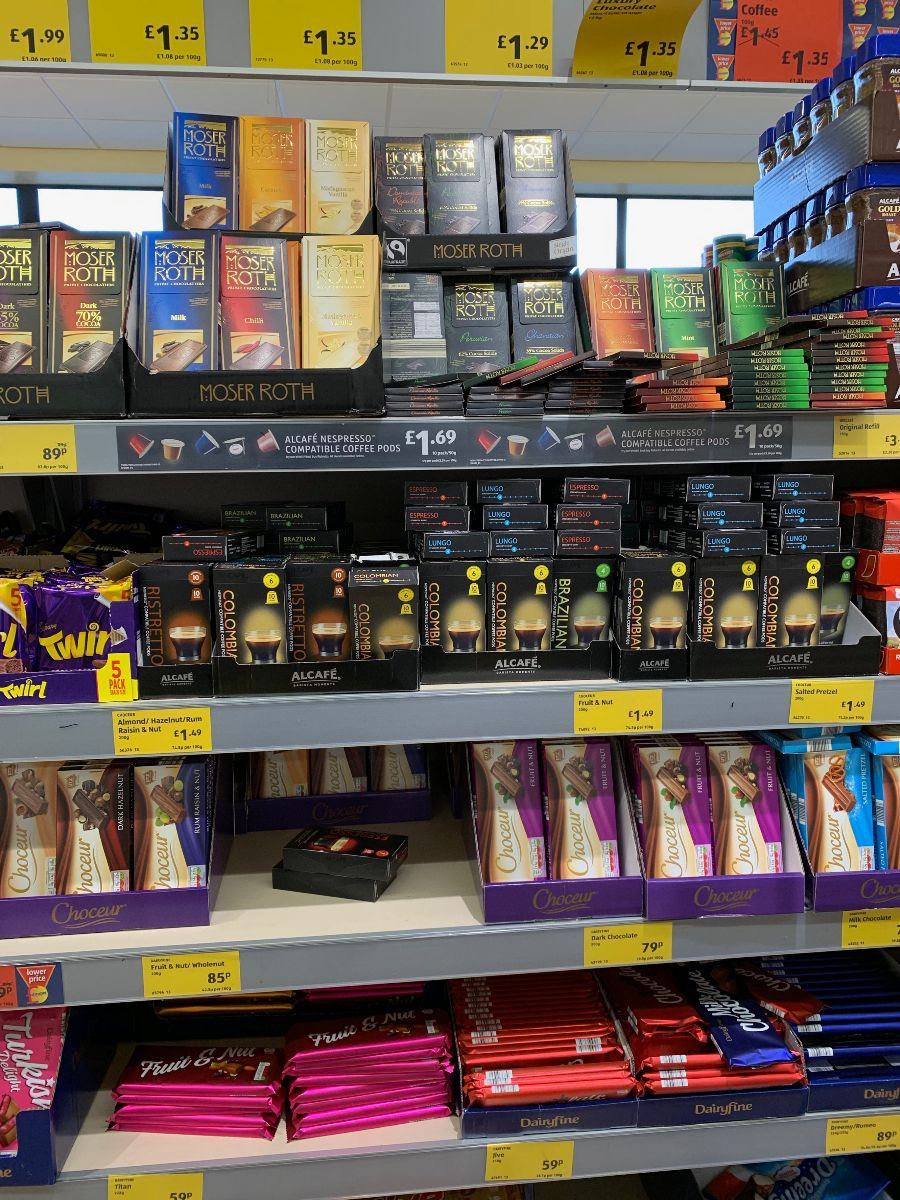
Areas such as Nespresso pods that are compatible with the machines (since Nestle lost their IP case, everyone is developing the pods) are necessary for Aldi as rivals will sell the pods and demonstrating a huge price gap between leading brands and their own product is a huge part of what they do very well.
However it's still range growth, even with the mixed cases (2/3 flavours in a box) - it becomes more range to squeeze in to an already congested Coffee fixture. As we can see in the image above, it's awkwardly in the confectionery fixture here....
It may tie in with the premium Chocolate above but it's still not in the location where one expects it to be.....
All in all, they continue to go well, they continue to do a better job in events, on premium and haven't neglected the core shop. But their ranges are tight in some areas as they continue to appeal to so many customers in new locations.... Their greatest risk continues to be adding range in to areas in ambient that are already tight.
But special buys also seem to be heavy with numerous ex seasonal lines, that space is then harder to manage and needs more maintenance.
However; still doing a job for the customers and in these times of weakening customer confidence; the discounters are still the automatic place to go to save money.
That's the challenge for their rivals.....
Subscribe to this service today!
From the Grocery Insight newsletter archive, first sent to subscribers on 4 February 2019. Steve now writes at read.groceryinsight.com. See also the blog archive and briefings.