Amazon Go - What did we think?
6 August 2019

Join our insight service today
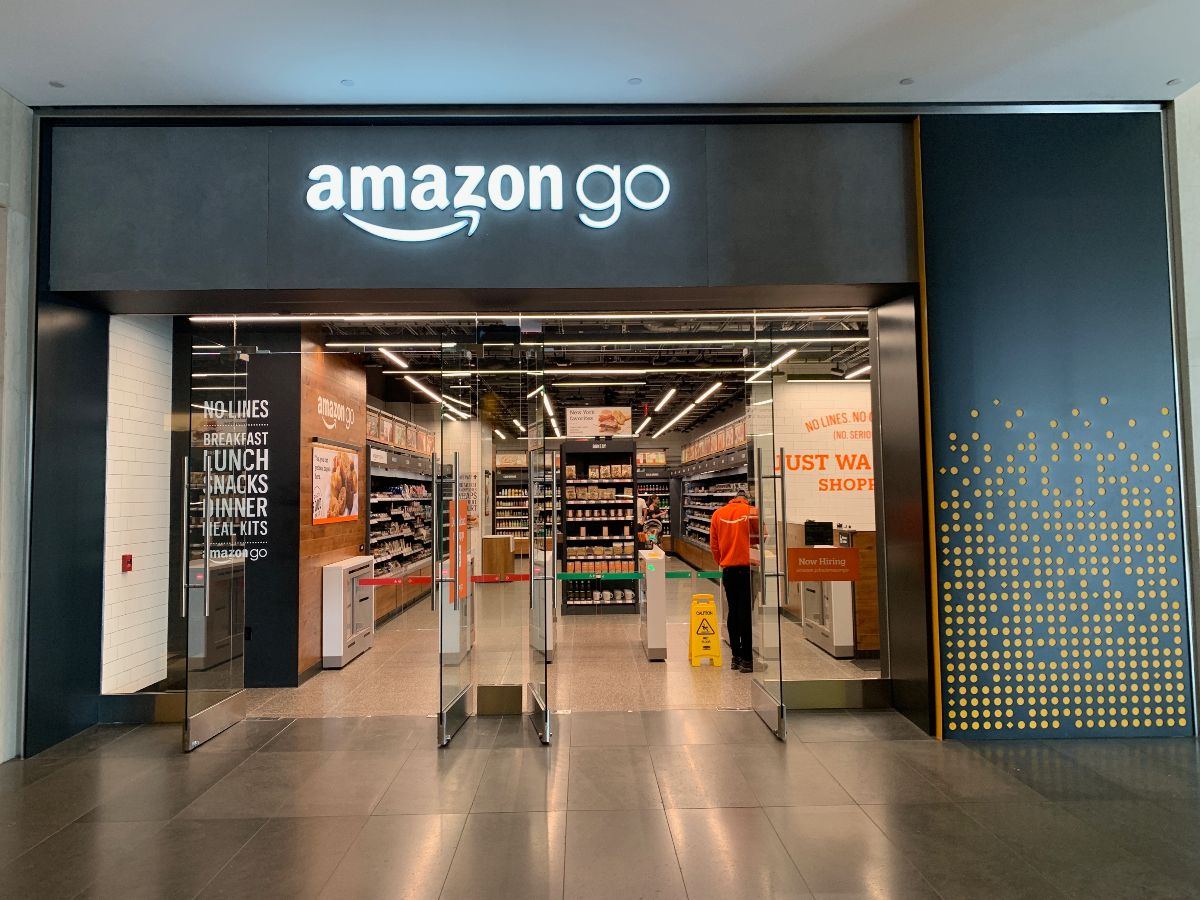
Good afternoon,
Much excitement about Amazon Go landing in the UK later this year so I was keen to find out what it's all about when visting New York last week.
I was excited to find out about the future of retail and what it meant for everyone in the future, more than likely to see the end of jobs in retail as we know it?
Not quite, there's still a lot of work required to run a store, even this one which is probably between 1,5k / 2k sq ft in sales floor space (indeed the picture above shows the entire sales floor across two aisles.
The store itself is located in the upmarket Brookfield Place which is "downtown" New York and located right in the middle of the financial district, an area revitalised in the very recent past after the events of 9/11 at the turn of the millennium. This area has seen Occulus (Westfield) open with a ton of retail space alongside Brookfield place itself.
The subway now runs to the World Trade Center station again (terminating here) and you can walk under the road near the Trade Center and get to Brookfield that way too.
Links are good and there is an abundance of workers at Goldman Sachs, One World Trade Center itself and the various offices in and around this area.
With that in mind, it's a perfect location for an 'on the go' style store such as this, checkout free so the queues are non existent and the customers can get in and out without any fear of queues or delays.
This aids the 'mental availability' that I will talk about in upcoming blogs and podcasts, I.E. barriers to customers attending the store (I think about the fact that a local store near you always has queues, it puts you off going back.
It then becomes part of the mindset for a customer where they rule out a store before visiting and go somewhere else. Then it's a battle for the retailer to entice them back in, usually with vouchers, only for the queues to be as long.
So removing queues is one part of the battle, availability is also a key part for the customer. I.E. "I can get what I want" - if there are gaps on products the customer buys, then that becomes another barrier. Pointless shopping anywhere if you have to go somewhere else on the way home...
Consistency (good and bad) is key here, customers are tolerant (broadly) but there are extremes at both ends where customers vow never to return and ones where they're loyal to a store, or brand for any number of reasons and will tolerate most issues. However for the masses, competition is everywhere and as a result - customers can simply go elsewhere.
Amazon Go was visited at 6pm on a Saturday so not peak trade but the store would have been busy throughout the day one suspects. Equally though, it will be busier on a weekday due to the area being heavy with bankers and other office workers which may have impacted availability either positively or negatively to be honest, it's hard to say.
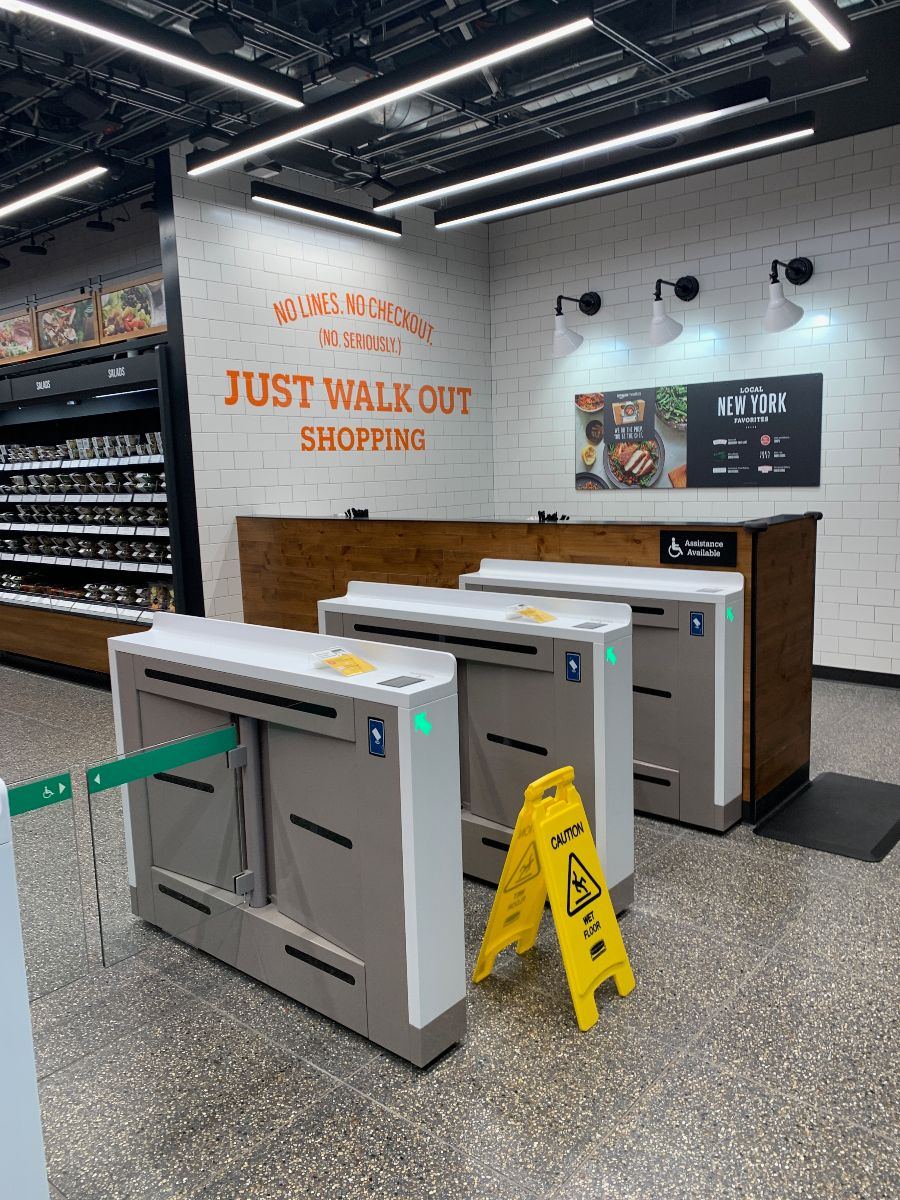
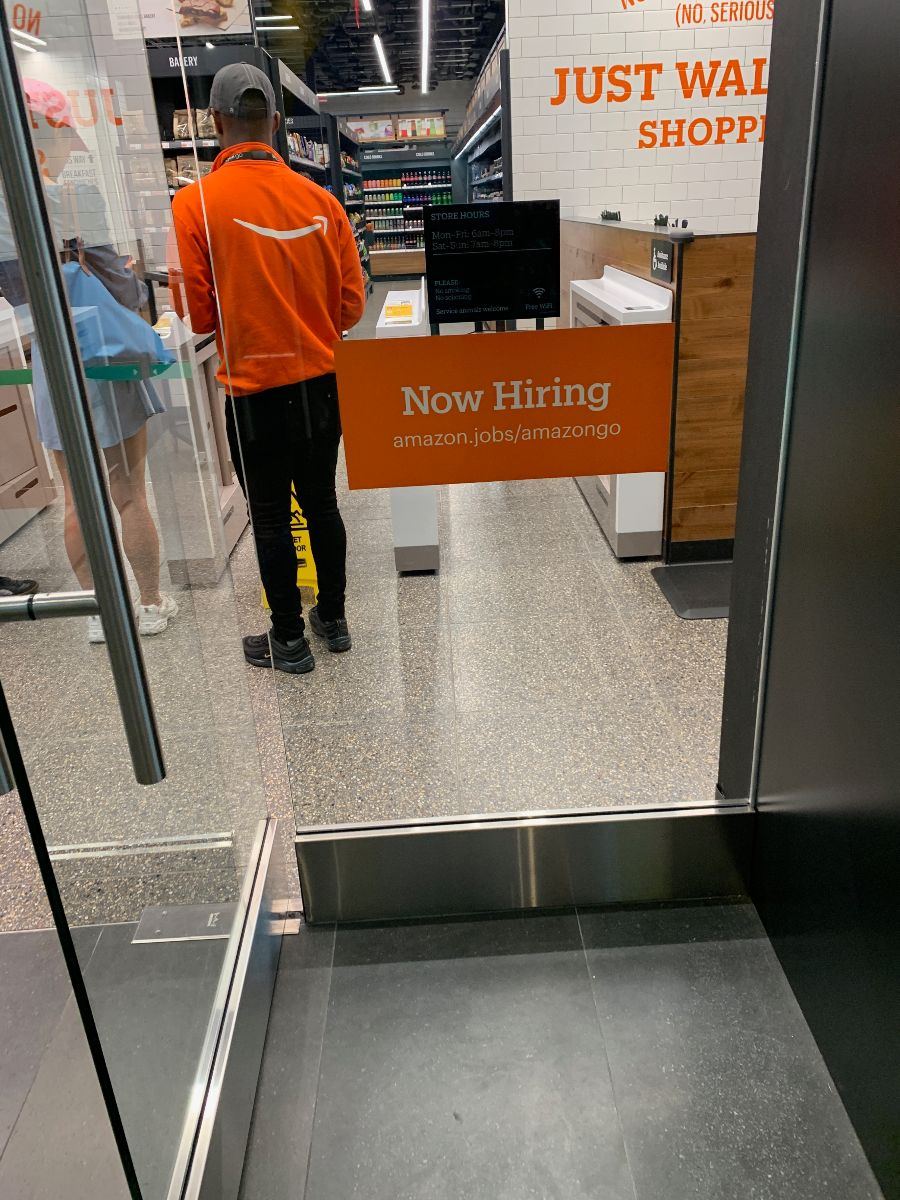
Entry wise - there was a sole person on the floor aiding efforts showing customers what to do and how to gain access. There were 4 in the party visiting so I had to scan each person in with my app (barcode) and then enter myself, this then allows the system of cameras and the like to track what we've bought seemingly.
The near irony about jobs was notable too.
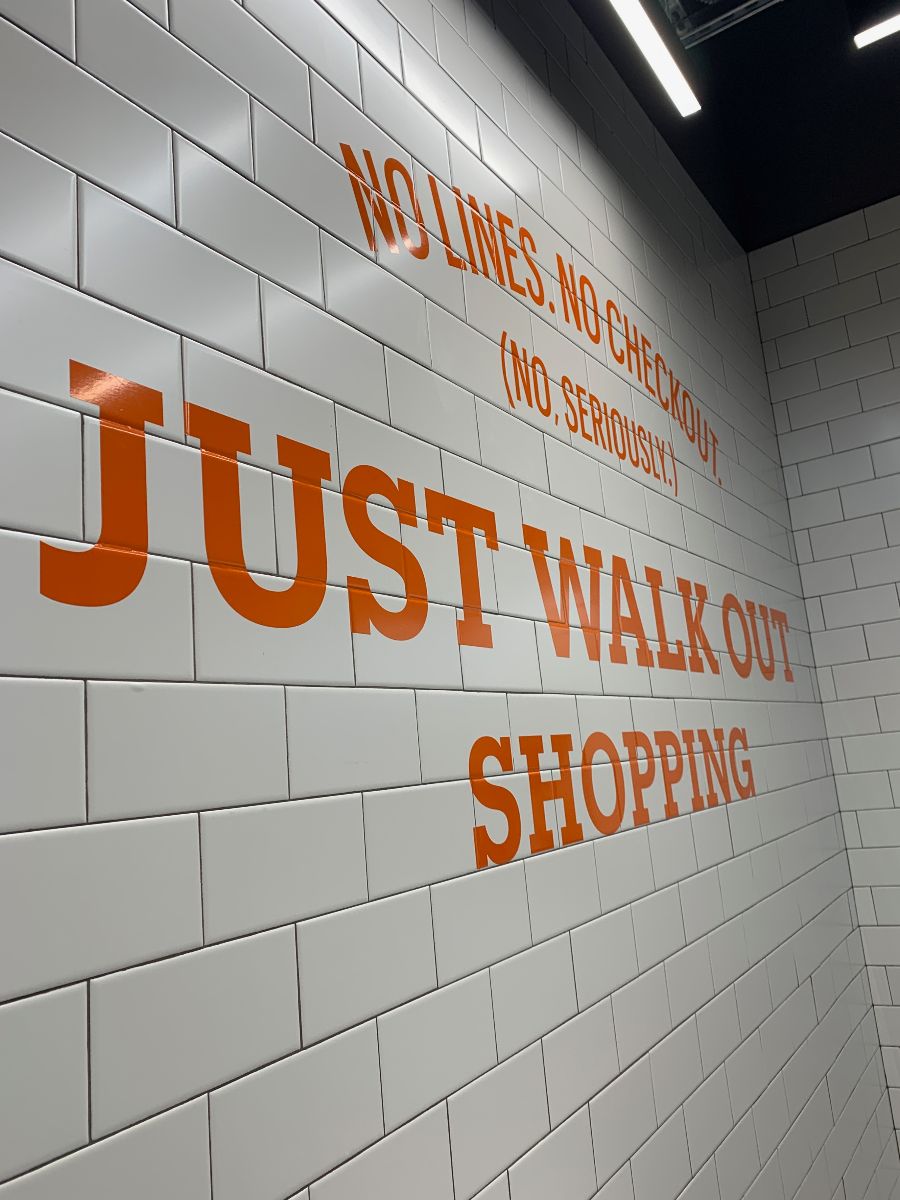
The key strapline is around 'just walk out shopping' which remains odd as a concept and against our better nature. I spent most of the visit trying to understand how it worked but leaving then being charged accurately was pleasing.
The benefits from a retailer viewpoint are curation of customer (IE you need the app to get in) minimising (never eliminating) shrinkage and accurately recording sales too. Plus you get instant access to the data, showing what a customer has bought too.
Allowing for further personalisation too and links to the wider Amazon world.
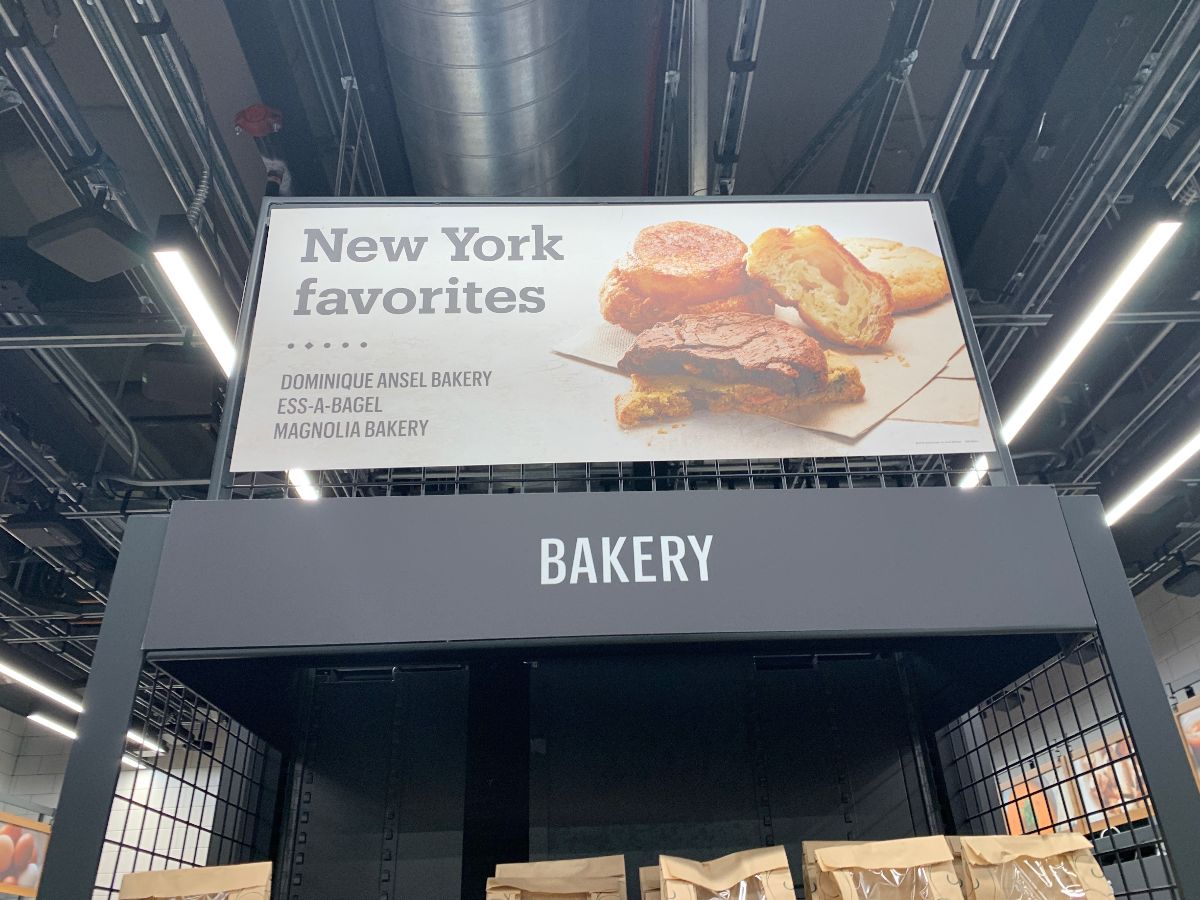
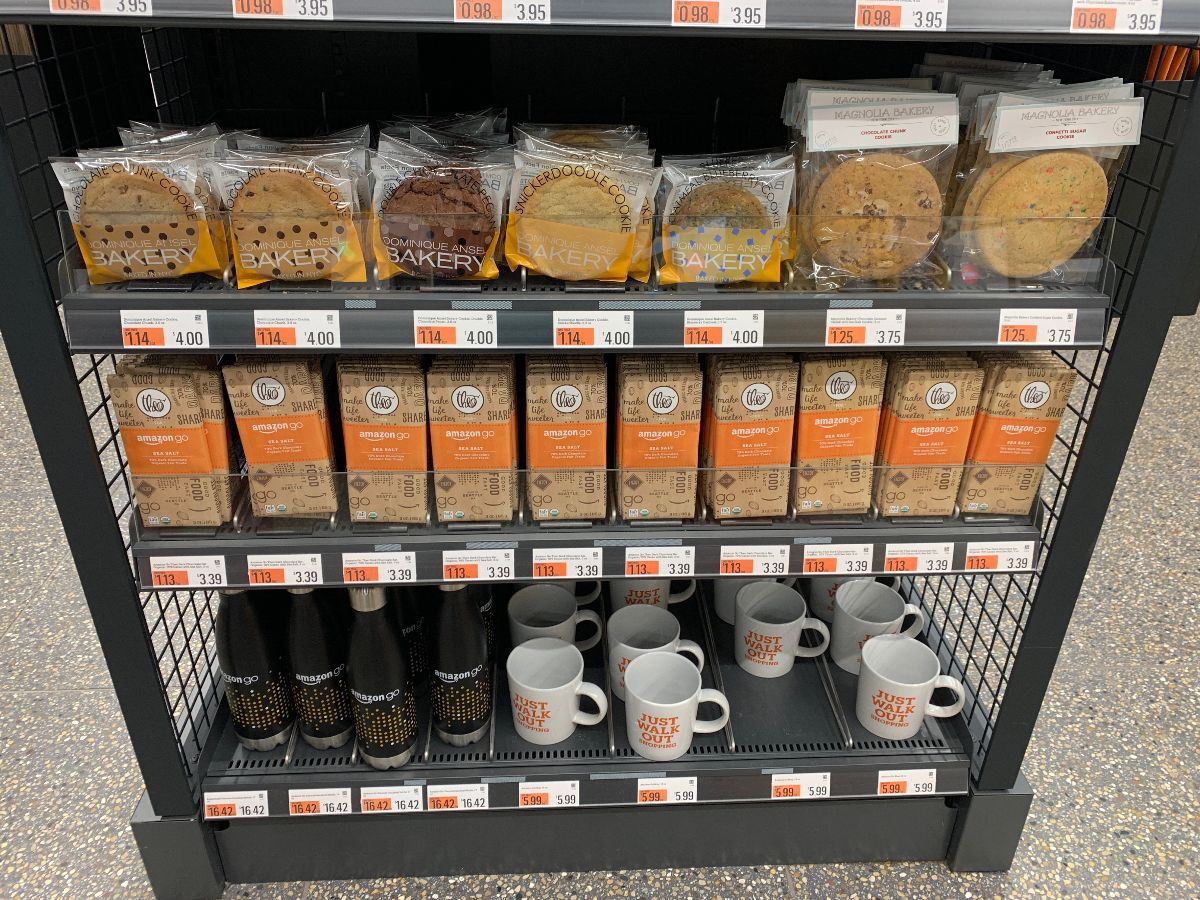
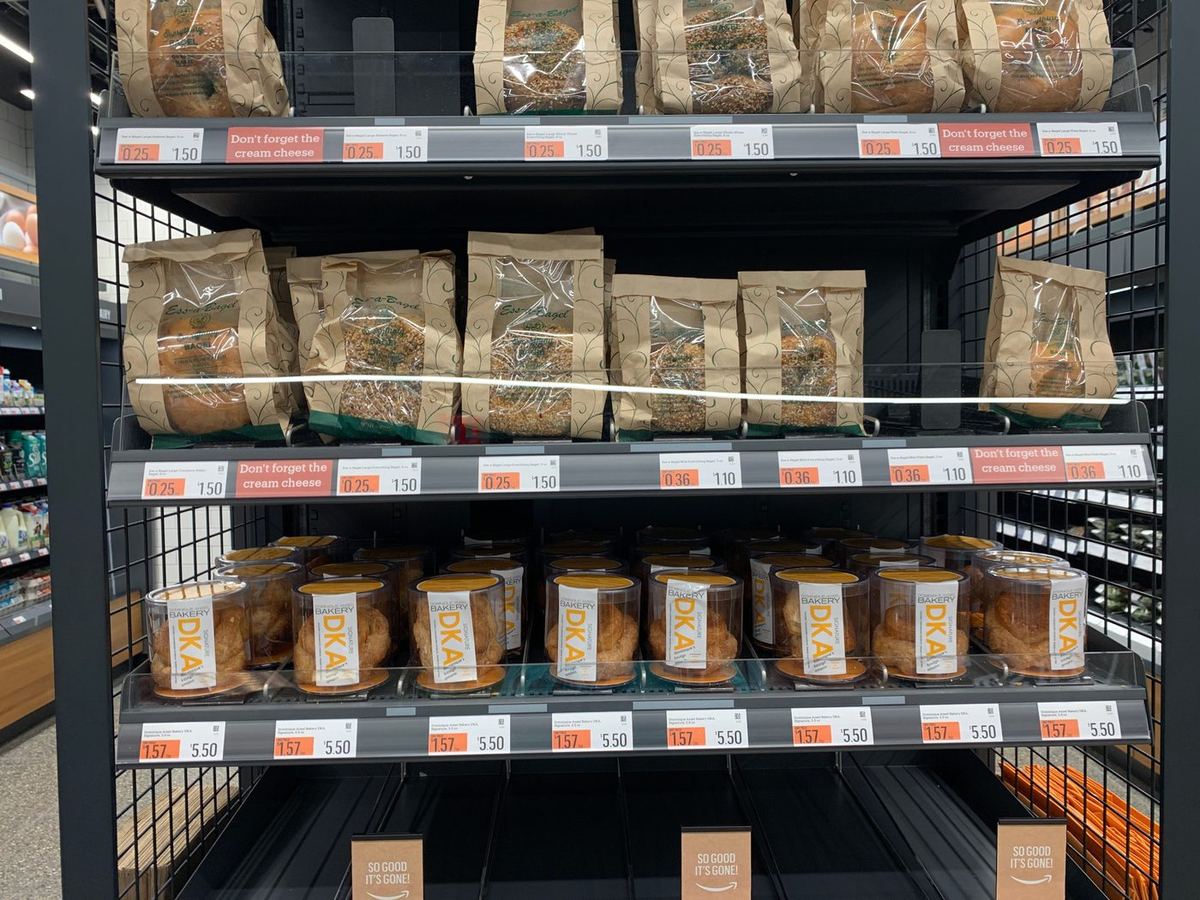
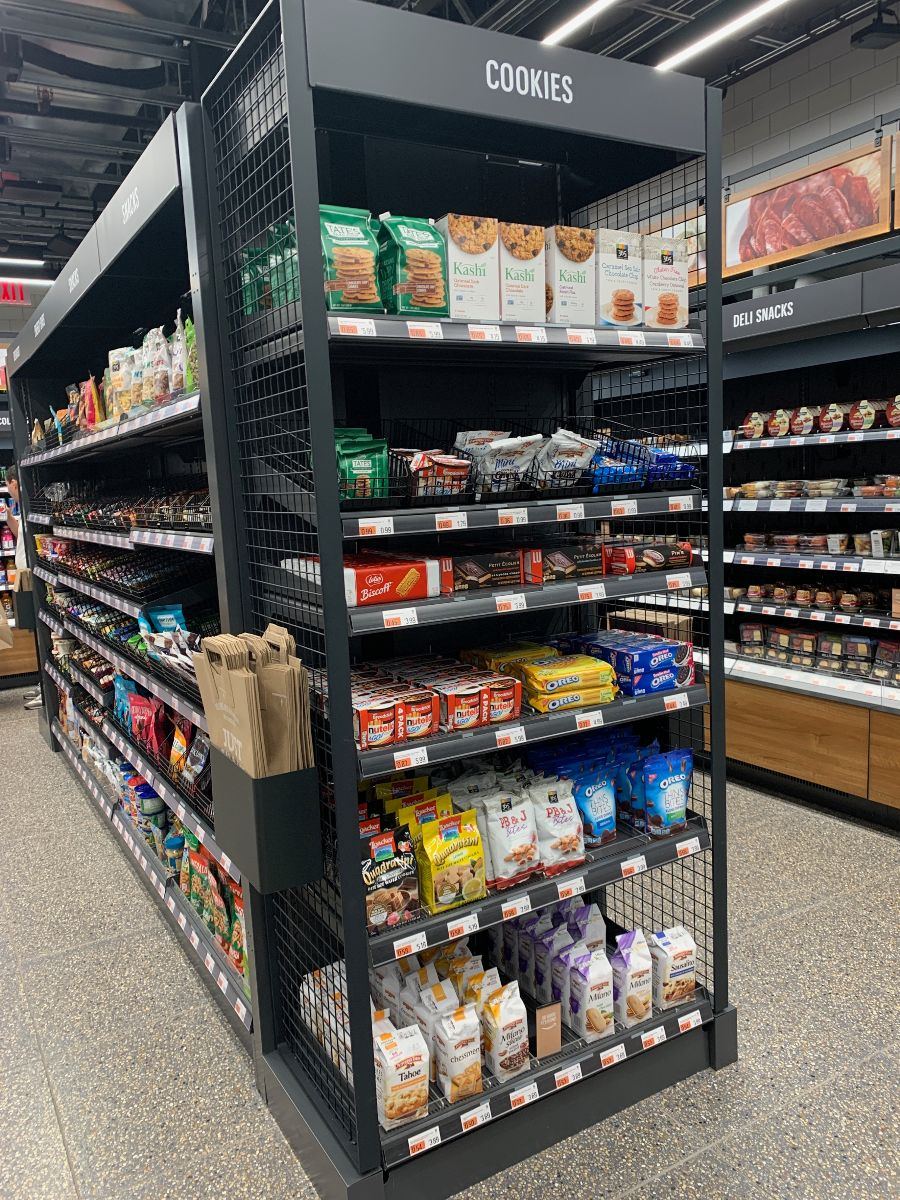
The ranging, space and assortment were inherently baffling and it seemed that Amazon hadn't necessarily visited better convenience operators (UK notably) to understand what may work well.
The likes of Duane Reed and Walgreens have an estate to die for and the opportunity to drive traffic in an unbelievable way but their offer remains stagnant and stores often quiet when visiting as their money is presumably in prescriptions and healthcare.
Therefore the better c-store operators (UK, Ireland, Europe etc) are the ones to look at here, applying the New York slant on product choice and also demographic/type of customer.
Opening the store to customers with Bakery being the first thing one sees wasn't a bad idea; however there wasn't a great deal of theatre associated with the product, perhaps earlier in the day it'd be different?
However the 'time of day' messages were lost a bit and it didn't really feel like they were flexing space like they could have done, to maximise their returns in what must be expensive real estate.
The Amazon Go mug and Chocolate was notable though, we bought both for souvenir purposes but the wider 'love' for Bakery was missing a little.
Cookies on the next 'end' were notable too but the range was relatively congested without there being a real distinction.
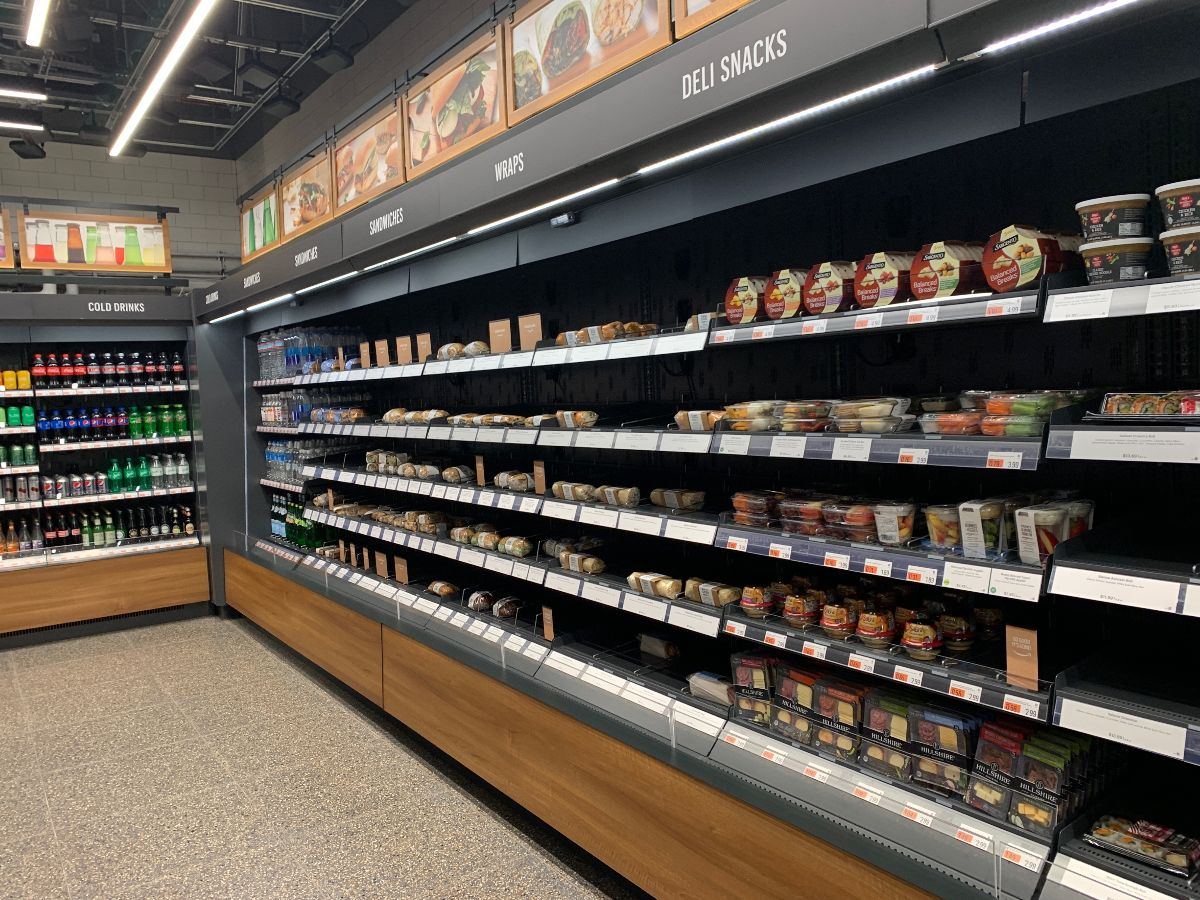
Another key part of the store was the range of snacks, sandwiches and salads that were ranged, I would have expected more 'time of day' here with the ability to flip the space based on evening meals / lunch etc.
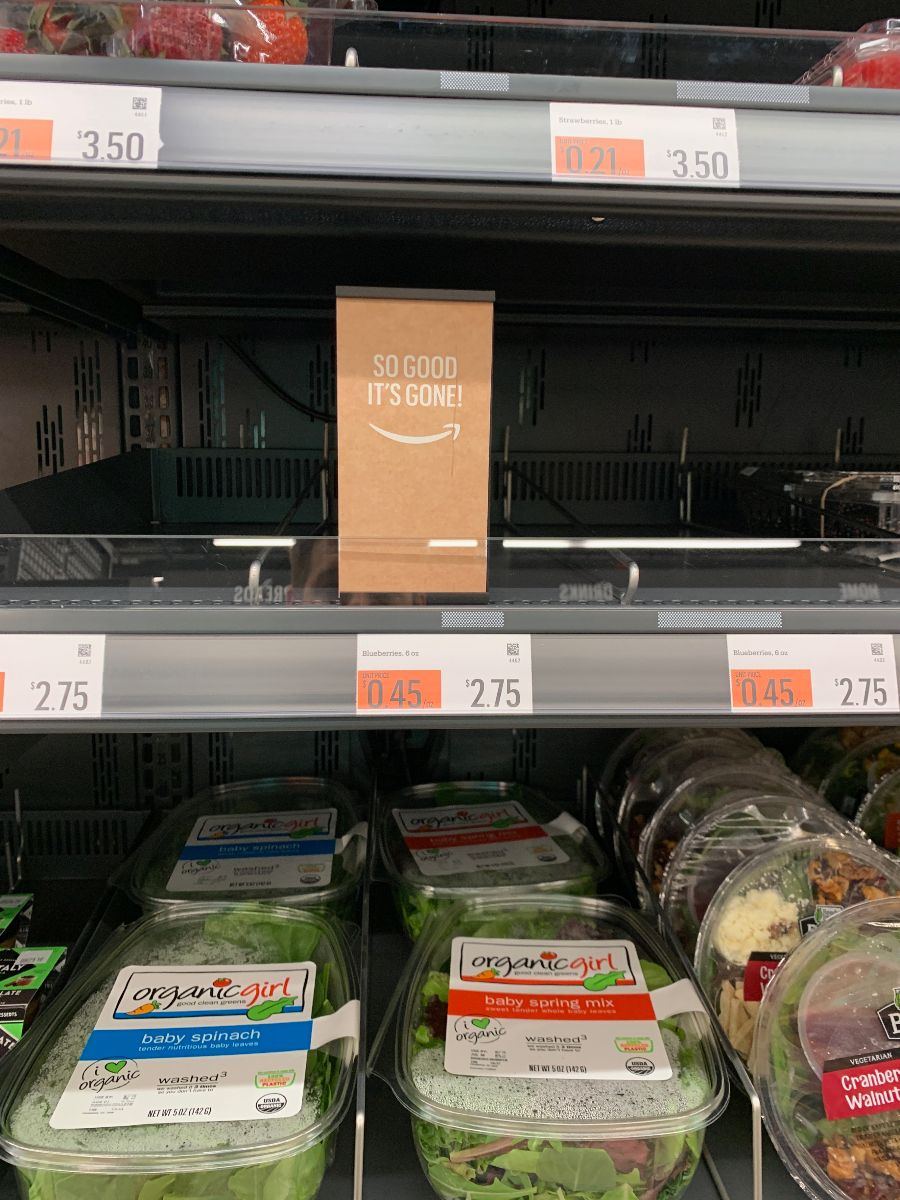
Perhaps that happens, also noted were numerous, almost self deprecating signs for indicating lines that had gone off sale.
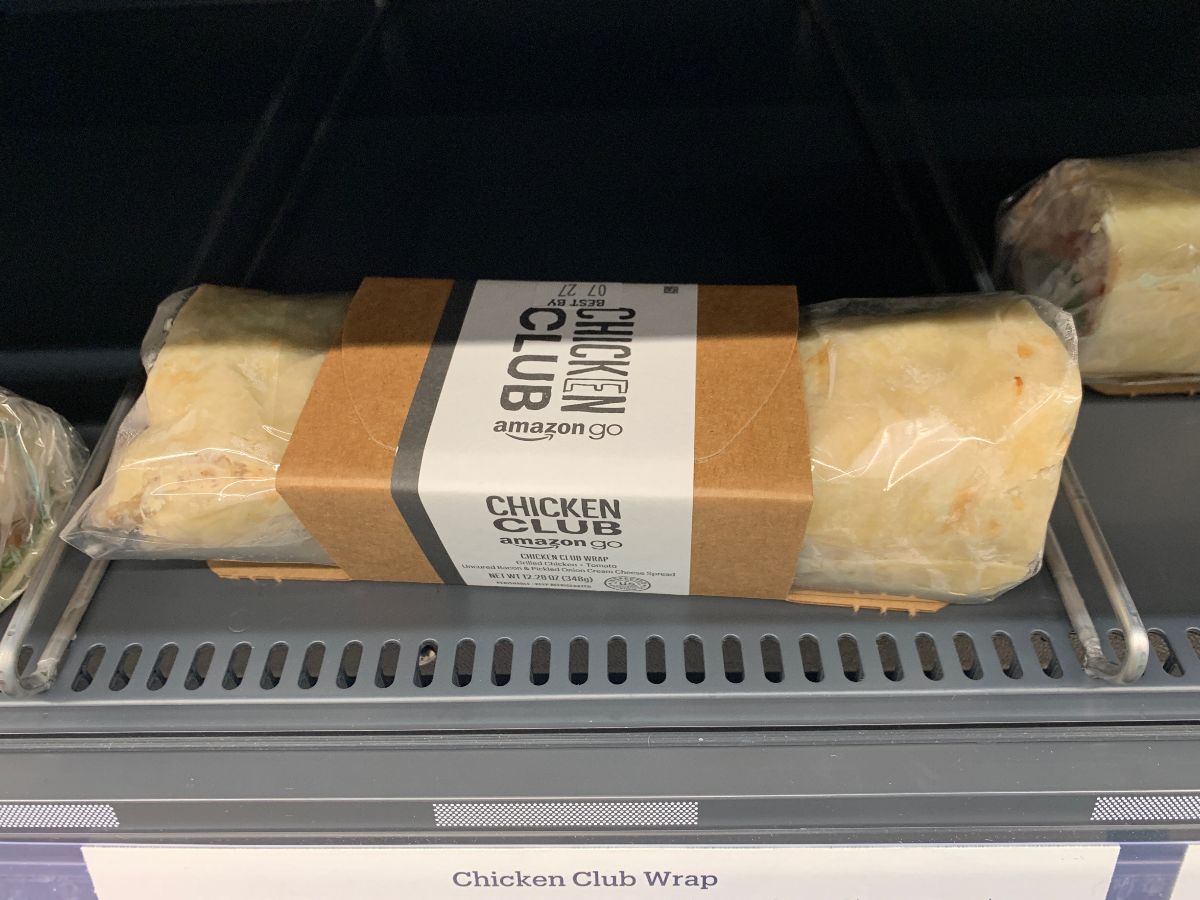
The sandwiches looked in store produced but I don't think they are done 'in house'.
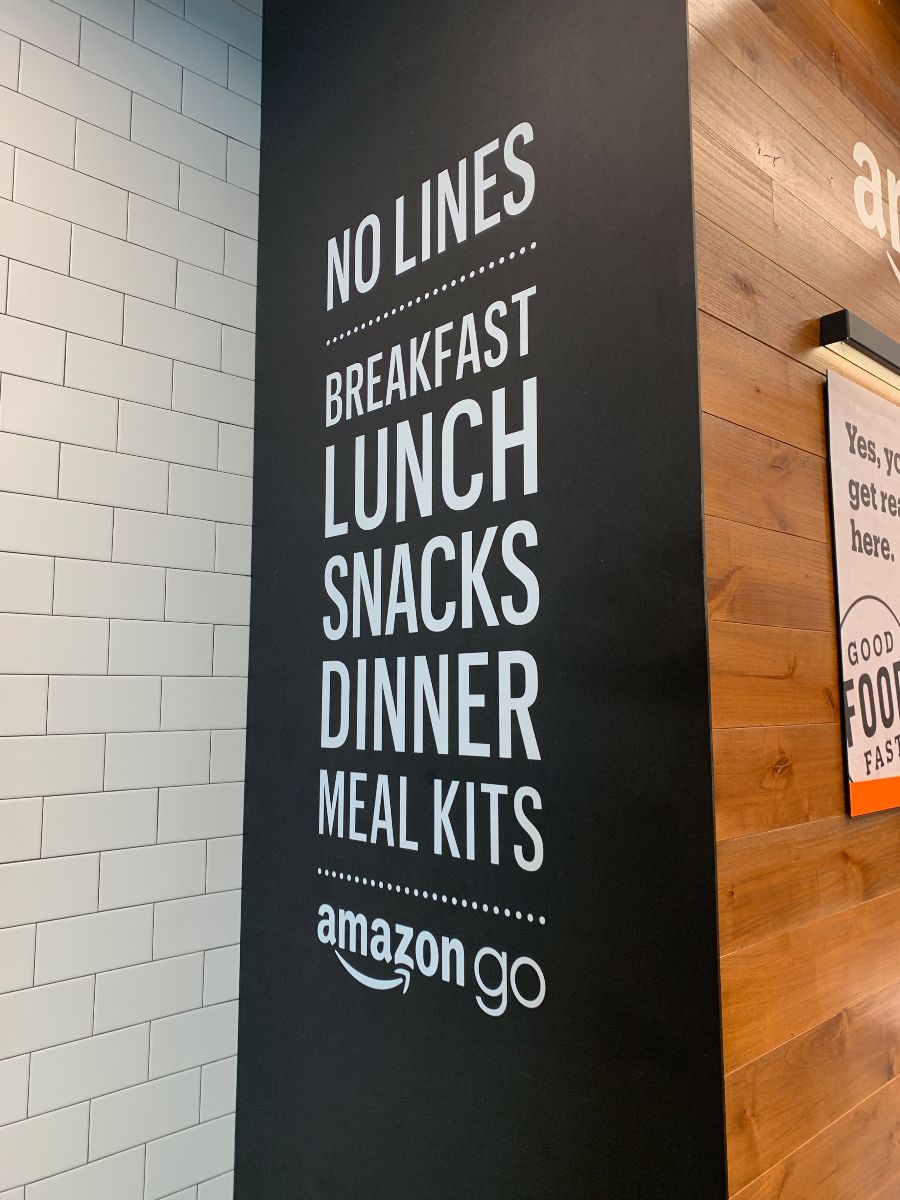
The key selling point for the store around 'no lines' and various items for meals at key times of the day was advertised, heavily.
Including meal kits which were also seen in Whole Foods (branded as Amazon interestingly).
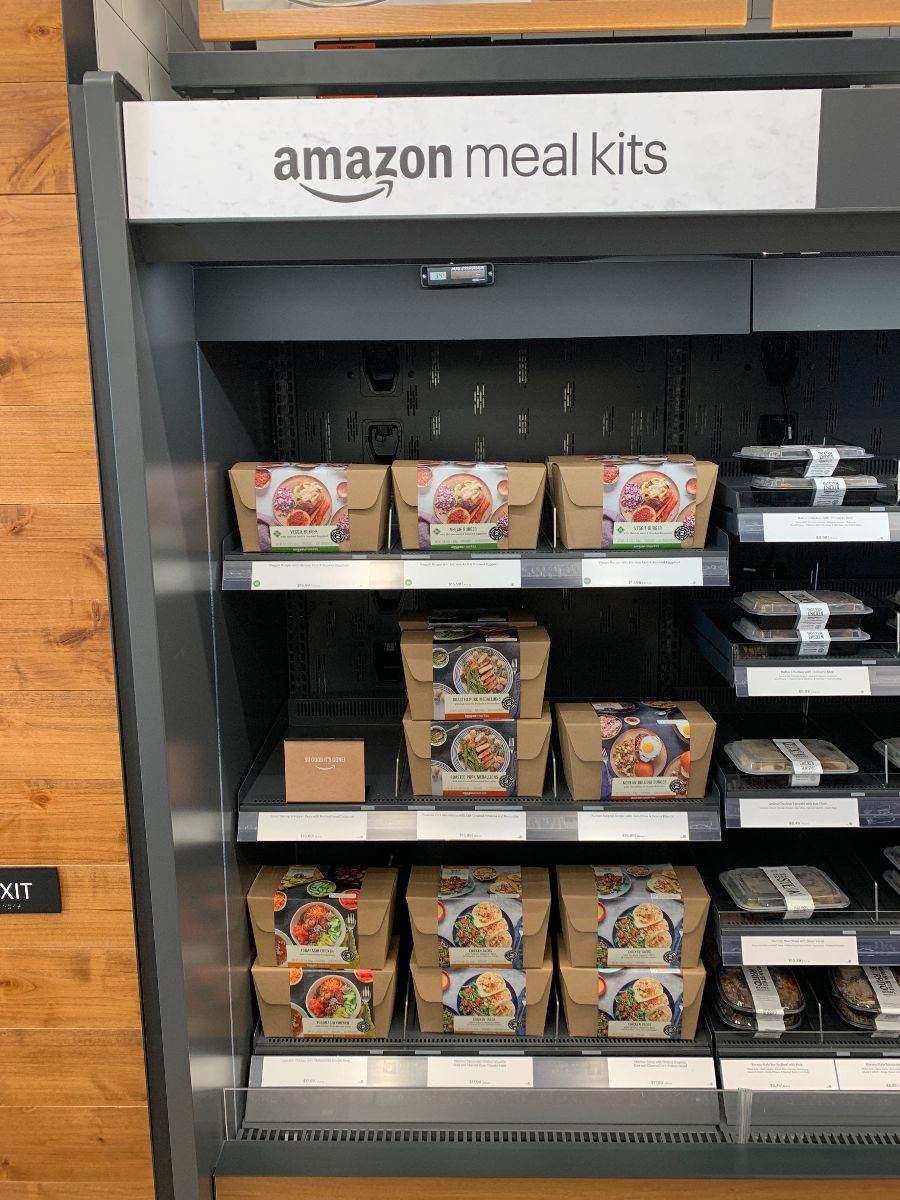
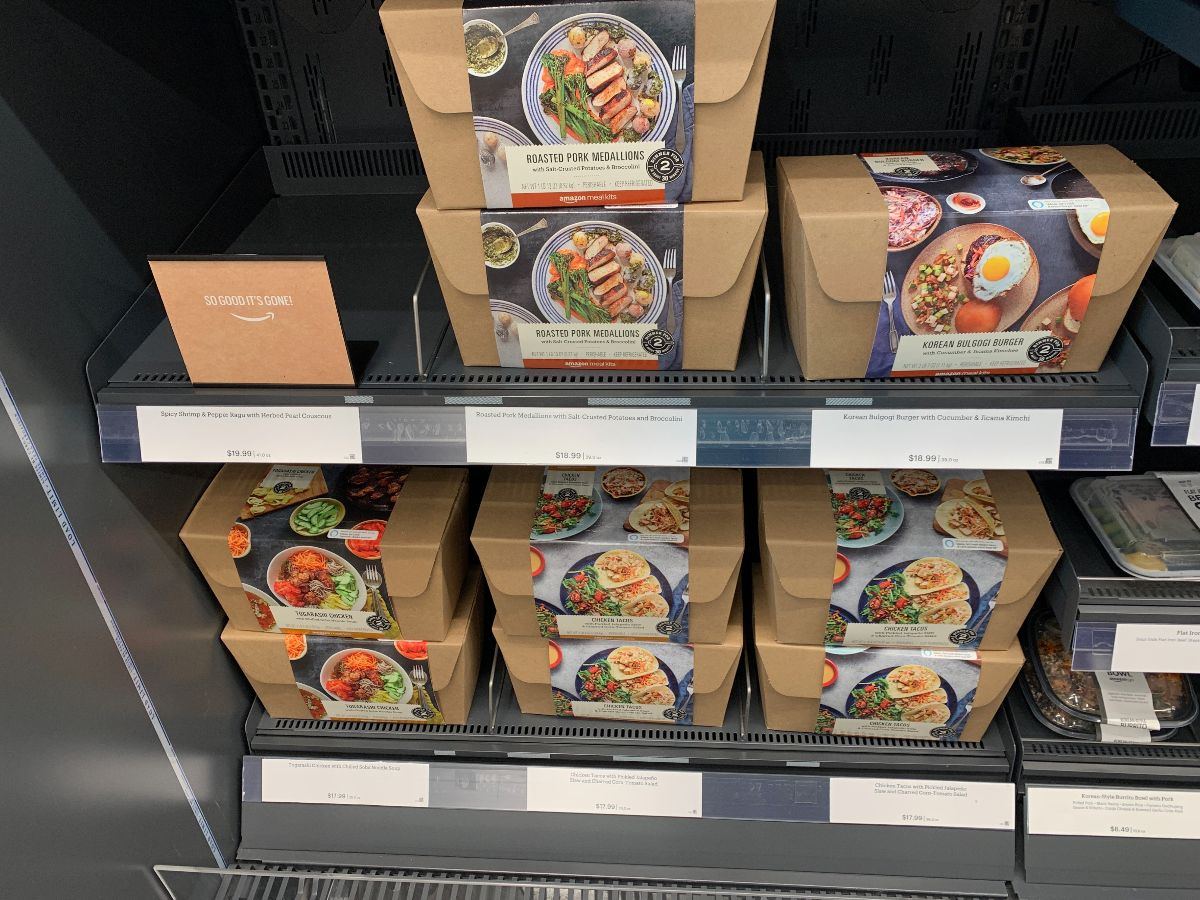
Whether this branding is right remains to be seen; but Amazon remains a place that you buy books and non food from, some people do buy food but does Amazon immediately evoke memories and feelings of fresh, quality food?
Would "Whole Foods" branding do that? However it may then confuse around the mixed branding and messaging.
But you have Amazon and Amazon Go in the same store, perhaps indicating what is a takeaway element and what is 'core' but both sandwiches and meal kits are 'take away'.
The branding and meal choices are quite good and packaging works well - sales were decent as one had sold out.
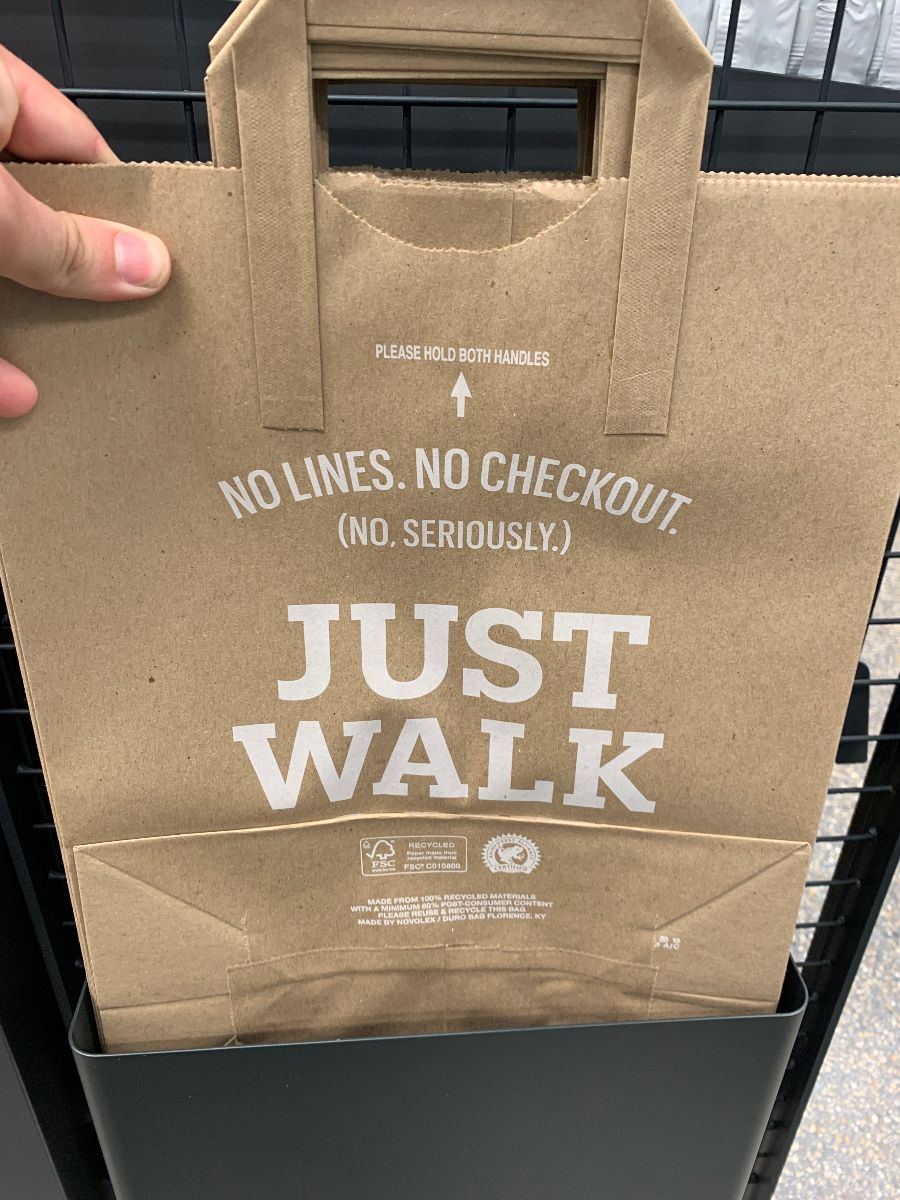
Paper bags were available to take around with you when shopping, then once done, you just walk out of the barriers.
Then the details of the bill come a short time later.
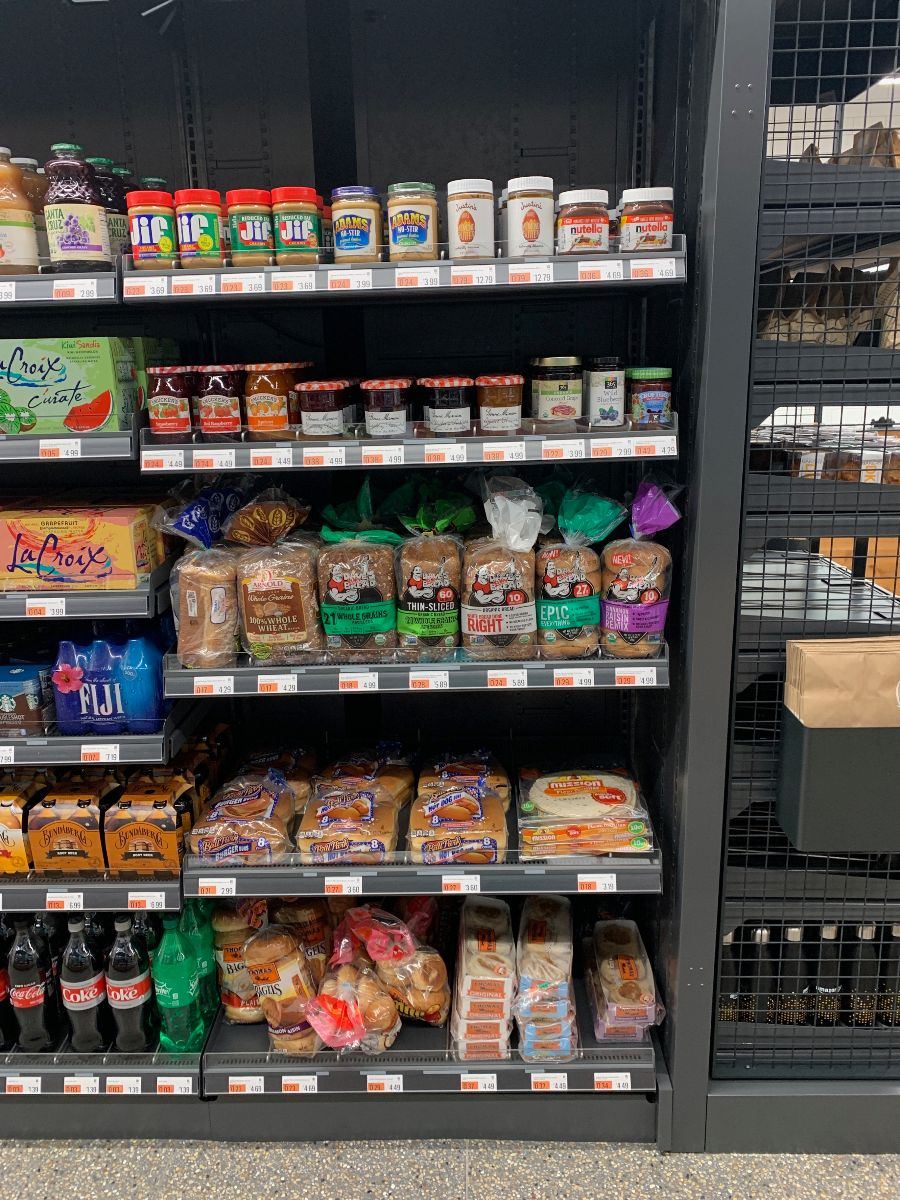
The range of ambient jam and bread etc was another point of issue. They had a label for each product facing which didn't seem to make sense.
Either that or they were gap filling - which did happen in the range of Amazon Go Chocolate, all flavours were faced over which perhaps made availability look better than it was.
That said - it's hard to see that they'd do everything on a single facing, so they must have one label per facing of product.
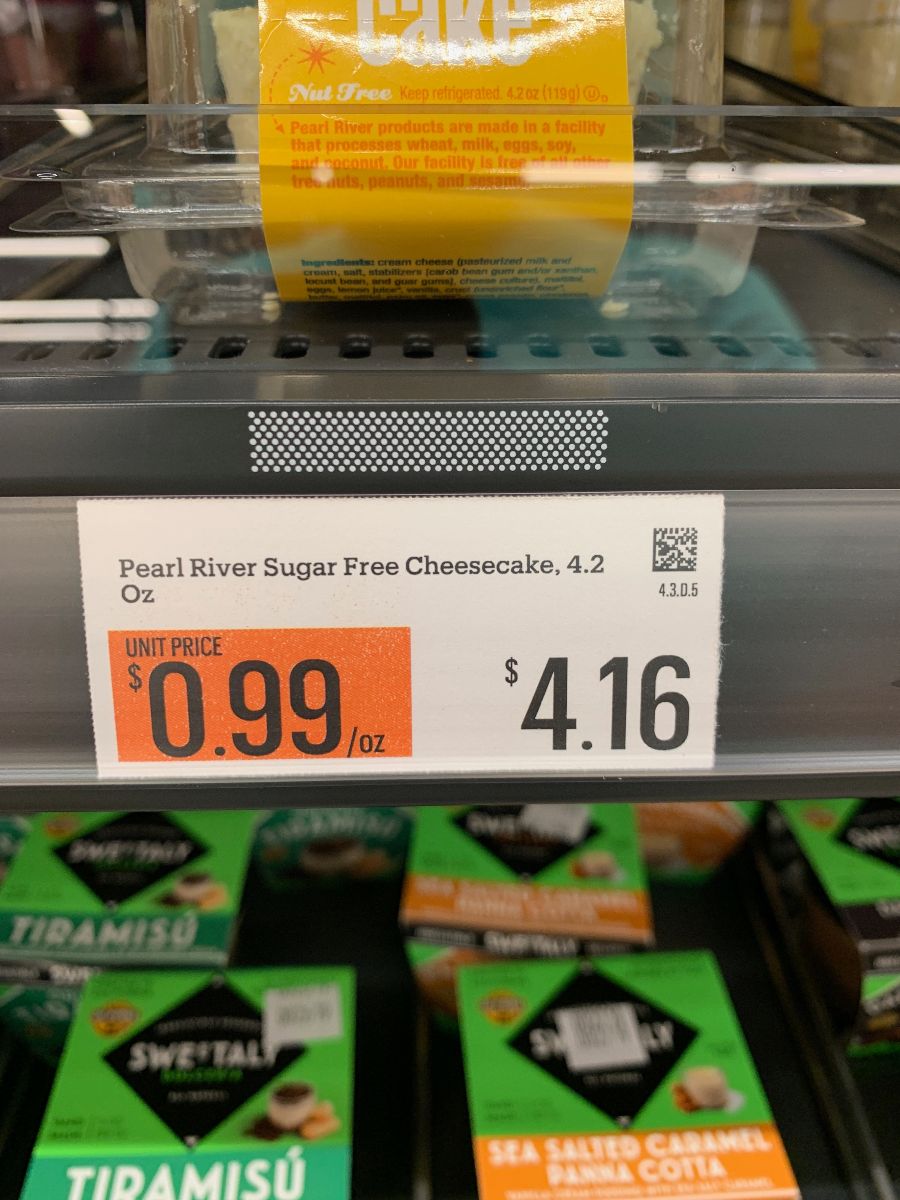
The labels were mildly baffling to a non native too, this is New York of course so there's never a way that a Cheesecake would be $0.99.
However the fact 0.99 is highlighted in orange as 'unit price' is odd given the price is actually $4.16.
Note the small barcode on the label which must give the associates a way to change prices or gap scan.
Notably no electronic labels in this store, which seems an obvious way to drive further efficiency given the small range and small store size.
They could even add gap scan functionality on to the labels with a button press too.
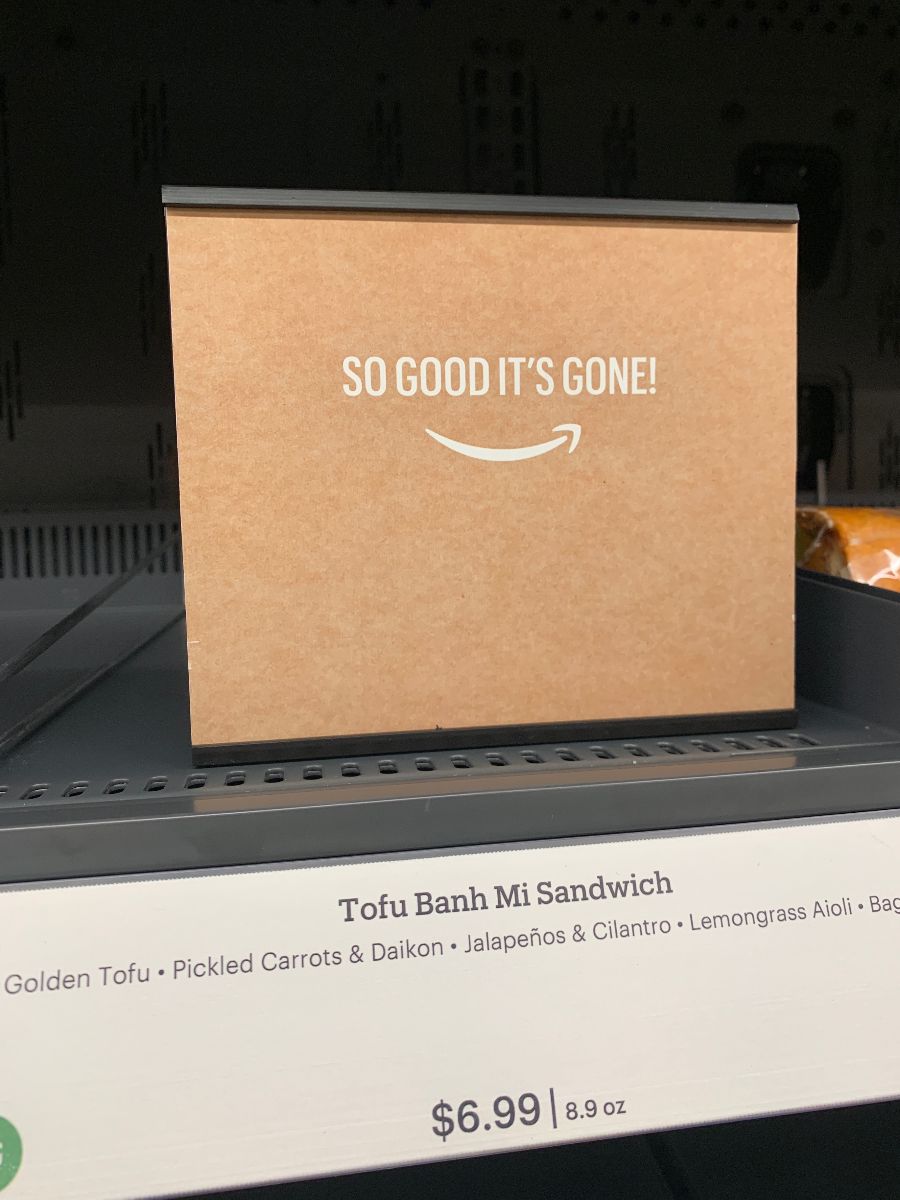
So good it's gone!
Quite.
So what did we think?
It's an odd shopping experience in terms of it being quieter when visting and there was just one associate at the front explaining the concept to slightly baffled tourists. However when busier there's no doubt it would feel more 'natural' perhaps.
The availability was questionable although it was later in the day.
Ranging was also confused as there wasn't a clear mission beyond food to go and the meal kits, some of the price points were also hefty for what you received although this is New York City, where time is money.
Overall you can't help but be impressed with the technology and how seamless it really is. From scanning the app you meander around, we picked up some things (a mug, Amazon Go Chocolate etc) and put some things back to test the tech.
The receipt came accurately as expected and the time in store, noted at the top was 5m 50s. So that bit worked and that was expected, so it's hassle free in that respect.
Although as we know, retail is far more than just eliminating or managing queues. The range, price and availability all matter and there remains work to do in this regard, but the cost to sell will be far lower due to the elimination of checkouts for sure.
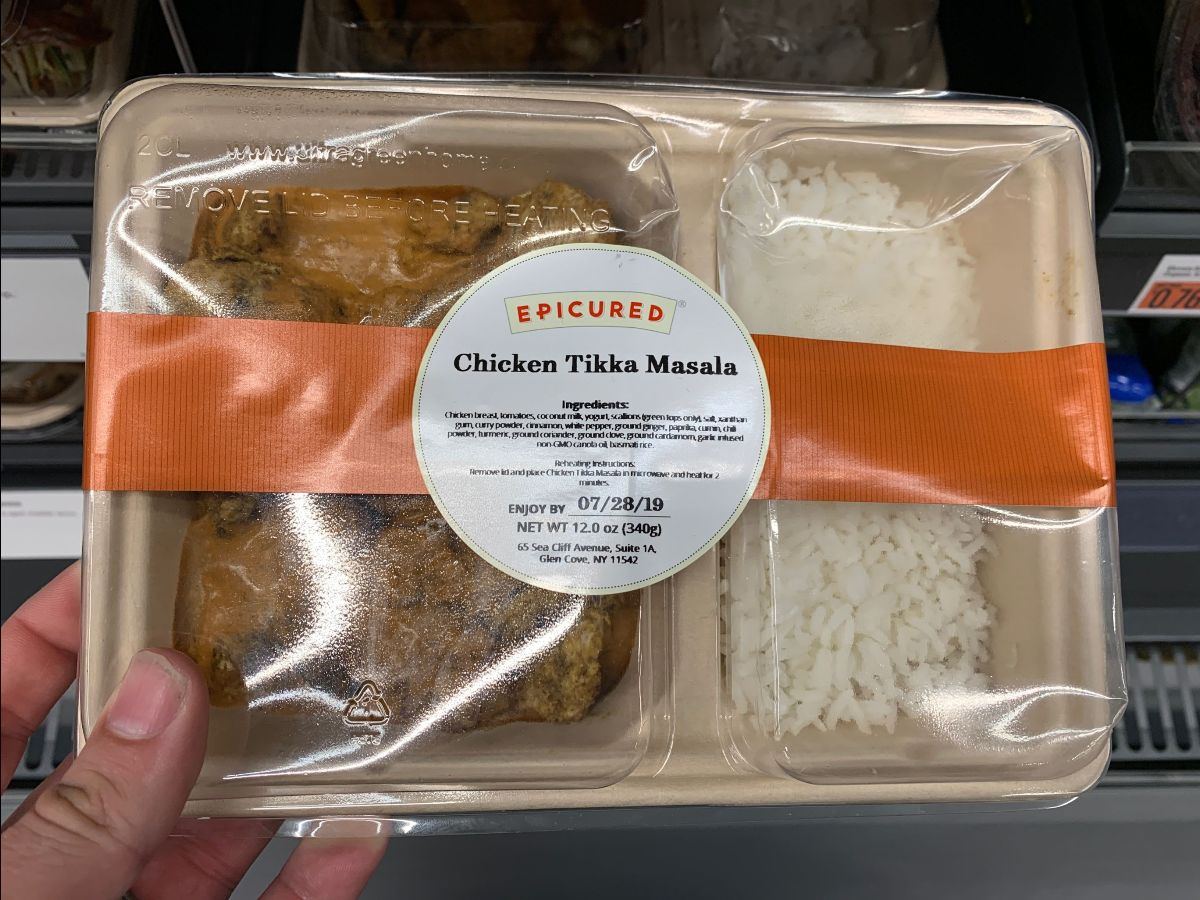
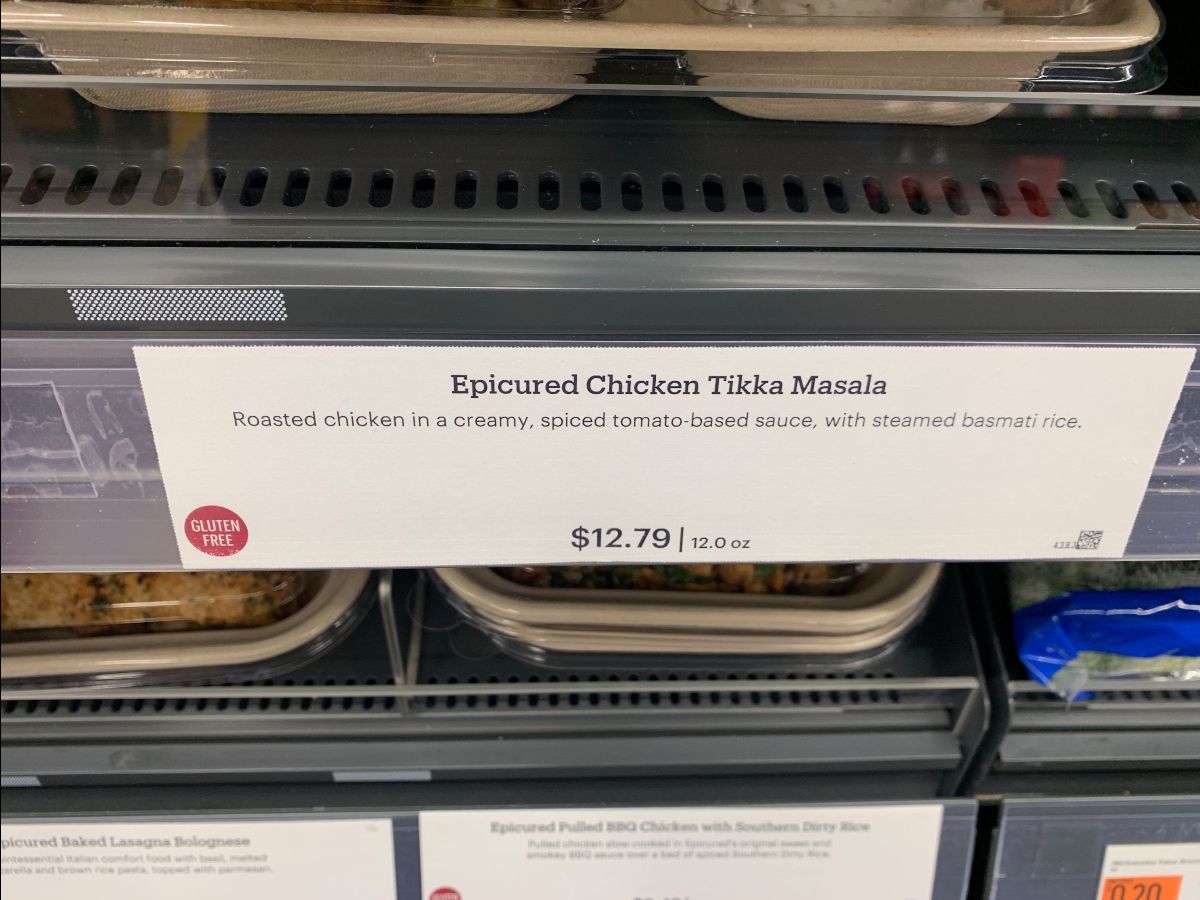
A mere $12.79. More to go at with Amazon Go but it's all fixable and we look forward to the London launch (if the rumours are to be believed) later this year.
From the Grocery Insight newsletter archive, first sent to subscribers on 6 August 2019. Steve now writes at read.groceryinsight.com. See also the blog archive and briefings.