Asda - Green shoots of recovery?
29 August 2017
COMING UP
Now: Market - A look at Asda
Next: Brands in discounters
Later: What about Wilko?
It's been a tough few years for Asda, with their market share taking a hit, like for like sales falling from a cliff and discounters raging a war on their core customer base... It's not been great for the Wal-Mart owned chain,
However the tide looks to be turning a little with recent results showing that they've at least bottomed out, with small growth aided by inflation but also a recognition of their sharper execution in store too. By no means is the turnaround complete, or even 25% of the way there, but any positive is good news in the current marketplace.
In terms of Asda, you have to look at the Wal-Mart strategy overseas, alongside their US strategy for a perfect storm that worked against Asda back in 2013/2014. Before that, the most successful (in Asda terms at least) campaign that Asda ran was the 'Chosen by You' own label push back in 2010 or so.
This was the first stab from Andy Clarke as CEO and centred around their own label being tested by some customers and led to own label yoghurts being supplied by different vendors if hazelnut was preferred by the panel from Danone (for example), but the Strawberry was produced by Muller... An extreme example but convention was that customers would test all products and Asda would then say x,y,z was 'chosen by you'.
However it wasn't chosen by 'you', rather customers or rather, a panel of them... So not quite the same but nevertheless, a push on own label was much needed from Asda. Their market share was poor in own label and the 'Asda' brand itself had very little equity. When you consider Sainsbury's as an example of what can be done......
Lest we forget that at this time; the Asda Price Guarantee was conceived. The first such scheme to compare own label and brands and across the entire shop too. The scheme was then extended to encompass a 10% difference as Asda were always pledging to be the cheapest.
Price guarantee is still running today but you'd barely know, where Tesco and Sainsbury's had their schemes running instantly at checkout - Asda still require you to log on and check.... There's barely a mention of it around the stores though..
Whilst price is important, Asda customers took it that they were cheaper, it was their primary reason to use Asda after all.
Which is why 'Chosen by you' made sense; intriguing that a campaign that didn't centre on price was so popular for Asda, yet it was never repeated.
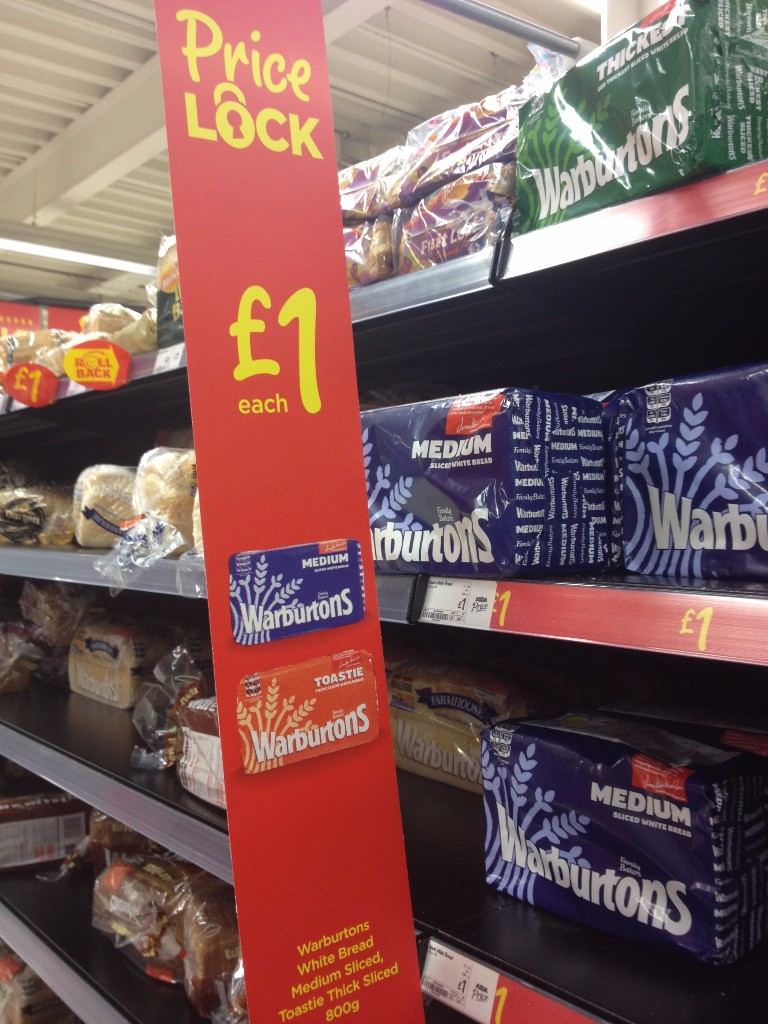
However their momentum did continue somewhat in to the credit crunch years, their price lock campaign on numerous staples like Milk, Bread and various Produce lines struck a chord with customers who were finding the discounters significantly cheaper on these lines and Tesco and Morrisons increasingly out of step with those budget pressures.
Tesco imitated this with their Price Guarantee scheme which failed as the rest of the lines outside the scheme were so high in price. Asda continued to press hard on price lock through better buying and a focus on essentials along with varied promotional prices and deals.
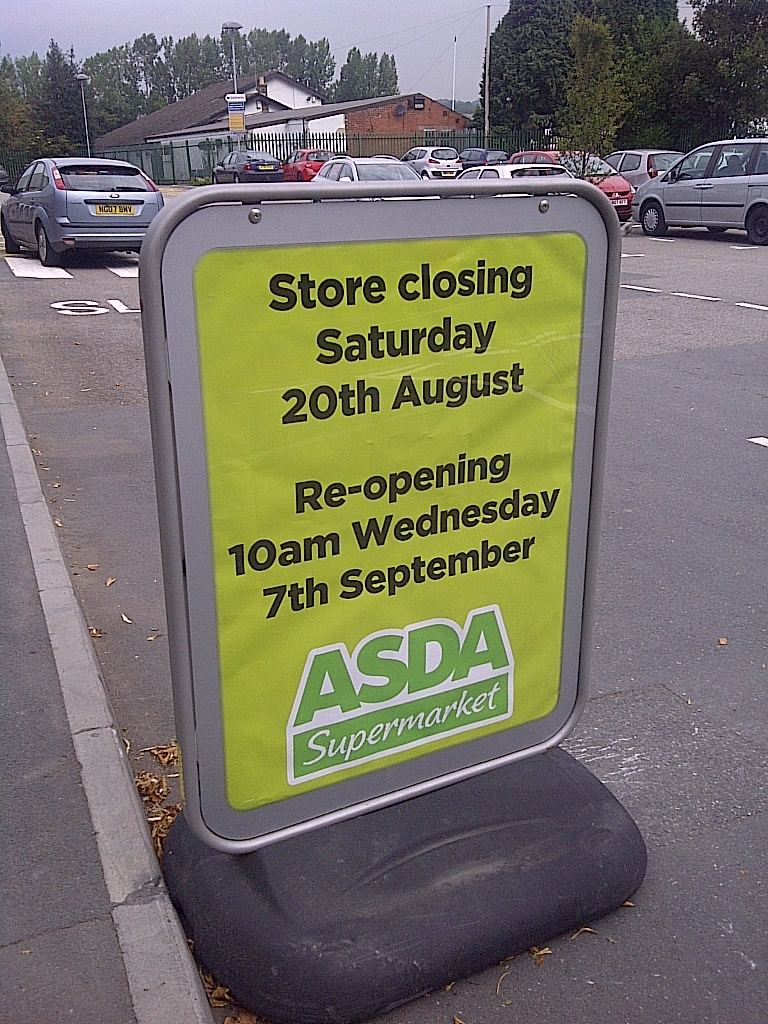
Memories of years gone by here, Asda spent big to acquire Netto before seemingly neglecting any non compete clause which allowed the Danes to reappear in a JV with Sainsbury's some 5 years later.
It's certainly argued that Asda never did enough with the supermarkets, they added some market share but a net result has equalled a loss overall post discount.
The wider offer still feels confused and needs refining in order to capitalise on this smaller format. Some units are good little engines for sales, whereas others feel confused. The growth that Iceland and the multi price moves by Poundland and Poundworld (most notably) will affect supermarkets given the sharing of sites.
Anyway - back to the story!
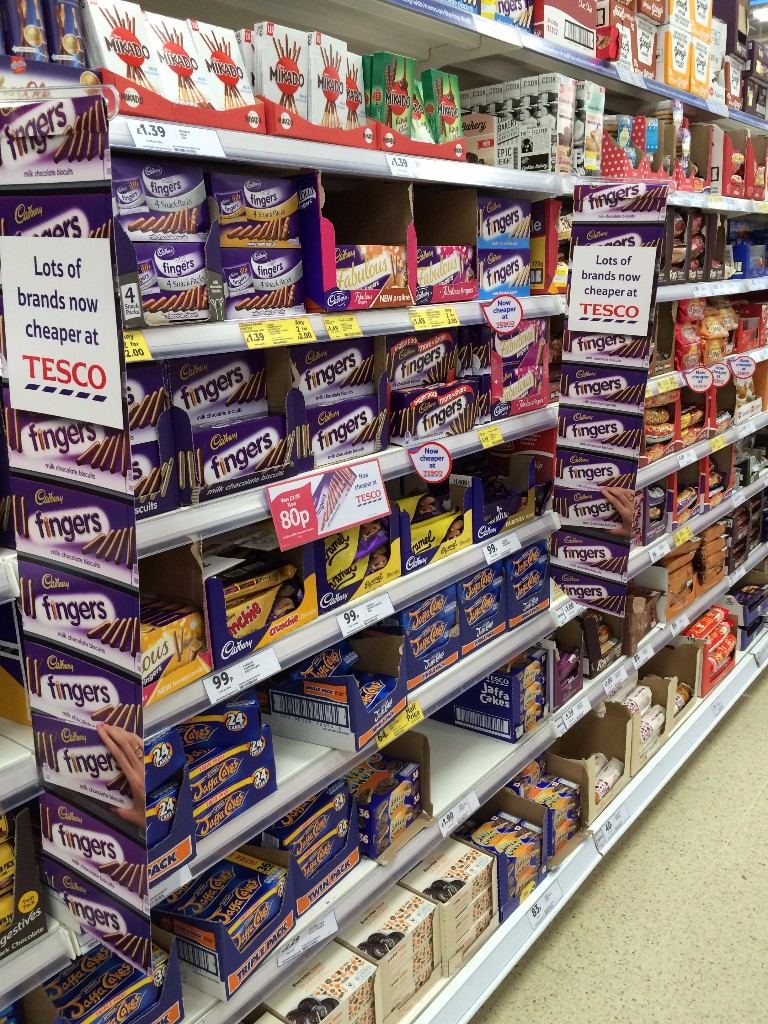
Whilst Aldi were still growing, they had felt the pressure from Asda and the other retailers starting to fight back, September 2014 (3 years ago almost) saw Dave Lewis arrive at Tesco and his initial price offensive was centred around some 40/50 products, a collection of random brands.
However when you delved in to the shelf edge; these were all brands that Aldi also stocked, why would the market leader allow any gap versus Aldi? Precisely. There wasn't a reason.
Tesco dropped all such products either down to the Aldi level, or in some cases, below which then forced Aldi to drop the price down to match.
This put Aldi on the back foot and there was the first sign of fight back from the 'big four', therefore the stage was set for Asda to continue with their own progress and step on the gas further. Especially given the expectation that the Dave Lewis regime at Tesco would change.
Whilst Tesco invested in lower prices on brands, on own label and continued with their work around own label reshaping, greater space driving greater volumes thus lower pricing.... Tesco effectively became the EDLP retailer that the parent of Asda are themselves.
The market has come around to EDLP as a principle now, with some deals added in, but the discounters have changed so much for the market and pricing is a huge part of this.
Tesco drove a lot of improvements with their plan under Dave Lewis, and Asda were expected to keep on with progress given their narrowing of the gap vs. Aldi and Lidl.
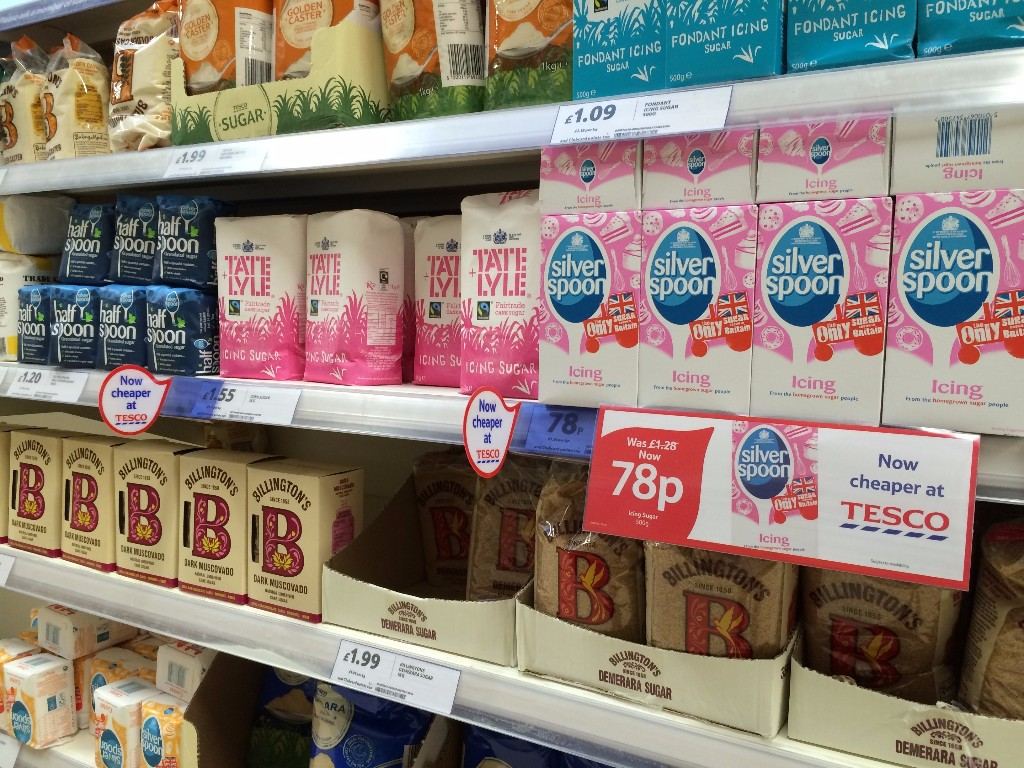
But Asda were victim to a change in managerial tactics from Wal-Mart who firstly started to take a number of top level execs from Asda to boost the US operation. Secondly, Asda targeted a contribution of £1bn of profit to aid the US operation, who were announcing various price cuts and increases to pay in order to improve their wider US business.
So was it ever thus; Asda were so close, but pursued a strategy that saw them deliver more profit with the same sales. But the base had been cut back so much that inevitably the core business suffered. That's not to say Wal-Mart were wrong to drive greater profits from overseas, their US push came at the wrong time for the UK operation....
A renewal plan then announced by Andy Clarke around improving stores via refits and own label changes was all too little, too late and in many cases seemed entirely confused. Cutting Smartprice as the entry tier but keeping the same product with slightly different packaging was an example of muddled thinking. Similarly with Chosen by You going too, why? It seemed ripe for a refresh and was something that had worked well
Their push in to click / collect was ambitious but absolutely the right move (see the work undertaken by Wal-Mart now, many ex Asda colleagues pushing Pickup and other operations).
Secondary sites like park/ride schemes and other ventures were canned, as were petrol stations. Another area where the market is now moving in to - if we look at the work from Sainsbury's and Morrisons in franchising as an example.
In many respects, Andy Clarke did a good job in his time at Asda. He pushed the business on to new frontiers with the online growth and click/collect and non-food collection points too.
Chosen by You was successful although short of throughput after the initial launch. Price guarantee made sense but was short on the throughput there too. They also got very close to discount, but changed tactics via Wal-Mart / themselves and lost ground, just as Tesco were re-energising.
Wal-Mart did back Asda with supermarkets / Netto which never really delivered what was expected, if it was clear what was ever expected. In defence of Clarke, he did lose key lieutenants to Wal-Mart as the US business started to realise external, overseas players could be effective - Judith McKenna (now US COO) and Mark Ibbotson (former Asda COO) were moved across within 18 months of each other - which left Asda short of a COO themselves for some 12 months...
So a mixed bag, so close but yet so far. However when Wal-Mart saw that things had gone too far in the UK, whilst they had been reaping the profit, it had come at a cost to the operation and the stores were struggling with customers suffering.
Action was taken with Sean Clarke joining as CEO before Roger Burnley arrived just under a year ago after 12 months out via Sainsbury's as the COO.
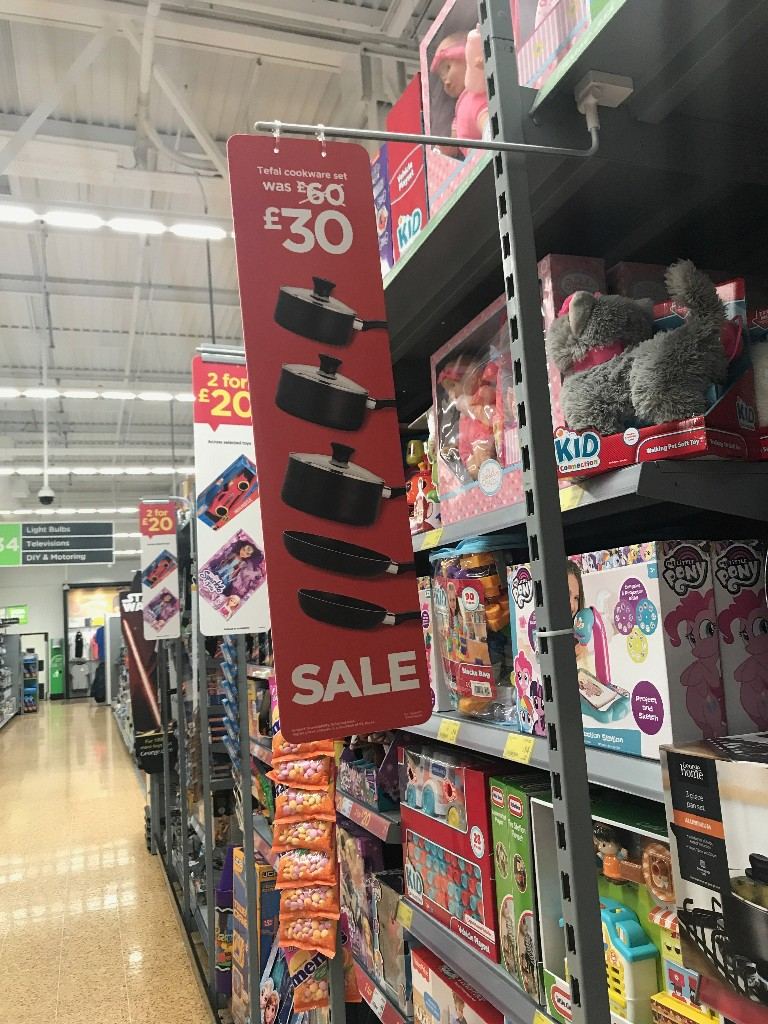
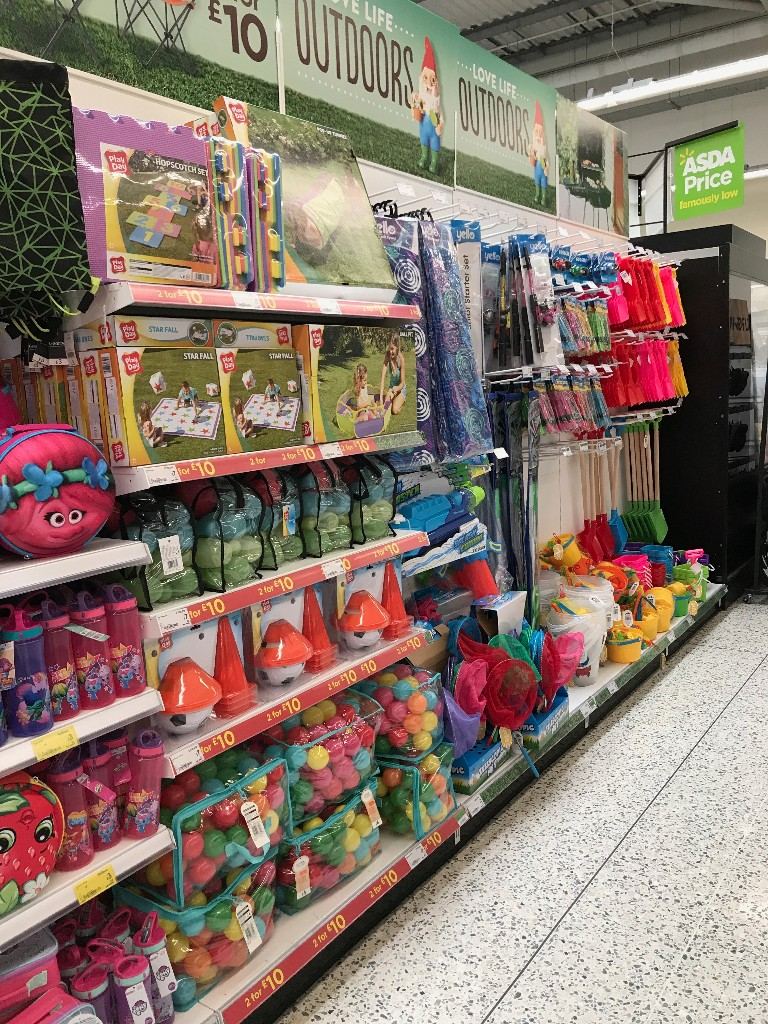
Seasonal events like the mid season sale and Gardening / outdoors have been representative of far sharper execution, both Christmas and Easter were also strong.
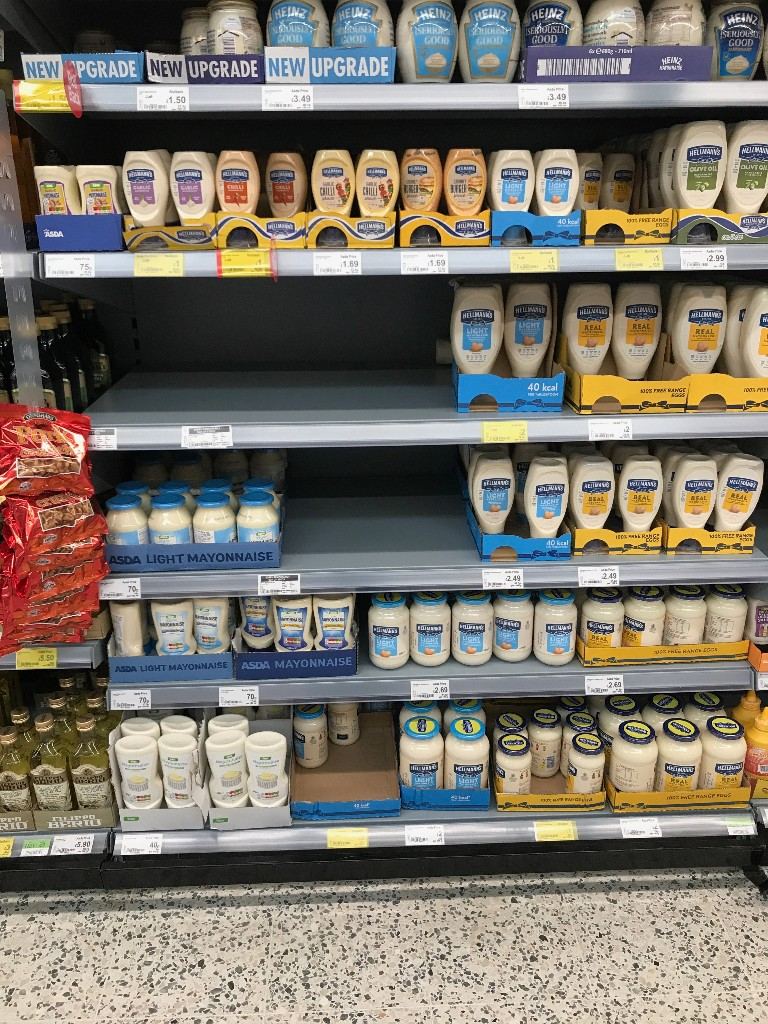
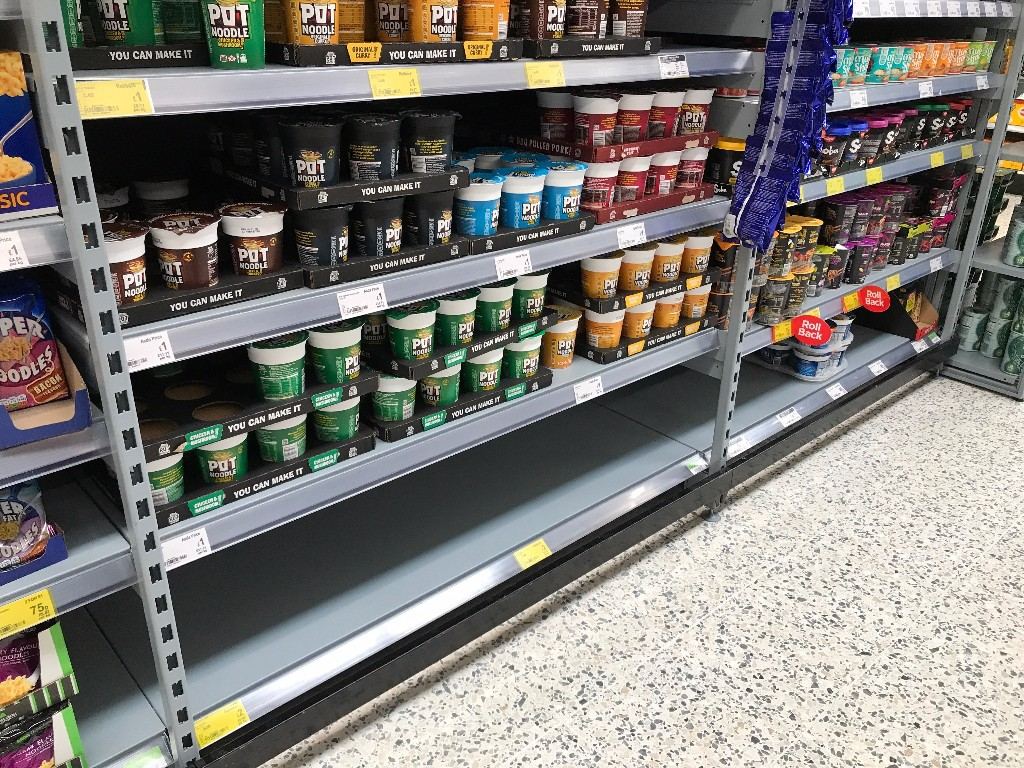
Availability remains a challenge with gaps on promoted lines always a concern. Anomalies like those in Mayonnaise are often seen too.
Progress was slow; but a stronger Christmas 2016 aided by more colleagues on the shop floor and ironically, the absence of the usual 'big rollback' was a benefit to Asda.
In fact Christmas 2016 was very strong, it impacted Sainsbury's who perhaps didn't pick up the switching shoppers from Asda who were happy enough with the range of premium party food and fresh foods found in Asda.
Heading in to the new year and up to August where we are now, Asda have been getting there in terms of consistency but still find themselves with issues in store. Particularly availability which is often found wanting at peak trade, although not as bad as it once was it is still challenging.
Their focus on brands has helped in the past, particularly versus discounters but they're coming around to pushing own label alongside the brands, helping sales along despite deflationary elements.
Farm stores; the value tier range brought in to imitate the Tesco range of 'Farm brands' and push on versus discount has worked well, with sales up strongly within Produce and Meat, despite the deflationary effect on the category.
The Farm stores move is appreciated by customers and it shows the value of being very close (say within 5-7%) on easily comparable products vs. discounters. We are talking areas of common interest and equivalence - 'lets compare Apples with Apples'.... Produce and Meat are two key categories where Asda shoppers may switch to discount....
Seasonal events have also improved drastically, Asda were always known for being really strong on events but this went by the wayside somewhat in recent years, especially for Halloween where Asda were always famed for being way out in front....
Stronger competition forced Halloween to be very close for 'best in class'. Numerous retailers all have very strong packages for Halloween. Other events like Father's Day and Easter slipped in Asda, combined with strength elsewhere which didn't help sales.
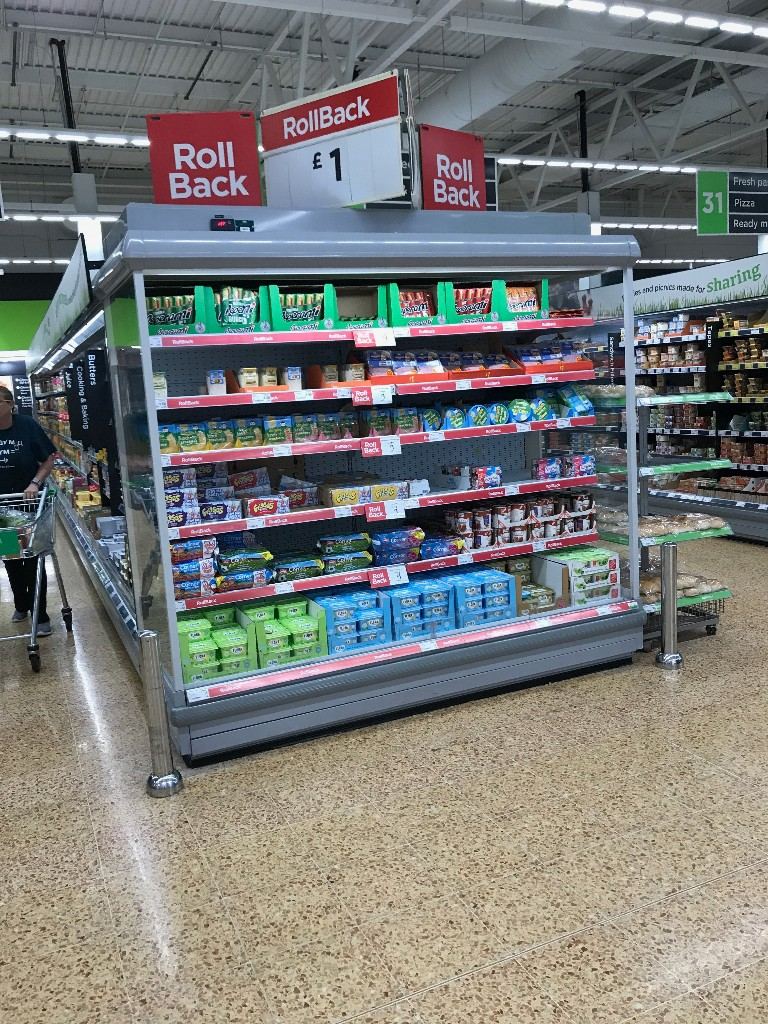
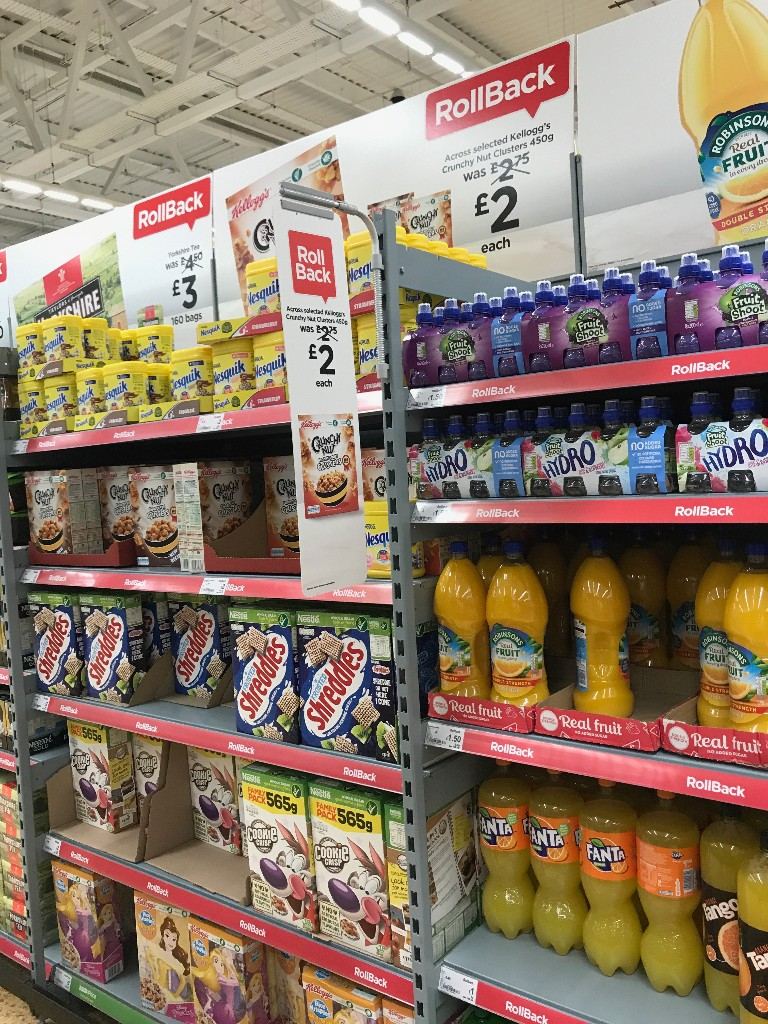
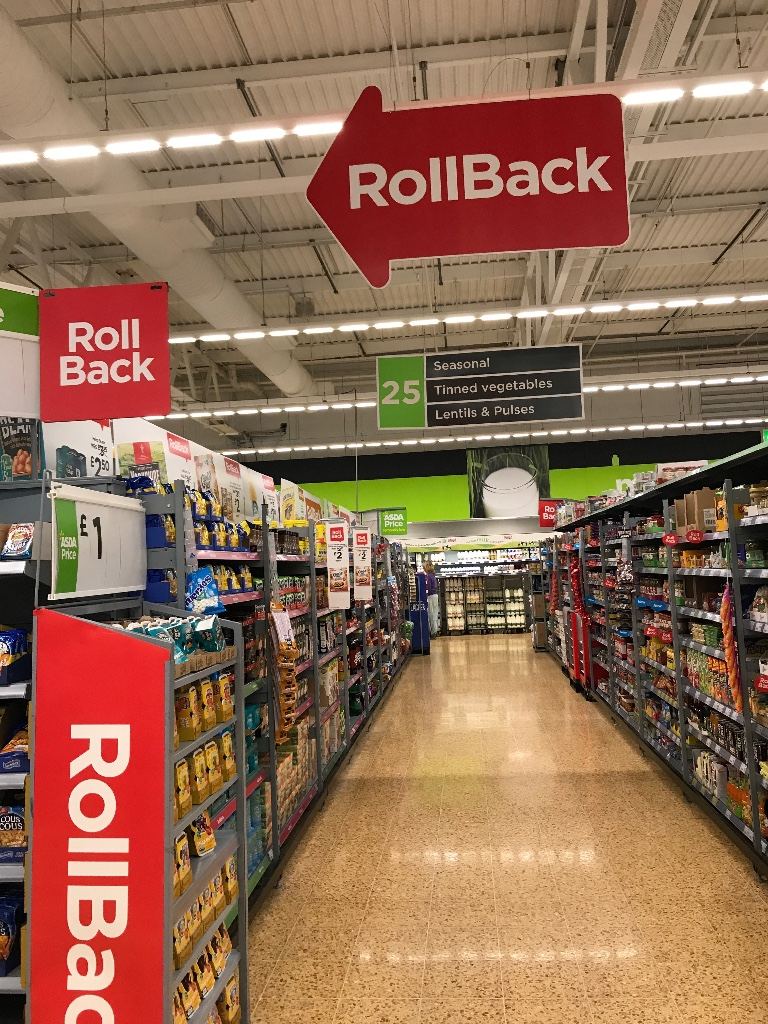
So we come to last week, and the first sign of the 'rollback' signage in its full glory. It has been around and about in stores, interspersed with the Green 'low price' Asda signage too.
But this is the first sign of a concerted rollback campaign from Asda who have steered clear of any real price campaigns since Sean Clarke took the job.
Rollback is a decent package of savings and the signage works well. It's bold and impactful on the ends notably. The seasonal aisle also benefits from further activity which is impressive.
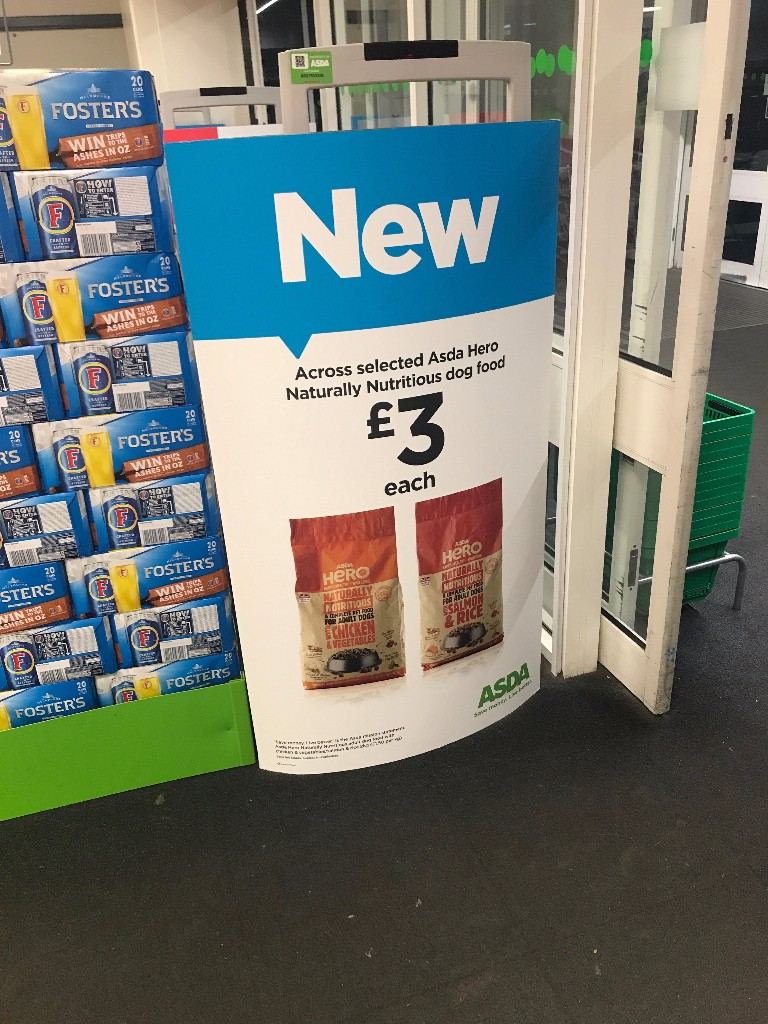
Rollbacks aside, some signs of own label starting to come to the forefront of things with doorway activity highlighting the new pet food range.
Similarly the household aisle has seen some activity, with own label lines merchandised near leading brands to drive awareness and sales. Noteworthy shift as Sainsbury's and Tesco particularly have pushed this strategy hard.
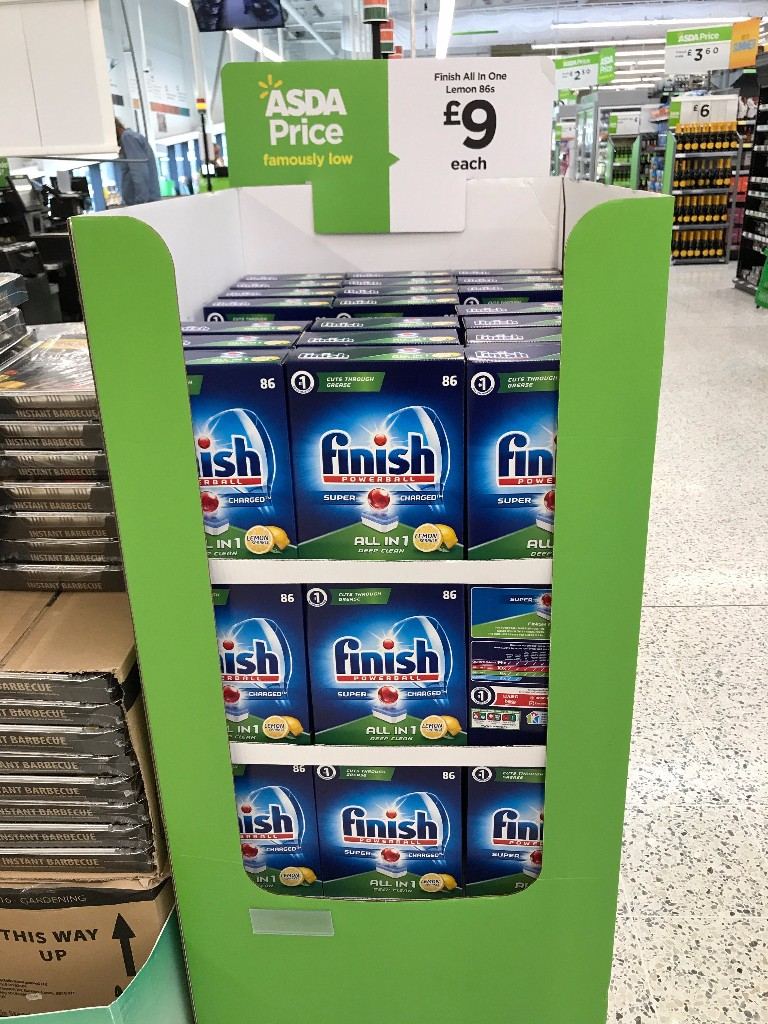
The 'famously low' price for Asda message can fall down is where that message isn't in step. £9 for an 'enough to keep you going in the nuclear winter' Finish dishwasher tablet pack isn't too bad as a wider value point goes....
However it's a hard message to stack up for customers, many of which would baulk at spending £9 on dishwasher tablets alone.
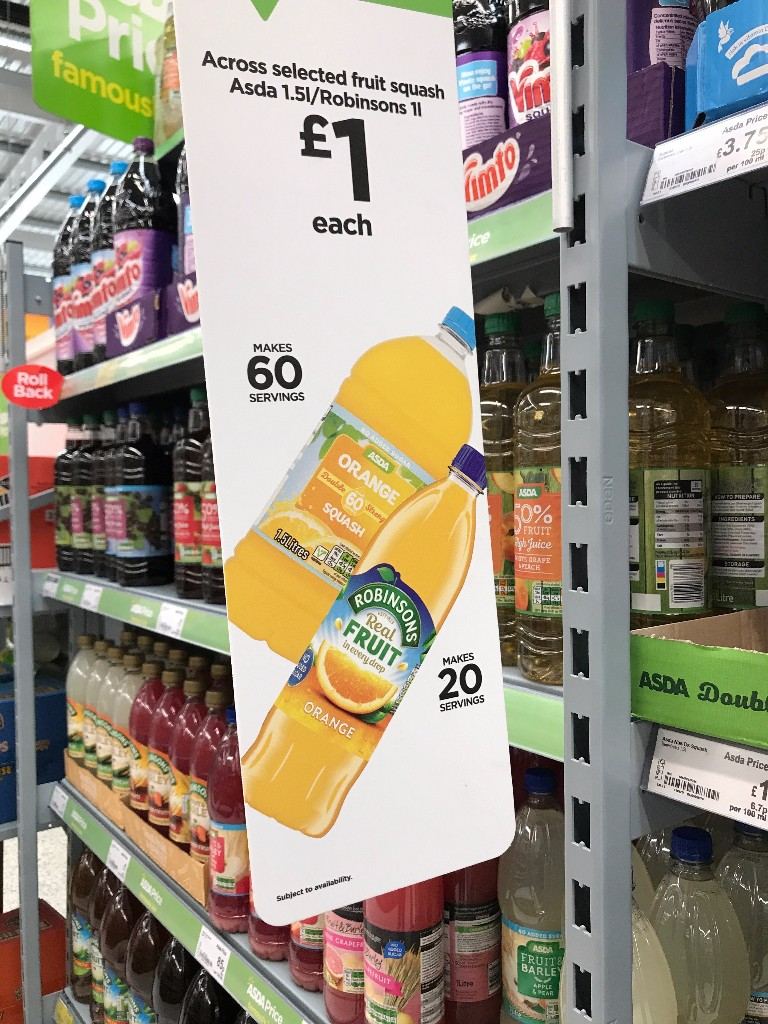
Own label focus was noted on signage within Squash too, brand and own label lines priced at £1 which is a good price in the marketplace.
However the Asda product is flagged with the servings alongside Robinsons - meaning brands and own label still play a part in the Asda strategy. However the pack size / value equation for own label isn't ignored....
So progress on some fronts for Asda, stabilising the patient has taken some time but they're at least on their feet to an extent now. The wider questions around non food links with online, the own label in food, space, where did the B&M story come from and wider strategical questions around price and discount remain.
But at least they're on the pitch, more of the rollback style campaigns will be interesting to see......
From the Grocery Insight newsletter archive, first sent to subscribers on 29 August 2017. Steve now writes at read.groceryinsight.com. See also the blog archive and briefings.