Is the value tier on the way out?
1 November 2016
Not a subscriber? Subscribe here.
Part of the march of discounters and the subsequent speed (or lack of) from the major supermarket retailers meant discount could condition customers towards a new type of shopping - one that relied on EDLP and a core mid tier product. Few brands and no deals.
Lidl ran a few deals, but they only added brands where they made sense - Tunnocks Caramel wafers for example, a real favourite.
Fast forward 5 or so years and the worlds have shifted somewhat, Aldi have loaded more, and more premium in, alongside brands too.
It makes sense to them, greater margin and cheaper than the equivalent ranges in Sainsbury's et al. Pushing their growth and attracting new customers to the store too.
But the risk is the discount model, it's about efficiency and adding more range means more work for colleagues in store.
Especially around fresh, where there is a plethora of date codes to check now, ensuring that stores stay legal, reducing lines and ensuring out of date product is removed from the shop floor. A basic in the larger retailers but adds complexity in what is a simple business.
Despite the expansion in premium, both Aldi and Lidl have been very measured in their expansion of their value / entry tiers. Of course the mid tier product being brand equivalent and sold at a low price removes the need for any entry tier products.
However in some categories, discounters decided that the gap between the core product and a supermarket value products was too great.
Rice Pudding is one that springs to mind, 20p for a value tin in Tesco whereas the core own label in Aldi (equivalent to Ambrosia) is likely around 35p, given the core own label in Tesco is 39p.
It was decided (back in the day where the gap was perhaps greater - 13p Value vs. 45p own label) that value was an essential for a hard pressed family. So introducing a value Rice Pudding made sense to reduce the entry price point.
We saw a very limited roll out of 'everyday essentials' value lines in Aldi and 'Simply' in Lidl. Complexity but a controlled roll out and made sense as a 'bolt on' to their core range.
Whereas the major retailers continued to struggle with their ranges, not reducing mid tier price and instead focusing on relaunching their value tier. Whilst this was a great piece of work from Tesco in the early days of Philip Clarke - it never progressed to serious ranging decisions.
As discounters pushed on, it was mere window dressing.
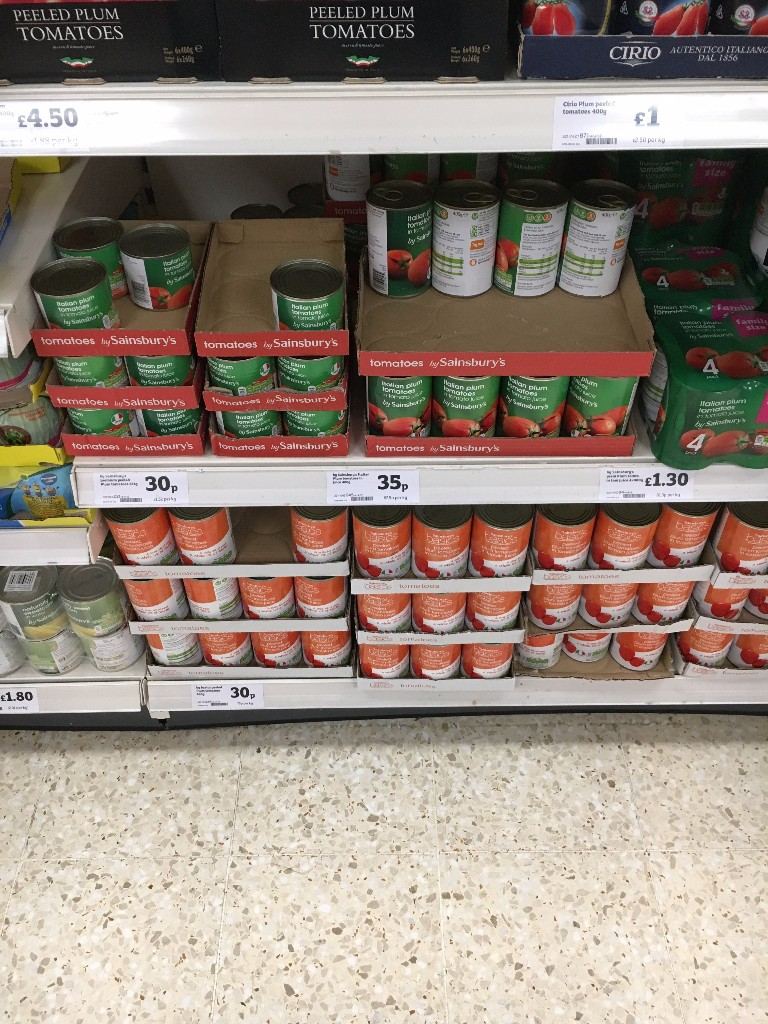
In several categories, the flattening of core product prices (as we move to the present day, from 2012 or so) in numerous retailers (including Sainsbury) means that Basics / Value tier now looks near irrelevant in some areas.
There is little point carrying both value and mid tier Plum tomatoes in the example above, in different packaging, as different SKU's when there is a mere 5p gap between the two lines.
There are several instances of this around the store, particularly Produce where the core price has come down, meaning the gap between Basics and core own label can be as low as 5p here too.
Wider deflation has caused this, but with inflation on the horizon - it's a fine balance to maintain the price point whilst enabling a value driven customer to still feel they can afford to shop there.
Some customers can only afford to buy value products, are incredibly price sensitive and as such, discount is a brilliant place for these customers. They can budget easily, buy a varied number of products and not have a 'stigma' of buying value branded products.
The packaging has come a long way in the value tier in fairness, with price sensitive customers viewing the Basics tier as a beacon for value.
Value is an incredibly personal thing, each person has their own barometer for value and what they're both prepared to pay and indeed what they can afford to pay.
Removing the value tier, and even flattening the price of canned Tomatoes to say 32p/33p could still be too much for this type of customer. It's an incredibly fine balance, the supermarket mid tier own label has to stand on its two feet as a bastion of value if value tier products are under threat.
More to come here perhaps, especially with Sainsbury's also tweaking in Produce / Meat by removing Basics and replacing with a similarly packaged product under 'Greengrocers / Butcher's selection'.
We know that Asda have embarked on a programme to rebrand their own label and remove smartprice. However this has been a little haphazard.
Most categories online can still be found with a smartprice product sold. The tier hasn't gone, it's just been renamed 'Asda' in the affected categories, put into white packaging and priced at the same level.
Not enough. A real push to bring the core tier pricing into line with Aldi would have negated the need for a entry tier in the majority of categories.
Tesco (image above) have blazed a real trail with their own label / category revamps. There has been some truly excellent examples of flattening prices, benefitting from the increased volume and exposure on shelf thus growing margins and investing more into price to enable further volume growth.
Phase 2 of their work has been more about growing the core business, growing own label sales and building value in this arena. Very discount esque.
The work has been seen own label prioritised on shelf in categories too, Mayonnaise for example sees the own label sit above the brand (Hellmann's) on shelf. Greater presence and nearer the customer eye level.
In the older days of course, significant sums of cash would be given for the prime position on the shelf for the branded lines.
However the commercial income gravy train was headed the wrong way down a one way track and sustainable growth in this market was never going to be achieved by taking supplier coin year in, year out.
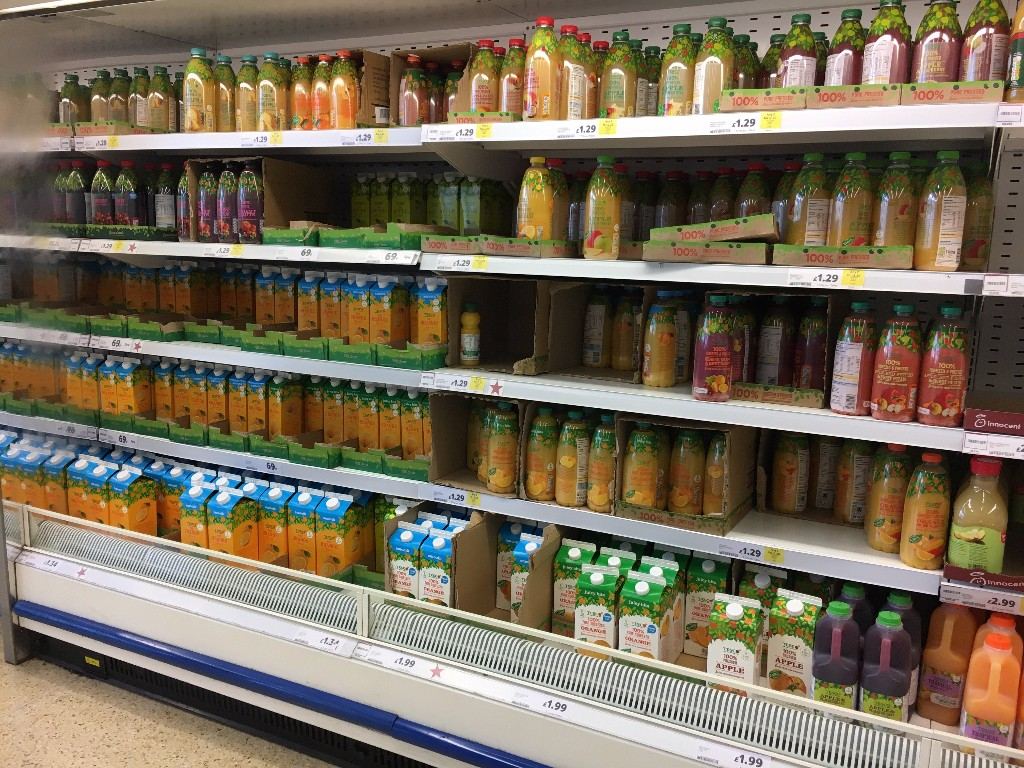
Tesco have recently reworked their Juice category (amongst others in Fresh) and have eliminated the value product in this category. The core product (From Concentrate / in cartons) is now 69p (no promotion) and the 'not from concentrate' juice is sold in bottles and has expanded in choice.
Whereas the Concentrate in cartons is now just set across 3 flavours with Orange Juice (with bits / smooth) and Apple juice.
No room for value which has bitten the dust in chilled juice at least; it still remains in ambient however.
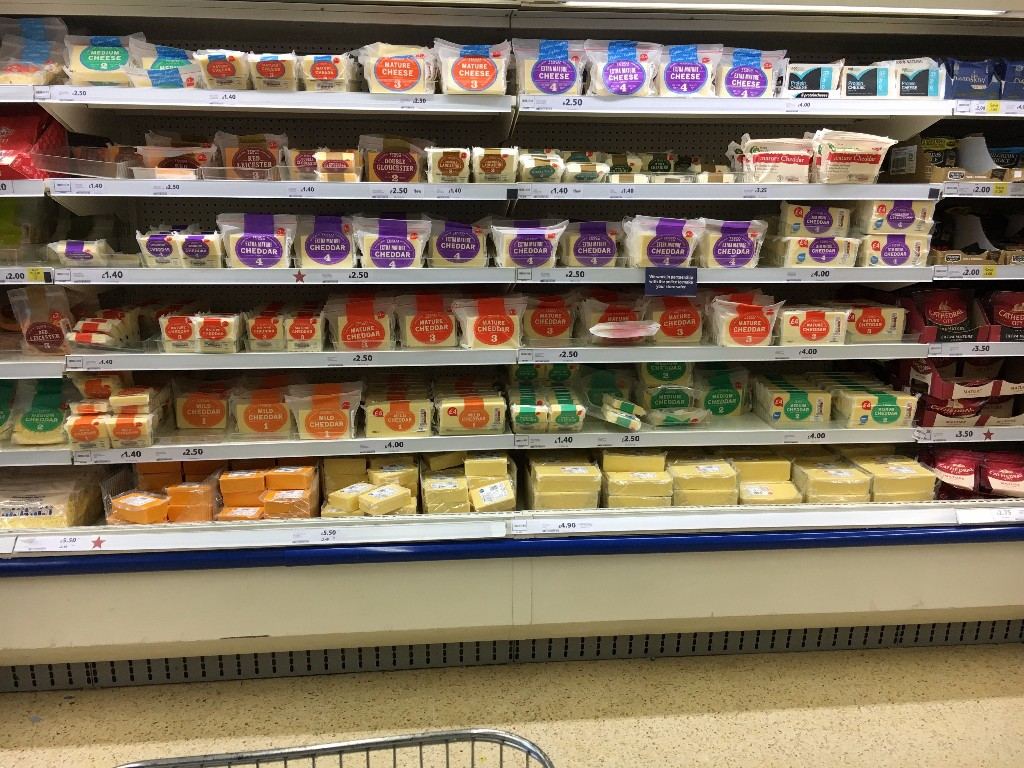
Further representation of the developments by Tesco on their own label are noted across Fresh. Cheese is another great example.
Not only are they really sharpening up their own label products with better packaging and sharper quality, they are also significantly increasing the space and exposure for the range in reshaped categories.
In the image above: value tier exists (bigger packs at the bottom), within core - simpler pricing (no deals) and a 2 bay profile for the range.
Branded Cheese? Hi/Lo promotional lines in the main. Just located to the right of the vast own label offer.
Whilst price is vital to the customer, the work Tesco are doing with the categories and plans is also driving some growth in the own range too.
Really good work, and more examples of their plan coming into reality in stores.
Email forwarded? Click here to request a service trial.
From the Grocery Insight newsletter archive, first sent to subscribers on 1 November 2016. Steve now writes at read.groceryinsight.com. See also the blog archive and briefings.