Sainsbury's and Nectar
17 February 2020
Visit the Retail Bible - our new platform for imagery and insight
The Bulletin
Thank you for the feedback on both the 'bulletin;' and the longer reads that we are also running, it's greatly appreciated as we continue to make moves to improve this service and offer the best insight.
In terms of today's note. We cover Sainsbury's and their move to imitate another Tesco tactic; introducing loyalty prices alongside their core pricing offer. Both Tesco and Sainsbury's have worked harder than most on their offer and price stability, with Sainsbury's the first to introduce 'simpler prices' with dishwasher tablets not going up to £14, only to go to £7 for 3 weeks and back up again.
The disaster that Dave Lewis inherited meant that the only way was up for Tesco and their price perception, their work, centred on lower prices, fewer deals and a simpler approach across the board, plus 'exclusive to Tesco' brands have aided matters demonstrably.
With Sainsbury's successfully coming out of their lull whilst the Asda merger was rumbling on, they pushed on with Price lockdown which has been successful, customers do not want variability on prices and the discounters with their EDLP approach have mastered this brilliantly.
If you spend £45 a week on your shopping and buy the same things, in a discounter, then roughly, roughly, it'll be £45 you spend each week. Whereas the promotional mix in the larger stores means if you buy precisely the same items each week when promotional cycles change, the bill could go from £40 to £55, or even higher depending on the mix of products purchased.
Sainsbury's have attempted to minimise the variation in prices by not utilising multibuys and simplifying their pricing and deal structure entirely. Ceasing multibuys does nullify the chain in some cases, especially on meal deal events like Valentine's day, however, their broad price stability project has worked well.
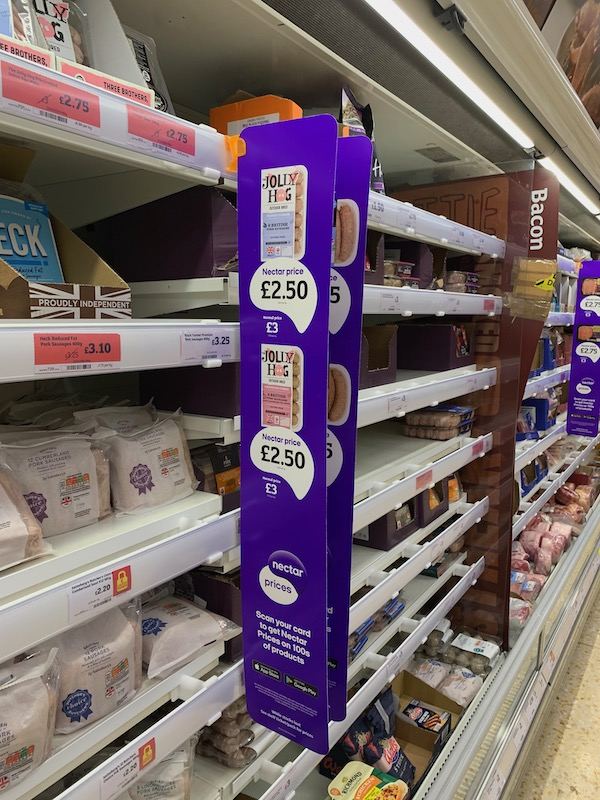
So to the Nectar campaign, it's noteworthy in that it brings Sainsbury's into the leagues of Tesco, but also Waitrose who have been busy readying their card-based campaign with a number of deals around October onwards for cardholders.
The campaign has hit home well with great exposure around the store, the logo and packaging/identity changed earlier in 2019 with a full Purple motif preferred, it does stand out reasonably well around the store.
Loyalty has been an odd phenomenon in retail with some customers seemingly realising that the points they received weren't worthwhile versus the level of data was generated via their shopping... However, it's important for retailers that the 'swipe rate' (IE the currency of loyalty, the number of times or % of customers swipe a loyalty card) in-store is high.
If it isn't, then the data isn't plentiful and there is probably a situation where any range based work utilising loyalty data could be skewed by disproportionate customer data. Naturally, there are some stores that don't have a high swipe rate, convenience stores, for example, have low swipe rates due to customers being time-poor.
So, the data is vital but just one part of the jigsaw. Indeed, brands utilise loyalty schemes to advertise their products and incentivise customers to swipe their loyalty card, plus customers can benefit from extra points for example. The intriguing element here is that it's a good money-spinner for the retailer, however, it's not necessarily 'loyalty' per se.
Incentivising non-cusotmers to buy a product with loyalty points is almost irrational on paper, but it does work and there are more of these deals occurring, this pushes up the 'swipe rate' and gives customers a reason to utilise Nectar despite the changes (despite fuel partners etc changing when JS took full control of Nectar).
Adding variable prices looks a smart move if the technology allows it then why not. However, it does make the chain more promotional as these lines are promoted, in addition to their package of 'lockdown' and other deals, where items are priced at £1 for example.
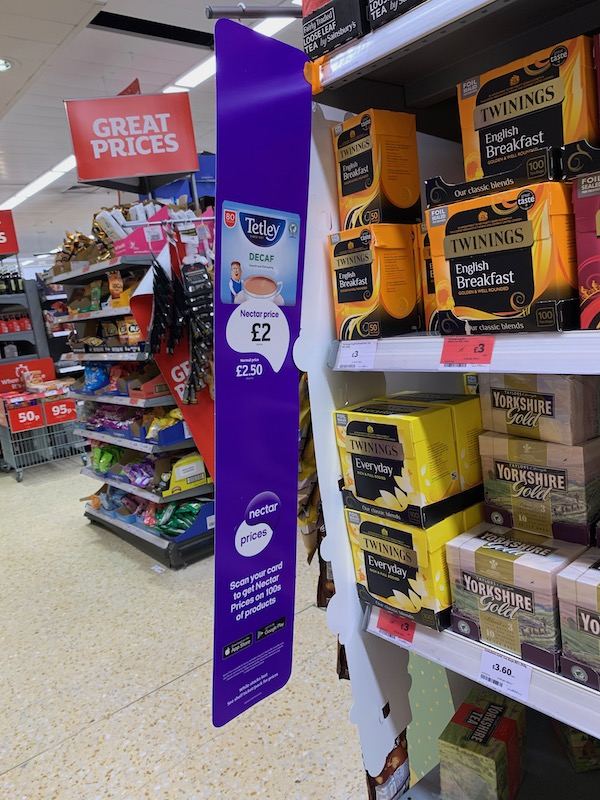
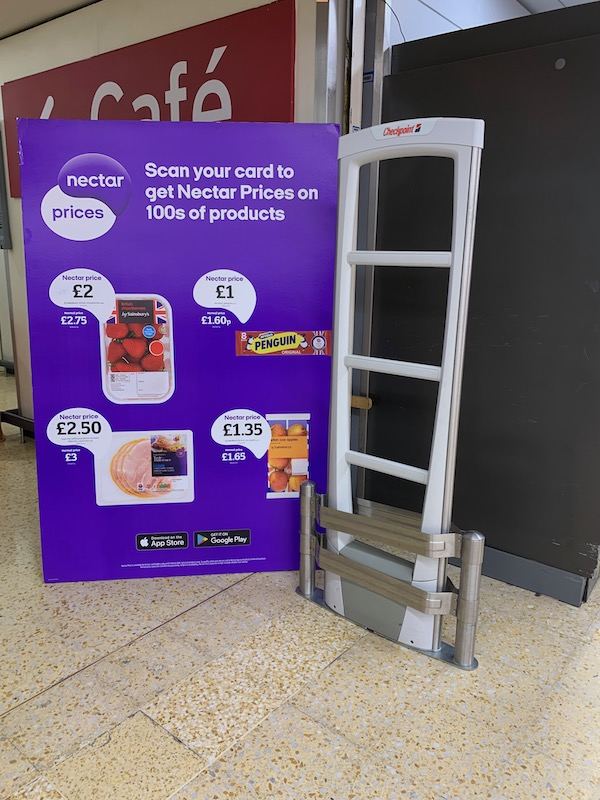
Own label products are featured, but branded items are also featured which generates a return for the chain via marketing spend. Big brands want exposure in the stores and featuring their brand/identity alongside a deal is a winner for both retailer and supplier.
As long as the customer wins too.
However, too much supplier income on irrelevant signage and media means that the store becomes a gallery for branded items and one that's near impossible to navigate.
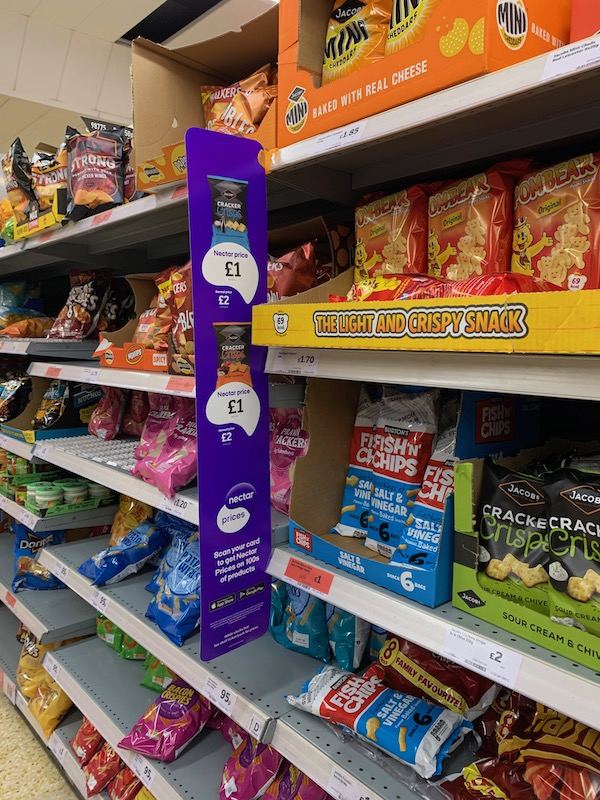
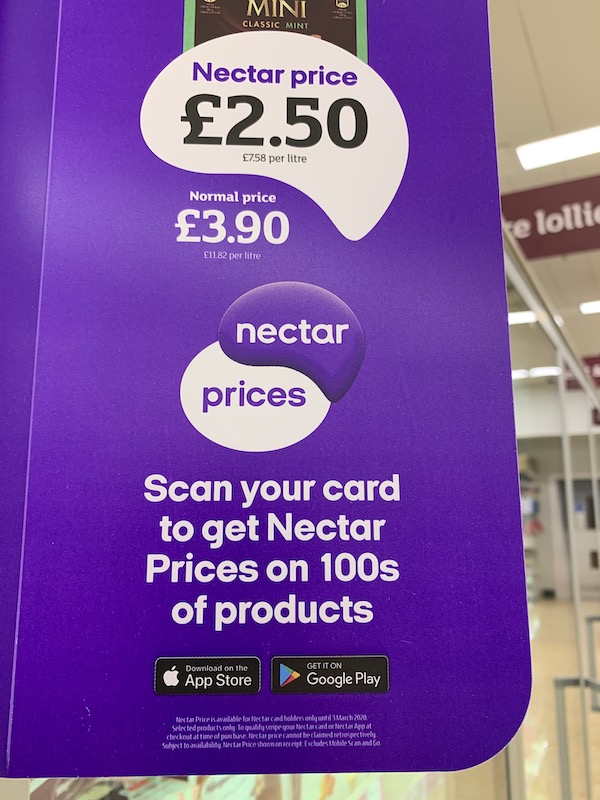
Signage works well really, great impact with on-shelf signage also strong, it's simple for customers and it would be interesting to see how many customers sign up for Nectar, and the app by using the links highlighted on the signage.
Some of the deals are core, IE Ben and Jerry's is typically on a deal anyway, but this was a Nectar only deal, which could annoy customers who didn't have a Nectar card. It can be seen as 'exclusive' but then again, Nectar is free to join and you can't please everyone.
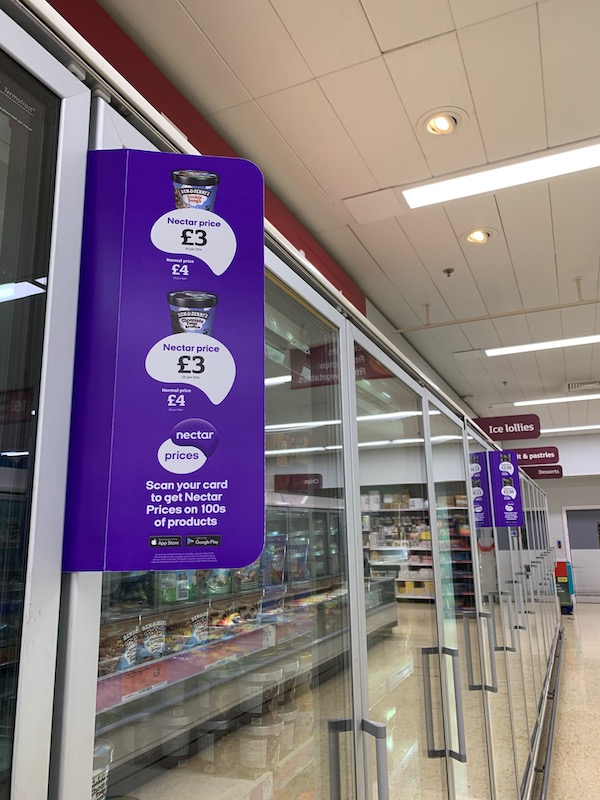
So, onwards and upwards for Sainsbury's and their ambitions with Nectar pricing, it's one to keep working on and how that works alongside Locked Down and the other promotions will be interesting to see.
It's a winner for loyalty campaigns, customers benefit from the deals and suppliers can get involved as well, however, there is a question around value and what this means for the wider Sainsbury's methodology of stable pricing for all.
But it's another example of technology progressing the offer too, customers can presumably join the scheme in-store via the app store links and benefit from the deals in-store.
More users means more valuable data after all. Plus if Nectar can be used as a tool to get the customers over the line and in to store, then it's a winner for the chain.
Even convenience benefitted from 'loyalty only' prices, which is interesting to see too...
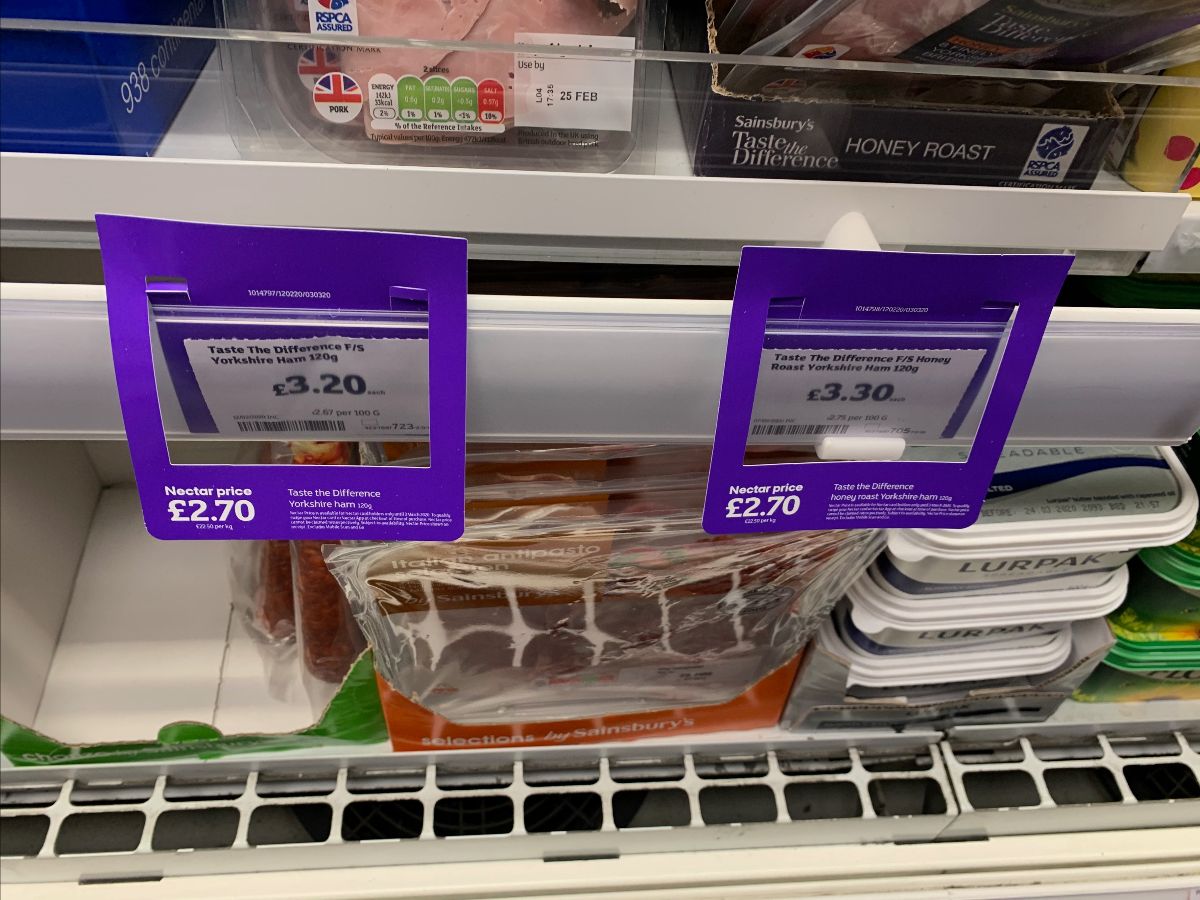
Another note for the supplier income, it can add value and be a winner for all.
However, the more that's done each year, the more that needs to be done to 'prop up' the sales line the year after too. Suppliers want more and if there's ambition then signage can 'take over' the store without any discernible customer benefit.
This one for Sports Relief. Doesn't really do anything.
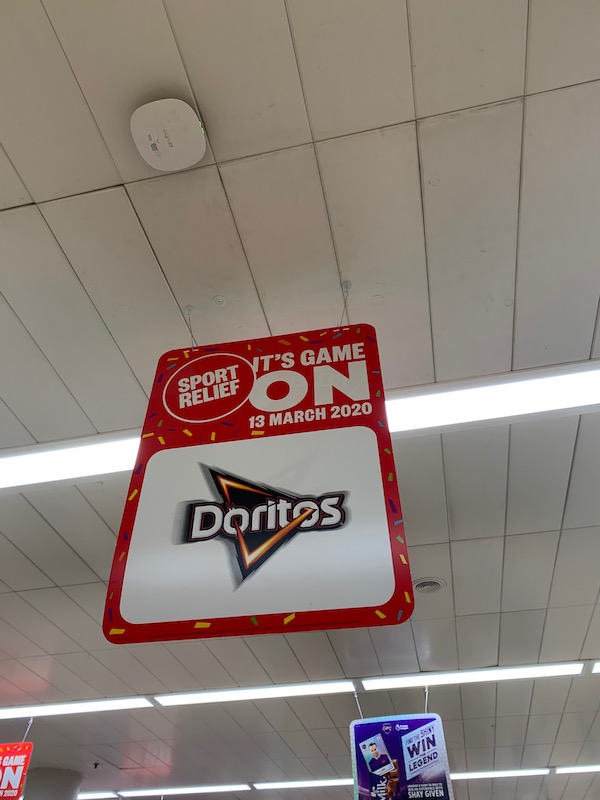
Dorito's are involved, but what is the donation for each pack of Crisps purchased? Where is the value?
It's a careful balance that needs to be struck, but another way to drive value for money for customers isn't to be ignored, or critiqued. It just serves to make the market even more competitive...
Visit the Retail Bible - our new platform for imagery and insight
Contact us to have a discussion about retail
From the Grocery Insight newsletter archive, first sent to subscribers on 17 February 2020. Steve now writes at read.groceryinsight.com. See also the blog archive and briefings.