Sainsbury's results - Transition, some three years in?
28 November 2017
In the half year for Sainsbury's which occurred a couple of weeks back, there were a few signs of progress for the business. The consolidated business is performing well at a high level and Argos appears to be integrating nicely, with an uplift in each store that benefits from the Argos concession.
They have a longer term plan in play on food which primarily centred on low and stable pricing and fewer promotions. Multibuys have also long since gone from the Sainsbury's proposition, unless it's Wine, or Non food - like Wrap / Cards which are on 3 for 2 at the minute.
However when you delve in to the Sainsbury's results, it's all a bit 2011....
Whilst there is no decreed convention around how like for like results should be displayed and what is / isn't included, generally, they should be excluding both VAT (which is just tax in reality, collected by the retailer) and fuel (which is lower margin and again, a high proportion is duty/VAT etc).
This, alongside excluding any new space (until it has been open a year, which then enables comparisons) means the retailers give a true picture of how their core business is performing, on a pure sales basis.
Of course one can pump up their numbers with vouchers, booze deals and 3 for 2 Toys, however these short term promotions can then make the following year's comparatives all the harder to trade against. Requiring more deals to 'better' the number, before the whole thing runs out of steam as we saw in relatively recent times in around 2014 / 2015....
Sainsbury's have a history of tweaking the numbers around in their releases, in the space race days, they often used to exclude new openings, but include store extensions in their like for like numbers...
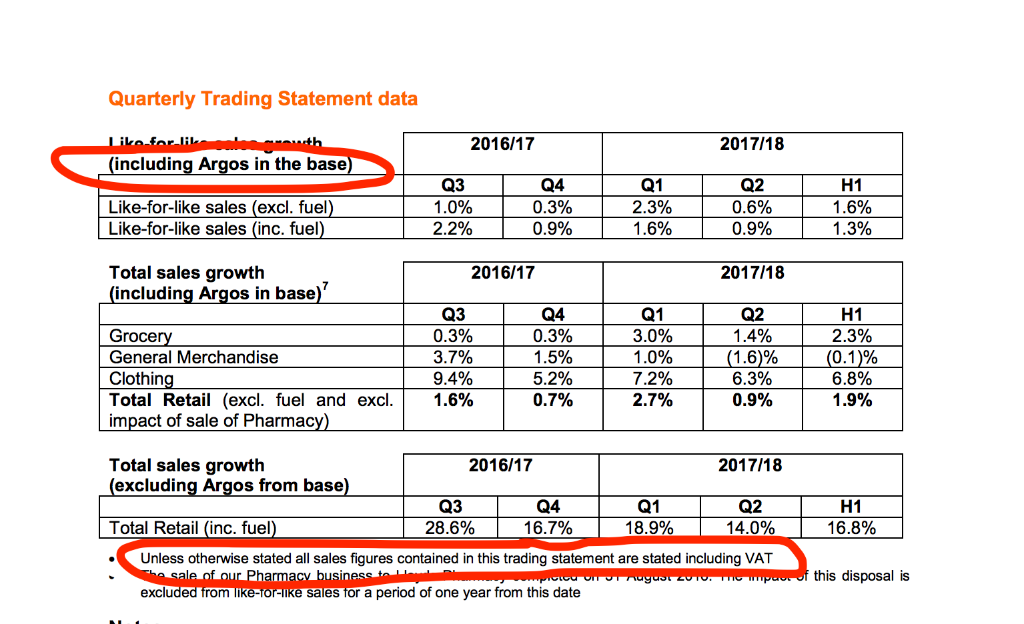
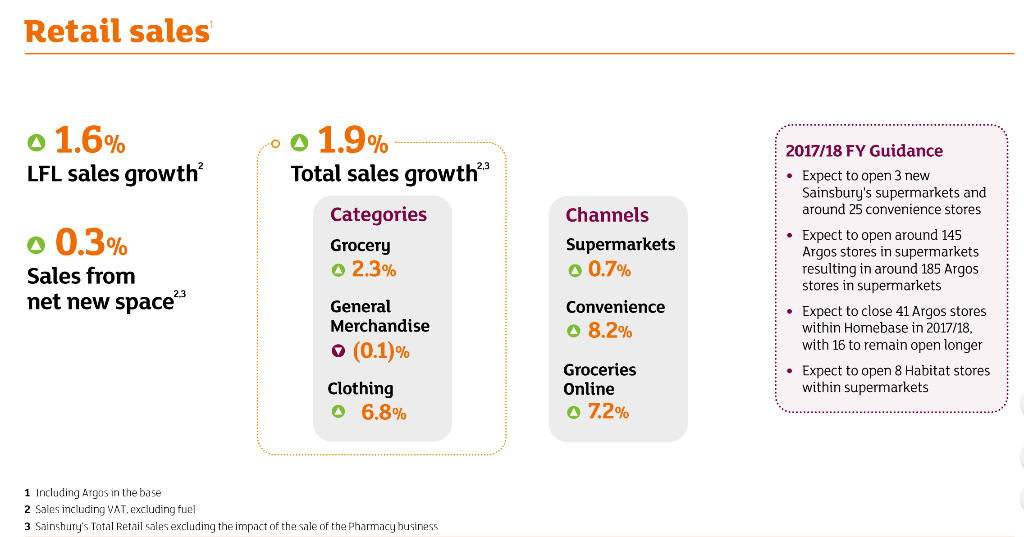
As we can see with the crudely drawn red boxes on the release, all sales figures now include VAT, which increases the figures and is entirely questionable, given the industry generally excludes VAT from their sales.
Certainly both Tesco and Morrisons excluded VAT from their sales on the last release, and Asda, judging by former press releases also exclude the VAT number from their headline numbers.
Reviewing the numbers in isolation above, we knew that Sainsbury's were to roll Argos numbers in as one big number, and wouldn't split out the figures (having done so for a year) which is fair enough.
The total sales growth table shows that Grocery is growing (in total) with Q2 showing a reasonable 1.4% performance, however inflation is running higher across the sector so perhaps not as encouraging?
Their Q1 figure was strong at +3% however the quarter was a long one, and included Sainsbury's specific events, like Red Nose day that boosted sales alongside calendar based events such as Mother's Day and a late Easter.
This set of figures includes VAT and is total growth, not necessarily like for like...
Given the Sainsbury's ambition in General Merchandise, the lack of sales growth here will be a concern, especially as it includes Argos in the base.
Further signs of the consumer tightening their belts and also the slowing in the availability of cheaper credit? Clothing did grow nicely though and represents ongoing strength for the chain.
We never quite got a pure like for like measure in these results either when Argos is excluded, the sales figures include VAT (naturally) and then bizarrely, Fuel too. This drives the numbers upwards to c.14%. Bizarre.
The Pharmacy impact is also stripped out of these sales figures, which means it's another way to split down the numbers....
If we consider that the net benefit is +1-2% when a Sainsbury's store getting an Argos implant, either moving from the larger unit elsewhere. Or in some cases, swapping out of Homebase in to Sainsbury's, should there be a greater like for like / total sales growth performance?
Or are the Argos customers not spending that much in Sainsbury's, bar perhaps a top up / essentials based mission?
Does, with all that in the background, mean their numbers are strong enough? Or is it still a case of wait and see as the integration work continues?
I don't think the figures released were clear, given the inclusion of VAT and the various splits with the Argos business, inclusive of fuel, stripping out Pharmacy impacts etc....
Still very difficult to see beyond that fog.
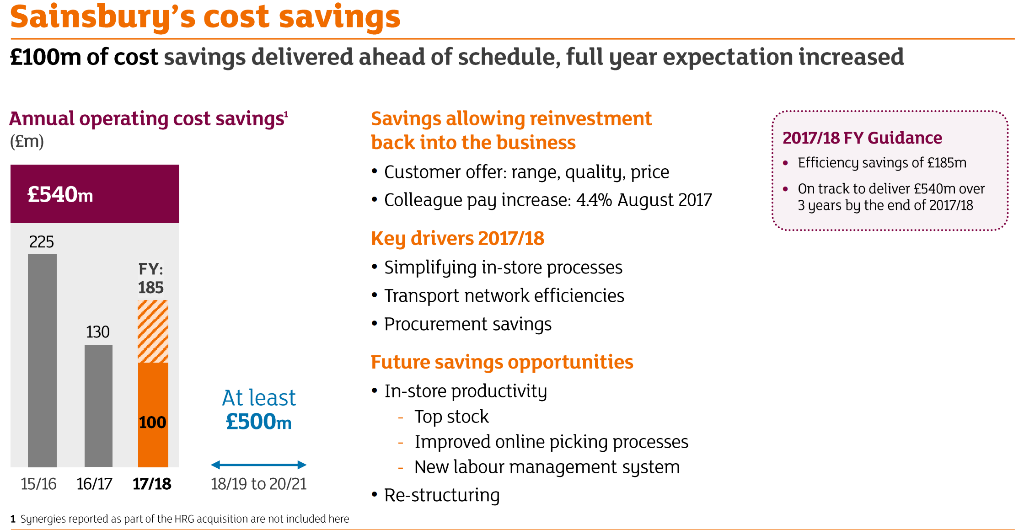
A drastic change in Sainsbury's has seen their store standards decline, which with the introduction of top stocking means that the good stores are barely different, whereas poor stores, as ever, look like they haven't been filled for a week.
Sainsbury's have 'brought customers up' on good store standards (in comparison to varying issues elsewhere in the market) and have won the Grocer 33 for stores for the past 5 consecutive years as evidence of this strategy.
Night shifts have now gone in the vast majority of stores, even those picking online have been hit. They were protected in the first phase as online customers benefit from strong(er) availability... However any disbanding of a night team means that filling has to take place on an evening, alongside the morning too.
Display excess stocks on the 'Top stock' is one of those things that 'customers hate' apparently. Do they? Most notice it and don't like it. But they'll never stop using that store because of the top stocking alone.
It just doesn't happen.
However the way it's implemented is key, it's an operational saving for Sainsbury's, however we know that JS are generally leaner than their competitors and have benefitted from these savings for years already.
So with pressure on the balance sheet, pricing and rising inflation, they have to be drastic with their model to deliver the savings necessary.
Top stock means reduced operational costs at the shelf edge and will reduce the 'yards' in store that stock travels. This should help improve availability which is vital as stores lose their night shifts and have to replenish 'in day'.
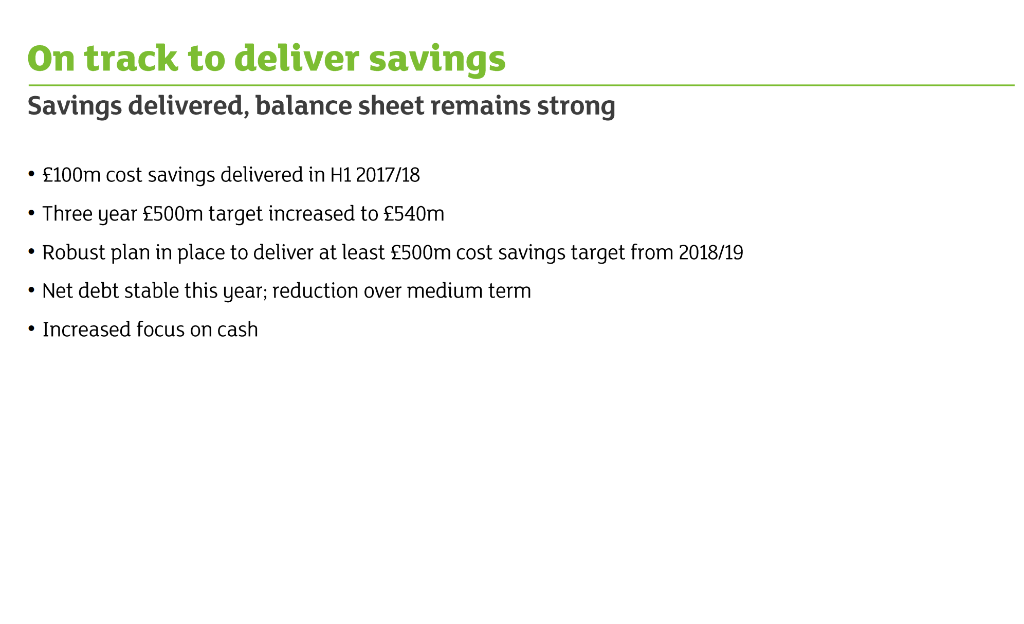
There has been talk of reducing the process in store around gap scanning and inventory management, however this would be an error from my perspective.
For the non retailers on the list (even some of the retailers may learn something!) An inventory based system works from a forecast, shelf space (to fill or to a '%' of fill) and an 'inventory' figure.
That is, what the system has in stock at that time. Stock is sold via the checkouts and this is deducted from the inventory figure. As deliveries arrive in store, a case (6, 12 etc), these are then added to the inventory figure.
The system then manages the 'ins and outs' automatically and works to a number of pre-set parameters around forecasted demand, physical space on shelf, whether a product was reduced etc.
However the issue comes when 'inventory' number is corrupted, which can happen in several ways. Ironically too much counting can cause corruption - own store adjustments through their core, daily routines can mean stock is miscounted.
A reduction in the inventory number will see the system generate an order, driving more stock to the store. The store may then 'find' the stock and add it back in to the system, however the replacement stock is already on the way... Leading to excess inventory and working capital being tied up.....
That extreme example aside, stores are working, living, breathing places and as such, stock gets damaged, stolen, wrongly sent in from depot, scanned incorrectly at the tills and all this affects the inventory number too.
Meaning the system works from an inaccurate base and won't generate further stock, thinking the existing stock in store hasn't sold for example. This is why regular inventory walks are key, with the store scanning their gaps and ensuring that the inventories are set to zero to generate new orders.
Human intervention is needed to scan gaps and adjust the stock position accordingly. 'Ghost stock' - IE stock not present but on the system can be for any number of reasons from the list above. This needs removing to reset the system and drive more stock to fill the gaps.
When done in a timely fashion, with good routines in store (IE the stock isn't in the warehouse where the delivery hasn't been worked). This can drive good availability as the system resets itself, generates orders and the depots can send the stock within their lead time and reduce the length of time that a gap exists on shelf.
Whilst systems have come a long way in terms of cloud based forecasting and the various algorithms in force. Basic maintenance, each day is the best way to ensure that any gap is a gap for a minimal amount of time.
You can automate the inventory reset process (as Tesco do) however, this is risky, the routines have to be in place otherwise it's carnage. Wal-Mart are sending a robot around some of their stores to scan gaps and flag missing tickets....
In my experience, in some shops, the robot would need re-mapping to avoid the aisles that the night team didn't get to......
I always think of the 'worst' shop for such a process to be embedded, one where they do not work stock accurately and the system thinks that a product is off sale, where in reality, there's 9 cases in the warehouse.
The change, if they proceed will reduce the number of gap scans down from 3 per week to 2. It was easier to see how they went from 7 day scanning to 3 given their strong work on availability for many years, but 3 to 2 does potentially leave them open to issues around availability.
With their availability feeling weaker in stores, it's hard to see how this initiative will necessarily improve the shopping trip for customers..
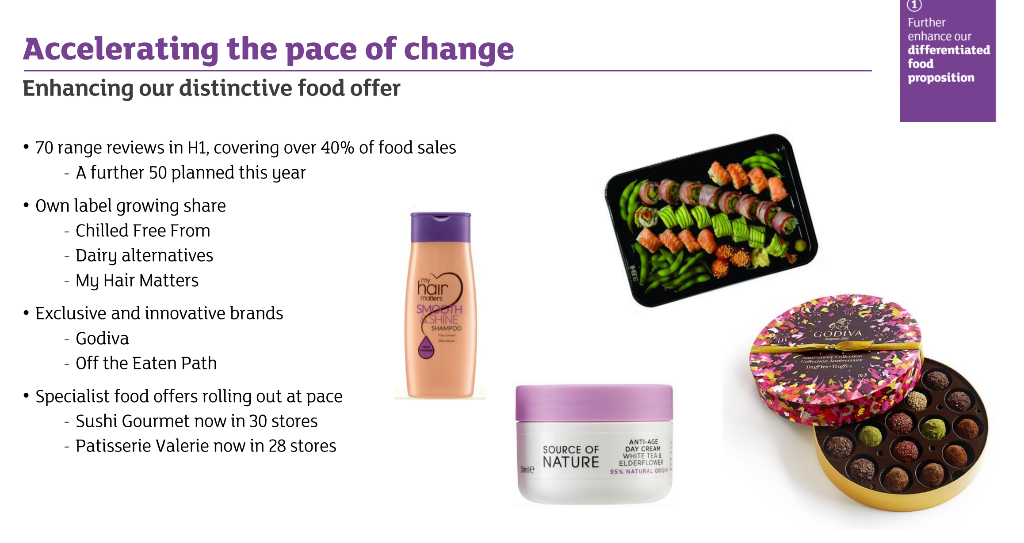
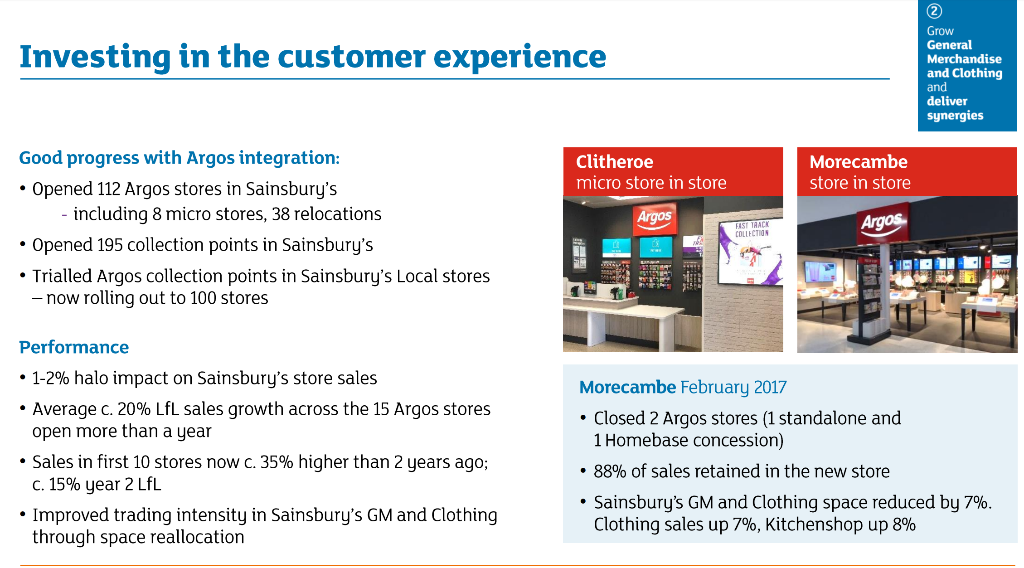
Sainsbury's have spoken about revamping their own label for some time, without ever really pushing anything further than basic category resets and introducing new products, without any real new thinking.....
Their own label has always been a real bastion of strength for them, premium notably so but Taste the Difference has come under pressure from discounters in particular..... Morrisons bringing back 'The Best' alongside solid work at places like Iceland, and even M&S sharpening up has hurt Sainsbury's.
Even the golden quarter, with the golden goose that is Christmas is by no means a dead cert for Sainsbury's any longer in the same way that it once was. Rivals have tightened up and narrowed the gap on quality and indeed, price. All of this means Sainsbury's have to work harder, just to stand still.
Range wise, there has been good work noted in Non Food - with the introduction of 'Home' by Sainsbury's a positive step. In addition, Argos has enabled existing stores to tighten their range of non food and shift some sales out to Argos in Toys, Electricals and Gaming.
Whilst a seeming contradiction in terms, Argos taking some of the range out of Sainsbury's assortments does appear to aid the JS focus on the non food categories that matter, with Argos for everything else.
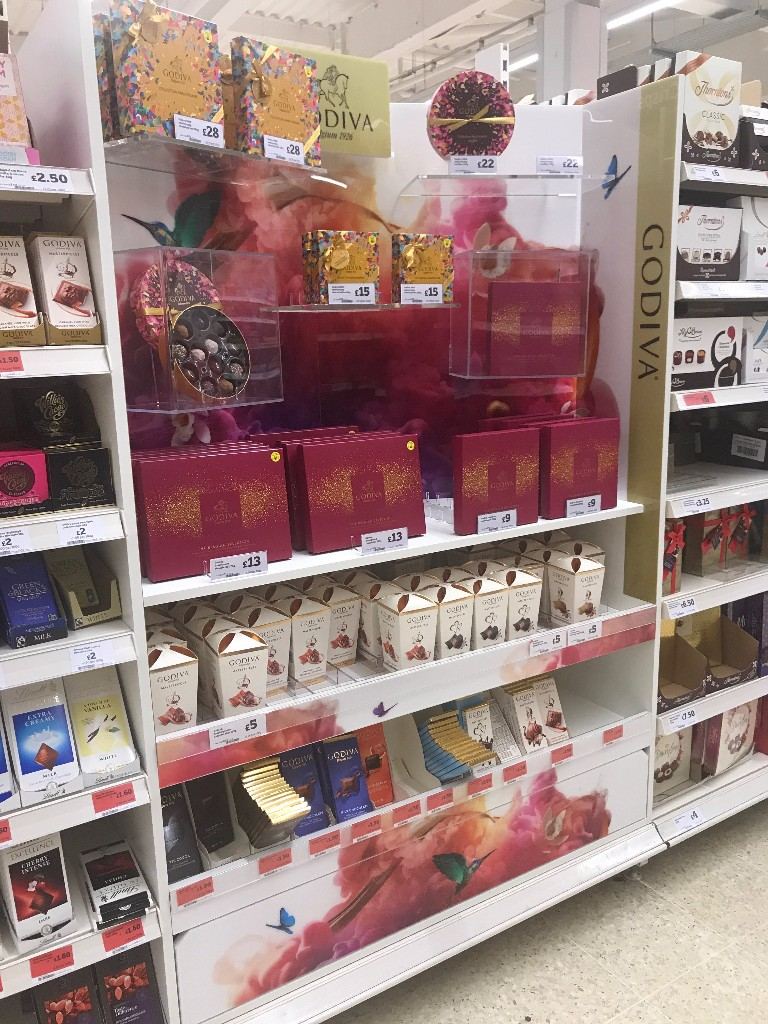
A notable piece of work from Sainsbury's has been their partnerships with brands such as Godiva within Confectionery. This alongside 'My Hair Matters' and others in Health & Beauty.
These are not brands that are necessarily developed by Sainsbury's, rather ones that are exclusively sold in Sainsbury's, thus enhancing the range / assortment for a core customer.
Godiva is a Belgian brand that never really had a foothold in any UK retailer for any discernible length of time. However Sainsbury's have given a bay over to the range in store, and the display kit looks strong for the brand too.
£28 is their highest price for a box of Chocolates. Whilst an impressive fixture and product, is that too high a price for some customers?
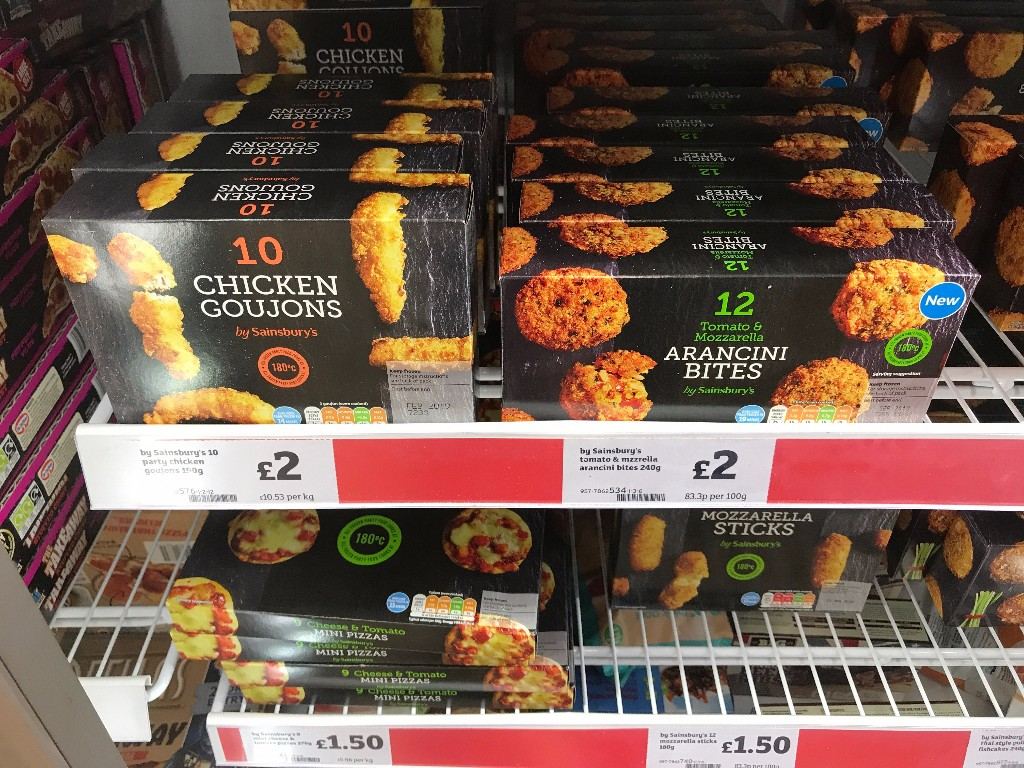
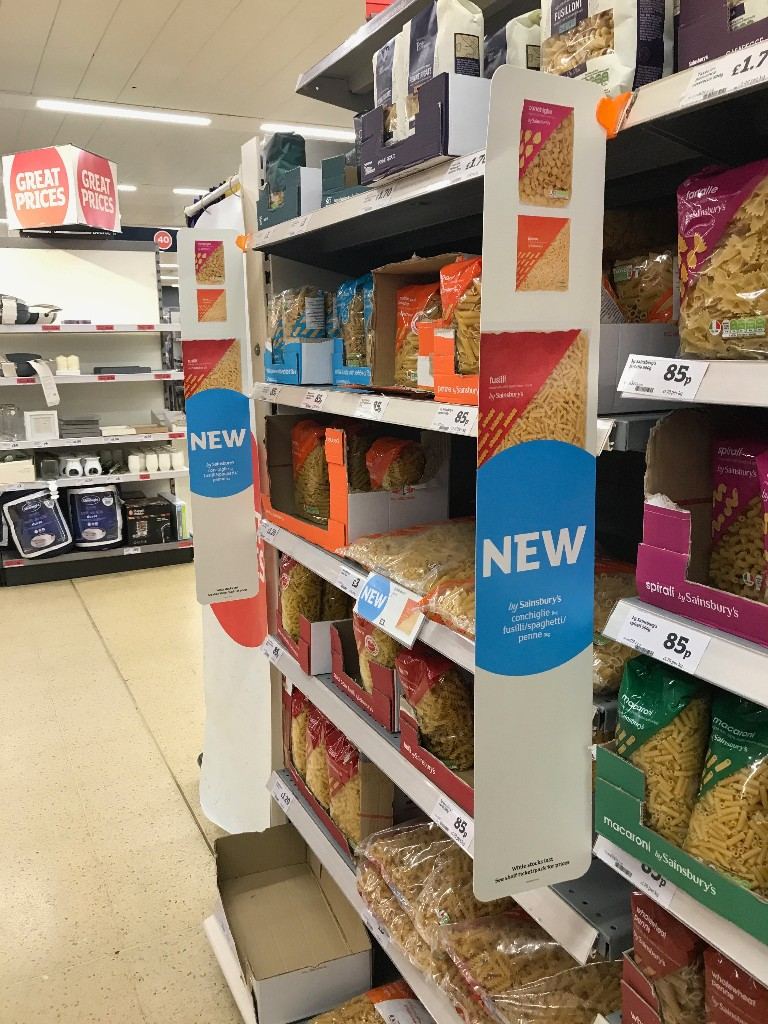
It's not just 3rd party brands and exclusivity agreements that Sainsbury's have been busy with, they have also been pushing their own label development further with a number of new lines arriving in to the stores ahead of the peak trading period.
Their work with larger packs of Pasta - 3kg for £3 represents value for the customer who prefers to purchase a larger pack and 'benefit' from volume based buying, rather than a semi permanent 2 for £1 deal on the core packs of 500g Pasta....
Their packaging for the Frozen party food in 2017 looks ever so slightly like that used by Aldi and Iceland in 2016. Well, if you can't beat them, join them!
The product is strong, good visuals on the pack and shows the customer what the product inside should look like, impactful work.
Price points are 'ok', not anything more. The lack of a multibuy on party food always scuppers that customer who buys a number of packs without 'thinking' necessarily, given their need to bulk buy for hosting...
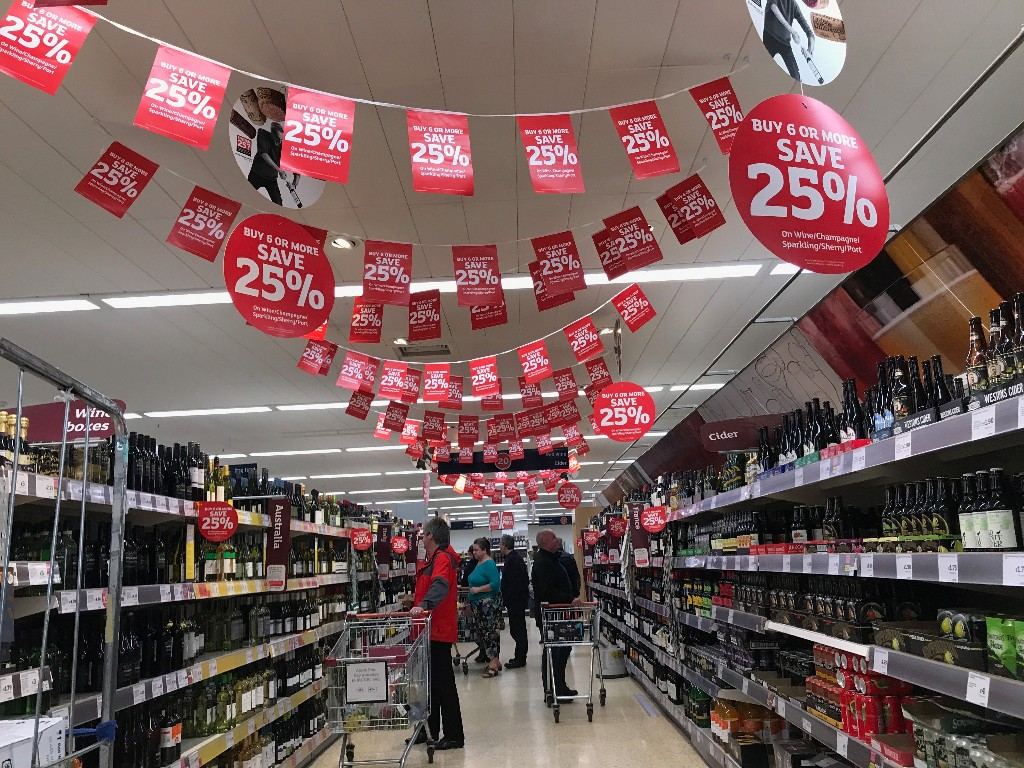
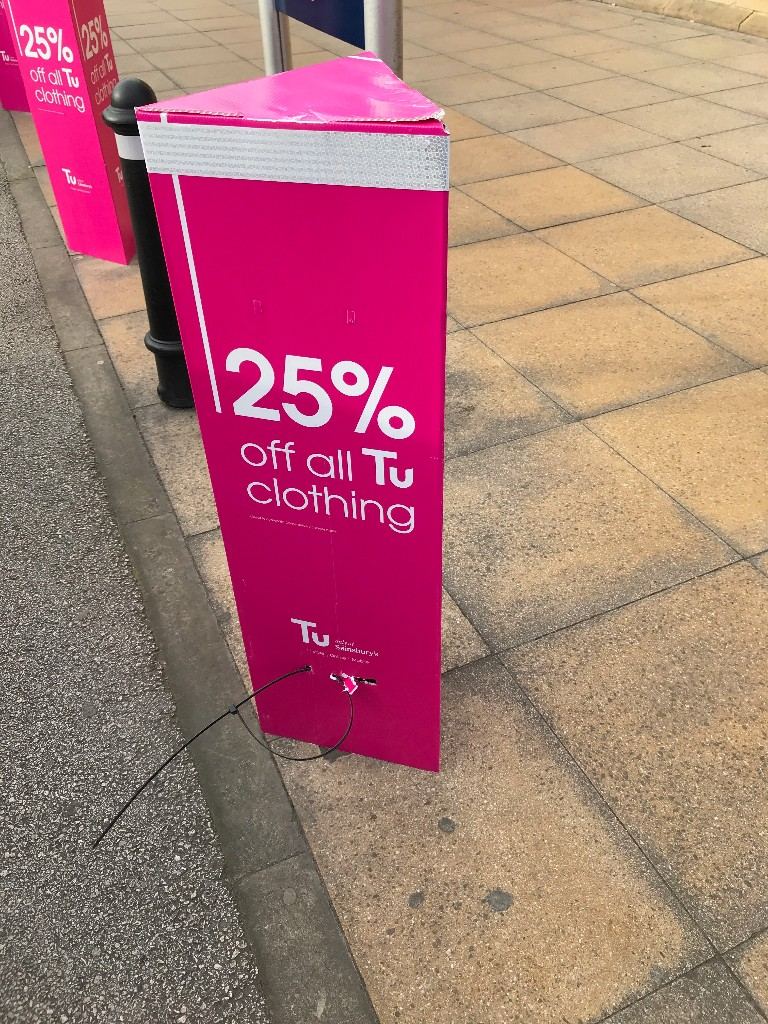
Whilst Sainsbury's have been evangelical about their focus on the price point, and not on multibuys or other 'deals. This hasn't extended to Wines or Clothing, where the larger deals continue to be part of their promotional package.
Indeed, as Tesco have dialled up their promotional participation (with 3 for 2 Toys, 3 weeks of spend £60 get 10p off a litre of fuel and also regularly running 25% off 6 bottles of Wine recently), Sainsbury's have had to react and run several wider 'events' of their own, certainly more than they did last year.
For example, Sainsbury's run their Clothing event - 25% off to incorporate Back to School and then Halloween / half term. However they have also ran the deal last week, similarly they have run their 25% off 6 bottles of Wine frequently to maintain trade in light of activity elsewhere.
Within the market of 'affluent' stores, Waitrose and M&S have been aggressive in this regard too, often running 25% off 6 bottles...
Sainsbury's were also flagging 1l Spirits at £15 too, they didn't enter the battleground of Spirits for Christmas last year. But recognised they had to this year I feel, given activity elsewhere....
The lack of a multibuy on Spirits means there's no 2 for £22 (Morrisons) or indeed no wider bulk pack Beer deal either (3 for £21 etc) which can impact sales. Where a customer almost mindlessly picks up 3 boxes as it's £21 (the saving could be tiny, as little as £1.50), it still encourages trade....
Even if Sainsbury's ran their Beers at £7 per pack, would customers still buy 3? Unlikely, some might. Others would perhaps just get 2, which is right for the customer but a lack of multibuys can be harmful to trade.... Especially at Christmas....
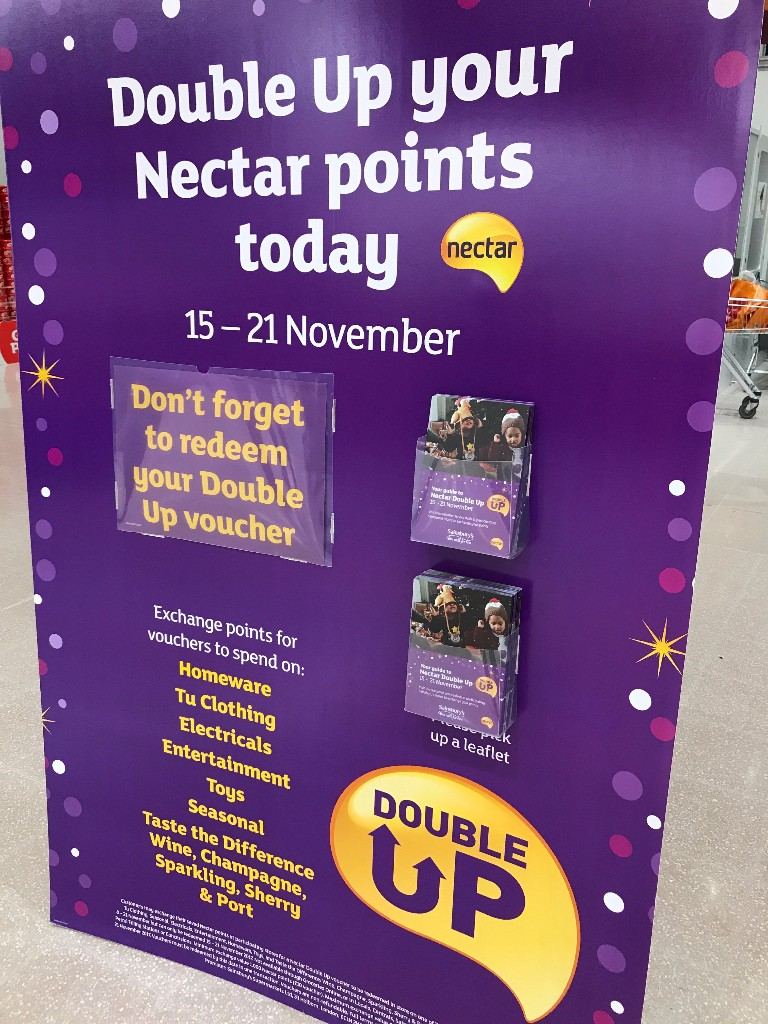
Another popular deal to have been repeated year on year by Sainsbury's is their double up campaign. This features higher margin categories in non food and clothing become eligible for loyalty points to be converted to cash and then doubled up....
A customer has to select a category for double up, so you can have £10 for clothing and double it to £20, then convert another £10 > £20 for Electricals. The limit was two vouchers per category, but you could do £20 in to £40 if you so wished.....
Whilst this does drain margin, it drives trade towards the stores and the theory is that customers will also do shopping whilst they're in store.
They may also use Sainsbury's for more shopping / financial services given the Nectar possibilities for 2018 and their double up campaign. If you consider that the change from 2 points per £1 to 1 point per £1 has given way to several Nectar based bonus events too.
It's another lever to pull and more wider deals that drive traffic, alongside stronger Spirits pricing and the Wines/Clothing offers. It shows signs that Sainsbury's are being more aggressive this year in the wider non food arena alongside areas of food too.
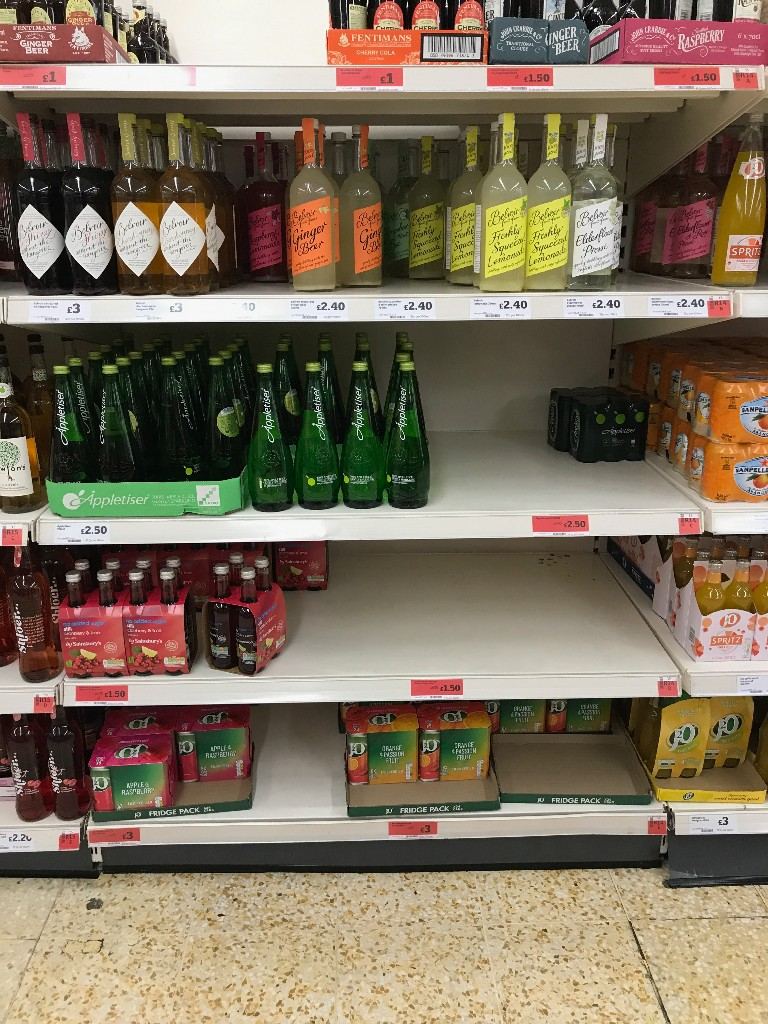
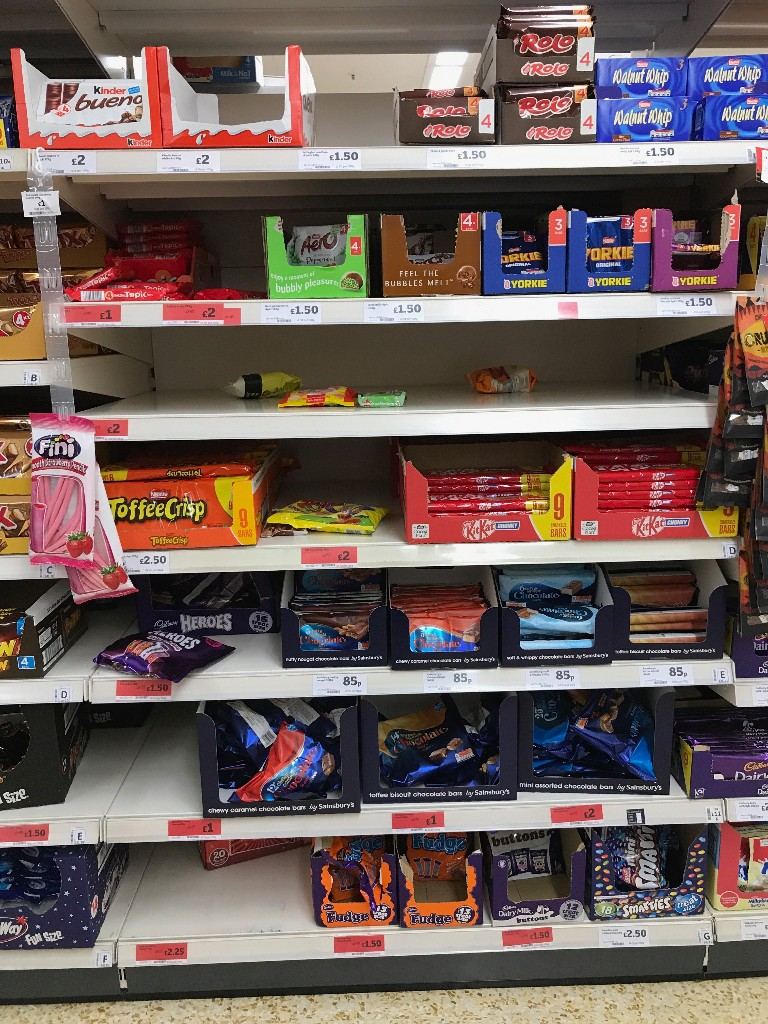
Despite that, availability has been uneven in stores I've visited recently, with promotions being hard hit. Even with top stock, the gaps on shelf are typically 'red' labels - customers are still buying in to deals despite prices being lower across the relevant category.
So with less deals, a UK customer attuned to shopping for deals and 'red' labels - don't you just transfer the same sales in to less products and put the product under pressure on the fixture?
It would seem so. I think there are efforts at Sainsbury's to bring the prices down, and in some areas you can see there hasn't been a great deal of fluctuation. But their availability has always been so strong, and recently it has felt weaker at the shelf edge.
The concern is for online customers too, if they purchase promoted items that are out of stock, the colleague will substitute with a suitable product. However they don't get that new product for the same price, they have to pay the difference....
Availability remains so important, and customers, despite discounters and work elsewhere to stabilise prices, still like promoted products....
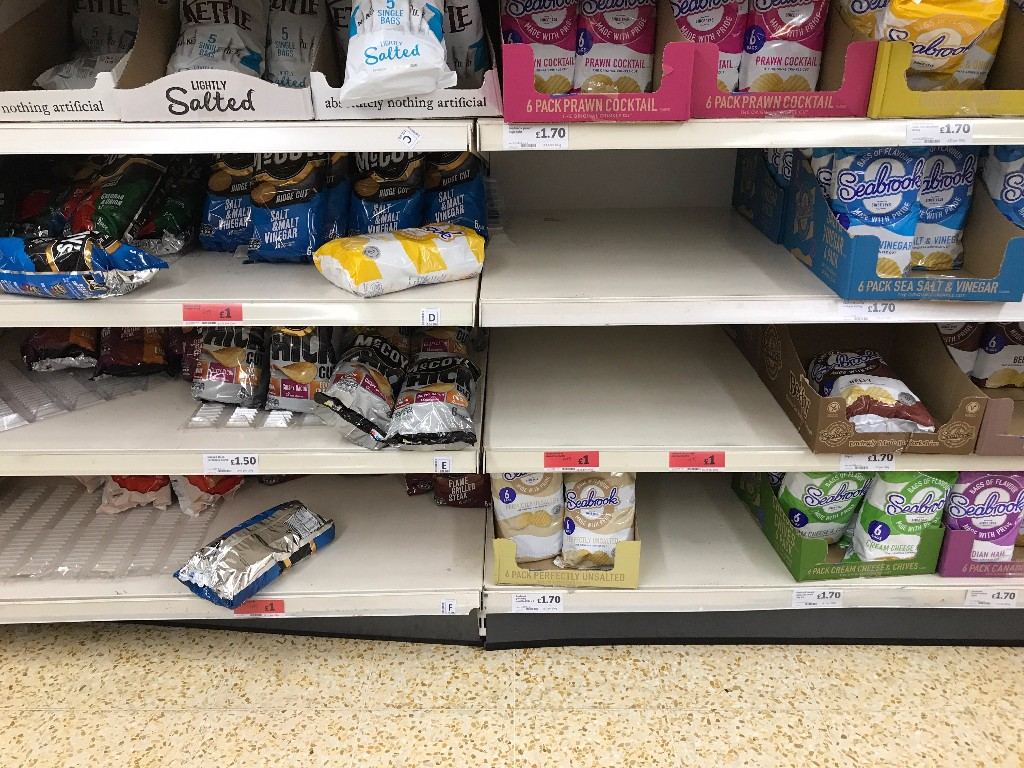
Impulse categories are particularly hard hit, but there are challenges in other categories too, but areas like Crisps, Confectionery and Fizzy Drinks are often deal heavy and suffer for availability as a result.
The challenge for stores is that the trade in promotional products remains high and keeping these lines on sale can be a challenge, balancing space and stock levels is difficult.
It then impacts the customer, who may be in the store looking for deals, or a particular deal. If a customer finds most of the deals out of stock, then they may feel they've been mis-led.
The deals could be products that a customer really wants.... Deals are appreciated as a way to save money, so the chain having poor availability on promoted items, with no other deal in the category leads the customer have a negative impression of availability...
Even if the wider availability is good, deals remain crucial, arguably more so with the lower number of deals around the store.
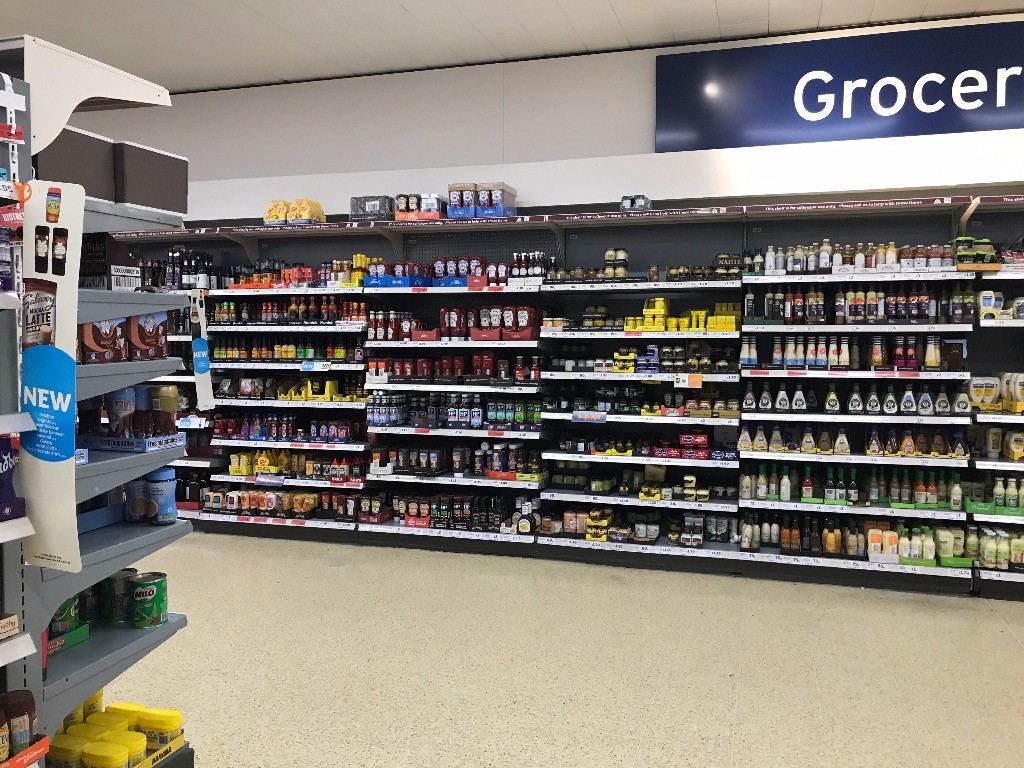
Top stock has arrived in stores as many have noted, it's a change for the retailer who generally operate clean and consistent stores, and is designed to reduce the 'yards' stock travels in store.
This makes replenishment easier for colleagues, who store the relevant stock above the fixture and don't transfer stock around the store unproductively.
Sainsbury's have empty warehouses already however, and the good stores operate very well indeed. Generally having full shelves and as a result their top stock features virtually no excess stock.
This store wasn't in bad shape, however as Christmas nears, the depots start to load stock in to stores for the peak month. The warehouses fill up so the stores can trade through peak months without waiting for deliveries, as volumes rise in other categories.
Therefore, rules are needed here to prevent top stocking going haywire and looking near ridiculous. Whether the rules are in place, or not is unclear, but this doesn't look great and levels like this should be split and some left over in the warehouse.
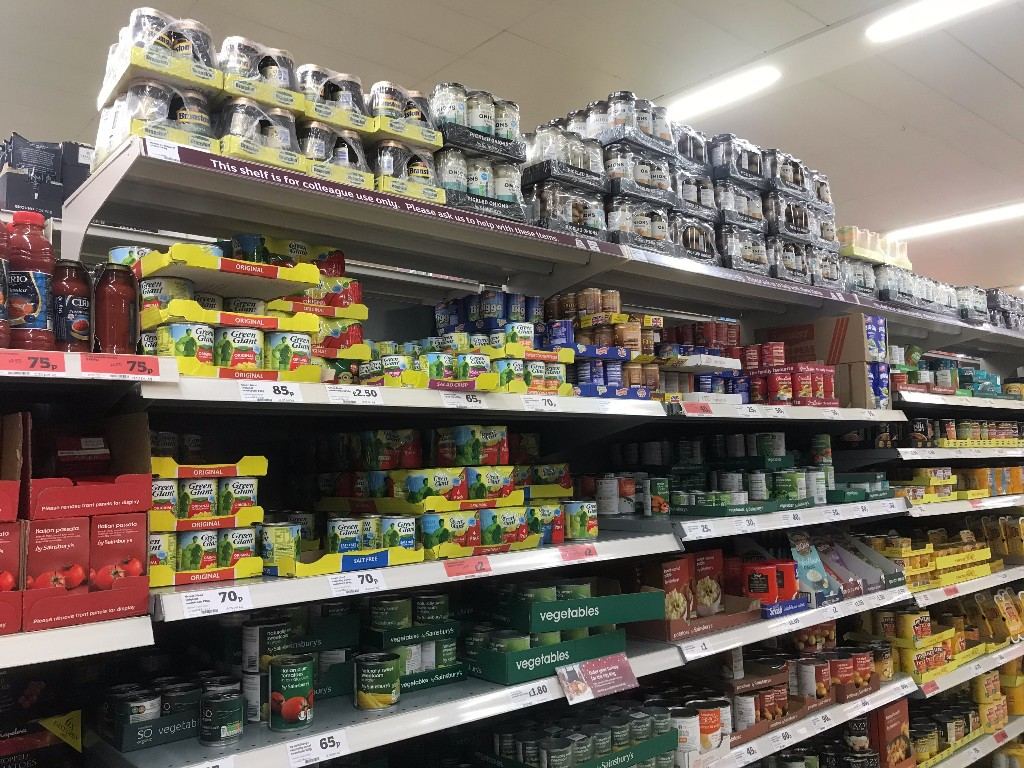
Plenty of Pickles and Pickled Onions here, all will sell most likely towards Christmas, but they're not needed in their entirety just yet. It ends up looking like a warehouse and doesn't really equate to what the top stocking should be used for.
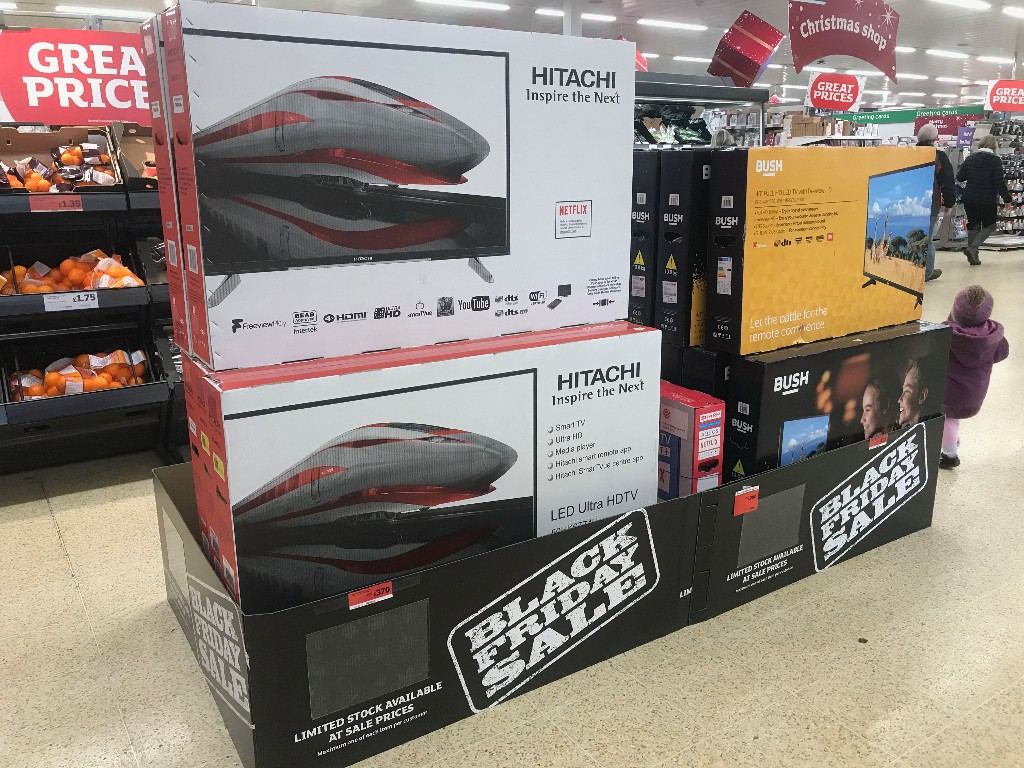
More on Black Friday to come, but Sainsbury's were a major player in the market this year. Both Argos and Sainsbury's were running Black Friday deals and within the stores where an Argos concession was sited, it did become a little confusing around where the best value was located.
However in store execution weakening is a running theme for me, all the work to get signage and Televisions on a good price at the front of the store.... Then the price label is miniscule....
So for Sainsbury's..... Cost savings are important, understandable and crucial.... Times are changing in the food retail market.
To invest in price against a backdrop of uncertainty and inflation is challenging, but there has to be one factor considered whenever anything is proposed around operational savings.
What is the impact on the customer?
If any initiative negatively impacts, then it shouldn't be done.
A customer wants their shopping at a fair price and to be in and out of the store in a reasonable amount of time. They don't really care about the latest wave of cost savings........
From the Grocery Insight newsletter archive, first sent to subscribers on 28 November 2017. Steve now writes at read.groceryinsight.com. See also the blog archive and briefings.