Tesco - The slides that matter
13 April 2017
So post the results; what are the key messages?
One tweet I wrote today whilst half asleep reading the results made the BBC, so perhaps there's food for thought for us all.....
Anyway; Tesco with their high level number before all the deductions and exceptional items (again) actually showed more progress with the core work they've been doing. However the raft of exceptional items, pension contributions etc meant the overall number was far lower.
One would hope this is the last of the legacy issues from those 'three years' that are probably best forgotten. Well, that is until I write my book!
It shows the level of mismanagement that the issues have rumbled on for another year, with the balance sheet attacked and kitchen sinked two years ago, losing a record -£6.4bn. Sidestepping the profits overstatement, those additional businesses and eye off the ball in the UK tactics look very expensive indeed.
Which when you put in to context, can make the Booker deal look a bit of a risk. Any integration is fraught with risk as the best people are generally combined to work on harmonising the business, pressure comes both from getting the sales moving but, perhaps more importantly - realising the savings and synergies.
It makes sense on paper, but are Tesco ready for it? Anyone coming out against the deal is newsworthy, but when its large investors / shareholders and even a Non-Exec who feels strongly enough to resign over it.... Well.
So to the slides; I'll watch the presentation later on. Dave always presents well.
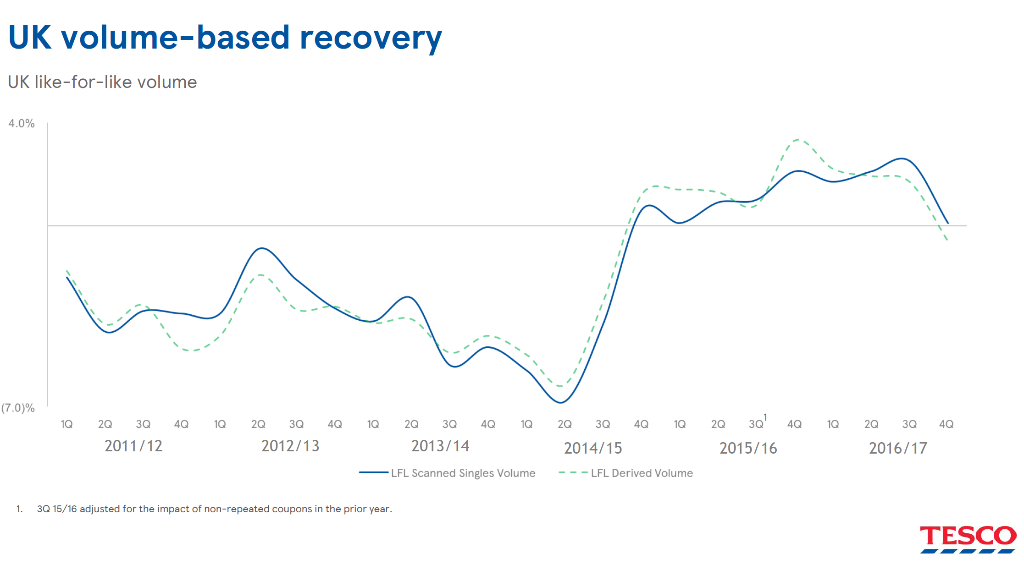
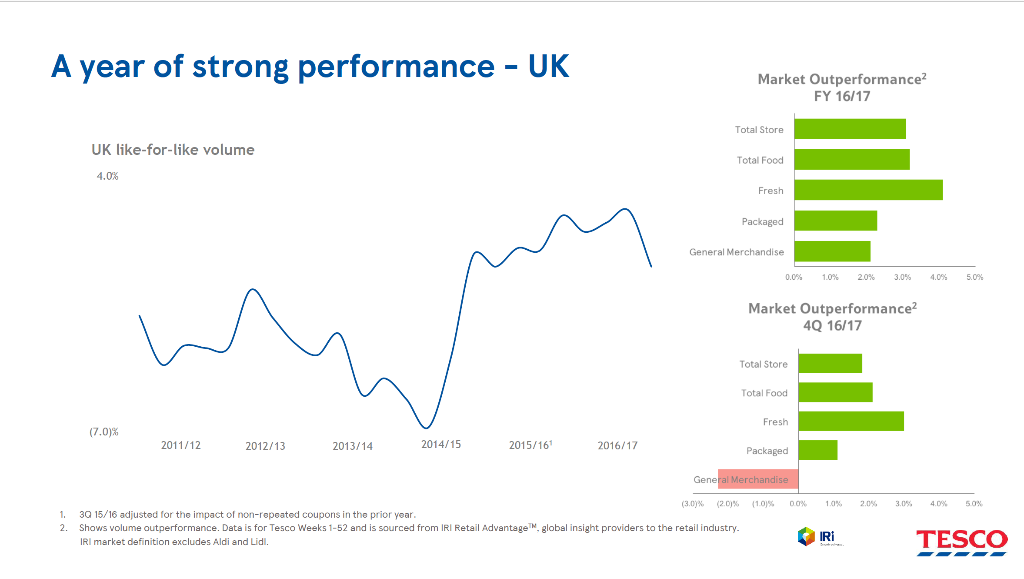
The charts that matter are always good; there's information beyond the obvious so the presentation decks always warrant a look to see what is being highlighted.
The first one about the volume based recovery; growth on growth now for Tesco so it makes it harder to show true progress. Of course they're still a significant way off their golden days of a £1.9bn trading profit (10 years ago, this was their figure) and 6% like for like each quarter etc.
But progress is progress, success then makes it harder. Kantar had Tesco faltering in their last couple of months and we can see that translate through to the volume line here. A notable dip for Q4, but why?
It's a confusion; inflation as we know is amongst us, yet the Tesco Q4 period goes from late November (26th) up until the year end (end of February).
Black Friday isn't quite what we thought it would be as a nation, but that landed in Q3. Therefore Q4 includes the peak Christmas period and run up. In addition, this period also incorporates the January sale and also Valentine's Day which is always strong for the larger stores, along with Express for the last minute bits.
The concern on the second slide is that the outperformance of the market for Q4 in General Merchandise was -2%. That's with Christmas, Toy growth and free click/collect driving traffic to large stores alongside smaller ones....
January is a tough month as customers recoil in horror at their credit card spending and pull back on spending, so that doesn't help the like for likes... Particularly in the larger stores.
So with volumes on the wane it appears; is that inflation creeping in? Customers looking at their spending and buying less, or indeed, switching shopping in to the discounters? Kantar had discounters growing at their fastest rate since February 2014 last month...
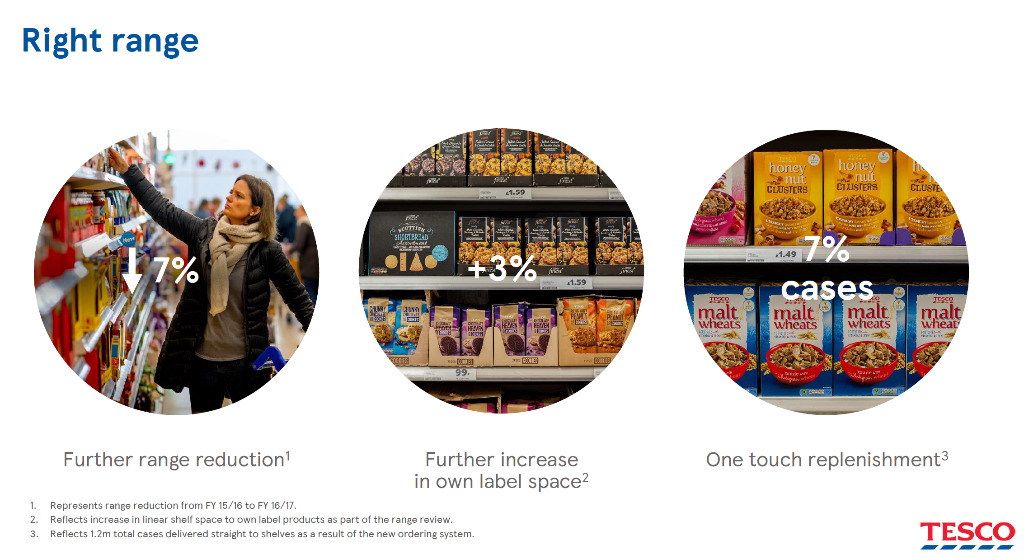
There is a significant increase in own label space (3% doesn't sound much but it is across the store), but their more impactful work has seen own label take up key positions on the shelf and within aisles.
Whether it's eye level shelf or having the own label lines located in the centre of the aisle, or at the start of a category (meaning many customers will walk past that bay whichever way they travel) have aided their own label growth ambitions.
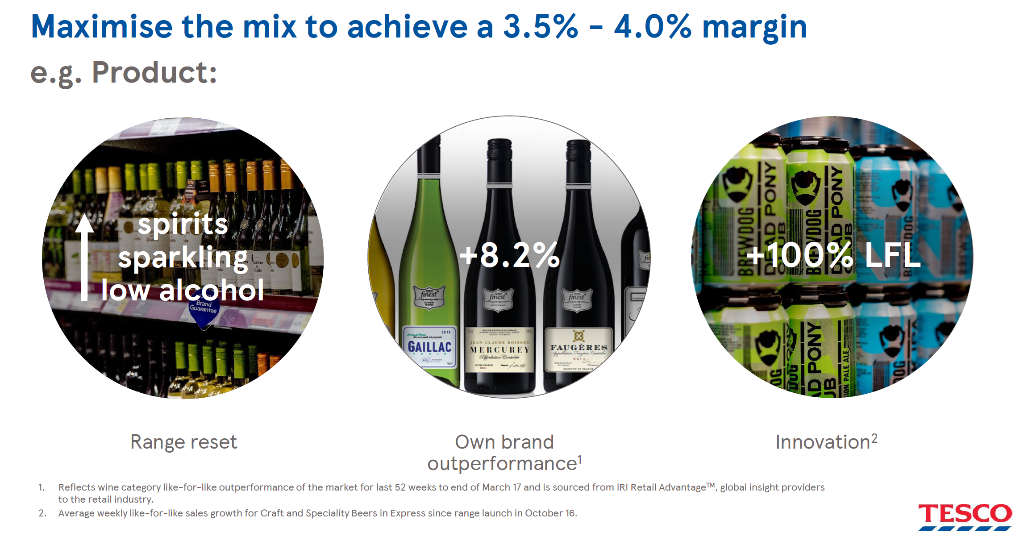
Getting this level of insight is always interesting; they have just re-done Wines in Tesco. However the merchandising job was significant and it wasn't done in a number of stores I visited. One store was still trying to trade with it half done, a recipe for disaster.
Low alcohol has increased in sales and is now located together with the other low alcohol lines in the latest range review. Own brand is heavily featured and goes down their EDLP route with lowered prices and better focus on shelf, hence the uptick.
The 100% craft ale rise is pinch of salt time, this only relates to the Express sales... Whilst it's a great piece of work to range in Express; their range was expanded to 30 beers/ales in October; pre October? They ranged 2.....
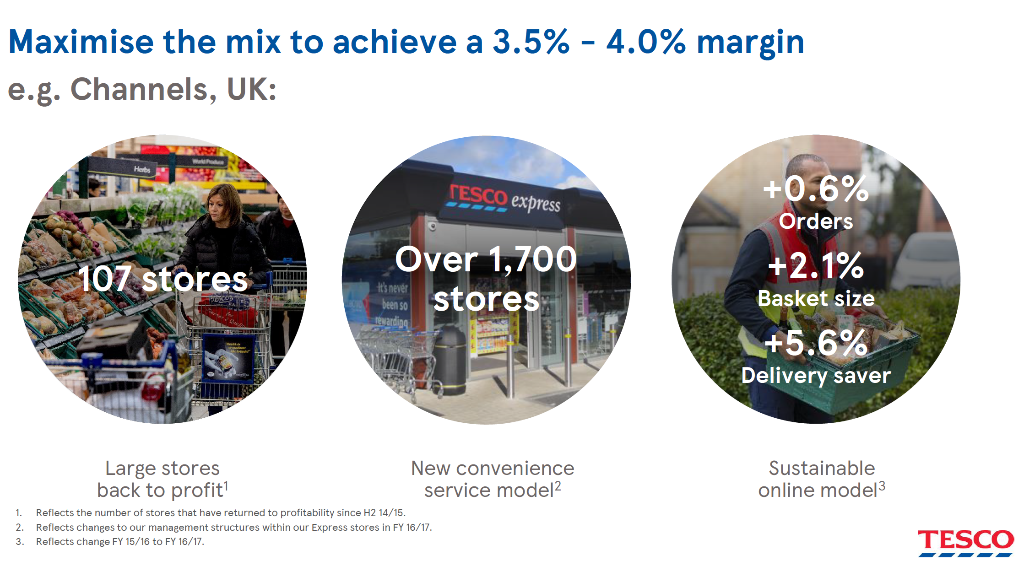
Good to see large stores returning to profit (some 100+) the work to reshape the stores with 3rd party concessions will help this number, as will a better sales line.
The new service model in convenience has taken management roles out, so it's interesting to see how this will play out for customers over the longer period.
Online is noted as a 'sustainable online model' with increases in orders, basket size and also the uptake of delivery saver.
However the Tesco margin chart has online at 'Red' for margin contribution, indicating the contribution across all channels isn't strong enough.
That's the challenge for Tesco; the growth channel is online, we're told by consultants and analysts (who don't like going to stores) that online is everywhere. It is!
However the numbers still don't stack up, the efficiency circle requires more cost to be added (via delivery vans and pickers) when more postcodes are opened up for orders. Growth = cost.
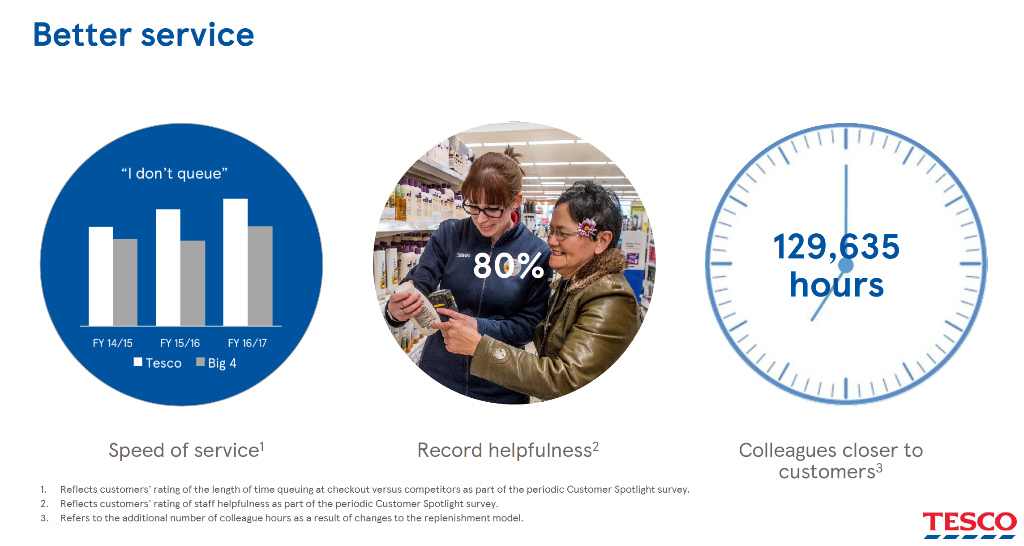
Unclear where the 'big four' data comes from around queues; but the inclusion of 14/15 is notable. Of course Dave Lewis took over in 2014 hence the inclusion, but that was a while ago. It should be a two year view now to properly adjudicate the progress upon progress.
Things were so bad in 2014 for Tesco that putting stock on the shelves and having a few more checkouts open would have been enough to shift customer sentiment upwards.
The 129,635 hours that are closer to customers are simply now in when customers are shopping, not working overnight. However those hours are presumably less productive as it's entirely unclear how you account for customer service when filling up whilst the store is open.
What this doesn't show is the impact on availability or customer sentiment when they're trying to get around the store and battling cages in the aisles. Twilight replenishment is spoken about, the late night operation is unlikely to impact, however the morning aspect is often entirely missed by the media.
Many stores will also have a squad in the mornings filling up fresh foods that arrives in the early hours. It can be hard work trying to find product in fresh foods when colleagues are still trying to fill up.
The shift has been made for cost reasons, that's fair enough and understandable. There will be some stores doing nowhere near money they once were (post discount), so therefore they can likely cope well without a night shift. However there is a tipping point, where that is, I don't know.
Do stores that are low taking (physical customers) but have a sizeable online operation retain their night shift? Lest the online customer be exposed to weaker availability if the store is picking at the wrong time....
There's no silver bullet here.
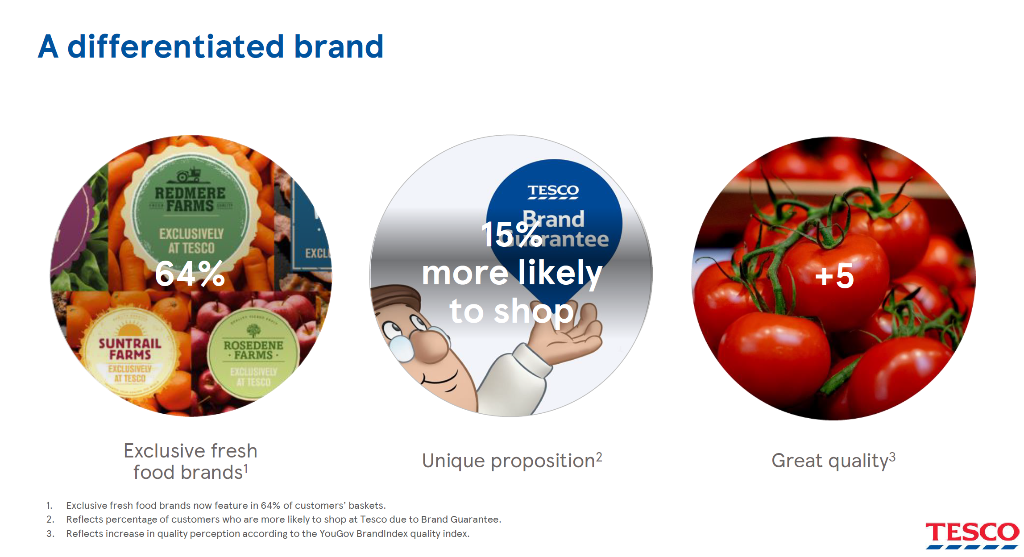
Fresh Food brands are strong in store; credit Lewis and team for that - however it's interesting that their success presumably then delates the category at large, particularly core, mid tier products.
I don't think the UK market has yet grasped what to do about the tiers, you would argue in some areas where these brands are strong - like Steak - you could remove the core tier and go with Farm brands and Finest.
But then you run the risk of alienating the core customer who perhaps doesn't want to buy 'farm brands'. Similarly you can't cull Value canned tomatoes (31p) in favour of core (35p) as it may force the price sensitive shopper to go elsewhere, even if the price of the core tier is flattened.
It's the next logical phase for Tesco one thinks. Does the 3 tier model have legs where farm brands are involved?
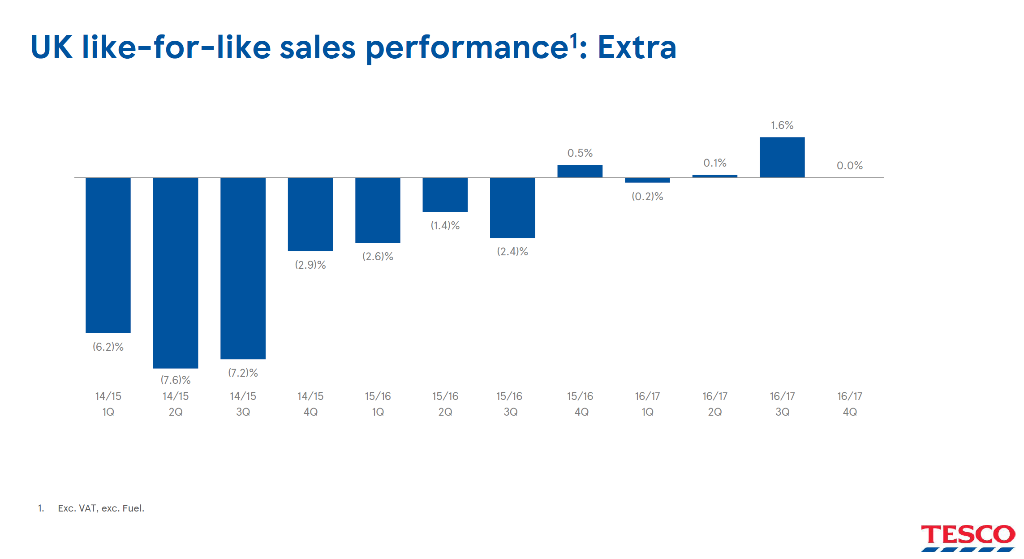
No silver bullet for space either; but quite the turnaround for Extra - again that 3 year horizon is used, including those periods before Dave...
Not sure they ever showed the like for like performance in Extra as explicitly as this, 14/15 Q2 down at (7.6%) and then Q3 (7.2%). Even Christmas Q4 at (2.9%) couldn't save the format from a negative year.
The swing around to growth has shown how successful Lewis has been here, however they're a long way from the boom growth times... Some of the Extra numbers have been flat (Q4) but Q3 was strong +1.6%, however they traded against a dip of (2.4%) the year before.
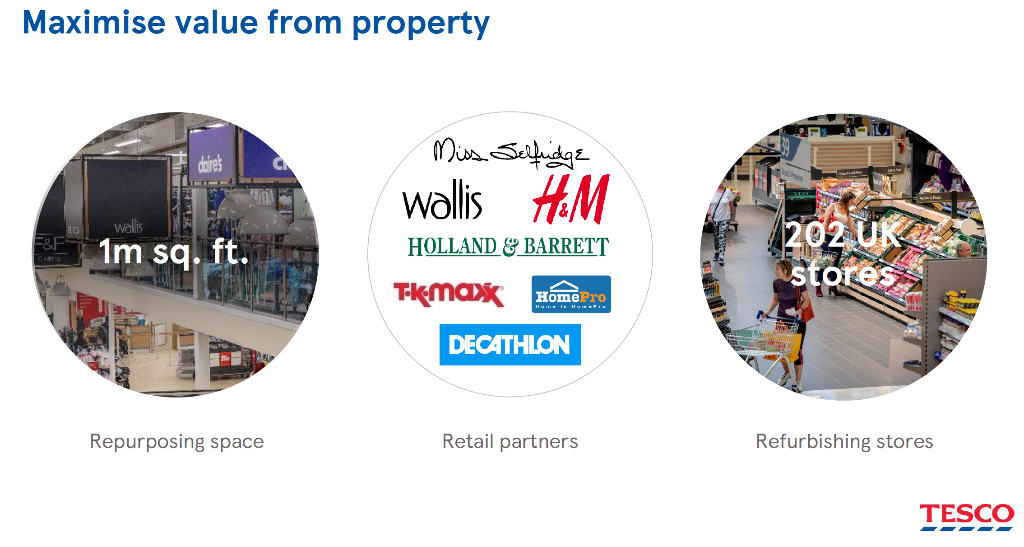
It's stabilised has the format, but the growth looks elusive, space remains an issue, the slide around new property partners both in the UK and overseas was notable.
The concern for the format around Christmas and Q4 is there wasn't the growth expected... With their work on Toys and indeed wider GM against Argos prices, alongside the free click/collect offer (driving people to store, but perhaps, away from big stores?) the format remains stubbornly flat / barely positive.
Non Food has been charted as an issue on here for Tesco; range, excitement, shopping experience and standards (moving from nights to day fill in every store) are all poor.
When customers are in the big stores, making non food at least compelling could grow sales - there is enough space dedicated to it after all.......
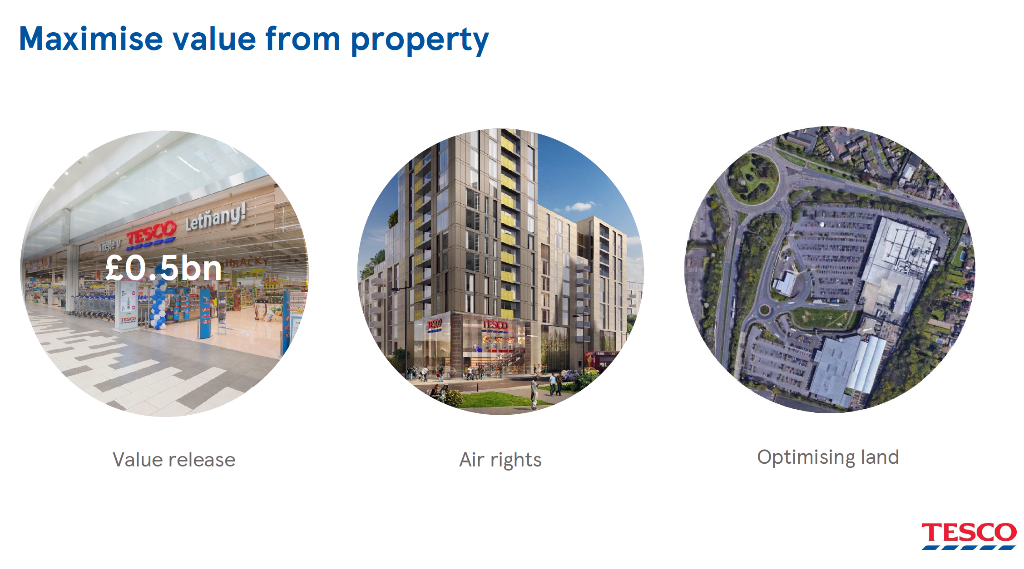
Air rights will clearly become the new 'land bank' with Tesco targeting areas above their stores to build new apartments and flats with their property developers and partners.
Larger sites could be repurposed to enable this too; with a new store built in the middle of a new housing estate for example. A new build, smaller store within a captive audience of houses makes sense; especially given the prices for property in the south.
It's a move that Morrisons are looking to do in Camden, with a rebuilt store alongside new flats and other redevelopments. It looks like a potentially good move for Tesco where they can downsize the store as appropriate.
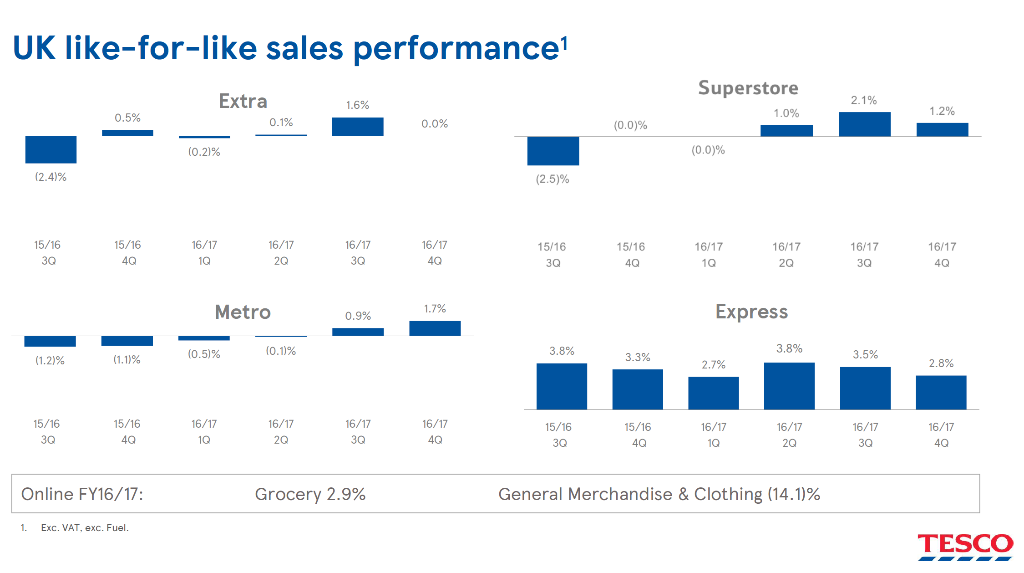
More on the like for like performances here; we can see Extra is turning around - flat performance for Q4 is perhaps surprising given the level of trade in Christmas and non food (Jan sale?)
Superstores have maintained their efforts and look to be working well for the business, however the growth in Q3 / Q4 is coming against negative / flat sales comparatives.
Metro uptick was odd; the format is relatively unloved and there have been rumours for many years that it would be move in to Express or superstore, and that the banner would disappear.
Not so, they're still around, seemingly a larger city centre format but haven't had much work since the glory days of Andrew Yaxley and co (now CEO Tesco Ireland) and the London team. Their growth in Q4 was against poor comparatives but pick up could have come with the free click/collect for Tesco direct....
Express was growing on growth and continues to perform well; I would have expected a better showing on like for like given the uptick in click/collect parcels driving footfall to the stores over Christmas. The queues in my local were evidence of this!
It was a tough comparative though; they continue to be a good / bad in equal measure do Express. They seem to heavily rely on the quality of a manager, our old local lost the manager and the store went backwards, alarmingly.
Happily our local Express now has that manager installed (I'm not that powerful, so it's nothing to do with me) and the store, despite being relatively old hat and badly needing a refit is generally good.
Some of the other stores are less strong, so it becomes a source of frustration for customers. There isn't any news on One Stop in the results, nothing on franchise or where the results sit......
The bottom results on the slide are a concern...... Online (full year) was 2.9% in growth but the GM and Clothing sales for the year were -14.1%......
Real problems with this area of the business; and it's not like an M Local where you can sell it off relatively easy and abandon the expansion. The research shows that online is important for clothing and GM, but Tesco cannot seemingly get it moving....
Direct has continually lost money but they got everything wrong in the early days, then continued under Clarke with permanently manned desks in store; touch screens for ordering and the Amazon marketplace imitation....
They still made it far too difficult to collect the parcels... Why not just have a unit, with a touch screen, where you alerted a colleague when you arrived via your order number.
Taking a seat to wait whilst your parcel is brought to you; it's the system that Asda use and it works perfectly. That's all Tesco needed to do, not try take on the world with a mini shop with an online offering to the world.
They're still seemingly trying to refine the click/collect model; with drive in units at the side of stores for food.... It's still not quite right... It works well in Express assuming you can find a member of staff....
In Non Food, there's a lot of work to do in price, proposition and the product.
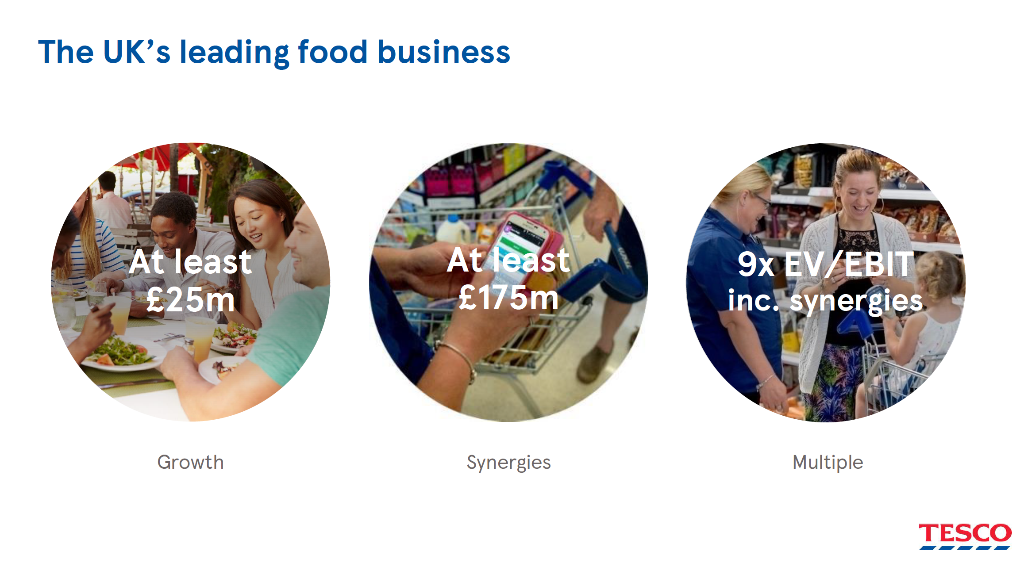
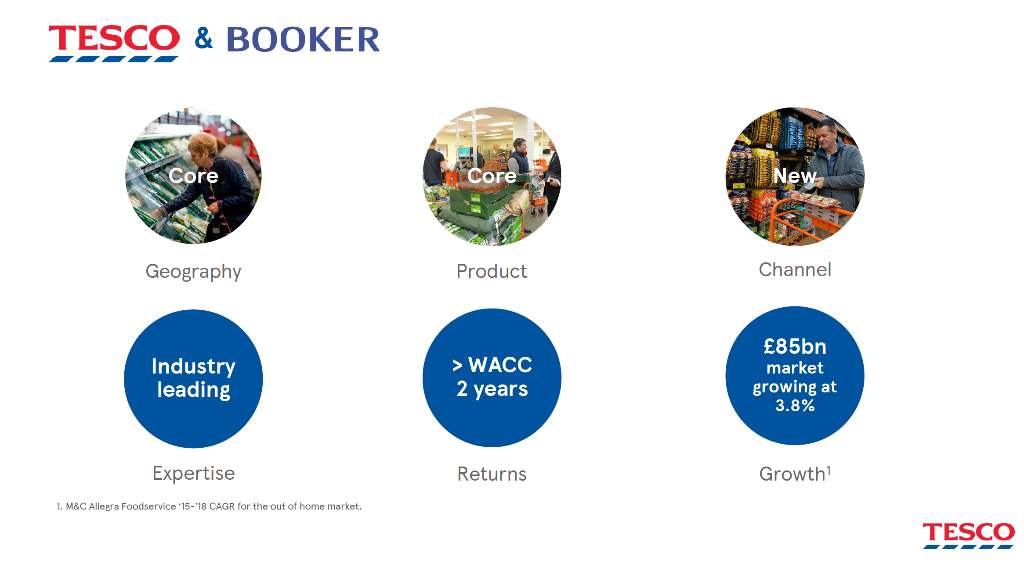
There isn't much around on Booker; save for a couple of slides at the end of the presentation; with further indications of the ambition to grow the 'eating out at home' sector for Tesco.
It allows Tesco to enter the market within that sector; with Tesco also able to enter the professional sector in their store estate - so presumably enhancing the offer / ranges for all customers.
Only £25m growth is relatively alarming though, £175m synergies are understandable but that's assuming there are no issues with the integration of the businesses.
With any acquisition, merger etc. There are challenges around the integration, the offer and everything comes together in the stores. It's a major play and it's intriguing there is no mention of convenience / franchise in the Tesco slides.
Overall; a good number of improvements for Tesco but the exceptional items are a concern, once again. It's representative of the state that the business was in and Lewis should be lauded for his work to sort out the chain.
However more numbers to affect the profits line, the SFO amount should see the end of that, Lewis will be ultimately judged by the profitability of the chain and their targets are to do that with the margin growth in selected areas.
The tipping point is now as Lewis approaches his 3rd year in charge (September). The need to enhance the profits by cutting costs is risky, there aren't the obvious savings that Morrisons have (ordering system for example) so do Tesco take a leap of faith with some of their store operations to drive a better bottom line.
A concern is the Q4 volume fall, alongside the Q4 sales performance which did look materially weaker given that Christmas was inside that reporting period....
Considering that we have inflation now, are customers pulling back and spending less? With the Brexit / slowdown / consumer confidence woes potentially seeing discounters become even more popular.... The next phase of price / range / brands looks important for Tesco.
Non food remains a concern, online figures are very poor in themselves and the wider non food was still behind the curve, even in Q4 where you'd expect sales to be higher - Argos comparatives clearly weren't enough....
All eyes on Tesco for the coming year, the progress upon progress is always hard. They have fixed, and continue to do lots of things very well, growing own label and doing some excellent work in ranging and merchandising.
The next phase, not least the acquisition of Booker is going to be very interesting indeed......
From the Grocery Insight newsletter archive, first sent to subscribers on 13 April 2017. Steve now writes at read.groceryinsight.com. See also the blog archive and briefings.