Tesco - Own label push
3 March 2017
Click here for a free 1 week trial to this service.
Interesting Kantar figures earlier in the week; all things considered in the market - a concern will be the record growth for discounters - they recorded their biggest share take since mid 2014, without any discernible uptick in store openings either.
Discounters, even now are winning new customers. Yes their marketing spend is big, but I was speaking to one customer yesterday who was telling me about their switching from Asda in to Aldi.
Their big focus was that lunchbox based lines were so cheap, nothing directly spoken about comparable brands, it was just that it tasted so good. Other things like dinner kits were also trialed and the Meat won positive awards.
No mention of saving money yet either as only part of the shopping had been switched, but I got the feeling that a) the saving was almost expected (and will be delivered) and b) more and more shopping was been done with Aldi.
That's the concern, for all the marketing spend, obsessions over shopper marketing, customer focus groups - no one seems to account for this. That is, the customer disappearing off, over the hill in to the sunset without being unhappy or having a bad experience forcing the switch.....
The more locations they open, the more markets they open up, yes there's happy cannibalisation to reduce strain on existing stores, but they are also able to become mini convenience almost, by being in decent locations, decent sized car parks and the reduced size of the store means you can be in / out in no time at all.
Concerning for the multiples for sure, that's before we consider the Brexit based car crash, faltering consumer confidence and sterling weakness driving inflation upwards.
Tesco have done well in the market AP (after Phil) and their fight against discounters was noted in Kantar, with the success of fresh food (farm) brands flagged again. Big take up by customers, but it's deflated the category hugely.
What next? Mercadona in Spain (will visit soon!) get to c. 70% of sale for their own brand and pull the brand given their own label has reached critical mass. What do Tesco do? Continue to offer core own label lines alongside these brands?
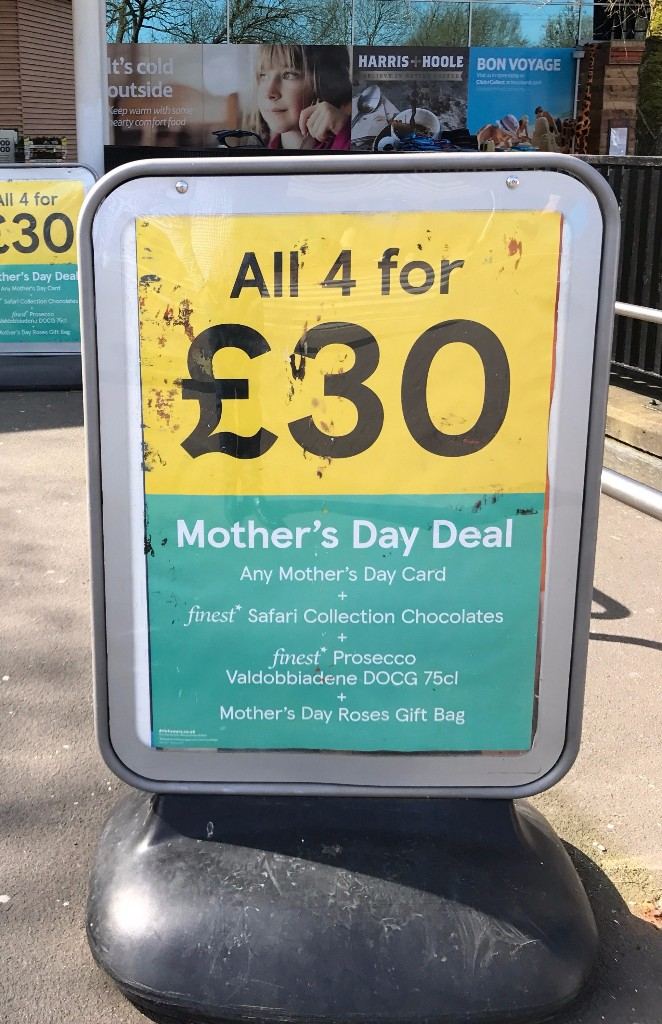
It was Mother's day of course at the back end of the Kantar 4 week period and the late arrival of Mother's Day and subsequent trading against an earlier Easter last year does skew the figures somewhat.
So it's always important not to read too much in to 4 week numbers, they're also heavily skewed by store openings too which is why discount win every time - their store openings programme is huge. They also extend existing stores which isn't always noted but their increased space means more opportunity to reach new customers.
For Mother's Day, the market was broadly strong, however this 'director's deal' in Tesco was questionable. £30!? Especially for a retailer looking to enhance price credentials and focus on low prices for customers.
I was surprised to see the overall price being so high, I am sure it was a good deal but the elements of the deal seemed quite generic so it wasn't clear what sort of deal this was.....
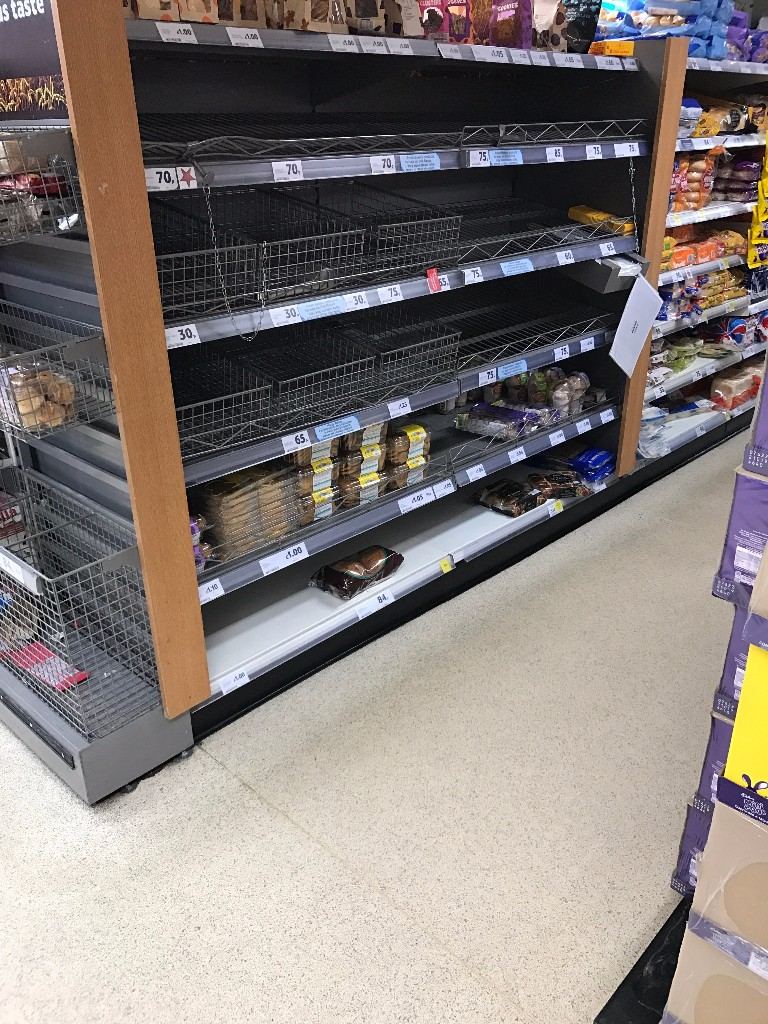
Express woes continue, the business used to talk a lot about convenience like for like but the results have been skewed in favour of bigger stores in recent times. Convenience continues to be important, we use our local Express a fair bit as they range so much, but at times, standards can be challenging.
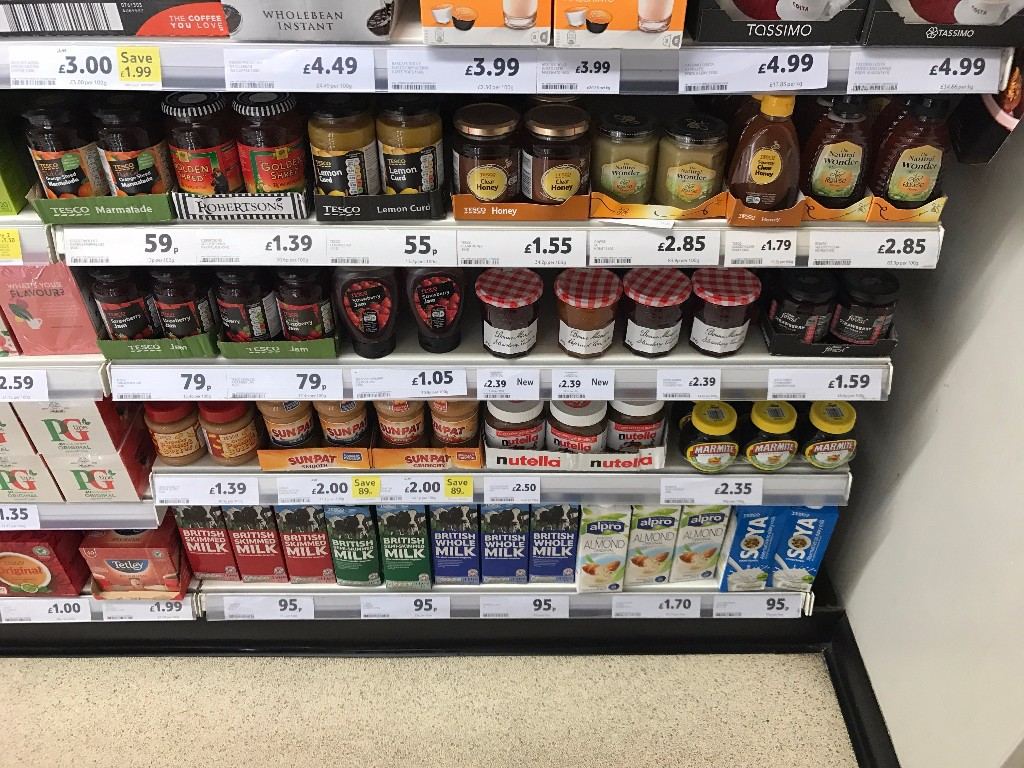
They range so much from a viewpoint of choice, without it overwhelming the smaller store environment. They've been tinkering with the rationalisation piece in Express like they have in main estate. Whilst it's not as easy in a 3000 sq,ft Express to give space over to own label, they have had a go.
If we consider the Jams/Preserves fixture as an example, there have been changes to the Jam range to incorporate Bonne Maman (premium brand) alongside a Finest tier (premium own label) too.
The other Jam, if you want a core Jam is own label, core tier. No sign of Hartley's et al, these typically only sell when on deal in any case, as a 'distress' customer after Jam for the kids will buy own label rather than pay full whack for a brand in a convenience setting.
Two fold benefit of the focus on own label in Express is that the margin is stronger / controllable and it also adds weight to Tesco being a low price retailer.
Dave Lewis worked out / customer insight actually worked it out (perhaps) that customers probably form an opinion of Tesco based around their legions of Express stores around the country, rather than a larger store. Given that the visit to an Express is more frequent, then Tesco have a good chance to convert those customers to their larger store for a physical / online shop.
So bringing own label to the fore brings the overall prices down, it doesn't look as much of an 'insult' to just have hi/lo brands across the board and customers can also grow affinity with the Tesco own label Jam, which they can only buy in Tesco of course.
The logic is the same for Marmalade (1 OL and 1 brand) and Honey is also 2 / 2 (own label / brand). Brands exist in Marmite (obvious) alongside Nutella and Sun Pat peanut butter as they are undisputed leaders. There is own label presence for Peanut butter too, but there is fine balance between flooding categories with own label and having enough brands in there too.
The last thing Tesco want to do is impact choice.
A lot of analysis above for what is 3 shelves of Spreads in the image and we've only spoken about one. This is a unique service I'm sure you'll agree(!)
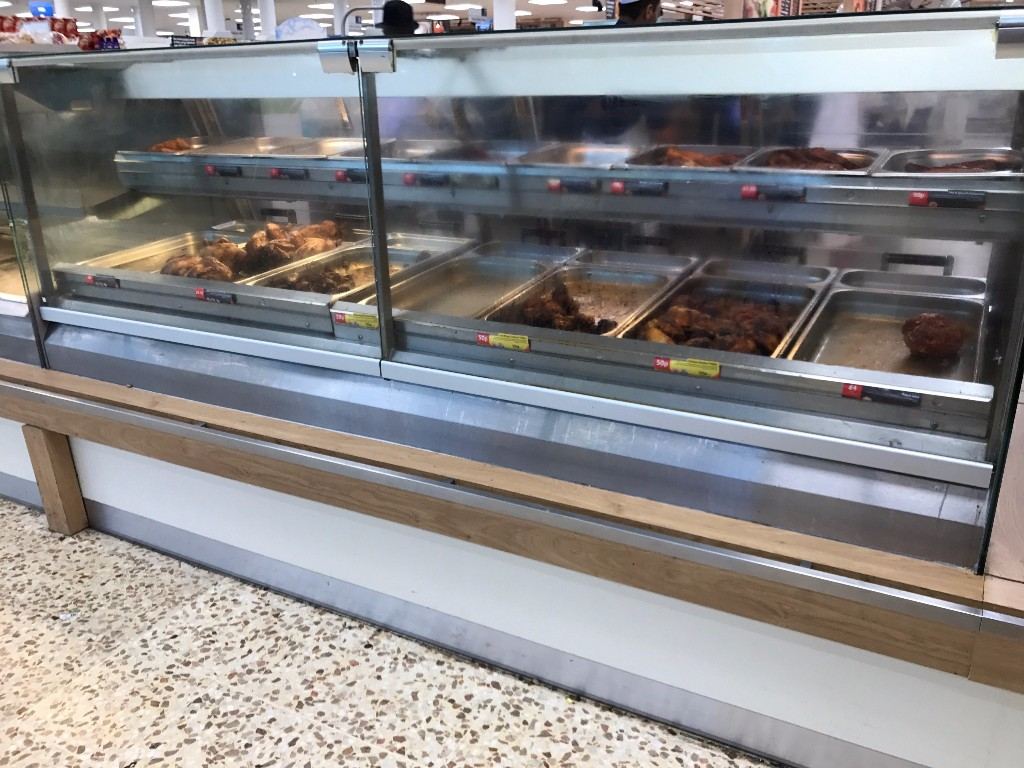
Their work in core stores continues to impress, particularly the pricing on own label and the layouts (as discussed on here previously). Tesco are playing a longer game around volumes and their work whenever a re-merchandising exercise has happened does impress.
It's brave as we know, reducing reliance on commercial monies (lazy buyers just take branded supplier money as it's easier than developing and trying new things, less risk too!) and also a plethora of deals is a long term game. It takes a lot of time to build the momentum and base, whereas a 3 for 2 deal is typically seeing a customer buy 3 (even if they don't want 3)....
Those deals are still seen, and appropriate in some categories (dental / health & beauty) but not commonly seen in food... Whilst promotional intensity has reduced, the death of the deal is overplayed in the press.
Standards are flagging in some stores, it's unclear why in some areas, as covered on here, night fill being taken from non-food areas explains the poorer standards and availability there. Which is odd given the saving is likely far lower than the sales improvement driven by sharper standards and availability.
Particularly confusing when footfall is up so the battle is 75% won given the customers have come in, getting them in to non food to spend is challenging but not impossible. The range work hasn't been as strong in this arena either...
Toys have been strong for Tesco with Argos price comparatives continuing, so to try replenish this in the daytime seems odd given the investment in price potentially impacted by lines being off sale?
The news of more stores ceasing their 24 hour trading does make sense, some stores just don't need to be open, but the additional stores to lose their night shift is noteworthy.
There is a tipping point where stores 'fall over' and cannot fill the delivery, particularly where a store is busy / high trade levels and cannot catch up. Not to mention logistics issues meaning there is no 'flex' in the store team to 'rescue' the store on a night.
No fill then impacts routines around stock control and subsequently weakens availability and increases stock holding thus working capital utilisation goes north too.
It won't happen everywhere, but it heightens the risk. In quieter stores it makes perfect sense, but some quieter stores pick for online orders, so poor availability in store is automatically felt by the business as the level of substitutions goes upwards and customer sentiment falls.
Interesting to see how this impacts customers / stores, always low hanging fruit with such exercises but the harder work starts when stores are selected that may be on the cusp of costs/sales to justify (or not) a night team.
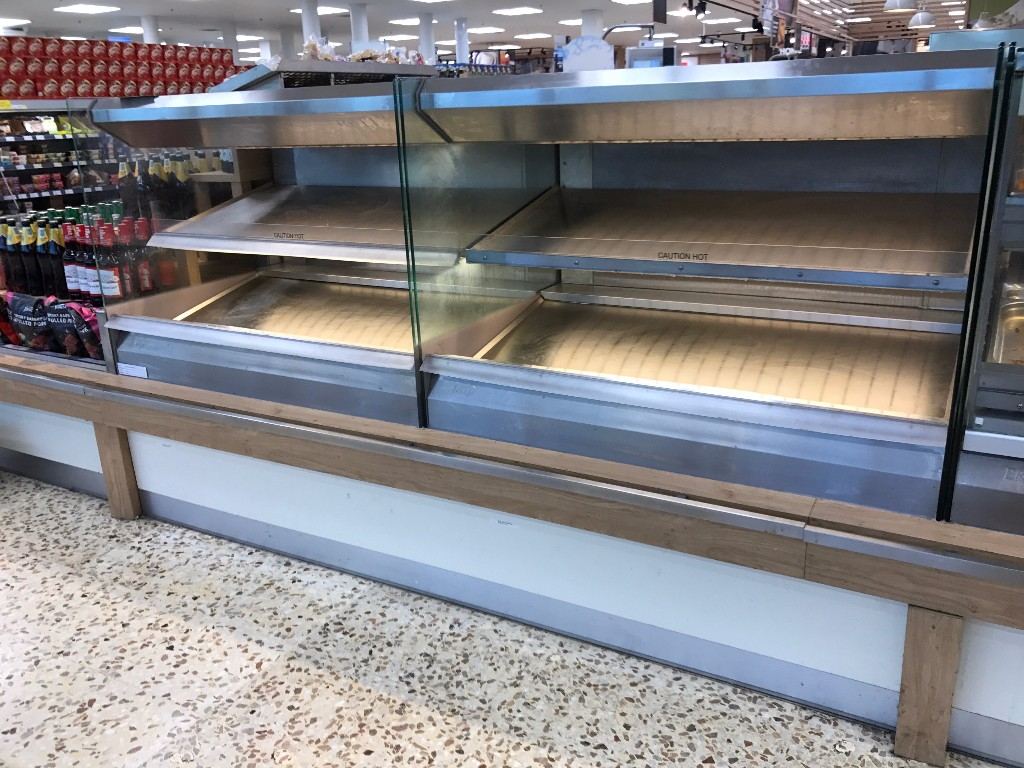
The counters above tell their own story, missed sales opportunities. Not down to hours though in this case, enough people around but clearly issues elsewhere. Management?
These own goals are far less frequent but the store standards improvement has been notable under Lewis, almost 'brought customers up' on sharper stores which fuels their recovery. Chipping away at the model runs the risk of reducing the store standards which thus upsets customers and they disappear to a discounter, or a rival and don't tell Tesco of their upset.
This is what's often missed by insight groups, of course customers talk a lot and complain too. But there's a sizeable number who switch when they're not unhappy, just mildly annoyed or indeed are so frustrated that they just switch and don't even complain or give the retailer a chance to remedy the situation.
The customer switching isn't always down to queues up the aisle and gaps everywhere...
It's simpler for any productivity / lean operating model / heat map or whatever to show how much can be saved by changing things around operationally. Valid too, in the days of thinner margins and the living wage, costs have to be reduced.
But it's near impossible to adjudicate how many sales are lost by the store being untidy, suffering from poor availability (at the time the customer visits, not what a '%' on the computer tells us) queues at the checkout etc driven by these 'savings'.
A customer may visit Tesco early on a Friday morning for example to do their shopping as it's always neat and tidy, no one in the way etc. However a shift to twilight fill means morning replenishment too for the fresh foods operation in many cases, suddenly the store is alive with lots of people, cages and activity.
That customer may decide to switch elsewhere after being frustrated. What's the cost there? An extreme example but nevertheless.... Late night shopping could also potentially be affected.
So lost sales are impossible to track, but we know sales are lost for some reason as discounters are still growing and picking up trade. The need to cut costs is understandable and perfectly valid, but it has to be grounded in reality and not just 'numbers on a spreadsheet'.
Particularly when you cannot track the customer service impact of filling an aisle when the store is open, no distractions on a night so it's more productive. However when a store opens, there is no knowing how many customers will need help and also what they'll ask for help with... How is that tracked and costed?
After all, we have seen how many initiatives around hours have failed at Morrisons and indeed Tesco, given the first act by messrs Potts and Lewis was to immediately put more hours back in to the stores.
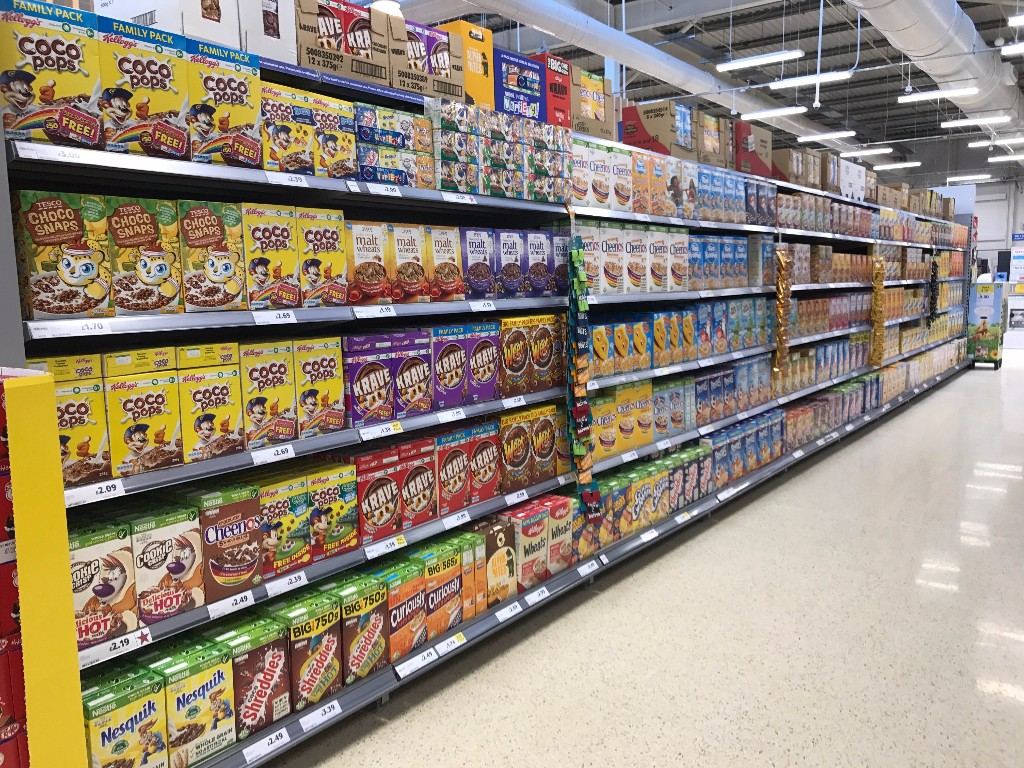
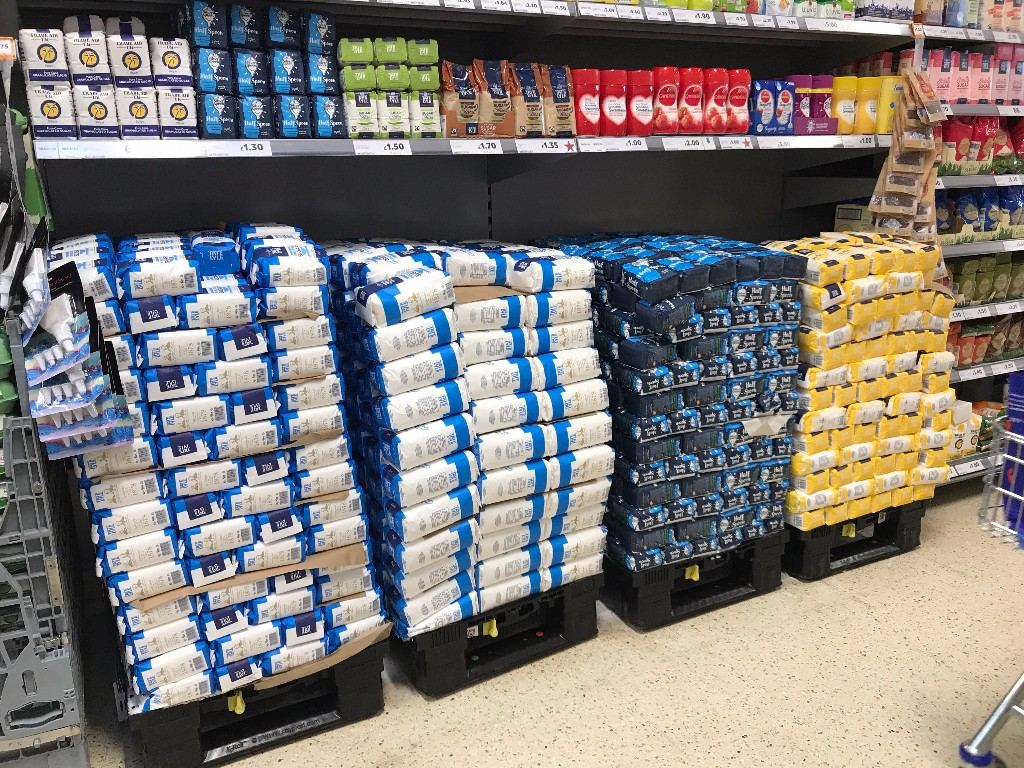
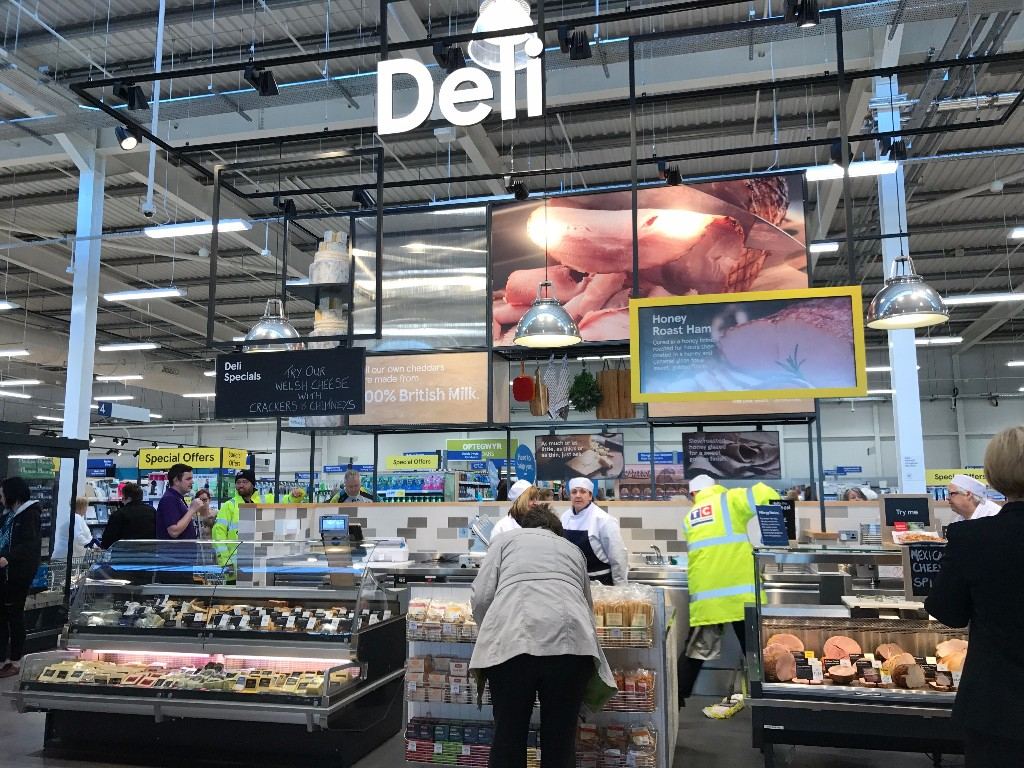
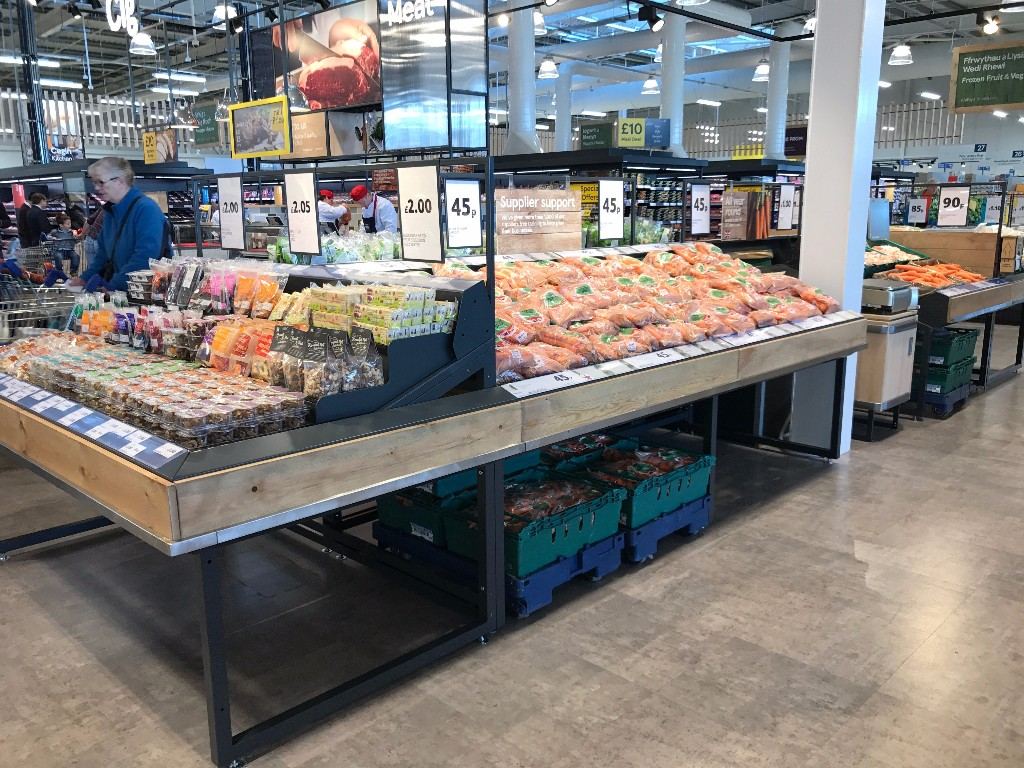
I was welcomed in to the new store remodel in South Wales on Monday morning (I say welcomed, everyone was for opening day!) and it was an impressive piece of work around their new concept 'food area' and different flow and adjacencies.
Lots of Jumbo influences here given Duncan Hoy (larger stores MD) is ex Jumbo (Holland) so there is inspiration here for definite.
It feels scalable but the costs aren't low to carry this level of work out, given the store was closed for over two weeks and the refit is radical in itself. However the proof of the pudding is in the payback for Tesco and also the halo effect it gives to the food quality.
Nothing much new in ambient, cost saving drivers are thin on the ground here, layouts looked good though and their work on categories being close to each other, going against the grain sometimes is very impressive.
Some impressive work; but it's one store. There is another to follow I believe but the store isn't sited at Kensington, or Watford, or Bishops Stortford where there's affluence and you can sell most things.
Swansea is relatively price sensitive and fiercely competitive with supermarkets all over the city. Therefore any proof of concept will be well grounded here, given the nature of the market.
The store itself is impressive, nothing much 'wow' on non food and their seasonal event space is tucked away in the middle of non food (bar Easter which was in the traditional location of power aisle 1). Some nice touches in clothing and they also added Arcadia clothing alongside their own offer.
The main event is food, ambient isn't across huge wide long aisles, the second half of the store is occupied by food and ambient is split in to two aisles within that half of the store.
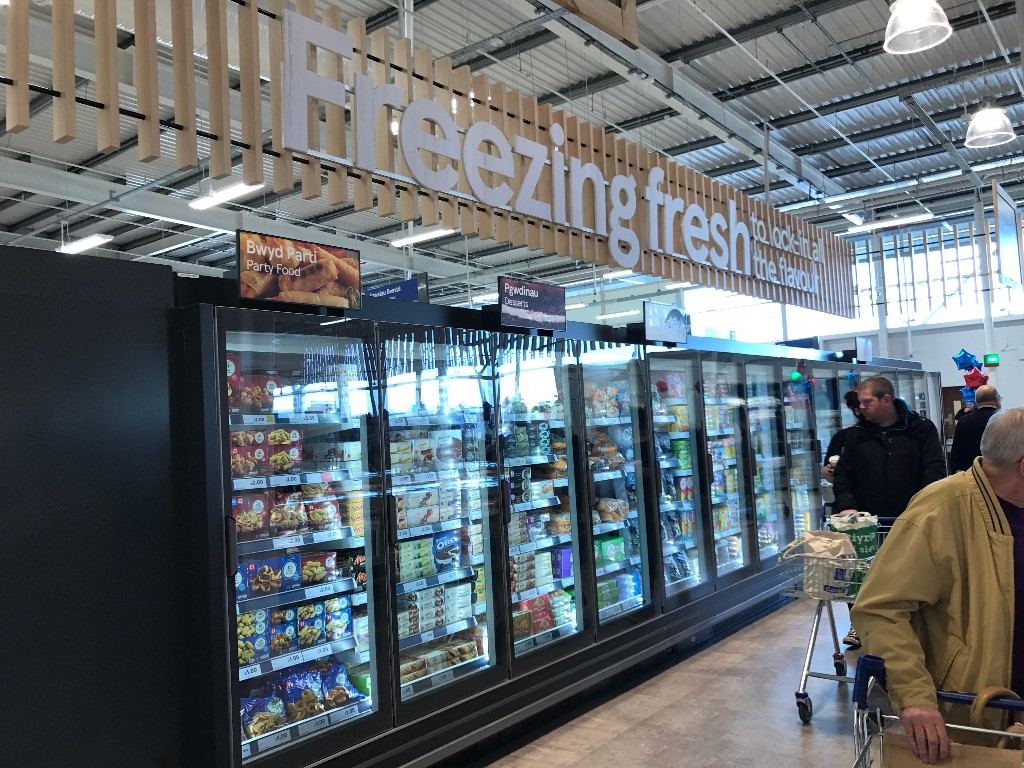
Walking in to fresh / frozen is very much a different world, new flooring, counters around the perimeter with the Bakery and Food to go featured near the store entrance as you walk on to Produce.
New displays, counter displays and the pre-packed lines located near the counter itself which was decent range adjacency tactics in itself.
It's impressive as a standalone, again all eyes on any roll out but it does add an experiential element to what can be functional Extra stores to say the least.
Click/Collect is featured at the side of the store (drive in / pick up) and the customer service desk is set out like Argos, whereby you enter your 'need' (complaint, order, refund) and then take a seat. Once you are called (your number appears on the screen) then you go to the desk and speak to the colleague.
Nice work, they had to do something given the closure of the collect / Tesco Direct desks (a money pit in all honesty), this meant collecting parcels in a large store was unnecessarily cumbersome meaning joining a queue with people complaining, buying cigarettes and asking for £1 for the trolley.
Whilst the desks / standalone Tesco Direct area was expensive to operate, the customer impact was immediate, they had to queue up with other customers at the customer service desk to get a parcel.... What about the solution rolling out before the costs are saved!?.....
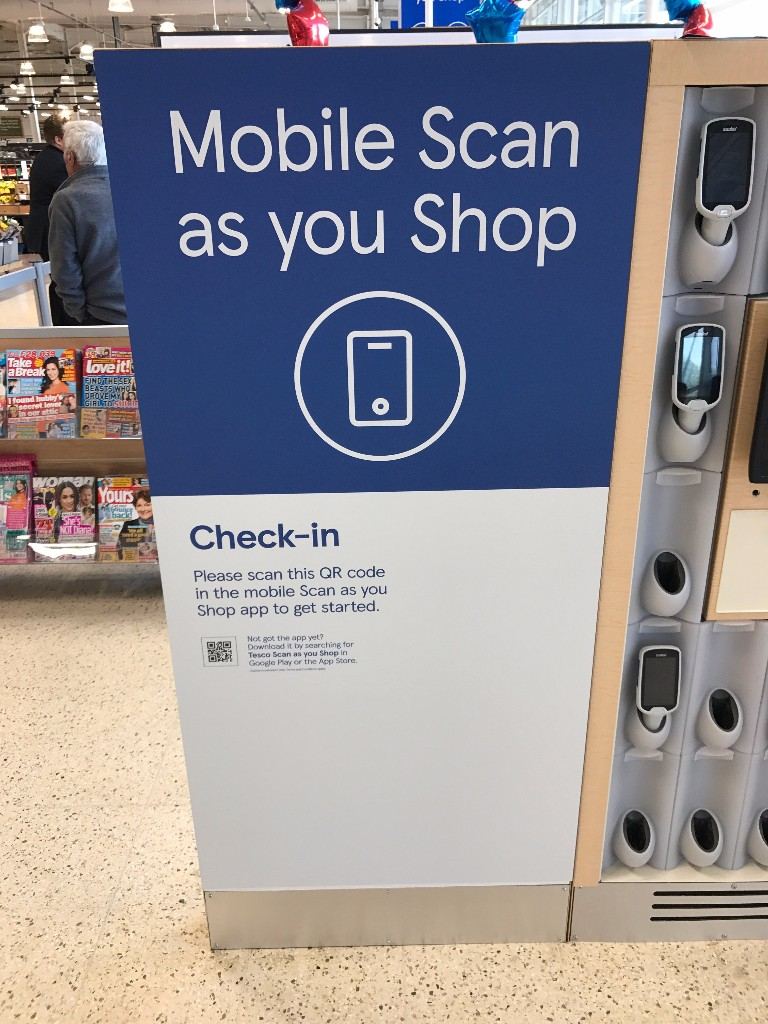
Mobile scan and shop is also featured (that is, scanning shopping with your mobile phone) alongside the scan&go usual operation with the 'gun' itself. Checkouts are well set up for this and there is a saving in time to the customer (no queue to then unload and reload the shopping on to a belt) plus it's efficient for Tesco as less colleagues are needed to operate checkouts.
A decent store though, and a good representation of what can be done in a reasonably efficient way. No Harris & Hoole, Giraffe and Euphorium outlets this time around!
So Tesco continue relatively nicely, their scale works well for them with buying, pricing and doing good things in the community. But they have high costs on the flipside, business rates for example due to the number of outlets they operate, alongside a huge number of colleagues mean the legislative changes around wages carry a huge cost to Tesco.
Even in the days of 5% margin it would hurt, so thinner margins, still growing and recovering after years in the wilderness means tough decisions are needed. However, it's about the right decisions, not necessarily the 'biggest' savings......
The customer should never be impacted, that's the bottom line.
From the Grocery Insight newsletter archive, first sent to subscribers on 3 March 2017. Steve now writes at read.groceryinsight.com. See also the blog archive and briefings.