Tesco - Non Food woes
2 March 2017
Subscribe to this service here.
With Tesco cutting 1700 roles in Tesco Express, it's notable that whilst 'big' news in retail, it didn't make as much of an impact as other cuts have - a new 'norm' in the market perhaps?
Where job losses in the days of Tesco being an absolute basket case were huge news. As were store closures, job cuts at the central office and a realisation that 'big bad' Tesco were really struggling, this quite rightly made the news.
Go further back, and job cuts (save the new CEO coming in = restructure, or the Asda 3 year renewal cull) were unheard of in the sector, and store closures even less normal. Virtually unheard of; we all know Tesco kept shops open, even if losing money as it prevented a competitor getting hold of the site.
However in 2017 (and before) restructuring cuts are the norm and Dave Lewis has given himself room to do things like this. It's viewed positively by the City as he continues to attack the cost base from a position of strength with sales going nicely in the main estate and the profit levels looking like returning to a level of 'par' in the new world.
It is sad for the colleagues who have given their service for the Express chain and will find themselves without a role, the new jobs will be team leaders rather than managerial roles which means they come with less pay and benefits presumably.
Despite the wider business view; there is a human cost and it's therefore sad that colleagues have to lose their jobs. But Tesco feel it necessary to reduce the operating cost, particularly as the living wage sits on the horizon in 2020.
The challenge for Tesco is always cost; whilst their scale is a real advantage with buying thus driving prices down, having so many sites and employees means legislative changes cost far, far more. See business rates too which appear not to be impacting large retailers massively, but any change is a real issue....
Looking at savings is therefore necessary for the Tesco machine to continue to grow profits, they've heavily invested in price and continue to be very, very competitive and credit them for a) having a plan and b) actually delivering and being decisive.
After three years of Philip Clarke; it was much needed.
Any cost saving initiative should be reviewed thoroughly though; it's easy to demonstrate how much money can be saved by stopping activity or changing when replenishment take place, and/or making a job role redundant for example.
Easy to show that money can be saved by stripping out managers at at the deputy level in Tesco Express, some may be long standing so on older pensions and contracts which attract payments for late shifts and/or weekend work. Similarly stopping activity such as night shift filling saves money on paper, day colleagues are paid less per hour and there are more hours around too.
So a simple decision then?
Well, the classic issue for retail is where the number crunchers can earn their corn on paper, but then not be around for the subsequent reversal when an incoming CEO has to restore the hours, removed for unsustainable job cuts....
Plus you can never, ever track how many sales are missed by not filling on a night for example. You can track customer sentiment of course, their thoughts if the store availability suffers where nights have stopped are valuable.
But it only concerns those customers who are either a) asked or b) bothered enough to give their opinion.
The huge issue is those customers who disappear off to Aldi without saying a word......
It's a bit of 'well, we will never know'.....
However - on with the pics!
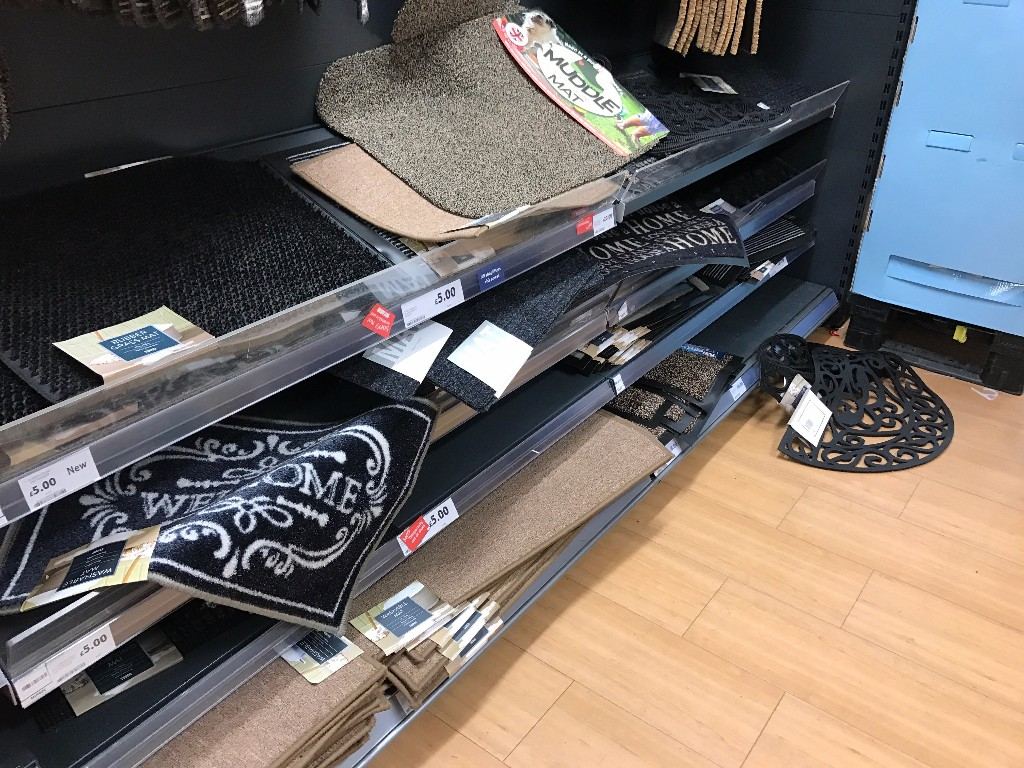
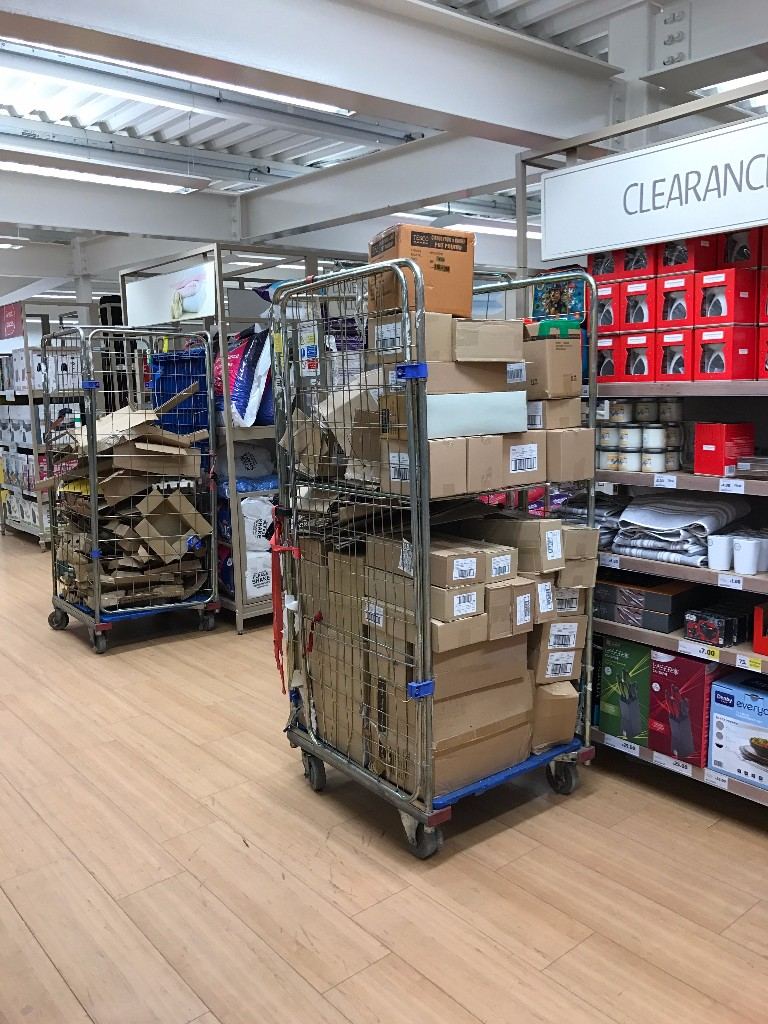
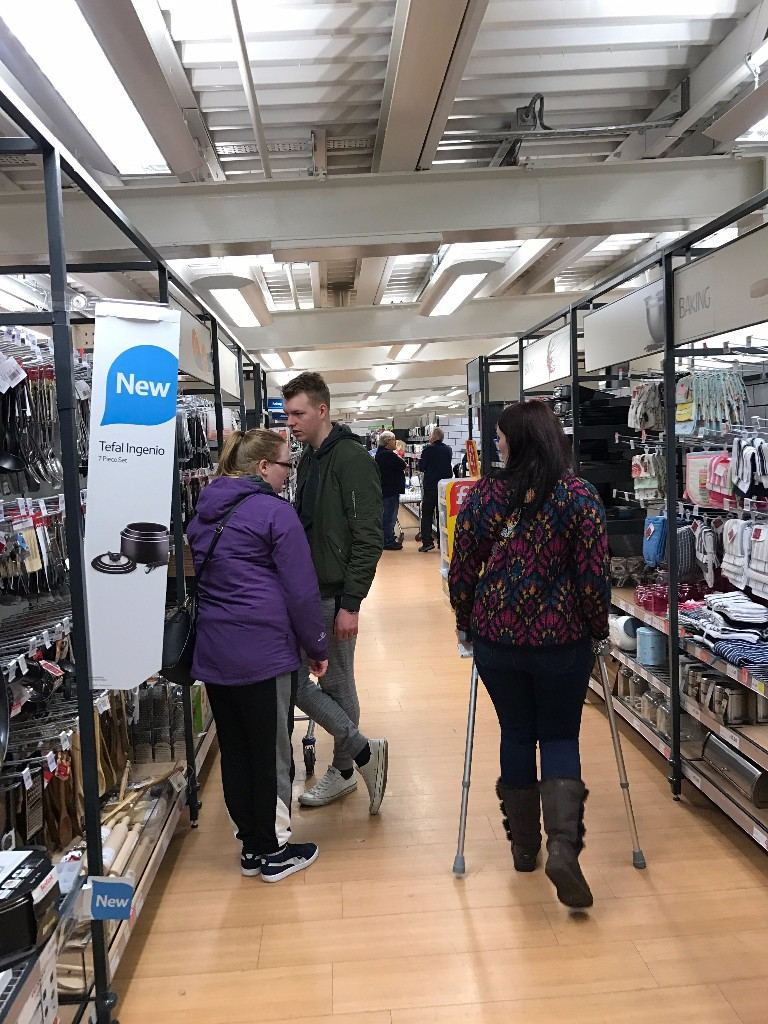
The intriguing thing about some of the changes that Tesco have pushed through in stores is that they opted to move night shift replenishment of non food on to days.
It's not clear which other retailers replenish non food on nights, some do in their larger stores whereas others in the smaller stores will roll it into their day replenishment operation.
Given the slower sales and lower volatility on non food, you can get away with filling in the day - especially in the smaller shops as the focus there, with the limited hours go towards fresh foods and ambient replenishment.
But for bigger shops, the focus is non food fill overnight as the departments are often significant in size and carry numerous products, plus seasonal changes are frequent also.
As we can see in the images above; the reality for non food is yes, you can take the hours away but what impact does it then have on the store operation?
This was a couple of weeks back, on a Saturday so not overly peak time in terms of gifting or events. Consider Christmas for example with increased activity on Toys and the promotions - keeping those categories stocked during the daytime is incredibly difficult.
In terms of the day to day shopkeeping, the cages have to go somewhere and unlike ambient, non food ranges and display kit means there isn't lots of space about for the cages to be parked out of the way of the customer....
Similarly the display standards weren't strong enough, there was one colleague working away manfully but some displays were very untidy, doormats for example.
All store controllable within the company framework (in terms of working days at least). The mezzanine floor added to a number of stores in the good old days - the lowered ceiling etc does give some stores an indoor market feel. However not a good feeling, sort of one that makes you concerned should a fire break out.
Just not airy enough and a little claustrophobic for me... Not ideal for trading clothing.
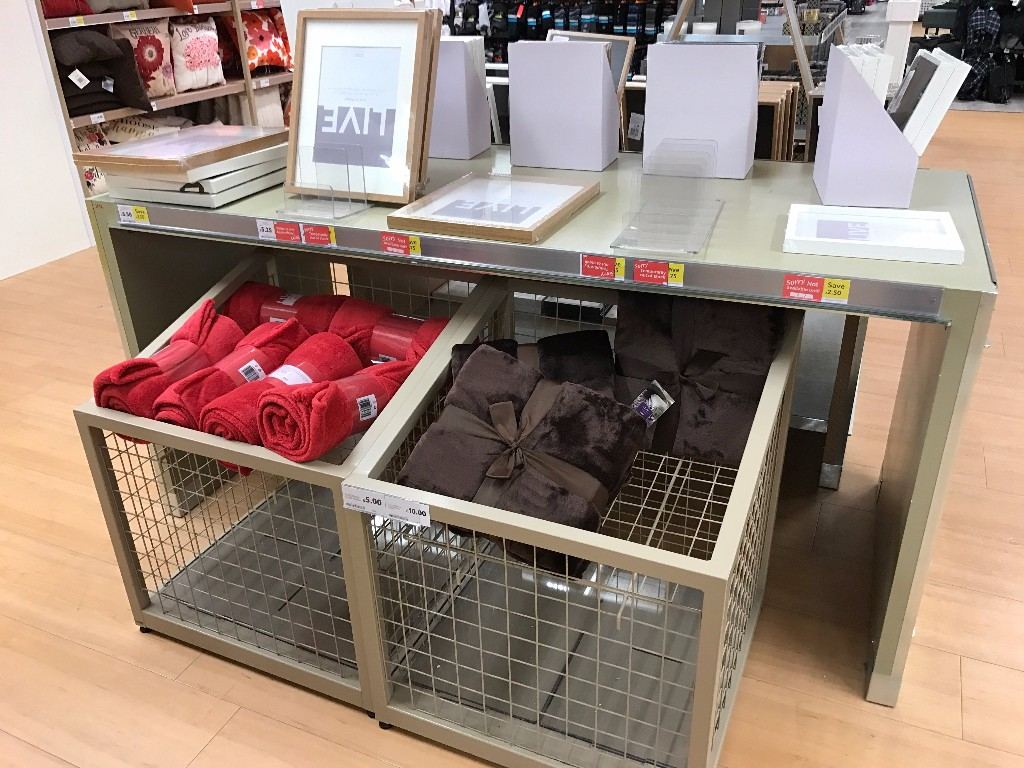
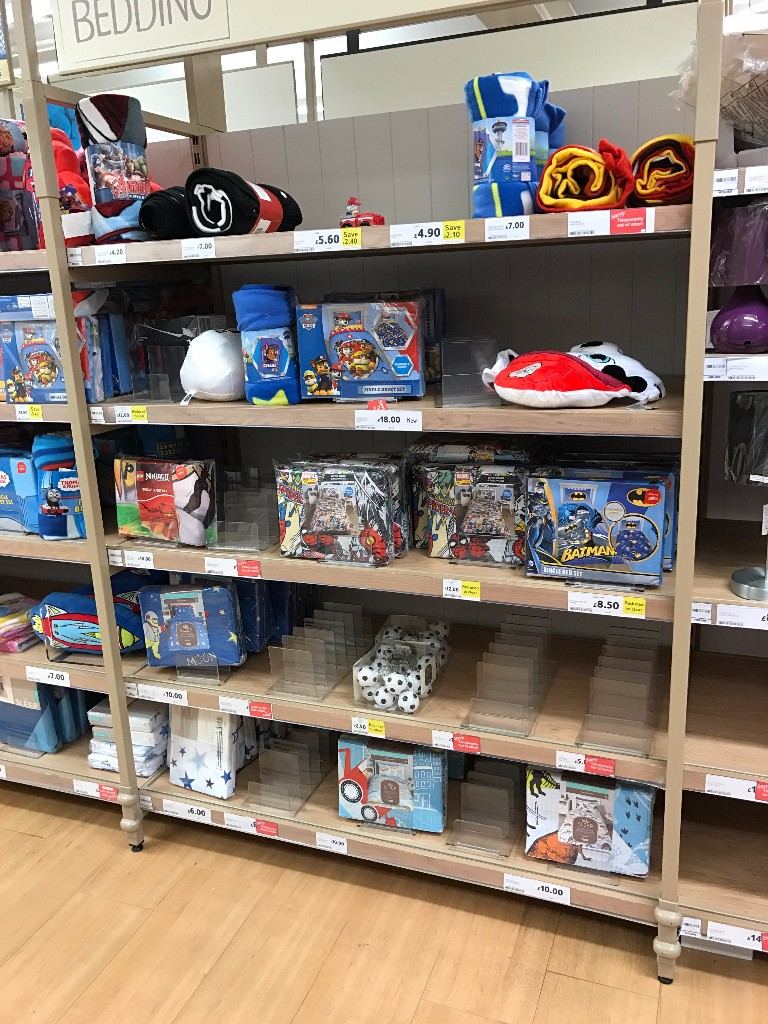
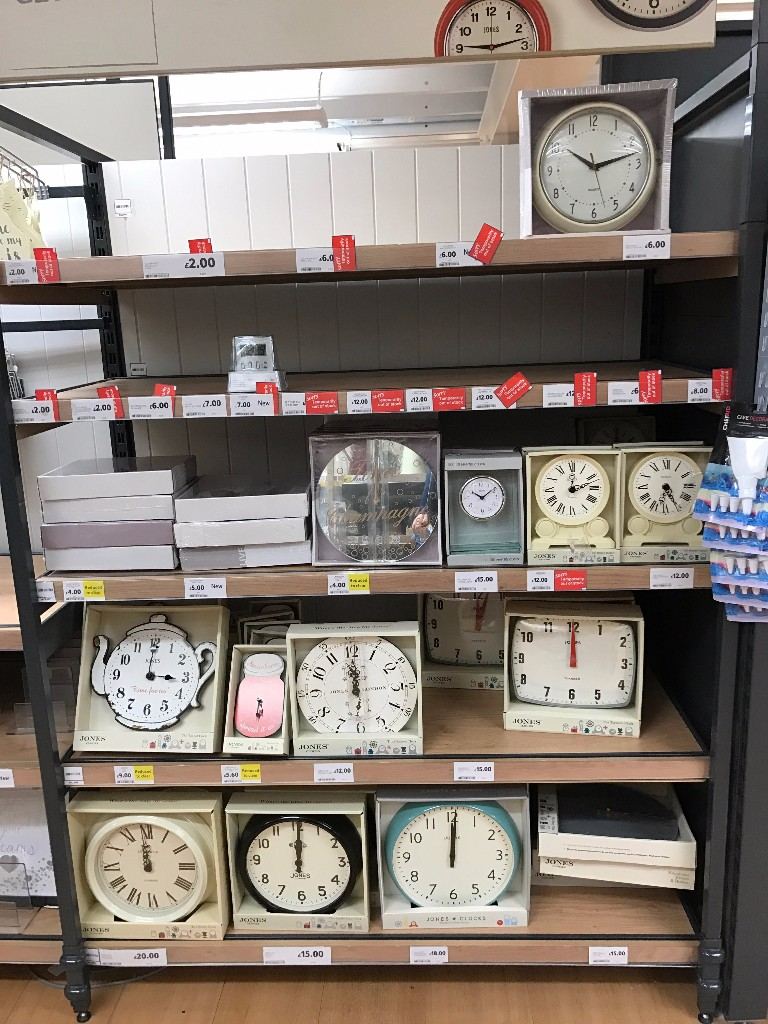
Not all these example are necessarily caused by the shift from night time to day time replenishment, but the point is that they weren't helped by the changes either.
There is less time to recover the department and ensure it's ready for trade, but the supply base have questions to answer over the disaster with the Clocks.
This could easily be around planogram based and something that would be picked up by the night fill team who would know the department inside out. Do days have the time to do these tasks?
Plus what do the empty fixtures do to sales? Availability alongside poor standards can only harm perception, not to mention the challenges around product quality and wider marketing in non food too....
Non Food is an area where Tesco lag Sainsbury's (who do a great job in non food, despite challenges in food) and also Asda who don't necessarily market themselves well, but do a good job with their ranging and product quality.
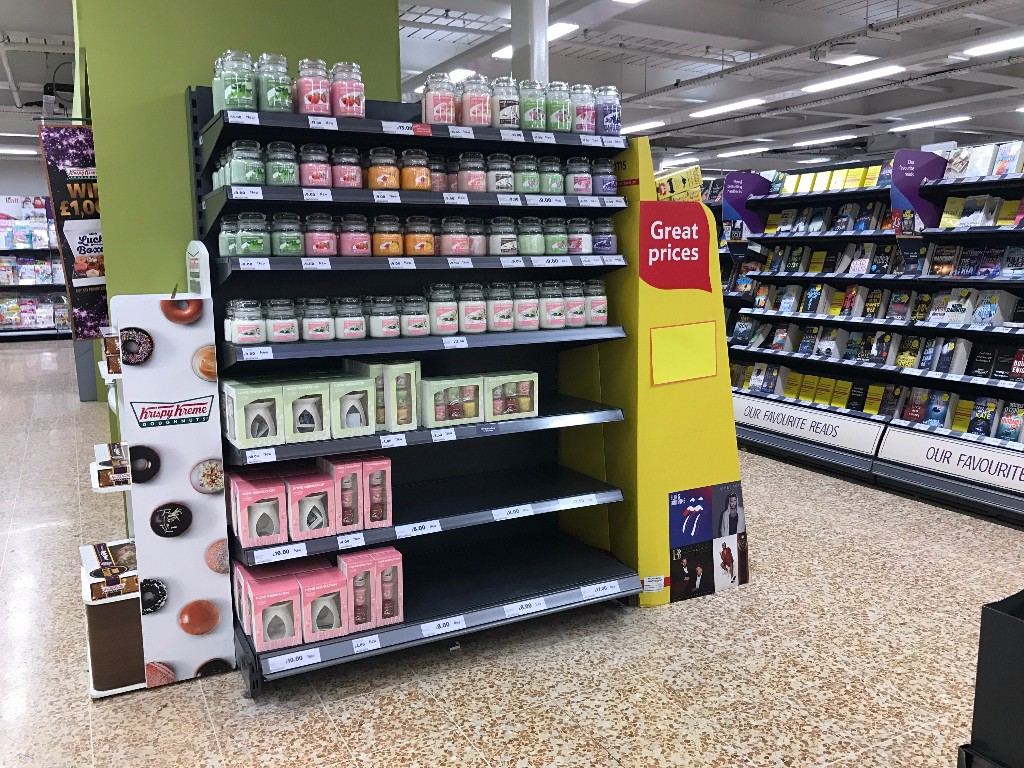
Candles are a big growth area in the market, the Yankee Candles particularly are great, but highly priced (driving good margins presumably?)
However the decision to merchandise them on the primary end near food to go and Doughnuts is entirely questionable. High traffic but just seems an entirely random place to merchandise the stock.
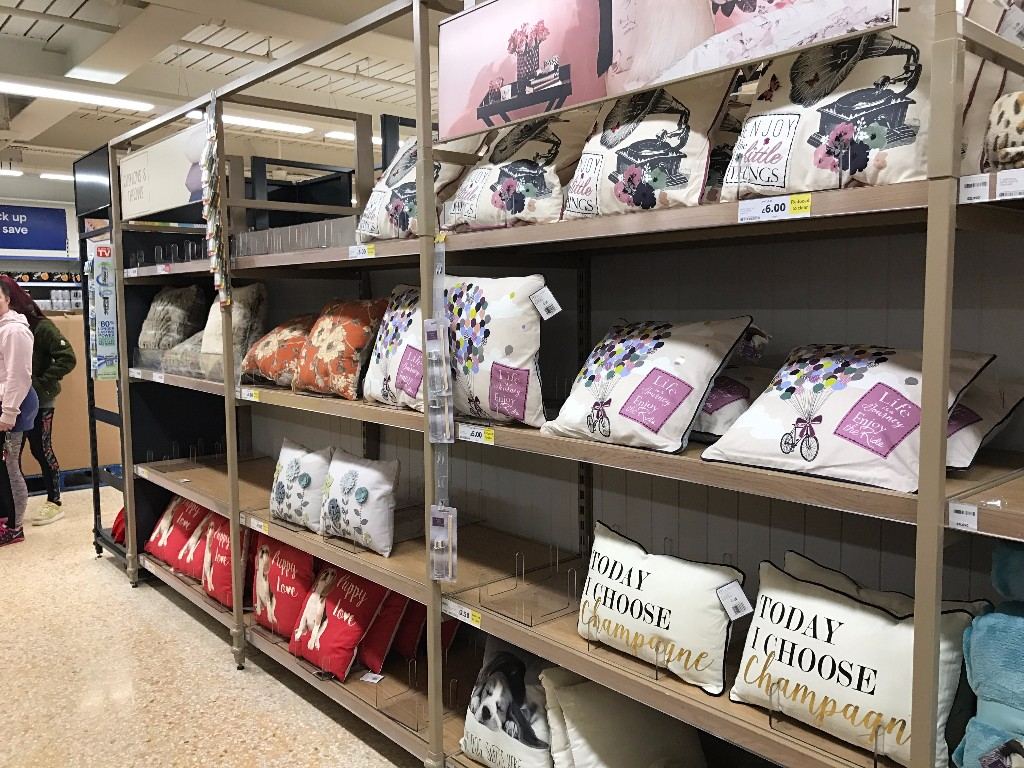
More non food based woe here; even the cushions are a struggle - is it a seasonal changeover? Perhaps, but the lack of lines isn't great - supply base to blame?
Cushions are an easy thing to get right and increasingly you seemingly have to stick a Pug on the front and they sell well. The point is that Tesco are not alone in selling these, more and more retailers carry a decent range and Tesco have to sharpen up in all areas of non food, not just soft furnishings.
So again, not necessarily due to the day crew here, but whether these are changed on a night shift usually, so with the new world - it becomes a job that's only done if there's time?
A re-merchandising job is very disruptive to customers so needs to be done out of hours... Difficult with no night crew and stores opening 24 hours a day.
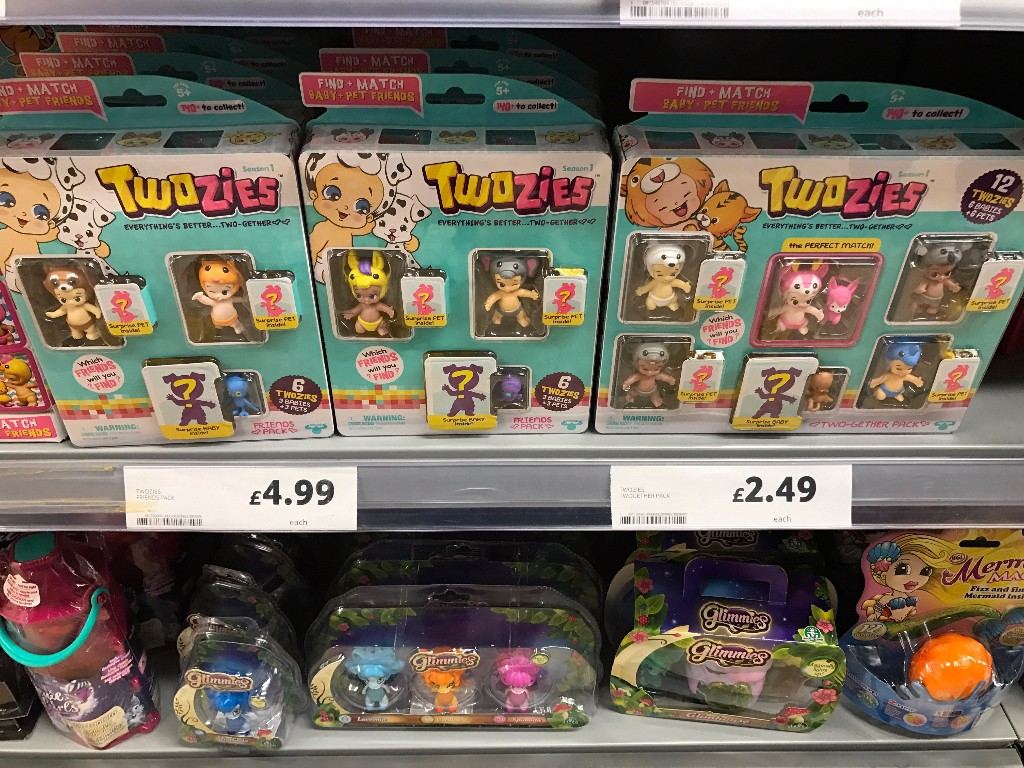
Not necessarily related to colleagues, but the pricing hierarchy isn't right here, the larger pack (right) priced at £2.49 but the smaller pack is £4.99?
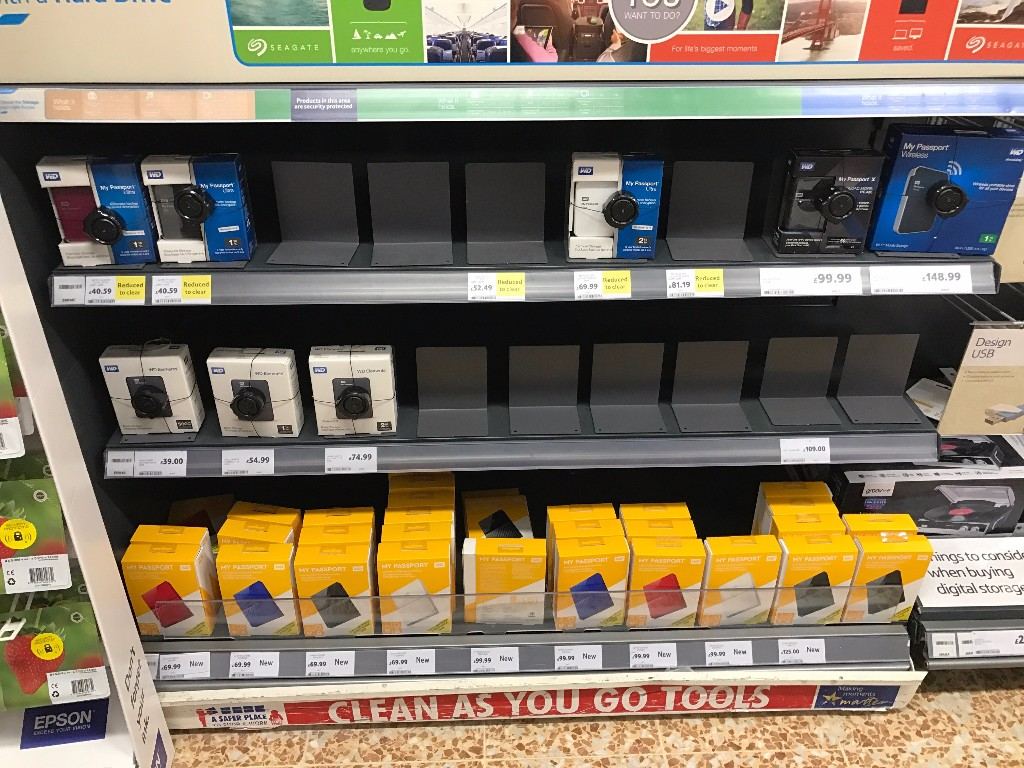
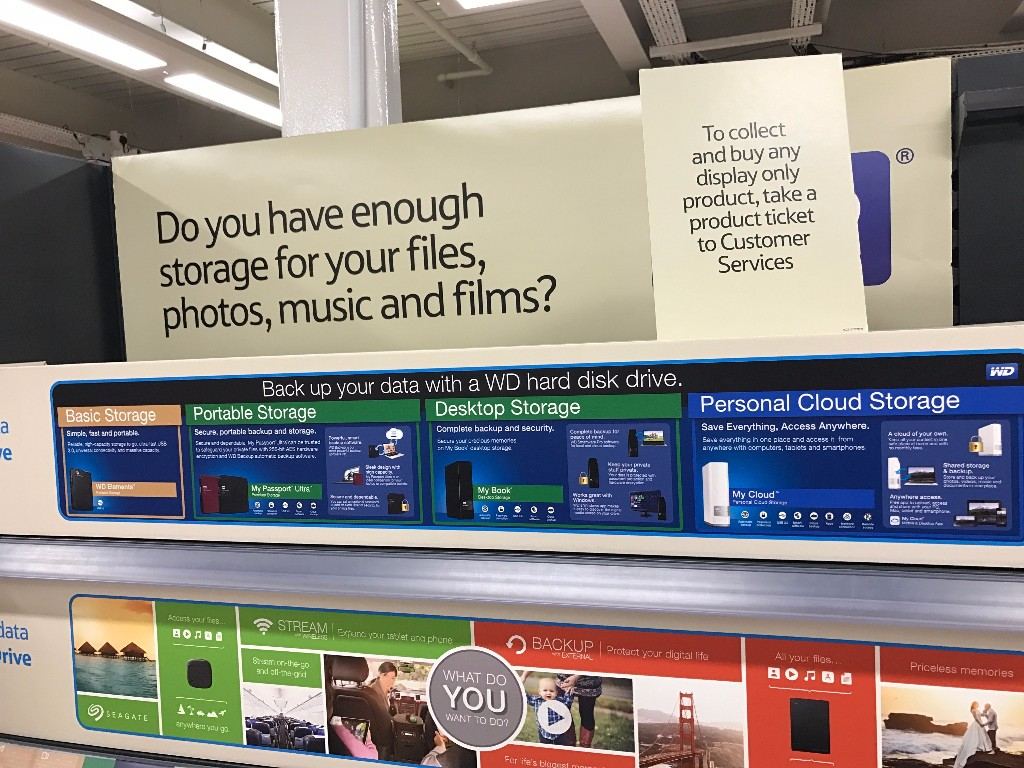
High margin electrical lines look to have suffered too; lots of missing lines here but some are being reduced to clear, there is still a lot of space around despite those lines being cleared....
Two areas of their efficiency drive - closing click/collect desks and also ceasing night replenishment combine to provide a real barrier to customers wishing to purchase anything that's high value and isn't on shelf.
It asks customers to get a product ticket and then go to the customer service desk, despite all the research showing that customers are time poor and want the easiest way to purchase and be in / out where applicable, Tesco have developed a cumbersome process that impacts sales.
If you're doing a full shop, or even just buying the one item (external hard disk for example) you have to go off to the customer service desk to get the item, as the click/collect desk has now gone (quite rightly really).
However customers queue at the desk to complain, to make requests, ask for a wheelchair, often the queue can merge with the cigarette kiosk too. A customer wanting an item that they can obtain at other retailers is then potentially asked to join a large queue again in order to obtain an item.
Sales prevention squad? It's not a great process and something else needs to have been developed to smooth this over for the customers. The Click/Collect desks were never appropriate and manning the desk when customers can come at any time within 14 days was money down the drain.
However customers having to queue twice potentially if they have a full shop, then to get their electrical item isn't very customer focused either. Self service machines to allow payment within non food or at the core checkouts, then collection from the checkout area?
How many customers pick the ticket up, then put it back down seeing the process? How many intend to buy their item, then see a big queue and don't bother?
This can't be tracked, as it's very difficult to do so, however the savings by not having a secondary desk and / or another method to purchase high value electronics (at checkout?) are demonstrable.....
It's lost sales whichever way you look at it.
Thus there we are! It's interesting for Tesco, non food is perhaps on paper the right thing to cease replenishing on a night but seasonality (Toys - Christmas etc) means there is a definite need for night fill at certain times of the year.
Similarly for all their work in food, the non food business badly needs some new thinking and not filling the department unless it's through the day (where there are more distractions / checkouts etc) can mean the basics aren't carried out.
The Tesco strategy going forwards appears to be centred around dropping the Arcadia brands in to the stores. Local Extra stores have had brands like Dorothy Perkins and Topman added to their upstairs level.
A decent move and good to add the 'halo' effect to the store, however when they have a large clothing offer of their own - how does that then work? It seems at odds with each other surely?
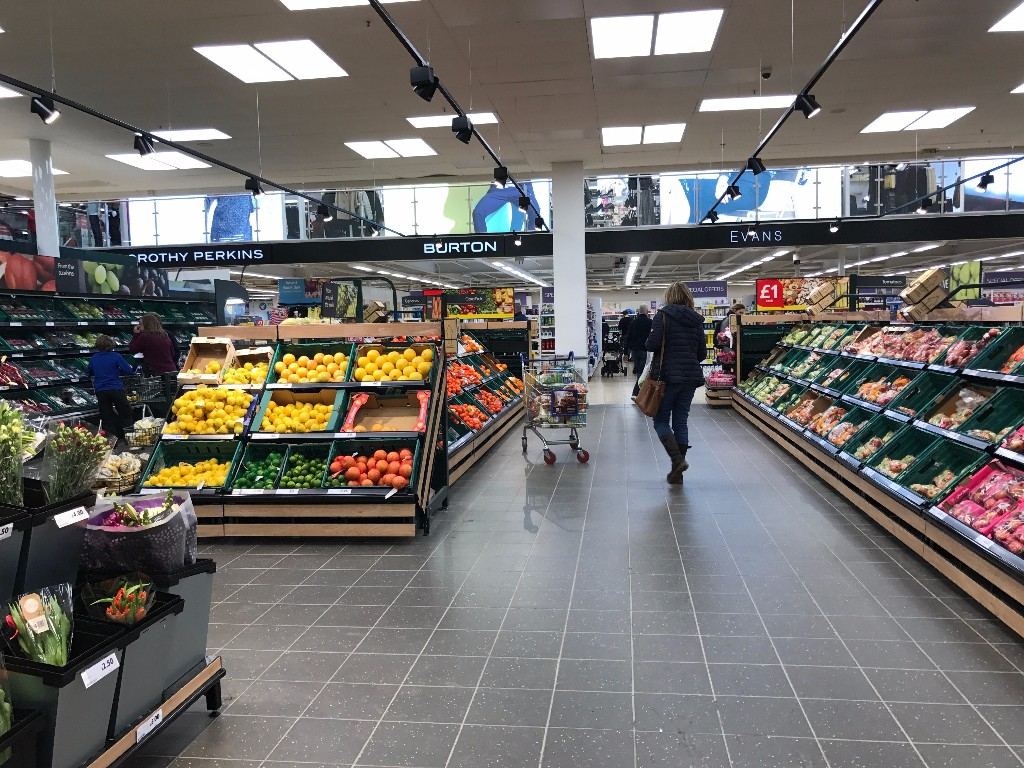
To under cook non food seems odd; it's a bit like under funding the stores when it comes to colleague hours.
The hundreds of millions spent on marketing in the wider press and around the stores, enticing customers in, then delivering a poor shopping experience with the store not having enough hours. Remarkable.
Tesco are not in danger of hurting their core shops, but why under cook non food? Good margin lines that benefit from the footfall driven by food - yet the non food departments are uninspiring and in some cases, fixtures are entirely gap ridden too.
The customers are over the line, and in the store... Why have non food in such a sorry state?
Any area where operational changes are felt by customers, such as the examples above shows that these changes need further refinement.......
From the Grocery Insight newsletter archive, first sent to subscribers on 2 March 2017. Steve now writes at read.groceryinsight.com. See also the blog archive and briefings.