What about the Tesco discount format(?)
1 August 2018

Lots of talk about the Tesco discount format and what it may mean, the talk of 60 store potential seems to make sense, given there are numerous locations that we know must be flagging. Especially with discounters opening left, right and centre...
The discounters like opening near bigger supermarkets for their footfall (used to be secondary, now primary in many cases) so this has an impact on a Tesco, Sainsbury's or whoever.
In the past, as noted before on this service; a discounter opening would be barely a ripple on the bigger supermarkets, it would be noted but their share / sales were so low that no one overly concerned themselves about it.
Whereas now, there is a sizeable reaction to an Aldi, or Lidl opening near an existing large supermarket, with refits pulled forward, or timed to coincide with the discounter opening their doors.
The problem is that the discounter is cheaper (although that gap has narrowed but the perception certainly remains) and customers know this. Immediately they depart to a discounter to have a look around and may buy 2/3 items initially (somehow if there are customers who have not yet experienced discount...) and then convert more shopping when they realise the Coffee isn't bad and the fresh foods are impressive. But the bulk of customers will know discount and therefore will likely transfer a portion of their shopping to discounters.
As the customer becomes accustomed to discount; the centre of the shop, the reliable volume drivers for supermarkets (canned beans, peas, veg etc) are lost, Produce, Fresh etc follow and the sales value isn't the primary concern here - it's the volume that disappears.
Given the retail model for hours allocations to stores is centred around time measurement and also how many items the store sells (not sales value). You can end up in a 'doom loop' scenario where you have a large store that needs more hours to survive, but the sales do not justify it as discounters / competitors have taken sales away.
Thus the existing store ends up looking tired, you struggle to find a member of staff around the store, gaps all over and the only interaction is with a colleague who barely said a word and to cap it all, you didn't get your half of your shop and you had to queue and it was more expensive than Aldi anyway.
Certainly is that what Tesco were like when Dave Lewis took over.
Discounters with their consistent product range, consistent shopping experience and low prices gleefully take more sales and this leaves existing larger stores from bigger retailers stuck in the middle...
If you consider wider economic/political challenges such as the increase in the minimum wage, business rates being a total disaster and then depressed consumer confidence via Brexit - it doesn't take much for an existing store to be tipped in to loss making territory - and with discounters nearby, no feasible opportunity to improve.
There is a refit as an option, but once the store starts to reduce its profit contribution, or even lose money given the increased costs alongside falling sales = a 'lethal cocktail' to misquote Dave Lewis, you can end up impairing the asset further as you're throwing good money, after bad effectively.
Then you end up with a number of stores that are landlocked, under fierce competition, even if refit spending was approved - there is no guarantee it would make any difference.
Any consideration for individual stores has to extend to the wider business too, is the offer good enough? It is not uncommon for stores to be loss making, then improve once the wider business sorts itself out.
Certainly Tesco reported that a number of their Extra stores returned to profit as the wider recovery took hold. So it is possible.
But there are limitations for the wider estate; there are some stores that have never really done enough money / been on the borderline and the opening of a discounter, or increase in costs can be enough to tip a store in to loss making territory.
That is before we think about online and the wider question around online picking, Amazon and what that means for the stores.
The challenges are exacerbated if a store is leased. We have seen numerous issues with CVA's and retailers trying to break out from onerous leases and close stores that are under performing. For the likes of Mothercare and House of Fraser, it looks like a scenario that is defensive and entirely unclear how that then can ever translate to a business that grows with less stores and a poor online offering.
For Tesco, you can not close every single store down that tips in to loss making territory, it's just not feasible to do so, leased or otherwise.
However there are some stores equally that may not lose money but are marginal stores that do not have a prospect of improving, even post a refit. You are just sat waiting for a discounter to open to take that store away from the good pile and move it in to the bad.
It could be that the local area for the store would be supportive of a discount store and equally, it could be an effective defence for Tesco to convert a store to a discount format, before an Aldi, or Lidl open up nearby.
However, the only real yardstick we know trying this approach is Netto. They had a brief sojourn in the discounter world for their phase 2 in England, Sainsbury's were the partner and this was successful to a point.
However scale was never in their favour and the locations that were broadly M62 centric without anything even remotely southern looking meant the venture was doomed to failure.
A dual banner where stores are run by one chain but under different banners isn't common in the UK. Tesco do operate One Stop, which is their entity, however run with a separate office. In the US for example, it's common that one retailer has numerous banners to cater for ethnic groups (such as Hispanics) alongside supermarket, value, fresh focused chains.
However the US is a far bigger market than the UK.....
For Tesco, the discount format shift does make sense at a high level. It does go against the grain for the market in the UK, but then, discounters have changed the landscape entirely anyway.
Stores that are identified so far; Chatteris and Immingham both look low risk, given that they are already built and part of each site is occupied by complimentary tenants in any case (Poundstretcher / Home Bargins) and one would assume the demographic would support discount either way.
Especially given that both stores were built and never opened, presumably for the fact that they wouldn't have made a bean necessarily, thus it became a futile exercise.
In terms of the other stores, two Metro format stores (St Helens, and Liverpool) are also rumoured to be changing to the new format. This will involved staff taking redundancy as the new entity is entirely different and will operate a different model with different terms/conditions from the Tesco business.
Further stores have also been noted in Birmingham as adverts for jobs have popped up, it appears to be a mix of sites and formats so far.
Both Liverpool / St Helens stores are ex Kwik Save which were acquired around 10 years ago from the smouldering wreckage of that business. Therefore it could stand to reason that the lease agreement has been up for discussion which could have perhaps fuelled this conversion, given the changes in the landscape (St Helens store has an Aldi open nearby for example).
The Metro format in itself is an odd one, not really developed beyond the London based work some 5/6 years back. These are bigger than Express stores, but the harder pressed areas need something that aligns value with the Tesco brand.
The Metro/Express formats can be in areas where the store is leased and is expensive, due to the nature of the format and location being key. Operating costs are higher and basket sizes are smaller, due to the nature of the store and location. Therefore stores that are struggling are landlocked within that model essentially if sales do not support.
It is not practical to put the entire value range in to a Metro store format for example, you deflate yourself and the volumes needed are huge to make the swing between lower prices and volumes make sense.
The floor space isn't there to give the appropriate amount of facings for example, due to the range makeup. You can end up with a number of stores that for any number of reasons, need more radical surgery to ensure they have a chance of surviving.
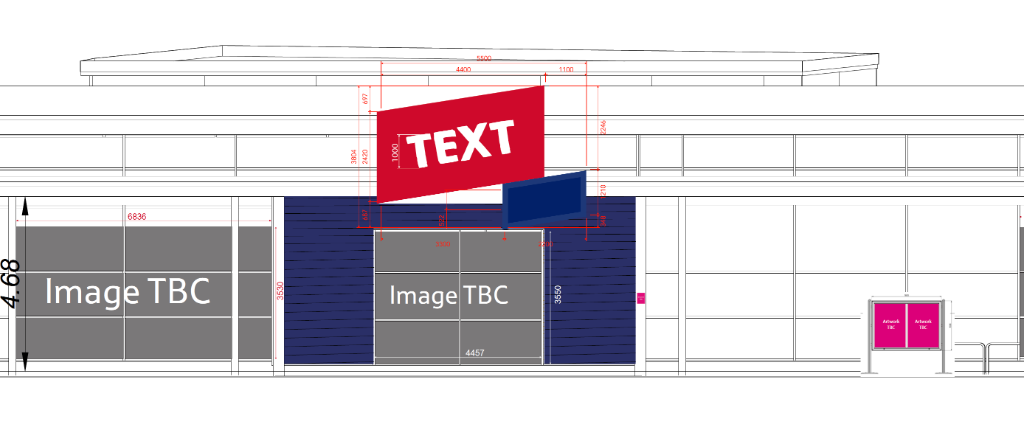
So to the possibility of Jack's from Tesco. The store drawing from a planning site looks Tesco in design. There is the usage of the core colours for example so it's not a huge departure from the brand.
There's no news on the name yet, which is exciting everyone naturally. However the signage does look 'Jack's' sized. Fresh & Easy was registered in the UK in 2013 too, for the own label offer I believe (some lines were converted over, then back to core).
What is of most interest is what then lurks inside the store. It is clear that understanding discount is paramount to then understanding the Tesco rationale for looking towards a discount format as potential both to defend stores that are under attack from discounters or landlocked within their current format / in their current area.
It's clear that Dave Lewis, in his time at Tesco has always understood discounters to be a major threat and has tried different ways to narrow the gap, without dragging the chain in to a deflationary battle by price matching every line on a like for like basis.
Initially; there was a price campaign which focused on a random assortment of lines (seemingly) that were brands that Aldi or Lidl stocked. There was little excuse for Tesco to be more expensive on brands than Aldi, or Lidl and this was a simple exercise.
There was then a targeting of categories that discounters performed well in, versus Tesco. Produce and Meat saw the value tier largely disappear and 'farm' brands added to the range.
These were lower in price and featured better branding than the former tier, enabling Tesco to close the gap on price between themselves and discounters on two own label dominated categories.
Highly deflationary, but as Steve Jobs once said "better to cannibalise yourself than have someone else do it".
It becomes part of a 'winning together' mentality. This means that if the wider chain succeed because the price of Meat and Produce are lower via farm brands, then so be it. The Meat team were no doubt delighted......
No category in the world would voluntarily opt to deflate their own prices and value of the category, despite the wider benefits for the chain (IE more customers, buying more with Tesco).
But it became vital for retailers to do something to stem the tide. Otherwise the category deflates due to the customers shopping elsewhere......
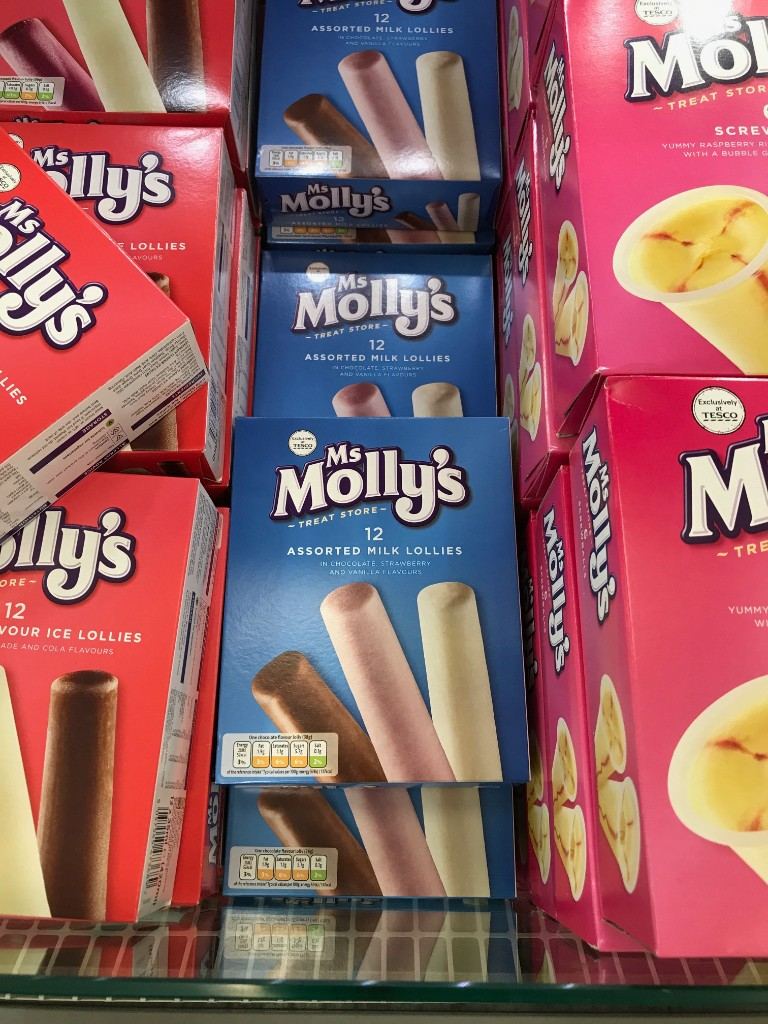
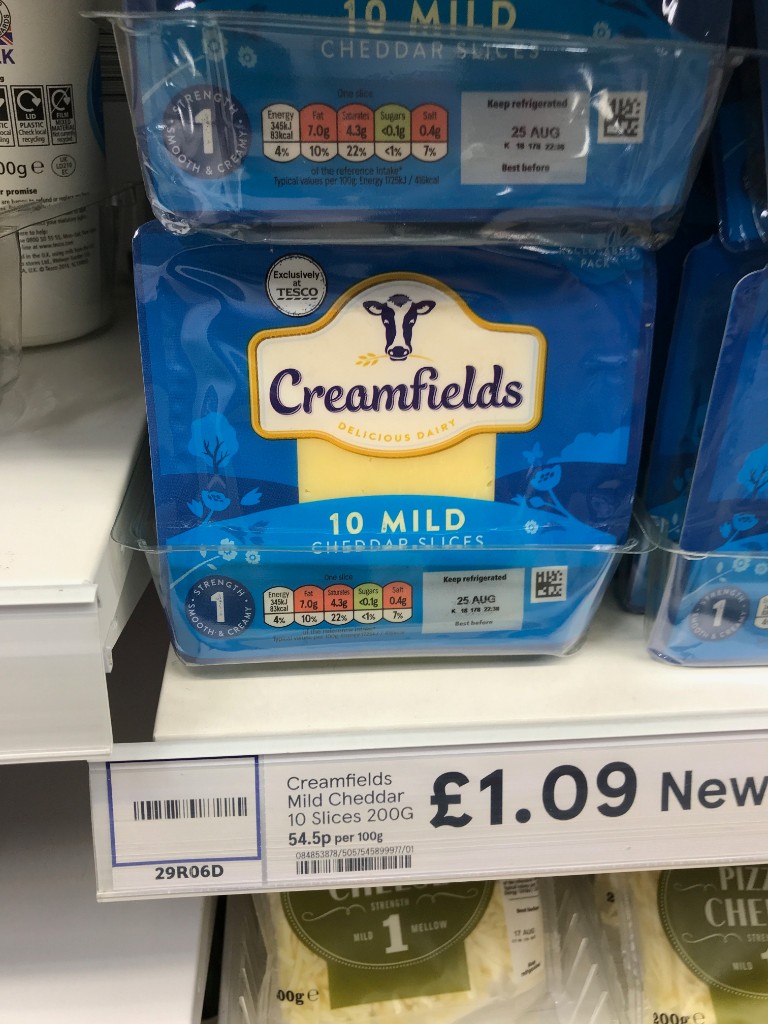
Post farm brands; Fish benefitted from two lines under the 'Tesco brands' plan before further brands were added across the ambient and frozen categories this year.
We have seen many from this email service and both images above are good representations of the latest work that has landed in chilled foods.
The benefit of these products is that they replace value and therefore immediately look more attractive to customers. They also look to be price matching versus Aldi at the high level, so bring price security too.
The addition of the products across Tea, Jam, Flour, Cooking sauces and selected chill / frozen must be related to the strength that Aldi and Lidl have in these areas via Kantar(?) Or even, the price gap between discount and Tesco in these categories, or even product gaps (pack sizes for example) in Yoghurts.
The question is what about the range for the new format?
Will this format benefit from all these lines? It would seem so.
There are brands that are not immediately attributable to Tesco (bar a small exclusively for Tesco badge) which can be removed, however if the brand name is Jack's / Fresh & Easy / whatever, then it will likely feature 'via Tesco' anyway.
The main challenge with any such project is the conflict between the main estate and then any subsidiary element, the brand outlet aisle regularly used to sell products that were a similar price to the main aisle but at different weights, for Mars bars as an example.
This was in the same store! The challenges are everywhere and a different format, with a different store model does not mean those challenges are negated either.
Tesco are competitive on branded prices and their value tier work across those 'brands' would form part of a core range in any discount format, there are not 1800 products to make up that range, but then, Aldi did start with c.600 products.
There isn't necessarily a need to go full throttle for 1500-1800 products within this format, as Tesco still exist in a larger sense in any case for the extra shop...
Equally, will brands will be also added to provide security for customers?
There is a case for some to be added perhaps, but would the format be better served with the tertiary brands that the likes of Booker stock? Think of the products that exist via Barr's not quite 'Roller Cola' but generic/tertiary brands.
Then the non food / central store is easier to envisage as Tesco are relatively strong in this arena already, as we know. Overbuys can be diverted in to this format and it can be effective for clearance too. There is also the opportunity to utilise their wider brands - Carousel for Toys for example.
The discount format has also seen success for the likes of Home Bargains and B&M who have made a hybrid format work well, therefore there is mileage in the logic that some of the 'clearance / special buys' that were noted when the aisle of Booker landed in 40/50 stores could end up here too.
Lines that are not necessarily core in the Tesco range, or are end of life (ex Christmas stock) could be in the central aisle and form part of a special buy package too.
There is lots to consider, the store plan that Tesco kindly shared with the licensing team for Alcohol indicated that the store was classic discount with self service checkouts.
Bakery will form part of this offer and likely be rock bottom prices, a la Lidl to drive the perception of Fresh and also set the price barometer at a good level for customers.
Get this format, and there are so many stores where this format would work so well.
Tesco have the property estate, they certainly have the locations where the existing store is suffering via discount or otherwise and they are nearing a format that could feasibly work and link well with the larger chain.
Especially with own label which customers can only buy at Tesco.....
From the Grocery Insight newsletter archive, first sent to subscribers on 1 August 2018. Steve now writes at read.groceryinsight.com. See also the blog archive and briefings.