Retail By Email - 479 - Mars and Heinz
14 July 2022
View this email in your browser
Retail by Email - Issue 479 - Mars&HeinzGaps opening up on shelfThe recent Tesco vs. Heinz, then Tesco vs. Mars (both stories originally broke by me!) negotiations that have been playing out in public have certainly captured attention.
It’s a reminder of the Unilever vs. Tesco battle in 2016; where Tesco stood up to Unilever on Marmite, who were battling away trying to push cost price increases through as a result of Brexit.
This resulted in a lot of PR and most of it was positive for Tesco who were repositioning themselves as a consumer champion, fighting back against Unilever.
In the fullness of time we’ll probably see Sir Dave Lewis given more justified praise for the work he did, repositioning the Tesco brand as much as anything else that he did.
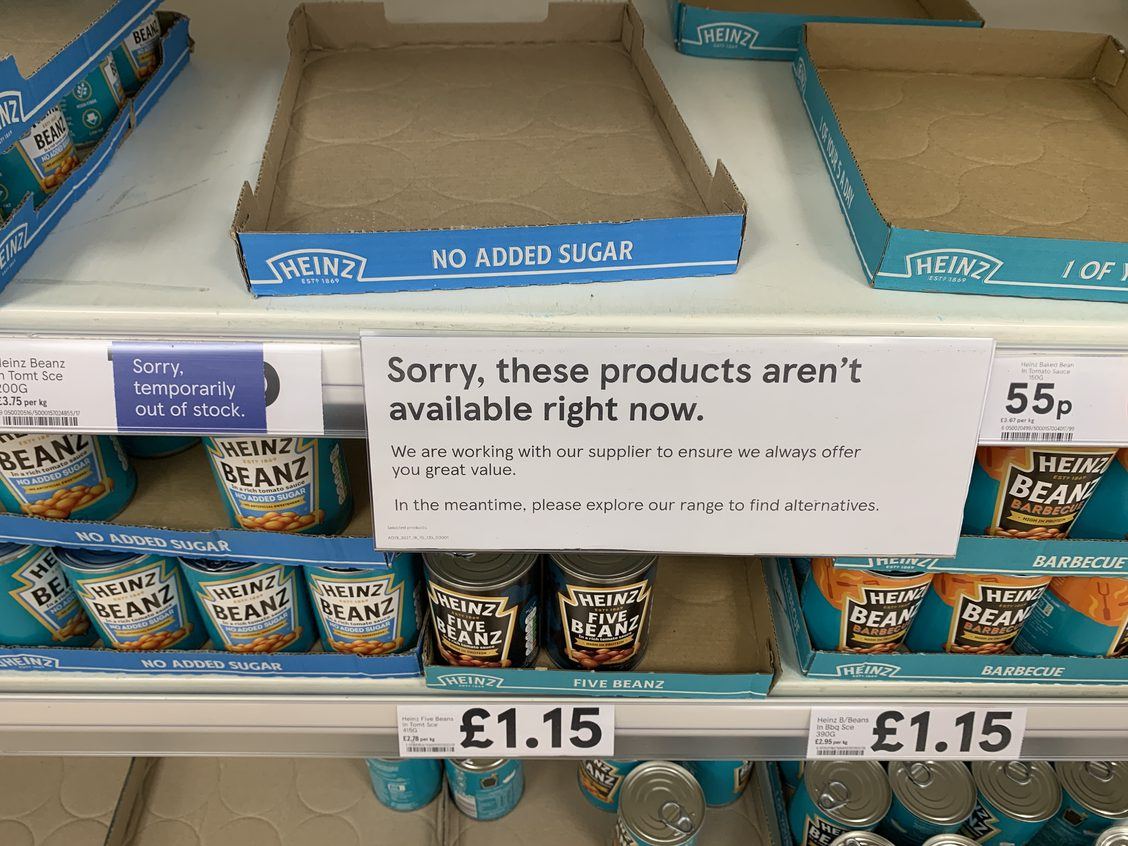
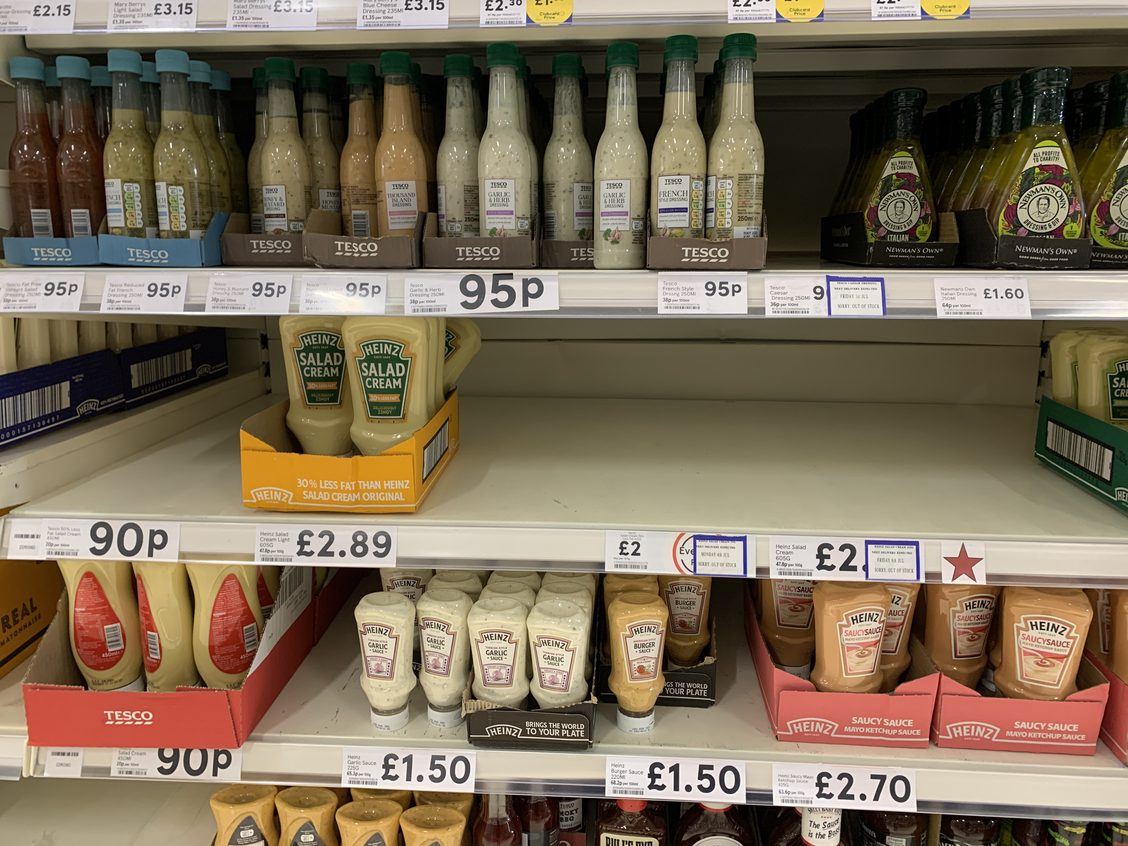
In recent weeks of course, we have seen both Heinz and Mars (Pet Food) fall in to dispute with Tesco.
Whether this is Tesco not taking the cost price increases, so the supplier refuses to send any further stock, or Tesco stopping supply because of the potential cost price increases in unclear.
Whatever the missive. The result is that both brands are seeing gaps not being replenished in store, space taken up by own label and other brands, online sees products marked as ‘out of stock’ and this is bad news for the respective suppliers.
For Tesco? Perhaps less so. There’s a fair amount of good PR surrounding the move so they’re ok, for now.
Whilst there are gaps on shelf, in larger stores at least, there is plenty of choice around the ranges to compensate.
Indeed; one Tesco store filled every gap with own label Sauces and Beans!
The cost of having a few gaps on shelf in Beans and Pet Food (via leading suppliers) but ensuring that customers are aware of your stance on rising prices is priceless in itself.
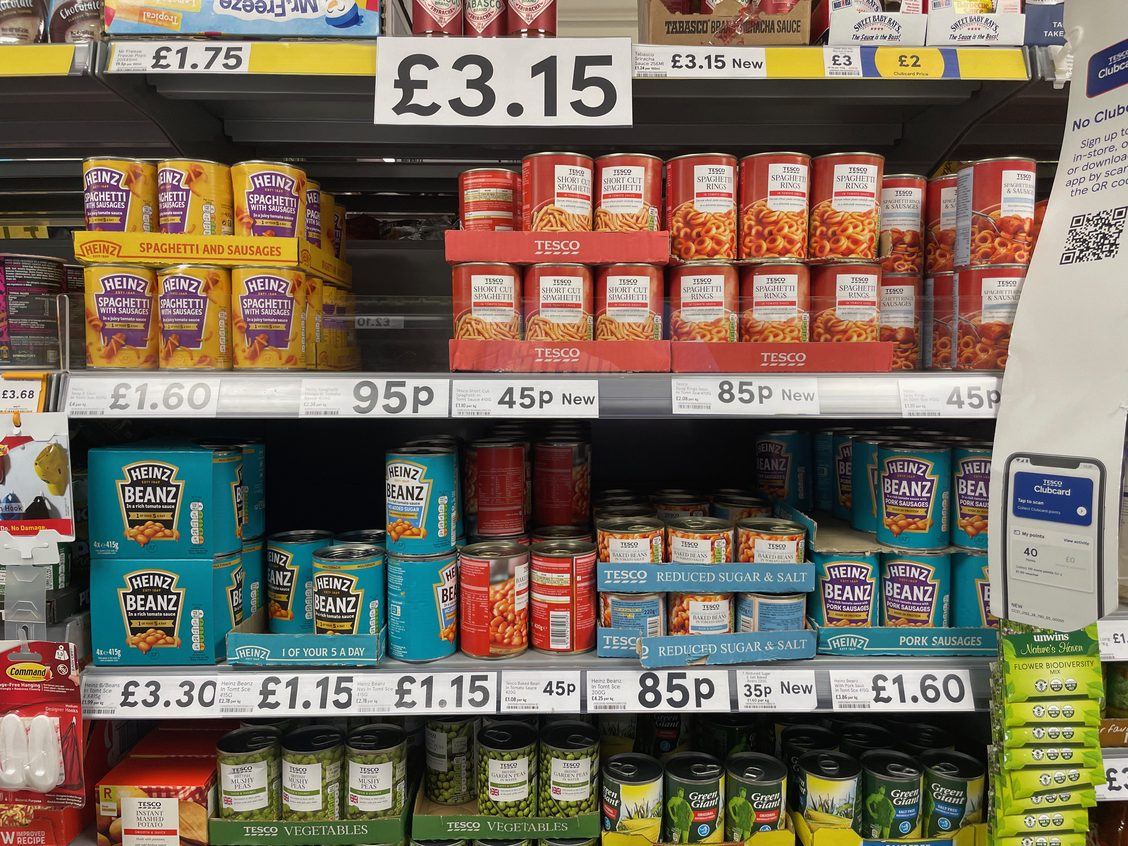
The intriguing element when looking at Express (in particular) is that Tesco have ranged their own label Beans and Spaghetti alongside the Heinz lines (which have remained on sale).
This seems odd; adding range is a complex matter for the convenience chain, stock can be slow moving and clearance space is also difficult to get hold of, too.
The rate of sale of Heinz is low in convenience anyway (as evidenced by the presence of product) especially without a promotion. But these lines do turn over due to Heinz being the sole product choice in Beans/Spaghetti.
Gaps would likely open up sooner, rather than later though and this would leave the convenience stores without stock on the shelves and crucially, customers without an alternative choice.
But this does raise the question about whether Tesco felt that their dispute with Heinz would rumble on longer? Especially given that they’ve added their own ranges to the assortment to ensure the customer has a choice.
But is it also a reminder to Heinz that Tesco can merrily add their own label to convenience ranges, where they enjoyed a sole listing?
Tesco are deflating themselves here by offering lower price (and therefore lower margin product) but better to deflate yourselves than have someone else do it for you.
Where the Heinz v Tesco spat has now had a resolution, the Mars dispute shows no real sign of slowing down.
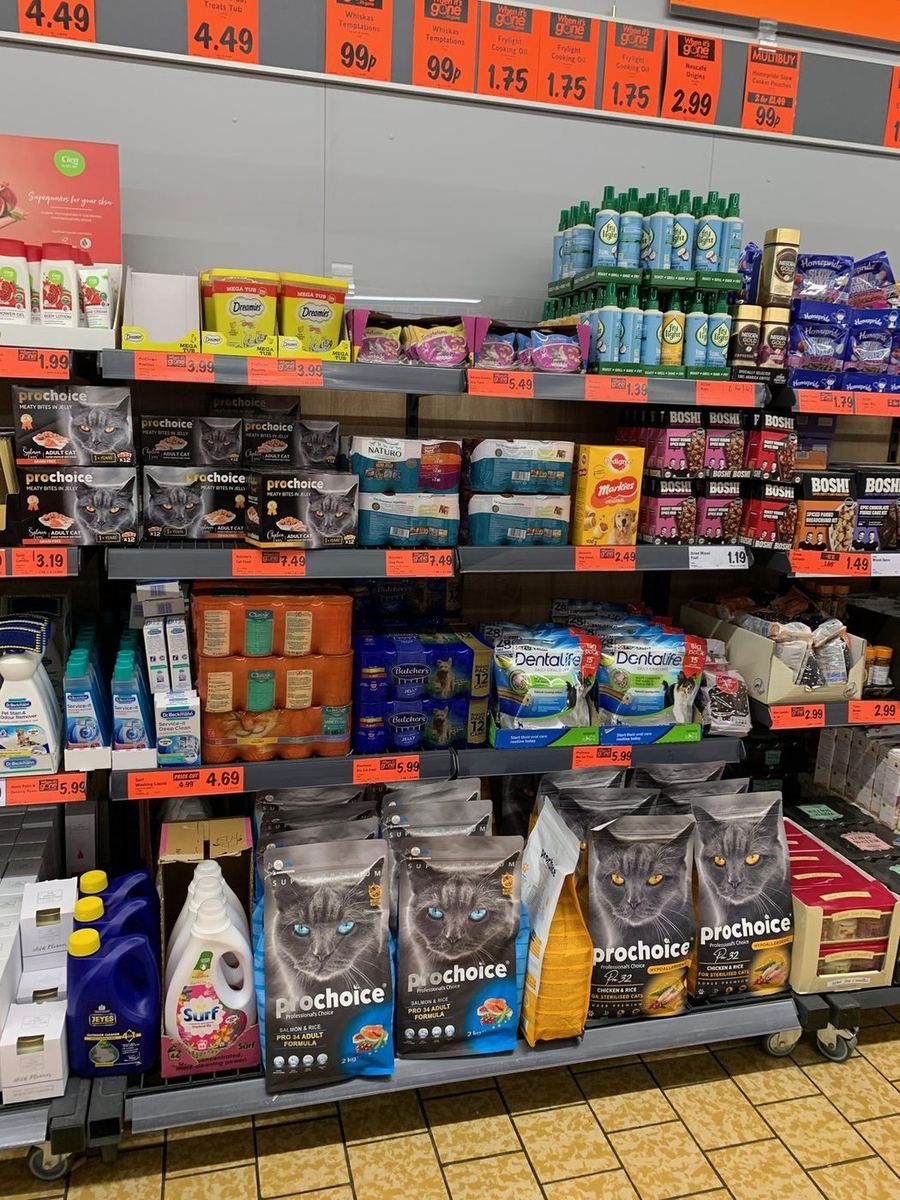
Instead it rumbles on and the wider Pet range is covered by a number of Mars brands, not just Pedigree and Whiskas. Indeed there are a number of treat based lines like Dreamies which are both low in price and are often on promotion too.
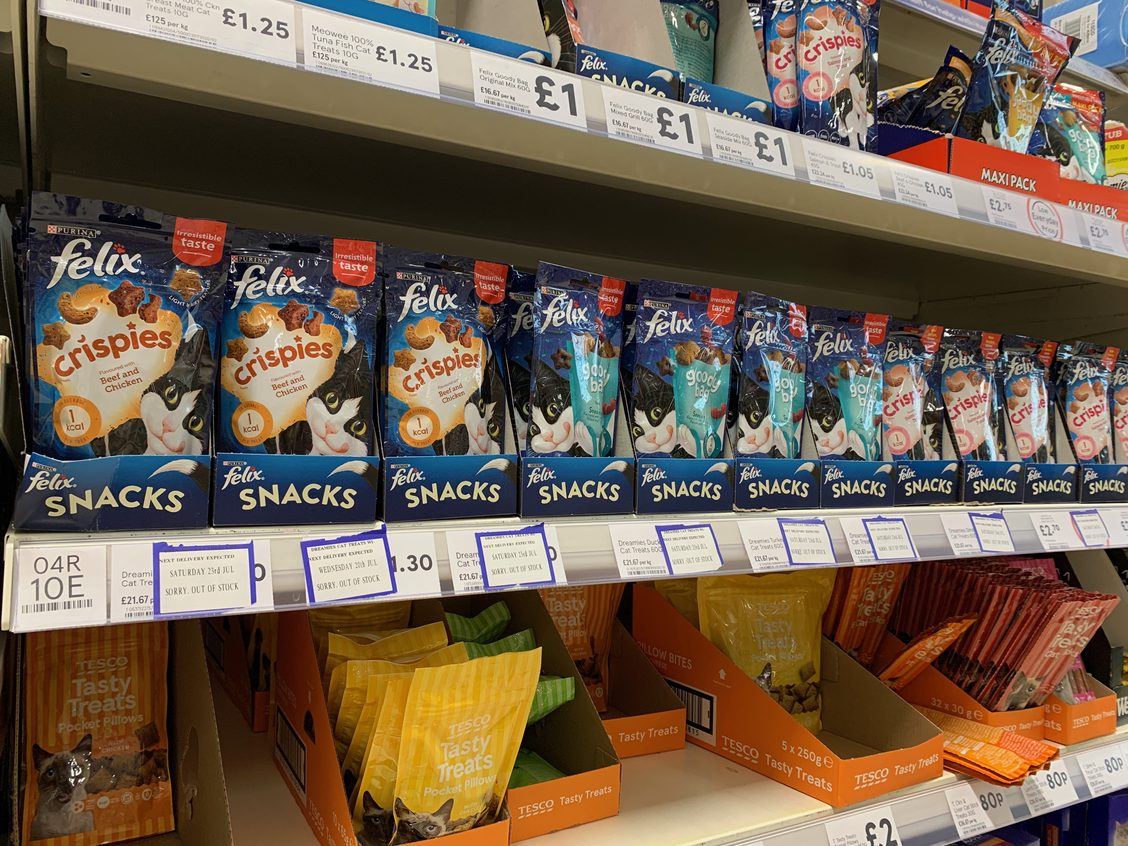
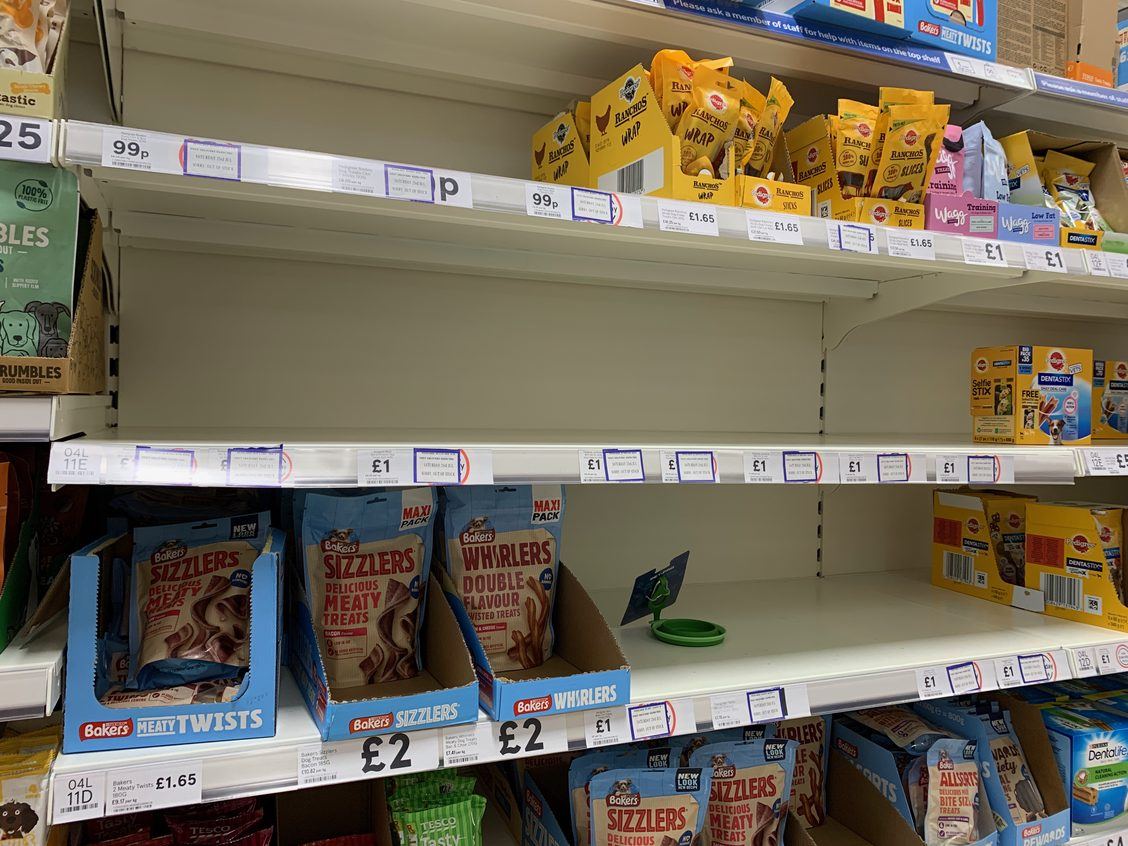
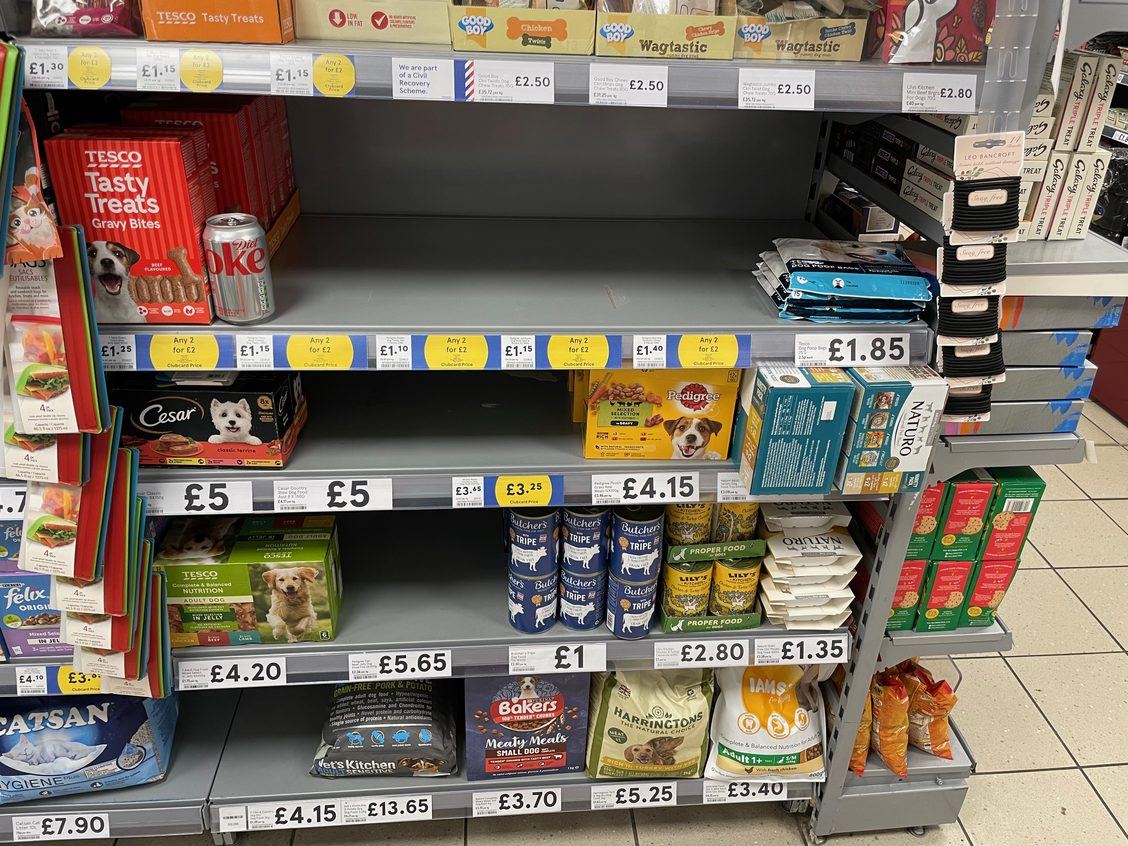
We can see in larger stores that there are fewer challenges around assortment choice, because if something is out of stock, due to dispute or otherwise, then the customer can choose an alternative in the range.
Notably gaps were filled with alternative stock, such as Felix treats to cover the gaps left by Dreamies (a Mars product).
But as we see in Convenience (further up the page) no such luck. It’s gaps all the way with little hope of an alternative.
Interestingly some of the Mars Pet products are covered by the “Everyday Low Price” scheme, where prices are matched to the likes of B&M, Home Bargains and in some cases, we believe, Asda too.
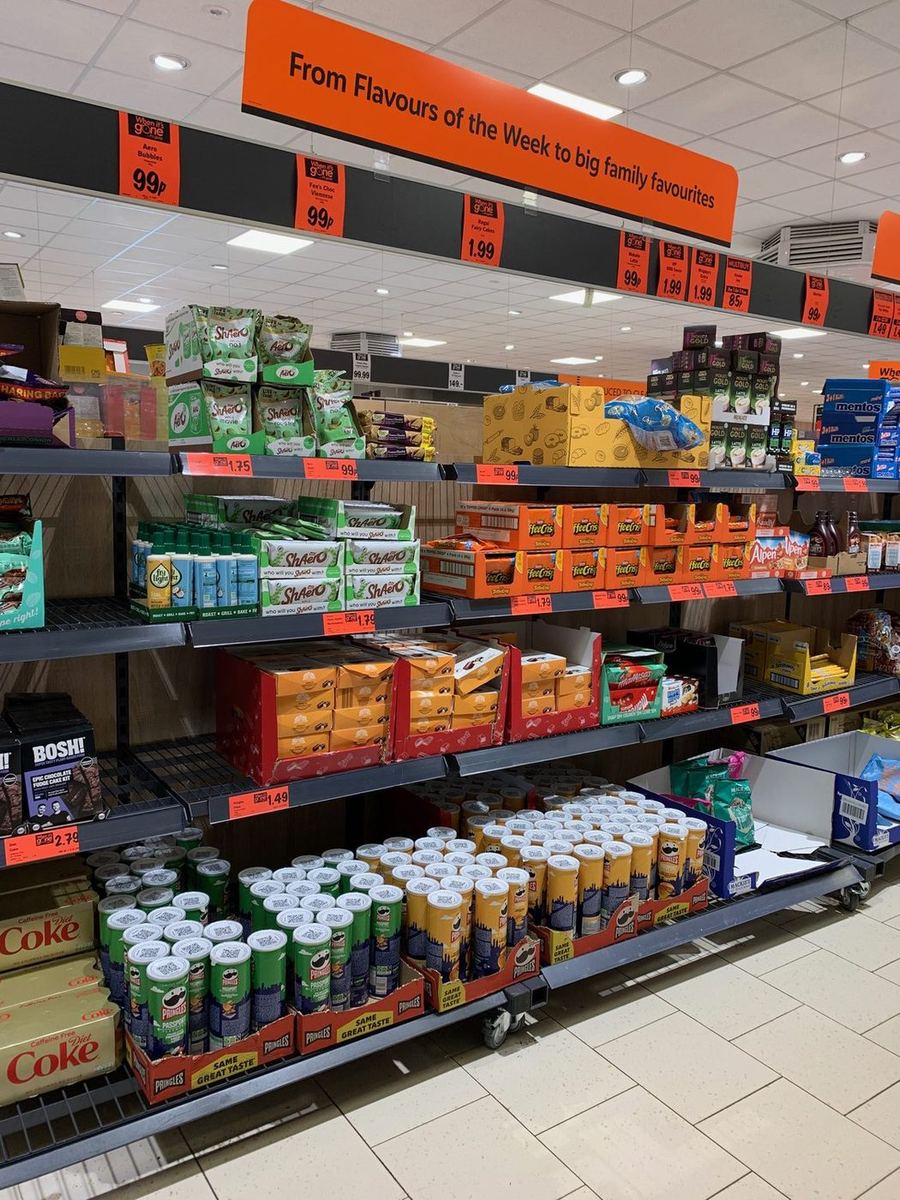
Whether this is also part of the dispute is unclear. But it is the case that both Mars and Heinz products have oft been noted in the special buys area in Aldi, and Lidl.
Which means these products then price matched in Tesco too.
There was some furore about this at a Tesco supplier conference where suppliers were not happy that the price match was being expanded to brands that were found in special buys at Aldi.
Not only that - but Tesco were expecting the equivalent price cut to be funded for Tesco, too.
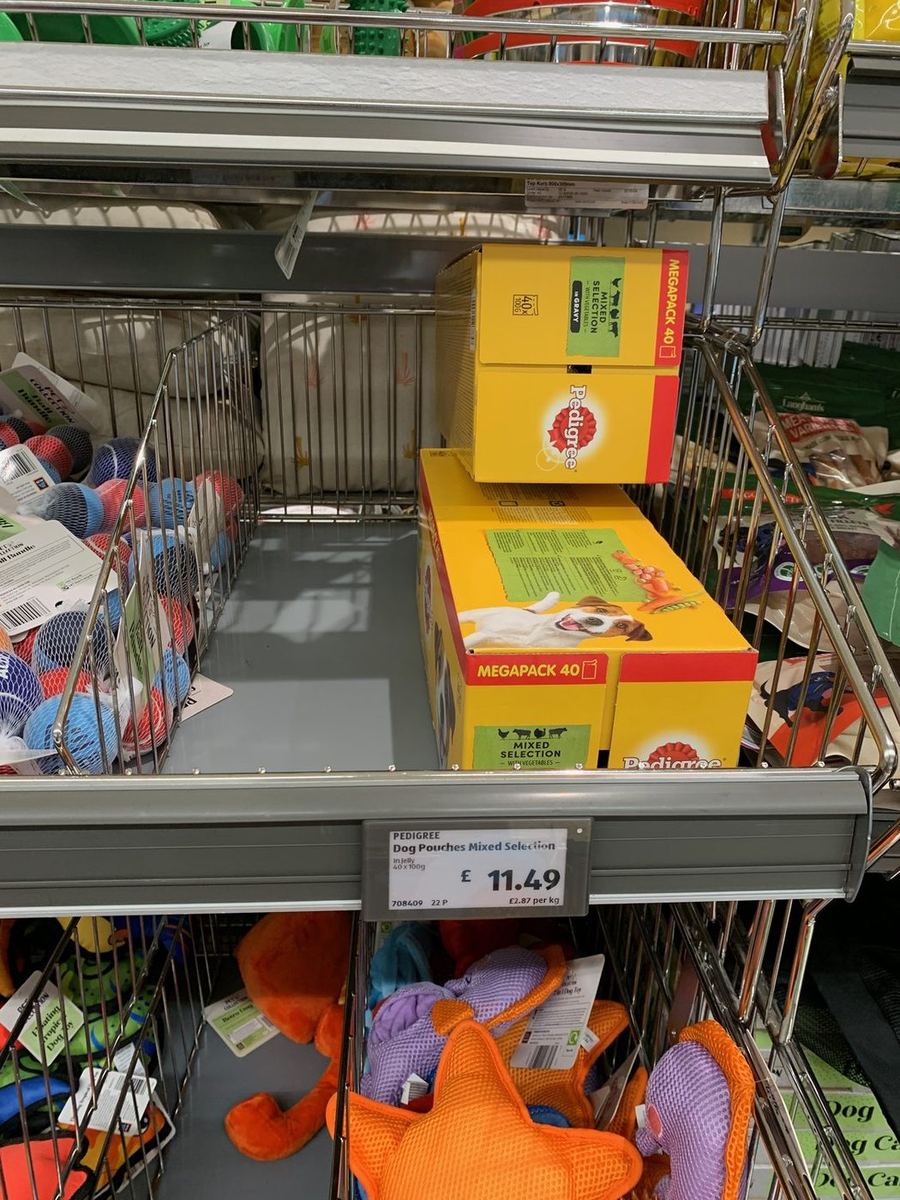
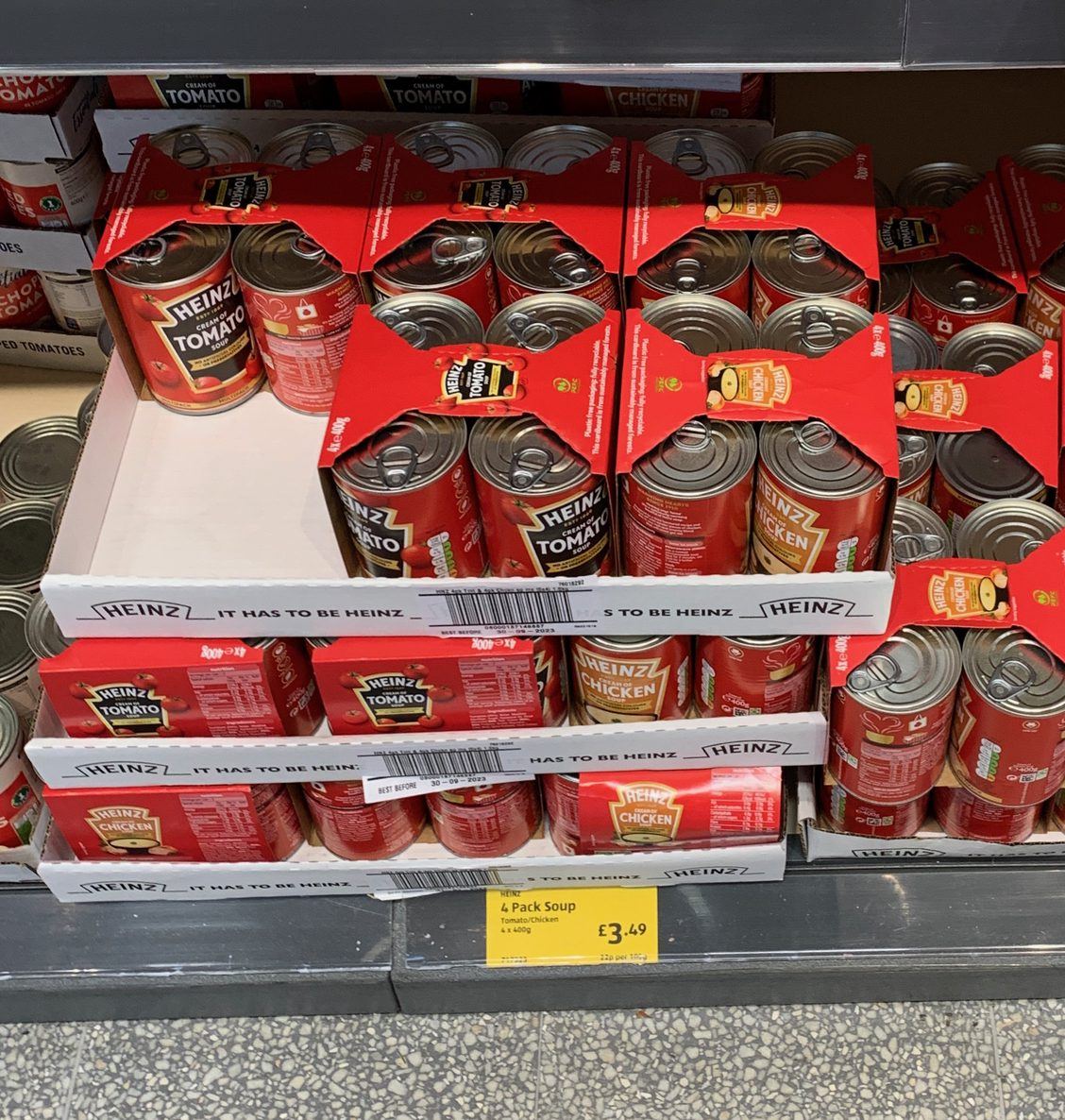
Heinz were in the firing line given their listing in Aldi and last week, we saw a £1 price rise on both Heinz Beans and Heinz Soup, linked to the dispute perhaps?
Crucially these lines had made their way to the “core” range, not just a temporary rotating special buy, which is the holy grail for suppliers, given their volumes and limited range in the first place.
But for some brands, you’re doing a deal with the devil, by listing your product on a core basis, next to the imitation own label product. You end up just highlighting how expensive you are, no doubt paying for the privilege.
Pedigree & Mars Pet lines have been noted in special buys space (centre of store) in both Aldi, and Lidl at various times of the year.
We saw a similar dispute around Colgate toothpaste where a plethora of range was cut in Tesco in response to the lower price in Aldi on the core Toothpaste via Colgate.
This was their sole listing; they removed their own label Toothpaste in favour of Colgate but Tesco, price matching to Aldi, were not happy clearly.
One has to question the FMCG branded strategy, generally here though….
Desperate for volume (to bring costs down, of course) and the discounters being the engines of growth that they are, it does makes sense for brands to try and get in on the action.
But we know that both Aldi, and Lidl have made their name by essentially imitating the branded packaging and charging a significantly lower price too.
So when brands are given the opportunity to drop a shipper, or be featured in special buys at a core, lower price (otherwise what’s the point of Aldi / Lidl bothering?) they take it. But long term? It makes no sense, at all.
Devaluing their brand whilst their bigger customers (big four et al) are charging more makes no commercial sense.
These are interesting times ahead with cost price increases coming through all the time, suppliers are under pressure like retailers as we all battle inflation.
However, there is a limit to what retailers will accept, especially within a competitive marketplace.
We fully expect to see more of this as the months go on; whilst inflation is rampant, there are numerous cost price increases that are known about and in most cases, costed (to a point).
There isn’t a great deal that is unknown given the price of fuel, energy and the rest.
With suppliers faced with the potential of rising costs coupled with falling sales as customers decamp to Aldi and Lidl (own label dominant); there are likely to be more attempts to recoup increased costs through price rises.
Which means that retailers either have to accept this, negotiate away or do as Tesco have, and stop supply to face down such rises.
Not easy, but a marker of where we are in the market. A difficult time all round.
Want to find out more about our services and the wider retail market?Subscribe to our industry leading insight service, today.
From the Grocery Insight newsletter archive, first sent to subscribers on 14 July 2022. Steve now writes at read.groceryinsight.com. See also the blog archive and briefings.