Lidl - out of the firing line
10 August 2020
To subscribe to this service and benefit from our expertise
Lidl - out of the firing line
In the war between Aldi and Tesco; we have seen numerous tit for tat price changes between the two retailers as Tesco adjust their prices on value and selected branded products as well, based on the special buys and their presence in the central aisle.
We'll cover this in a forthcoming note, but the reality is that branded suppliers in the main have no real idea of how to combat discounters, or indeed, the variety stores. No volume to be had in the majors (pre-COVID) and the growth engines are selling either their own labels that are imitating your own (Aldi/Lidl) or indeed, variety stores who are very strong on branded items and sell them at a fixed price, lower than larger retailers.
But for Aldi and Lidl, they have been adding brands on a limited buy basis for probably around two years now, Lidl notably has been aggressive in this regard and we have tracked their space too, growing with 'shelving' rather than wired bins. Indeed, Kantar called out their growth late last year as being brand-driven, more so than anyone else.
That is of no surprise, given their plethora of shippers and other brands that have appeared on a rotating, limited purchase basis for a fair while now. Whilst Lidl range more brands (permanently) than Aldi, and have their EDLP (every day Lidl price) in situ for core pricing, they have been adding lots more via this 'back channel' almost as if brands were part of an event in the same way that Toys or furniture sometimes are.
Lidl continue to focus on their core offer; with a strong own label and various deals, including some multibuys but have continued to add branded range via various routes to grow the basket size, certainly when considering growth into ambient and chill in Home Bargains and B&M for example. Their pricing comparatives are often, at a glance, more likely than perhaps Aldi's are, with Morrisons in the firing line with the usual sizeable gap between the two retailers equivalent shopping basket.
However, their branded work is notable and they've stepped on the gas in recent weeks with even more activity around the categories; for suppliers; the promise of volume at a set price is appealing but that's all they get. There is no prospect of a listing for the brand and to be fair, even if they put a brand in, it would be located adjacent to the Lidl own label which is an imitation of said brand and priced far lower anyway.
So it makes no sense, but as a vehicle for volume, Lidl make sense and it's a mutually beneficial partnership. Until Tesco pick up that the brand is sold lower in Aldi, than Tesco and ask the supplier to make up the difference (presumably).
For Lidl; the benefits are obvious around growing the basket, increasing sales with a rotating number of brands at various prices means that customers do not get 'fatigued' with the same shopping experience week after week. It generates the treasure hunt element that both Home Bargains and B&M benefit from, that feeling of randomness and customers visiting almost 'to see what they may find'.
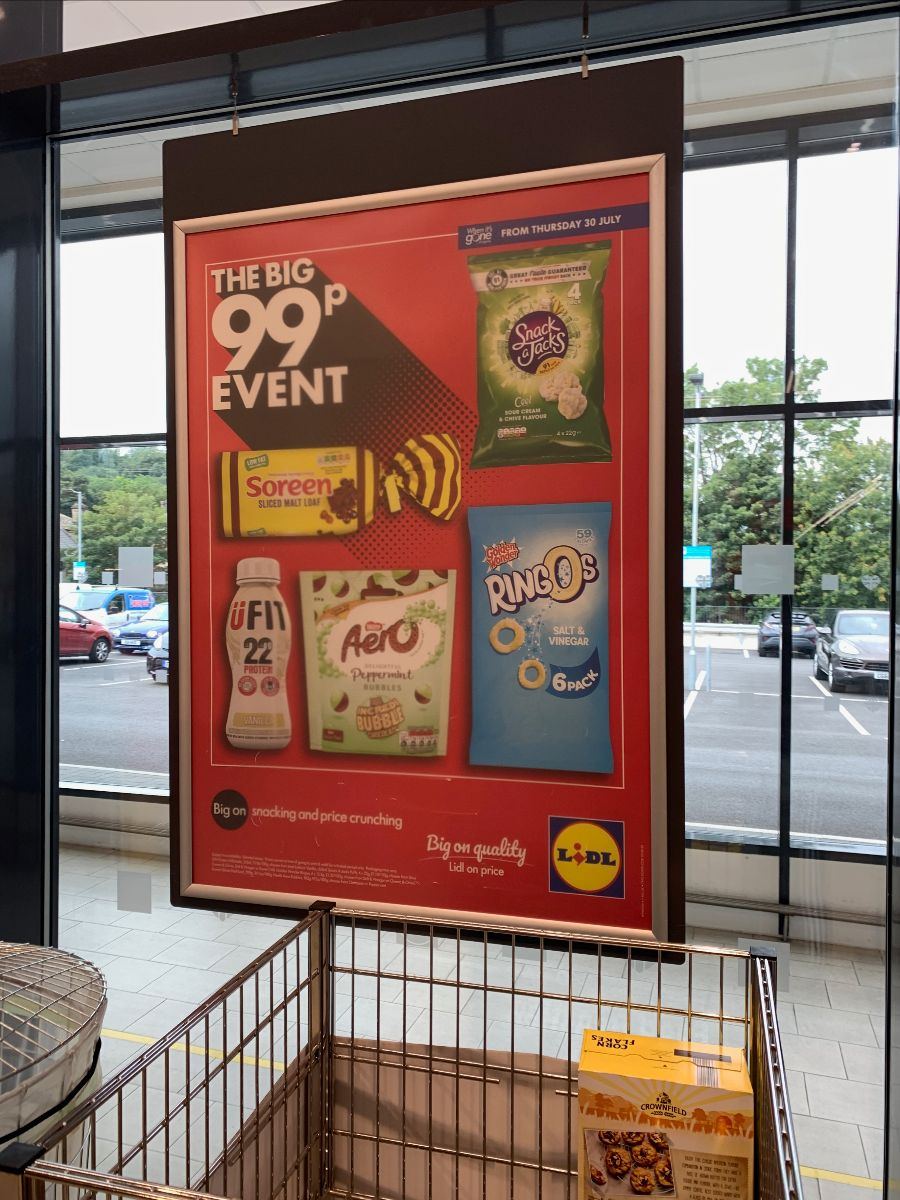
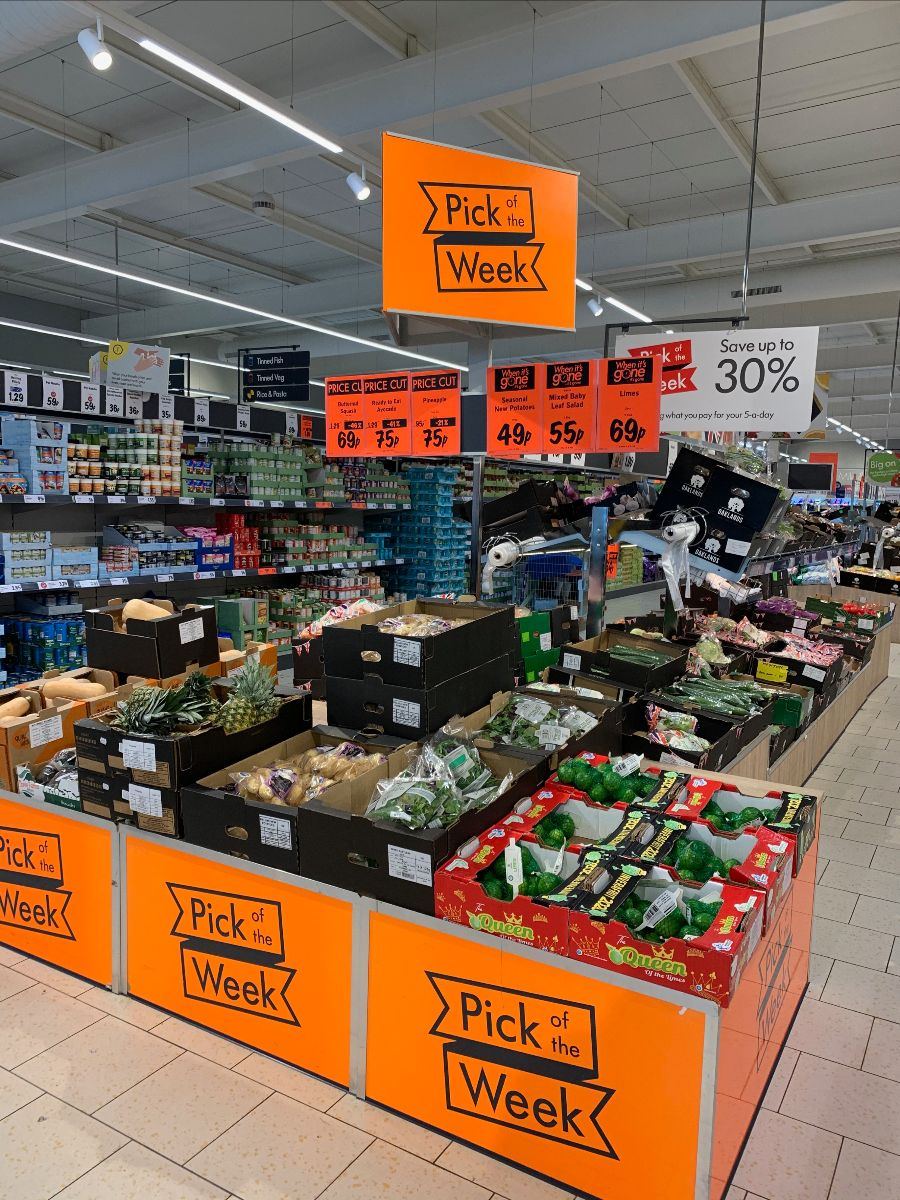
In-store - straight into the value message. Where the market has followed this Super 6 style from Aldi with various "Fresh 5" messages, Lidl utilises Pick of the Week which is utilised in Produce and Fresh Foods (and Wines) to trade various special deals to maintain footfall and interest from customers.
Their 99p event was strongly signposted too - very strong, effective deal package and well-advertised as well.
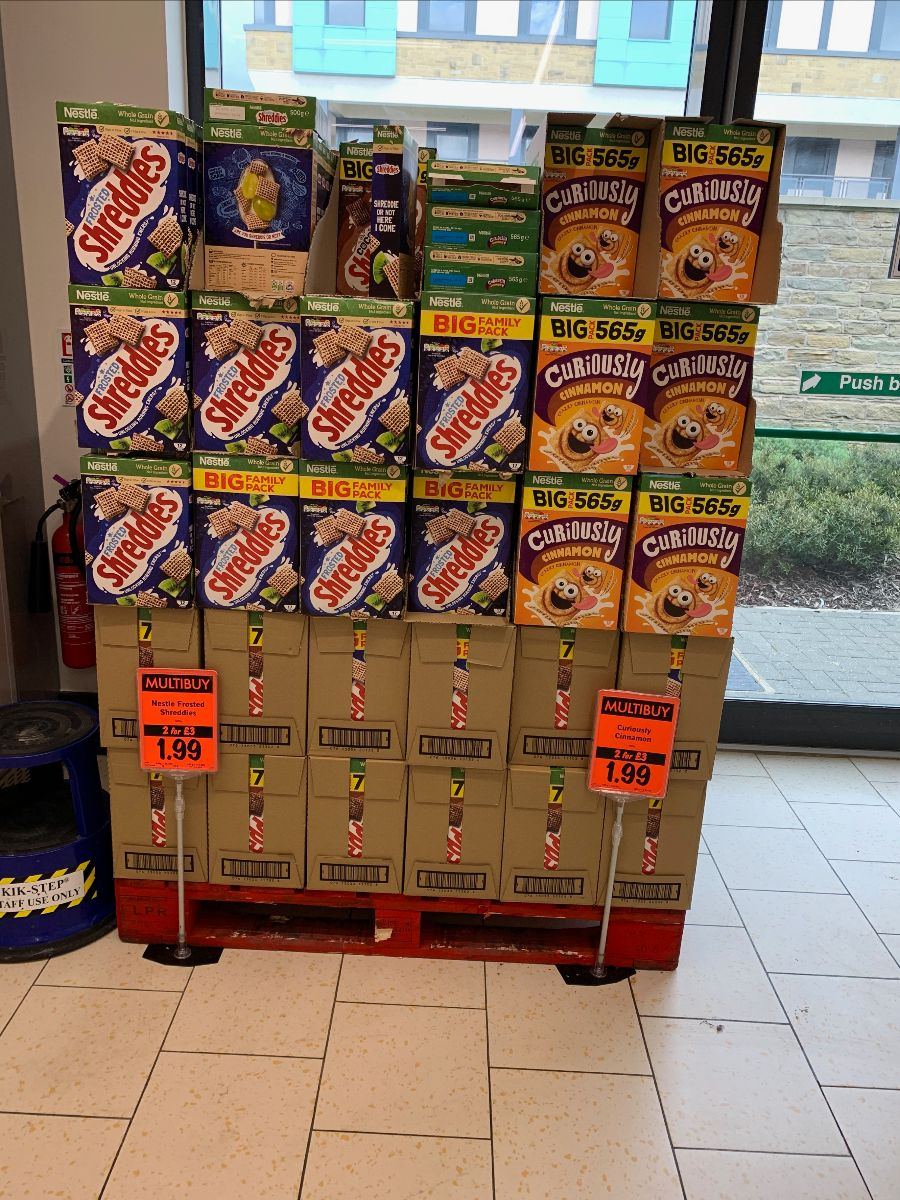
With Lidl having a fair number of larger stores, they utilise the floorspace well for various stacks and pallet based displays where stock is left to 'sell-through' without needing to be merchandised. We can see here that large pack Cereals are trading at £1.99 (2 for £3) which is a strong deal for larger packs certainly.
It's akin to what B&M would do brands that are not necessarily 'leading' and indeed, variations on popular products (IE Frosted Shreddies and Cinnamon favoured Cereals too). Good value and still efficient from their operating model viewpoint.
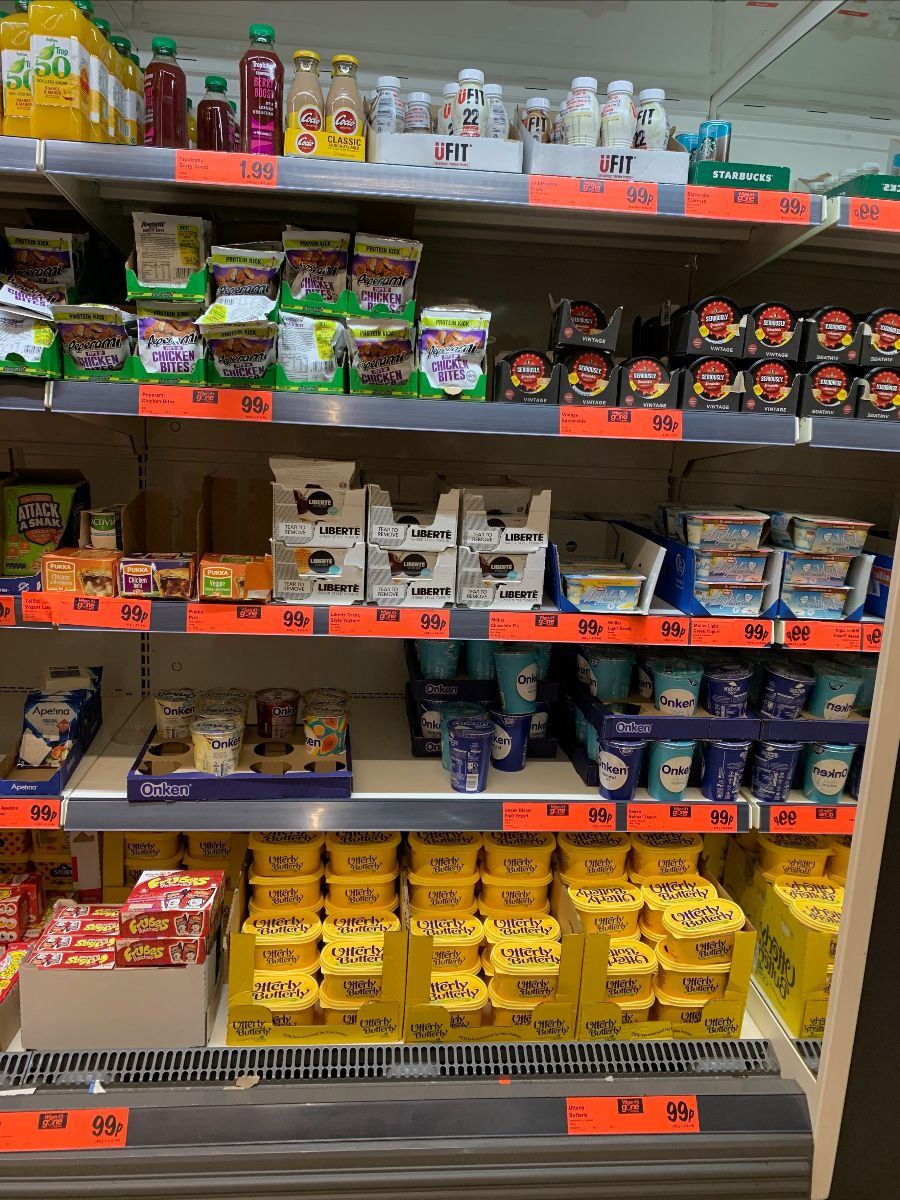
Fresh also has a fair space dedicated to special buys and some of their larger stores do have chilled beers in this space as well, perhaps indicating that sales in some stores are not as strong as perhaps they first thought.
Their special buys feature all manner of products and sometimes, these products are linked to an event, whether it's Spain, Poland, Greek or health for example. There isn't space dedicated for promotions and nothing else, there's often a link with a larger event in the store too. Again, it provides that element of 'treasure hunting' where the range differs for customers and drives footfall.
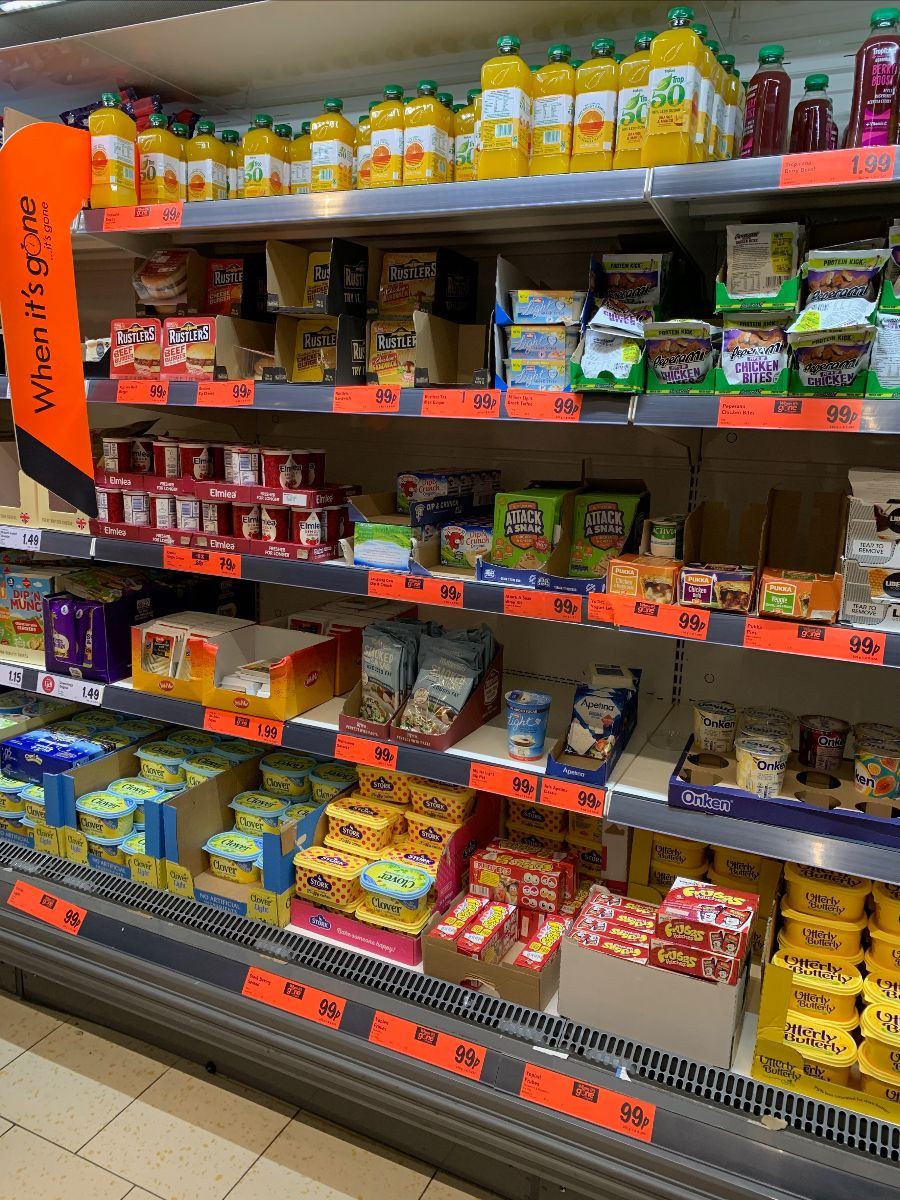
The 99p event is seen in its full glory here; lots of products that are branded and priced at 99p, offering superb value. In chilled, notably, the ranges are thought through well as lunchtime lines and other products suitable for the kids (who are off on holidays at the minute, despite lockdown meaning some kids have been off since March). Frubes, Spreadable Butter, various yoghurts etc all provide strong value.
It's explicitly signed and can be somewhat 'in your face' but it's brutally effective.
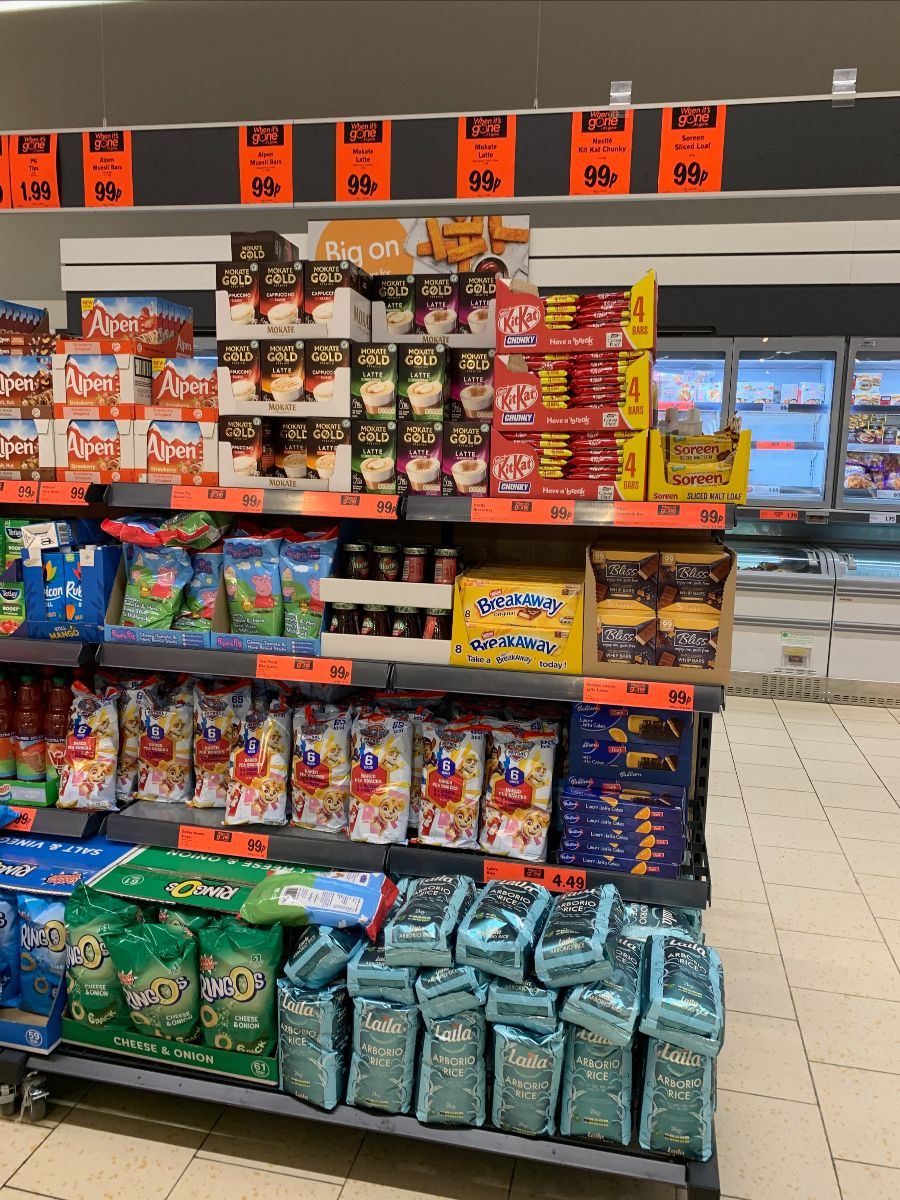
Over in ambient; we have seen various brands in the space for quite some time, it can be "B&M week" sometimes with generic brands like Golden Wonder (that are not necessarily ranged in the big stores permanently) dropped in to provide choice, perhaps restrict the need for a customer to visit other retailers....
For the 99p event; typically leading brands like Kit Kat's, Soreen, Breakaway biscuits and Hartley's Jam were all featured alongside "Ringo's" and generic Coffee drinks (ready-made, add water) that one would find in Home Bargains for example.
A fair range of products here in this event, alongside their other special buys that may not be 99p, but offer a solution for someone, in terms of value, bigger pack or just 'something that we need'.
Which is the aim of the game, it's a very Morrisons approach of days gone by - Sir Ken Morrison would be proud.
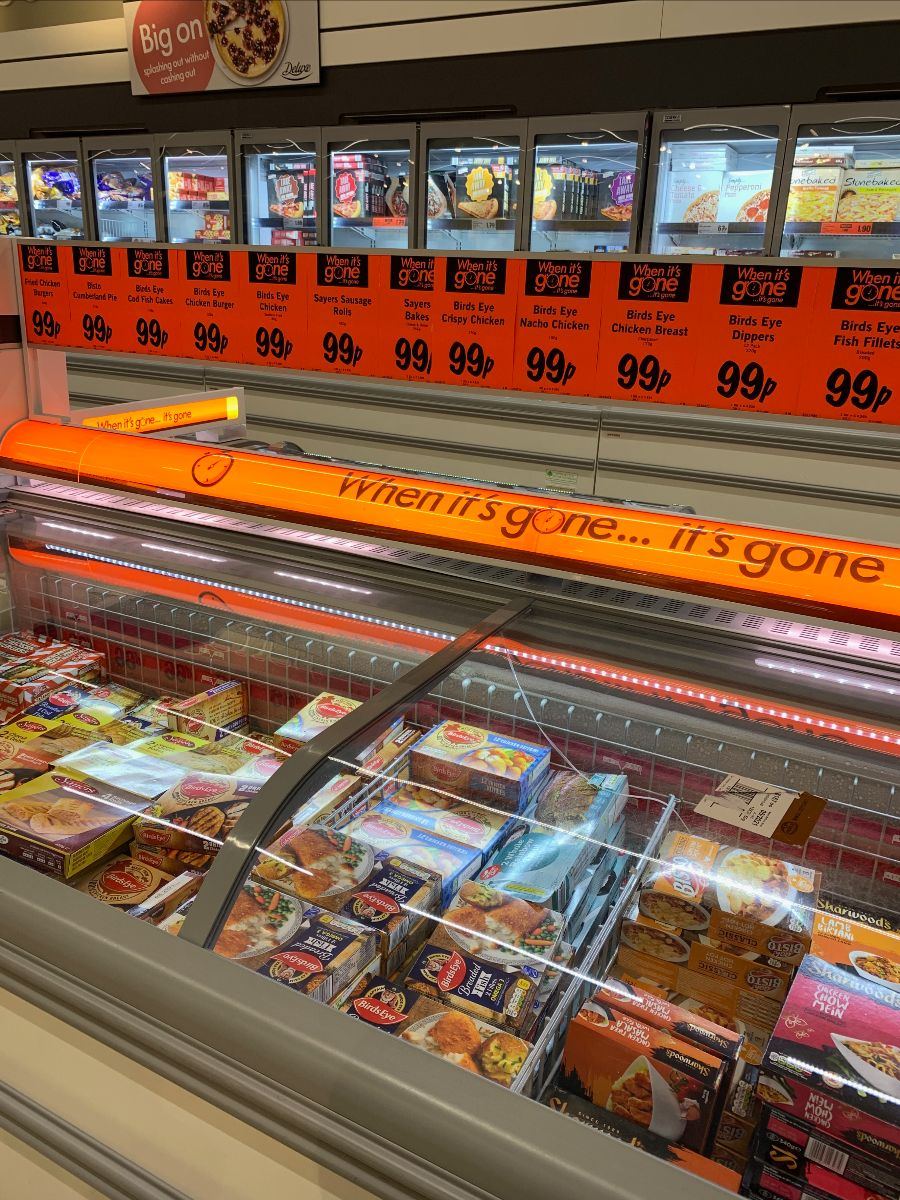
There is a fair amount of space dedicated to Frozen Foods in Lidl stores; especially the newer stores feature islands and core space on the perimeter. Increasingly this space has featured deals and the central island freezers have been highlighted as featuring promotions on a 'when it's gone, it's gone' basis, these are brands and priced at various levels, but 99p is a common thread.
The expansion in this area perhaps shows that Lidl (who have strong own label credentials) do see B&M, Home Bargains but also Iceland as credible competitors in this space. Of course, frozen foods is a strong category for families who look for value here to provide solutions for the kids and evening meals as well.
Brands work well in Frozen, they're trusted and offer value, Asda is often strong in this arena too and Coop generally offers a huge number of products for £5 to drive footfall with their 'deal of the week / super saver' offer. Lidl turning over space to brands and their 99p offers makes sense for them, it's another way to keep customers from needing to go elsewhere for these sorts of products.
If they visit Lidl first for their 'core shop', then the strategy of adding various brands on special buys / rotating basis (assuming your model allows it, which for discounters it does, to an extent) works. It means you can grow sales (which are entirely unclear for discounters, given their sales growth on Kantar is clouded by new store space) relatively easily and capture sales before a customer visits other retailers.
Events remain key but where customers visited stores for non-food specials in the old, old days, now they're in for the food shop first and as a result, events are important but the reliance of non-food sales say, is restricted now the market is moving online rapidly.
Their work on Toys is often strong and they manage their various events tightly with stock limited. They end up having two/three bins of absolute garbage that is marked down and in some cases, entirely unclear which event is belonged to, but broadly, they do a good job here.
Back to School is another area of strength and for COVID, it's the first real event post-COVID that matters, Summer is always important but it's a big message that rumbles along for 3/4 months and is heavily weather dependent. In the UK, it's never a good thing to rely upon the weather.
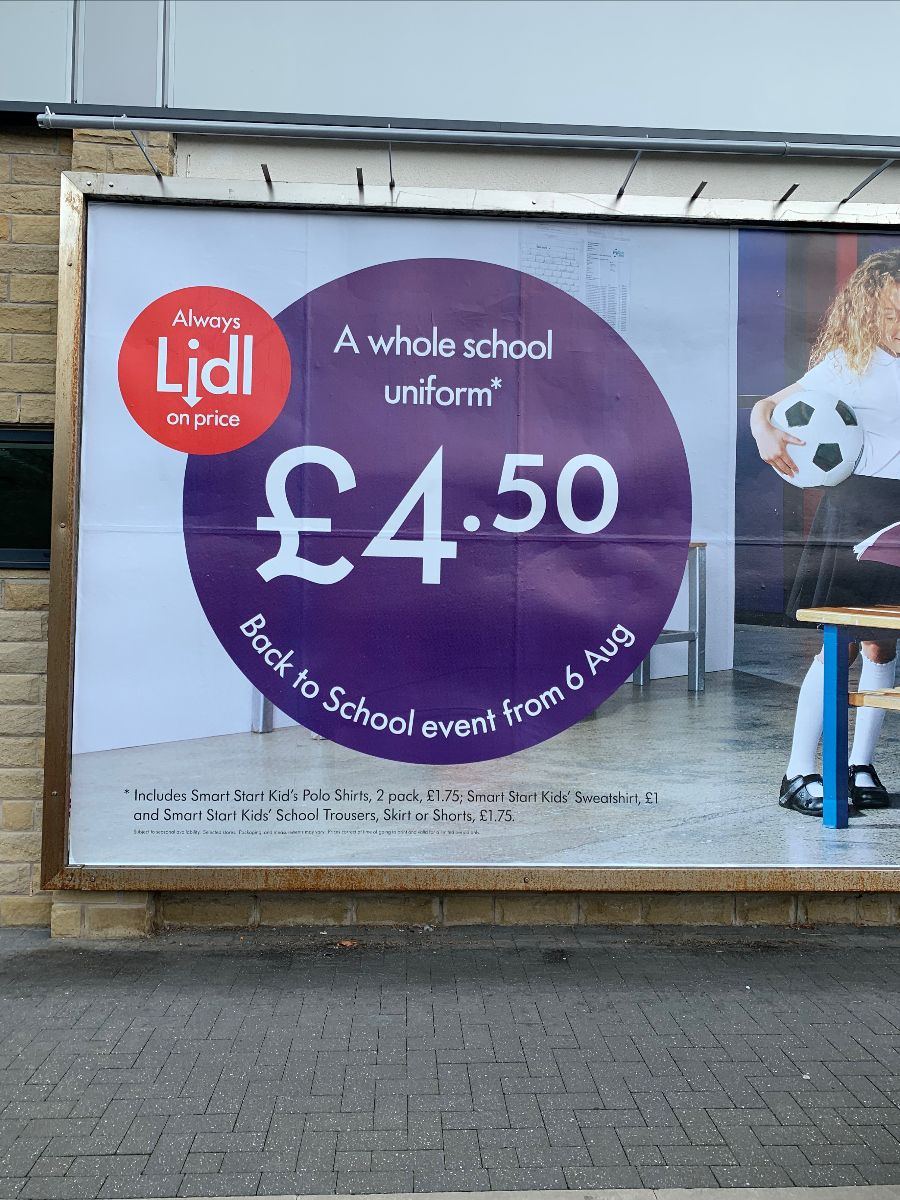
For both Aldi and Lidl; they have put together a uniform for £4.50/£5 that offers parents a chance to not spend a fortune where finances are tight (and likely to be tighter than usual given what families have had to put up with 4/5 months).
The quality is good enough for the price and customers purchase this as their main uniform for school, other parents invest in the uniform as a 'spare', especially younger children who go through uniform as though it's going out of fashion in some cases. It's a great price point, strongly advertised on a full-sized billboard outside the store.
It's another example of where value is clearly signposted for customers; a valuable footfall driver and again, another question as to why other retailers are not competing with this sort of deal.
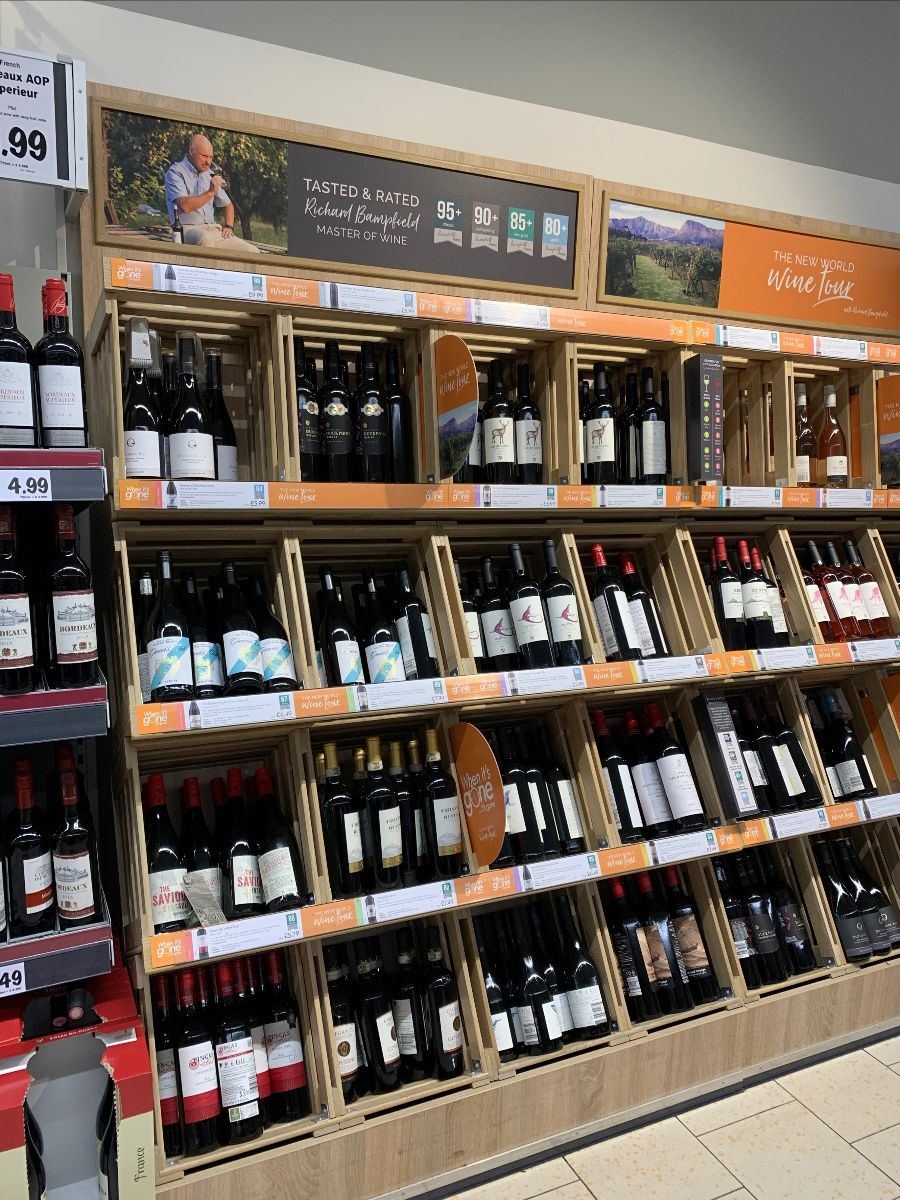
Wines was a key area of growth for Lidl in their early days when they were trying to bridge the gap between quality and low prices, bringing in Wines that were strong, at a surprisingly low price (once featured in the Daily Mail wines feature, sales are through the roof). Driving footfall and then, the challenge for retailers and traders is ensuring that customers who may come in for the Wine, or the school uniform deal then buy other things as well.
Ideally, they then switch some of their shopping to the retailer and the deal works until such a time that another retailer does a job of attracting the customer, or the retailer themselves upset the customer with poor store standards or queues, poor availability or whatever else.
For the retailer, the challenge is that customers don't fill out surveys to tell the retailer what's going on, they just decamp elsewhere.
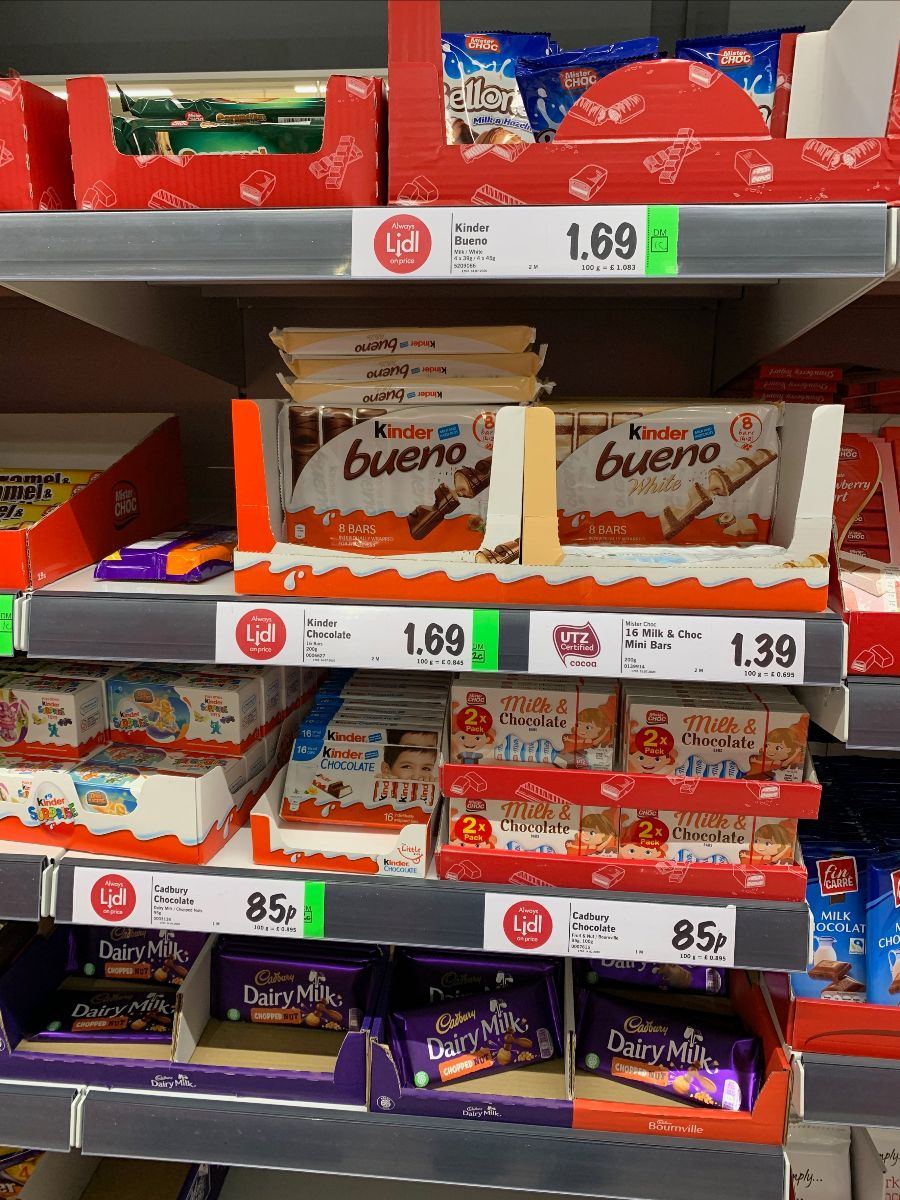
It's worth highlighting that for all the special buys and various promotional deals around the store, Lidl is the EDLP operator, like Aldi across the various categories. Notably, on brands, they range more core lines that Aldi and flag these 'permanent' lines as "everyday Lidl price' on the shelf edge.
No deals necessarily, but the core price is low and often lower than equivalent retailers elsewhere. Strong, permanent messaging at the shelf edge helps customers see that brands are always cheap, whether in-store as part of a permanent range or as part of special buys.
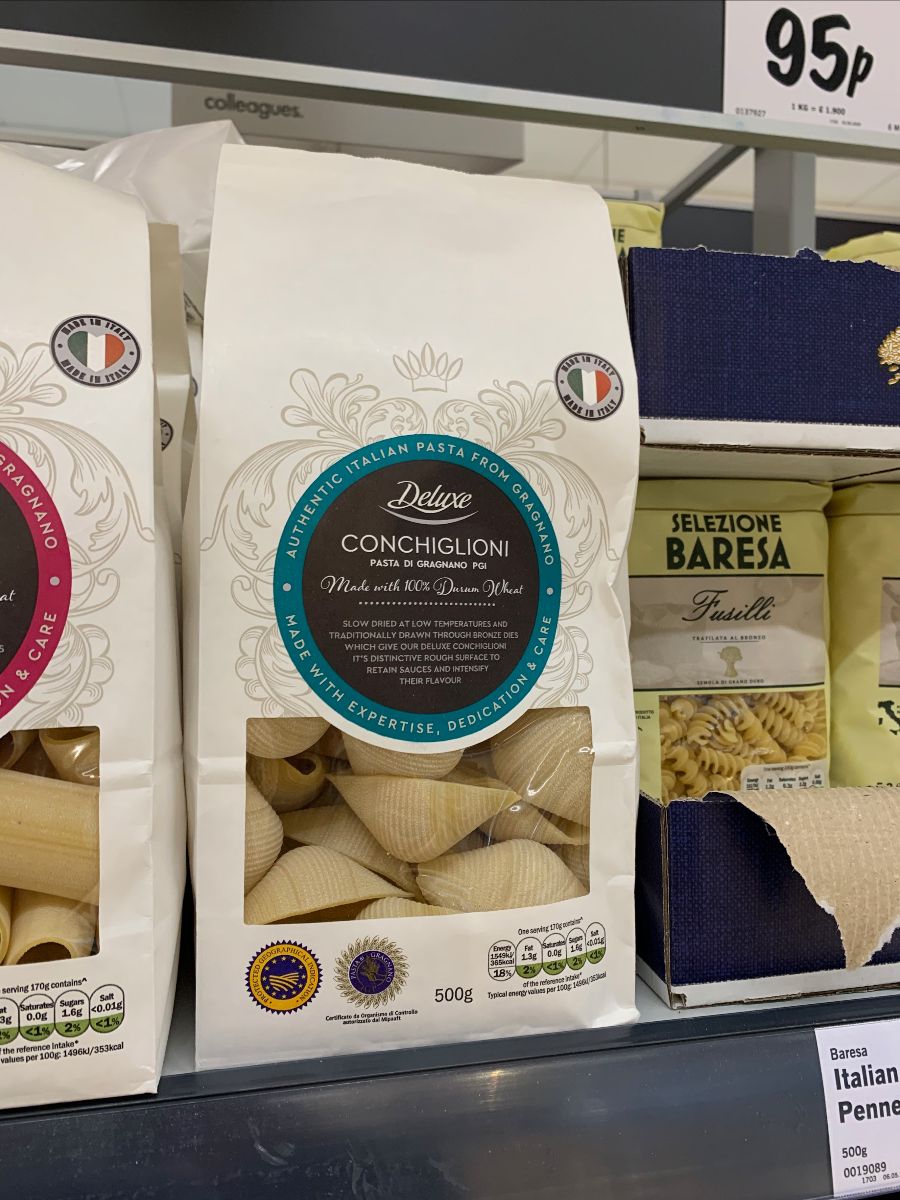
Of course, bridging the gap between value and quality remains key and premium own-label products under their Deluxe tier remain very important. It drives margin and if customers like the premium Pasta e.g. then they're more likely to stick with Lidl as their preferred retailer due to the strength of the own label.
There are numerous extensions around the store and their premium tier isn't as extensive as Aldi, it does a good job for those customers wanting to expand their spend and trade up in some cases. Notably, it's strongly backed at Christmas and Easter as well and provides another reason for customers to pick Lidl over other retailers.
In terms of Lidl; they're doing a good job on value, promotions and special buys / WIGIG's whilst trading the core shop as well.... Whilst store standards can be variable and some of the COVID measures (such as queues / social distancing) reports have been also variable, bringing safety in to question...
They're broadly doing a good job for customers and their ability to bring in branded, short term products on 99p or other price points as part of WIGIG's / Special buys makes it even harder for other competitors to combat and defend against the chain.
To visit Belle's JustGiving page
From the Grocery Insight newsletter archive, first sent to subscribers on 10 August 2020. Steve now writes at read.groceryinsight.com. See also the blog archive and briefings.