Tesco Q1
26 June 2020
To visit Belle's JustGiving page
The Bulletin - Tesco's Q1 - 2020
A quarterly sales performance for Tesco in normal times would be worth a consideration to see how the various initiatives via Tesco were progressing, alongside eyes on how the large stores were performing too. It's been very much a cut and thrust, nip and tuck sort of market since Dave Lewis came to Tesco and whilst the margin, taking a battering, has recovered somewhat, it will never be up at the levels of 5%+ enjoyed by Sir Terry and to a lesser extent, Philip Clarke.
I often used to say that we'd never see like for like figures up at +5% again, not post discounters and their expansion but then again, who predicted a pandemic? Covid19 has changed so much, accelerated the online market, perhaps making 4-5 years progress in about 3 months and the slots keep on opening, but this is expensive.
It's easy to be swayed by the great like for like numbers and various records being broken on the online side of things. But the reality is that the mantra of sales are vanity, profit is sanity has never been truer, whatever the headlines and various commentators point towards.....
Tesco has performed well throughout the Covid19 period and that's not just about sales (if anything, it's bottom of the list) it was always more about being a good community-focused company, a good business citizen and doing the right thing by people as we all faced a challenge, bigger than any of us imagined.
As we know; Tesco was strong on hiring people, on giving shielded colleagues time off, on full pay and also sharpening their sickness benefit so no colleague would lose out and more importantly, people were kept as safe as possible. The other food retailers did similar and have also done well in this regard and it's notable that discounters, for the first time perhaps PD (post discount) were drowned out in the media and around advertising as well.
Safety is now a key consideration for customers and that's interesting because it would have barely registered on a customer's radar previously, whereas now, that will be a key driver for loyalty and customers deciding where they wish to shop. Larger stores, by definition, have more space and with social distancing applied, they feel larger, with more space to move around without getting close to customers, or colleagues.
Whereas discounters, as we know operate a traditional 'box' by and large that suits their needs, their model and of course, works perfectly well for them. It will again, once we exit this pandemic and all that goes with it, but for now, there are limits on store traffic and this impacts their model greatly as it's derived from case counts on the delivery, the store productivity which considers how many items scanned through checkouts and the like, divided by the number of people in-store working.
Both chains have pointed to stores being so busy that they elect to knock down the store and rebuild a larger one in its place (Lidl) or indeed, build a store near an existing unit that wouldn't ordinarily meet the justification to invest, but would 'take the pressure off' the existing store in terms of trade.
So social distancing and limiting the numbers in stores is not good news for anyone, but for discounters and their record trade, notably so. Customers can elect to queue/wait for the green light outside the store before entering, but how long does one queue for? Do customers pull in to the car park and back out, knowing that the store is too busy given the queue outside?
There isn't necessarily a quiet time for stores either, people being off work, either through furlough or working odd shift patterns, plus the kids being off too means that people will shop at any time of the day. Equally, stores are were on the breadline with falling sales and rising costs are given a new lease of life by customers, perhaps going to this store because they know it's quieter, or they manage the queues especially well.
How this works towards the Autumn and Winter, in terms of queues outside remains to be seen. People won't tolerate queuing in the cold weather, Tesco do allow customers to sit in their cars and wait to be called forward but any such shift needs to be organised and orderly for later in the year, how do you operate Christmas? Shopping slots like one would have for a pre-order of Christmas food? It feels like the only way forward.
For Tesco; strong signage, organisation and a focus on the 'job' at hand - filling the shelves and feeding people in an almost primitive retail way, saw the sector and individual retailers at their best. No messing around with marketing campaigns and other tit for tat battles, just a full-on focus on buying > supplying > selling, with all focus on the stores themselves.
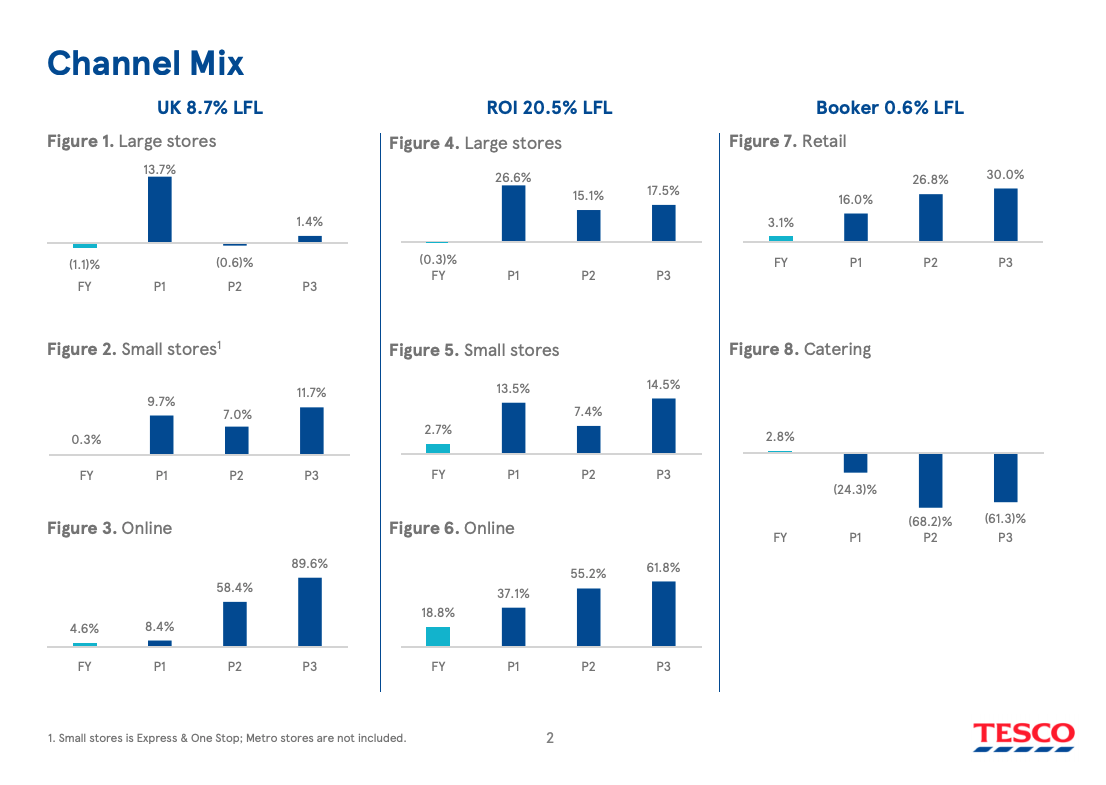
We all love the Tesco charts and these are great in terms of giving further information beyond the results:
First up - we see the split of traffic across Tesco and in particular, larger stores / smaller stores and online as well:
The "P" relates to the period which is every 4 weeks or so, one can see that overall last year, large stores were just negative with online +4.6%. Small stores are essentially convenience and they were up, only marginally though.
Large stores in P1 were near +14% with the lockdown rumoured and people buying anything and everything, then with the lockdown announced and people adjusting to being at home and not being starved of food (what, we can still go to the shop?) sales fell away to -0.6% with a slight rise in the last period which may well account for increased spending in areas like BBQ, Meats, Beers etc.
The recessional shift to convenience was well documented and that behaviour has, by and large, stuck with consumers, who choose to save money by buying what they need each day or so, to save on waste. The proximity of the smaller stores and the feeling of safety one assumes means that overall, trade was strong with strong positives in each period.
Online tells its own story, +8.4% in P1 and this would have been far higher no doubt, but the capacity constraints (IE vans/collection slots etc) meant that Tesco was flat out there, 58% and 89% rises in periods 2 and 3 are remarkable and reflective of the work that Tesco have done. It's not just vans, which are hard to build out (various infrastructure is needed etc) but even adding collection slots, or an area to store that doesn't usually offer click/collect requires chilled vehicles and people to bring the shopping from the holding area.
It's not as efficient as it could be, nor is it as full an offer (for example, a local store to me can't offer frozen on click/collect because of the infrastructure issues) but it represents tremendous work from Tesco. Indeed, fulfilment is one thing but the number of people that are then required to pick and pack the shopping is huge and the store is also judged on availability, so the product has to be available as well.
A difficult task with even the shortest supply chain when customers can make changes to their shopping up to 11 pm the day before delivery, or collection. However, it's worth noting that restrictions were placed on the number of items/number of changes made to a shop at the peak of the pandemic. Nonetheless, a remarkable achievement.
ROI continues to perform well and their stores and online were all performing well, aided by their long-running and successful campaign versus Aldi and Lidl, now called 'you won't pay more' after iterations on price down and also 'the 800' - reflecting the number of items (actually nearer 1200) that were price matched versus Aldi and Lidl each week.
For Booker - catering has tanked as expected, given the closure of restaurants and other operators, even in the new world with openings to take place on 4th July, it won't be anywhere near full trading for many months. If people are worried about doing their shopping in Aldi because it's too crowded then sitting in a socially distanced restaurant (at 50% capacity) could be too close for some (did the waiter linger too long?) etc etc.
But the core Booker sales were strong, aided by the independent sector trading well throughout the pandemic as people opt to shop local, shop safely and shop where they know stock will be available.
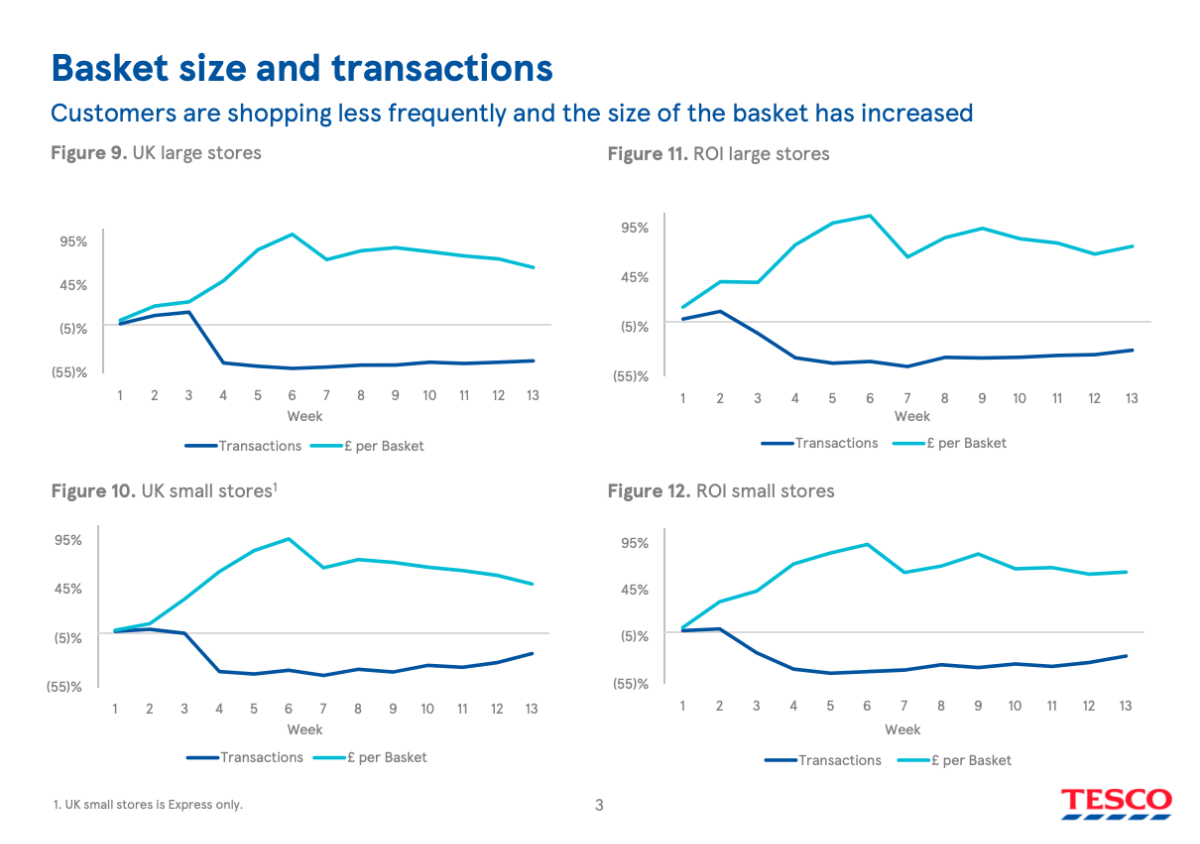
Less frequent shopping = lower transactions and basket sizes up through the roof, the reverse of what we have seen in terms of more trips, lower basket sizes but then we are in a situation where odd, is even and vice versa.
Small stores and large stores show similar rises and peaks, as does Ireland, reflecting when various measures were put in place no doubt.
Smaller stores doing bigger baskets and lower footfall is the very definition of a reversal in the market and is great news for those stores particularly, the customers have kept on returning so are clearly happy with what they are getting.
We should be clear that no matter how close, safe or otherwise a store is, even in a pandemic, there is ample choice and customers still want quality and value for money above all else. It's reflective of Tesco as a whole and the recovery, that they have capitalised on this with their sales figures today.
GM and Clothing are two categories that were once wonderful, but now bring challenges and to be fair to Tesco, lots of work has gone on to repurpose both categories and in particular, reduce the group's reliance on GM as a whole, given the market shift away from the category and in to online (Tesco, losing £40m a year abandoned that as well).
The reverse of what we have seen at Sainsbury's where Argos was acquired and the click/collect play and the sales halo that brings was often a boon for them. However depressed consumer spending means GM is adversely hit and that has impacted the number for Argos for quite some time, you are really in the firing line in this area. Whilst Argos will have done well out of lockdown with Nintendo Switches, outdoor toys for the kids, BBQ's and various home working devices for hardy souls no longer going to the office each day, the challenge will be later in the year with widespread job losses and a weak economic outlook.
Other areas will have stalled too and for a non-food operation, it's bad news. Clothing is another category where sentiment hits sales, having said that, people still have kids that are growing and the world keeps spinning in other areas too. The absence (or decrease) in the summer holidays will impact clothing, luggage and other areas where extra spend can be attributed.
However, in lockdown, no one is buying clothes just to sit at home, spending all but stops.
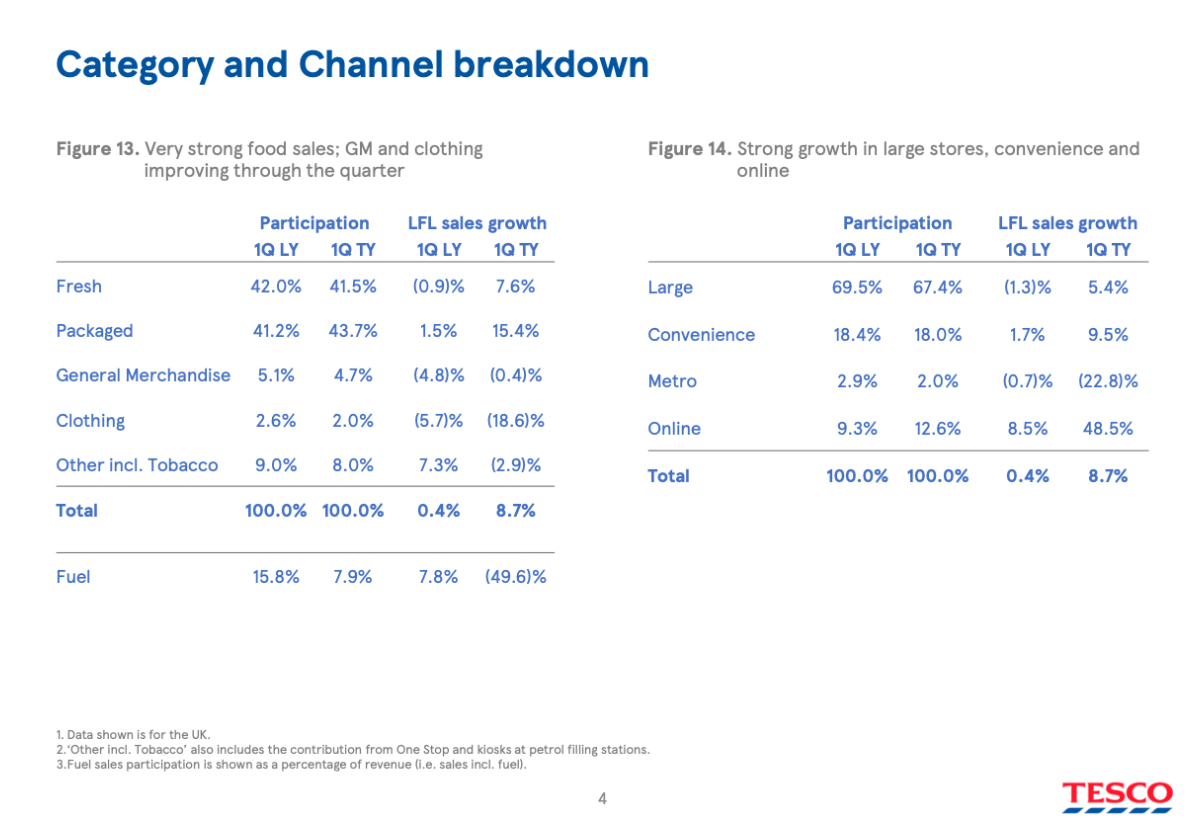
For Tesco - Their non-food was improved this year on Q1, perhaps taking advantage of home working and other elements (DIY / Kids Toys) but last year's Q1 was horrendous at -4.8%. Clothing was -18.6% versus last year at -5.7% so there is work to do and an almighty sale too. Lost sales are a given with the loss of a summer holiday and indeed, school uniform sales may well be later (depending on what happens with school reopening).
Fresh and Ambient in food were up strongly, slight negative in Fresh (but this is sales value, so the introduction of price campaigns / new value lines and shifts to those will impact the overall number) turned to +7.6% with packaged / ambient / grocery lines +15.4%.
Other including Tobacco -2.9%, whether people actually chose to give up smoking for a pandemic remains unclear, but this will likely include magazines and newspapers (hard hit by the pandemic) alongside sales from petrol station kiosks (where of course, fuel sales fell as no one left the house).
Fuel -49.6% is also reflective of the lockdown. Not that retailers make a fortune on fuel, they don't, margins are thin, but it's the other spending that generates profit - the forecourt shop, de-icer, screenwash and the car wash which represents near ridiculous margins.
In terms of the stores - Large stores did well - huge participation too, convenience also performed well. Metro down, unsurprisingly given the location of stores (in city centres) and reliant on food to go trade via office workers and other foot traffic. Despite participation being down a further 0.9% on last year, that reflected a -22.8% sales drop.
Tesco will be even keener to shift the Metro stores on, given the future for city centres and high streets being, even more, doom-laden and those rents not going anywhere either.
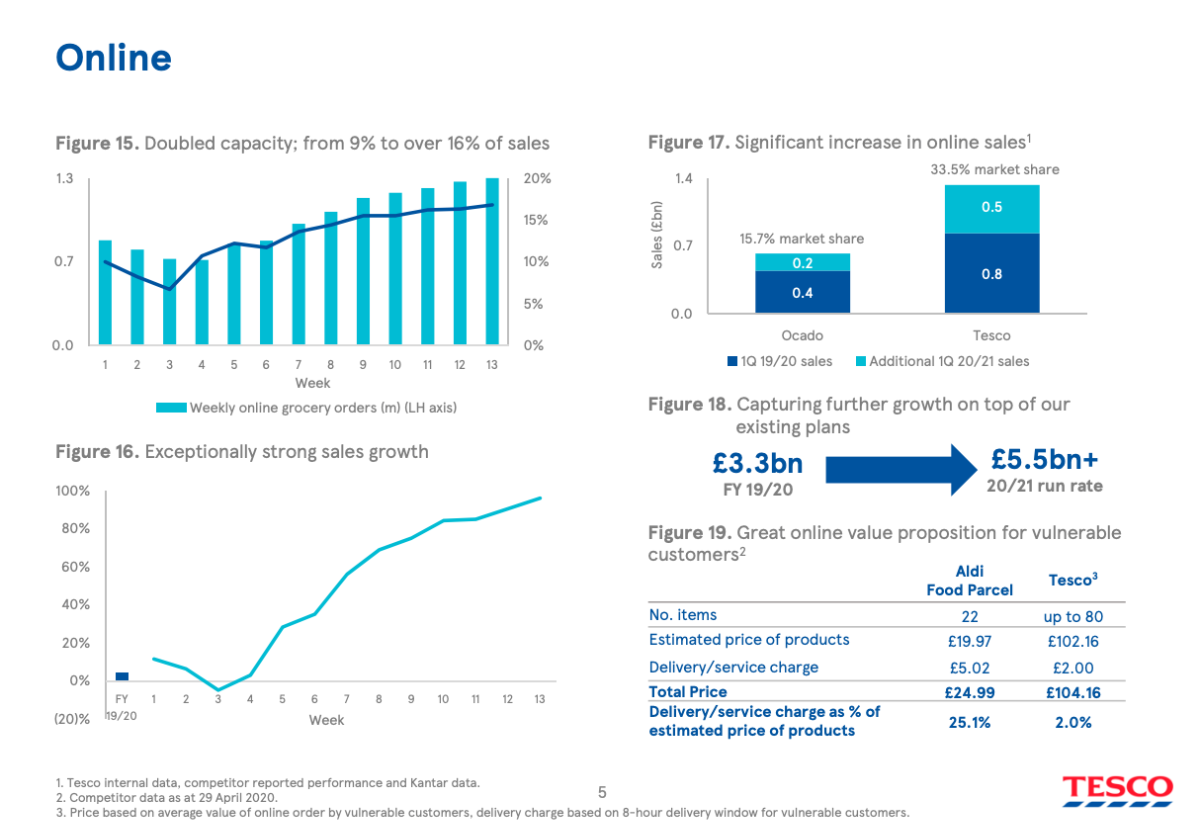
To online then, it's clear that there is growth and it saves customers a job, people are safer not going out, so why not get it delivered or worst case, pick it up?
What that does to the oft mentioned element where customers after picking up, then visit the store and spend more money is perhaps put on ice for the time being... But nonetheless, the future remains online but stores still play a huge, huge part in fulfilling demand and the move to shift some of the larger Tesco stores to the fulfilment of food online looks very wise indeed, given Covid19.
There has been an acceleration in the shift of how to shop by some years in a matter of months, no question. But stores remain key as we have discussed to availability, quality and service for that online shopper. Indeed, any fleeting visit by an online shopper is likely to be to Tesco (I use them online and like their own label sauces etc) but if that store visit is negative, then the whole online shop may be in question.....
Online as a share of sales for Tesco has gone from 9% to 16% in 3 months or so, remarkable. Turning their market share from 15.7% to 33.5% in the same period. Unprecedented.
The notable element here is a jab at Aldi (not online of course) with their belated entry to food parcels at £24.99 charged c.£5.02 for fulfilment and delivery which Tesco calculate to be 25.1% of the overall cost. Tesco on a up to 80 item shop at £102.16 + £2 delivery charge is just 2% (based on vulnerable customer average shop and 8hr window for delivery etc).
An interesting stat and a reflection of Aldi not being online is a real miss out on sales. However their model may not lend itself to online groceries and a pandemic, or coming out one, is a chance to reconsider that. But it still doesn't make it the right move for them, necessarily.
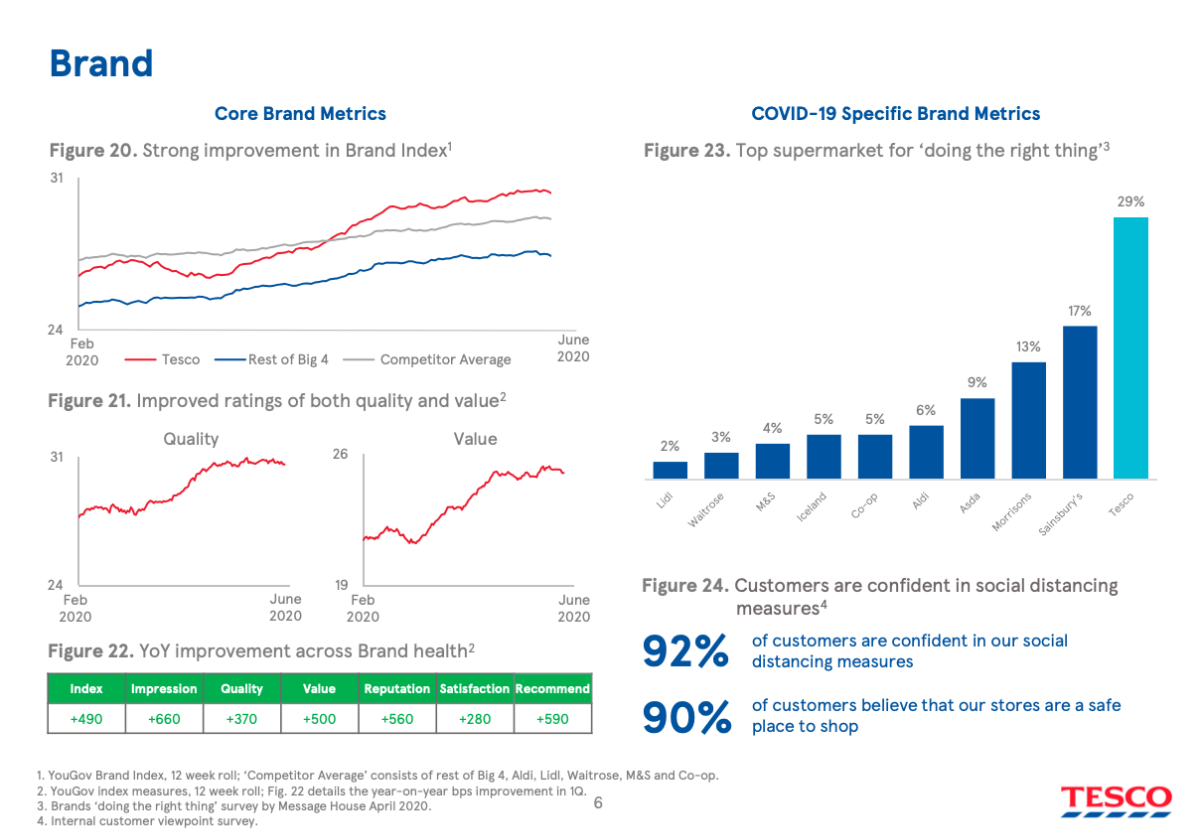
One area where we knew Tesco would be ok under Dave Lewis was the brand, in addition, it was one area where the business sorely needed help. It was a brand that showed minor recovery under Philip Clarke (remember horse meat?) but then fell into old ways and was battered by falling sales and then the accounting scandal which made things even worse.
The brand and wider perception of supermarkets in the Covid19 pandemic has been very interesting, discounters usually own the PR and media space with their adverts and consumer champion role. However, they were almost drowned out by the multiple messages from larger supermarkets about their efforts to hire and recruit people, their work to make stores safer and generally, it was a time to make hay just talking about doing the right thing.
Quality and value both ticked up in Tesco, perhaps reflective of their sales growth and customers returning to Tesco for the first time in a while, or doing their 'big shop' there, rather than visiting numerous other stores (via the lockdown / essential shopping piece and tying into fewer trips, higher spend too).
Either way, customers have been impressed and the brand values for both have ticked up strongly, as have the big 4 brand metrics but Tesco has outstripped the market and overtaken the competitor average as well.
Strong scores in reputation, value and impression are all good indicators that customers have been impressed with what is going on around jobs, recruitment and how safe they've felt in stores too.
Tesco is well clear on 'doing the right thing too' with Lidl right at the bottom, noteworthy as they barely did any signage around Covid19 or their work around recruitment / social distancing etc. They were also the first to start advertising (just after Easter I think) with their core adverts around price, value and the 'every day' messaging you'd associate with them.
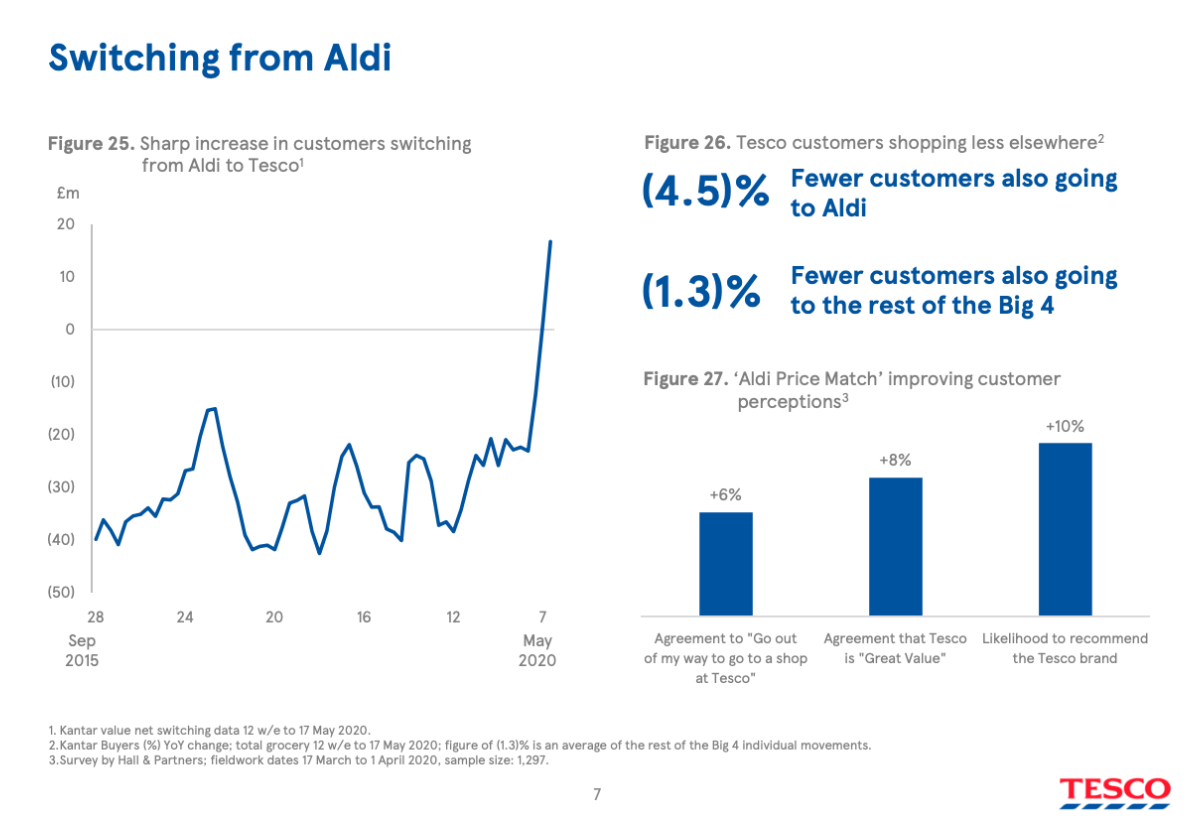
A big increase in customers switching out of Aldi into Tesco, it could be that the Aldi price match (Just before the pandemic hit) was incredibly well-timed to capture this new demand, given people were not visiting discounters because they were too busy, viewed as less safe or the queue outside was just too big.
Discounters do build stores near large competitors too, to pick up secondary footfall so this strategy may have worked against them with customers able to easily travel, a reasonably close distance to a larger competitor.
It also perhaps explains the uptick in advertisements both in-store and on media that Aldi have embarked upon to highlight why they are cheaper than Tesco with their family meals and other comparatives.
Whether this trend will stick remains to be seen but Tesco are in control of their pricing, stores, product quality and ranging so it's down to them! No pressure, but a reminder of how competitive our market is, again...
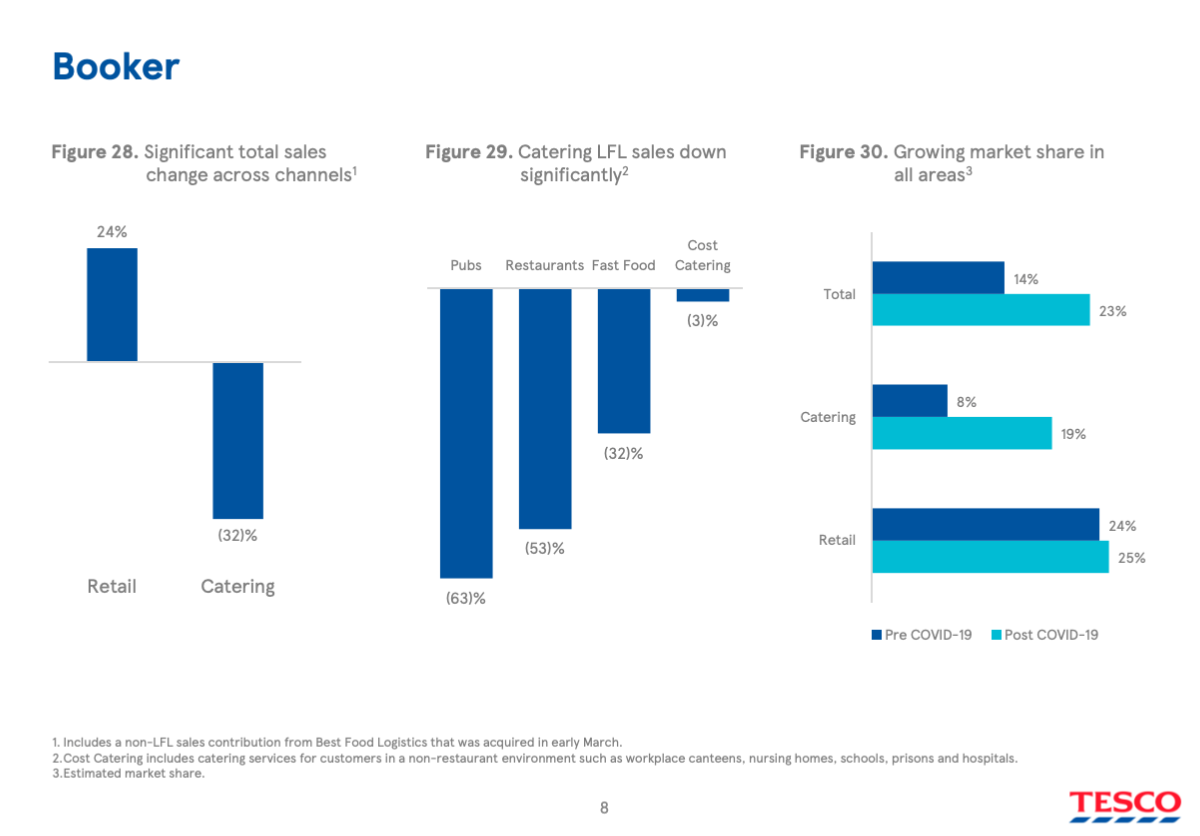
Big drops at Booker in catering as we have identified and it's of no surprise really. A stark reminder that even the ability to click and collect (that some outlets have offered) has barely made a difference for trade with pub sales -63%, Restaurants -53% and even fast food -32%.
Even workplace canteens and other providers of those services were -3%. However, market share has risen as a result post-Covid as Booker will presumably pick up extra trade from other operators.
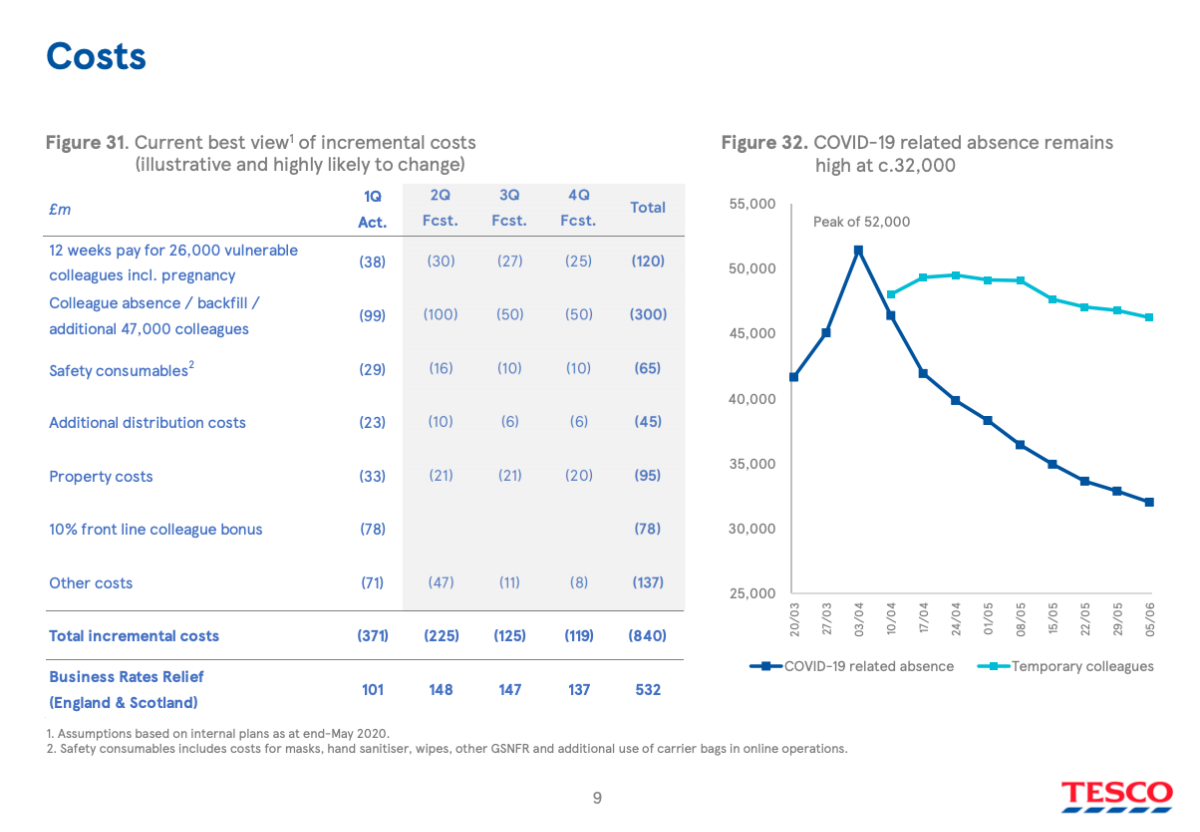
Saving the best till last - costs of doing business in Covid19 are not good, they are high, the furore over the dividend (for a 5-year turnaround) and the rebate of business rates has missed the point entirely. the two things are separate.
Indeed, Lord Adonis was moved by my stance and labelled me 'an apologist for greed' after pointing out he rarely engages on Twitter.
Anyway - the interesting element here is that we knew from the full-year results that Tesco's rebate plus other bits and pieces wouldn't cover their total costs of doing business, sick pay, hiring staff, distribution costs (who gets the extra stock to stores etc) alongside the additional bonus rightly paid to colleagues for their sterling work on the front line.
The total forecasted (with Q1 actuals) for the year comes in at £840m. Presumably, their forecast is cautious and whether that assumes a second wave and Winter challenges is unclear.
12 weeks full pay for the shielded totalled £38m, the forecast was £30m so already it's £8m more. Absence rates were at their highest - 52,000 workers off with COVID related absence, be it symptoms or confirmed. At the height (late March, early April) the testing debacle meant that no one knew if they had COVID, or if they were sat at home for no real reason for two weeks, such was the lack of speed in the govt response.
A timely reminder there of the importance of testing, of course now, you can get a test and be back at work if all clear, but back then? Not a chance.
Even the hiring of some 47,000 temporary colleagues left the business, at the peak, 5,000 short in stores and being direct, but not disrespectful, experienced colleagues versus new temporary staff means the experienced, trained staff are having to work even harder given their knowledge.
Q2 forecast for temps is at £100m with it dropping to £50m for quarters 3 and 4, so money is left in but the numbers are halved for later in the year and moving to 2021. Safety consumables such as masks, sanitiser and extra bags for online all add up and they have to be paid for, which is another £65m.
Property costs one assumes are related to online with sheds, portable chillers and units alongside extra trailers for chilled online shopping to be held and indeed, lower rents from tenants associated with the stores? Either way, there's a £95m cost here.
£78m for the colleagues' bonus for their hard work in Q1. Well deserved and other costs, which could be the refrigerated trucks but it all depends on how it's accounted for but £71m in Q1 versus £47m in Q2 dropping to £11m and £8m in Q3 and Q4 shows that there were costs incurred that were substantial.
Presumably, store signage may well feature here; the plethora of messaging around the store that has to be designed, printed, delivered and sited in stores, only for the govt to fudge the 2m rule and make it 1m+ = potential for yet another change of messaging is welcome (for hospitality and assuming it's safe to do so) but the work for stores is significant.
Whether these costs have any Brexit related disasters included are unclear, or whether that was accounted for previously isn't clear, but we have the potential for that politically related joy playing out over the next few months or so..
So that's it! I believe Dave Lewis final act as CEO? Ken Murphy joins the chain 1st October and the interim results are a mere 6 days later, so interesting times ahead, joining in the embers (we hope) of a pandemic will presumably be easier (all being well) than what Dave Lewis inherited back in 2014, with the accounting challenges shortly afterwards of course.
A test of any leader is that you leave something in a better state than in which you found it.
Despite the accounting issues, falling sales, a huge debt pile, bloated central offices, a huge number of ancillary businesses that made little sense in isolation, or even when they were put together, stores that looked as though they hadn't been filled in a week, abysmal value perception and non-existent positioning, no corporate direction or 'message' to customers, an over-reliance on a market that was slowing in Non-Food alongside a plethora of other challenges, capped off in his final year by a global pandemic / Covid19........
Dave Lewis has certainly left Tesco in a better state than he found it.
From the Grocery Insight newsletter archive, first sent to subscribers on 26 June 2020. Steve now writes at read.groceryinsight.com. See also the blog archive and briefings.