Tesco vs Aldi - hotting up
28 July 2020
To subscribe to this service and benefit from our expertise
Tesco vs. Aldi - Edition 301
One of the most interesting things about 2020, aside from Covid19 was the price offensive from Tesco, versus Aldi, on the value tier products that had been launching over the former 18 month period. With Stockwell and the farms going back even further, it has been fascinating to see this then culminate in a package that highlighted Aldi price matching versus Tesco equivalent products in this space.
As we have noted, Ireland did the same, although on own-label products in the main and this worked very, very well against the discounter. It's the only feasible way to take on discounters is to basically follow them on prices as there's a 'floor' where even they can't go.
Especially now as customer numbers are limited with social distancing, Aldi runs on a very tight margin anyway as part of their 'always cheaper' focus on products, with price cuts applied to a raft of products whenever competitor activity is noted.
As we know, Lidl stock more brands on a core basis than Aldi but we have also highlighted that special buys, way before COVID was turning in to a "B&M" style aisle, with various branded products added to the assortment. Some of these in Lidl was almost added to drive sales (Kantar tracked this with Lidl branded sales being a fair proportion of sales growth, over a year ago).
The confusion is potentially there as the ranges can merge and own-label products are pitched against branded equivalent (even generic brands like Golden Wonder for example) but also, leading brands are finding their way into Lidl on shippers. Notably, these special buy products are located away from the core ranges, so the own label 'halo' is preserved.
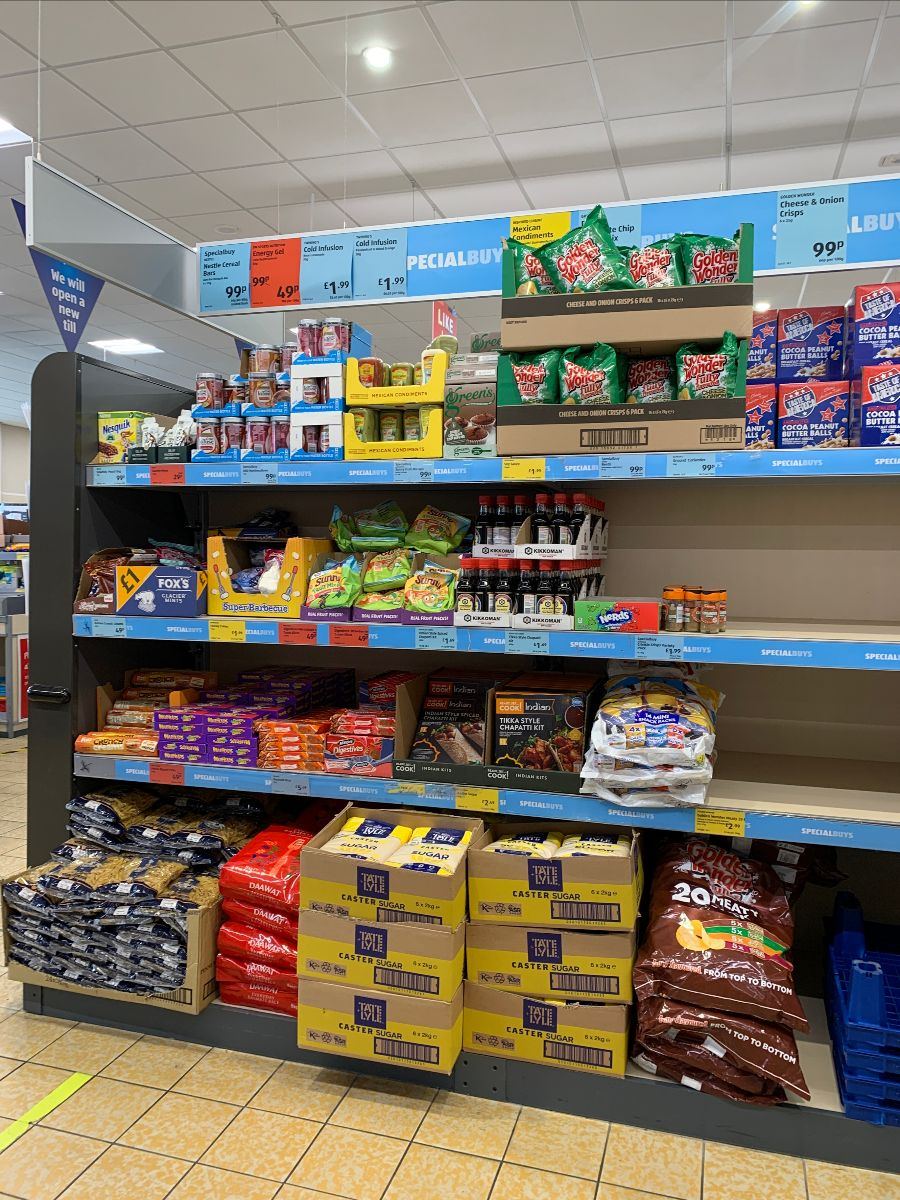
Aldi followed on brands/food in the central aisle, in some cases, it was well executed with extensions for free from the week, or aligning with 4th July for example (adding Peanut Butter and some own-label lines) but increasingly, there has been a lot of products added where non-food would reside.
Aldi have often done their non-food special buys a justice, some events were overbought and remained heavy but the product development has generally been there and their events have gone 'ok'. Some excess stock, but the packaging and products were often well thought out.
The slowdown in non-food, post-Brexit and also as economic conditions slowed (pre-COVID) meant that customers weren't buying as they would have done previously, not frivolously, certainly. Plus the move of non-food to online meant that Aldi was potentially cannibalising their own sales with their non-food, online offer.
Customers go to Aldi for their food shop first, not non-food, it's all about food and the special buys are a bonus, adding food and brands here isn't a bad thing per se, for either discounter. But it does make them somewhat 'hi/lo' in some cases and is likely designed as a sidewinder against the likes of B&M and Home Bargains (who can share retail park space) and their vast offer of ambient products.
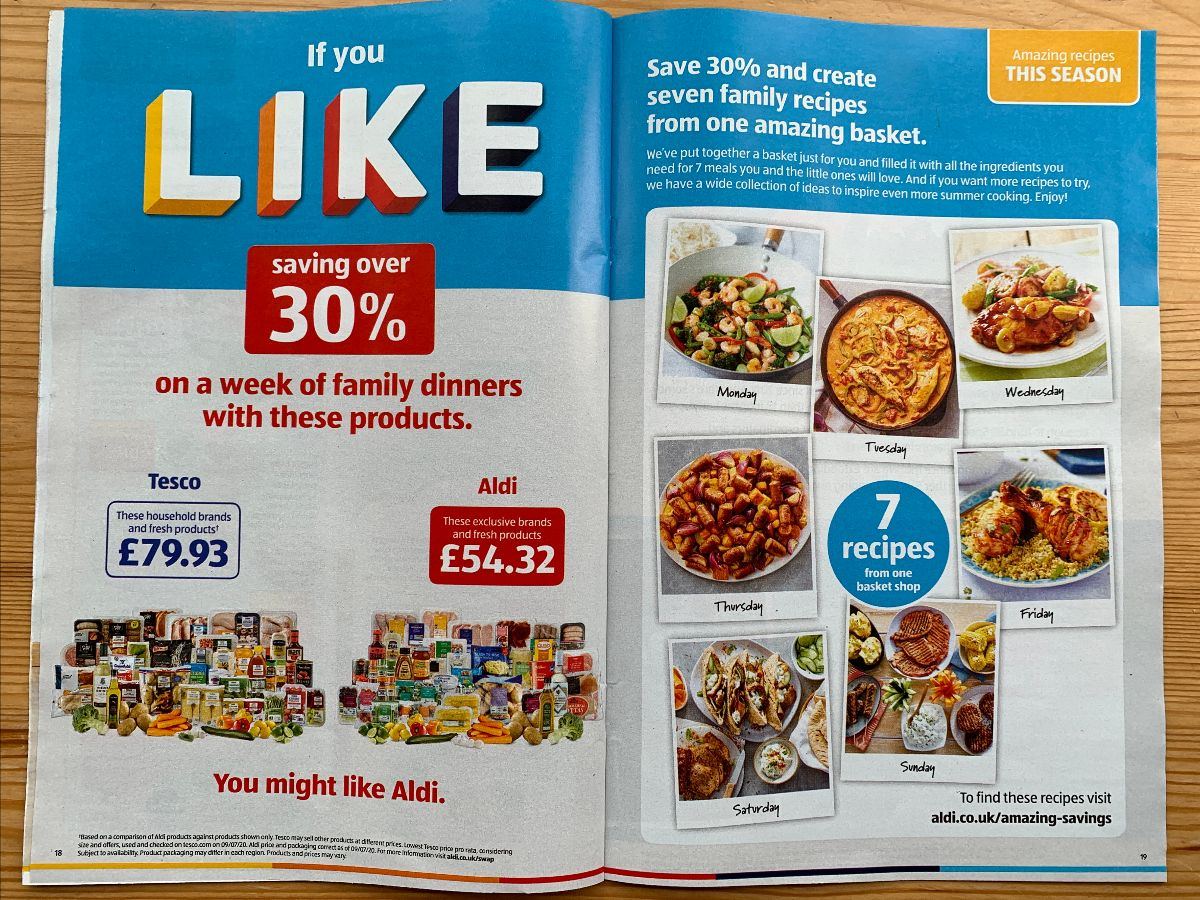
The price war is often dialled up each week with another comparative shop versus Tesco, the Aldi brochure and adverts point to a 30% saving on 'family dinners' with a near £80 spend at Tesco playing a £54 spend at Aldi.
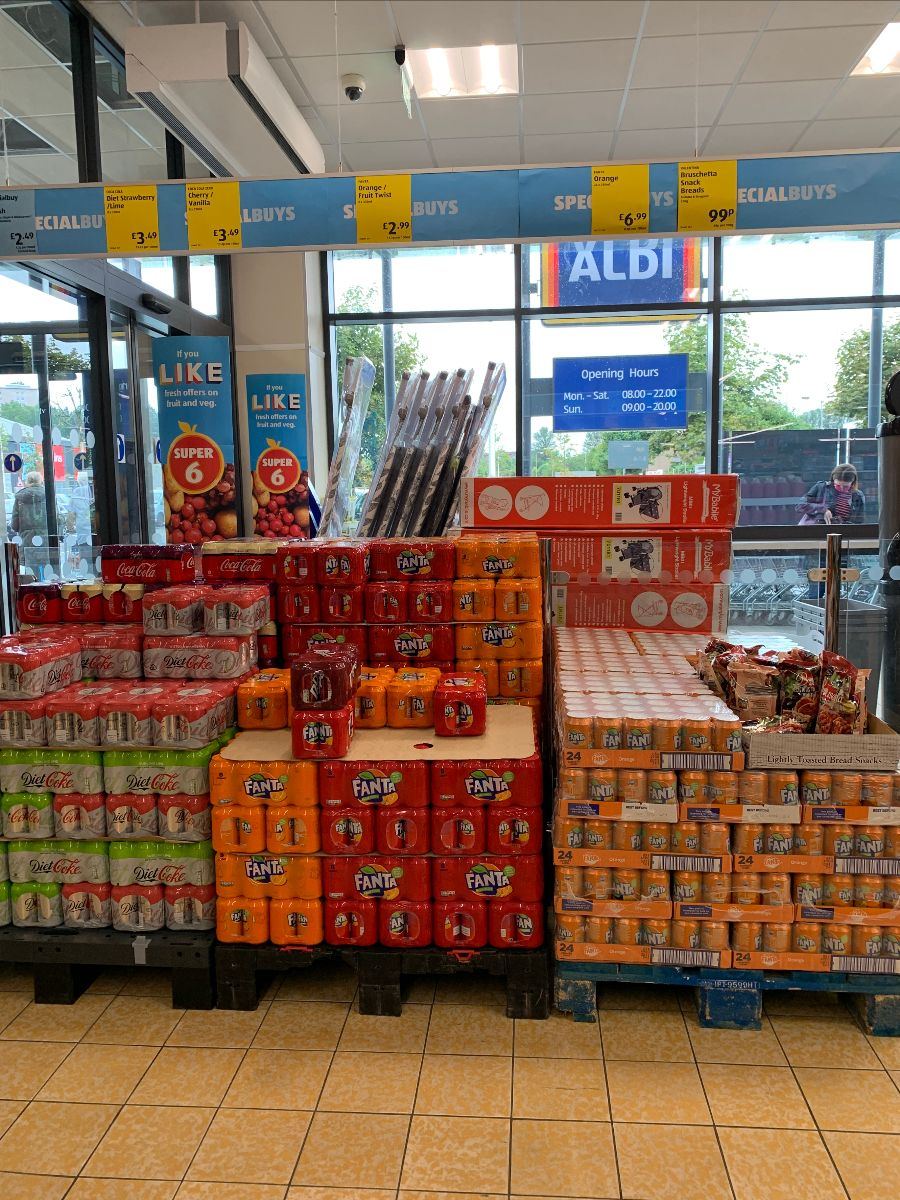
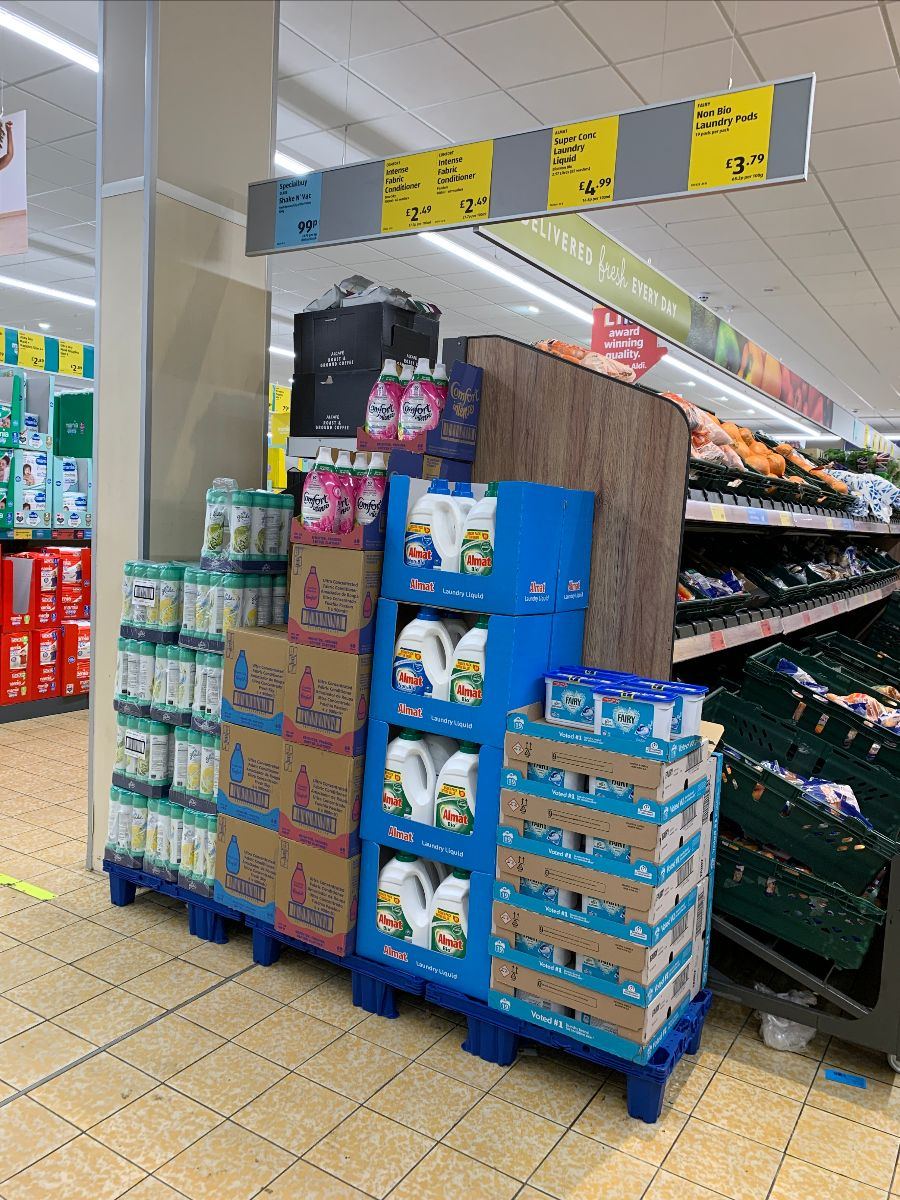
Aldi has started to utilise lots of space around the store for stacks and shippers of other products, driving sales forward. As noted, suppliers really have no strategy to deal with discounters or variety stores who sell their product at a lower price than their biggest customers.
Indeed, their solution is to drive some volume into these stores to aid their own numbers which make sense but suppliers are never going to benefit from the volume on a weekly basis, as Aldi won't range them. It makes no sense for them.
So we see a number of additional selling sites and various stock that they have got in to sell. Brands like Diet Coke (Coke is ranged) with Fanta also notable. Cases at £6.99! 24pk no less.
This is perhaps skewed by a glut of these products appearing in various retailers, Coke has been hammered by the food to go market collapsing with the absence of workers and the meal deal dying a death. So there are various packs of product appearing all over to shift volumes.
However, there are so many other brands around special buys that the chance to stretch spend on a variety of other ambient products is easy.
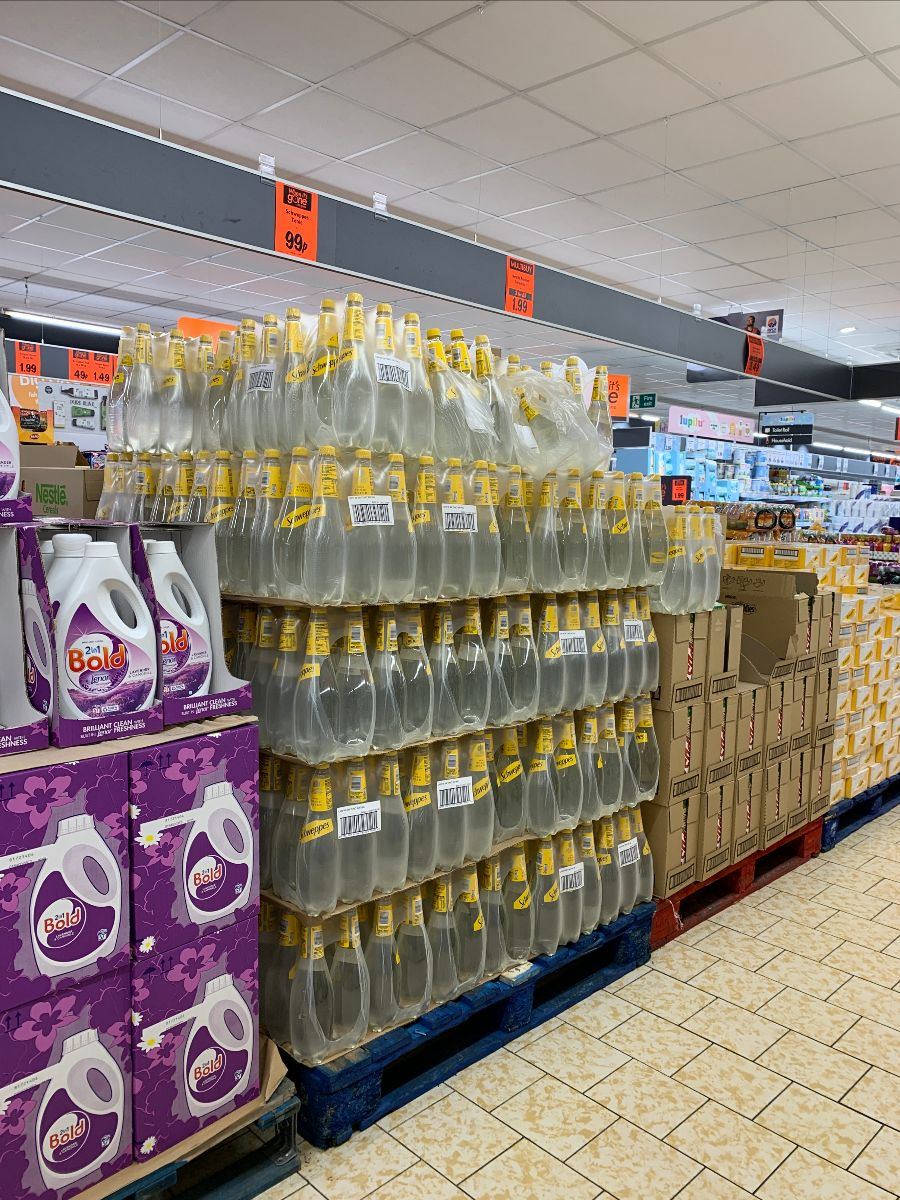
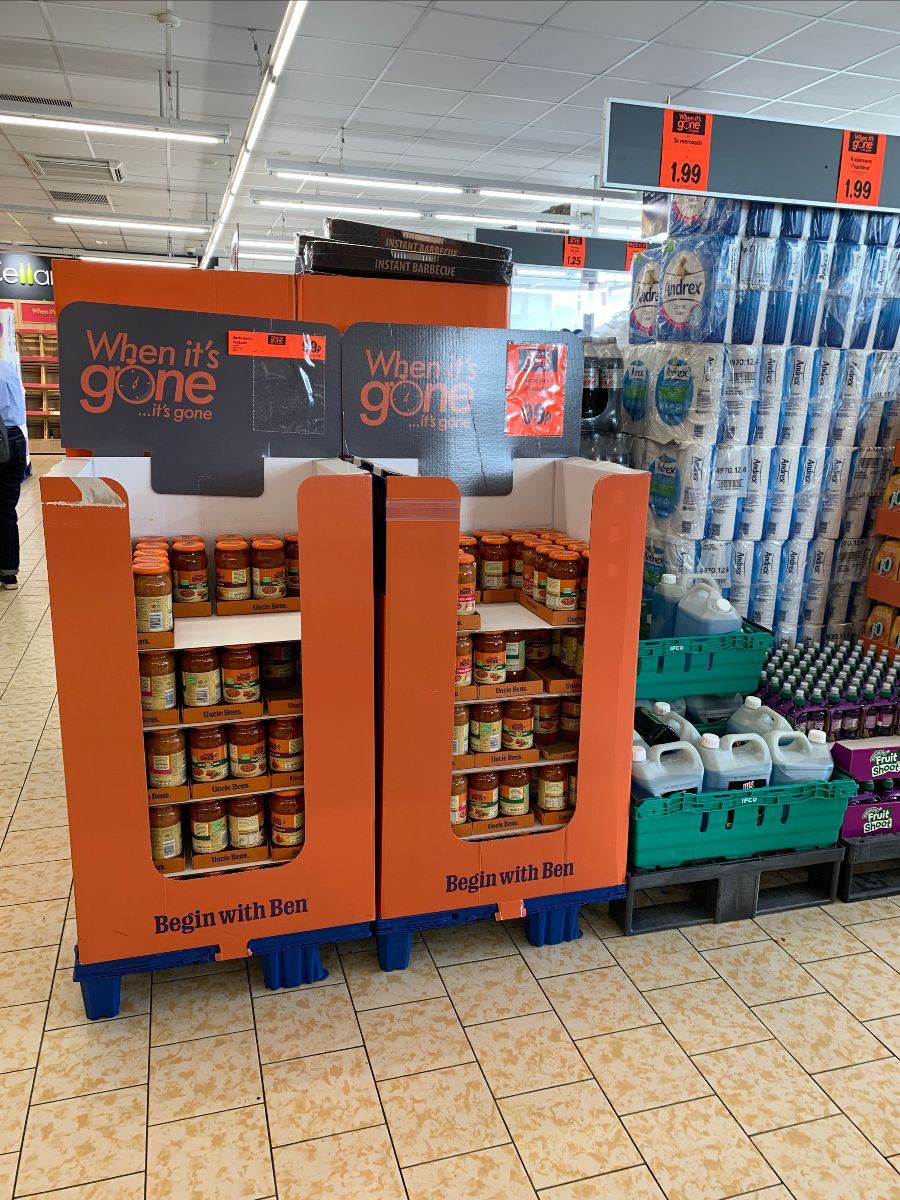
Although Lidl appears to have stayed out of sights versus Tesco, and Aldi, they have been adding brands and shippers for at least 18 months now, with some stores expanding their 'shelved space' in the central aisles to accommodate more foods. Some are own label extensions (for events like Spanish week e.g.) but often, it's branded items.
Their shipper programme has been extensive too; each shipper is typically branded with the supplier logo and accompanied by a header using their 'when it's gone, it's gone' message.
A giant pallet of Schweppes was noted too; probably as a result of the off-trade being closed due to lockdown, creating a glut of supply in the market? Lidl, with their volumes like Aldi, Home Bargains and B&M will happily take this to sell.
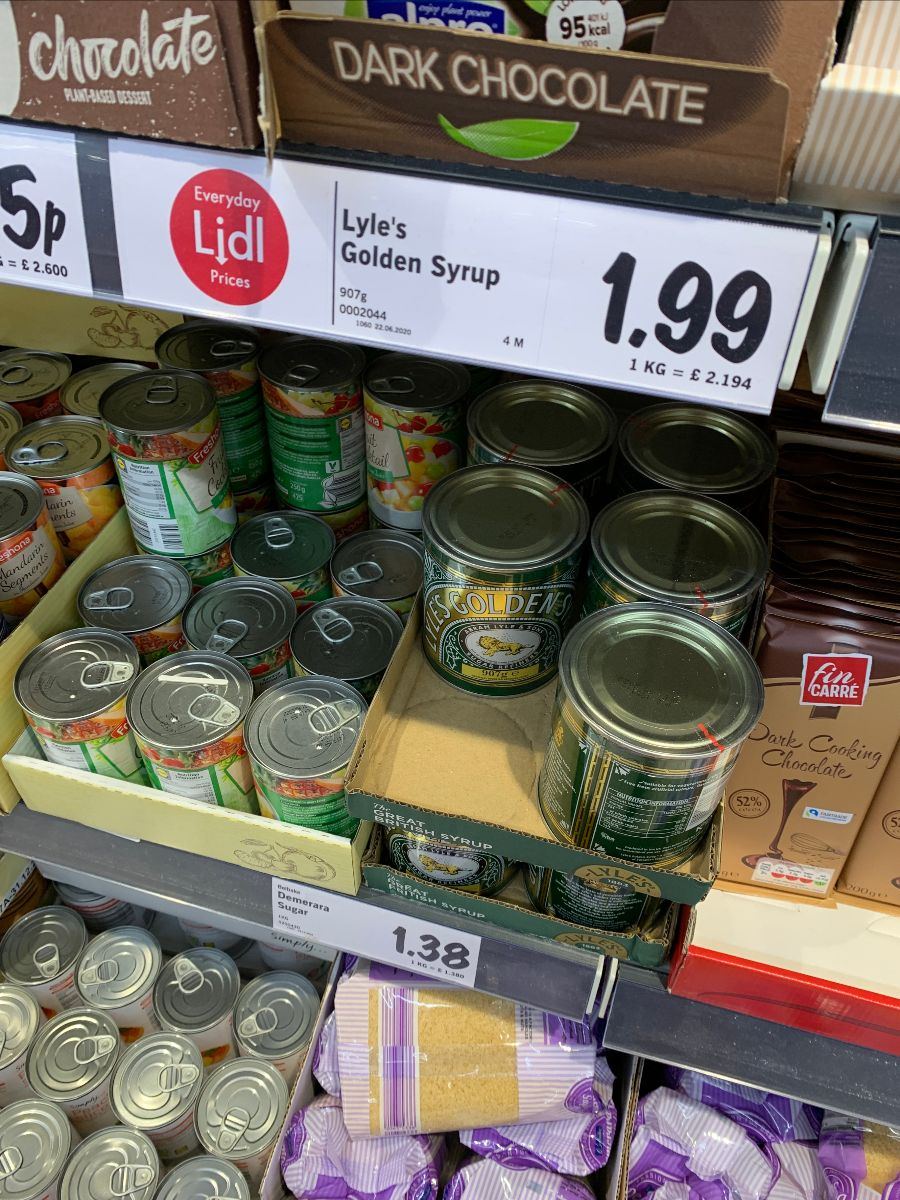
There has been a degree of noise in the Grocer magazine about the plans by Tesco to go more "EDLP" and chase down discounters. They have been on the journey for a number of years towards this approach, with the value brands added, less deals, more focus on everyday pricing (particularly with the comparative launch versus Aldi) which landed way back in March of course, just before lockdown.
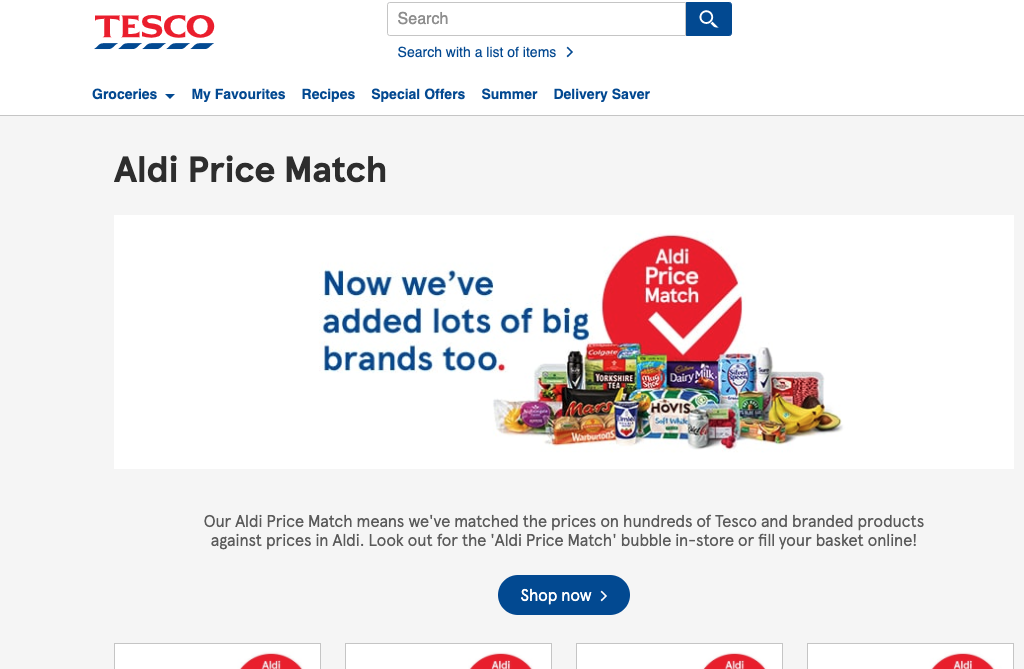
The noise appears to have been amplified by Tesco adding a number of branded items into their price comparative spreadsheet (that Tesco publishes to show their progress versus Aldi on the various product matches).
Products included are own label and brands (indeed, some brands are stocked in Aldi, all year round, like Tunnock's Caramel Wafers) but the brands have risen rapidly, presumably because when Tesco are visiting stores to check, they are seeing special buys in on a longer-term basis. Either this is due to sell through, or indeed, Tesco is deeming that they've formed part of the range.
We've seen various brands arrive and be in the central aisle for a while, Cereals notably alongside some branded lagers, this could be sell-through but is likely a way to enhance the offer, and range, without adding to the store assortment and 'breaking' the model.
Plus, why would Aldi need to add brands to the core range when it's all own label and does a great job in comparing itself to the brands? Certainly, cleaning events have become part of the mix in stores, with large boxes of Surf powder often noted in store.
If a supplier is selling this into Aldi, then Tesco, as a large customer, is asking questions. It goes back to suppliers not really having much of a strategy to deal with the variety stores, discounters (particularly) or indeed, falling volumes in the bigger stores.
Tesco prioritising their own label in many categories will have also impacted....
The 'noise' makes sense, given that a number of brands have now been added to the mix, with Tesco also adding in special buys (like the 6 pot Hartley's Jelly) on a price comparative, alongside Nutella (ranged from memory) and other lines too.
A noteworthy step and it's perhaps fitting that the first real price offensive from Tesco, under Dave Lewis was to price match Aldi on a number of branded products (Cadbury's Fingers, Caramel Wafers etc) a real eclectic mix that made little sense in 2014.
Until you realised that they were the branded lines that Aldi sold........
To visit Belle's JustGiving page
From the Grocery Insight newsletter archive, first sent to subscribers on 28 July 2020. Steve now writes at read.groceryinsight.com. See also the blog archive and briefings.