Comparing Apples and Apples...
2 April 2014
Comparing Apples & Apples.
Or Onions v Onions, or Melons v Melons etc.....
With the murky world of Price comparisons continually making news headlines, ASA appeals over wording, calculations, unfair comparisons and so on, Fruit & Veg provides a safe haven for price comparatives.
Arguably, the only 'scheme' around price match that works without question is Sainsbury's brand match, however customers don't buy only brands. Fresh food is very important to customers but the majority is sold under supermarket own label
One category that is exclusively own label (thus excluded from brand match) is Produce. Whilst there are different varieties of Apples, Orange and Pears, the country of origin can change and Value Veg won't look as good as Premium - it all comes via Mother Earth.
Thus making the comparisons easier, particularly on price as this is where the discounters have had a lot of success with their lower Produce pricing and elimination of confusing promotions and wide ranges.
Aldi core pricing and 'Super 6' set a new benchmark for Fruit & Veg pricing and it is phenomenally successful and for customers looking at the wider category, its clear prices on other lines are lower too.
Naturally, there is a trade off here. The discounters don't use sell by dates so the produce is bought very much on appearances to the customer. Similarly, favoured growers / varieties aren't always available at the right price, so aren't included in the range.
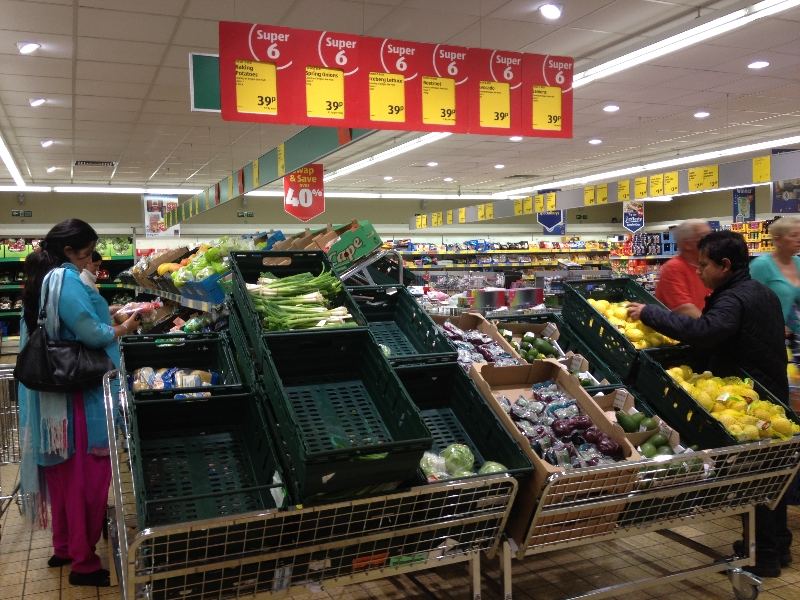
As the image (18 months old or so granted) shows, 39p was the Super 6 price for a variety of Fruit & Veg on the 2 weekly offer. The commonly accepted price of Produce is now lower and it's easily comparable across the range, a Lettuce is a Lettuce to your average customer, particularly when they're counting the pennies.
The lack of organic and fair-trade products always plays a part at Aldi, lesser range equals better pricing and as I discussed in Retail Week. UK customers more concerned with paying their gas bill than the farmers of Cuapa Cocoa.
I spoke at an industry event recently and a fellow speaker was Paul Foley, the former Aldi MD for the UK for umpteen years. He said that the first time a customer shops in Aldi, they are skeptical and will buy 'safe' food. Likely Bananas, Coffee, Orange Juice and Milk.
Then if satisfied, they will make a further visit and perhaps branch out into other categories, Fruit and Vegetables are a good barometer for customers. If it tastes ok, is fresh and of decent quality then the customer is happy.
Aldi as we know are cheaper across the ranges but the multiples have reacted to their gain in Fruit & Vegetables since the year turned. It's become a key battleground.
Customers know that apples are apples, so for them its easy to draw comparisons and price perception in many cases will be driven significantly by the price of Fruit & Veg.
Produce is another category that struggles with promotions, which are often plentiful, particularly 'x for y' deals but this keeps the core price higher than Aldi and can encourage food waste.
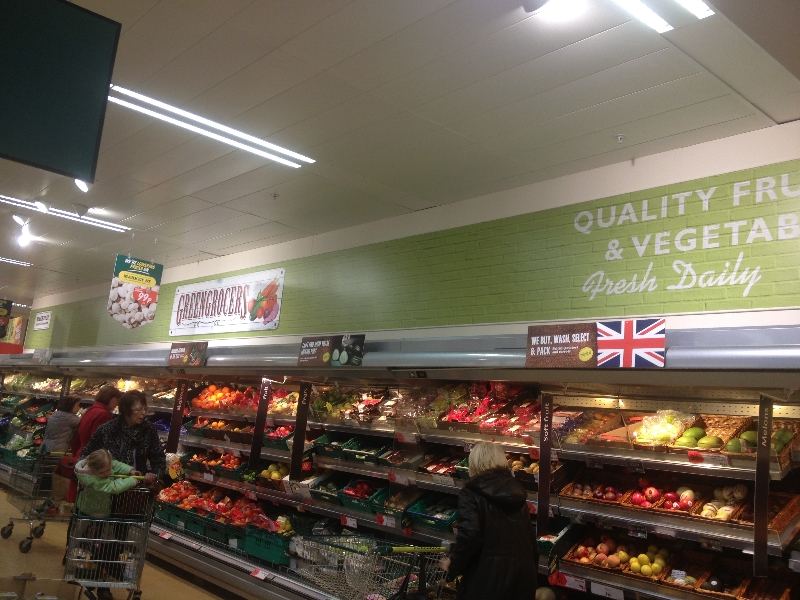
The reaction started in February with Morrisons launching a number of Produce price reductions and promotions to accentuate their point of difference on Fresh.
This led to mix / match deals on Fruit & Vegetables rotating at 3 for £1.50 / 3 for £2 alongside a raft of price cuts across the range, with both on pack and per kg price reductions.
Headline products such as Iceberg Lettuce and Cucumbers were reduced to 49p which brought Morrisons well into line with Aldi, who promptly reacted, dropping Lettuce down from 48p (still cheaper than Morrisons) by a further 3p to 45p.
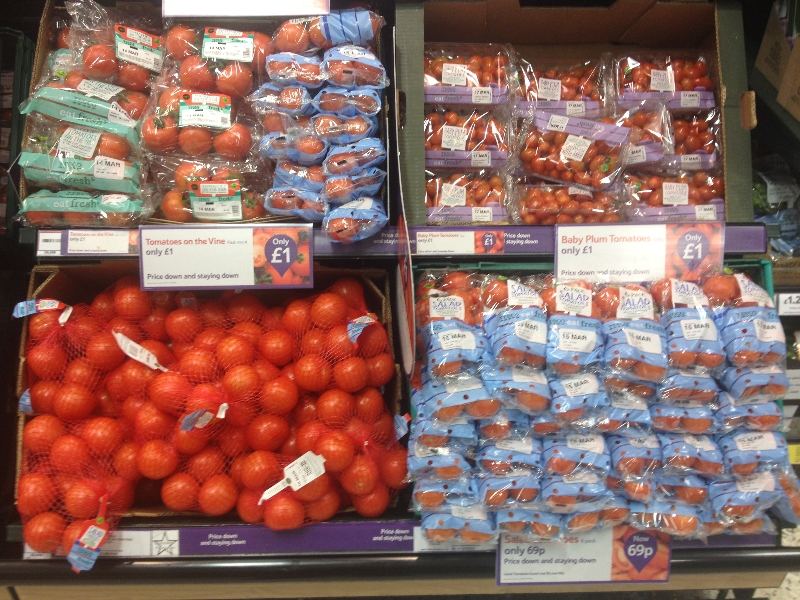
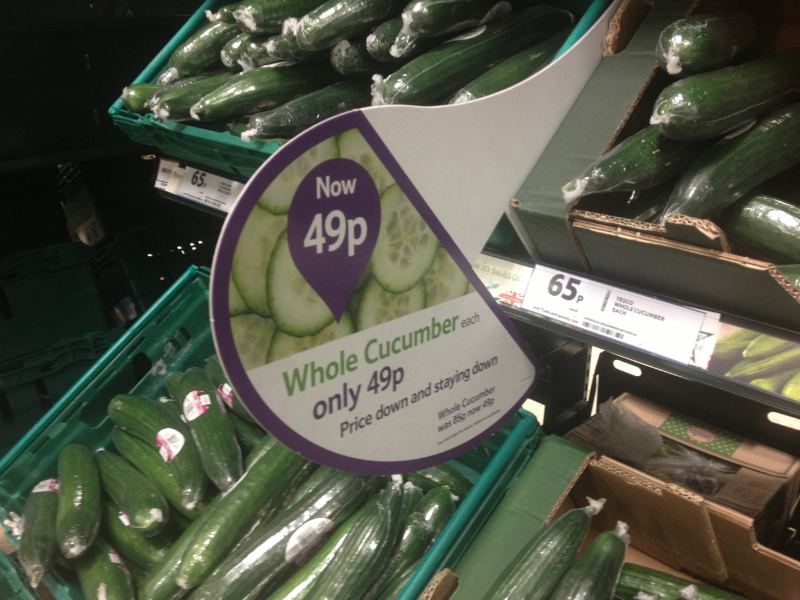
Tesco then brought forward some of their price investment planned in April with a raft of Produce price cuts as discussed in an earlier email.
Tomatoes, Carrots and Cucumbers were brought down 'to stay down' with Vine Tomatoes down to £1 and Round Tomatoes down to 69p, Asda lock theirs at 75p which as a 'lock' can't be moved, lest customers lose faith in the mechanic.
Carrots were reduced across both loose and pre pack which seemed odd, it would have been better to 'back one horse' by eliminating one pack size and keeping another. Thus lessening duplication for the customer.
The tactics from the multiples show an interesting change in tack, highlighting that prices are 'down to stay down' / 'locked' to offer stability on price, just like the discounters!
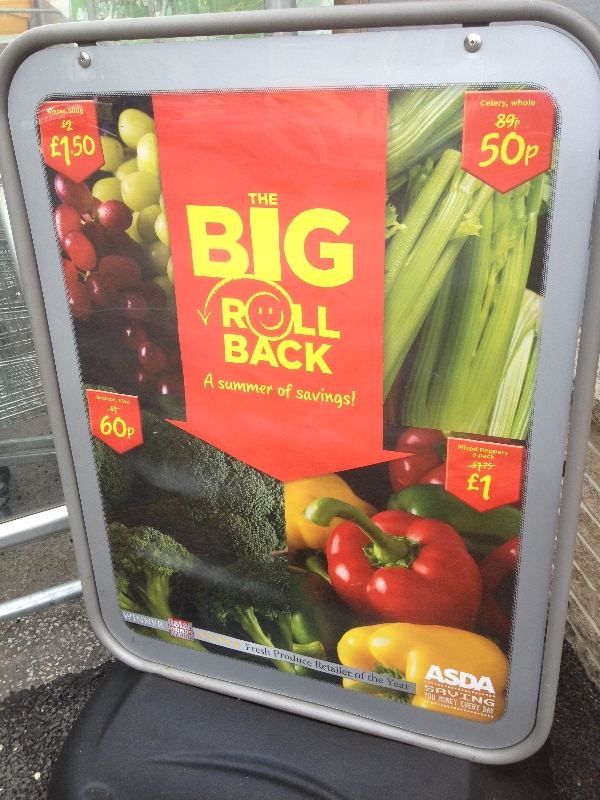
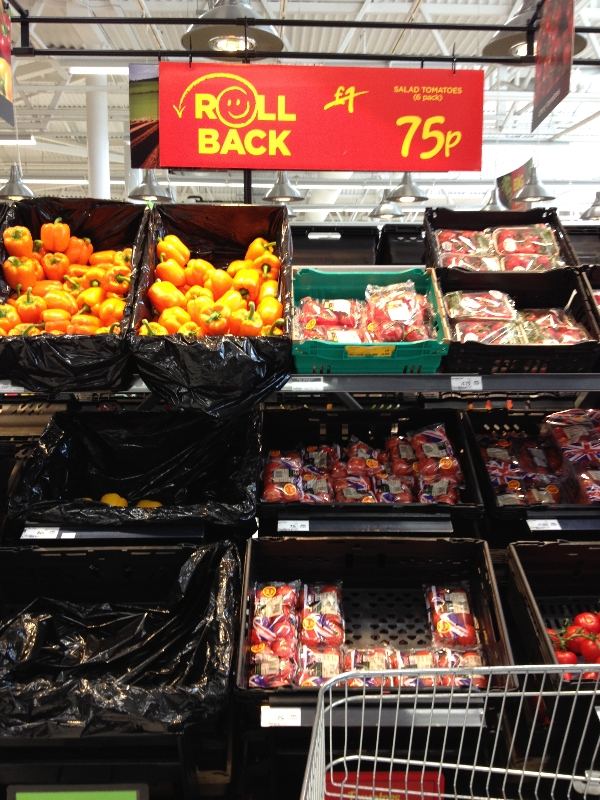
Despite all the price movement and retaliatory moves from Tesco and Morrisons, Asda reacted a long while ago with their price lock which locked down pricing on Cucumbers, Tomatoes and Bananas.
Credit to them (and the ever impressive Steve Smith) for seeing the market shift and taking these steps when they did, they've the most to lose from the Aldi onslaught given geographical overlap and shared low price ethos.
They should communicate the price lock, 'x' months and counting now, to really hammer home the message that prices remain low and locked.
Their rollback programme is popular but does conflict with the price lock message, they need more price lock and less rollback on Produce and I'm sure it's something they'll look at.
As they expand price lock across core Grocery with own label Pop and Cereal added, along with Kellogg's Cornflakes, it seems sensible to expect further cuts and locks to Produce given the heightened activity elsewhere.
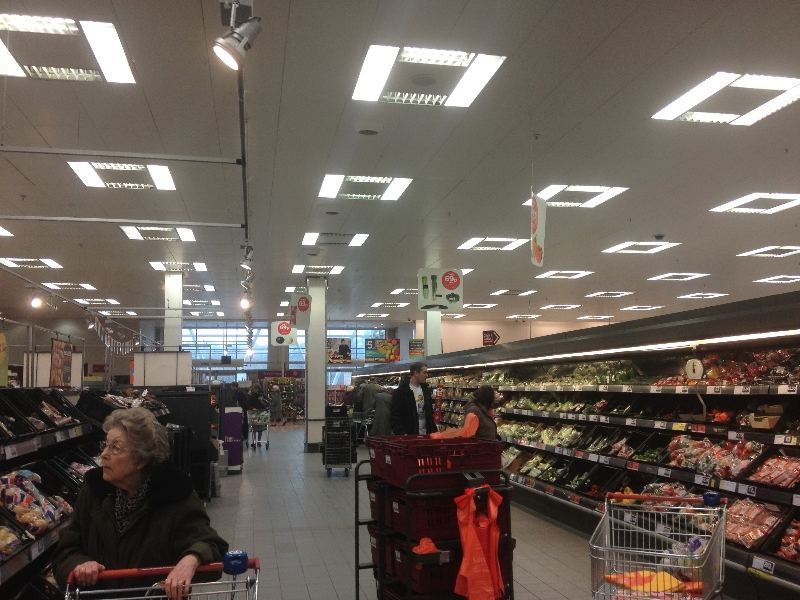 Look at the ceiling.... Hanging PoS denotes the magical '69p' price point.
The one retailer immune to any downturn (it seemed) was Sainsbury's as they trundled along posting gains to their LfL numbers irrespective of economic conditions, competitor woes or indeed any other factors.
Their work on brand match, values, provenance and quality struck a chord with the consumer, and their position in between Waitrose and Tesco was actually an advantage when it came to customers wanting to spend less but not sacrifice quality.
Justin King spoke about not being affected by the discounters as everyone else had been, certainly they felt safer than Asda and Morrisons.
However, sales have slowed down and as Justin King announces he's stepping down in the summer after 10 years at the helm, sales fell off a cliff with a 3.8% decline in Q4.
Even Sainsbury's had to admit that they too were being affected by the discounters, who are happy to open in the home counties and affluent areas themselves.
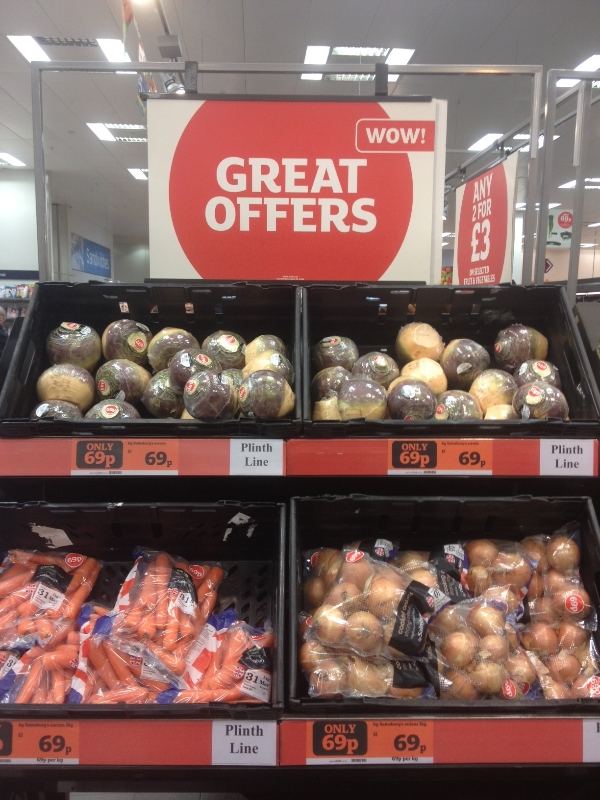 An interesting choice of price point.
Highlighting a 69p price point is new territory for the supermarkets, particularly Sainsbury's. Typically promotions are half price, 'round pound' or 'x for y'.
Looking at the Sainsbury's margin, they may want to avoid a full scale price war because a) they can't afford it b) it may undermine their values around responsible sourcing and quality.
The '69p' price point is yet another example of how the discounters with a combined market share of 5%, (till roll share, Kantar, Jan 14) are changing customer perceptions around an 'acceptable' price for Fruit & Vegetables.
It's also a secondary sign that as good as Aldi / Lidl are, the 'big 4' have given them somewhat of a free run at the market for a while with little retaliation.
The fightback looks to be on, at least on Produce but as we know, Aldi / Lidl are so much more than price and price alone.
This email service is going subscription only!
We know you're overwhelmed with generic, rewritten press releases and non specific insight from the food retail space.
This email service will fill in those gaps, offering incisive insight, trend spotting, covering new stores and day to day 'from the ground' store insight rolled up into insightful emails.
Subscription is £20 per month (66p a day!) and for a limited time, there's an extra month free for subscribing today.
Can you afford to be without it?
Do follow me on Twitter!
Grocery Insight provides market insight on the food retail market, whether its an 'instant update', monthly overview or fuller in depth research into individual retailers.
Insight can also be provided for retailers, with analysis on operations, store performance and the market. Whether it's their own stores or the competitors.
For a no obligation chat, please email: [email protected]
Twitter Website LinkedIn Email
From the Grocery Insight newsletter archive, first sent to subscribers on 2 April 2014. Steve now writes at read.groceryinsight.com. See also the blog archive and briefings.