Online and masks
13 January 2021
To subscribe to this service and benefit from our expertise
With supermarkets high on the agenda as 'vectors of the virus' given that people, are unable to go anywhere else now with the current lockdown, it was interesting to see that retailers, the heroes back in March/April were firmly stuck in the firing line by a government who have provided guidance on how many people should be in store (seemingly) but didn't want to guide any further than that.
The reality is that the supermarkets (by and large) have handed back their business rates that were merrily handed out by the chancellor in the first of many schemes, poorly targeted perhaps, but then, we all know the costs that have gone in to delivering COVID19 in stores with the additional manpower and safety measures. Hand sanitiser doesn't pay for itself.
You can excuse many things really given the situation we are in, but continuing to target businesses with schemes that are poorly targeted and miss out so many isn't really excusable in this day and age. For example, the excluded, some 2.9m people with no support and what sort of hospitality sector are we going to be left with? The supply chains have ground to a halt near enough (not great news for Tesco with Booker at all) and it's not just the closure, which is bad enough, but rather the closure at such a peak time.
Tier changes on 21/12 (urgently given the spread, but how much down to tier 2 for London in the first place?) and then further changes on 29/12 which came right on the cusp of new years eve, with battered businesses having to refund deposits and waste food bought for the occasion.
Really not great.
For food retail, it's a 1st world woe with sales strong but the mix not ideal, with a tilt to lower margin food, but there are still retailers who have handed back monies that will have been impaired by the closure of non essential retail and the decline in city centre trade too.
However for non essential, it's all kinds of grim. Hammered with closures pre Christmas, then post Christmas which impacted any real efforts to sell their January sale off and recoup cash in this way. Click and collect now closing in non essential settings (a real surprise they were able to get away with that in any case) for John Lewis will only add to the woes.
Especially given delivery charges and the lack of clarity around just how online works and how numbers stack up. We can only look at the new entrants to the market, or relatively new operators, like Deliveroo (offering delivery of food on a limited item basis) similar to the Instacart sensation, seen in Wegmans, Publix et al where the fulfilment is taken out of the hands of the retailer entirely.
The Instacart crew shop the store as a normal customer effectively, even paying at the register with an Instacart credit card to enable billing to take place too. This must place a demand on the ordering system however, as its unforecasted demand, whichever way you look at it and can only lead to availability issues and potential working capital tie ups in extra stock.
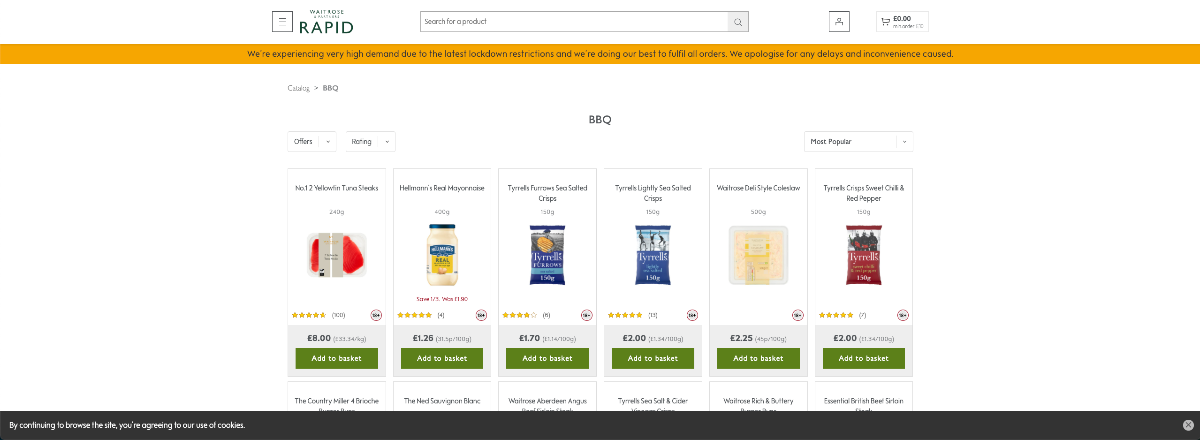
Charges for Deliveroo (and Instacart) vary, but for the UK, Deliveroo charges are between £2.50 and £4.99, with Deliveroo Plus members getting the service for free. In addition, there are constraints as its a maximum of 25 items and the selection itself is only 650 strong. Similar to this, there is a 'Rapid' service for Waitrose that offers 2000 items for selection, with a maximum of 25 items and the delivery charge is £5.
A hefty delivery charge given you can get a slot with another retailer and have a big old shop delivered for less than that... It all feels expensive and it's a desperate attempt to grow capacity for Waitrose, who lost Ocado at the worst possible time in reality. Whereas M&S bought it at the best possible time, no one could have known this, but a reminder that it's better to be lucky than good, sometimes,
Expensive to operate, fulfil and it probably leads to greater frustration for Waitrose customers, given the charges and also the constraints on the service, with only 25 items available to be selected. The range is tighter also. In addition, the site itself looks poorly targeted as there is a 29 product category featuring BBQ items..... Not sure this is totally relevant at the minute.....
Aldi have also joined the online game too. Although Lidl haven't, and their results are better at the moment, but we'll cover those aspects on the '5 of the best' in the coming days when we concentrate on the retailers and all they have done at Christmas.
In terms of Aldi, their click/collect offer is up and running, it does face some constraints though with store car parks tight on space and in addition, there are issues with store capacity and picking too. It's not as easy to set up an operation from scratch, without investment in storage also for the products that are selected.
However it's the most capital light way to do business online and will work well for them. However the scalability remains entirely unclear. There is a charge of £5 per shop too which is hefty when one considers costs elsewhere (some C&C can be free e.g.) but is perhaps reflective of the true cost of doing business in this way.
Which circulates around to challenges faced by bigger retailers as they grapple with enlarged online operations in the face of the pandemic and all that goes with it, higher costs if availability is poor (IE chain picks up the tab if a product is out of stock and an alternative has to be sent) alongside fulfilment costs and the additional equipment and staffing required to deliver orders, pick, pack and process too.
The urban fulfilment centres that Tesco are developing, mechanising fulfilment on the key lines (one presumes) with the additional "20%" being picked manually feels like it would make the most sense, especially given that customers are largely habitual online and will buy broadly the same sort of things en masse and as such, with data retailers can get ahead and take the "legwork" out of picking shopping.
Plus it means that the impact on the store itself is minimised somewhat, currently, a well shopped store via online can look as though it hasn't been filled for a week for normal customers, as the online business is taking such a huge amount of money in its own right. There are challenges everywhere and online growth has been off the scale, nothing that could have ever been planned for.
One presumes it will recede as the pandemic ends but more people will be open to online shopping, more often, which will mean, net, net, a rise in demand and this puts pressure on the bottom line for retailers who need to find ways to further develop the operation. There has been such a lot of work already in terms of sequencing stores (so the shopper isn't wandering aimlessly up and down aisles, like a retail version of the Royal Mail Walksort system) and if they can't find a product, it will be in A1L15 (aisle 1, left hand side, bay 15 for example) to save on time.
In addition, picking is done on a category basis, so a customer might pick for 6 different orders at once in the same category, so as to save time and not have people all over the store, crossing each other. But there is only so much one can do, there has to be further development and Tesco have an abundance of space to do this sort of thing, however, the challenge is always, what happens if it breaks?
Potentially, there is a huge disruption to customers and how is that mitigated? Especially with the network running at breakneck speed, rather like the tube network which then means there is little time for maintenance and improvements. Huge challenges, whichever way one turns.
Also, the scalability of any such roll out is a key question. Scale is good as the savings are huge as it rolls, but, the costs are also huge to deploy the kit in the first instance. What is the hurdle rate of any installation? Can it do more? How long does it work for before it needs replacing? The last thing anyone wants is a 3 year write off because the kit didn't work.
Does such a roll take the pressure off nearby stores who are picking now? Meaning fulfilment can take place from fewer locations?
Does the installation of such kit turn the business rates argument (pending any changes) if part of the store becomes, in effect, a depot? Could one make that case now? There are so many questions and the UFC's were pondered by Tesco before COVID19, rolling them now is great as it's a super stress test.
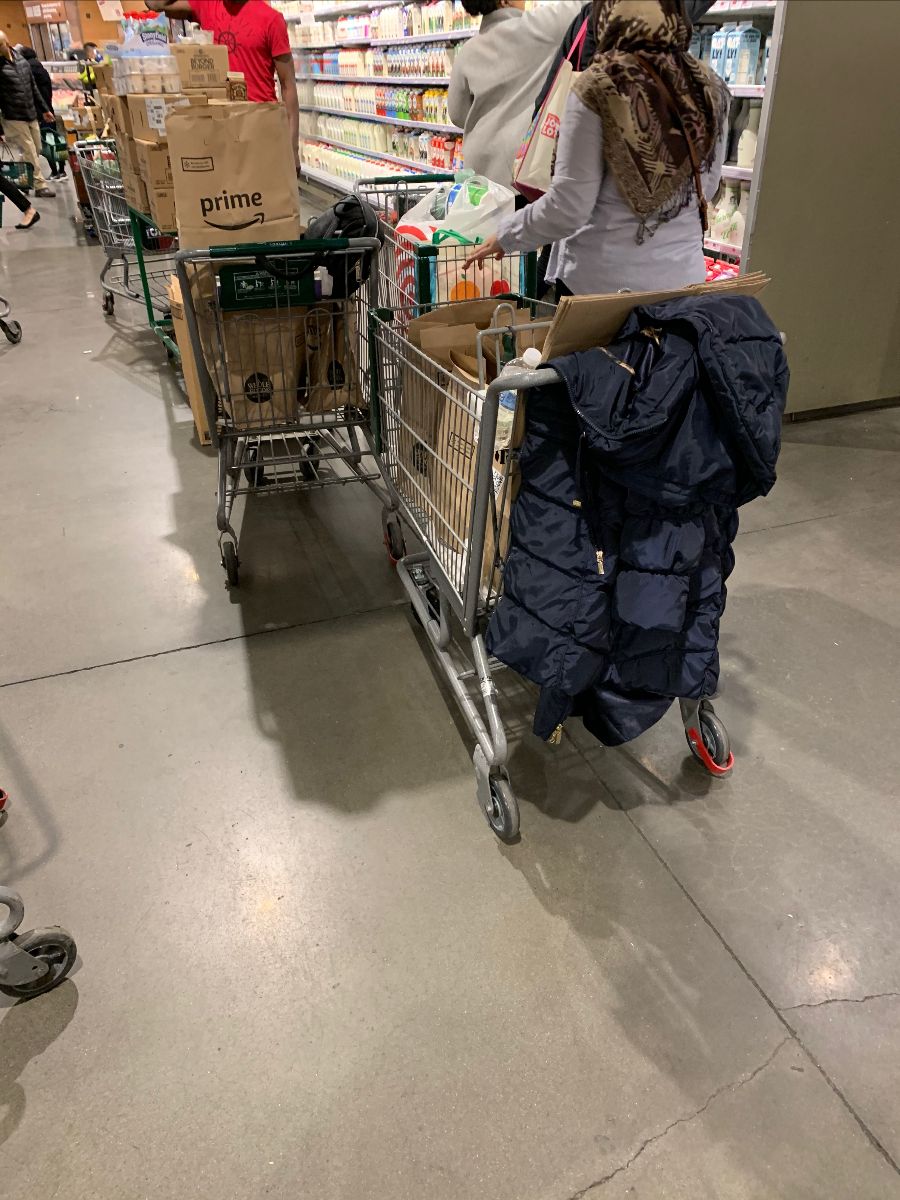
In the States, pre COVID, back in February 2020, Amazon were making the most of their Whole Foods ownership by merrily picking Prime orders in a number of stores around New York and Philadelphia. Impacting core customers as well, logistically, it felt expensive to both operate and fulfil in this way, but Amazon won't care necessarily, given their long term focus.
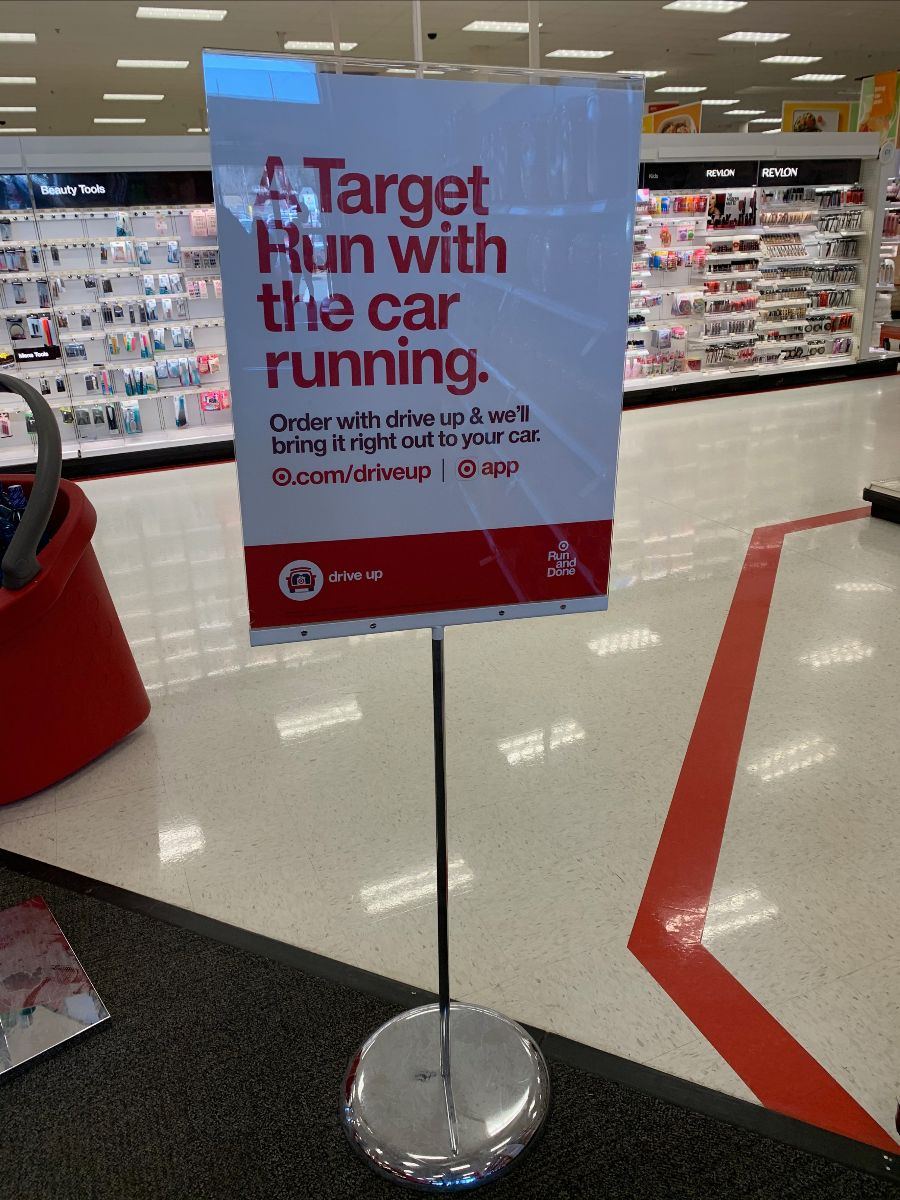
A key reason for the success of Target in the US has been their expansion in to online fulfilment, especially via their stores with pickup and 'drive up' well established before COVID impacted. Walmart too have made a great success of their operation thanks to their work underakten pre COVID.
This is far more efficient, delivery is expensive and the costs are eye watering when one adds in the various components - driver wages, insurance, fuel, congestion charges (London), wear and tear, repairs, van hire (chilled vans remember so expensive) alongside a ton of other training and employment based costs too.
Hugely uncontrolled environment too. You can't legislate for customers not being home, or slow traffic, roadworks, breakdowns, staff absence (Drivers require training for example to drive a company vehicle correctly).
Whereas pickup / click and collect takes the hassle out of that and puts the customer in the driving seat (literally). The renaissance of click/collect looks to be the way forward for consumers, and indeed, retailers of the UK. It's telling that any US expansion of online (bar Whole Foods, but even then, their drivers are often 'flex' / casual labour) has been focused purely on click and collect.
Asda are well built out in this area already, having pioneered lockers many years ago now, whereas other retailers are able to add 'easy' capacity to their operation, given they had all but given up on the service (Tesco) or operated the 'parking an online van in the pick up area' (Sainsbury's) that went out of with the ark.
Indeed, Morrisons have gone from 3 stores to nearly 300 stores offering click/collect alongside their store pick model, this is aided by the Ocado fire and Morrisons being able to benefit from giving capacity back to Ocado when the DC burnt down, of course. This alongside developing store pick technology together which aids both businesses.
However, all to play for in 2021 as we hopefully move away from COVID and start to think about retail and what it should look like. The news on enforcement of masks is welcome and the unifying approach taken by retailer is once again, a reminder of how good food retail can be.
That said, people need to play their part. Whatever the missive, put your mask on. Otherwise colleagues are again in the firing line and that's not on... Exemptions will always exist and they are just that, exemptions. There is nothing to stop someone wearing a visor, for example.
It's a needless flashpoint but for some customers, it is their 'cup final' after all.
Next time, we'll be reviewing the retailer performance with the results to guide, such a different year and of course, positive like for likes of this magnitude were not seen in recent years, it was all BD (before discount) but now, they're almost a given. But this can't last, so we have one eye on the future prospects for retailers and what the reality of Christmas in stores can tell us.
From the Grocery Insight newsletter archive, first sent to subscribers on 13 January 2021. Steve now writes at read.groceryinsight.com. See also the blog archive and briefings.