Price activity in own label
9 September 2020
To subscribe to this service and benefit from our expertise
Price - Own label wars
With the recession looming, furlough ending and fears of a second wave looking increasingly likely, we are heading for a terrible winter seemingly and there will be little for customers to do, other than shop for food.
That's assuming we had towards a lockdown once again, which is hard to predict given the government's frequent changing stance on almost everything as they try to lead by focus group/stories in the press to adjudicate what people think.
It's unclear if we will see panic buying on the scale that we saw in March, but one would hope not. It won't come to that and restrictions that are applied, both locally and nationally are adhered to and behaviour changes (as it did pre lockdown) to aid the flattening of the curve of cases.
With time, things become clear and it's sometimes hard to grasp why we flattened the curve, only to see a potential rise in the winter as we contend with flu and all the challenges that come with the overlapping of symptoms.
However, one forgets that the NHS was close to being overwhelmed so it was the only real option, my thought remains that we didn't reopen too early, instead, we locked down far too late and thus, could do little other than reopen too early.
With schools now returning, the guidance indicates that if a child displays symptoms (including a sore throat/fever/cough - as we know kids often pick these up at the best of times) then one has to get a test for their child.
Once the test is done, even if it's negative, the family still have to self isolate for 14 days, assuming no further symptoms, they're free to go about their lives. However, if someone does develop symptoms and has a test, then things complicate further and you can potentially have the entire family at home for weeks, without a positive test seemingly.
The rules are not clear and we risk challenges here, alongside everywhere else I fear, especially with the wage challenges, job losses and the fact that self-isolating just isn't well paid and with people under pressure, 3m people excluded from any support, decisions may well be made that only prolong the suffering around COVID.
The challenge for retailers is that, as I've outlined before, customers are inherently illogical and sometimes, are probably incapable of explaining why they have shopped somewhere, or why they've purchased something when they have.
They're disloyal, changes to where customers shop can be literally so minor they couldn't be predicted or even defended against from a retailers perspective. So, decoding their behaviour is not the easiest task, add in the plethora of challenges that are dealt with by retailers (social, political, regulatory etc) with numerous stores around the country (meaning consistency can be difficult) and it becomes a near-impossible job.
For all the customer questions and confusion over what customers want on a day to day basis:
"lower prices"
But you can't go to 1p, customers will always say that.
There also must be some elements of 'shy Tories' (those voters who say to pollsters they're voting Lib Dem, but then vote Tory) where they say things in a focus group that they feel they must say, or indeed, are fashionable to say. Fairtrade is a good example, as is supporting local producers, both come with higher prices, typically, and this then flies in the face of customers saying they want lower prices.
I think people want to help, charity begins at home, however, it's a hard circle to square when you're struggling with your household bills and still buying, or being asked to buy, Fairtrade products. So the retailer messaging has to be absolutely spot on, there are numerous elements within this too. It's never just about top-line pricing, alone, although that is a key part and something that everyone sees when shopping.
After all, where do price perceptions come from in the first instance?
It's clear that customers are certain around one thing, they want lower prices and indeed, more stable prices too. It's entirely possible that in the older days, and in some cases now, in some retailers... Buying the same shopping for 6 weeks would see the total jump by £30/£40 perhaps, depending on promotions if you didn't shift spending around to whatever was on deal.
That has settled and we now see a preference for more stable prices (kicked off by Sainsbury's, to their credit, back in 2014 no less when they stopped putting Fairy DIshwasher tablets back up to £14 after moving to a 'half price' at £7, instead of moving to £10, for example). It also saw them introduce no multibuys which, I still disagree with, but they've stuck to it and as I often say 'they're not my numbers / KPI's!'.
Customers like Aldi and Lidl because they offer the stability in prices, it's a different model, like comparing Rugby League to Rugby Union perhaps, given the similarity in the game but the difference in rules/approach. When the recession hit (in 2008, but the lasting effects were felt for 2-3 years, but discount continued to accelerate way beyond that) Discounters were known for low, stable price, however, their branches were not plentiful in location and it was a somewhat utilitarian experience.
That's changed as they've evolved and they were aided by their shifts in presentation, range and approach alongside the lack of a response from anyone in the UK market for a number of years to gain share and a foothold across the market. I won't go over this again, but their fundamental approach remains true and this is why customers like shopping there.
For the larger retailers, we have seen a prioritisation of own label and indeed, value tier products to compete with equivalent products in discount, this has helped the efforts around price competitiveness and we continue to see gaps narrowing, not necessarily matching, or beating (unless you're Tesco) but you don't want to be caught with your pants down on easily comparable products either.
The chink in the discount armour is their limited range; meaning that areas such as Free From can become a competitive advantage for larger retailers, in addition, their limited range means that comparatives can be easier (if you exclude brands in special buys, which Tesco do not). There is no excuse to be selling Cucumbers at 10/15p more than the market/discounters but a 2-3p gap is infinitely more tolerable.
Equally, there are products that are own label (outside of fresh, meat and produce) that are also easily comparable across the stores and customers will draw conclusions from these; 3pk Orange Juice cartons (for the kids), 6pk Sparkling Water, soft drinks, crisps, flour and other baking lines. A large number that is often 'par' in terms of taste, presumed it will be the same across the market.
A gap on these comparable products means that a customer draws negative perceptions for the chain, and as Terry Leahy noted in his book, a customer can draw a negative perception of the price for the entire chain, of 30,000 products, based on just one price that's out of line.
So given we know what Tesco are doing on price, working hard against Aldi on their value products, alongside seemingly making suppliers pay for price matching versus discounters on the ever-rising number of brands and shippers featured in special buys.
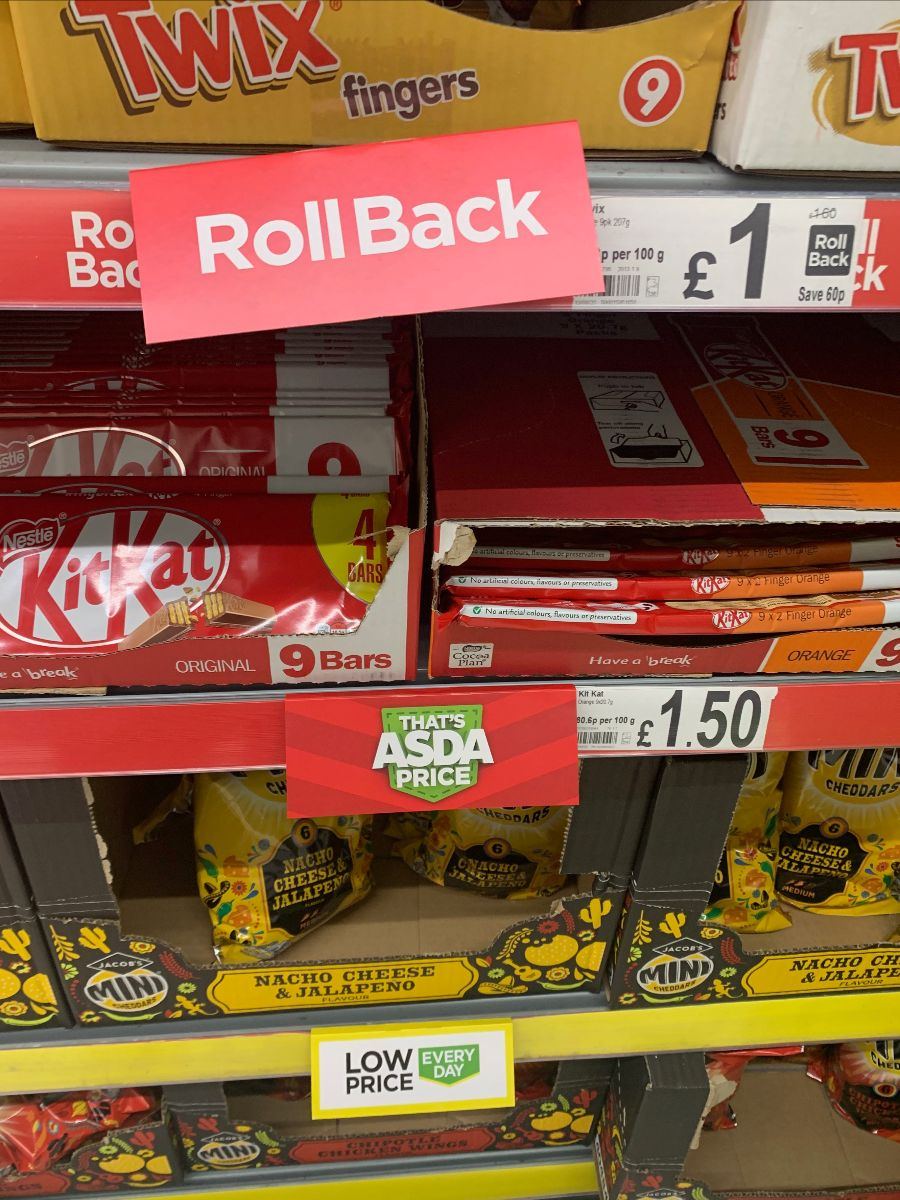
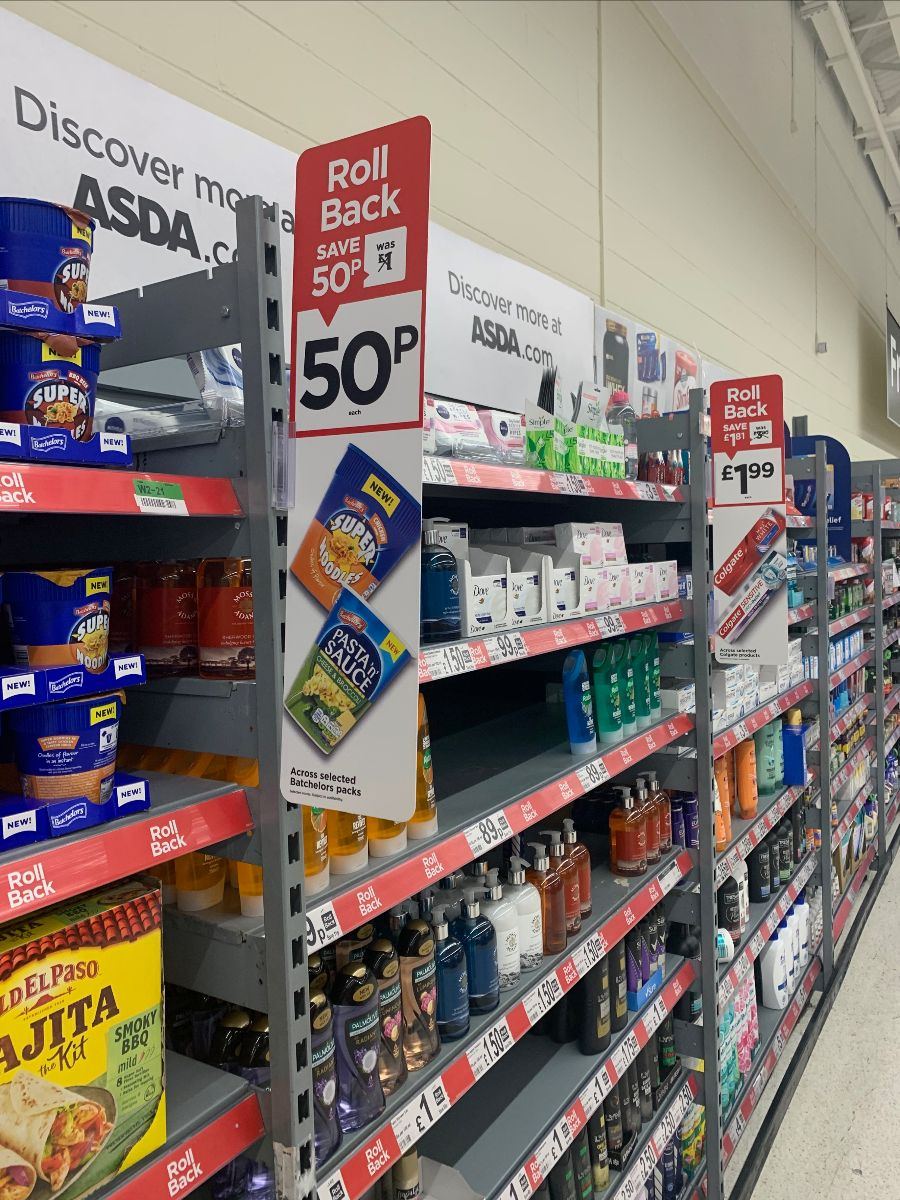
Asda has landed their "Asda Price" strapline once again with a raft of signage around the store, still promotional in terms of rollbacks and brands, but this is essentially their DNA anyway, very much focused on competitive pricing and indeed, whilst they don't shout about it necessarily, some of their own label comparative products are strong versus the market.
There are a number of ends that are also strong and the rollback campaign featuring numerous brands works well too, more focus on low prices, such as on the Jelly shipper unit (30p, typically would have been 5 for £2).
A risk given lower volumes (no customer automatically takes 5 for the offer, no incentive) but the reality is, customers will take as many as they need, which is right for them and generates goodwill. The challenge is then getting other customers to buy into the range, which the hope is, they do, to generate the volumes required.
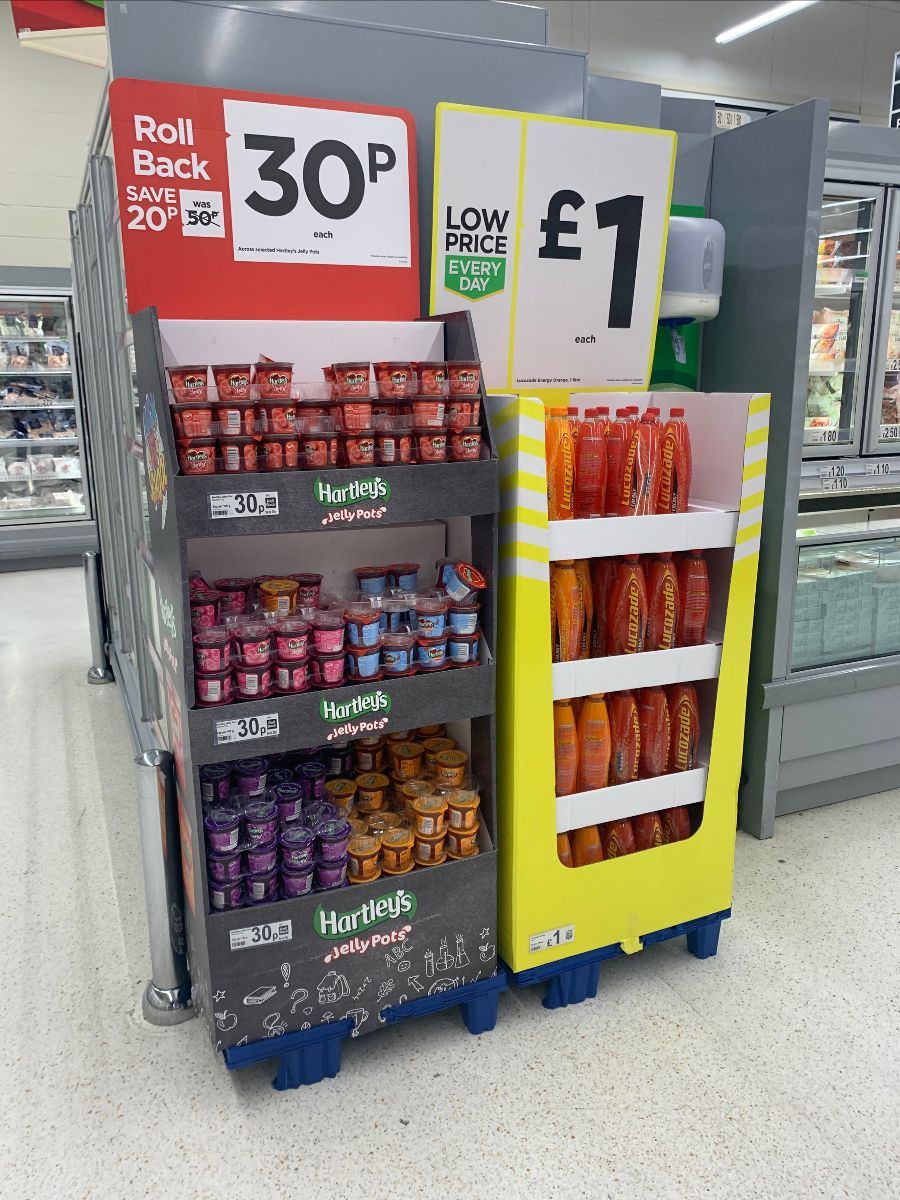
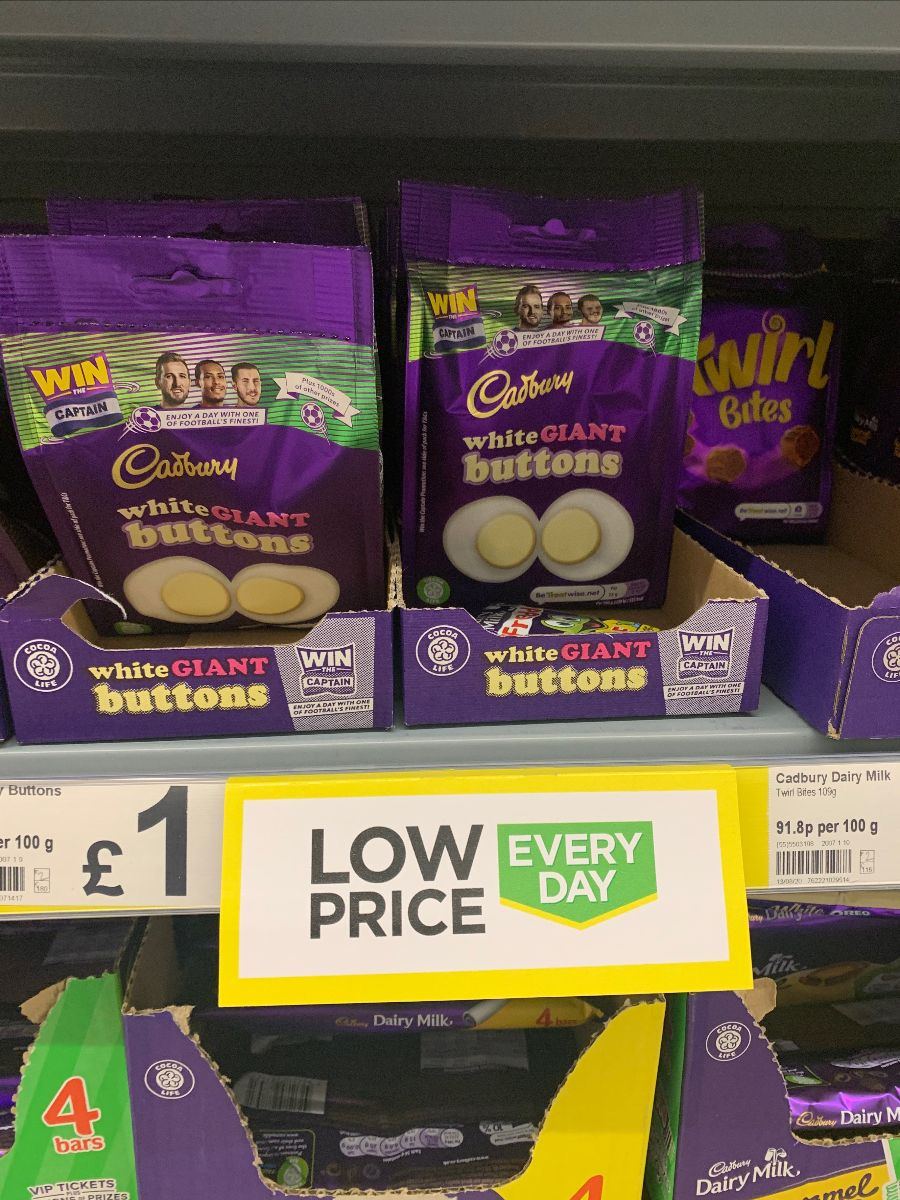
But the key element is stability, Asda is flagging numerous lines in yellow on the 'low price every day' message which works well, stands out for customers and they can see that these lines are going to be £1, or whatever, every day. Bringing trust for the customer.
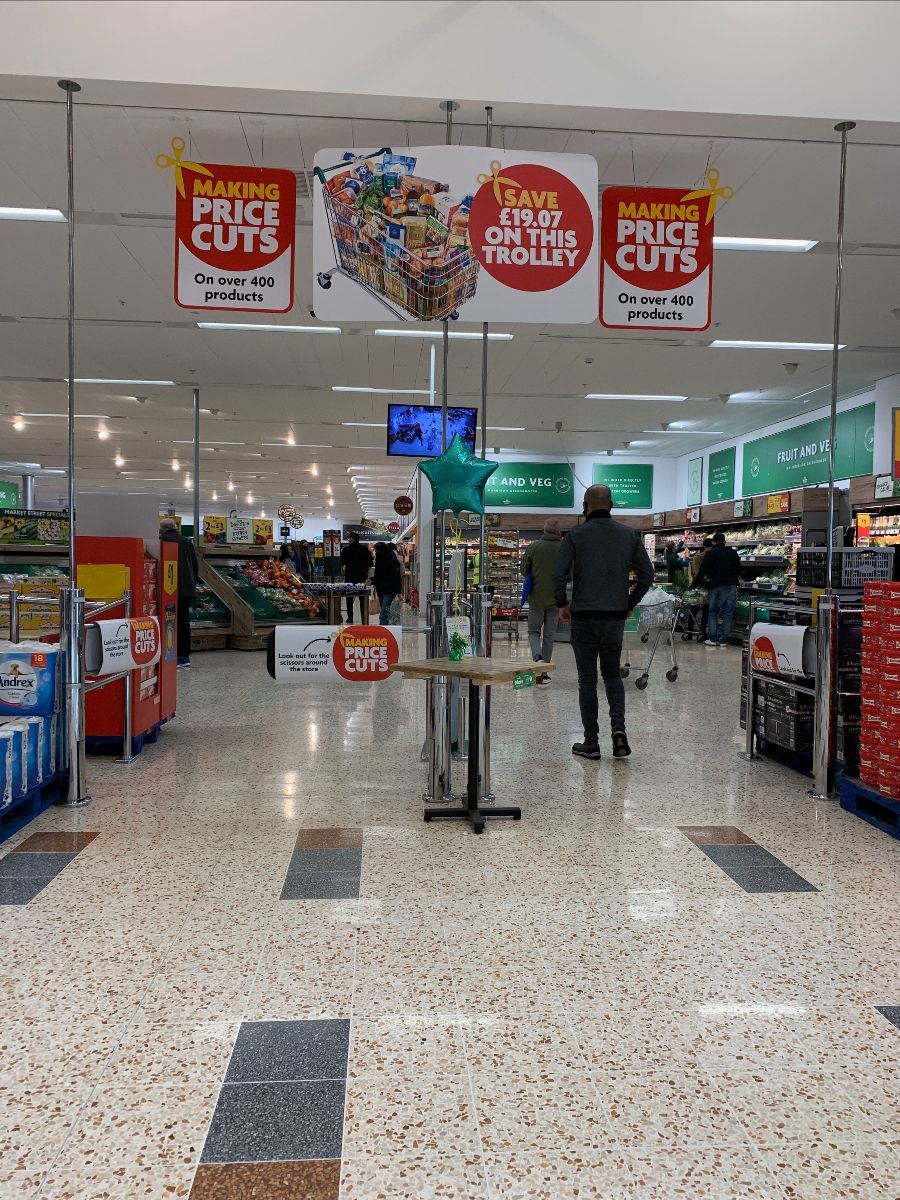
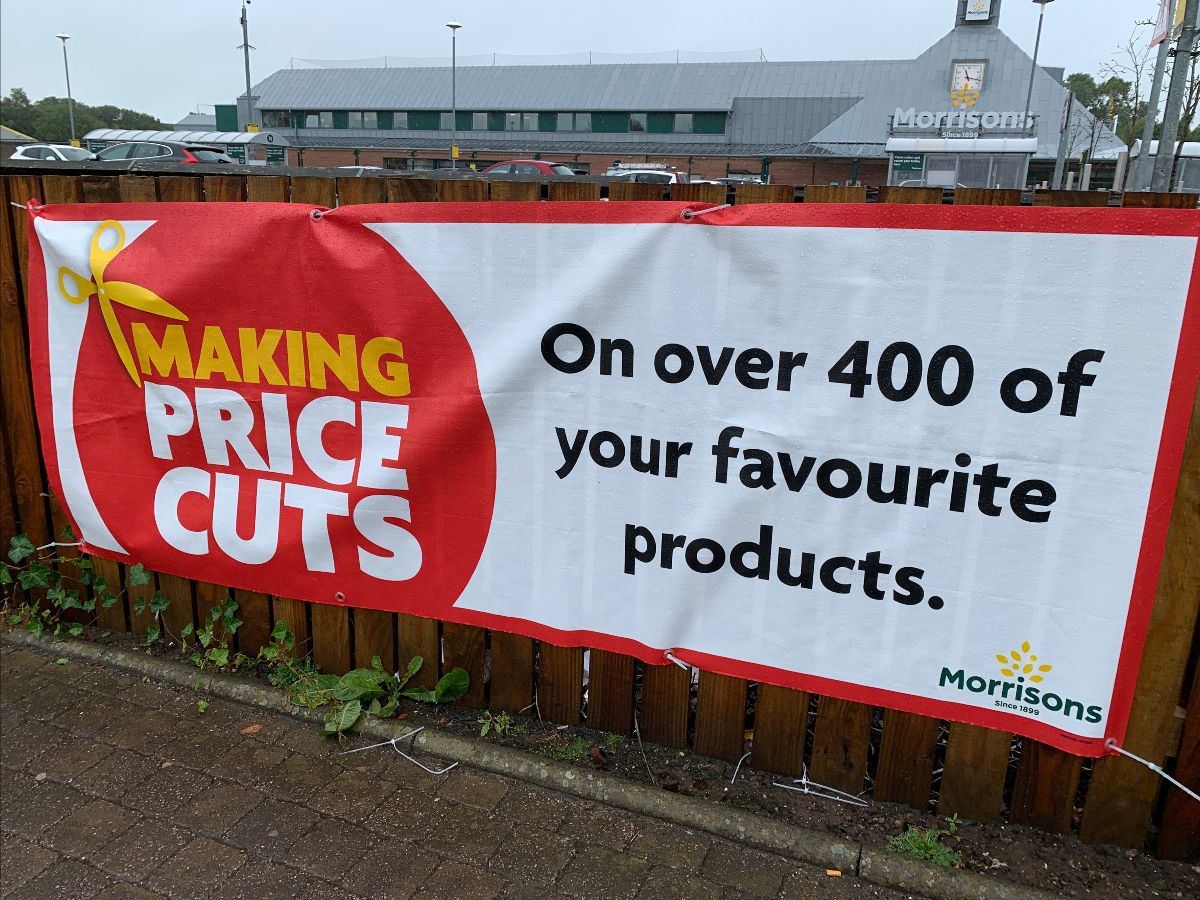
Value you can set your watch by, which is all-important, especially as we head towards the golden quarter and with household budgets set to be tighter... Morrisons landed their 'making price cuts' campaign this week and like Tesco, and Asda, have included a fair number of own-label products too, hoping for cross comparatives with Aldi and Lidl, and crucially, generating loyalty for their chain based on the own label.
It's not easy though, especially, as discussed when thinking about 'cucumbers' or 'dried pasta' which is the same the world over. However lower prices are better for the customers, a number of these products were on long term multibuys, but this drives customers to spend more to get the discount, which isn't a positive element in 2020.
Multibuys still have a part to play in some cases, but to offer savings purely on a multibuy across the year can drive resentment with customers, especially as they're having to spend more to benefit. If they don't buy 3 (for example) at £1.50, then the retailer is perceived as being expensive as Tesco, or Asda are only charging 50p for one e.g.
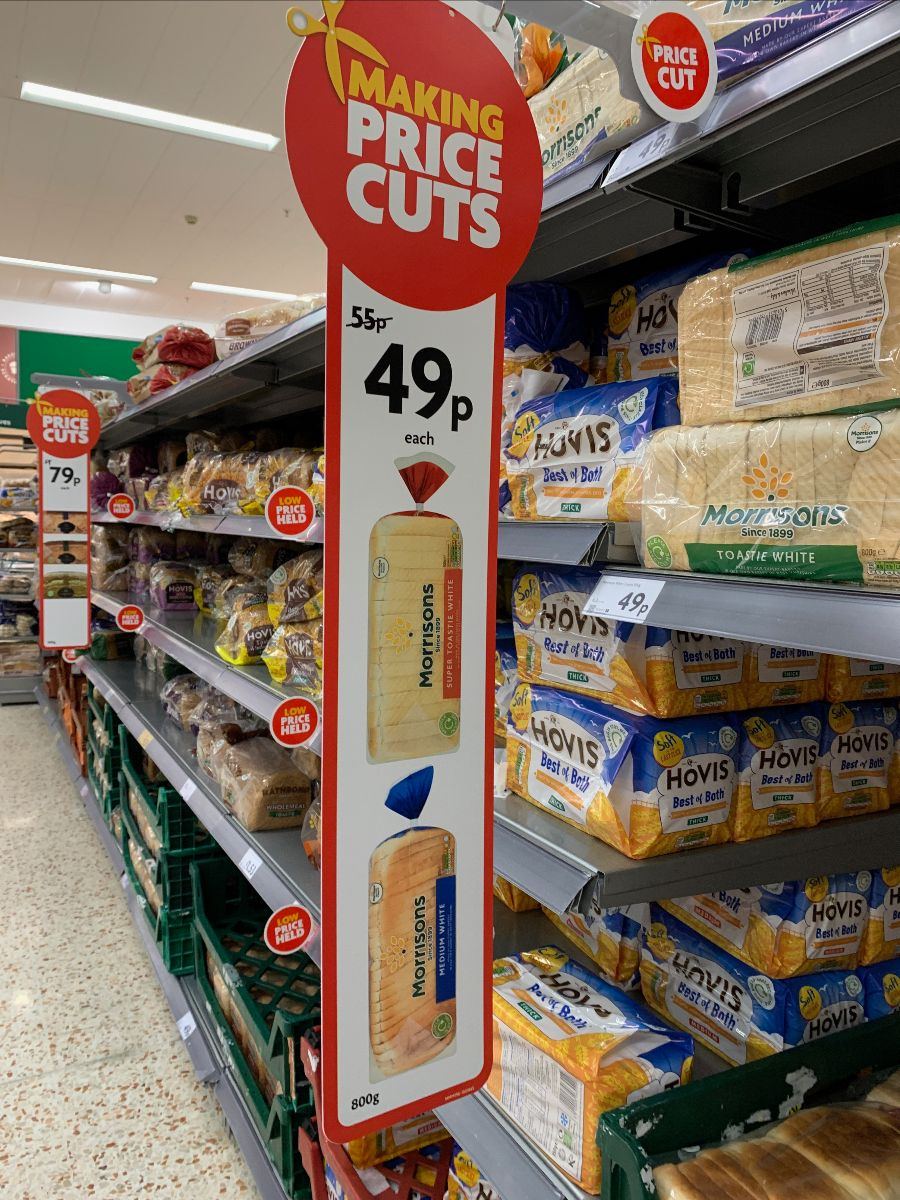
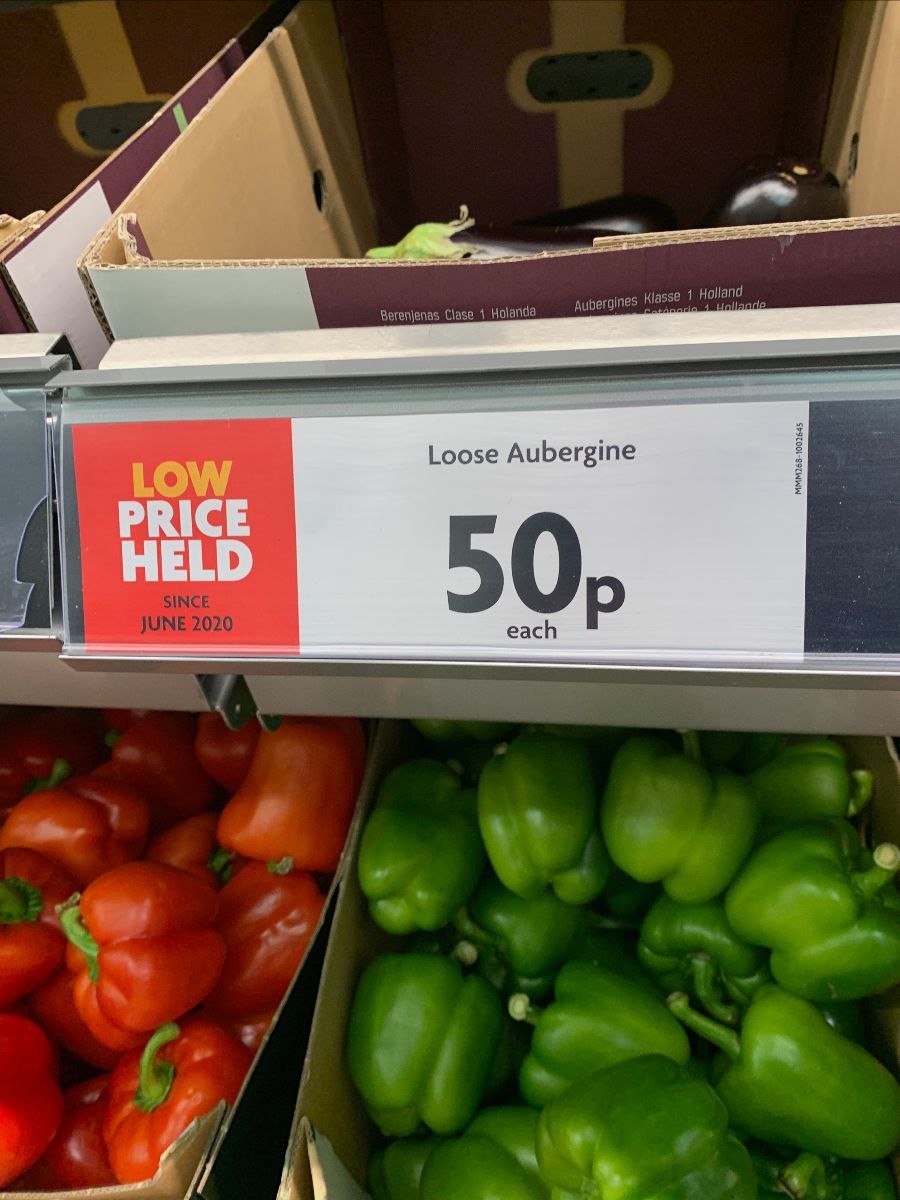
A number of cuts here and some feature a simple cut on essentials, whereas others feature another key element, which is the low price held, another big reassurance for customers that sees prices held down and not fluctuating.
It can be difficult in some areas, where inflation can be rampant but equally, this is often products where customers buy the most (Milk/Bread e.g.) so being smart with investments mean you can reassure customers on price stability and also reassure them that prices, going up everywhere else are not rising in this store.
Of course, Morrisons have their factories and vertical integration to consider so more volume in these facilities makes the numbers even better, so that's a key challenge. To manage the entire chain and balance is up carefully.
The Sainsbury's price lock message is similar but is a rotational programme of 'hold' for c. 8 weeks, this means the chain can be tactical and pick products that are not rising but are key products - back to school = lunch based items etc,
However what about the end of the 8 weeks? Any rise has to be carefully considered given the fact that this price has been highlighted for 8 weeks as not going up, but then may go up anyway? It has landed well and Sainsbury's generally, I feel have felt stronger in terms of a value proposition throughout the pandemic and indeed, since exiting.
They also feel a safe place to shop, with people on the doors and measures still taking place to reassure customers, ever more vital as the prospect of restrictions coming back to society appears to be a growing threat, today.
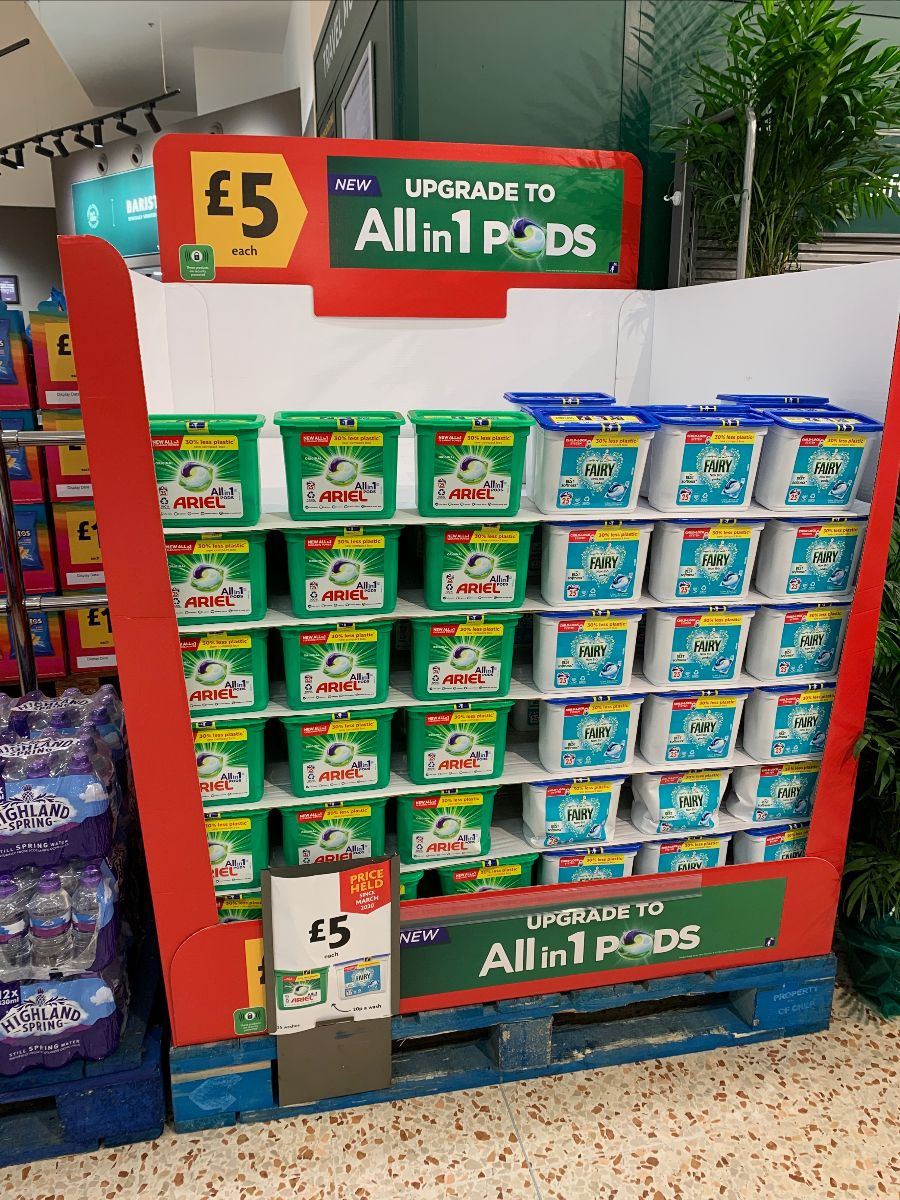
However you navigate value, customers are forming perceptions everywhere, I accept not everything can be £1, or lower on featured space. But numerous lower prices are around the store, is £5 a good price for these? There are numerous examples across the market of supplier funded deals and branded pallets, the scourge of commercial monies can lead to poor value perceptions.
They're price held too, but with B&M and Home Bargains incredibly strong on branded detergents (more examples of the lack of strategy from suppliers in reality...) is that a good price?
Is it likely to aid or hinder things? Or do customers appreciate the deal? It's a fine balance and every single piece of signage, or price, matters. Because if it didn't, the signage wouldn't be up in-store, or the product wouldn't have been ranged and priced at that price.
As ever, interesting times and a reminder that price isn't everything, not by a long stretch.
For all the kind donations raised so far; thank you so much, we are way over our target for £1,000 for the specialist unit at Airedale hospital for parents and babies who are born sleeping.
Belle would have been born this month, so we are soon to close the fundraiser and donate this money to the hospital, where they can do so much for people like ourselves.
If you'd like to donate, please follow the link below, thank you so much.
From the Grocery Insight newsletter archive, first sent to subscribers on 9 September 2020. Steve now writes at read.groceryinsight.com. See also the blog archive and briefings.