Sainsbury's - Messages to the customer
15 October 2018

Forwarded this email? Subscribe today for more!
Our "Jack's" report is now available!
The focus for this week is Sainsbury's, but also we'll look at Tesco and their value efforts. Last week ran away with us and it's a busy old time in the market - the golden quarter moves at pace now and Halloween is with us alongside the various phases of Christmas across retail.
It promises to be an interesting period for retailers, particularly Food retailers who are fighting back against Aldi and Lidl but also within themselves. We will look at M&S in the coming weeks and their food business has started to move forward with some purpose, especially around price and also their new marketing messages also.
What does that mean for Waitrose though? They are in a transformation plan (of sorts) that doesn't appear to be moving a great deal forward apart from their exit of some stores earlier in the year. There has been some progress in terms of the offer and they are now reducing ranges (with the help of consultancy no less) but that is a difficult balance.
Especially for Waitrose where the obvious 'tail' of range cuts - those bottom 5% may end up being purchased by the top 1% of affluent customer. So what do you do?
As a wise man (me!) once said; "you always p*ss someone off when changing the range". Even for poor selling products, they are bought by at least one person and that person is disaffected when their favoured product disappears.
Anyway - more to come on that at the 'top' end of the market, if that is such a thing these days. Certainly in the good old days, Sainsbury's would be a retailer who occupied that middle ground and succeeded at Christmas, recording a stronger Christmas due to their premium offering and the ability for customers to 'trade in and up' from their core shop.
A problem that used to hamper Asda, spending 11 months of the year telling customers it was all brands, rollback and value before spending December putting the 'Extra Special' boards up across the store.
However the playing field has been levelled somewhat, with Aldi and Lidl changing the premium market, alongside the other markets of course and bringing prices down but also changing customer perception on quality and that link with price. This benefits Asda as customers are more inclined to consider their premium ranges, which then hampers Sainsbury's who may have picked up that 'extra' trade around Christmas in some cases.
Therefore you're looking at Sainsbury's to chase down value but retain their protection of their core business, that is the store standards being relatively strong, colleagues around to help and a quality offer that is perceived to be stronger than equivalent ranges elsewhere.
We know that this isn't the case over the last 6-9 months (perhaps further out than that) and it has been tracked extensively on this service too. Stores have gone backwards and availability has followed, whilst it is perhaps fair that they are 'at the same level as the market' now. They have still given an advantage up versus rivals, and sometimes the 'perception' of availability is a worse thing to lose grip of.
That is, customers perceiving that you have no stock when you do (2/3 packs, or tins on sale) are still available to a system, or a retailer. However to a customer they perceive that availability is worsening, this is exacerbated if they then are unable to get any of the products they came in for.
Should any of those products be on offer and unavailable, then the perception can worsen as those products are ones that the customer really wants and their alternative is to pay full price on another product or buy own label, which they may not want.
Quality is a difficult message to communicate to customers without the price accompanying it, the discounters do a good job because their ultra low prices can always be prominently displayed alongside the product and the awards they no doubt win.
However for Sainsbury's, their prices are not as low and any price cuts can be squared as 'still xx% more than discounters e.g. A flattening of prices is appreciated by customers but eliminating multibuys made sense for their business and it has improved Health/Beauty for example.
However in other areas, the price cuts have not come down the track to counter balance the step back in store standards. Any talk of price cuts is difficult in a quality based environment as you do not want to the customers to infer that quality has stepped backwards.
In terms the environment in which a customer shops, the quality of that environment has stepped backwards in Sainsbury's and it's infinitely unclear why they need to do this in such a manner. There seems to be enough colleagues about.....
A quality food operation can not be run from poorer stores, the equilibrium does not stack up. However store standards aside, the messaging from the chain is always important. The relentless drum beat of comms around provenance, hero products, price, messaging all helps the stores tell the story and retain customers.
I am of the firm belief that any retailer that struggles because they no longer have a message for customers. Anything they display or communicate is lost, either due to an overload of 5/6 messages as the board try to find something to 'stick', or because there is nothing to say....
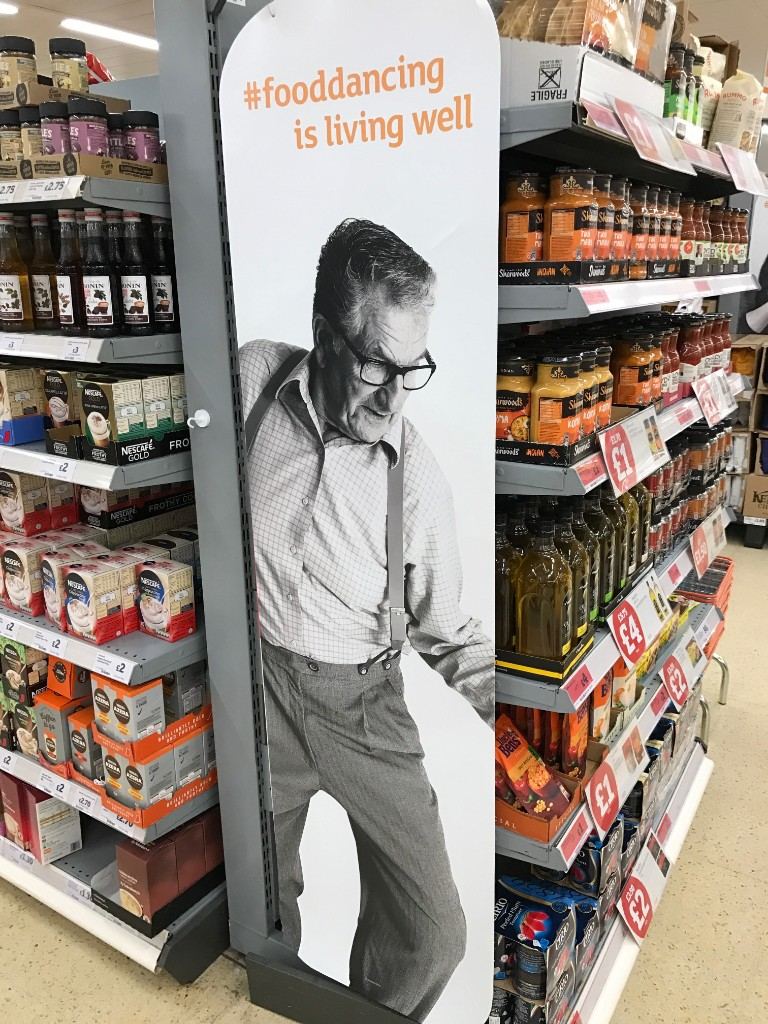
Ah food dancing. Remember this?
Landed in January 2017 and was their first work via W&K; designed to showcase people dancing in their kitchens and enjoying themselves. It was plastered on every single end in the middle aisle of the store, even on Spirits and cleaning products....
It was a 'shock' type advert that polarised opinion, many felt it took the chain's image backwards (remember John Cleese as an example of this) but others thought it was near genius as everyone was suddenly talking about the business.
I remain undecided; it's hasn't been a continued theme for Sainsbury's in terms of a campaign so was it a limited time thing? A similar theme was used for the Christmas advert..... However in 2018 - there has been very little.
This extends to the stores themselves; there is no leading message.
Asda have their "starts with A" campaign highlighting various Asda own label products, Morrisons rehashed their British / Provenance / Food makers campaign and also have repeated messages around Market Street in store.
Tesco have hit a sweet spot with their continued Food Love stories message; nothing flashy save for a small chiller at the front and various recipes on signage and dotted around the store. However it has been consistent and talked to customers about food, over and over. Jamie Oliver being added to that mix is intriguing but their message has been carefully curated whereas in the dark days, what was their message?
Blinkbox, branded signage left, right and centre and even more mismatched messaging on price, Finest and the like.
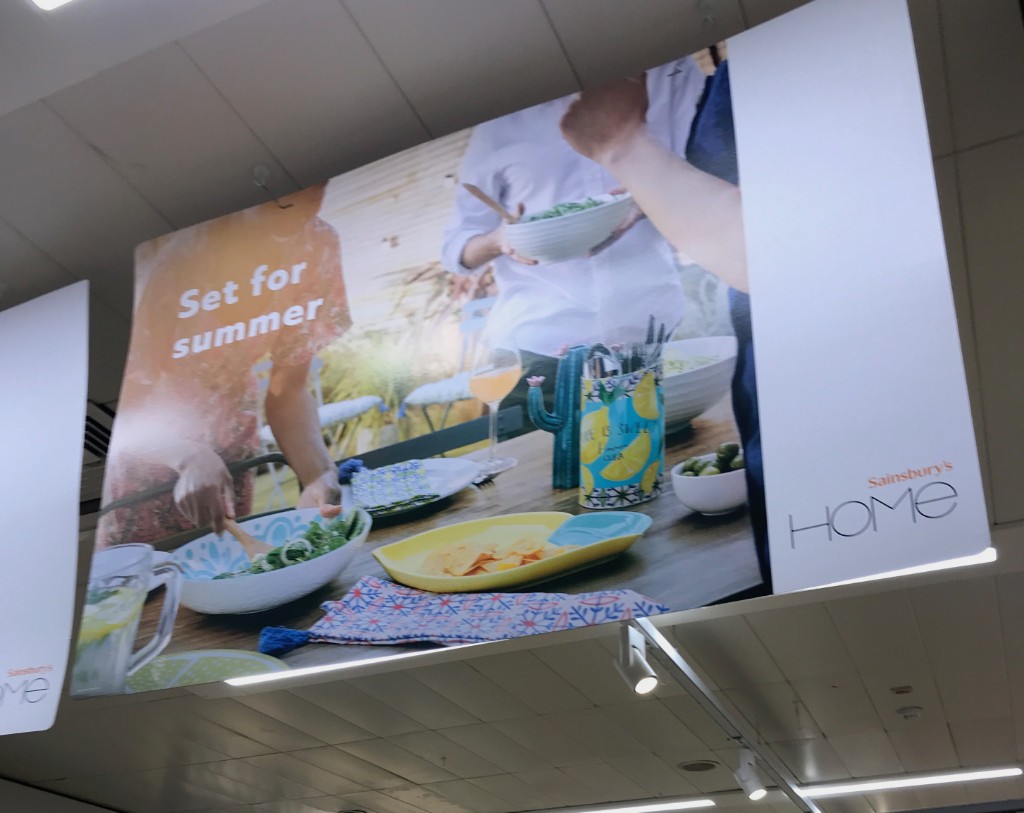
In to early October and the Summer message was still up in store, an isolated case I am sure, but the leading message in stores over Summer was around Home and Non Food. Better margins of course but their non food offer is a great example of what food should be like.
If we consider their non food offer is new (to an extent) Justin King had to get rid of Jeff Banks and co and start their own offering in stores c. 2005 or so. The business has gone from strength to strength and their seasonal collections are often superb featuring some really good quality products.
Price points can be a little high, but the offer itself is a strong one and works well. So a "Home" message is effective over the Summer months perhaps, but as a strong food retailer - it may have been effective to feature more food messages perhaps.
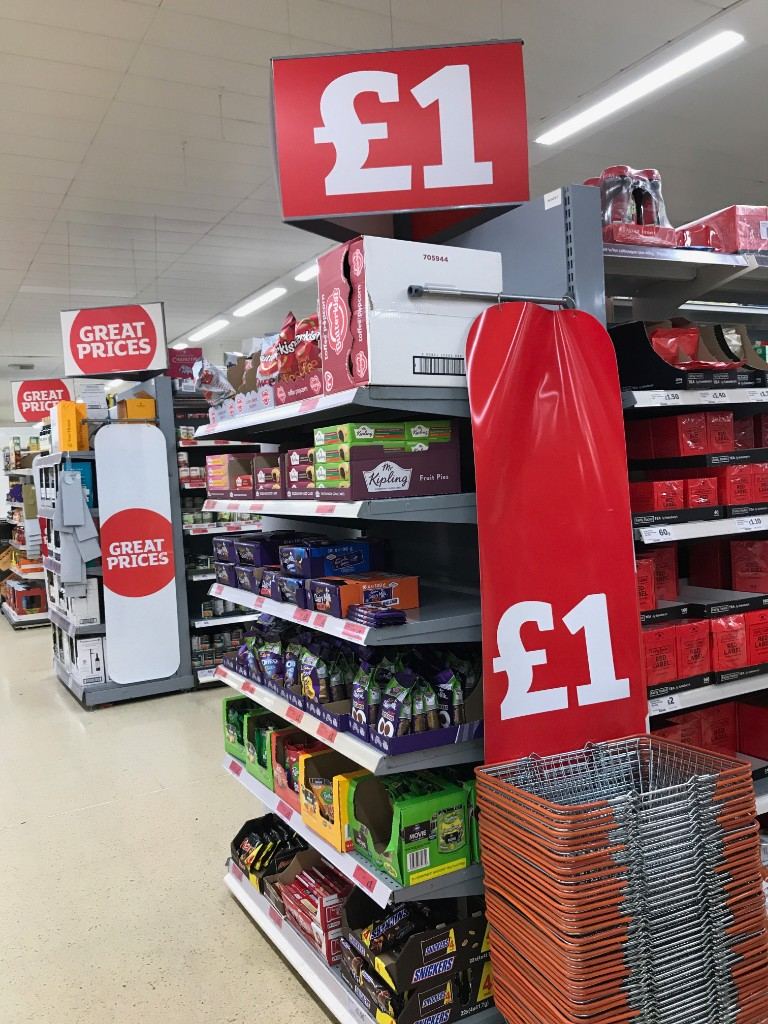
God loves a trier and that stack of baskets for customers who may want to pick up more than they intended is a great example of positivity. Inspiration on a late night can be a challenge in some stores.....
However the re-introduction of price based ends is notable as Sainsbury's have realised they need some value barometers for customers. These are a welcome re-introduction and help value focused shoppers find the price points as applicable.
Some of the other ends are near bizarre, but the price based ends are good.
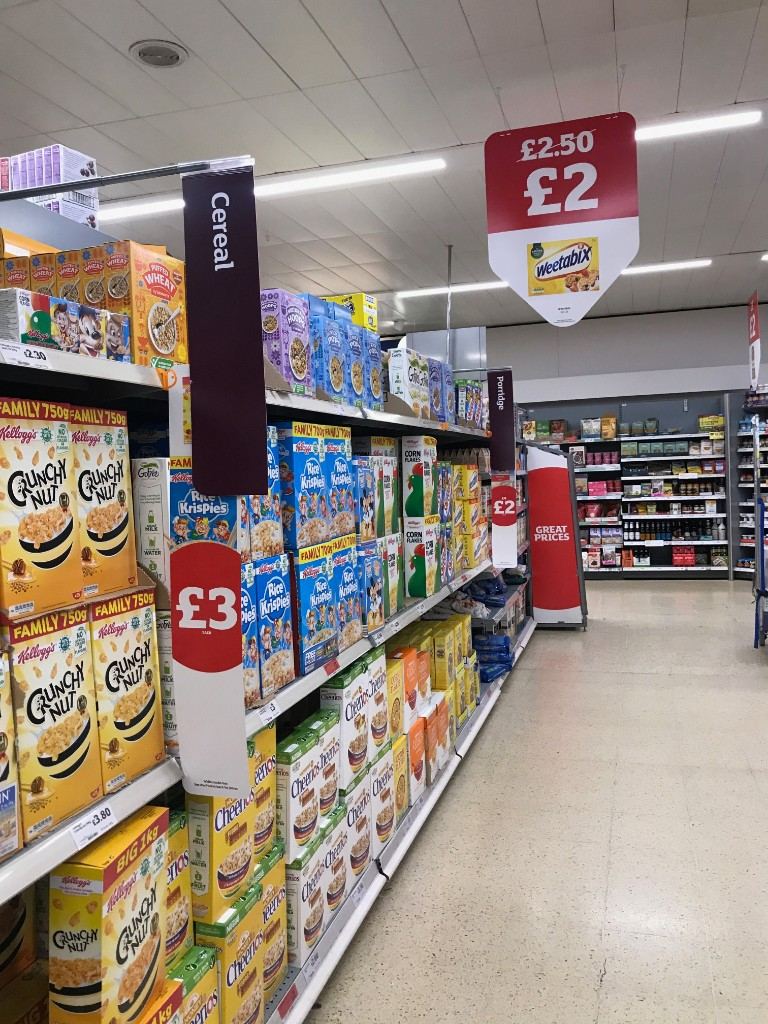
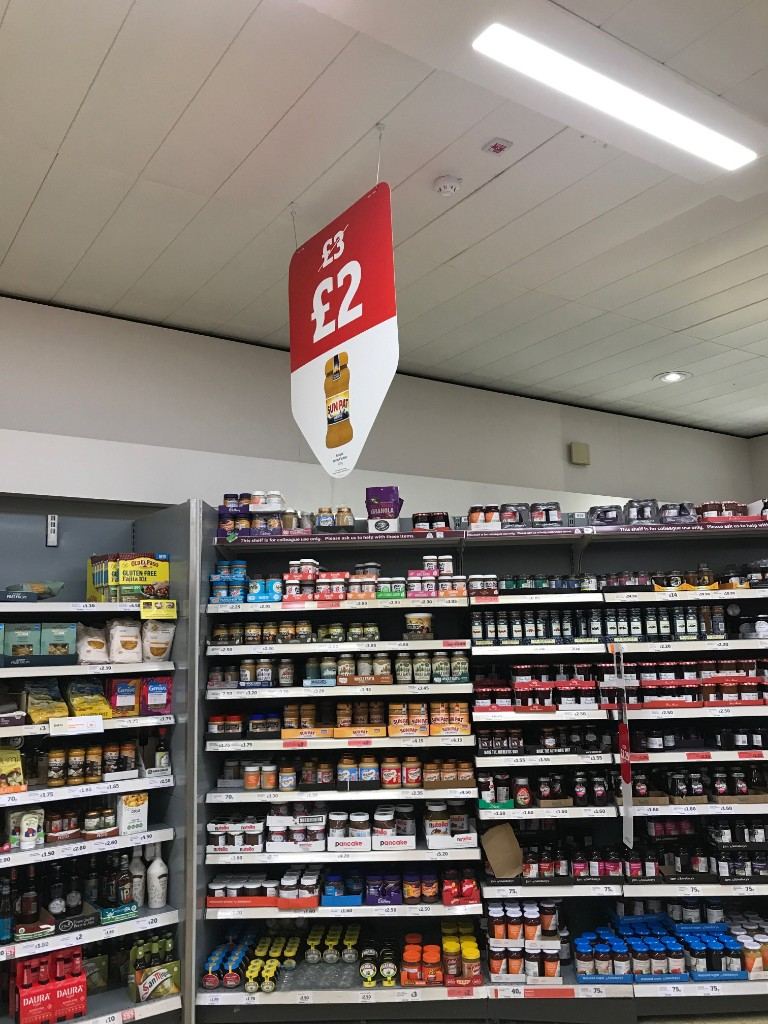
Moving around the store; there is no overall message to be found to reassure customers who may see emptier shelves and a general lack of tidiness and wonder what is going on...
It's important to re-emphasise that all retailers struggle with similar, Sainsbury's are not unique in this, however the pace of change (negatively) has been noted by numerous customers, especially on social media.
The price based messages around the store were notable too; these were branded and typically featured the product image. Not out of the ordinary but a step up versus 'clean aisles' that we'd see elsewhere.
Certainly not seen a level of price based signage elsewhere like this; in Sainsbury's it's quite stark as they generally are ever so strict and do not allow a single sponsored element in to the store... Bar these signs, which are on the increase.
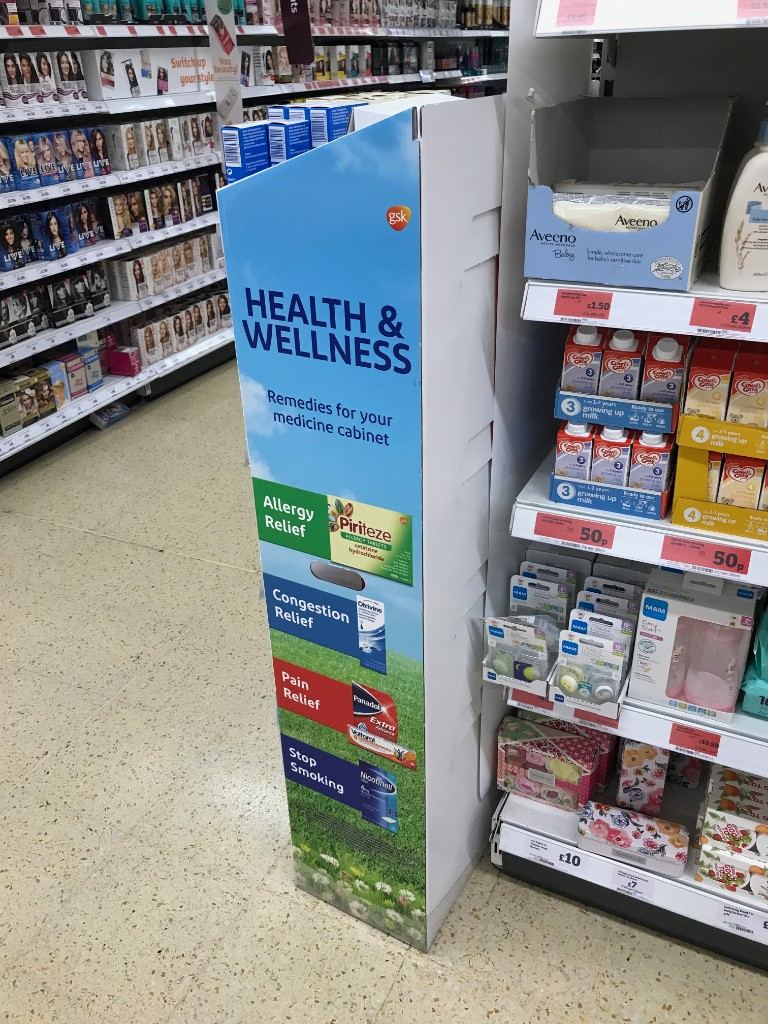
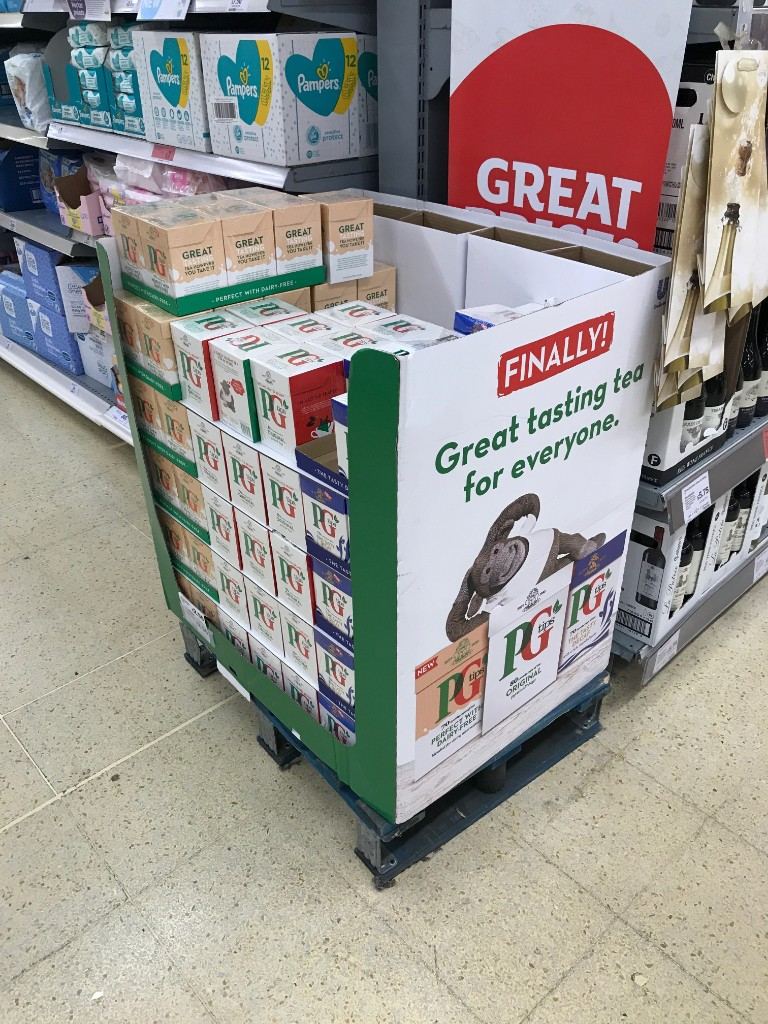
Commercial monies were notably on the rise in the last Sainsbury's annual report and that was positive in some cases (volume based rebates e.g.) In other cases it was a concern as supplier income / signage etc was rising.
There is nothing materially wrong with this as it's part of the cut and thrust of the industry, but it can be very easy to plaster the stores in branded signage and messaging and lose your own identity. Categories such as Health/Beauty and Impulse are prime for it as the big suppliers are here, trying to get increased sales and share given the discounters are going well, taking sales....
These shippers are nothing new of course; but they don't have a message. Not a new product or a particularly impulse based purchase. Unsure what the value price was for Tea (if there was one, or just slow sales) and the branded GSK shipper was not good, generic and not really aiding a customer....
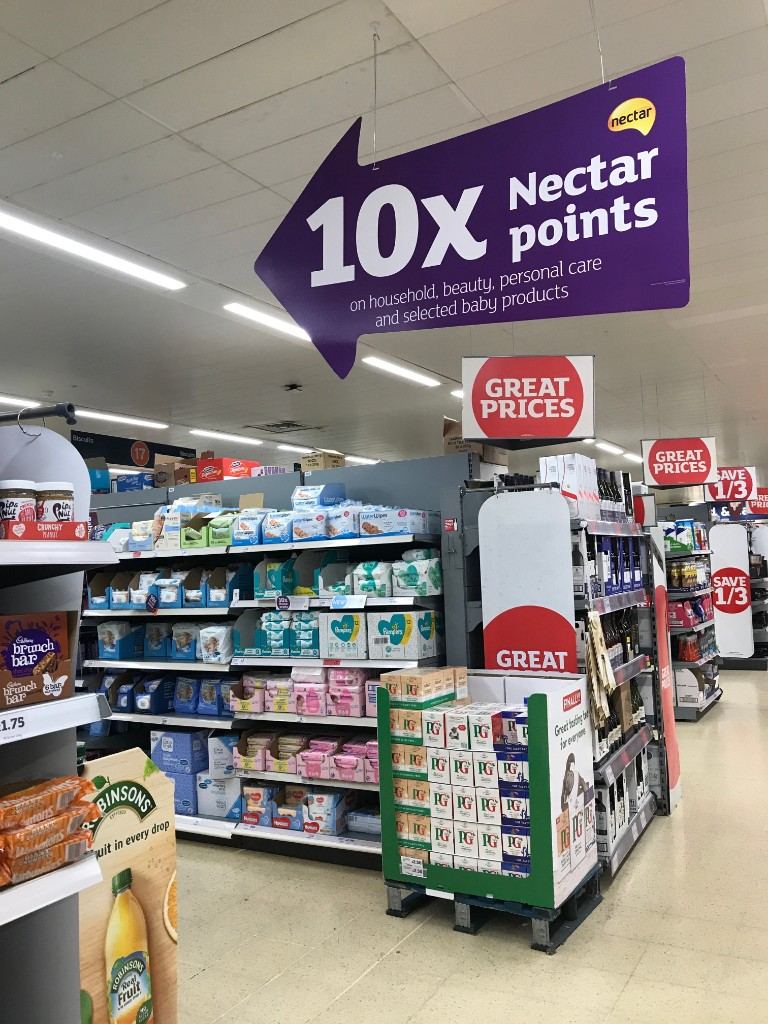
Sainsbury's now own Nectar outright, so the changes to the point collections where customers get less, but more deals are now running is perhaps fair.
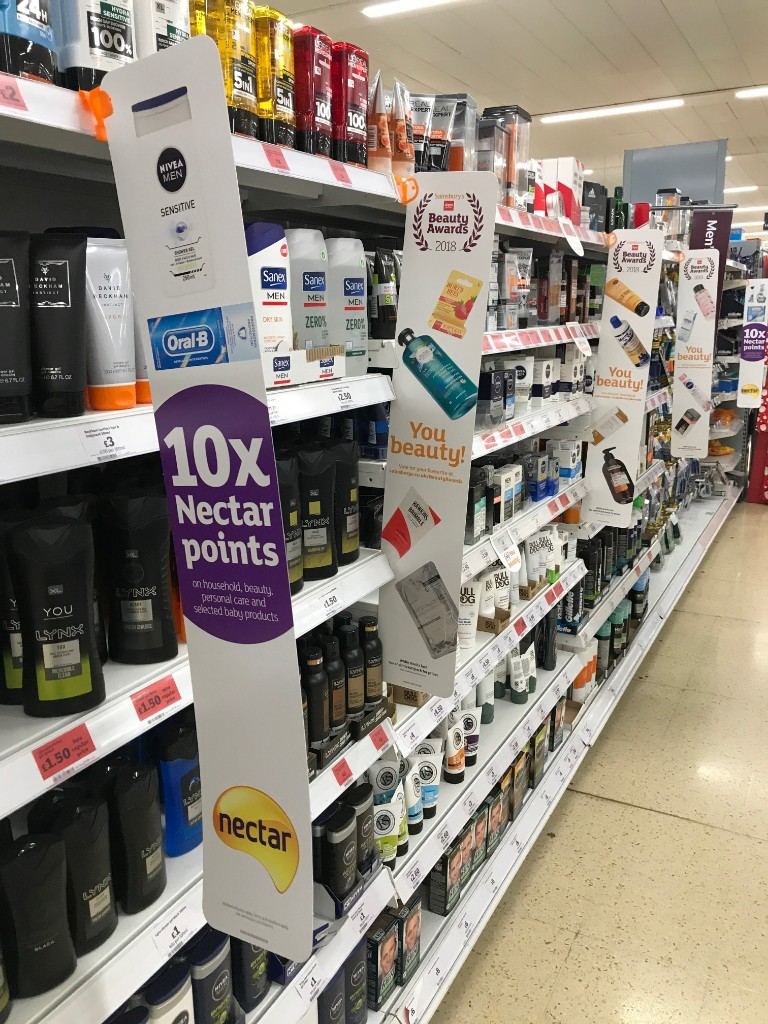
However there has been a real step up in these increased redemption based events, the Health/Beauty event (10x multiplier) ran for no less than 5 weeks and incorporated household and Baby too (overlapping with a baby event where discounts were already applied).
The benefit of this is that it's a Sainsbury's only deal, so customers can increase their points haul if buying in to Health/Beauty, Cleaning etc, or Baby even. Nectar / Sainsbury's can see the customers who shop with them and are more likely to get better data to track lapsed shoppers (who disappear) and try bring them back in to the fold.
Brands like it too, their sales increase when featured and they presumably get hold of some data to showcase what they're doing woks in some way. They also get to put their logo / products all over the signage as noted here.
The Beauty awards were also well flagged in aisles and this is an event that Sainsbury's have run for more than one year, it's a good idea to showcase innovation and recognise customer favourites too. Some of the own label / exclusive brands won awards too which was good advocacy for the strategy here.
However as a message; 10x points was the leading message for a long time. It makes the year on year numbers hard to annualise against (like for like basis) as it's somewhat of a gimmick.
It seems inherently unclear what the difference is running a number of Nectar points events versus multibuys. They were decried as 'evil' when Sainsbury's abandoned them in favour of a simpler pricing strategy some years back (that whilst disputed in some cases) did land in stores as a clear strategy....
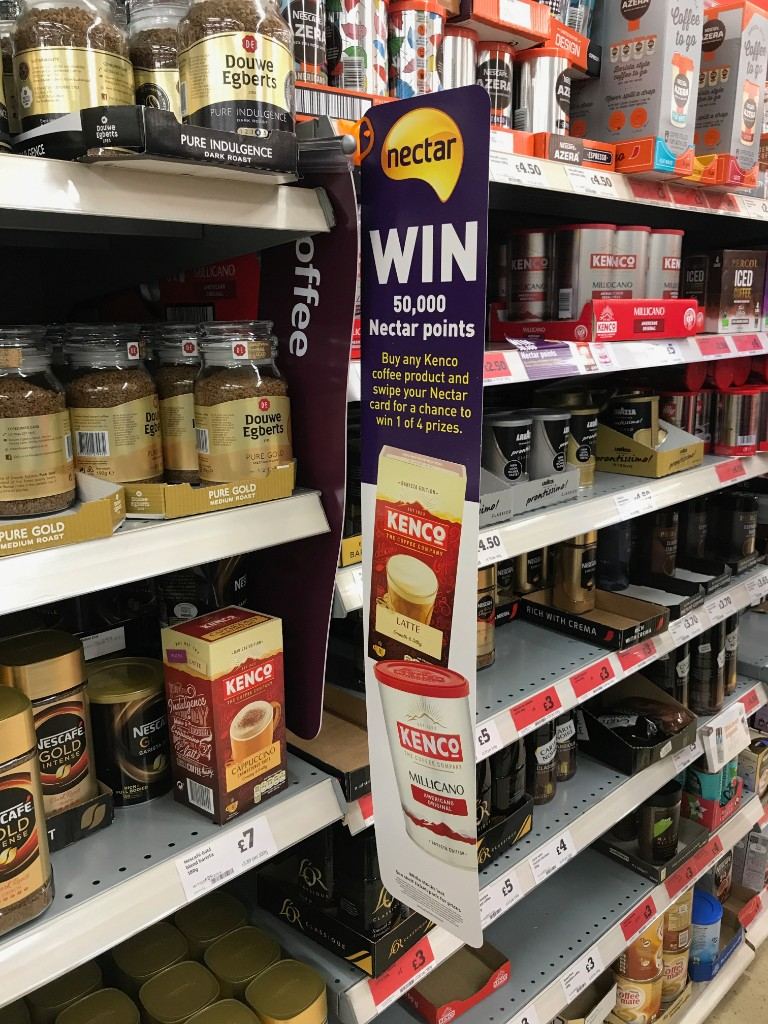
The random 50k points opportunity when buying Kenco products was a good example of a relatively raw, basic Nectar competition that in all likelihood is poor value. The chance of winning is slight, at best one would think.
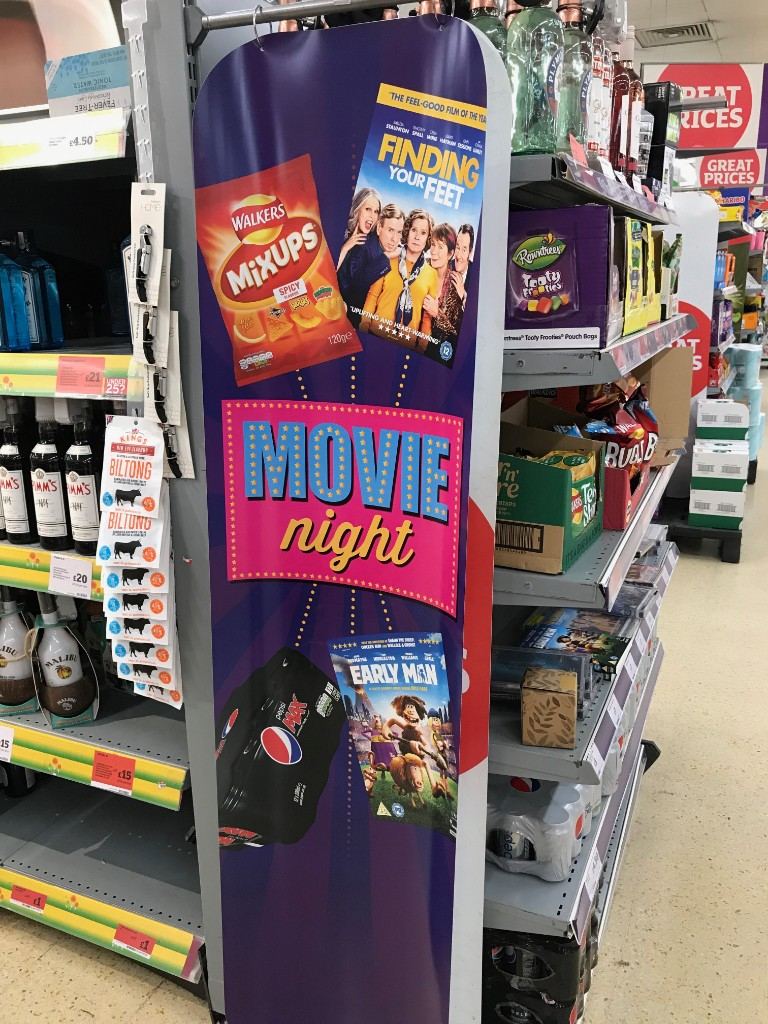
Even the "Movie Night" signage wasn't immune from numerous brands and movies flashing their wares on the signage..... A good focused end but the trend in the market has been to start featuring own label alongside brands, or at least gaining some form of parity here.
Tesco have done a great job on this very thing, however Sainsbury's appear to be going the other way.
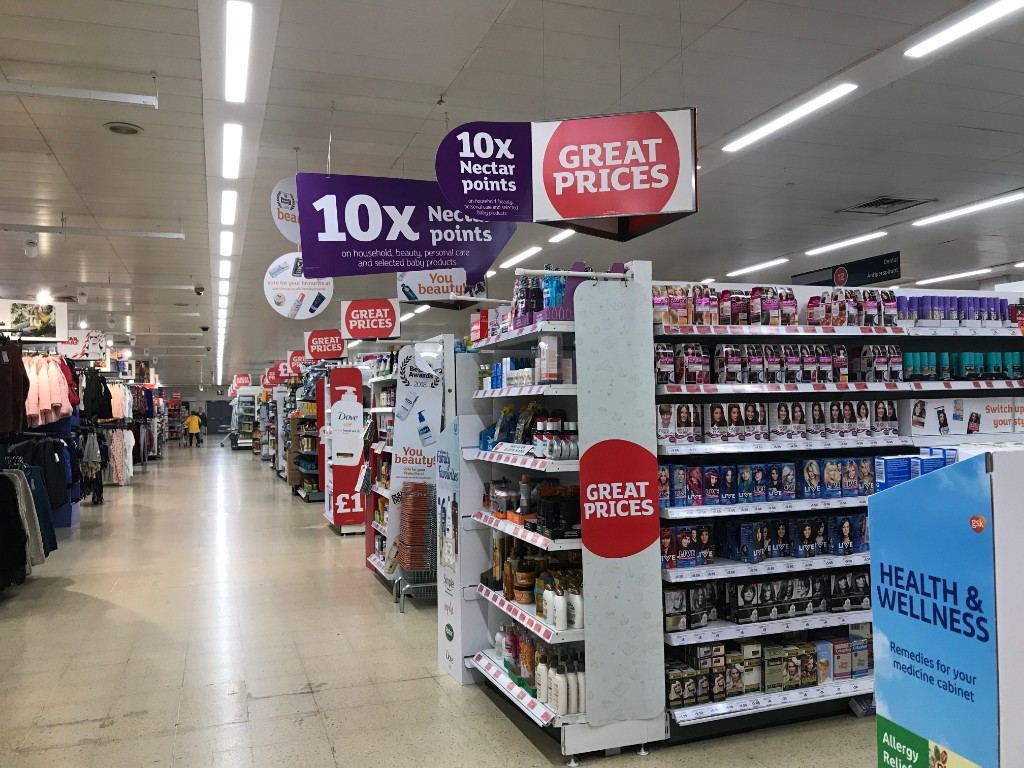
Early October - No leading message related to Food, or otherwise here. Heading towards Christmas, now is the time to start thinking about premium elements, food ideas given the weather is turning colder and also differentials for the chain versus others.
This is looking back to Health/Beauty and the earlier ends are food based. But all you see is brands and the Nectar/Health/Beauty awards.... Where is Food?
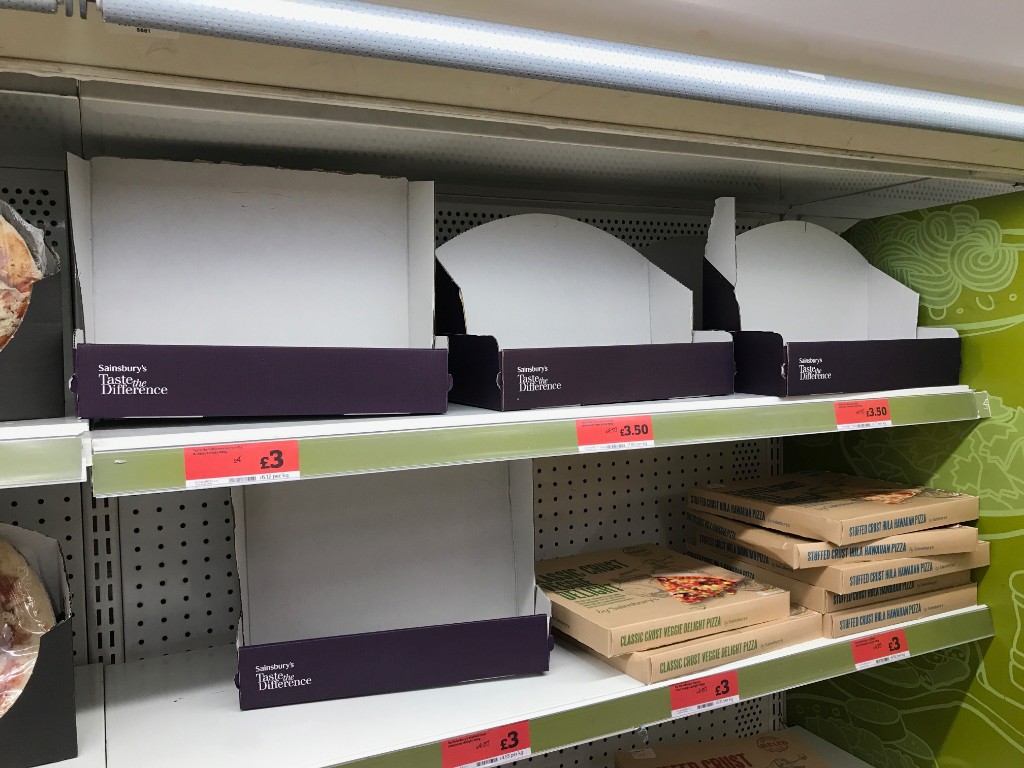
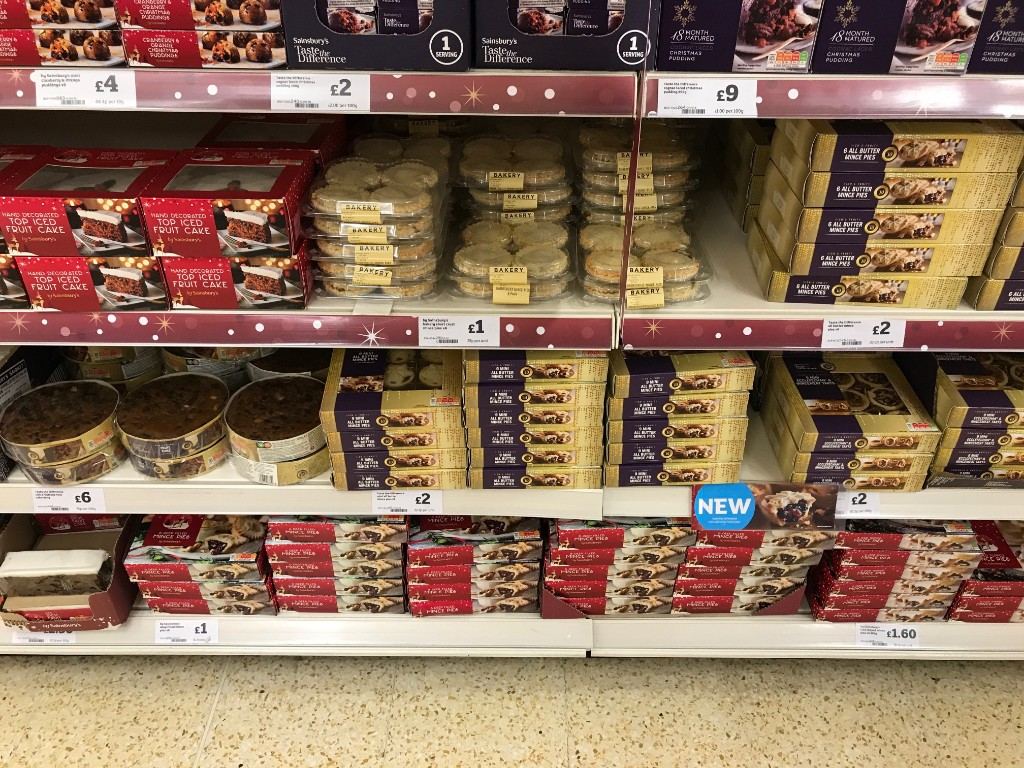
To wrap up, I could fill several emails on store standards within Sainsbury's alone, however it's akin to shooting fish in a barrel. What is the bigger picture? A lack of a store based message over September/October, as above is a good example of this.
Promotions remains crucial for customers, as evidenced by the premium Pizza's being off sale in their entirety. Frustrating for any chain when sales are missed but this is wholly self inflicted and a good example of customers thinking that availability has worsened.
Christmas - the initial ranges looks reasonably 'core' and stable, as they have in former years. Mince Pies looks standardised and I can not remember the last time they won an award for Mince Pies - a hero product for any retailer.
Good Food saw Tesco win last year, Morrisons won this year with the usual suspects like Iceland, and Aldi highly commended. Where are Sainsbury's? It also seems odd to use that 'Gold' packaging for their premium Mince Pies - it's not the core identity of the product by any stretch.....
Adding the Bakery Mince Pies in the middle of the fixture is a good idea though.
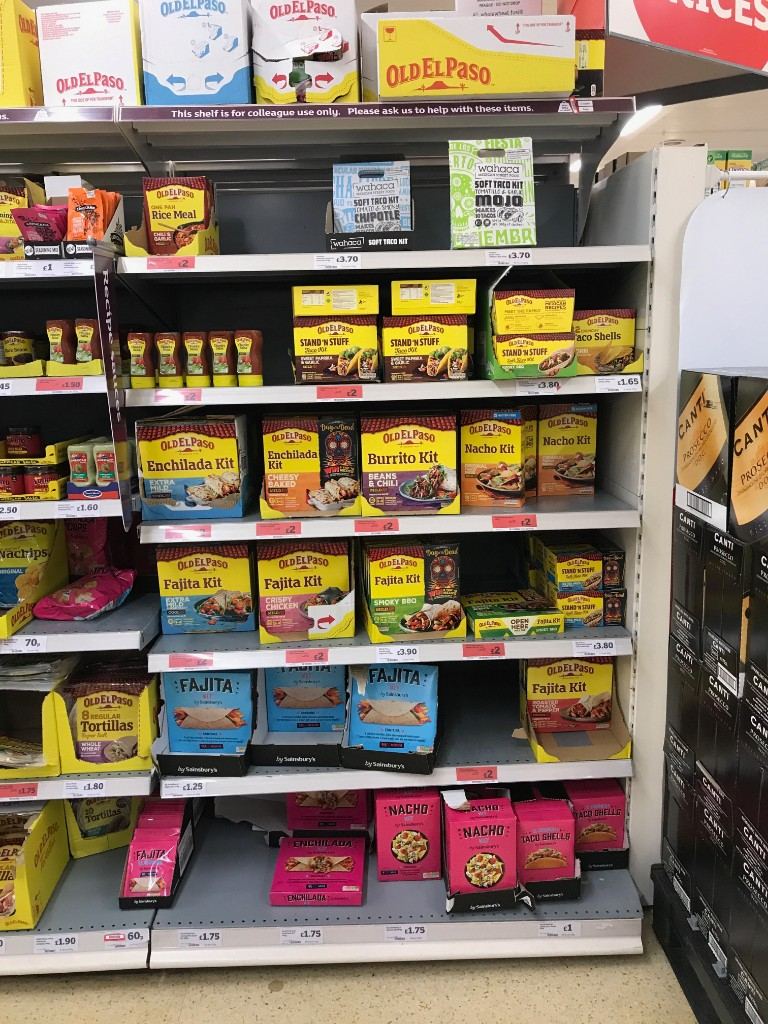
I have another image of this fixture with all the red labels off sale; underlining another salient point about promotions and the customer.
In terms of this fixture; it can be core for Sainsbury's in terms of them highlighting brands and pushing own label to the base of the fixture.
However the chain should (more than Tesco for me) be looking to push their own label products in this category, and others.
There are numerous reasons for this and Tesco have proved this concept over and over with their work on own label and product placement.
1) Brands may offer (£) to be featured prominently but they are hi/lo and customers are waiting for a promotion, if there isn't a deal then they infer that products are expensive / may be on deal elsewhere.
2) Own label is exclusive to, as Dave Lewis points out. It sounds very obvious (of course) but the reality is true. You can not buy the own label anywhere else.
3) Differentiator. The packaging looks excellent and stands out so well, so why locate it on the base shelves?
4) Price investment - it's a volume game but siting the two shelves of Mexican own label lines at eye level / above would immediately improved price perception. A customer scanning the higher shelves first would see the lower priced own label first.
It's lower in price, even versus a promoted Old El Paso product. Food for thought.
Especially as Old El Paso have dropped their entire range in to Aldi Special buys in recent weeks as brands prove they have little idea in how to deal with the discounters themselves.....
So for Sainsbury's - a message is sorely needed and a 'reason to believe'. The business should be bouncing as they head towards Christmas, however stores feel lightweight and confused - it will be interesting to see how the messages are highlighted nearer the big day.
Especially given the backdrop of stores and the changes there, it's going to be a very interesting few weeks ahead..........
Forwarded this email? Subscribe today for more!
Our Jack's in depth report is now available!
From the Grocery Insight newsletter archive, first sent to subscribers on 15 October 2018. Steve now writes at read.groceryinsight.com. See also the blog archive and briefings.