Range change will do you good
25 March 2014
Range, range change.
'rationalisation' set to be the order of the day.
Next time you're shopping, think of the energy drink fixture and the plethora of drinks that maybe 10 years back (in my youth) was limited to Orange / Original Lucozade or Red Bull.
Now, there are so many variants such as Red Bull zero calorie, Red Bull Cranberry, Relentless has around 5 flavours and Lucozade have steadily expanded their stable too.
These products are typically on some sort of promotion too, which can build overstocks post promotion and as we know, products on promotion need more work. Replenishment / Point of sale etc.
Secondly, consider the Bakery / Cakes area. A category that is bloated (literally) by the myriad of seasonal Mr Kiplings products that arrive dependent on season.
Cadbury too, via their bakery partner launch several flavours / variants of their Mini Rolls and Cake Bars. Just constant duplication within the category.
Indeed, checking Sainsbury's online - there are 4 different variants of Mini Rolls (6 packs) with a further 3 variants of the larger 10 packs. That's 7 varieties!
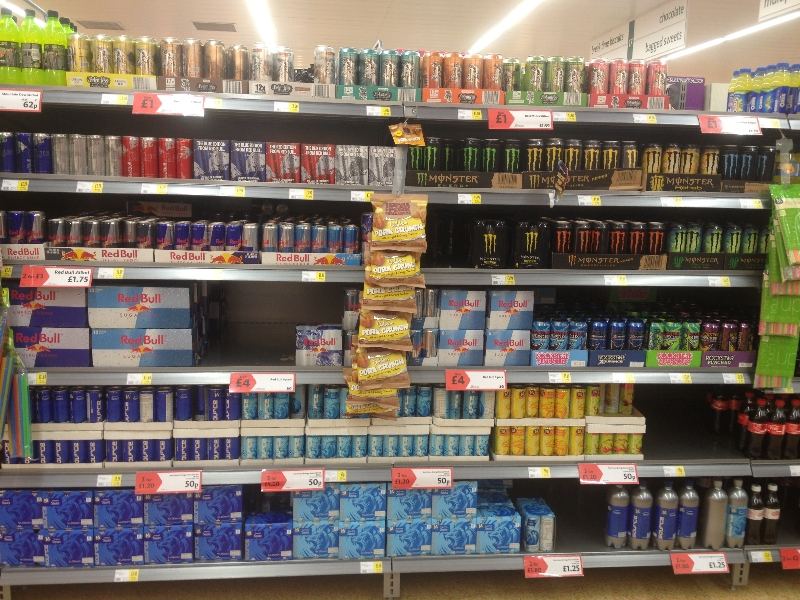 Energy drinks, a widening category.
This slow growth of ranges is alien to the growth engines of food retail, the discounters, limited assortment retailers with their simple business models.
1300-1500 SKU's is all you need and the associated benefits of low prices, great availability and interestingly, a lack of promotions mean that they're winning the race in the UK.
Aldi / Lidl are not 'cheap' per se, it is entirely possible to shop at any of the big four buying value tier products and spend less than you would at the discounters.
The difference is, customers don't want to do that. There is a stigma with the budget brands from the mults and the quality isn't comparable to the marginally more expensive discounter ranges.
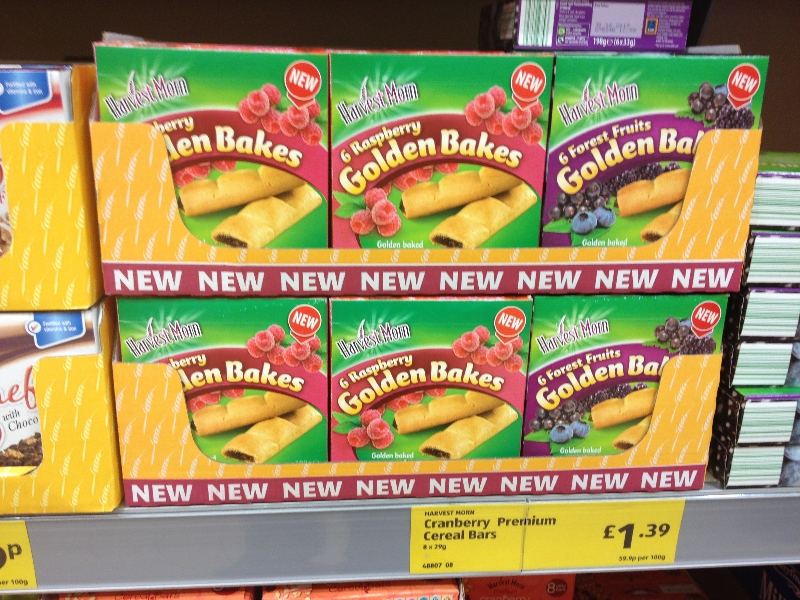
The move to a discounter model with a limited range cannot happen for the multiples, they have too much space to shrink the range to a comparable 1300 / 1500 SKU count.
Additionally, consider the space that stores have, the remodelled Watford Extra is still a vast operation, even with a fair chunk of space on the right side of the store remodelled for Harris and Hoole, Euphorium and enlarged F&F.
It's impossible to reduce the range to a discounter level, but what is clear is that customers are fatigued. They are tired of wading through confusing promotions where the smaller pack can be better value than a larger pack, even without a promotion.
They go to Aldi / Lidl and get around the store in 15-20 minutes, if they want Weetabix, there is the Aldi label and maybe a Weetabix (brand) as a 'safety net'.
Of course, this isn't typical but what has become clear is that supermarkets have expanded their ranges massively, and the yearly 'category review' where new ranges are introduced and others are culled isn't enough.
The problem with these reviews is throughout the year, suppliers release 'must have' new flavours, these are added to the range which just continues to grow the assortment.
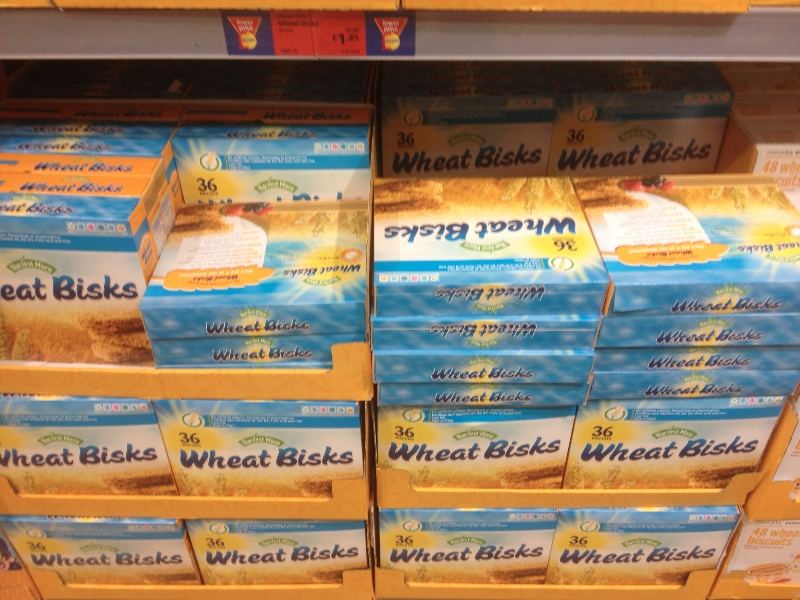 The range cull cannot be as brutal as Aldi and their 'one product' principle but there needs to be a middle ground.
The volume of new lines and variants from suppliers is increasing, as discussed earlier with Energy drinks a key culprit.
Buyers are responsible for their category and as the year end nears, many will take new lines in volume to boost their figures and hopefully attain their bonus.
Let's look at Weetabix and co as a good example of a range that is bloated. The ideal scenario sees products culled that make sense, going too hard will upset customers. This is one sector within the wider Cereal category, so shows the work needed to really shrink ranges.
(NOTE that pics are taken in Tesco but these are relevant for all multiple retailers).
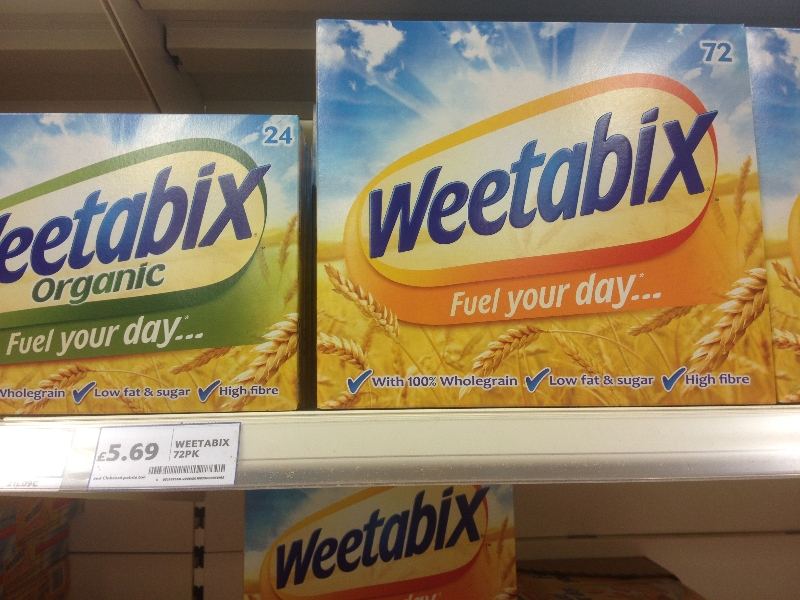 Large packs must be a contender to rationalised, the high price point (£5.69) is too high for budget conscious customers.
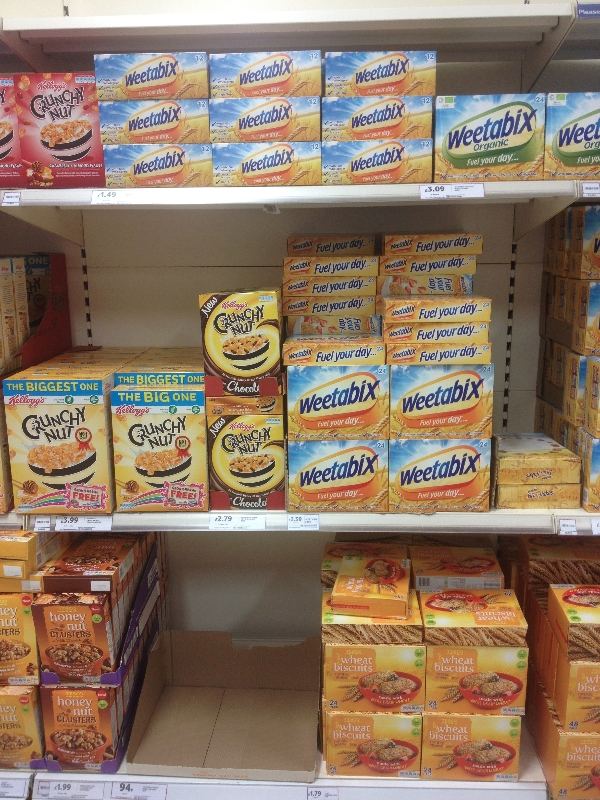 Weetabix; 12,24, Organic, along with all sizes of core own label and the value product too.
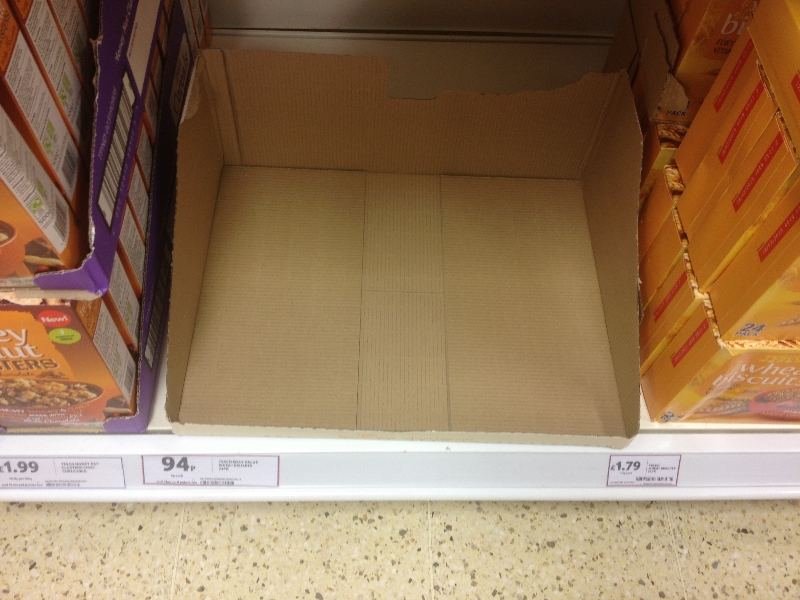 Of course, the Everyday value line was out of stock, clearly this is the most popular line in this store.
There is no need for the large packs, particularly with current consumer spending under pressure, the high pack size has become unaffordable.
Similarly, is there a need to list all the branded and then own label pack sizes too? Each SKU = complexity and cost.
It's important to remain an outlet that offers choice, as Aldi/Lidl don't do that and Tesco appeal to a broad range of people and have larger stores to fill.
I remember a quote from Justin King on the perils of using the 'bottom 10%' as a baseline to reduce range. Nectar data revealed that 'Grape Nuts' was bought by around 1% of Sainsbury's shoppers, however these shoppers were the most affluent shoppers Sainsbury's had.
If JS removed Grape nuts from the range, then its likely those shoppers could go to Waitrose for the product, thus running the risk of losing the full spend to a competitor.
Ranging is a tough issue to grapple with, especially with suppliers not keen to lose listings either. But a leaner, meaner organisation will seek to reduce ranging and improve buying terms.
Do follow me on Twitter!
Visit the website and see the services we offer.
Grocery Insight provides market insight on the food retail market, whether its an 'instant update', monthly overview or fuller in depth research into individual retailers.
Suppliers can gain insight into their category, I look across the entire market, including concept stores to provide the best insight package in the industry.
Insight can also be provided for retailers, with insight on operations, analysis on store concepts and core stores.
For a no obligation quote, please email: [email protected]
From the Grocery Insight newsletter archive, first sent to subscribers on 25 March 2014. Steve now writes at read.groceryinsight.com. See also the blog archive and briefings.