Sainsbury's - The slides that matter
10 November 2016
Not a subscriber? Subscribe here.
The interesting thing about the Sainsbury's results yesterday was that it was entirely clouded by events over in the US. Donald J Trump is to be the president and the election was still ongoing whilst Sainsbury's released their half year results to the city.
It was more of the same really, with deflation in the market and indeed Sainsbury's having had worked hard on their prices, eliminating multibuys and pursuing a lower, regular price strategy.
However their like for likes remain in negative territory, they have never had the 'nadir' of -5/6% like Tesco, Asda and Morrisons did, but whilst Asda are in the midst of their poor period - both Tesco and Morrisons have recovered and are back in positive territory.
Given Sainsbury's never had a nadir, is their actual result not that bad? Negative but never that negative? Or should they now be looking at positive territory given their work on price whilst maintaining their excellent store standards?
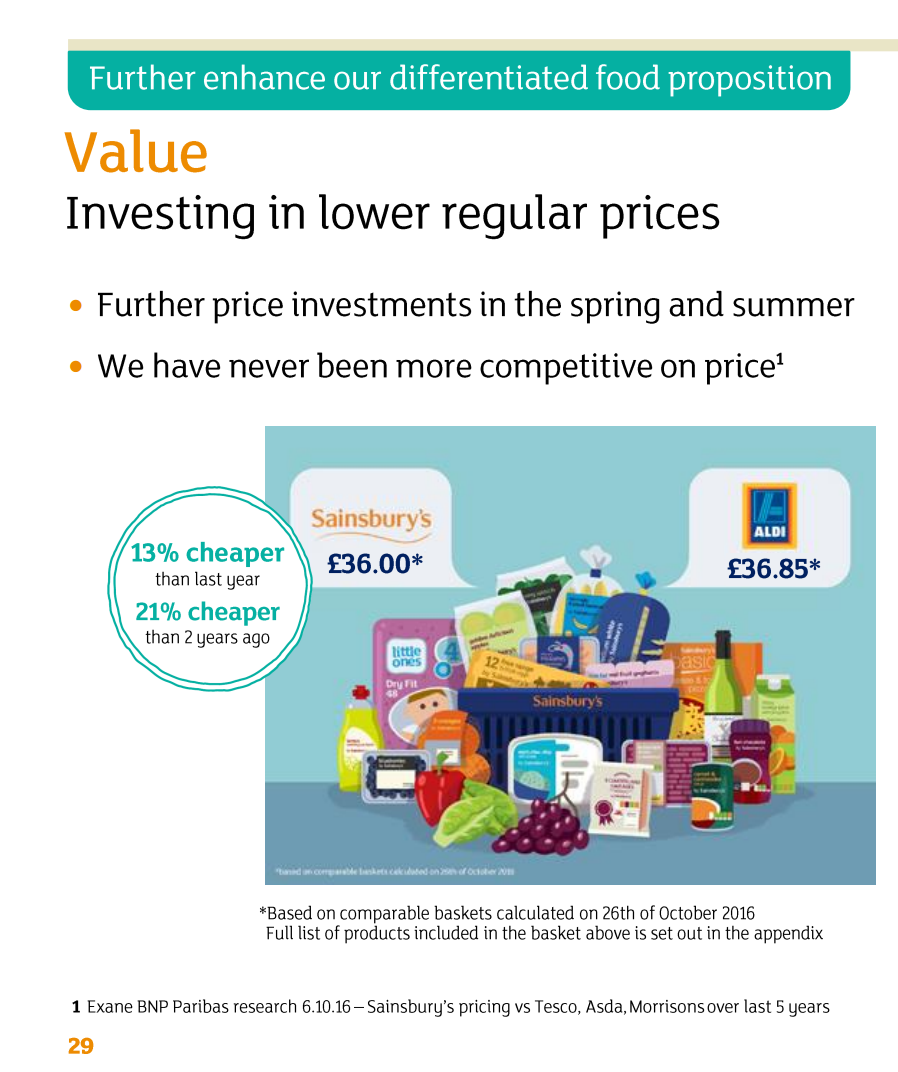
Very noteworthy that Sainsbury's are matching themselves to Aldi on price here; their appendix then shows a price basket which shows Sainsbury's to be 85p cheaper than Aldi.
Also noted that JS are 13% cheaper than last year and then 21% cheaper than two years ago. With deflation in the market, this is expected but it's a stark drop.
On an everyday value basis, they do feel cheaper, but the absence of multibuys does leave me feeling a bit about where the value lies.
Customers love a bargain, poor people need one, rich people love one as Ken Morrison once said. Multibuys form part of that, but Sainsbury's without x for y deals are off doing their own thing, and pulling down wider pricing to compensate.
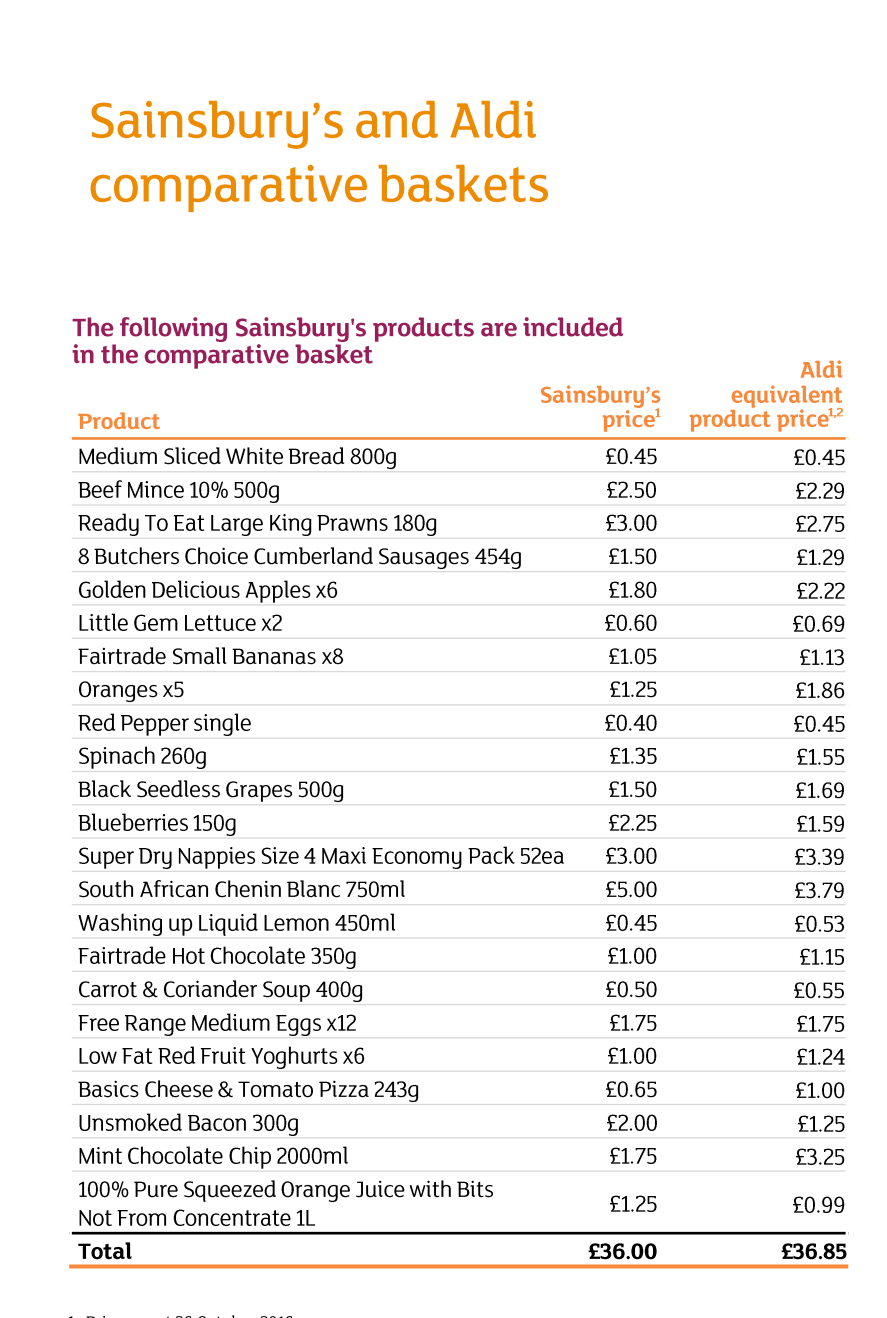
It's such a marker as to the market changes that Sainsbury's are calling out Aldi pricing and beating them here. Justin King used to note that the one Lidl within the Sainsbury's car park in Newcastle (I believe?) worked well for them.
Obviously as Aldi (and indeed Lidl) started to push into premium (Aldi should perhaps slow down a bit too with this), they then encroached on JS and indeed M&S territory.
It's a sample basket above, Aldi could bring one out that was significantly cheaper on the premium ranges, Asda could do one, undercutting JS significantly etc. You can cut and splice it many ways.
There are two schools of thought; the fact Sainsbury's (on near everyday items in fairness above) are able to be 85p cheaper than Aldi is a strong, strong piece of work.
However I don't expect to see this comparative in store, firstly it doesn't really work as a hook for customers. 85p difference in Sainsbury's but a wider basket would then be cheaper in Aldi.
Plus the shopping trip is simpler in Aldi, it takes less time and there's less choice. But as a wider viewpoint, it's a nice thing to be able to flag and representative of the work Sainsbury's have done with their price investment.
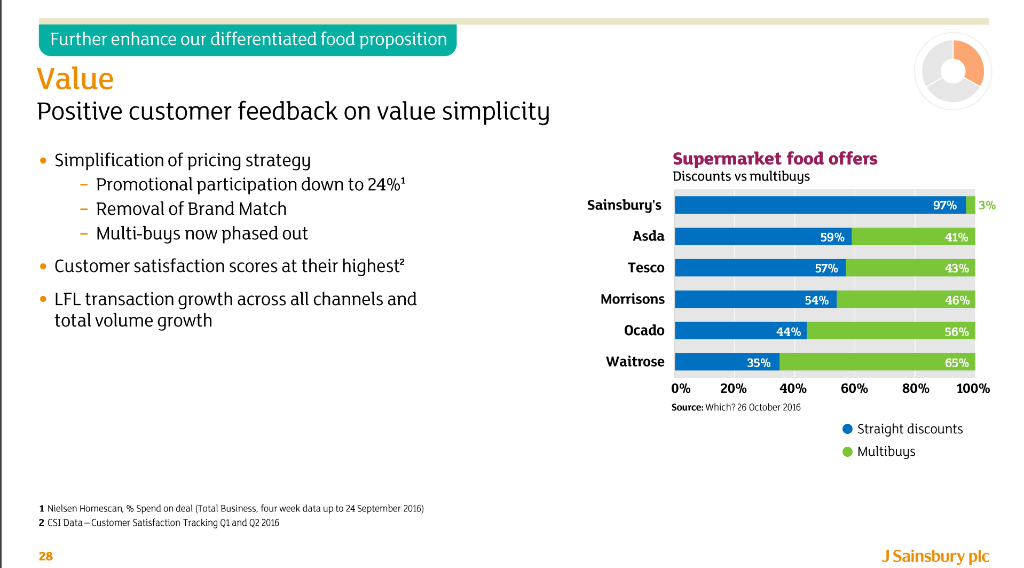
3% multibuys in Sainsbury's now, it's probably even lower than that across food, but they do still run them in non food. Lightbulbs are one that's on, alongside Wines which is 25% off for 6 bottles once again too.
Their strategy is bold enough, it would be interesting to see when the read from Which for deals was done.
Asda have significantly stepped up their multibuys in aisle, so Tesco having a higher '%' of promotions on multibuys doesn't seem quite right. Tesco too.
Surprising that Waitrose are so high on multibuy too, doesn't seem to ring true to me. But as a high level, it does show the work for Sainsbury's.
No more multibuys means the Sainsbury's stores are then even simpler to run, a multibuy promotion is tough to forecast, you never quite know what the pick up rate will be.
Will customers buy 4 rather than 2 if they're 2 for £1? Will they bulk up, or will they not favour a multibuy and instead opt for own label?
Plus if the pick up is greater it boosts volume. It requires more people on the shop floor, replenishing, more wagons on the road distributing products and more cost in the chain.
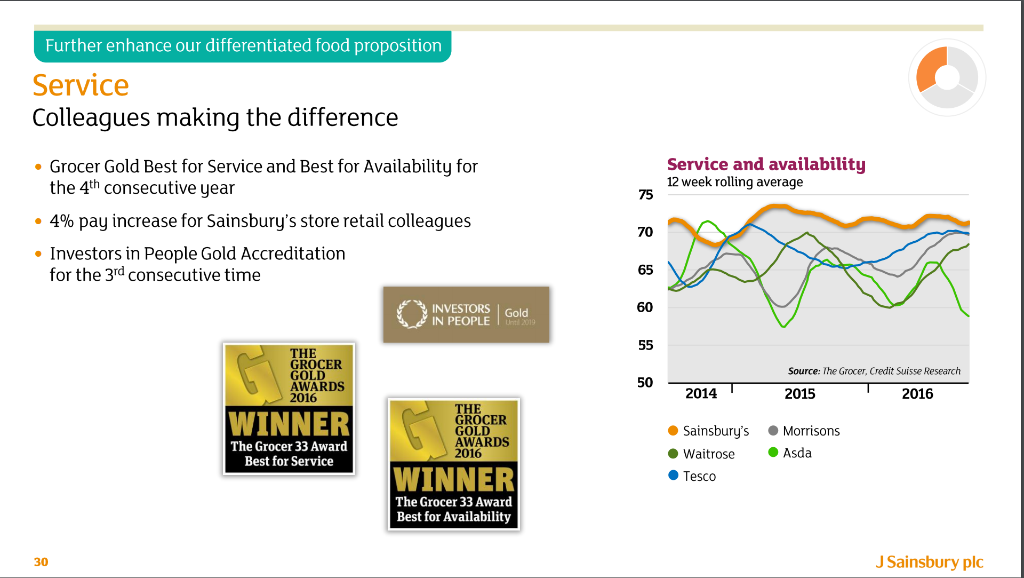
The wider impact is that it aids availability, easier to forecast means goods in the store at the right time. Their stores are strong and they've been on a journey for a number of years with the simplification exercise.
Asda have fallen off a cliff in 2016, both in terms of service and availability, ex Sainsbury's man Roger Burnley is now in situ and will be looking to address those challenges.
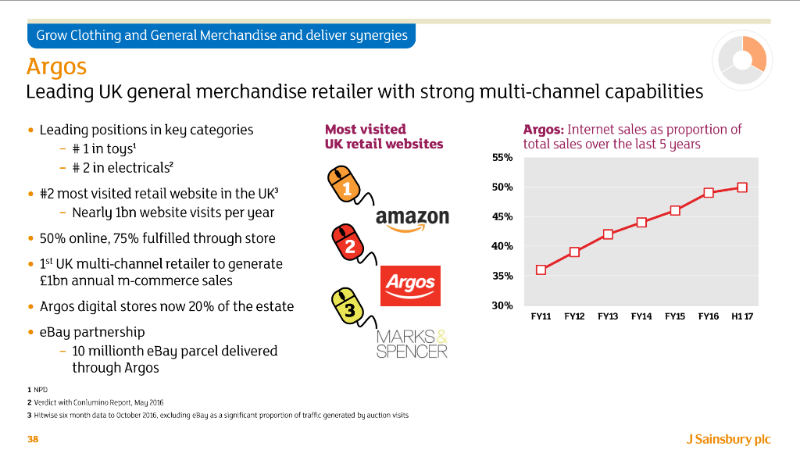
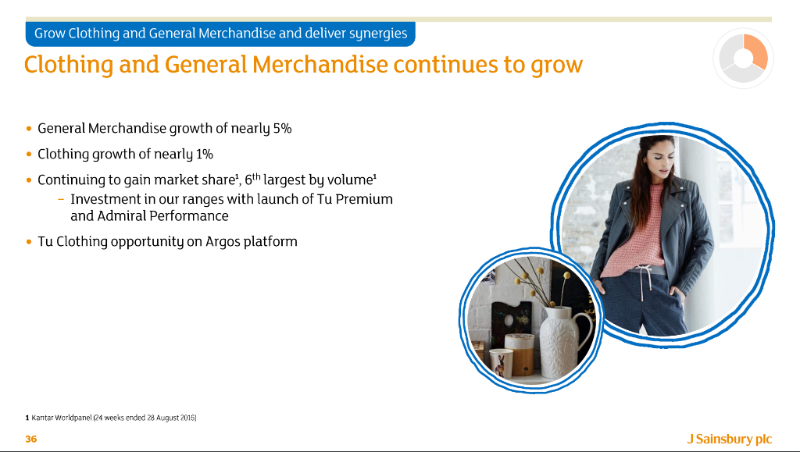
Good progress in the clothing, non food and Argos businesses, noteworthy that Sainsbury's won't be splitting out the sales from Argos forever either, with next year seeing the 'group' sales reported as one.
GM is a major strength for them and using Habitat is genius, given the Sainsbury's range is so strong, with seasonal collections and a strong Christmas range too. Habitat works ever so well and will serve to boost margins in this arena.
The GBP weakness could impact the margins at Argos though, especially with JS growing their non food business significantly via Argos and co. That's the challenge coming over the hill.
Long term is looks to be the right play, especially with online growth and their moves to sharpen their online grocery offer with same day deliveries is a good development, but absolutely necessary given the march of Amazon and co.
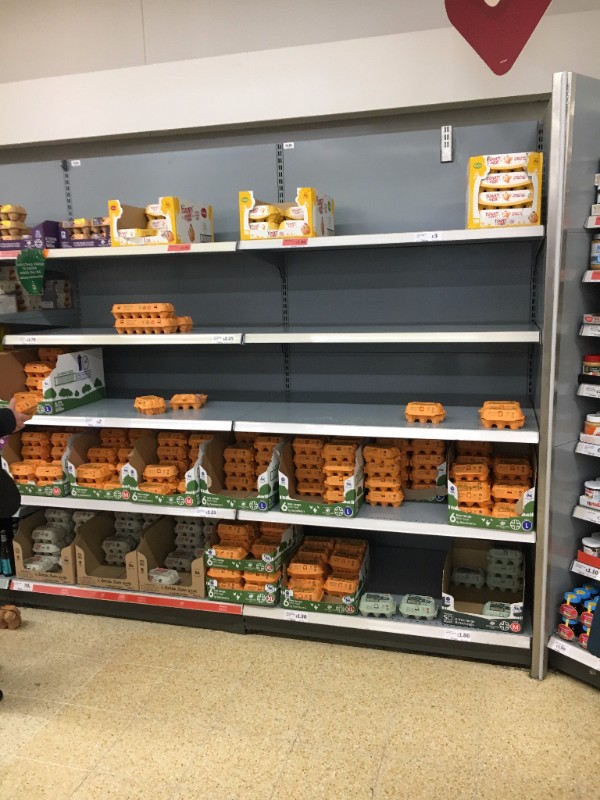
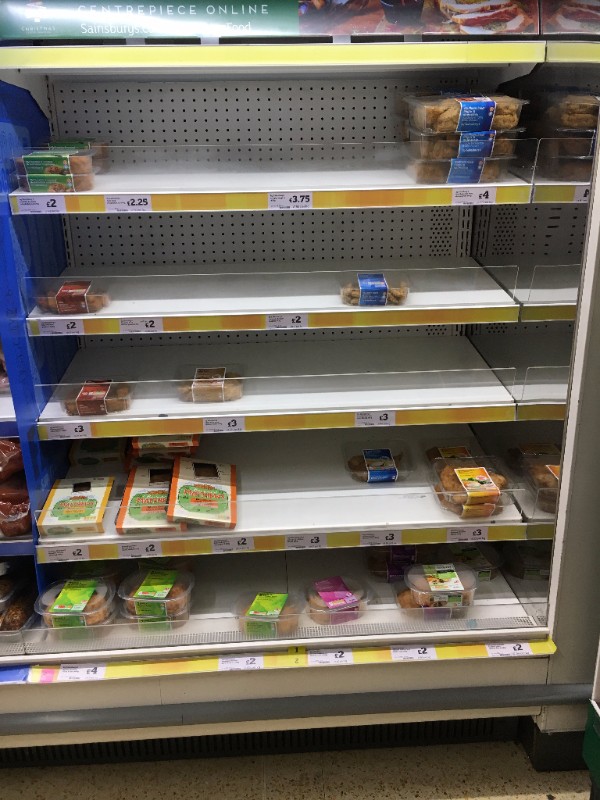
Better timed replenishment within a slide was noteworthy for the cost savings, opening hours and removing night shits where volumes don't support is wise cost saving.
Sainsbury's generally manage this well, my local store is broadly twilights and early mornings and the disruption is minimal. However the organisational piece is a must for the store, prioritising key areas for fill and not just blindly filling cage after cage.
10am and a few Eggs off sale and not much breaded poultry (although this was a supply issue too) can show the risks for customer impact.
As long as this is managed effectively, with no customer disruption then the saving makes perfect sense. More efficiency improvements to come with this regard, with the Argos estate to represent some savings as it's merged into the Sainsbury's estate where applicable.
Email forwarded? Click here to request a service trial.
From the Grocery Insight newsletter archive, first sent to subscribers on 10 November 2016. Steve now writes at read.groceryinsight.com. See also the blog archive and briefings.