Sainsbury's full year results
30 April 2021
Find out more about our services
Enlighten your inbox, join today.
The Sainsbury's results yesterday were somewhat a surprise, given they incurred a loss, despite record sales, alas we know that there are issues within the COVID costs and what that does to the profitability.
However, the loss was generated via the closure of Argos stores, with 170 stores closed in the year, both via the pandemic (with many not reopening) but also, no doubt, with a fair few already on the pad to be closed down.
The death knell for the high street(?) Well, it's not good but Sainsbury's were always going to continue to expand space in their stores and incorporate Argos, however, one would think that the low hanging fruit in this regard, IE those stores that would most benefit from the Argos implant would have already benefited from this.
Only 30 implants were added to the Sainsbury's estate this year for example. 35 collection points were also added to the estate too. But it was a year of reshaping and closures.
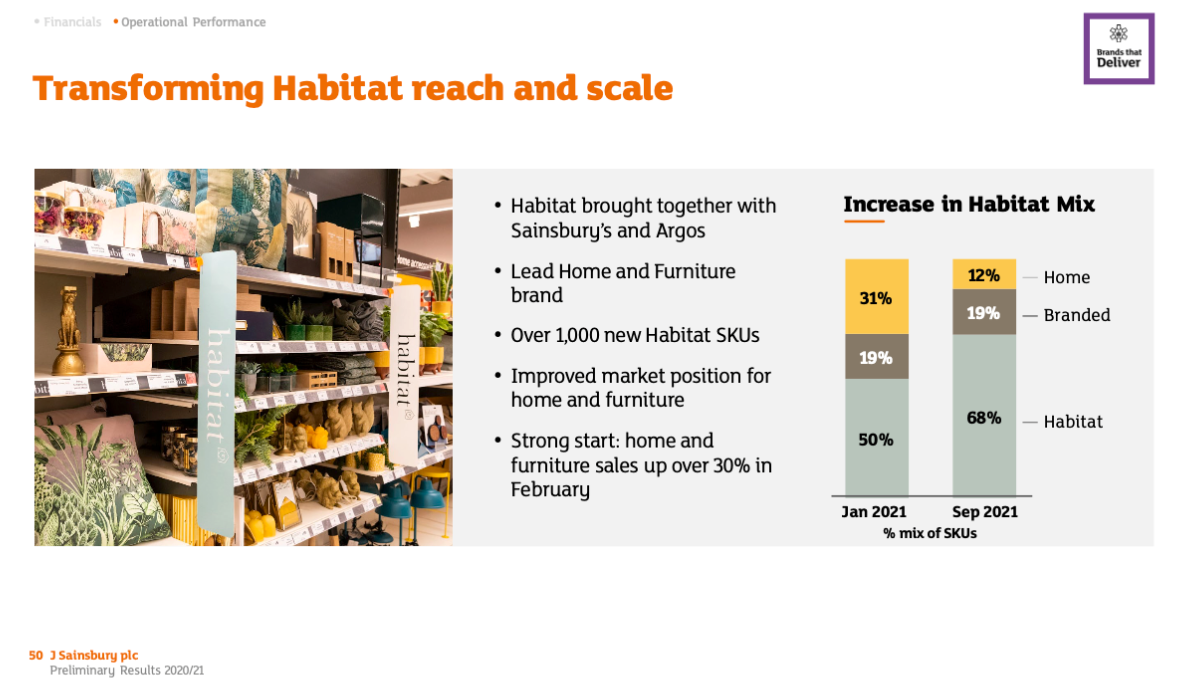
Interestingly, Habitat is rolling in to the main stores too, with this already highlighted on this very service. However, there were 16 stores under the Habitat brand at the start of the year, admittedly, they were probably caught in the crossfire with the closure of non-essential retail but 13 have closed down in the year.
This includes the relatively small implants in stores such as Monks Cross, York. Personally, whenever visting stores, the Habitat units have always been reasonably quiet. But then, their high ticket price means that a few customers spending can turn in to a strong sales number.
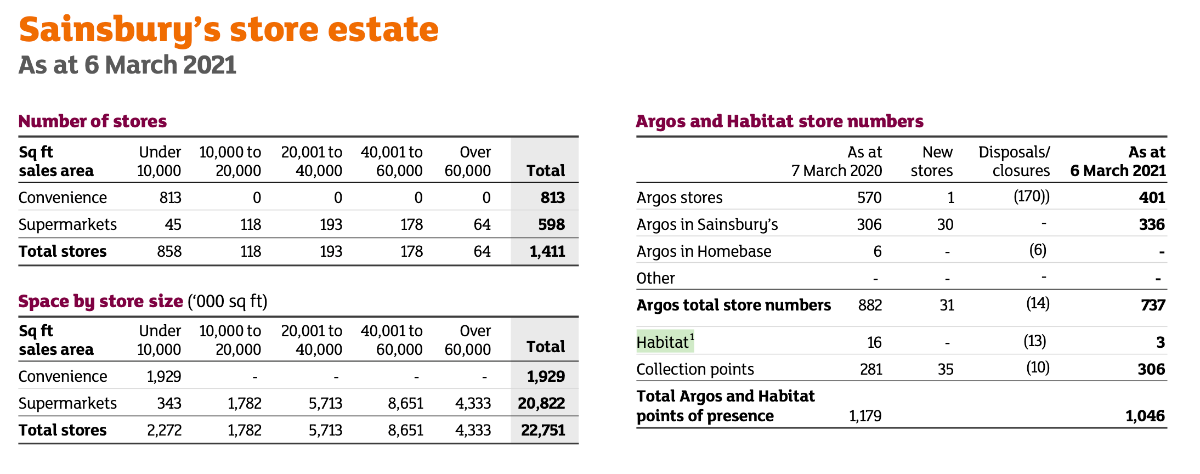
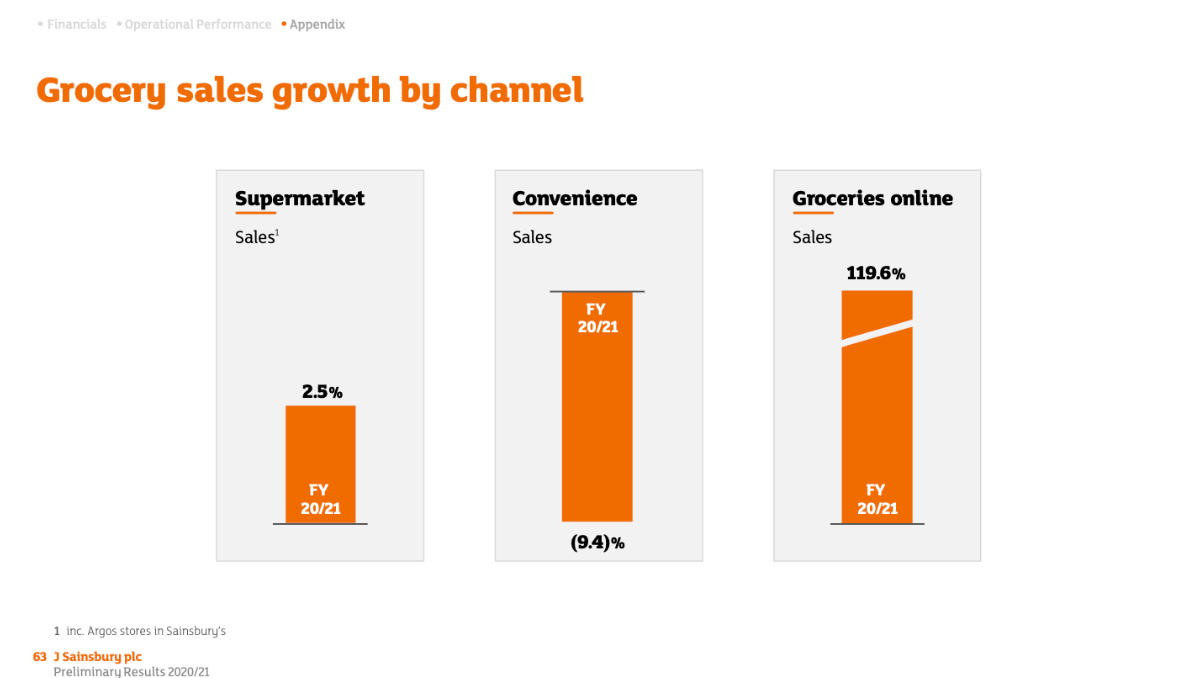
Store estate reshaping continues apace and we are seeing more and more supermarket closures, convenience too, but that is every day activity, given the ever moving nature of the c-store business.
11 stores were closed down in the year, for various reasons but one would imagine leases play a part with the ever moving nature of retail impacting heavily. A discounter opens nearby and with the rises in the living wage, the lack of viability for online and all that goes with the rest of it.....
It can turn a store that's borderline in to loss making territory, overnight.
193,000 sq.ft of space was closed within the supermarket division across 11 stores = 17,545sq.ft of space which means these aren't small stores that are being closed down. Stockport was over the road from Asda and was a tremendously busy store in the day, however as time has passed, access is difficult (car park is tight) and there is competition everywhere.
Alongside this of course; the march of online offers another avenue for shoppers to utilise.
In addition to this, there was 170,000 sq.ft of downsizes and other adjustments to stores, some of this will be covered in the closure of the Habitat concessions of course, but it marks a step back in terms of the space across the estate.
More to come, no doubt.
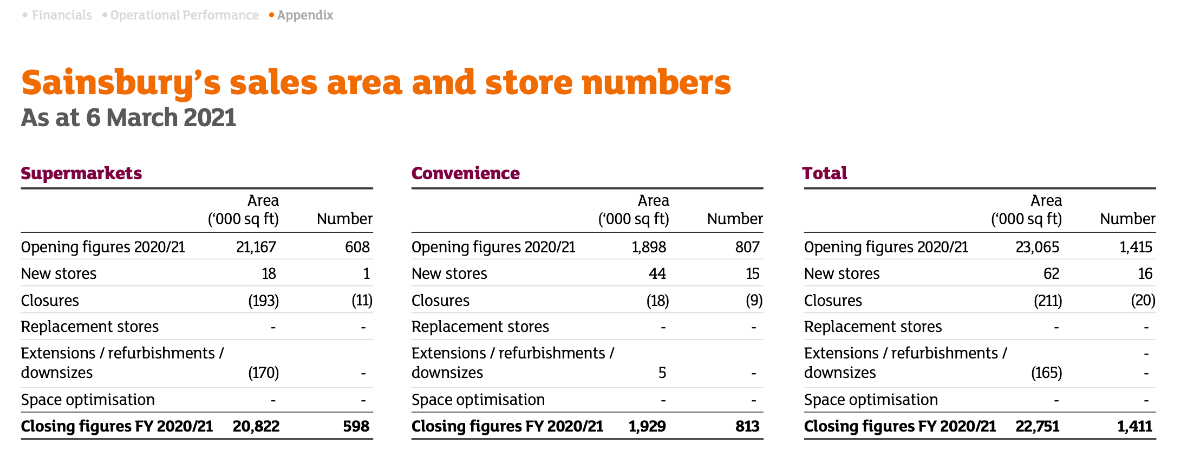
Sales growth by channel is gaining all the interest, especially given the march of online via COVID, driving 5 years of progress in about 5 months, with the growth of capacity slowing and demand seemingly slowing and receding in some cases....
Interestingly convenience sales were -9.4%, however, that is explained by COVID, but, it's difficult because the estate is tilted towards convenience and Sainsbury's will be hoping that there is a return to normality, broadly, given their convenience sales figures here.
In addition, Supermarket sales rose which was positive, given COVID, they have done well on safety (for example). However, the +2.5% rise included the Argos stores within Sainsbury's.....
It remains unclear how one can say there is sales growth in the supermarket channel on groceries when you are including Argos stores.
Argos rose nicely though, although their category split for growth was low margin electronics, gaming and office equipment. The addition of Habitat product to the Argos range should pay off nicely given their higher quality reputation and the fact that IKEA are out of stock of a fair number of cabinets and wardrobes......
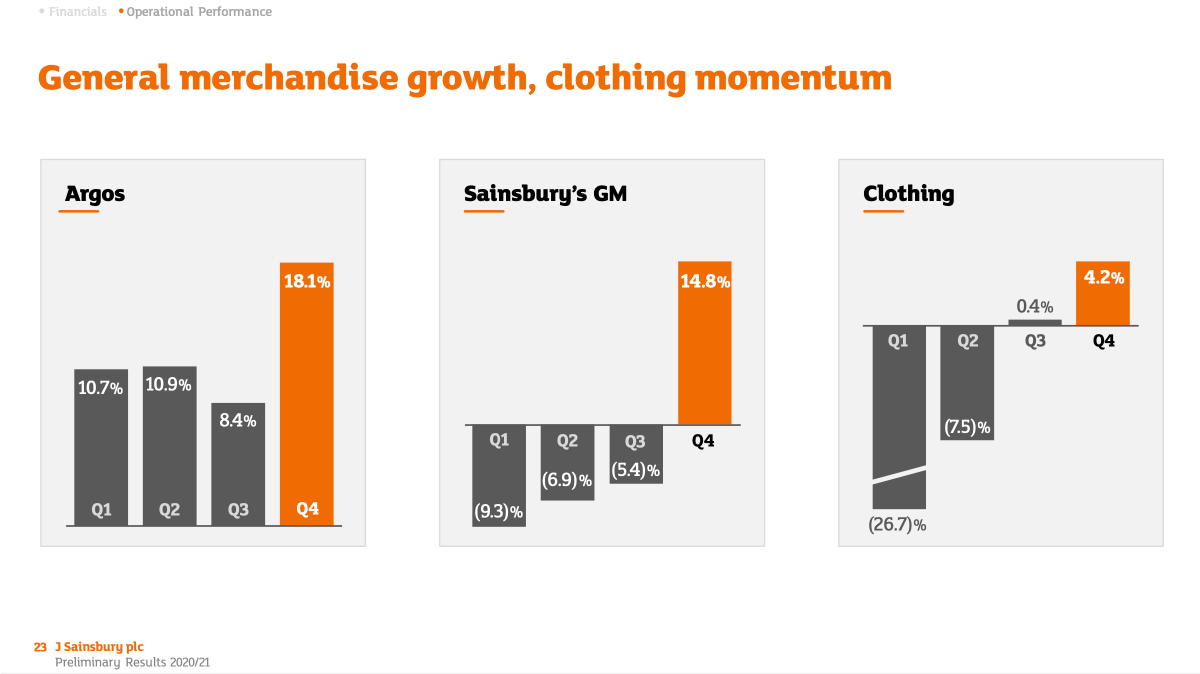
Q4 saw a bounce in GM and Clothing at Sainsbury's, however gifting and also, the Nectar scheme which allows customers to double the value of their points in selected categories will have also aided matters.
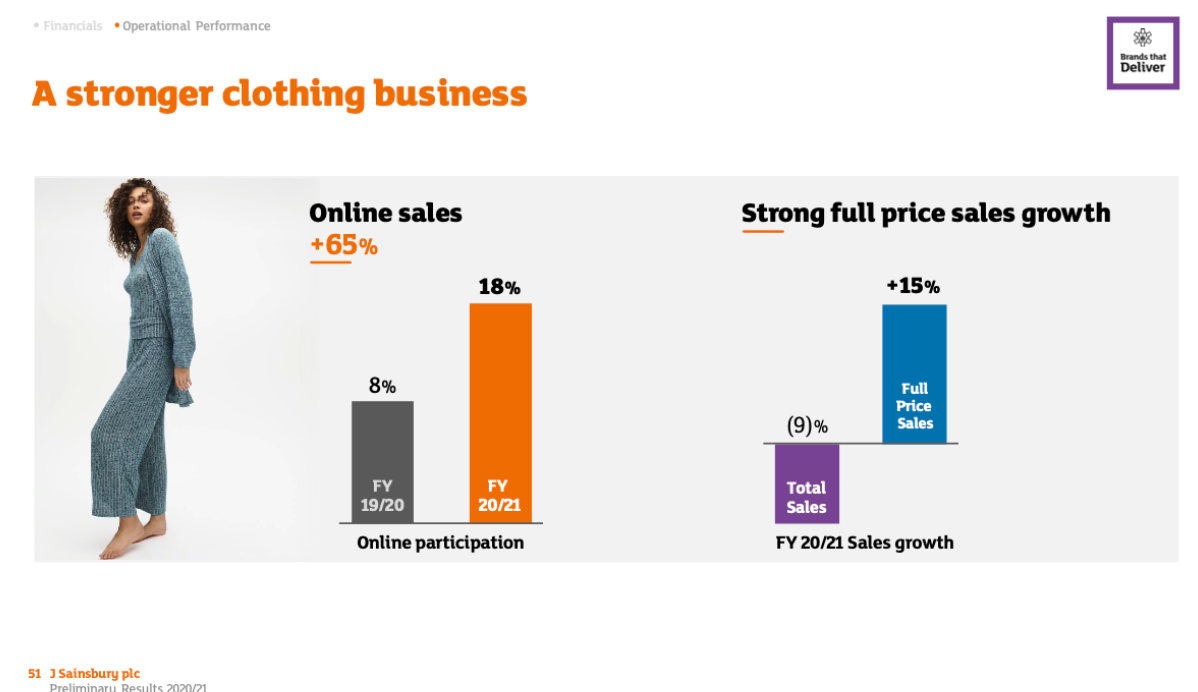
Growth in online clothing will also help matters. A difficult year for any retailer with non-food and clothing businesses, Sainsbury's will be justifiably happy with the results here and the Argos delivery network, enhancing their same day delivery service will also stand them in good stead with customers.
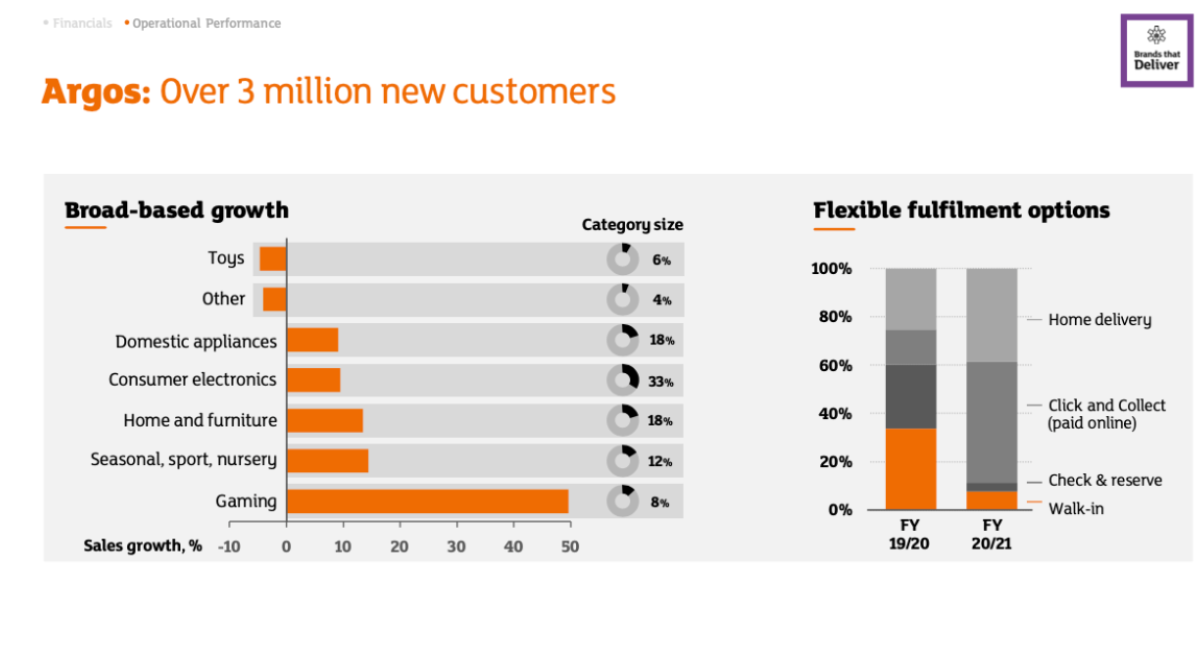
Notably there has been a shift in deliveries and fulfilment via Argos, with far fewer walk in and click and reserve customers, understandable given the stay at home message and what counted as essential shopping.
Good news for the delivery service, same day is often £3.95 which represent a fair return for what can be a delivery of one item, a strange world when a customer pays £4, just 5p more for a full grocery shop to be picked, packed and delivered.....
However the footfall to supermarkets does drop as a result, this may reverse slightly with the pandemic moving to an endemic stage and
Results wise, on with the show.
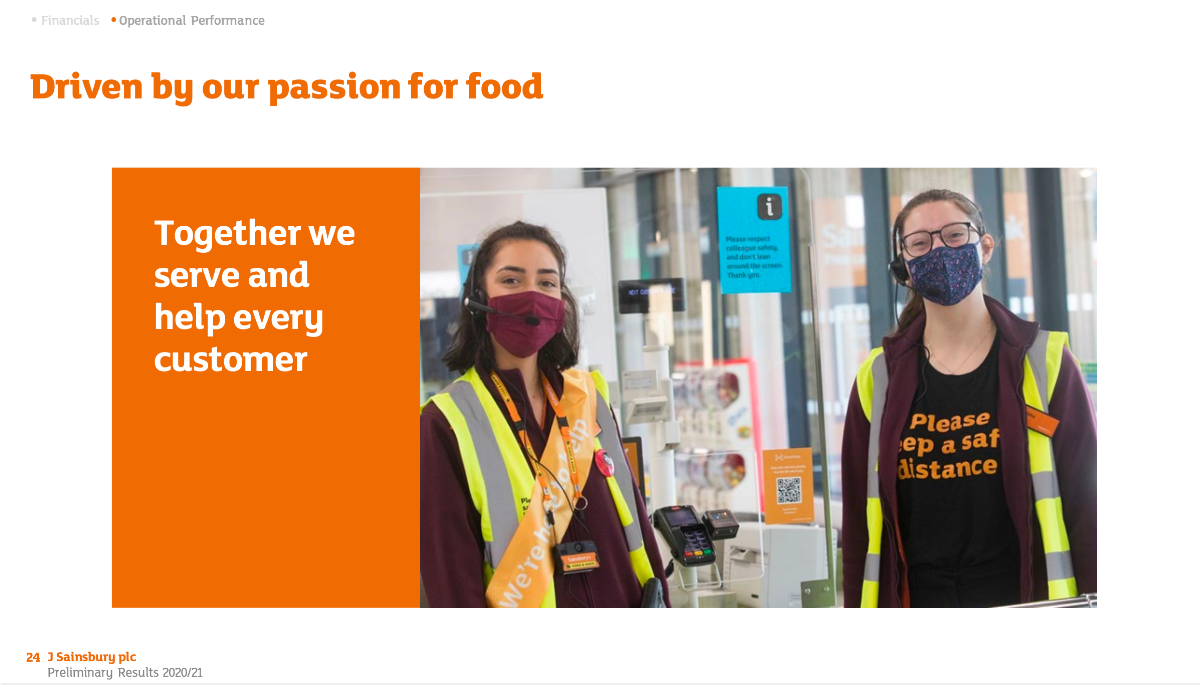
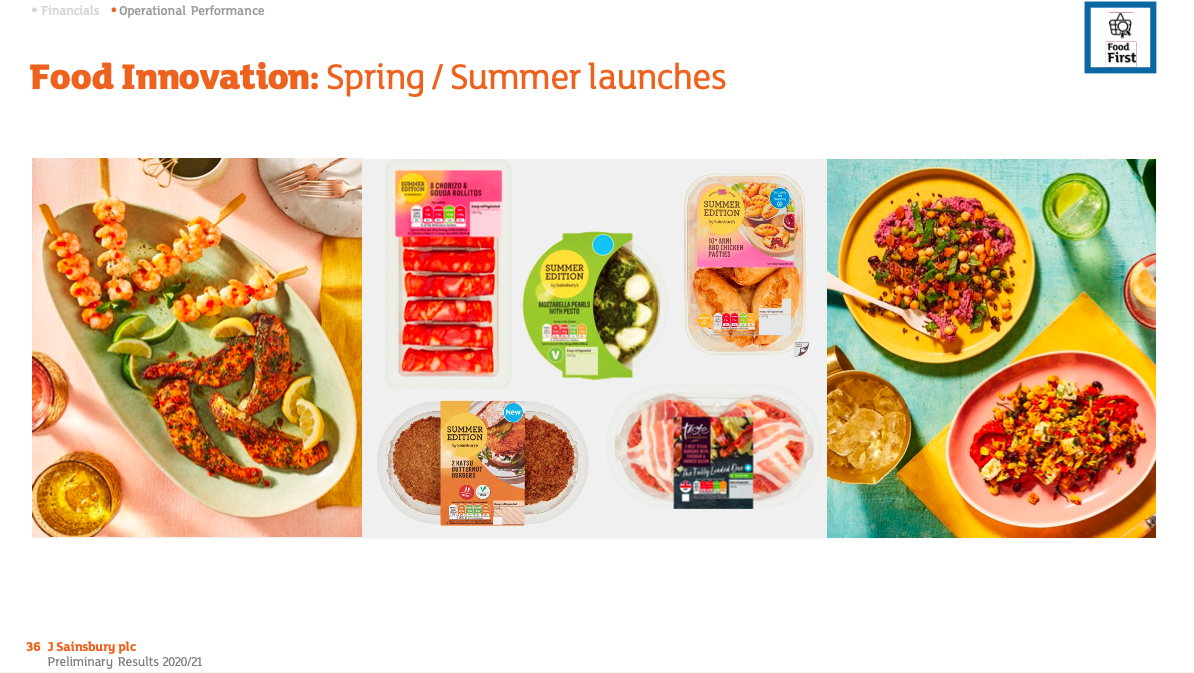
A big part of their new strategy is related to the food innovation piece and putting it back at the heart of the organisation, where it had been, is another question entirely.
Presumably it's linked to their long standing ambition in non-food, Argos, Habitat and the rest, alongside the merger with Asda that then failed too.... It's understandable that there was a lack of innovation, given the volume of people that were working on the merger, Brexit and a whole host of other things.
The problem is, the market doesn't stand still and that lack of sales momentum meant other retailers were able to get a step up and embed their position on own label or fresh foods, where they may not have been able to do so, so easily, in the past.
The strapline, or mission about 'together we serve and help every customer' was intriguing. Hardly needs saying one would think and the reason for being almost, in retail, but nonetheless, they are focusing on service and indeed, product once again.
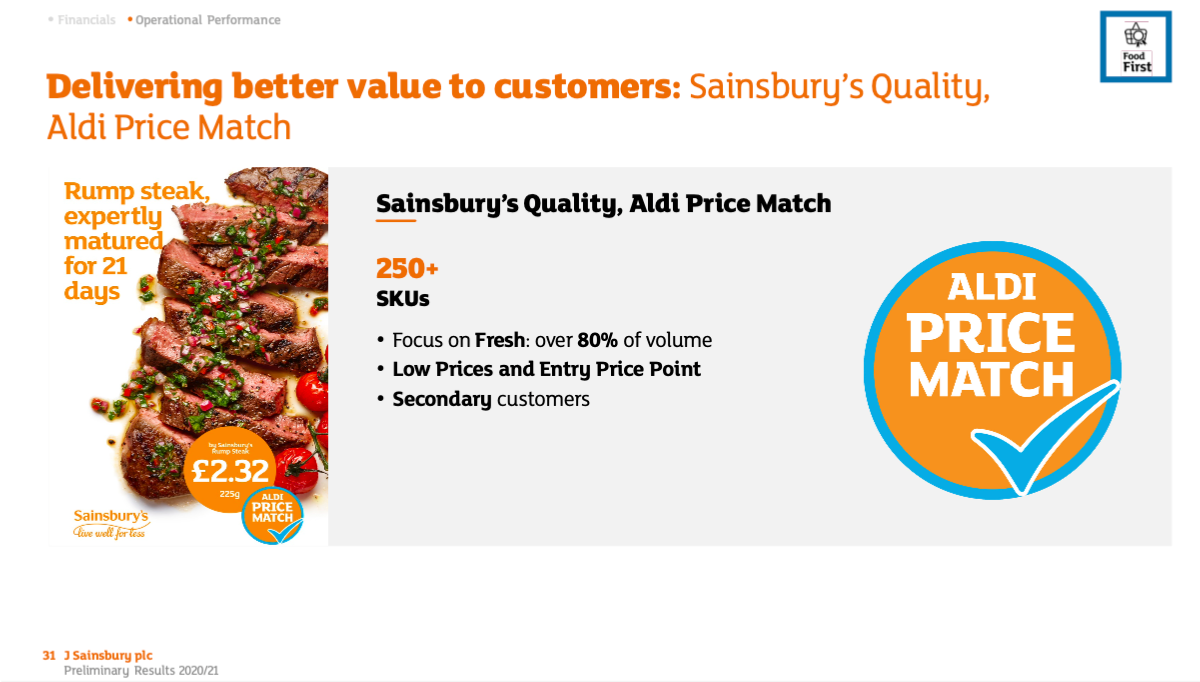
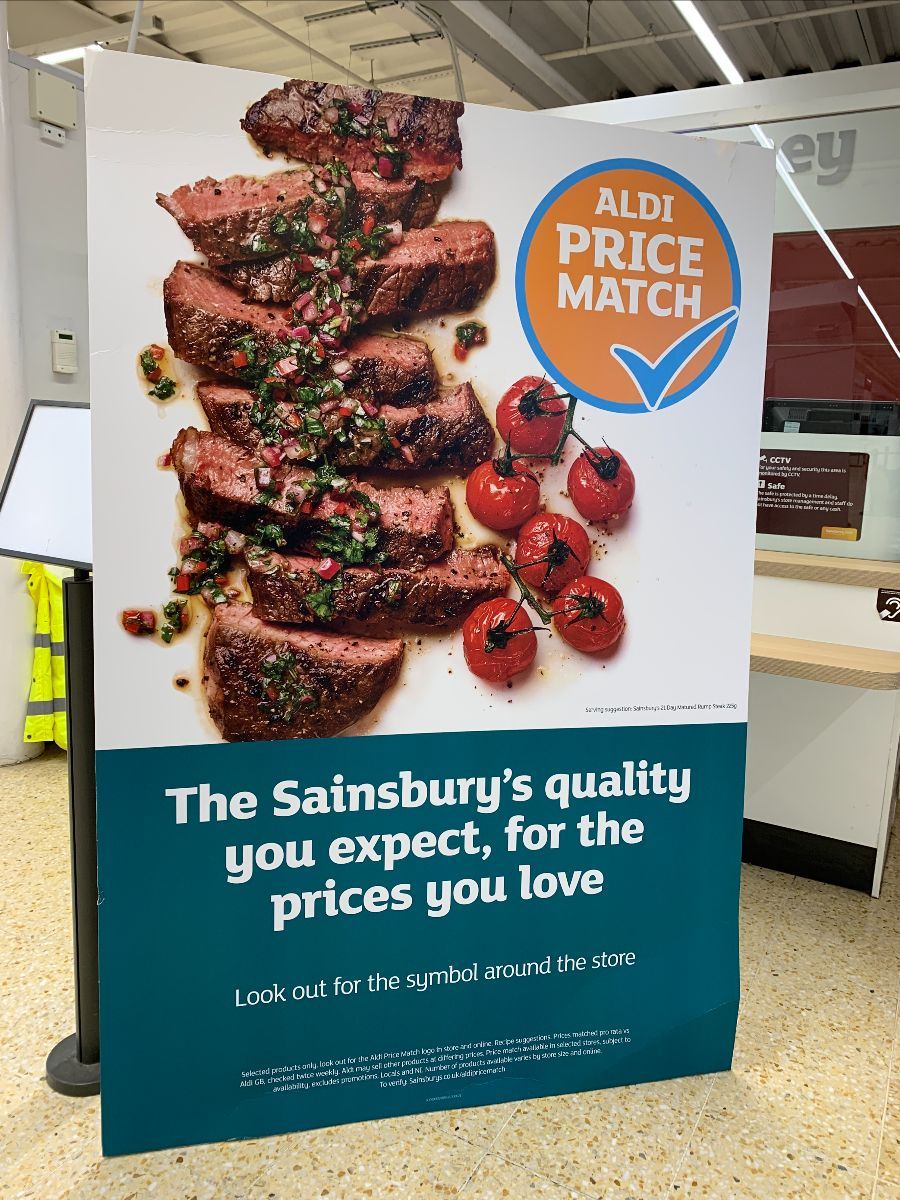
New signage has landed below to accentuate quality, so one expects Aldi to land signage that highlights all their awards in comparison to Sainsbury's.
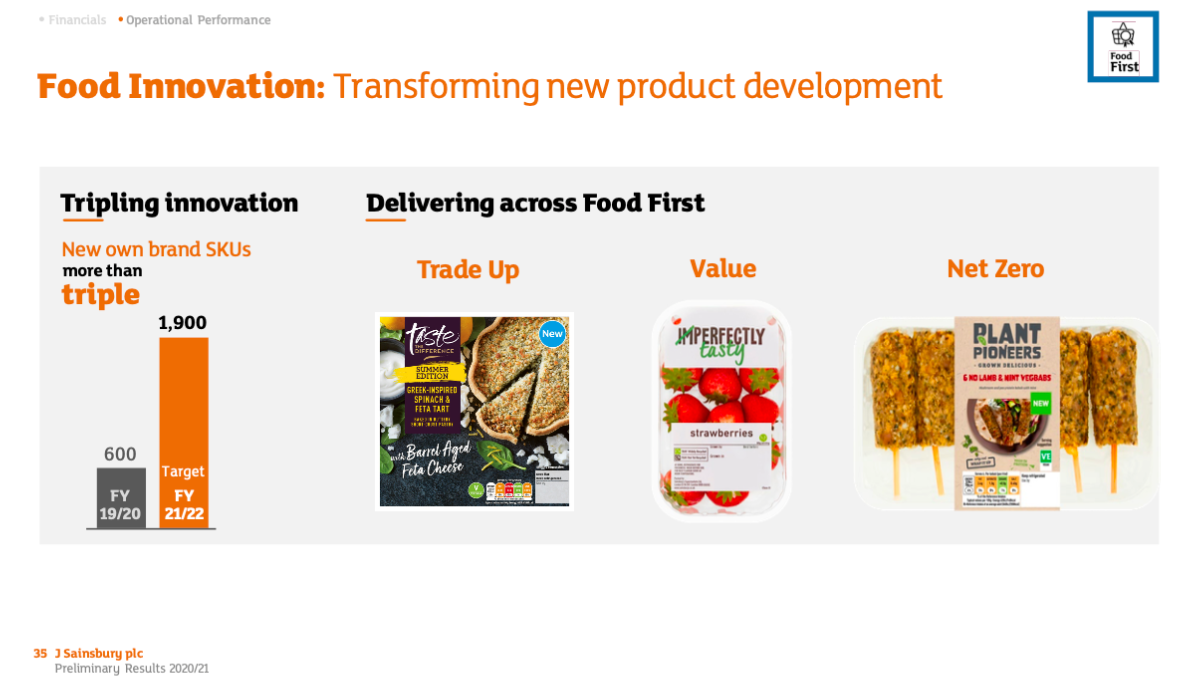
Alas, there are a number of positives here, not least the improvement in own label, particularly premium. For so long, Sainsbury's were comfortably differentiated in own label and this arguably, kept them afloat in the early 2000's when things were dire.
But years of no discernible progress in development, same offer for 2 years running at Christmas e.g. as priorities were elsewhere, meant that their rivals could close the gap with relative ease.
No retailer exists in a vacuum and Sainsbury's still have work to do, in order to close that gap down further and establish some form of leadership within the big four at least, however, one thinks M&S and their efforts on innovation will prove too difficult to catch and indeed, even the discounters with their record of imitating any form of innovation have equity in the own label space.
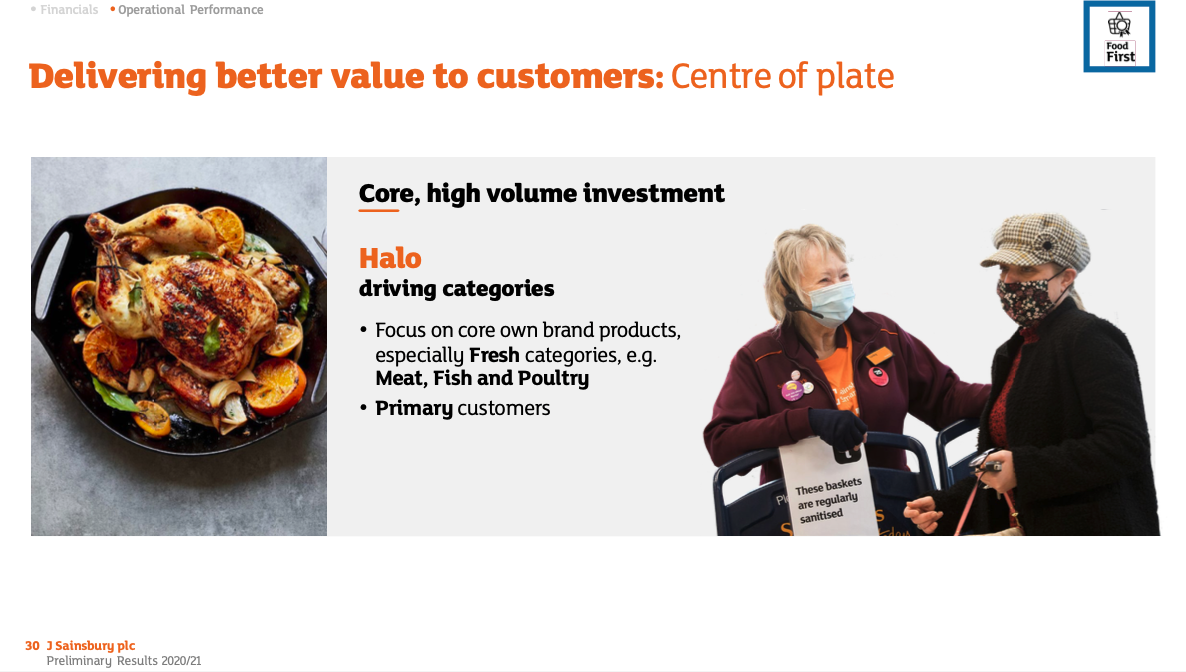
The news that fresh foods is strong on their Aldi price match is also noteworthy, Tesco match all of their products, as applicable, and layer the branded specials on top. Whereas, Sainsbury's have picked an edited range and focused on fresh foods, with good results to start with in Meat, Fish and Poultry.
However, it's a value play in the bottom tier and Tesco have already made moves to somewhat nullify this by using their mid tier as a consolidated 'brand'.
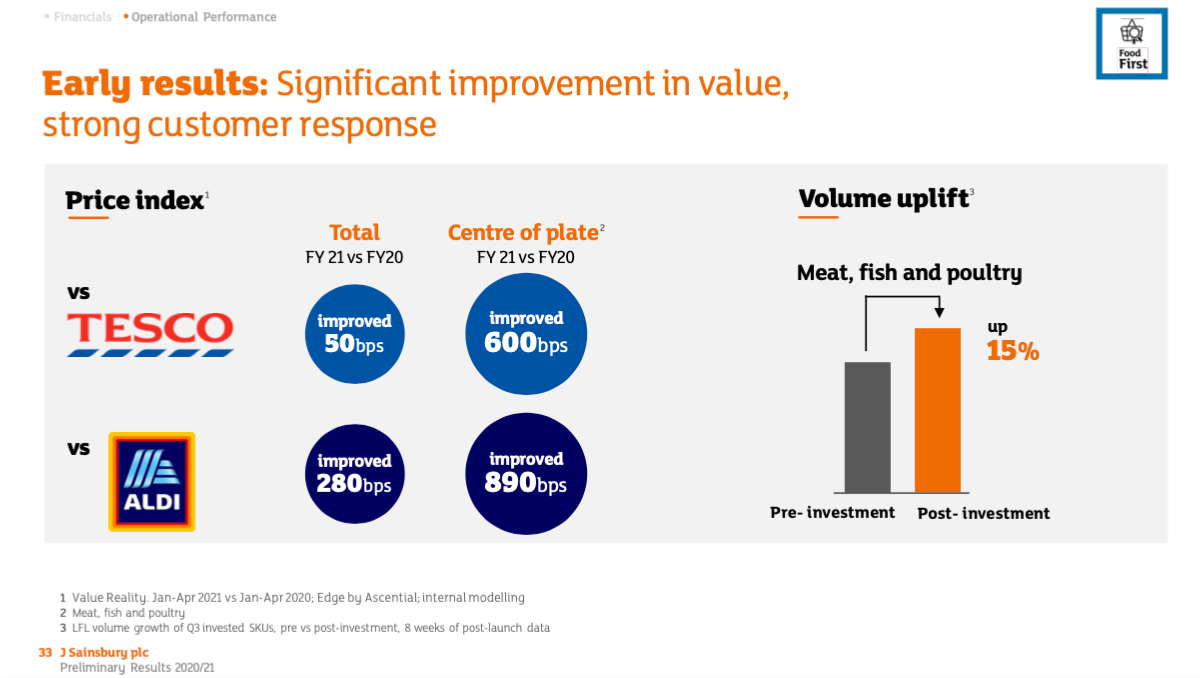
Volume growth was ahead of the market, but only just, a tiny amount ahead but ahead nonetheless.
Their net zero work, with Vegan, is vital and they have done very, very well in this arena.
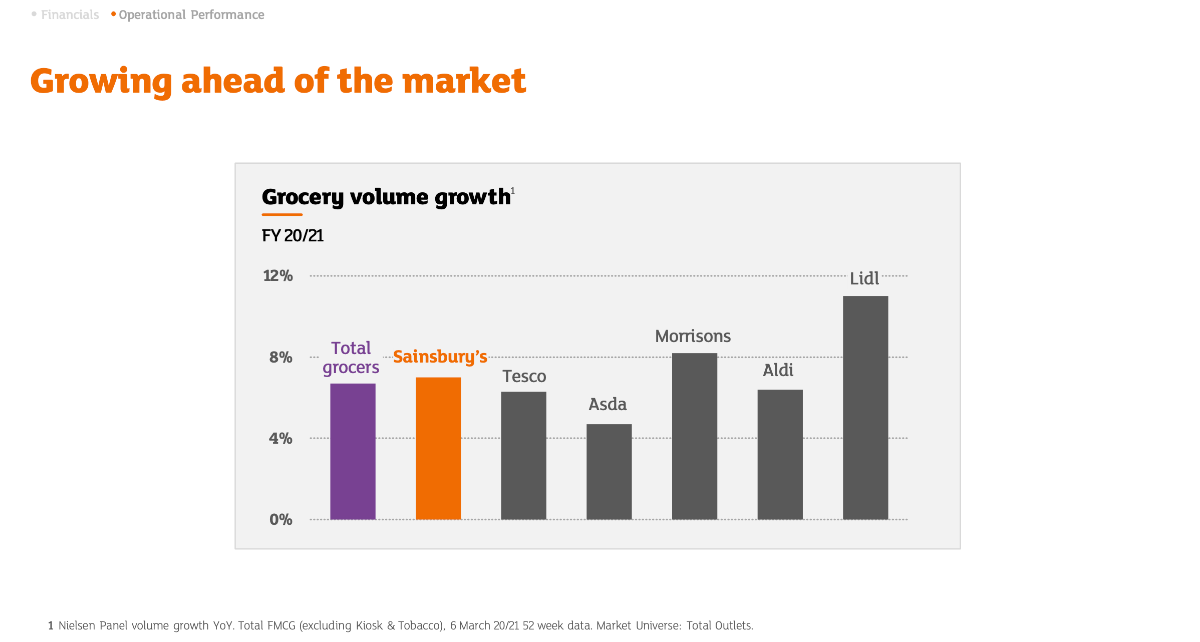
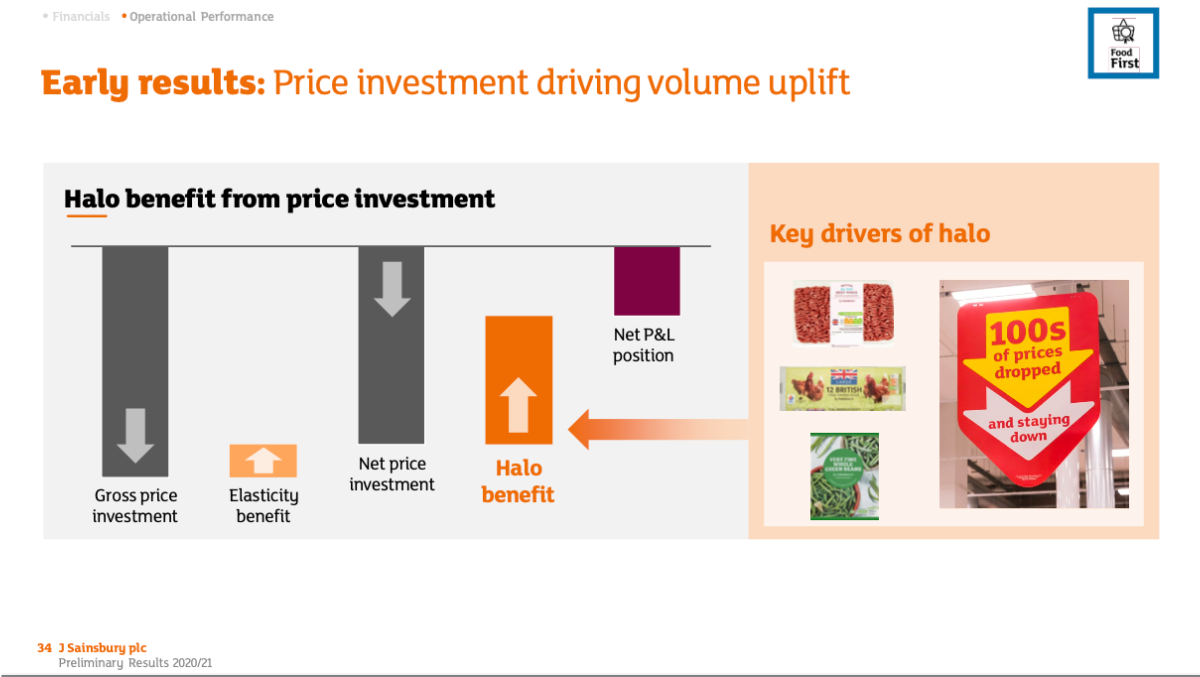
With the volume uplift sorely needed to swing the pendulum and make the numbers make sense, Halo benefit is vital and this looks to have replaced the Argos implant as the halo benefit that was needed previously, to drive trade.
Interestingly, a food counter is a good halo for a category, but the business has closed these down, with a fair saving, post COVID as well.
Mentions were made that the counter business was dying away and many didn't\t trade well. However, store visits showed the execution was wildly inconsistent and some were essentially waiting for the clock to strike....
Low sales drove a lower forecast which drove even lower stocks to stores. It's a doom loop scenario and the additional trade package and signage was equally poor. Newer stores were stronger, with better kit, signage and the like, but still....
It almost seems to be the case that deflating your category with value tier matched with discount, in this case, Meat, Fish and Poultry to such an extent to compete with discounters, means that the counters either have to be differentiated significantly, or close down entirely.
We saw a similar piece of work with Tesco, although they did retain counters in the busiest stores on an exception basis, which was the smart thing to do. Sainsbury's must have walked away from some serious business in their more affluent stores, closing counters, en masse.
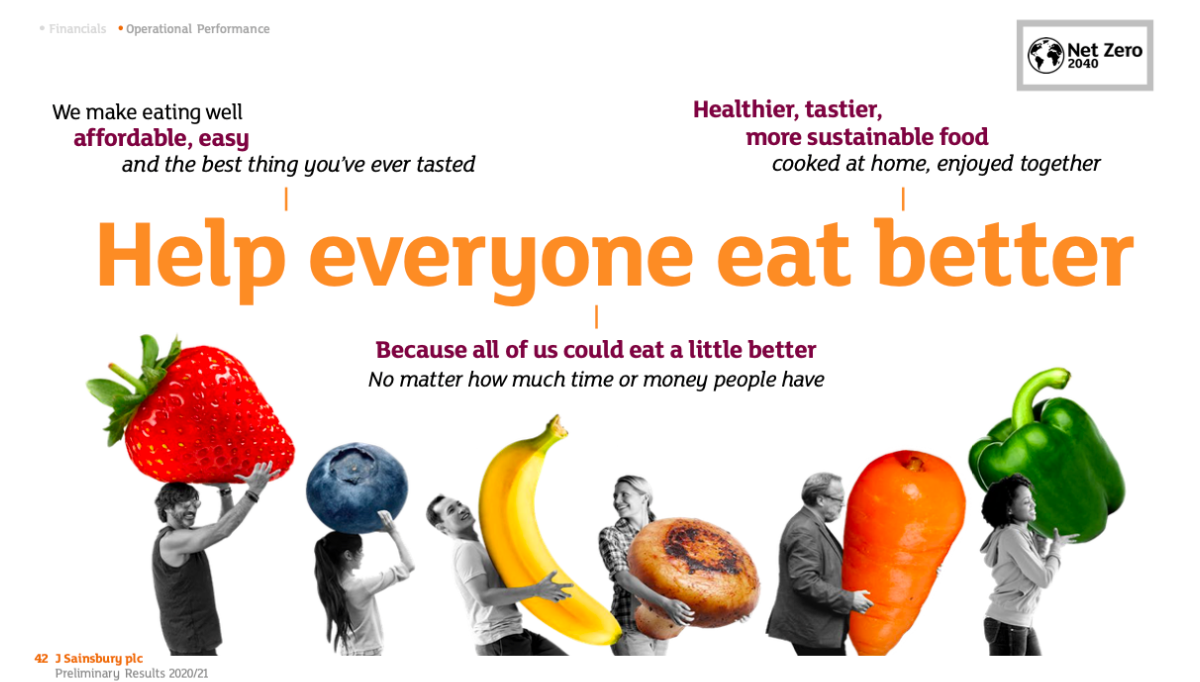
New strapline then?
It stands out well, a good piece of work with better too as it means different things, not just less Cadbury's Chocolate but also, more sustainably, together as a family.
Eating being an event in itself. Help is also key, both value but also highlighting key lines, trends and everything else.
Everyone - naturally.
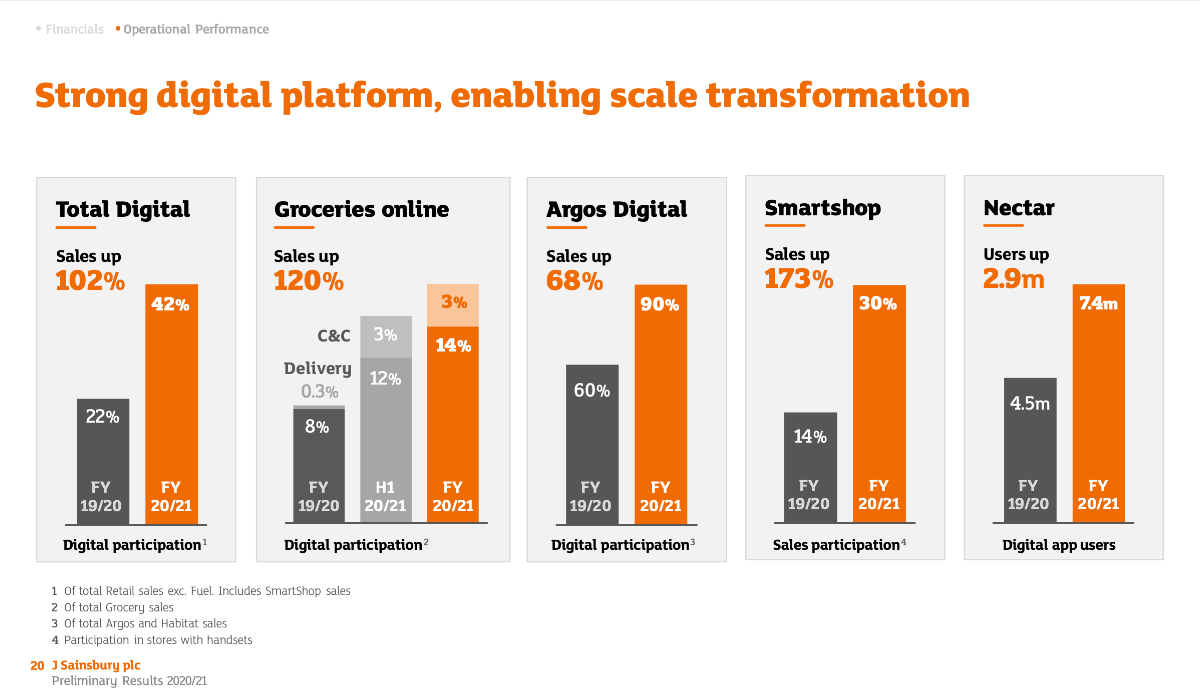
Online is a huge growth area as we know, although the demand has dropped down somewhat via Kantar but again, we will need to see more data before we make any assumptions on what this means, long term, for the world of retail.
The interesting element with Sainsbury's is that their click and collect business has grown significantly, they have never really done a great deal in C&C, that was a big sell for the Asda deal given their work, sites and technological advantages in this respect.
But with COVID and relaxation on planning regulations, stores have been able to pop up C&C sites in car parks and near stores with little issue.
Digital sales have risen a fair amount, 20% participation increase with overall digital sales +102%. This does include Smartshop sales (where customers scan their own shopping with a handset, registered via their Nectar card) which is perhaps questionable, but does lead to reduced requirements for colleagues at the front end.
Smartshop was +173% which was boosted by COVID and people not wanting to wait at checkout lines, it's a great system nonetheless. Works really well with brand new tech. This also explains the rise in Nectar users too, as you need a Nectar card to use the service.
Online sales increase significantly, both in half 1 and then the full year. Click and Collect remained stagnant in terms of 3% participation across the year, despite a growth in sites that will be significant.
Deliveries rose sharply, They were 8% end of the year 2020, now 14% by March '21. With Argos digital sales also up and participation for digital up at 90%, which is significant, whether people visited Argos 'off the street' was always questionable but, with the stores closed for a fair amount of the year, due to being non-essential (except, ironically, for collections via orders placed on the web) this is less of a surprise.
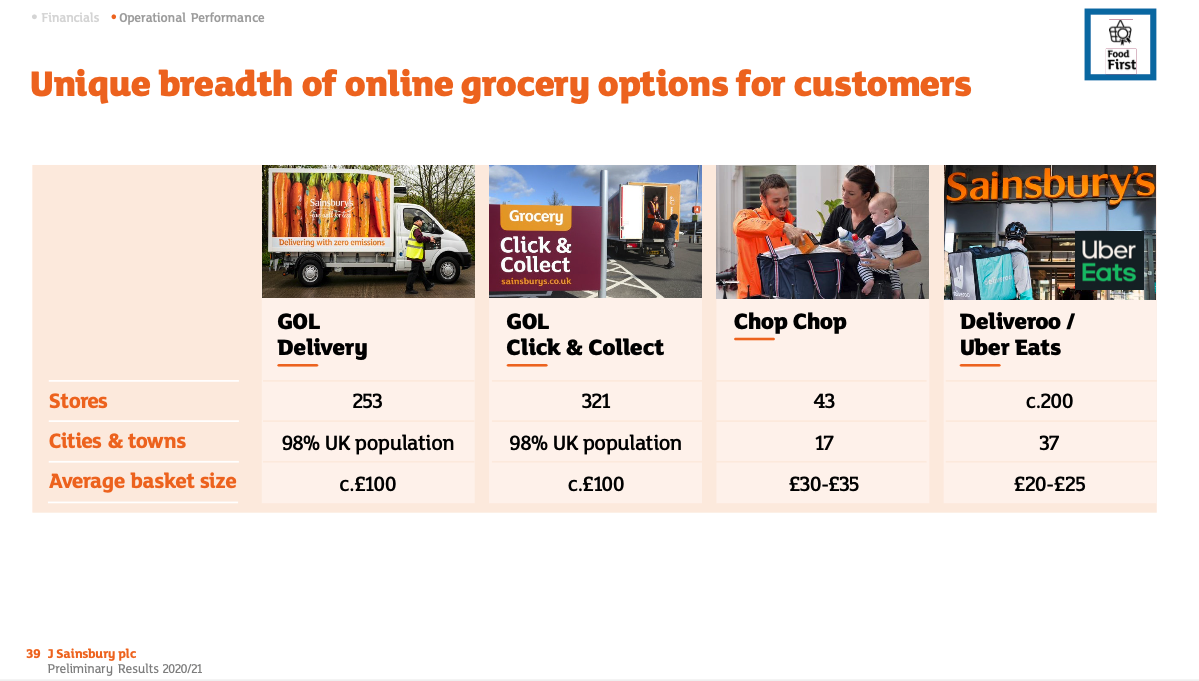
The 'instant' delivery option for smaller shops, in a quicker period of time looks to be a trend that will run and run, with every retailer talking about it. Both Tesco and Sainsbury's have strong convenience networks that will lend themselves well to this emerging trend, preferred by younger shoppers, opting for lower basket sizes and opting for convenience.
Basket size is £25-£35 and it looks likely to deliver greater revenue in this respect, given that the customer is more likely to understand why they're paying for the delivery, given the rapid service / response time.
Chop-Chop has grown to 43 stores in 17 towns/cities now, and looks to be a reasonable alternative to Deliveroo and Uber Eats, where the challenge via those operators is that you give up the 'final leg' of the operation, however you also transfer the risk/complexity.
Despite this, 200 or so stores offer Deliveroo and Uber Eats service also.
The good news stops here, however.
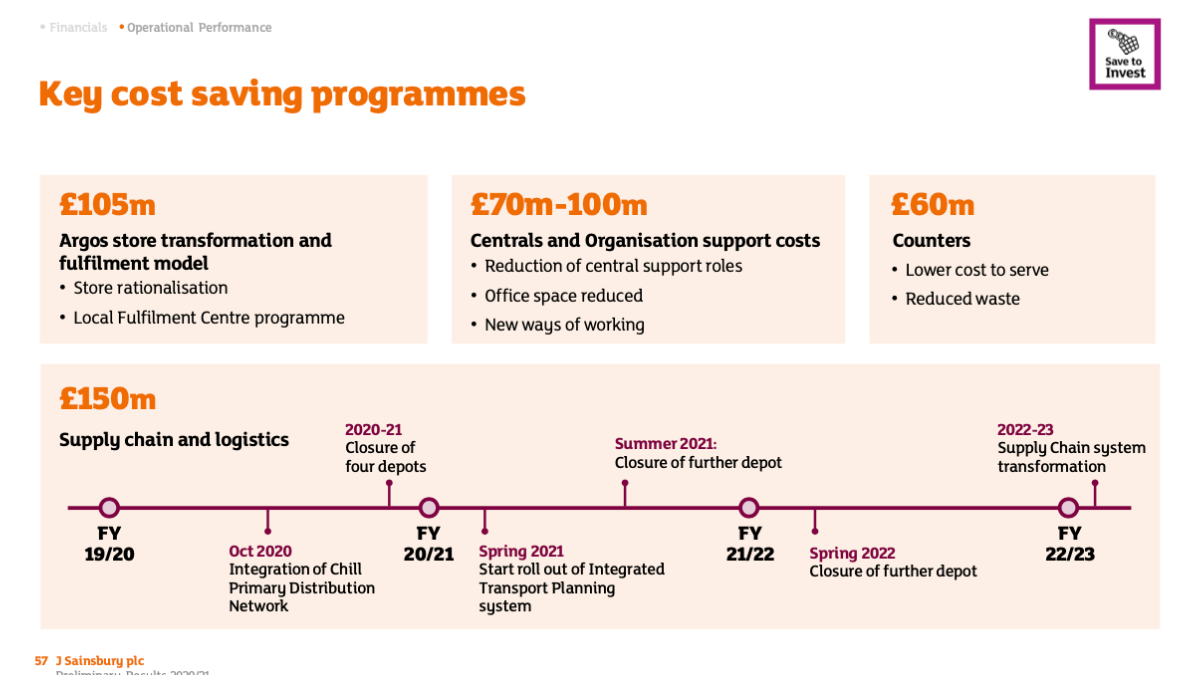
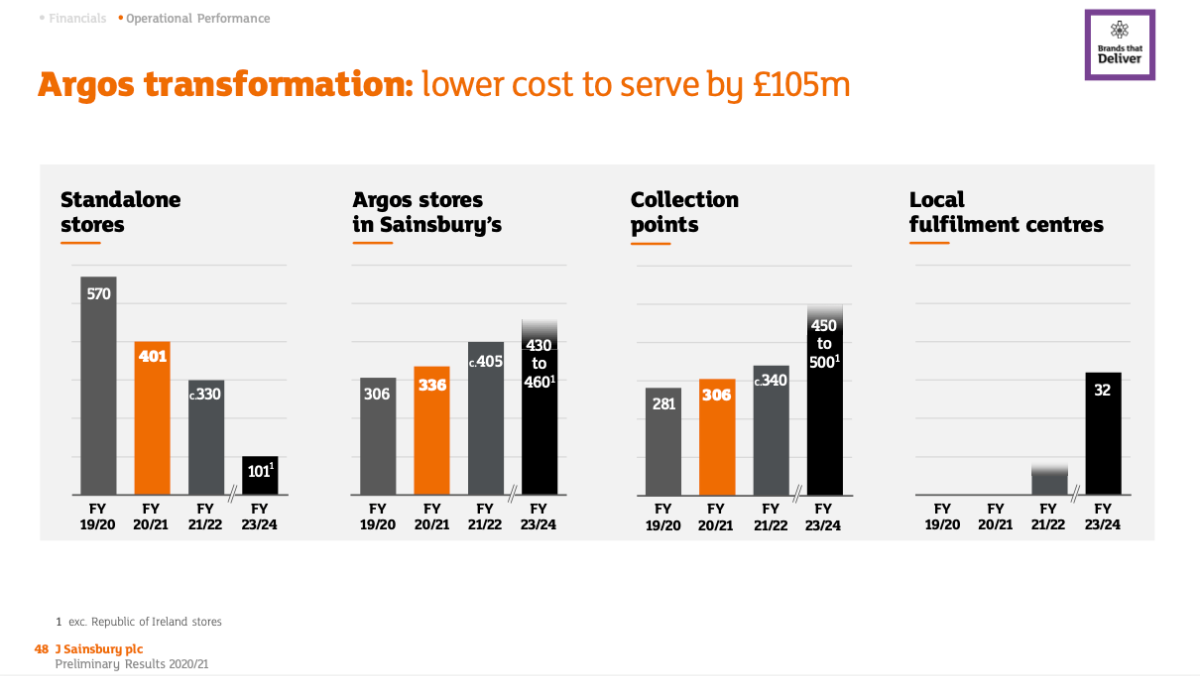
Closure of depots via Argos, with the new network of centralised depots opening to fulfil the plethora of orders and presumably, meaning fewer physical stores are needed to fulfil the online delivery demand.
The counters closures being included in this slide was odd, given it's a forward looking plan and the counter closures occurred in the last financial year, but this financial year, the savings will be realised one thinks....
More collection points coming for the chain, with 300 > 450/500 in 3 years, alongside this, more Argos stores are to be dropped in to Sainsbury's stores and standalone Argos stores, falling from 570 to 401 (today) and further to just 101 by March 2024.
Lots of savings to be made here, not least on rent and rates.
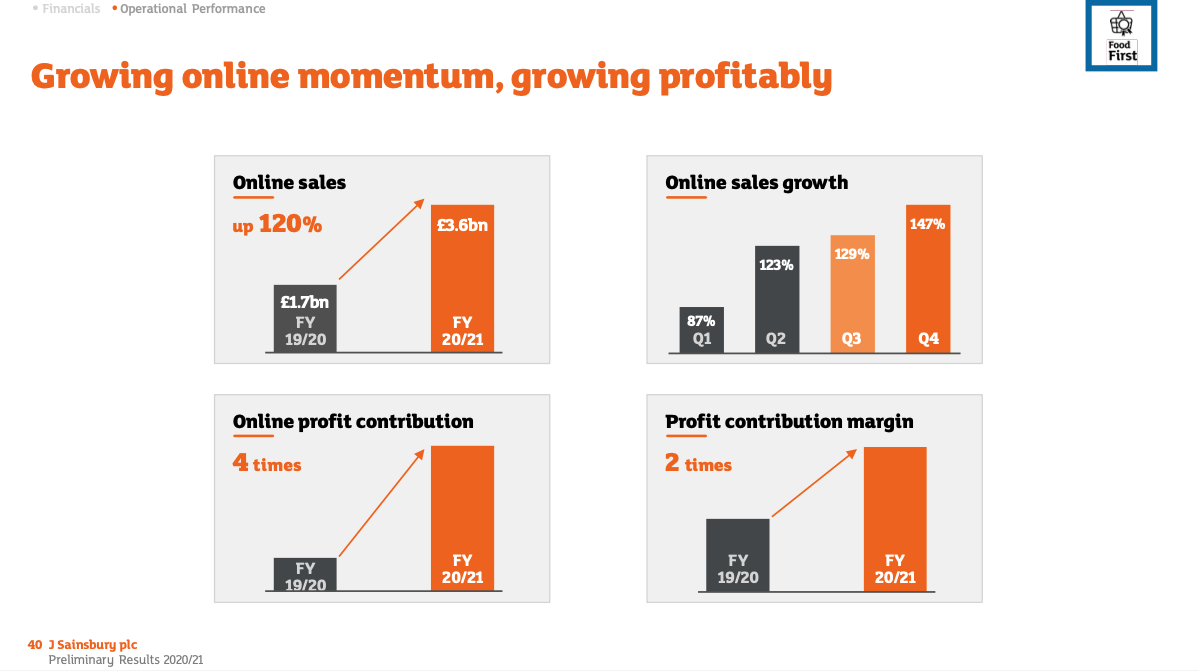
Given the growth in online; the economics now require some understanding and as an analyst pointed out to Tesco, a £6bn business that doesn't provide numbers that are split out for review is surprising, however, the online business shares so many assets and fixed costs with the supermarket business that they are intrinsically linked.
Thus, variable costs reduce if more trade goes via the supermarket, especially if it's a store that struggles for core trade from customers. Conversely, some stores have had their book value written up, rather than down, reflecting their value to the chain if online volumes are flowing through these sites.
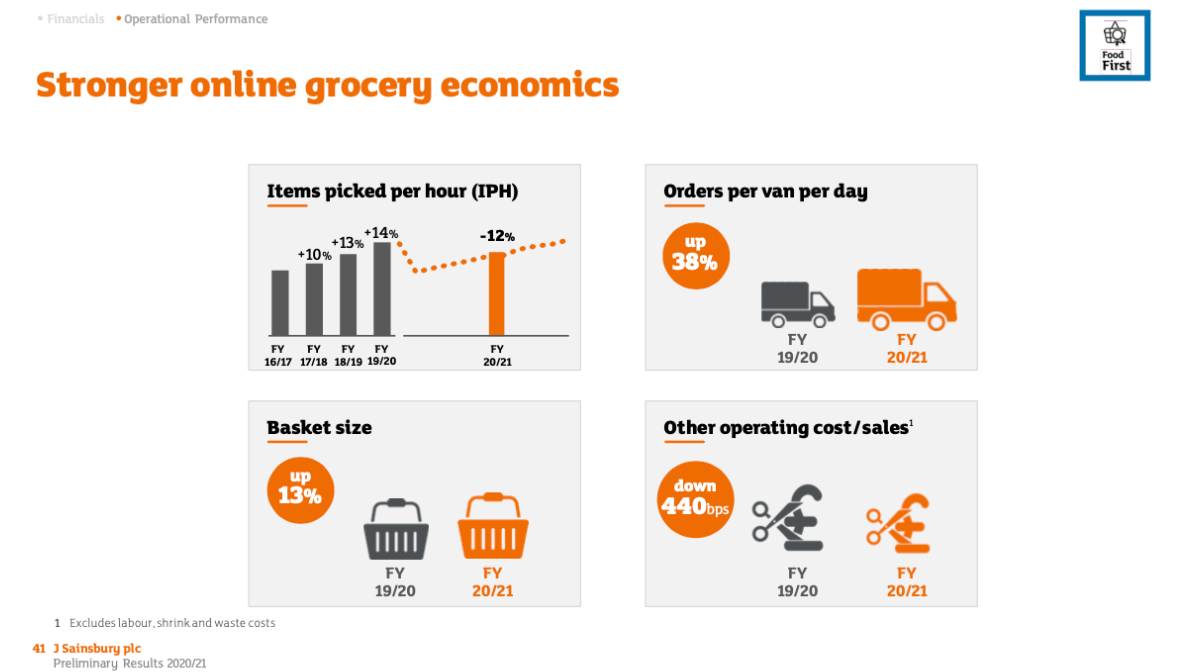
Items picked per hour decreased, due to the rise in basket sizes and the demand catching the stores by surprise, thus no room to shift and amend the operating model.
Profit contribution grew in FY21 from online, by 4 times, with further growth across the board in sales growth, contribution to margin and the like. However, delivery charges this year, alongside click/collect sales were largely par, there was no price gouging so to speak, but equally, no competition on slots as there wasn't enough capacity to go around.
However as the slots open up, competition will open up with delivery saver passes, lower prices and the like, this will reduce the revenue in this regard.
Further metrics were also strong, with a rise in basket size (again, given the pandemic, unsurprising), orders per van was also increased and the operating costs / sales were down also.
However this excluded labour, shrink and waste costs.....
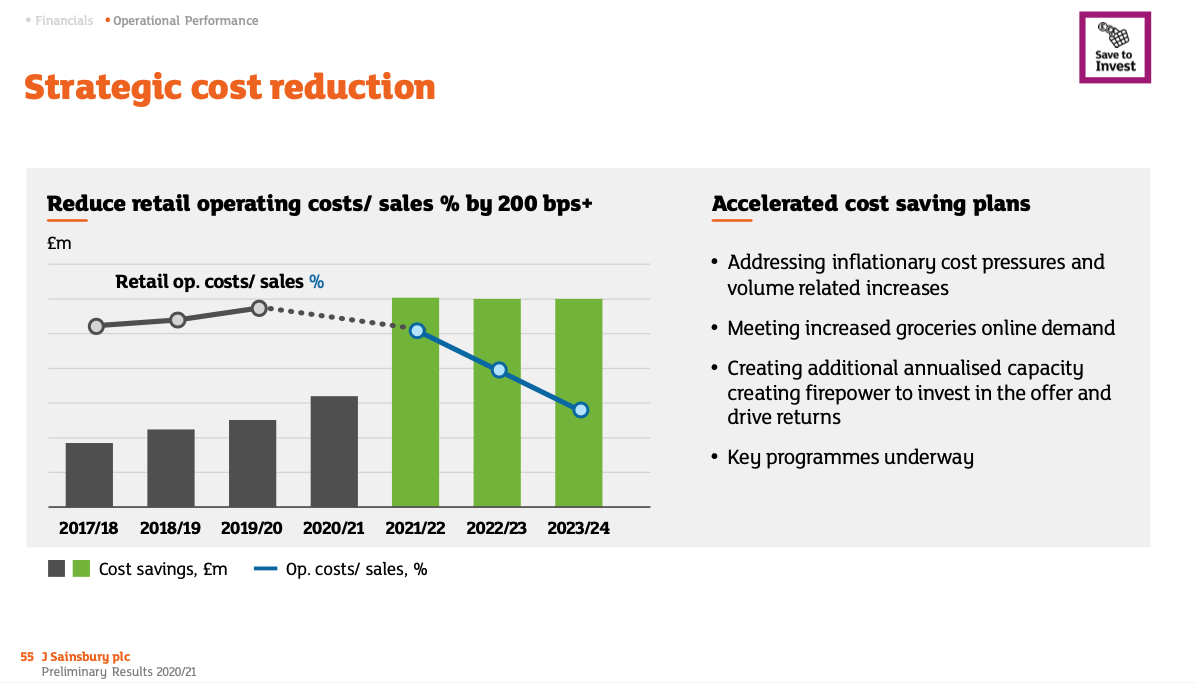
Strategic cost reduction remains key for the business and the plan is a fine balance between driving sales, volumes, market share and the like.
However, cost reductions come at a price, somewhere. The talk of reducing waste, and shrink budgets but improving availability just doesn't compute, nor will it ever.
The cost saving plans are needed however, because inflationary pressures, increased groceries online demand, firepower for stunt deals and further deals (fuel, when things return to normal)....
A fair few savings to be made here; larger bars on the graph and the operating costs falling as a division of the sales line. But this is difficult, they are a lean organisation and don't have a great deal of fat, as is....
Woe betide them cutting back too far, they have driven stock in post COVID and the availability has improved demonstrably.......
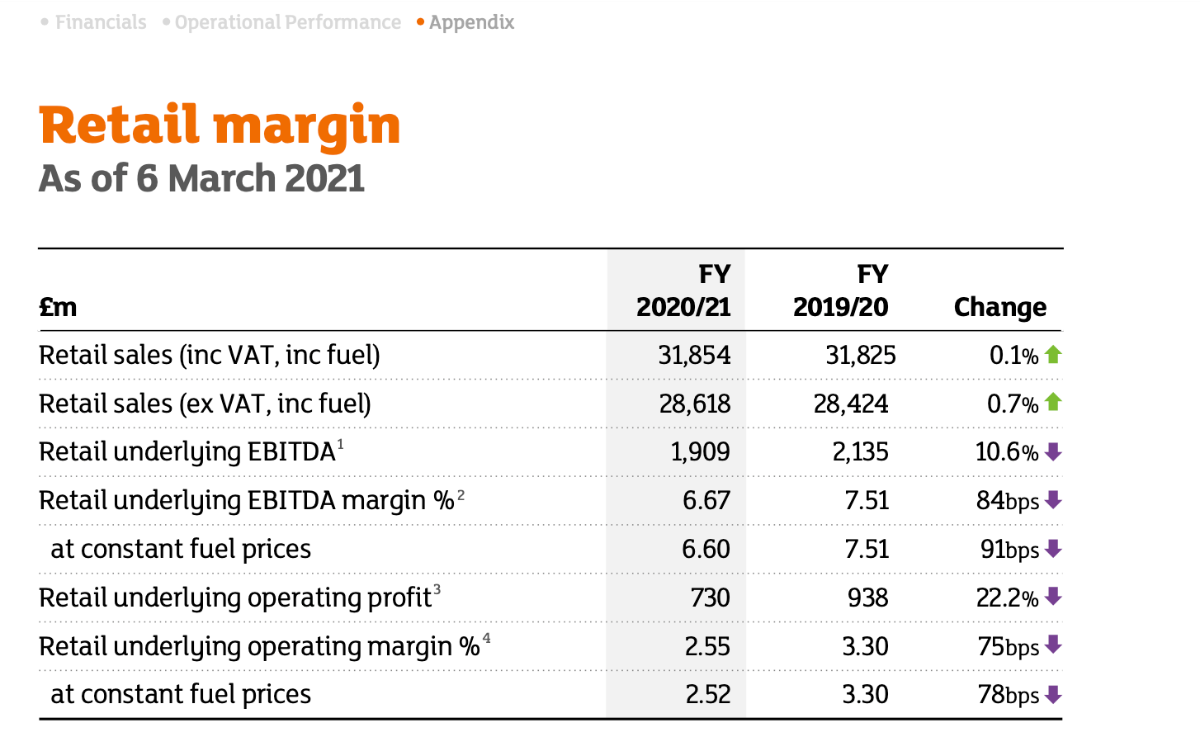
Fuel sales have fallen significantly, via COVID of course, but that should recover this year in a more meaningful way.
However, a drop in the margin to 2.52% shows that there is pressure all around the business, recovering the margin is key and they have a fair plan to resolve it, much will depend on COVID and how we trade out of the pandemic, all the signs are positive.
However, further issues remain around supply of non-food, far eastern container ships are not cheap to obtain slots on, the delays at the ports and the increased demand won't last forever, either.
But there is a fair amount to look forward to for retailers, especially if the Summer is strong, with holidays abroad entirely unclear (both from a booking viewpoint and also from a cancellations last year, going this year).
The European Football Championships are also occurring, as are the Olympics which both offer valuable commercial income based opportunities as well.
An interesting year ahead for the business, food first is a noble strategy with own label at the forefront. However, no business operates in a vacuum.
From the Grocery Insight newsletter archive, first sent to subscribers on 30 April 2021. Steve now writes at read.groceryinsight.com. See also the blog archive and briefings.